Year End Employee Review Samples For Managers
Description
Get your form ready online
Our built-in tools help you complete, sign, share, and store your documents in one place.
Make edits, fill in missing information, and update formatting in US Legal Forms—just like you would in MS Word.
Download a copy, print it, send it by email, or mail it via USPS—whatever works best for your next step.
Sign and collect signatures with our SignNow integration. Send to multiple recipients, set reminders, and more. Go Premium to unlock E-Sign.
If this form requires notarization, complete it online through a secure video call—no need to meet a notary in person or wait for an appointment.
We protect your documents and personal data by following strict security and privacy standards.

Make edits, fill in missing information, and update formatting in US Legal Forms—just like you would in MS Word.

Download a copy, print it, send it by email, or mail it via USPS—whatever works best for your next step.

Sign and collect signatures with our SignNow integration. Send to multiple recipients, set reminders, and more. Go Premium to unlock E-Sign.

If this form requires notarization, complete it online through a secure video call—no need to meet a notary in person or wait for an appointment.

We protect your documents and personal data by following strict security and privacy standards.
Looking for another form?





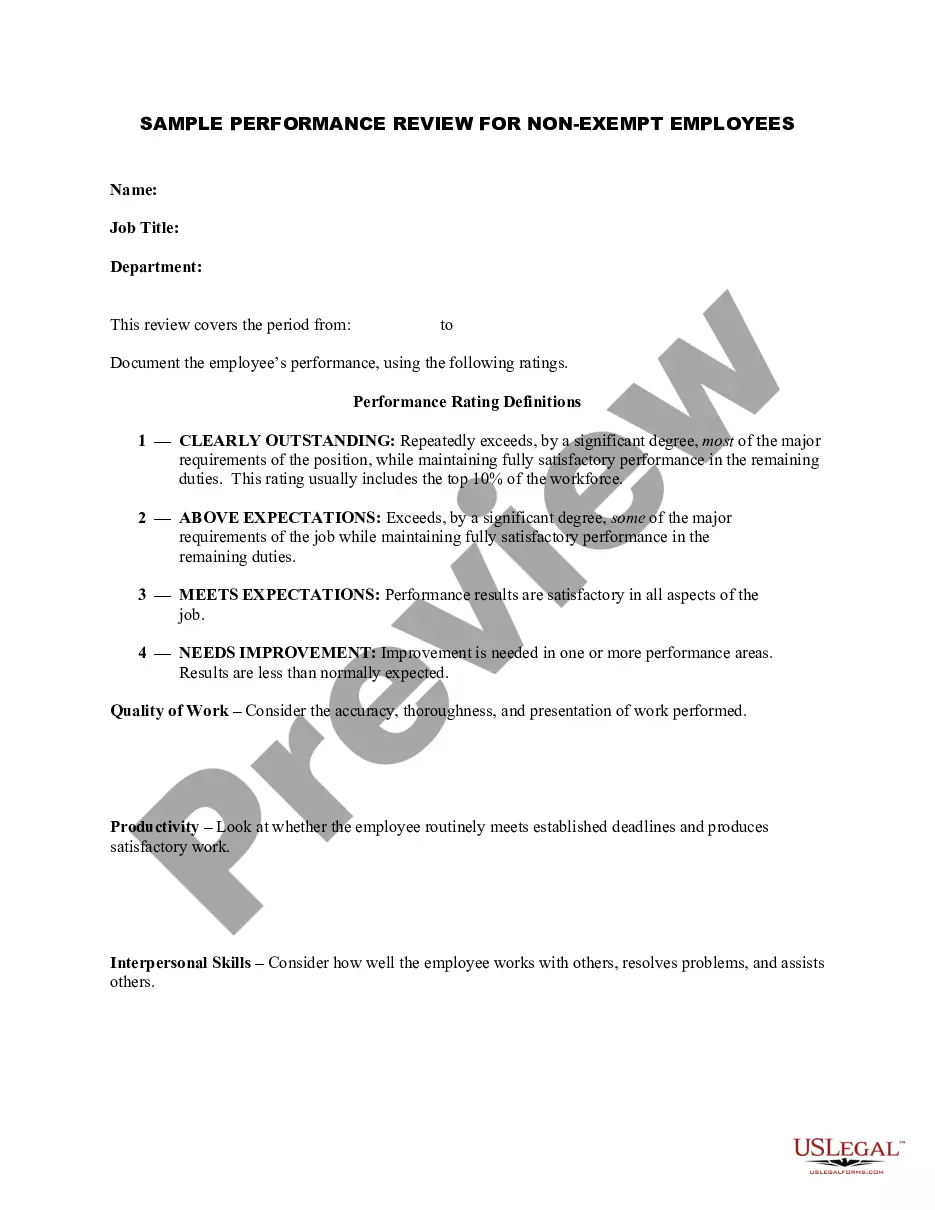
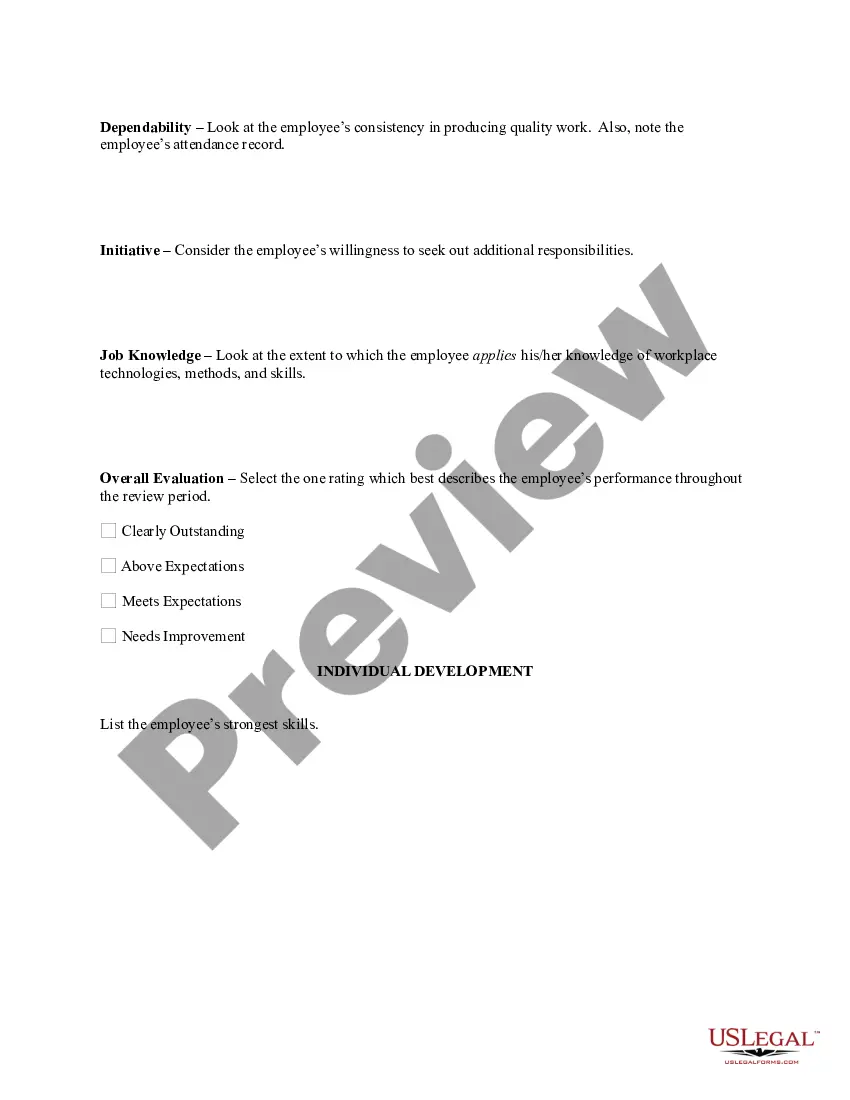
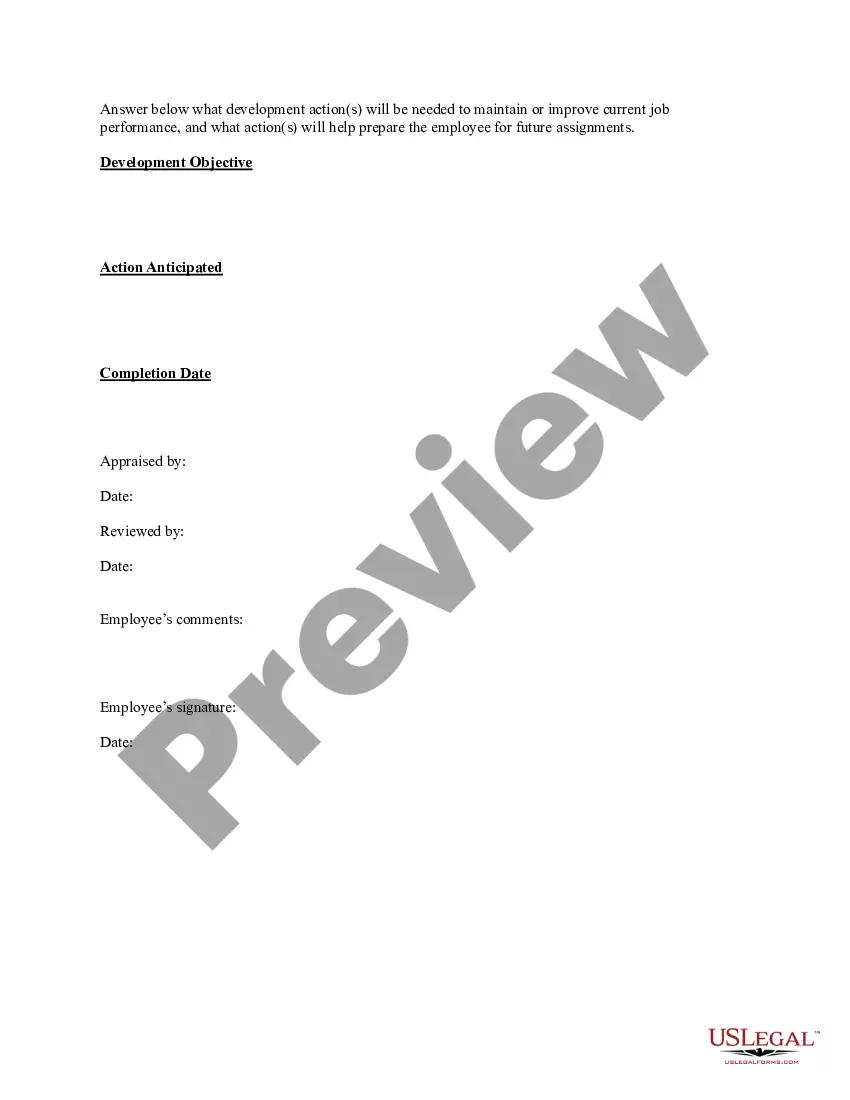
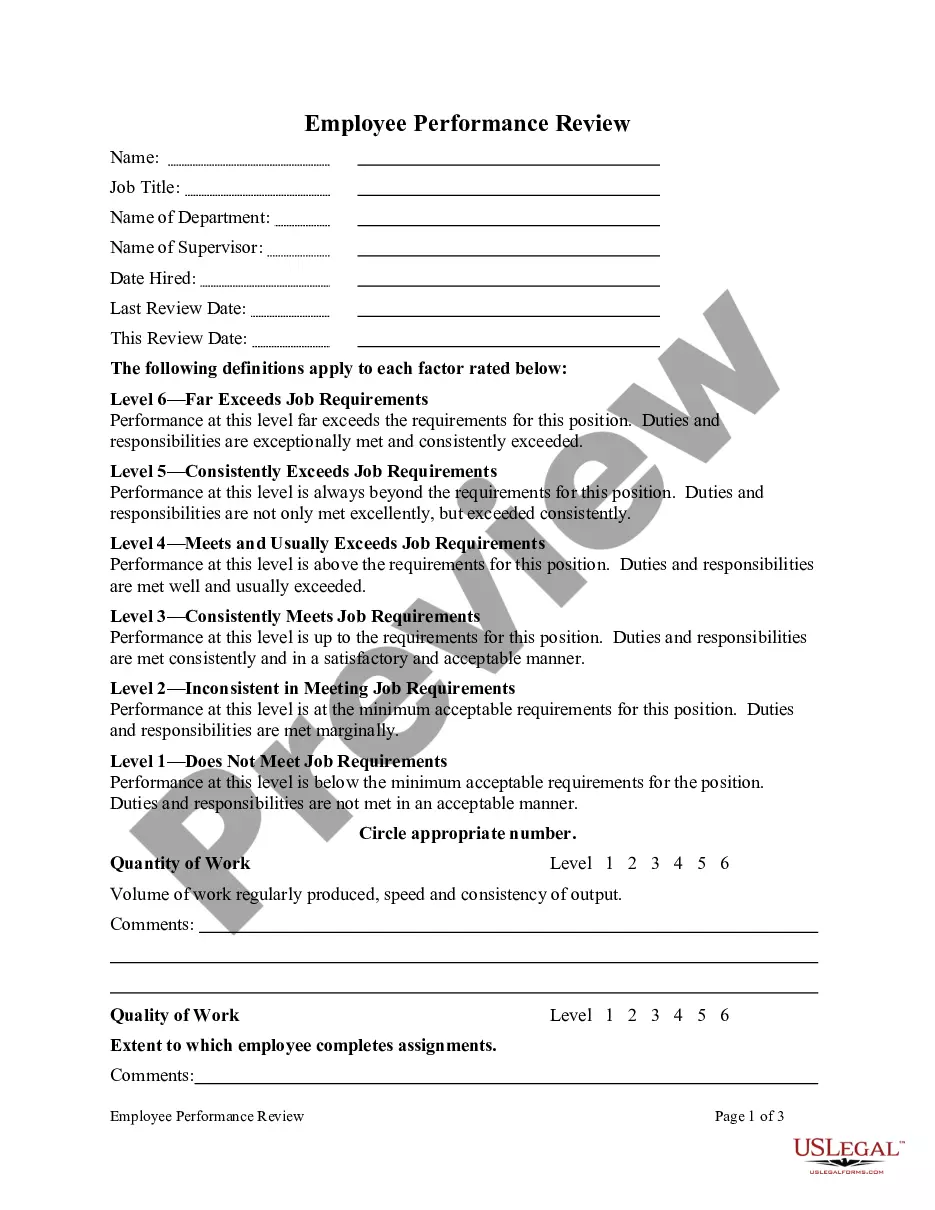
How to fill out Sample Performance Review For Nonexempt Employees?
Legal documents organization can be daunting, even for the most seasoned experts.
When searching for Year-End Employee Evaluation Templates For Managers and lacking the time to dedicate to locating the correct and current version, the process can be taxing.
Tap into a valuable resource library of articles, guides, and materials pertinent to your situation and needs.
Save time and energy in finding the documents you require, and leverage US Legal Forms’ advanced search and Preview feature to obtain Year-End Employee Evaluation Templates For Managers and download them.
- If you hold a subscription, Log In to your US Legal Forms account, search for the document, and download it.
- Check your My documents section to locate documents you have previously saved and manage your folders as desired.
- If it’s your first time with US Legal Forms, create an account and get unlimited access to all platform benefits.
- Follow these steps after reaching the document you need.
- Confirm this is the correct document by previewing it and reviewing its details.
- Access state- or county-specific legal and corporate documents.
- US Legal Forms addresses any needs you might have, from personal to business documents, in one place.
- Utilize modern tools to complete and manage your Year-End Employee Evaluation Templates For Managers.
Form popularity
FAQ
Preparing for an end-of-year review with a manager involves reflecting on your achievements and setting goals for the upcoming year. Utilize year-end employee review samples for managers to understand what to expect from your review process. Organize your thoughts by reviewing past performance feedback and discussing any challenges you faced. Arriving well-prepared will not only boost your confidence but will also demonstrate your commitment to professional growth.
To write year-end performance review examples, start by clearly defining the key performance areas relevant to the employee's role. Use the year-end employee review samples for managers to guide your language and structure, focusing on measurable achievements and areas for improvement. Ensure each example highlights specific contributions made by the employee, as this creates a productive and informative review. Remember, a well-crafted review not only benefits the employee but also fosters a positive work environment.
If you need a performance review sample, consider reaching out to your HR department or looking for resources online. Platforms like US Legal Forms provide year-end employee review samples for managers that you can customize to your needs. Don’t hesitate to request examples from colleagues; sharing insights can enhance the review process. Collaboration often leads to better outcomes.
To write an effective performance review for a manager, begin with a comprehensive overview of their contributions. Include specific examples of successes and challenges, and refer to year-end employee review samples for managers for inspiration. Highlight the impact of their leadership on team dynamics and overall performance. This approach fosters a balanced and fair assessment.
Writing performance goals involves defining clear and measurable objectives. Start by considering the key responsibilities of the manager and then craft goals that align with the organization’s mission. Year-end employee review samples for managers can offer you frameworks to structure these goals effectively. Focus on both short-term and long-term objectives to drive success.
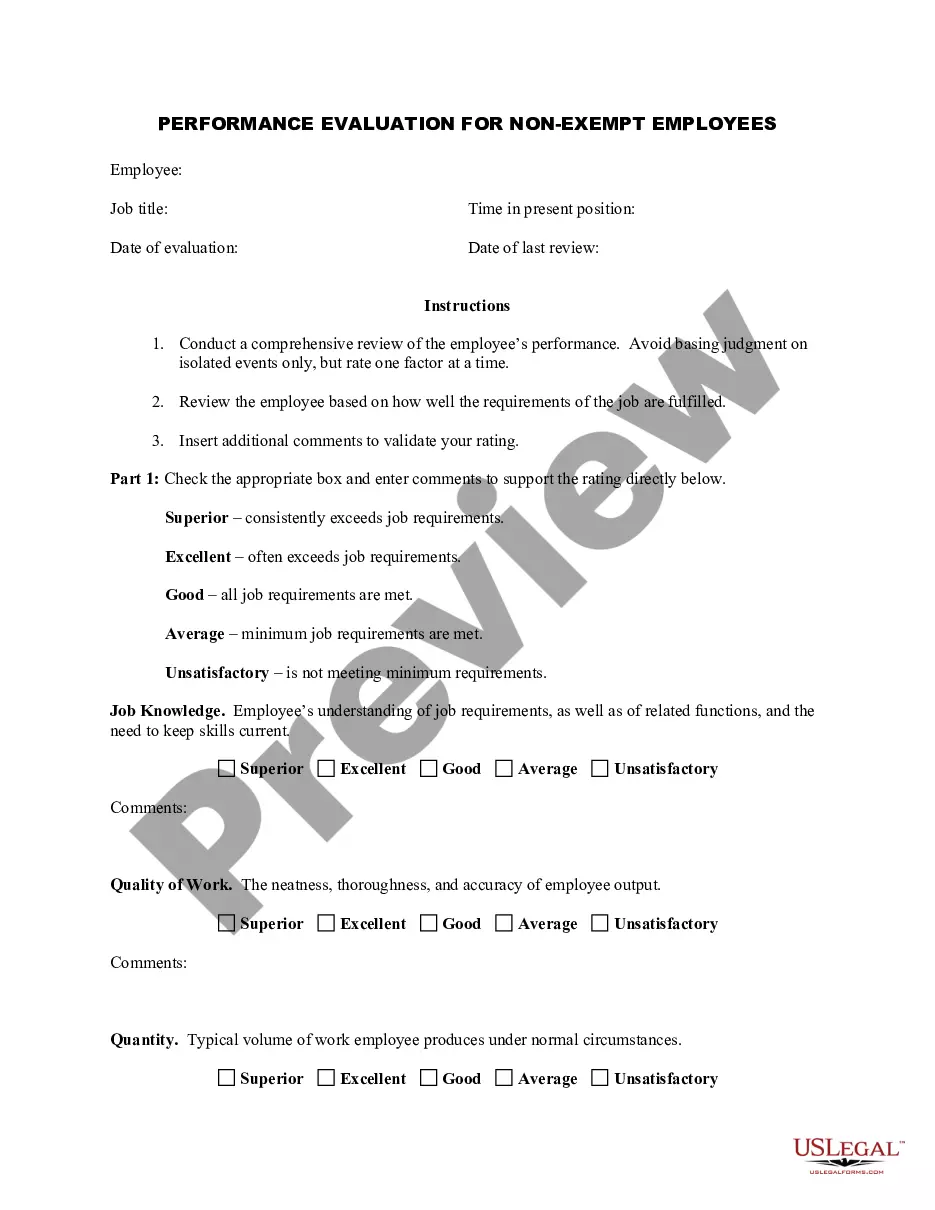
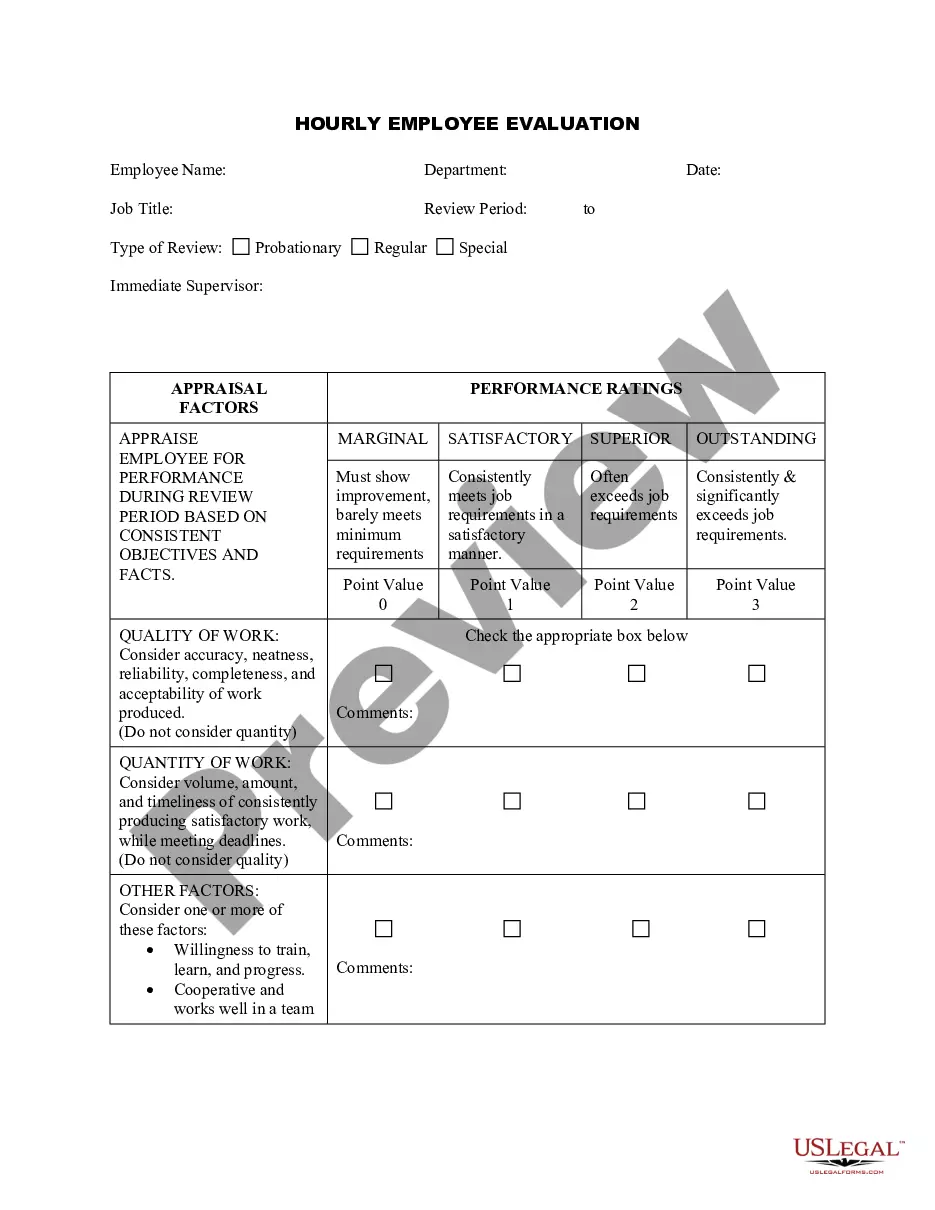
When conducting a performance review, it is important to provide specific feedback. Use year-end employee review samples for managers to guide your discussion. Focus on achievements, areas for improvement, and set clear expectations for the future. Remember, constructive feedback encourages growth and enhances team performance.
What to say in a performance review Talk about your achievements. ... Discuss ways to improve. ... Mention skills you've developed. ... Ask about company development. ... Provide feedback on tools and equipment. ... Ask questions about future expectations. ... Explain your experience in the workplace. ... Find out how you can help.
What Happens in A Year End Review? In a year end review, a manager evaluates whether employees have met their goals. The manager tells them whether they have measured up to (or surpassed) expectations. They discuss strengths and weaknesses and pinpoint areas for growth.
Brainstorm a list of the employee's successes and challenges. Don't just respond to what the employee wrote. Prioritize the list of accomplishments and challenges, including ones the employee included and ones they may not have.
When conducting a performance review, it's important to focus on the manager's behaviors and outcomes, rather than their personality traits. Avoid making generalizations or assumptions based on personality traits, and instead, provide specific examples of behavior and performance.