Fmla Rolling Calendar For Employees 2023
Description
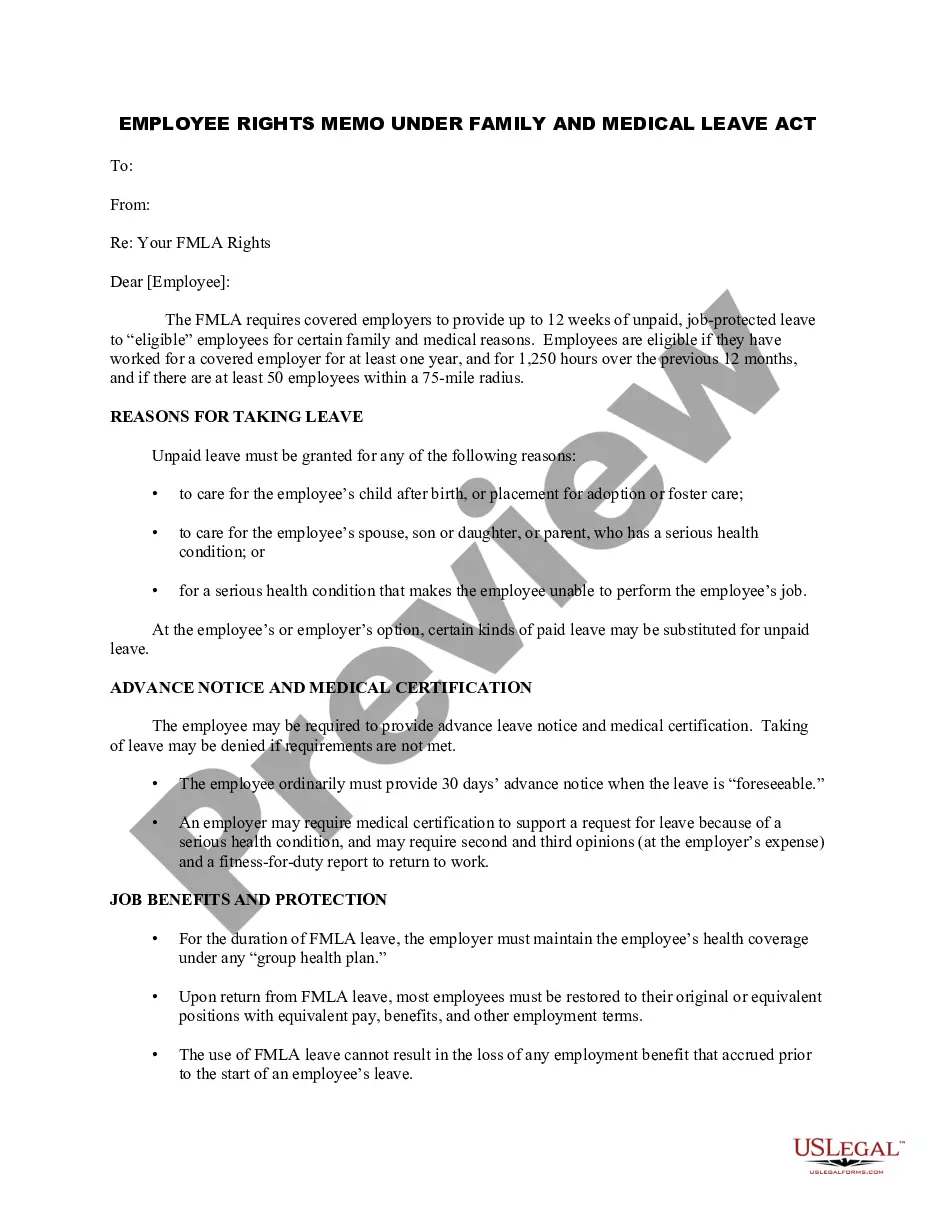
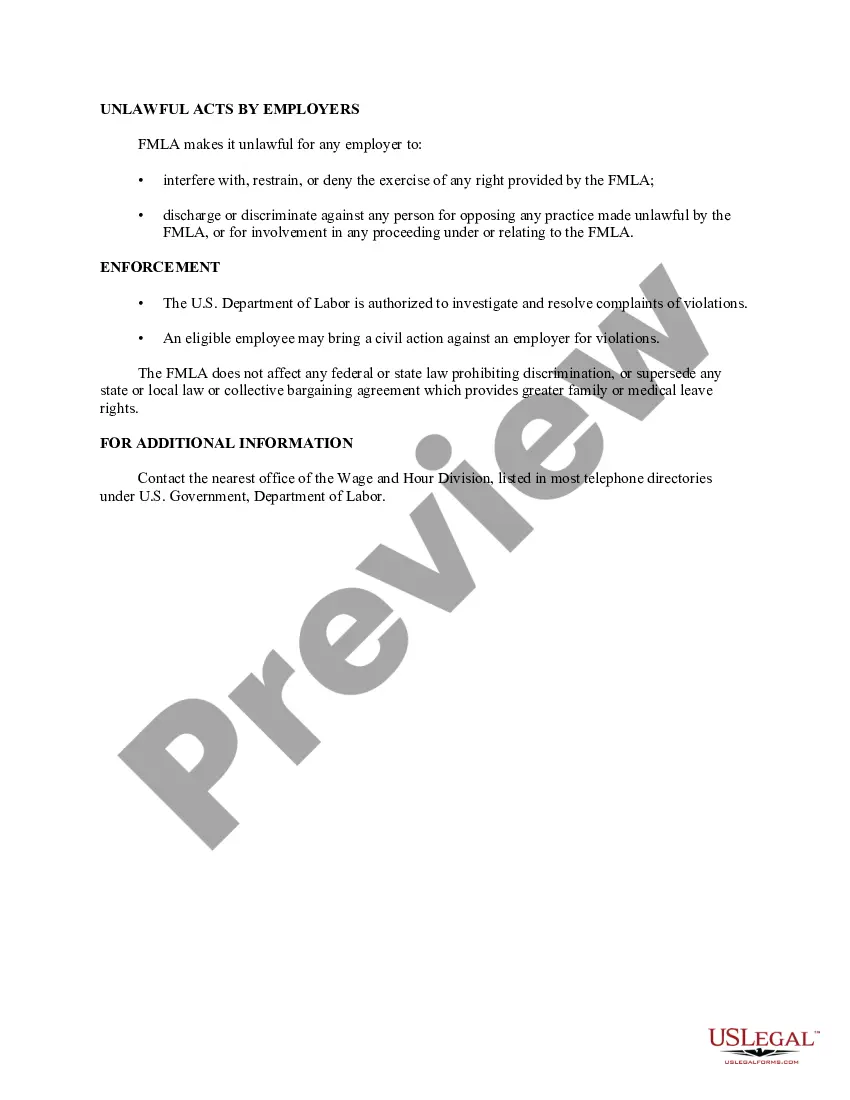
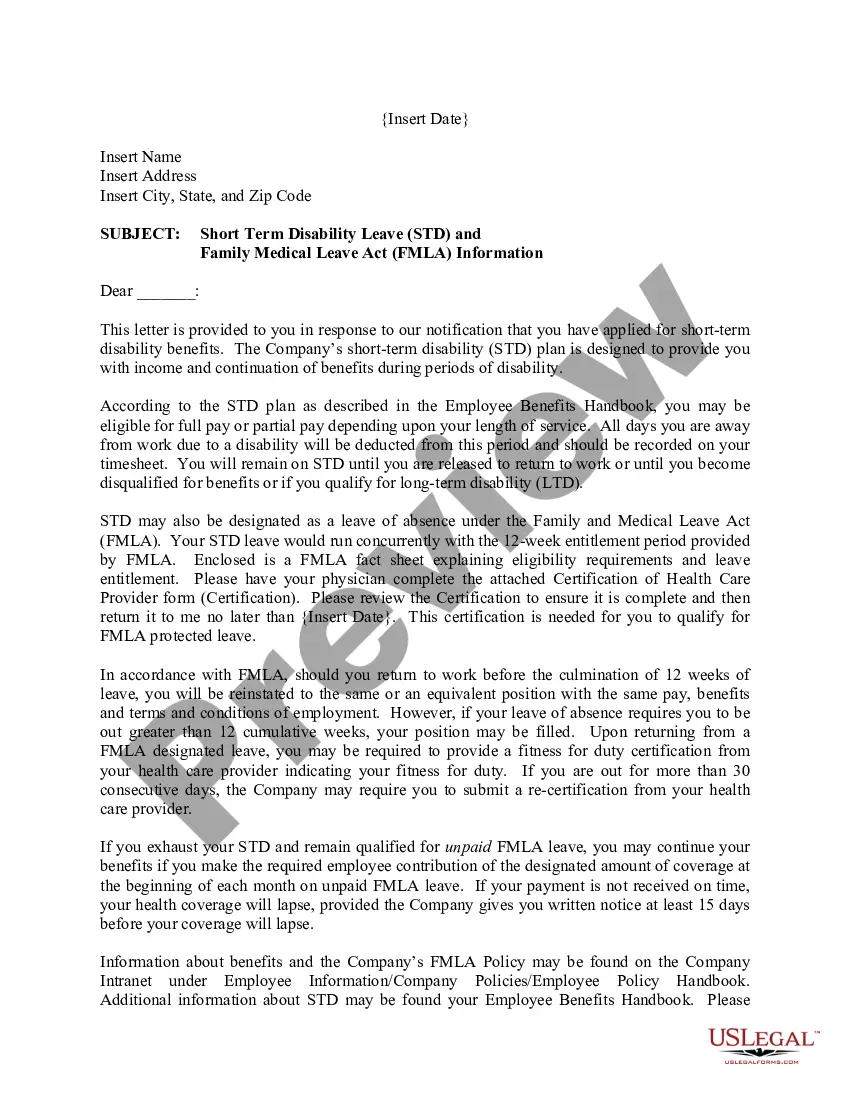
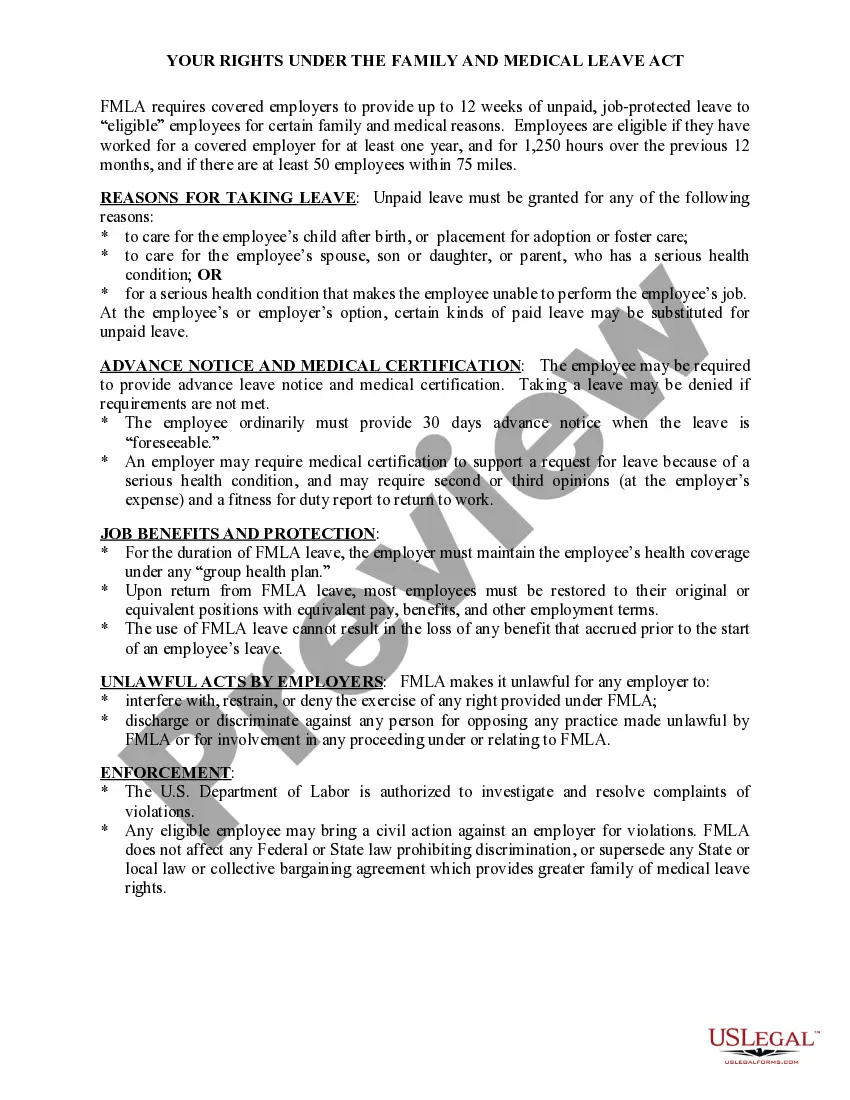
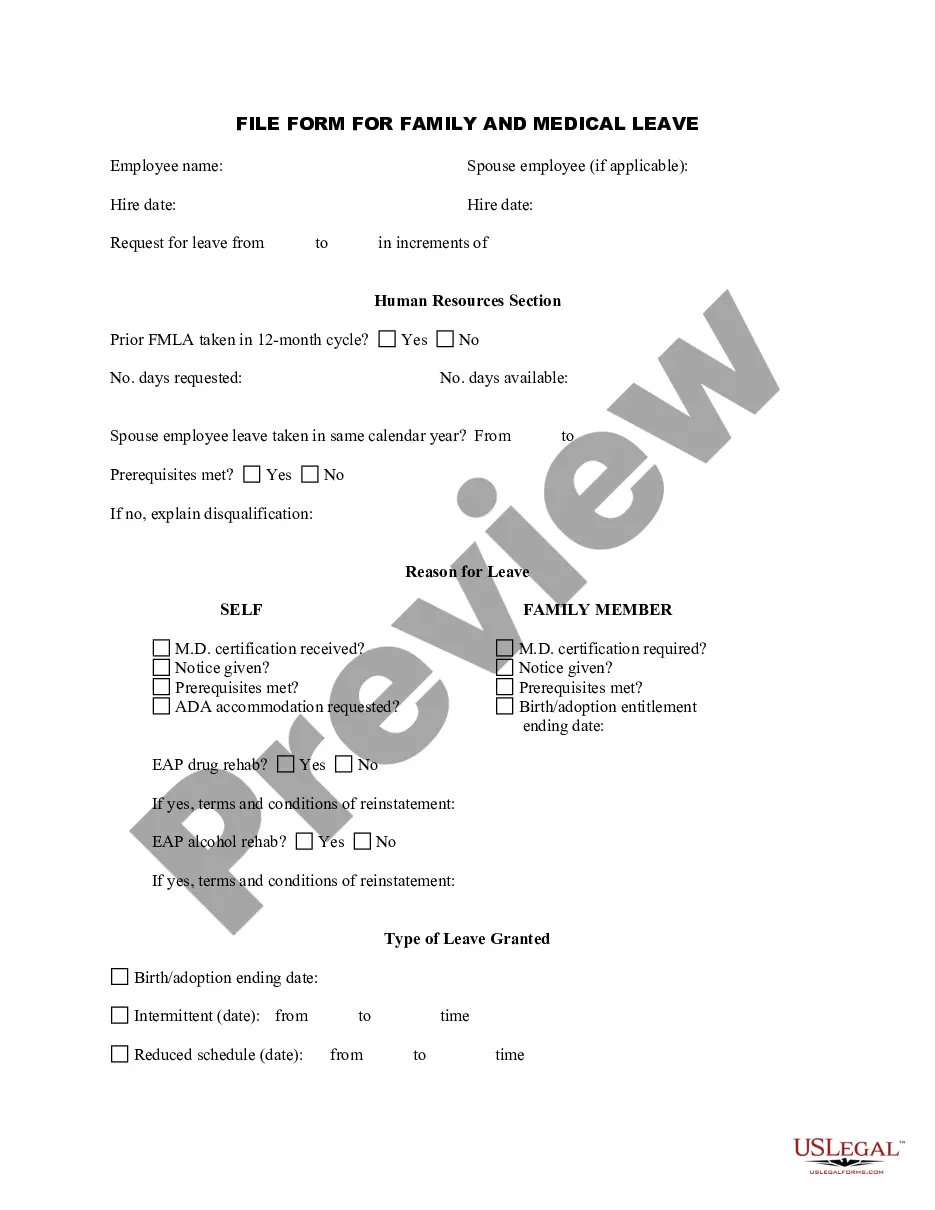
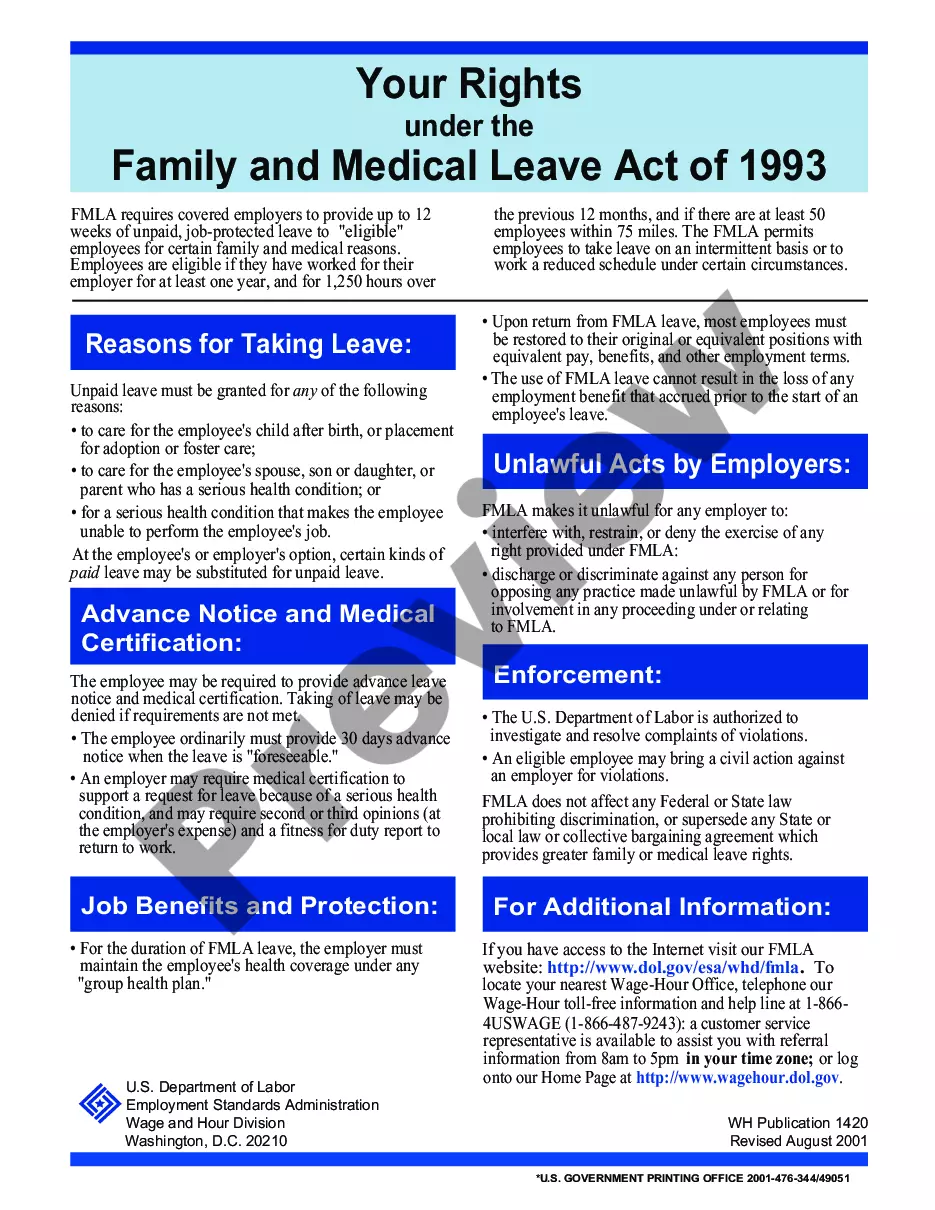


How to fill out Employee Rights Memo Under The Family And Medical Leave Act?
- Log in to your US Legal Forms account if you're a returning user. Ensure that your subscription is active; if not, renew it according to your payment plan.
- If you're a first-time user, start by browsing the form library. Use the Preview mode to confirm you have the right document that meets your needs and adheres to your local jurisdiction requirements.
- Conduct a search for alternative templates if necessary. If anything seems off or doesn't match, utilize the Search tab to find the right document.
- Proceed to purchase the document by clicking the 'Buy Now' button and selecting your preferred subscription plan. You’ll need to create an account for full access.
- Complete your payment by entering your credit card details or using your PayPal account. After payment, you’ll have access to the document.
- Finally, download the form to your device. You can also access it any time from the 'My Forms' section in your profile.
In conclusion, US Legal Forms stands out with its extensive collection, providing users with more forms than many competitors at similar costs. With over 85,000 customizable legal documents available, obtaining the necessary forms is quick and efficient.
Don’t hesitate to start your journey with US Legal Forms today and ensure your legal documents are correctly completed and compliant.
Form popularity
FAQ
The 50 75 rule states that if an employee takes more than 50% of their FMLA leave in a 12-month period, then their leave is subject to additional scrutiny. It is crucial for employees to be aware of this rule when planning their leave. Utilizing the Fmla rolling calendar for employees 2023 helps ensure you are compliant and avoid the risk of losing your leave benefits.
FMLA typically uses the calendar days method unless otherwise specified by your employer. This means that weekends and holidays count towards your leave. Familiarizing yourself with the details of the Fmla rolling calendar for employees 2023 can assist you in keeping track of your leave accurately.
FMLA leave can be tracked based on either work days or calendar days, depending on the employer's policy. Generally, most employers follow the calendar days method. Understanding how your employer tracks leave under the Fmla rolling calendar for employees 2023 can help you plan your time off more effectively.
The 3-day rule applies to employees who take intermittent or continuous leave under FMLA. If a leave event lasts more than three consecutive workdays, it usually requires a medical certification. Knowing about the 3-day rule is beneficial when managing your Fmla rolling calendar for employees 2023, as it ensures you remain in compliance and avoid any potential disruptions.
To calculate FMLA days, track the total leave used within the past 12 months. Add up any sick days, vacation days, or unpaid leave that falls under FMLA regulations. Utilization of the Fmla rolling calendar for employees 2023 allows you to have a clearer perspective on your remaining leave, and helps in planning future absences.
For FMLA, a rolling calendar year counts the 12 months backwards from the date an employee applies for leave. This means that any FMLA leave taken in the previous 12 months factors into your available leave. By understanding the Fmla rolling calendar for employees 2023, you can better plan your time off and stay compliant with regulations.
No, the FMLA does not reset at the start of a calendar year. Instead, it operates based on your individual usage of leave under the rolling calendar option. When using the Fmla rolling calendar for employees 2023, the reset happens only after you complete a full 12 months since your last leave, providing flexibility in your leave management.
A rolling calendar year measures time from the first day an employee takes Family and Medical Leave Act (FMLA) leave. This approach allows employees to track their leave on a continuous basis. It means that each employee's FMLA leave entitlement resets every year from the last day they used their leave. Thus, with the Fmla rolling calendar for employees 2023, you can easily manage your days off while ensuring compliance.
FMLA does not reset every calendar year. Instead, FMLA entitlements are based on a rolling 12-month period, which remains in effect regardless of the calendar year. This is where using a FMLA rolling calendar for employees 2023 becomes essential, as it helps employees manage their leave more effectively, ensuring they do not miss out on any rights or entitlements.
To calculate the rolling 12 months for FMLA, start by determining the effective date of the leave and count back 12 months from that date. This method considers all FMLA leave taken within that time frame. Using the FMLA rolling calendar for employees 2023 can simplify this process, ensuring accurate tracking of your leave usage and entitlements.