Family Leave
Description
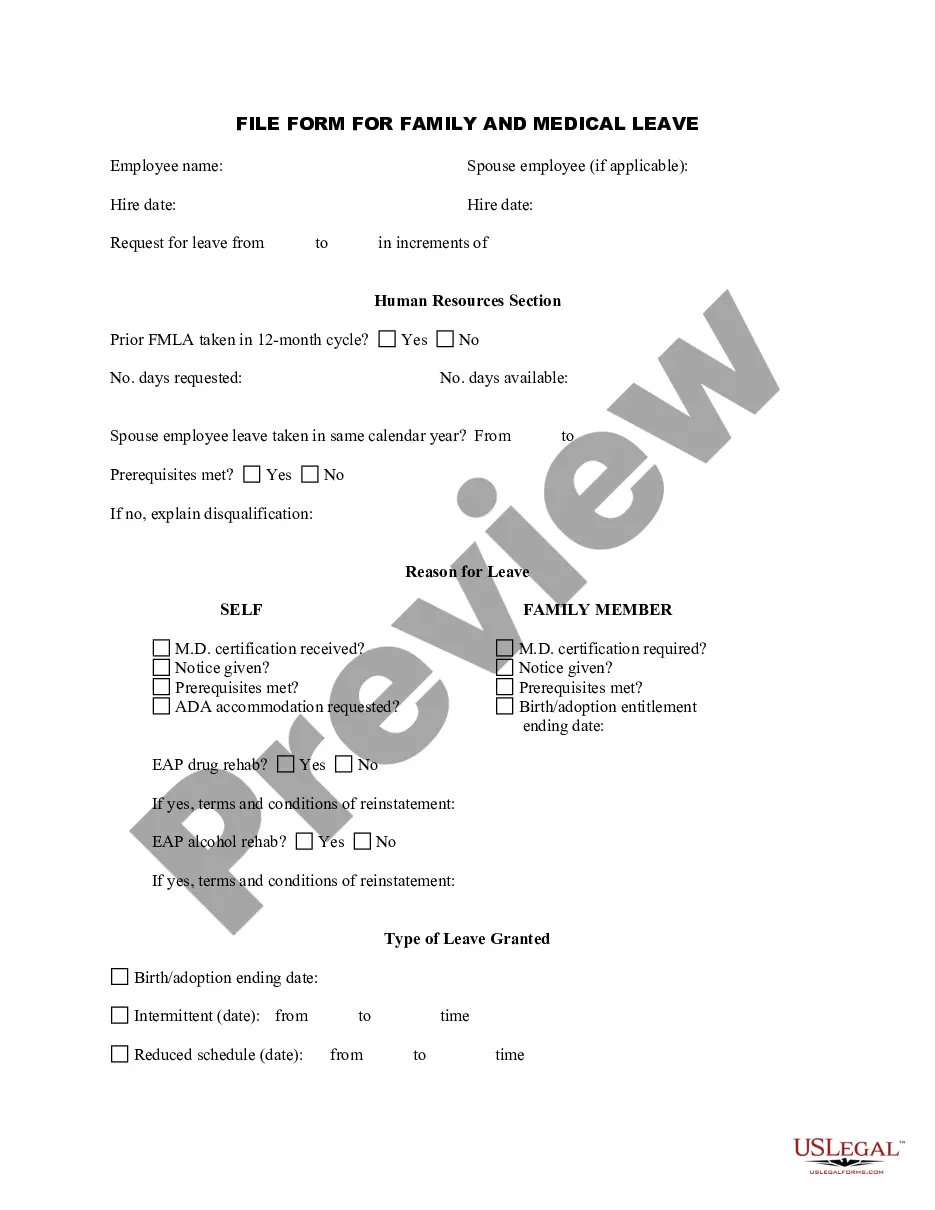
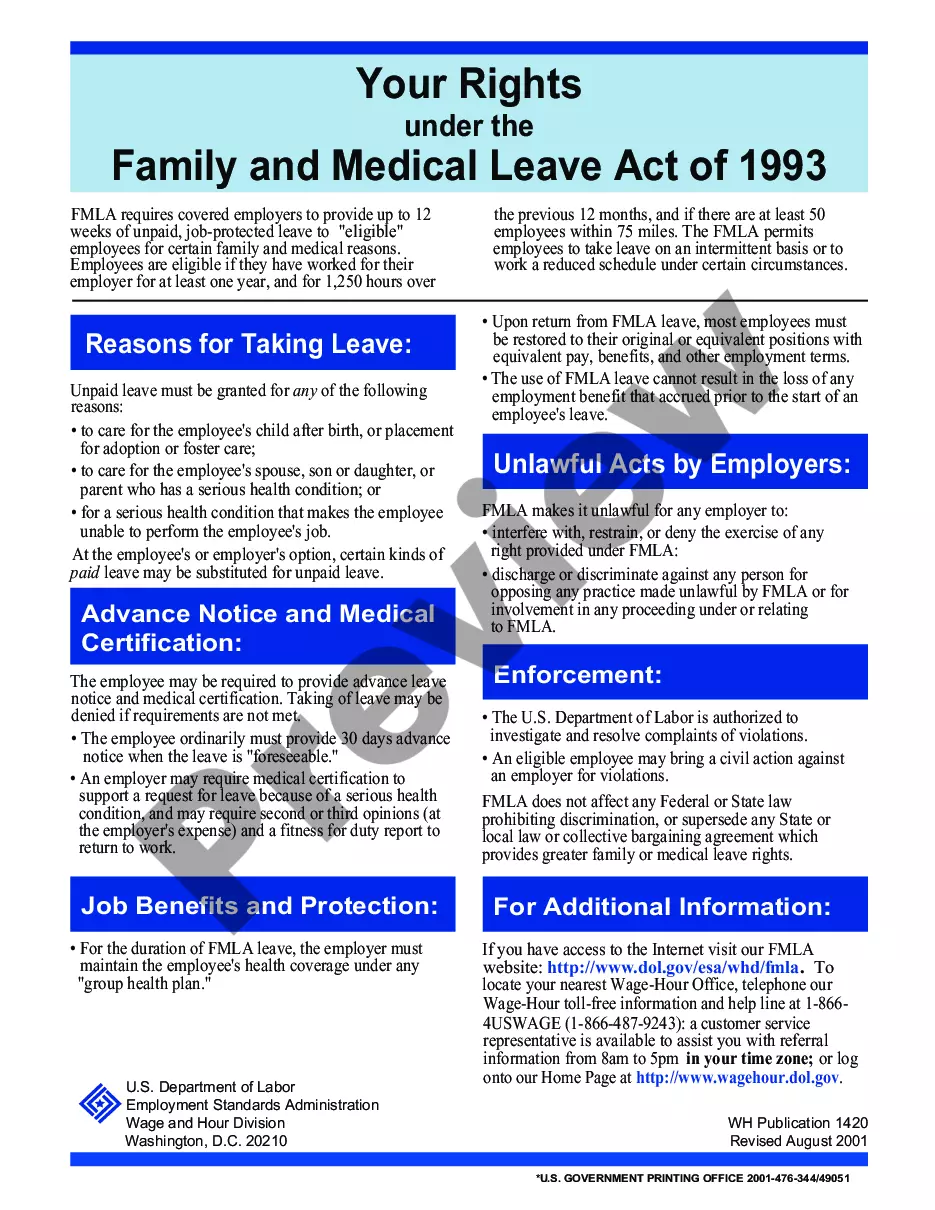
Get your form ready online
Our built-in tools help you complete, sign, share, and store your documents in one place.
Make edits, fill in missing information, and update formatting in US Legal Forms—just like you would in MS Word.
Download a copy, print it, send it by email, or mail it via USPS—whatever works best for your next step.
Sign and collect signatures with our SignNow integration. Send to multiple recipients, set reminders, and more. Go Premium to unlock E-Sign.
If this form requires notarization, complete it online through a secure video call—no need to meet a notary in person or wait for an appointment.
We protect your documents and personal data by following strict security and privacy standards.

Make edits, fill in missing information, and update formatting in US Legal Forms—just like you would in MS Word.

Download a copy, print it, send it by email, or mail it via USPS—whatever works best for your next step.

Sign and collect signatures with our SignNow integration. Send to multiple recipients, set reminders, and more. Go Premium to unlock E-Sign.

If this form requires notarization, complete it online through a secure video call—no need to meet a notary in person or wait for an appointment.

We protect your documents and personal data by following strict security and privacy standards.
Looking for another form?





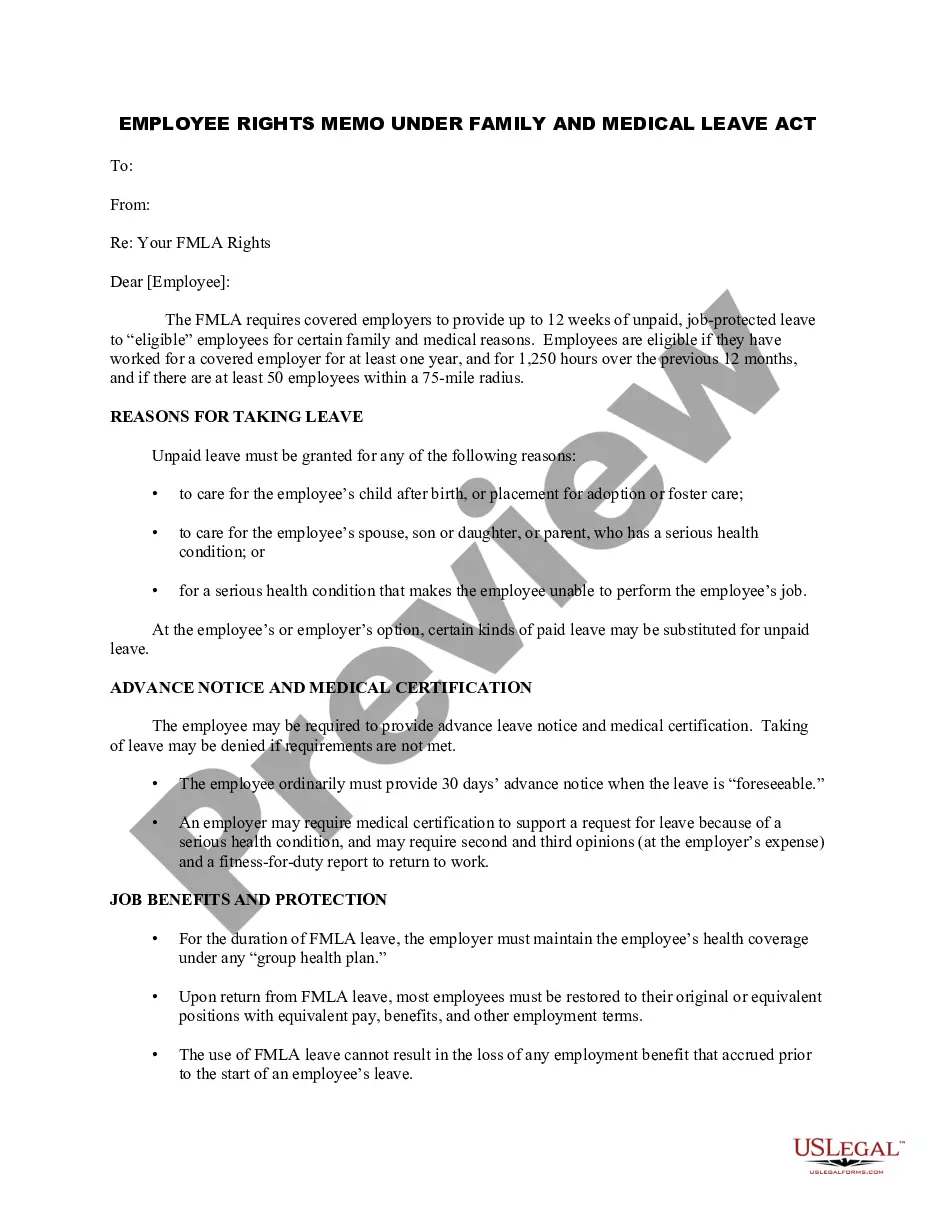
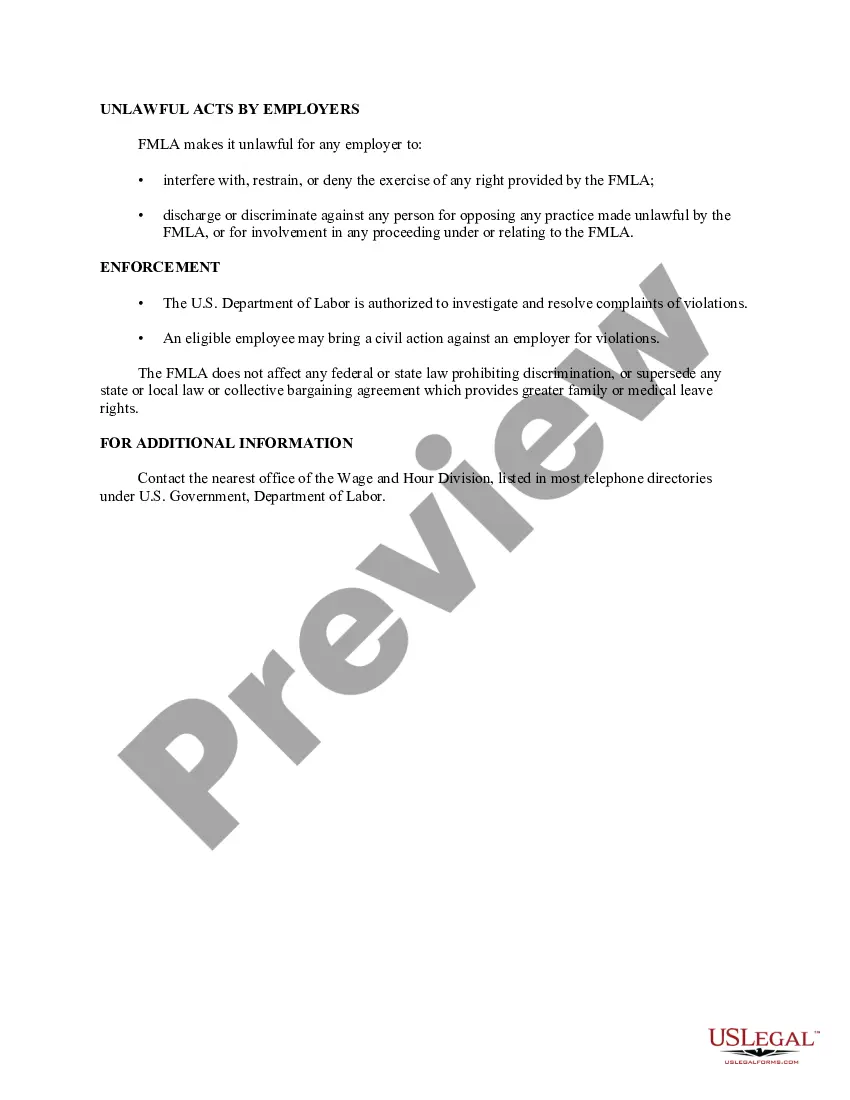
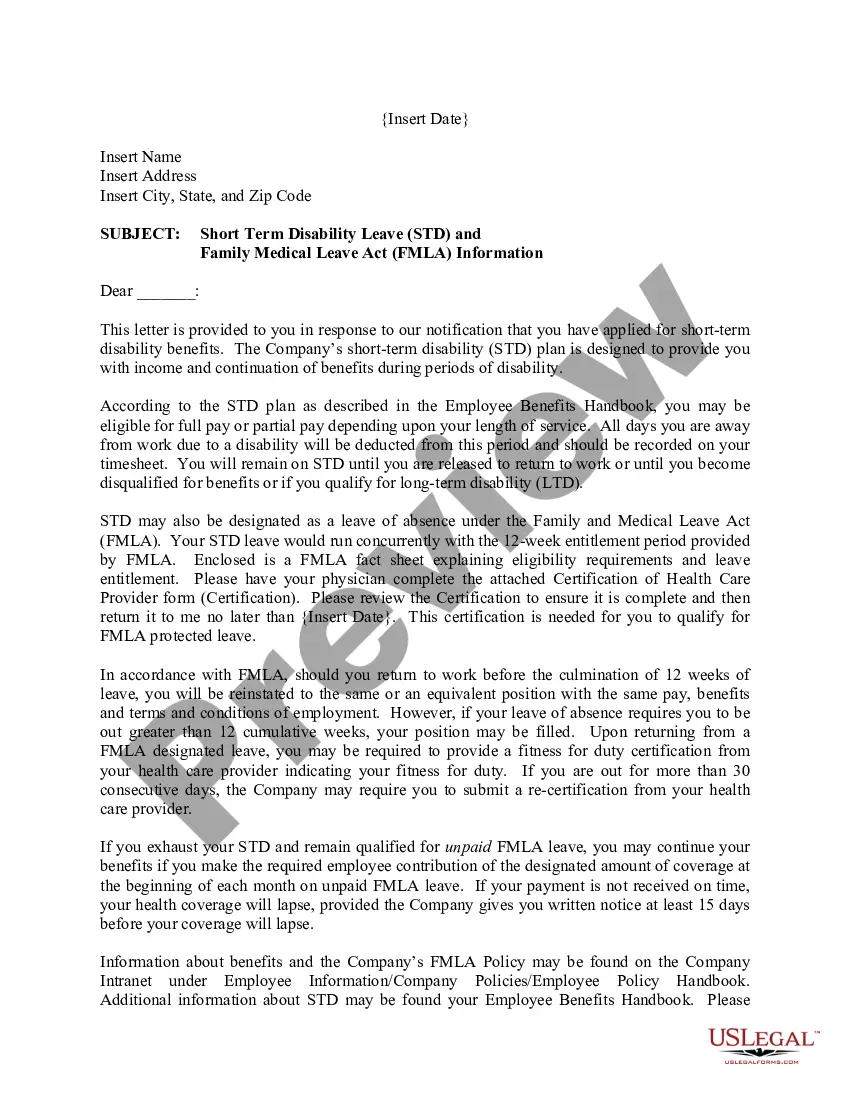
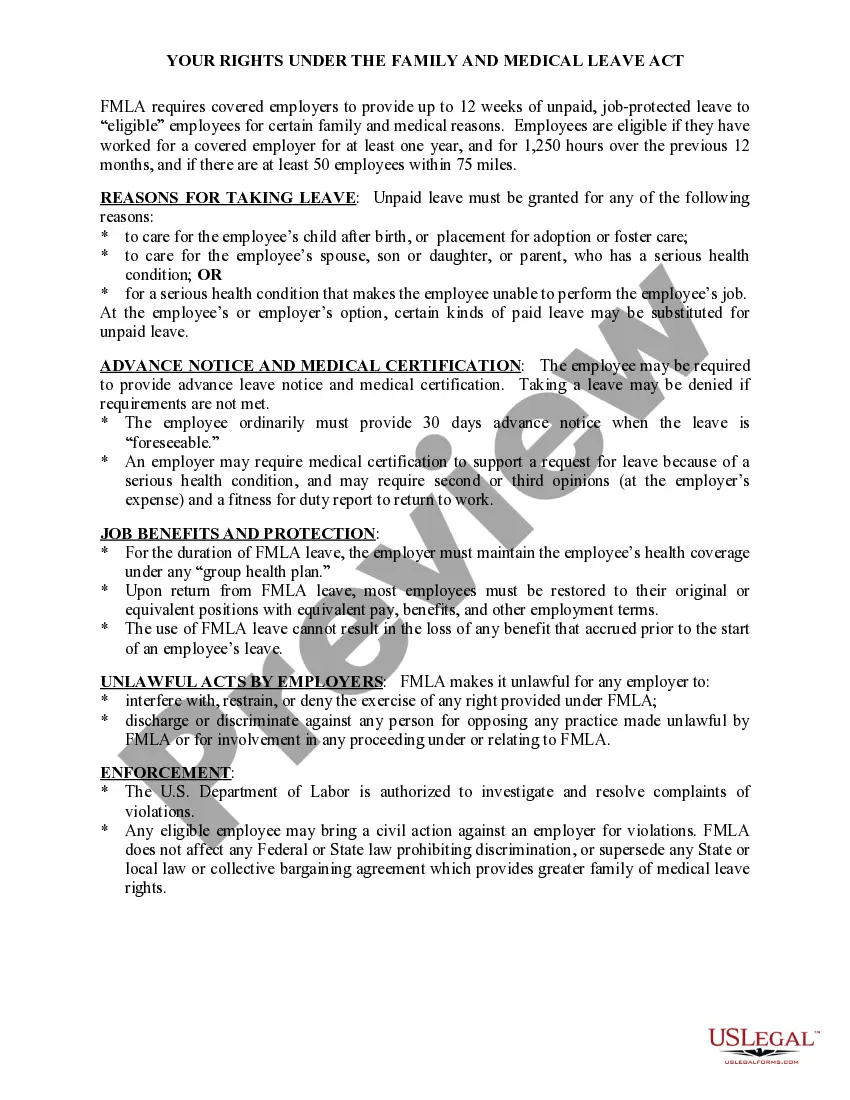
How to fill out Employee Rights Memo Under The Family And Medical Leave Act?
- If you are a returning user, log in to your account and ensure your subscription is active to download the needed family leave template.
- For first-time users, browse the available forms; utilize the Preview mode to familiarize yourself with the options and select one that aligns with your jurisdiction’s requirements.
- If the current selection isn't suitable, utilize the Search tab to locate alternative templates that meet your needs.
- Select the form you need and click the Buy Now button to choose your preferred subscription plan; you'll need to create an account to access the full library.
- Finalize your purchase by entering your payment details using a credit card or PayPal.
- Download your selected form and save it onto your device; you can always find it later in the My Forms section of your profile.
With US Legal Forms, you gain access to an extensive library of over 85,000 legal forms that are easy to fill out and edit, ensuring you have what you need to execute your legal documents confidently.
Don't hesitate to leverage this powerful resource; start your journey towards obtaining the necessary family leave documentation today!
Form popularity
FAQ
In New Jersey, the Family Leave Act allows eligible employees to take time off for certain family-related reasons. Employees may take up to 12 weeks of unpaid leave during a 24-month period. This includes caring for a newborn, newly adopted child, or a family member with a serious health condition. If you need assistance navigating these rules, consider using the US Legal Forms platform to access proper documentation and support.
Notifying your employer about your need for Family Leave is straightforward. Start by reviewing your company's policy regarding Family Leave. Then, inform your supervisor or HR department in writing. Include the reason for your leave, the expected duration, and any supporting documentation as needed. This proactive communication helps maintain a good relationship with your employer.
To improve the chances of getting your Family Leave under FMLA approved, clearly communicate your situation to your employer. Provide necessary details about your medical condition or caregiving responsibilities. You can also submit a completed medical certification form from your healthcare provider. Make sure to follow up to ensure that your request is being processed.
When you receive benefits under the Family Leave program, those payments can be considered taxable income. You must report these benefits on your tax return. The EDD typically issues a 1099-G form, which outlines your total benefits received. It's best to consult a tax professional for personalized advice regarding your specific situation.
FMLA has several key rules that both employees and employers must follow. Employees are entitled to take up to 12 weeks of unpaid leave within a 12-month period for specified reasons. Employers cannot retaliate against employees taking family leave, and job protection is a significant aspect of this law. For comprehensive guidance on FMLA regulations, the information available through US Legal Forms can be invaluable.
Filling out the FMLA form requires specific information to ensure proper documentation of your family leave request. You need to provide details such as your personal information, the reason for leave, and the anticipated duration of your absence. It’s essential to consult your employer's HR department for any additional requirements. US Legal Forms can guide you in completing the form accurately to avoid any delays.
Family leave under FMLA can be taken for various serious health conditions. This includes caring for a newborn, adopting a child, or tending to a seriously ill family member. Additionally, FMLA can also cover situations where an employee is unable to work due to their own serious health condition. If you're unsure of your rights under FMLA, you may find useful templates and guidelines on US Legal Forms.
The statute governing family leave in New Jersey is the New Jersey Family Leave Act. This law enables employees to take up to 12 weeks of unpaid leave to care for a newborn, adopted child, or a seriously ill family member. The law is aimed at providing workers with the necessary time to balance their family and work life without the fear of losing their job. For detailed legal insights, consider exploring resources from US Legal Forms.
In New Jersey, employees can take family leave after working for their employer for at least 12 months. They must also meet minimum hours worked criteria, which is typically 1,000 hours within the past year. It's important to know that New Jersey's Family Leave Act offers additional protections beyond federal standards. US Legal Forms can assist you in navigating these requirements effectively.
Not everyone qualifies for family leave under the Family and Medical Leave Act (FMLA). Employees who work for companies with fewer than 50 employees within a 75-mile radius do not qualify. Additionally, employees who have not worked at least 1,250 hours over the past 12 months are also ineligible. Understanding your rights is essential, and resources like US Legal Forms can provide helpful information.