Harassment For Dowry
Description
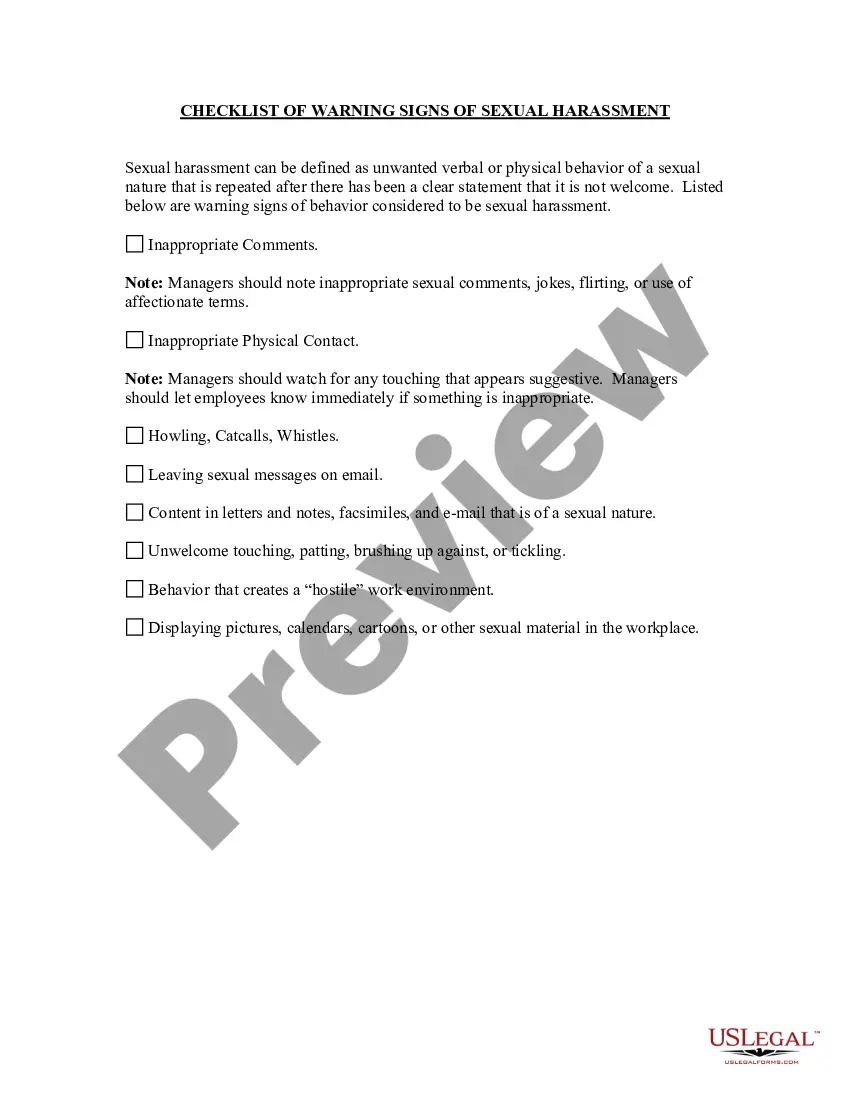
Get your form ready online
Our built-in tools help you complete, sign, share, and store your documents in one place.
Make edits, fill in missing information, and update formatting in US Legal Forms—just like you would in MS Word.
Download a copy, print it, send it by email, or mail it via USPS—whatever works best for your next step.
Sign and collect signatures with our SignNow integration. Send to multiple recipients, set reminders, and more. Go Premium to unlock E-Sign.
If this form requires notarization, complete it online through a secure video call—no need to meet a notary in person or wait for an appointment.
We protect your documents and personal data by following strict security and privacy standards.

Make edits, fill in missing information, and update formatting in US Legal Forms—just like you would in MS Word.

Download a copy, print it, send it by email, or mail it via USPS—whatever works best for your next step.

Sign and collect signatures with our SignNow integration. Send to multiple recipients, set reminders, and more. Go Premium to unlock E-Sign.

If this form requires notarization, complete it online through a secure video call—no need to meet a notary in person or wait for an appointment.

We protect your documents and personal data by following strict security and privacy standards.
Looking for another form?




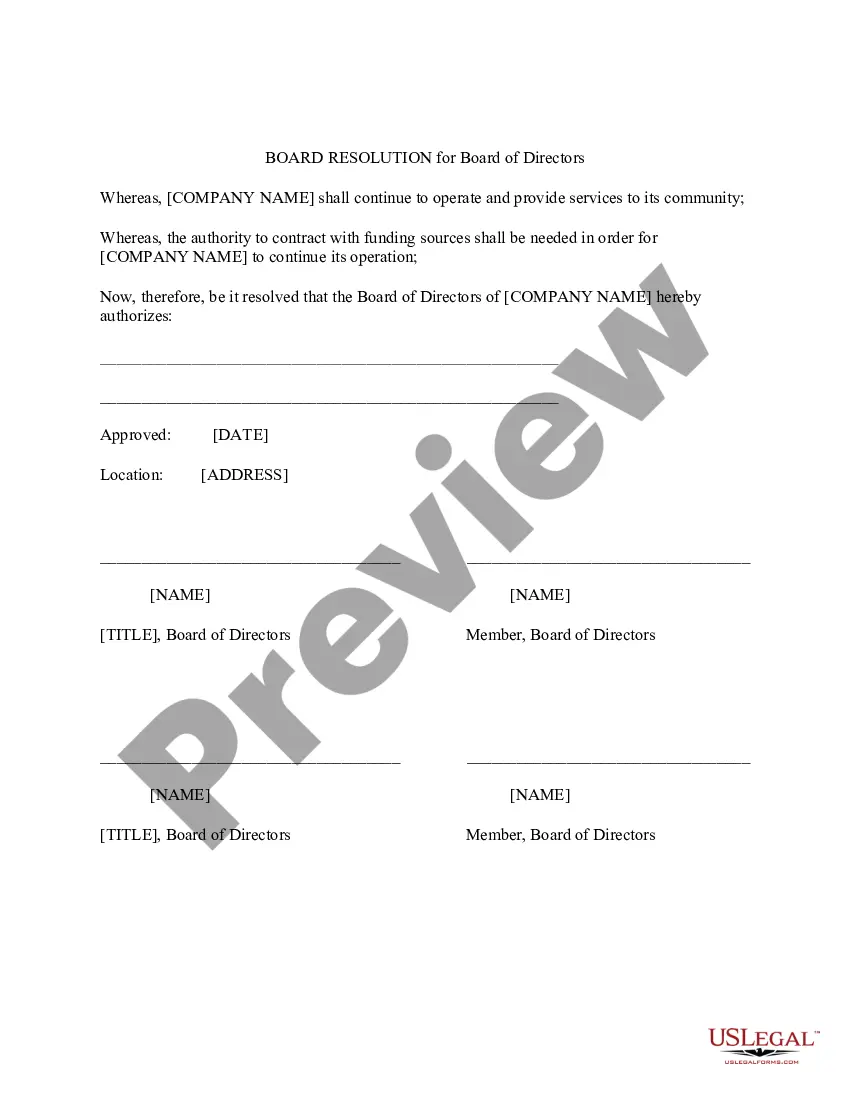

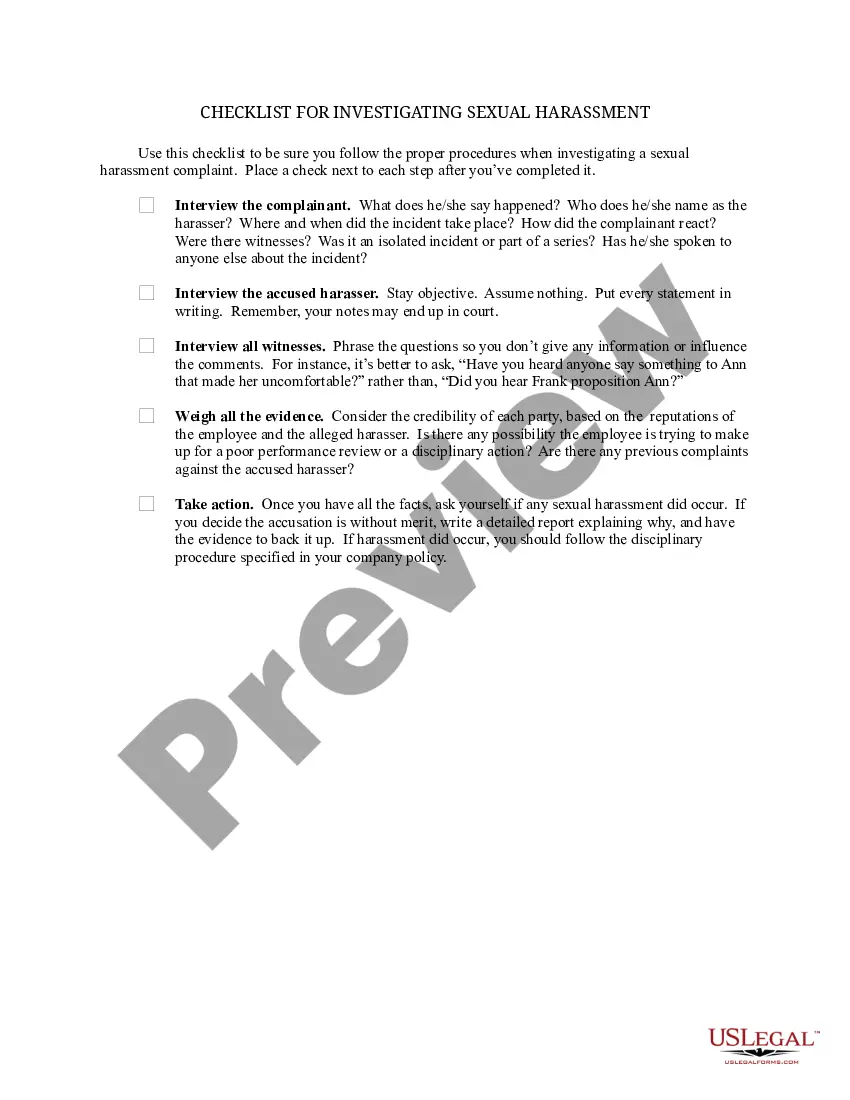
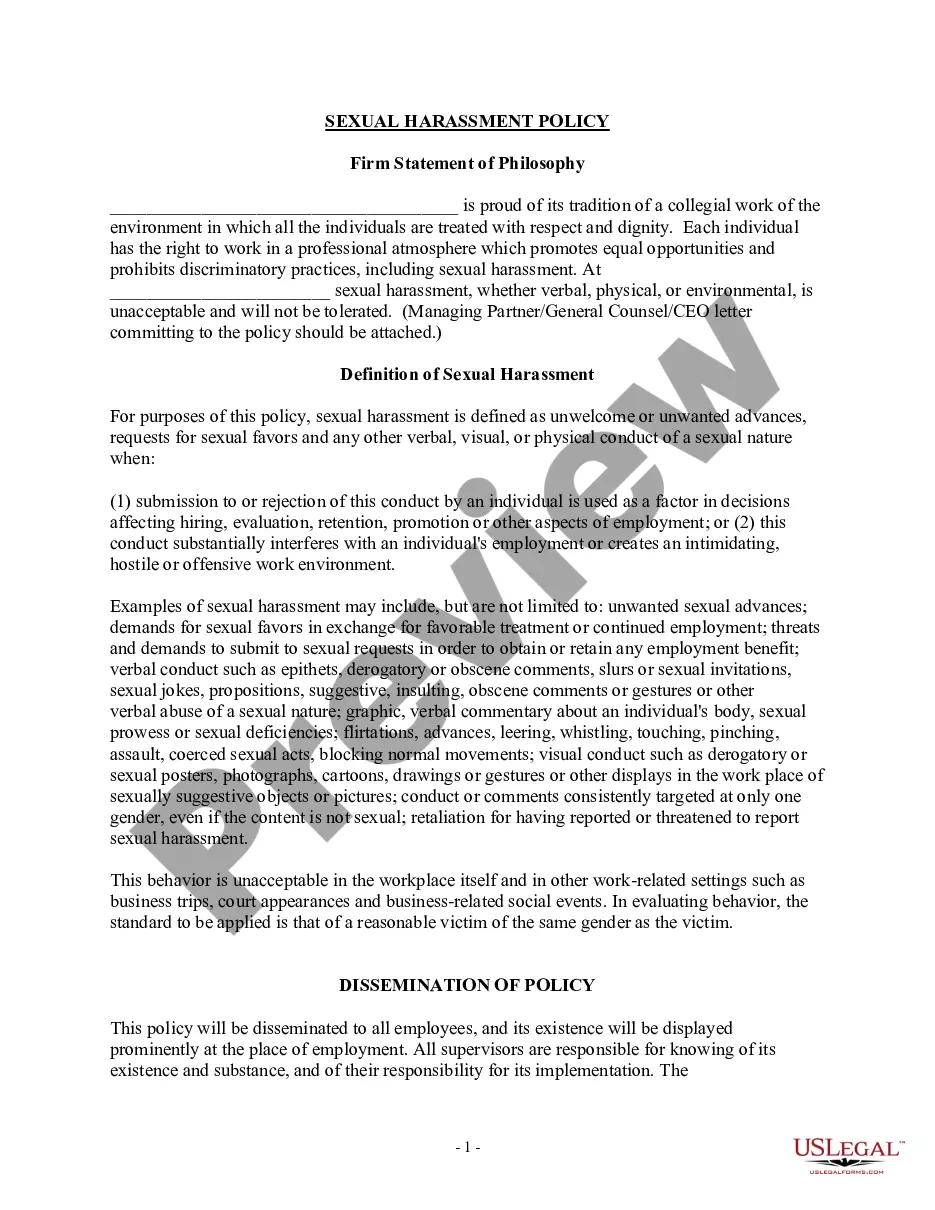
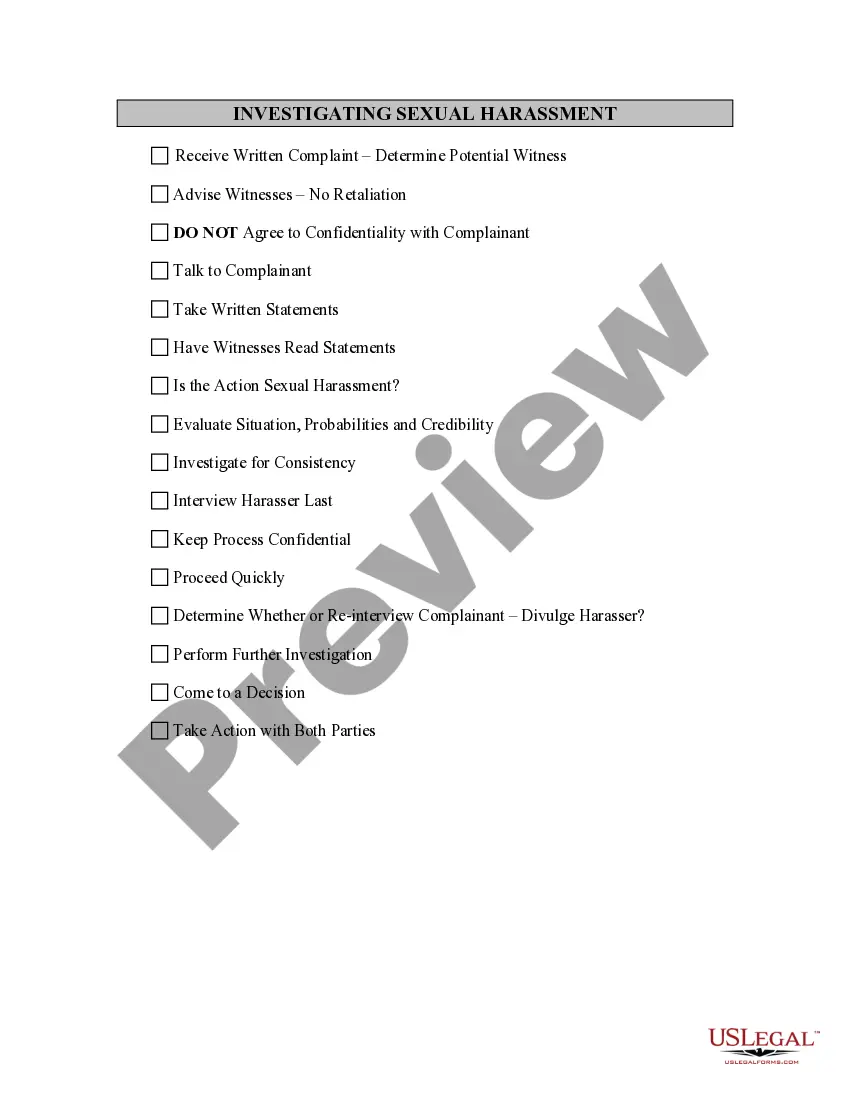
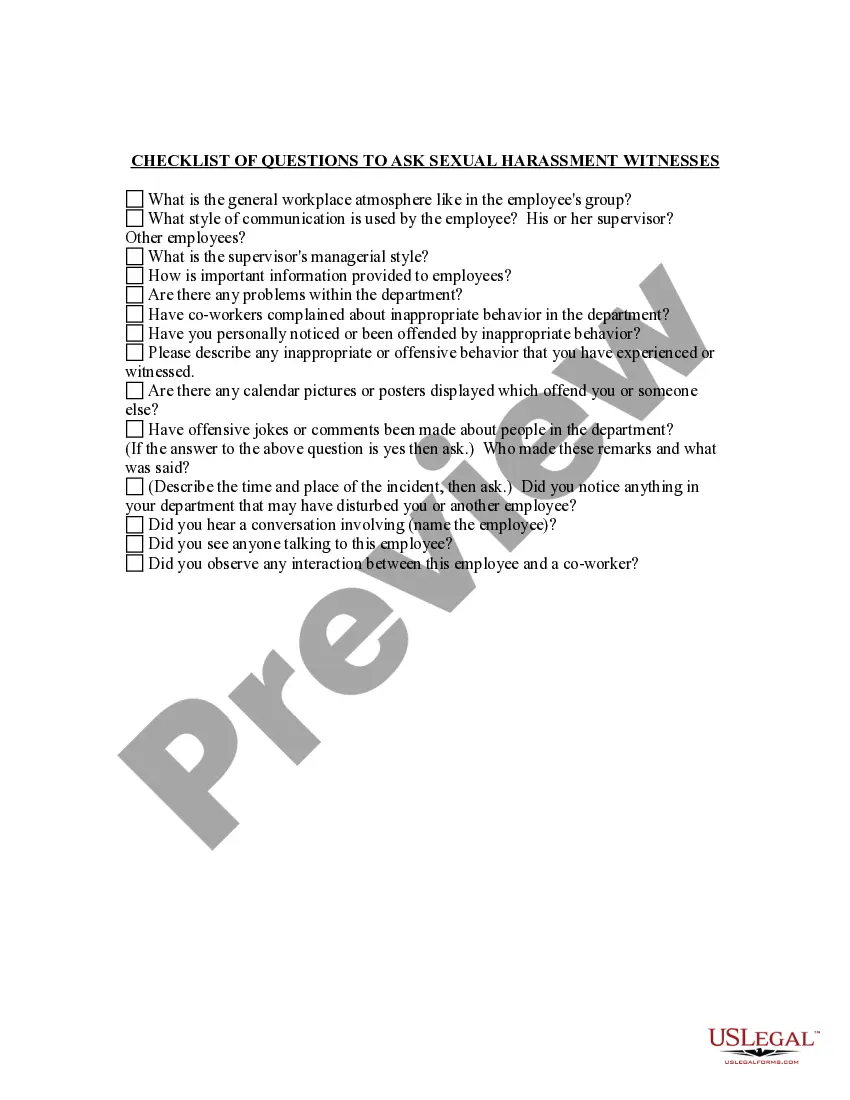
How to fill out Checklist For Investigation Sexual Harassment - Workplace?
- If you are an existing user, log in to your account and ensure your subscription is current. If it needs renewal, follow the payment instructions provided.
- If you're a new user, start by reviewing the Preview mode and form descriptions to confirm you select the appropriate document that meets your jurisdiction's requirements.
- If necessary, utilize the search feature to find an alternative form that suits your needs.
- Proceed to purchase the document by clicking the Buy Now button and choosing your preferred subscription plan. You will need to create an account to access the form library.
- Complete your purchase by entering your payment details, whether through credit card or PayPal.
- Download your chosen form and save it to your device. You can access it later from the My Forms section of your profile.
In conclusion, US Legal Forms is committed to empowering you with a robust collection of over 85,000 legal documents, ensuring you can manage harassment for dowry cases with ease. Our platform also provides access to premium experts who can assist with form completion.
Don’t wait; start your journey toward legal clarity and protection today with US Legal Forms!
Form popularity
FAQ
Absolutely, asking for dowry is illegal in India. The Dowry Prohibition Act prohibits any form of dowry demand and protects individuals from harassment for dowry. This law aims to eliminate the societal pressures surrounding marriage financial transactions. Seek assistance from platforms like uslegalforms to understand your rights better and navigate any legal challenges effectively.
Yes, giving dowry is considered a crime in India under the Dowry Prohibition Act. The law views the act of giving dowry as a significant factor contributing to harassment for dowry, leading to troubling situations. Victims of such circumstances can seek justice through legal channels. It’s essential to respect this law to promote equality and dignity.
Paying and accepting dowry is illegal in India, as stated in the Dowry Prohibition Act. Both parties involved in a dowry transaction can face legal repercussions. This legislation helps combat harassment for dowry, promoting a safer environment for marriages. It is vital to be aware of these laws to avoid violations.
Yes, it is illegal to ask for dowry in India. The Dowry Prohibition Act criminalizes any request for dowry before or after the marriage. This law aims to protect individuals from the harassment for dowry. Engaging in such behavior can lead to severe legal consequences.
Section 4 of the Dowry Prohibition Act, 1961 specifies that any demand for dowry during the marriage process is illegal. It categorically states that giving or receiving dowry is unlawful. This law supports the efforts to combat harassment for dowry. Consequently, individuals can report violations for necessary legal action.
Harassment for dowry is a serious offense in India, governed by various laws. Those found guilty can face imprisonment, fines, or both. The duration of imprisonment can range from six months to seven years, depending on the severity of the case. It is crucial to seek legal advice if you or someone you know is facing such circumstances.
The minimum punishment for a dowry case typically includes imprisonment for at least six months and possible fines. This reflects the legal system's intent to discourage harassment for dowry. Victims must understand these penalties to feel empowered in seeking justice. Seeking support from organizations or platforms like uslegalforms can provide guidance throughout the legal process.
In the United States, there is no specific dowry law as seen in some other countries. However, harassment for dowry can be addressed through existing domestic violence and harassment laws. Victims have options such as seeking protective orders and reporting incidents to law enforcement. Understanding your rights is vital to combating this issue effectively.
Dowry harassment in India involves mistreatment of a woman by her husband or his family in connection with her dowry. This can take many forms, including emotional, physical, or financial abuse. The law views harassment for dowry as a serious crime that can lead to severe legal repercussions. Understanding this issue is crucial for raising awareness and empowering victims.
The maximum sentence for dowry harassment can extend up to seven years in prison. This harsh penalty emphasizes the legal system's stance against harassment for dowry. These laws aim to protect individuals from coercion and unjust demands. Being aware of such maximum sentences can empower victims to seek justice.