Harassment At Workplace
Description
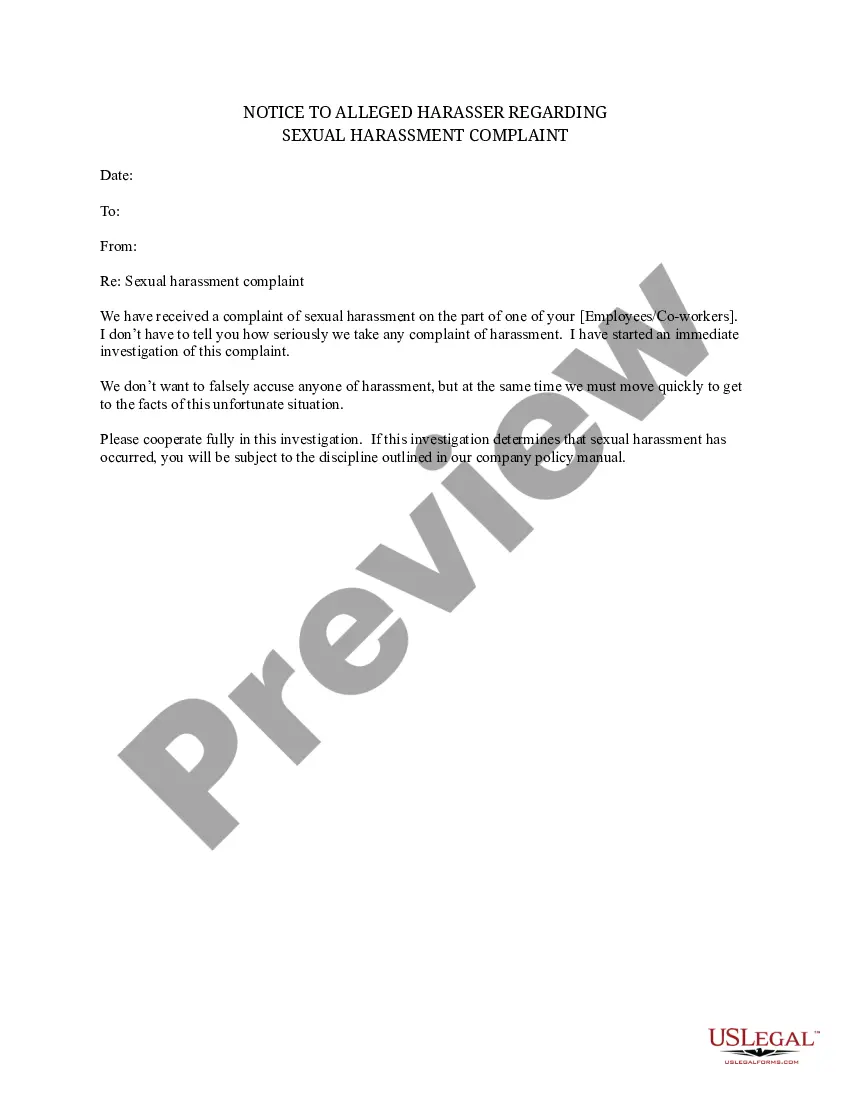
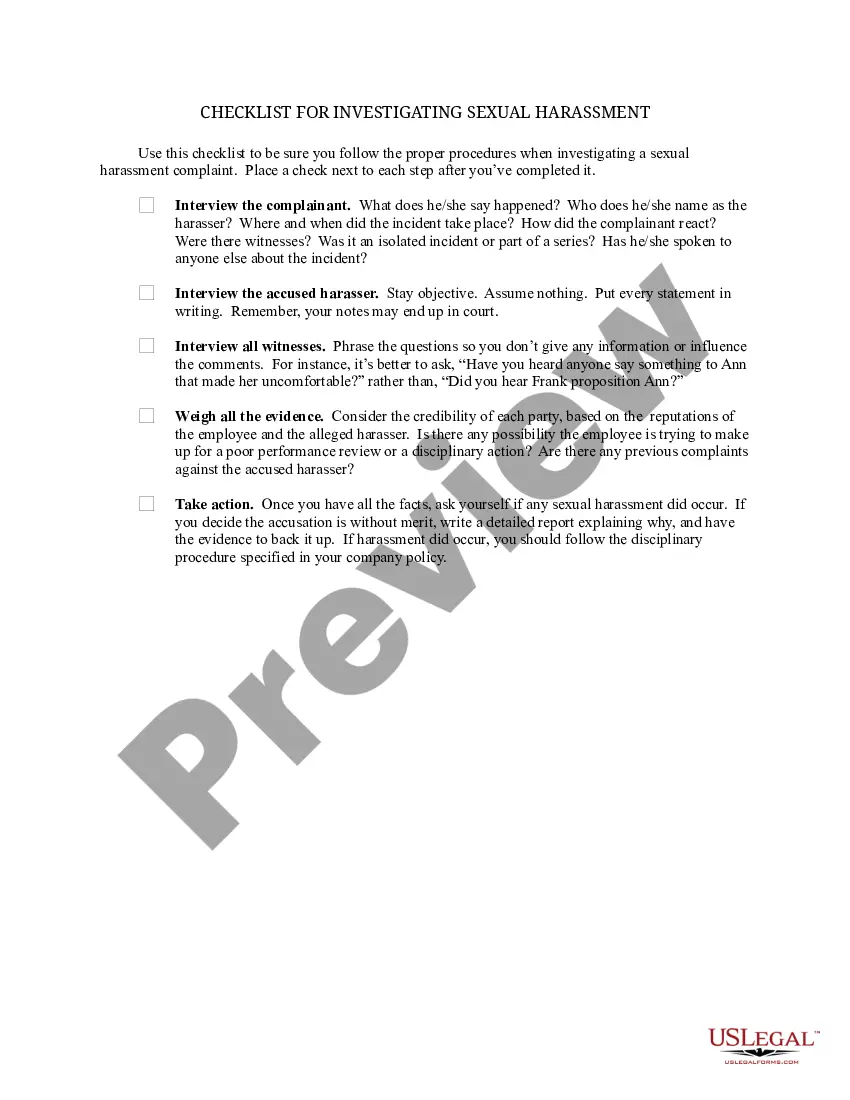
Get your form ready online
Our built-in tools help you complete, sign, share, and store your documents in one place.
Make edits, fill in missing information, and update formatting in US Legal Forms—just like you would in MS Word.
Download a copy, print it, send it by email, or mail it via USPS—whatever works best for your next step.
Sign and collect signatures with our SignNow integration. Send to multiple recipients, set reminders, and more. Go Premium to unlock E-Sign.
If this form requires notarization, complete it online through a secure video call—no need to meet a notary in person or wait for an appointment.
We protect your documents and personal data by following strict security and privacy standards.

Make edits, fill in missing information, and update formatting in US Legal Forms—just like you would in MS Word.

Download a copy, print it, send it by email, or mail it via USPS—whatever works best for your next step.

Sign and collect signatures with our SignNow integration. Send to multiple recipients, set reminders, and more. Go Premium to unlock E-Sign.

If this form requires notarization, complete it online through a secure video call—no need to meet a notary in person or wait for an appointment.

We protect your documents and personal data by following strict security and privacy standards.
Looking for another form?
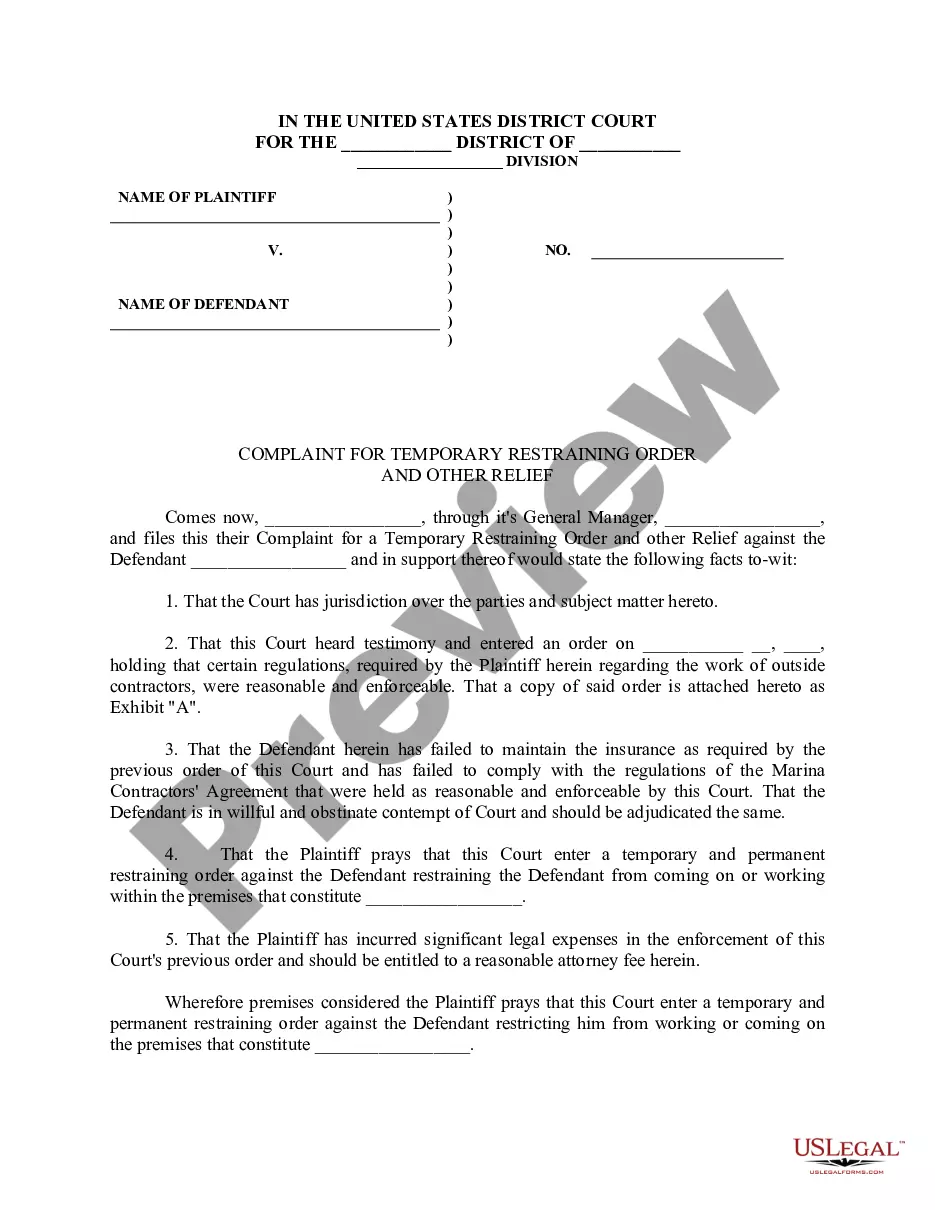

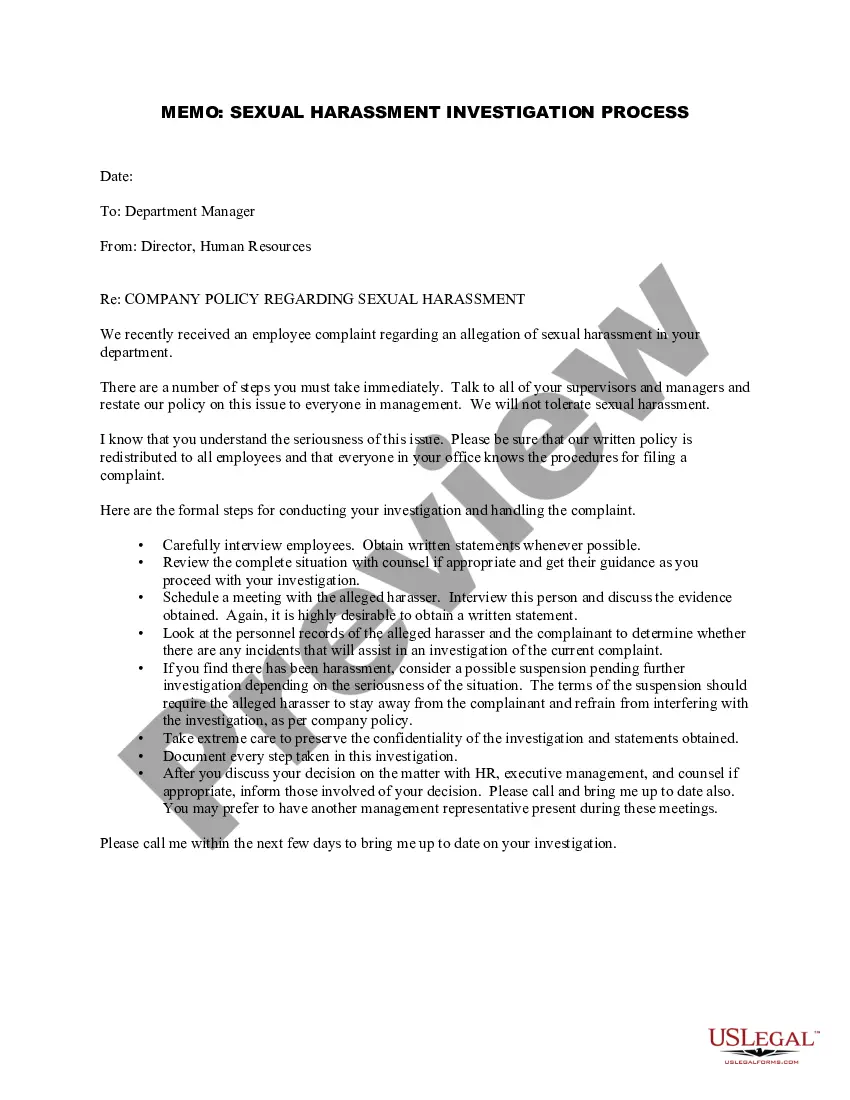
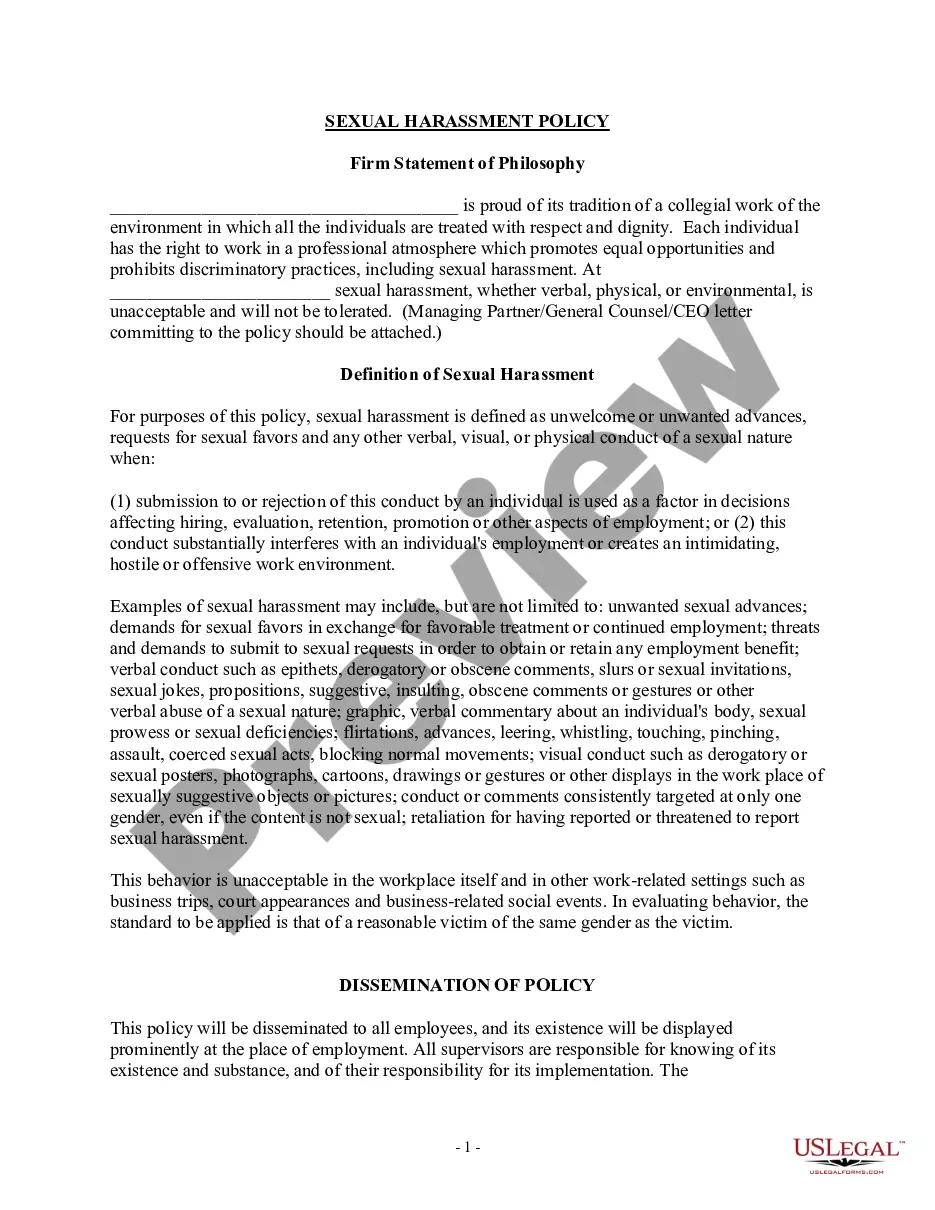
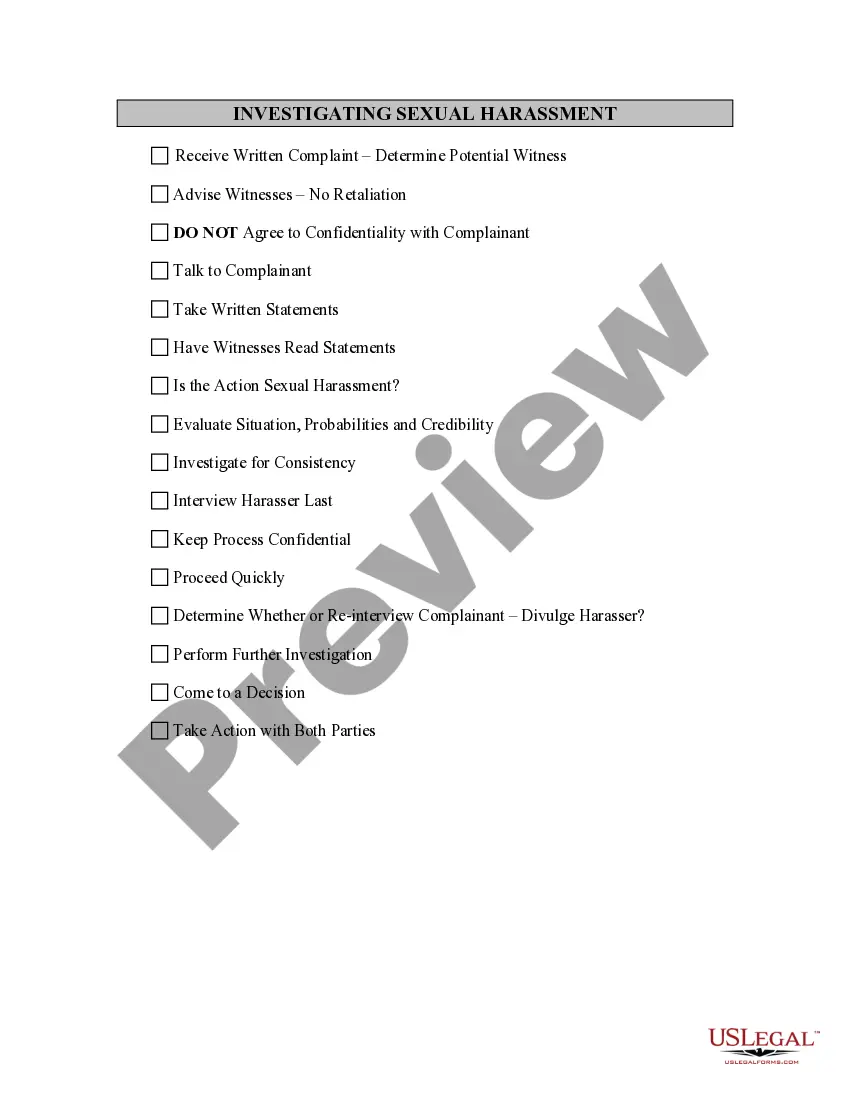
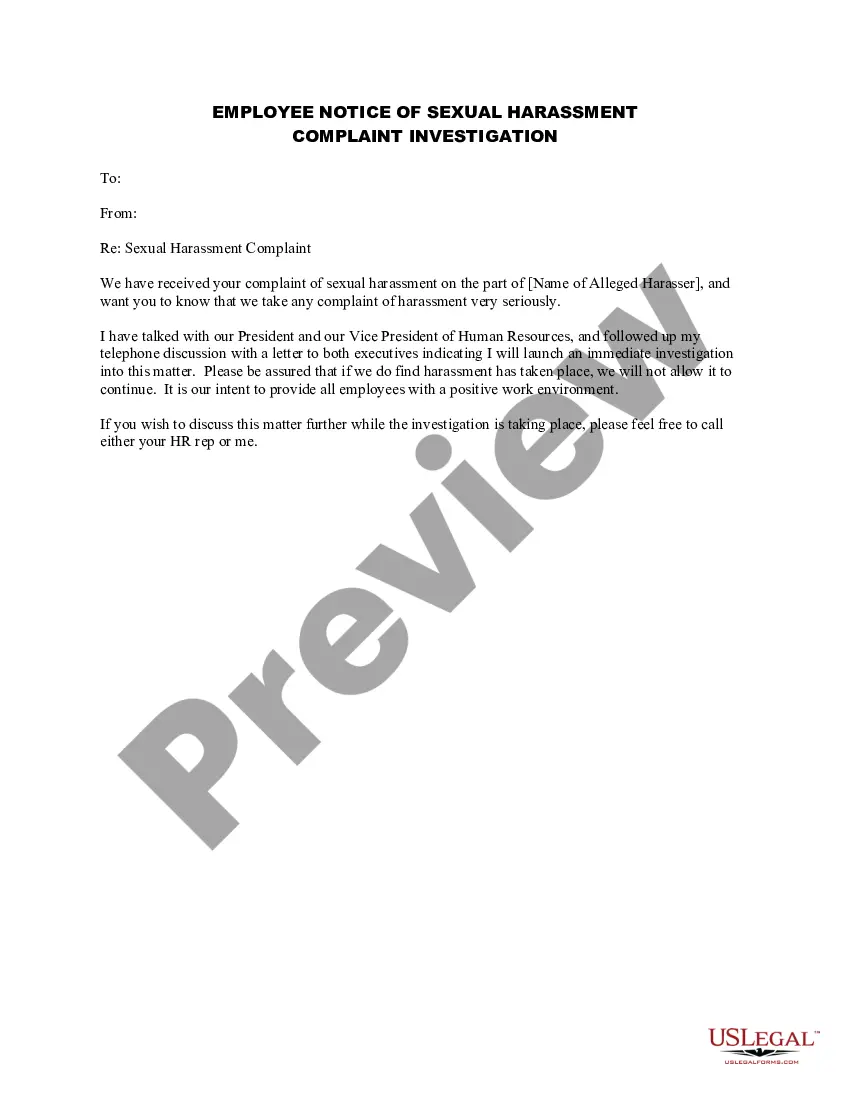
How to fill out Memo - Sexual Harassment Investigation Process - Workplace?
- Ensure your subscription is current. If you've previously used US Legal Forms, log in to access and download the required form template. If your subscription has lapsed, renew it per your payment plan.
- Check the form preview and description carefully. Make sure the template aligns with your jurisdictional needs and accurately addresses your situation.
- Search for additional templates if necessary. Use the search function to find any forms that better meet your legal circumstances before proceeding.
- Purchase the form. Click 'Buy Now' and select a subscription plan that works for you. You will need to create an account to unlock the library’s full resources.
- Complete the purchase. Enter your payment information, either via credit card or PayPal, to finalize your subscription.
- Download your form. Save it directly to your device for easy access, and find it anytime under the My Forms section of your profile.
By following these straightforward steps with US Legal Forms, you can effectively address harassment at the workplace with the right legal documentation.
Don’t hesitate—get started today to protect your rights with the simple and reliable legal forms from US Legal Forms!
Form popularity
FAQ
A workplace is considered hostile when harassment at workplace becomes severe or pervasive enough to create an intimidating or abusive atmosphere. This may include actions like consistent verbal abuse, offensive jokes, or sabotage of work performance. It is essential for employees to recognize these behaviors and report them to management. Legal platforms, like US Legal Forms, can help employees understand their rights and provide the necessary legal guidance.
Harassment at workplace can manifest in various forms, creating a hostile atmosphere for employees. For example, persistent bullying, derogatory comments, unwanted physical contact, or threats are all signs of such an environment. When coworkers engage in this conduct, it undermines teamwork and morale. It is crucial for companies to address these issues swiftly to maintain a healthy workplace.
If you are fired for harassment, it may impact your future employment opportunities and affect your reputation. You may have options to appeal the termination or seek legal recourse if the dismissal was unjust. It is essential to understand your rights and the legal implications of such a dismissal. Resources like US Legal Forms can guide you in navigating this challenging situation.
The three primary factors that determine workplace harassment are the frequency of the behavior, the severity of the actions, and whether the conduct is physically threatening or humiliating. Additionally, context matters. An isolated incident may not qualify, while repeated behavior can have serious implications. Identifying harassment at workplace scenarios can help individuals take appropriate action.
Yes, sexually harassing someone at work can lead to criminal charges, depending on the severity of the actions. If the behavior involves unwanted physical contact or threats, it may be classified as a criminal offense. Legal repercussions often depend on the jurisdiction and the particular circumstances. It’s crucial to understand that harassment at workplace can have serious consequences, both legally and personally.
Workplace harassment includes any unwelcome behavior that creates a hostile or intimidating environment. This can consist of verbal or physical conduct, jokes, slurs, or even gestures that make someone feel uncomfortable. The key aspect is that the behavior must interfere with the employee's work performance or create distress. Understanding the specifics of harassment at workplace is essential for all employees.
To make a harassment case at work, start by documenting the incidents in detail. This should include dates, times, locations, and descriptions of what happened. Next, report the harassment to your supervisor or HR department to follow your company’s procedure. Using US Legal Forms can help you understand your rights and create necessary documents.
HR handles harassment at the workplace by first taking the employee's report seriously and documenting it. They will conduct a thorough investigation, interviewing witnesses and gathering information to fully understand the situation. Finally, HR will implement corrective measures based on the findings, which may include training, mediation, or disciplinary actions to prevent future harassment.
Yes, HR is responsible for addressing harassment at the workplace. Upon receiving a report, HR will follow established procedures to investigate the claims thoroughly. Their goal is to maintain a safe work environment, so they will take appropriate actions based on the investigation's outcomes, ensuring all parties understand the company's stance on harassment.
To prove harassment at the workplace, gather evidence such as emails, messages, or any witnesses who can corroborate the incidents. Document your experiences in detail, noting how these actions affected your work environment. This documentation will support your claims when reporting the harassment to HR and can facilitate a more effective investigation.