Interview Questions Format For Research
Description
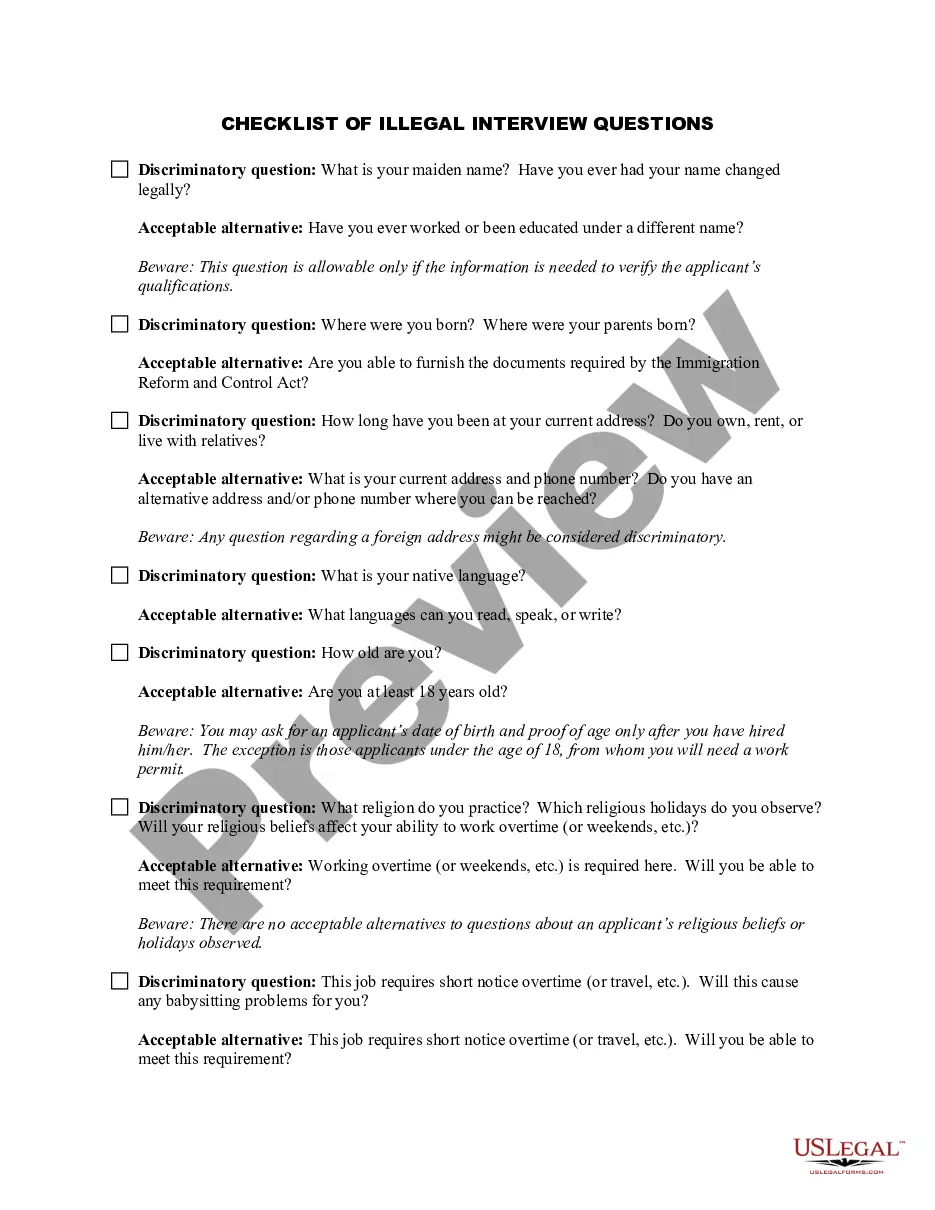
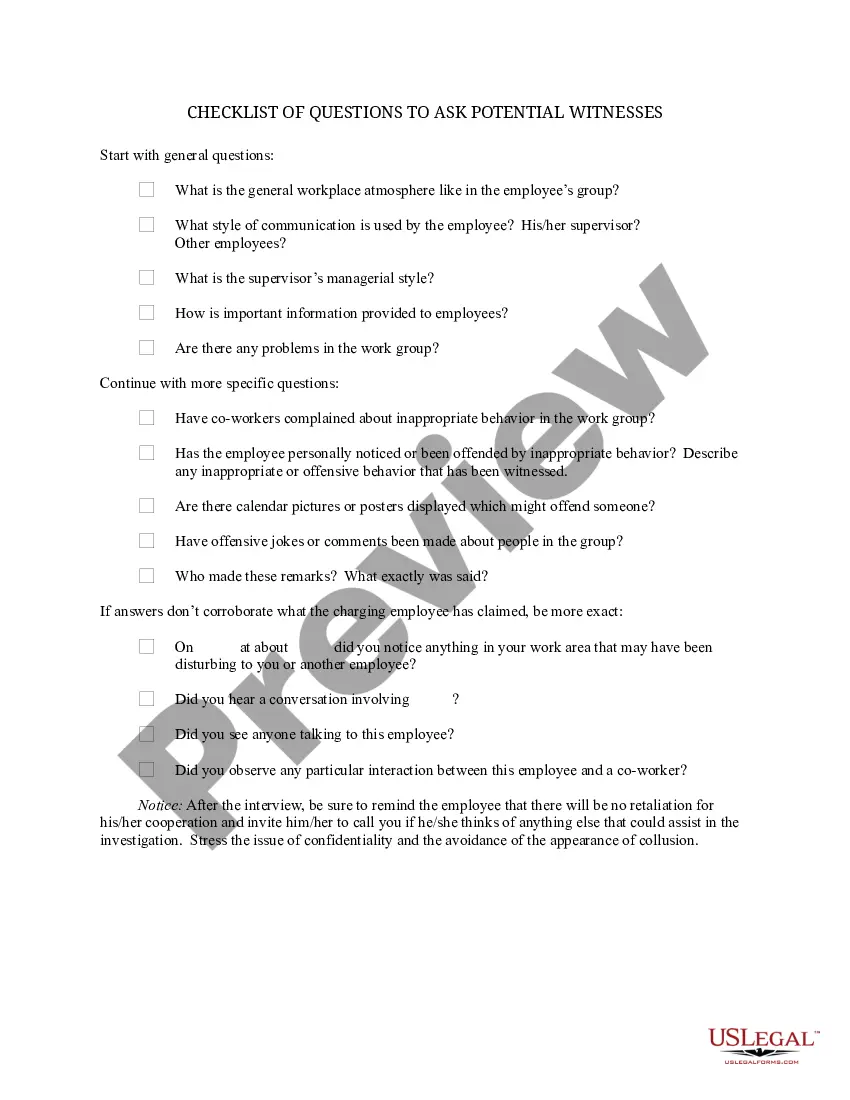
Get your form ready online
Our built-in tools help you complete, sign, share, and store your documents in one place.
Make edits, fill in missing information, and update formatting in US Legal Forms—just like you would in MS Word.
Download a copy, print it, send it by email, or mail it via USPS—whatever works best for your next step.
Sign and collect signatures with our SignNow integration. Send to multiple recipients, set reminders, and more. Go Premium to unlock E-Sign.
If this form requires notarization, complete it online through a secure video call—no need to meet a notary in person or wait for an appointment.
We protect your documents and personal data by following strict security and privacy standards.

Make edits, fill in missing information, and update formatting in US Legal Forms—just like you would in MS Word.

Download a copy, print it, send it by email, or mail it via USPS—whatever works best for your next step.

Sign and collect signatures with our SignNow integration. Send to multiple recipients, set reminders, and more. Go Premium to unlock E-Sign.

If this form requires notarization, complete it online through a secure video call—no need to meet a notary in person or wait for an appointment.

We protect your documents and personal data by following strict security and privacy standards.
Looking for another form?


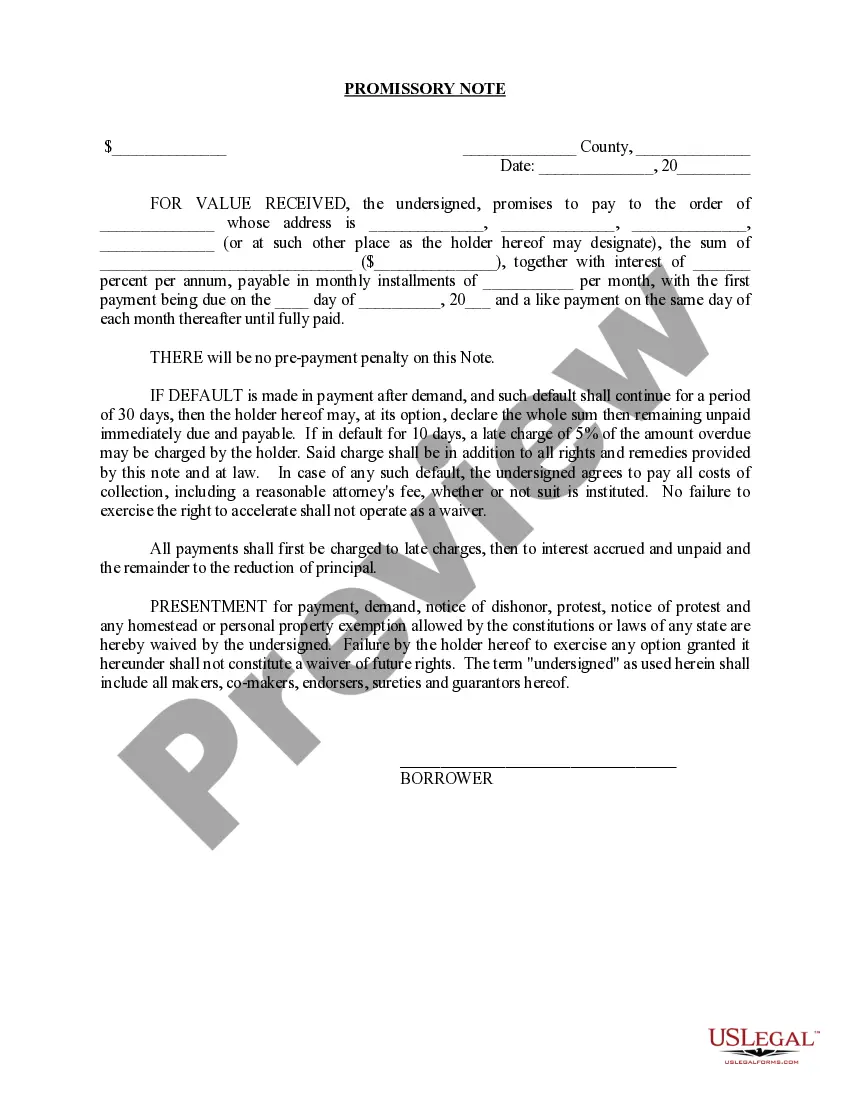


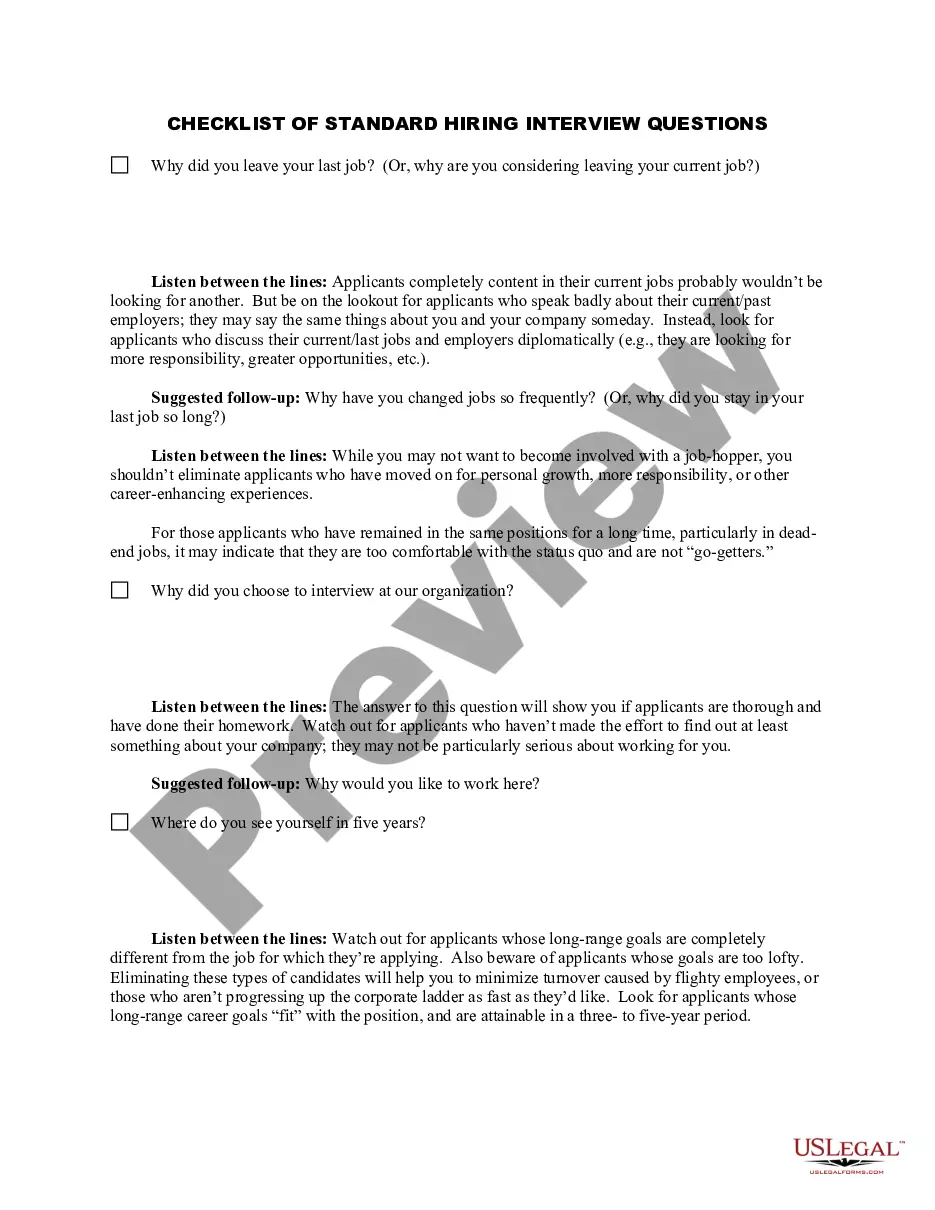
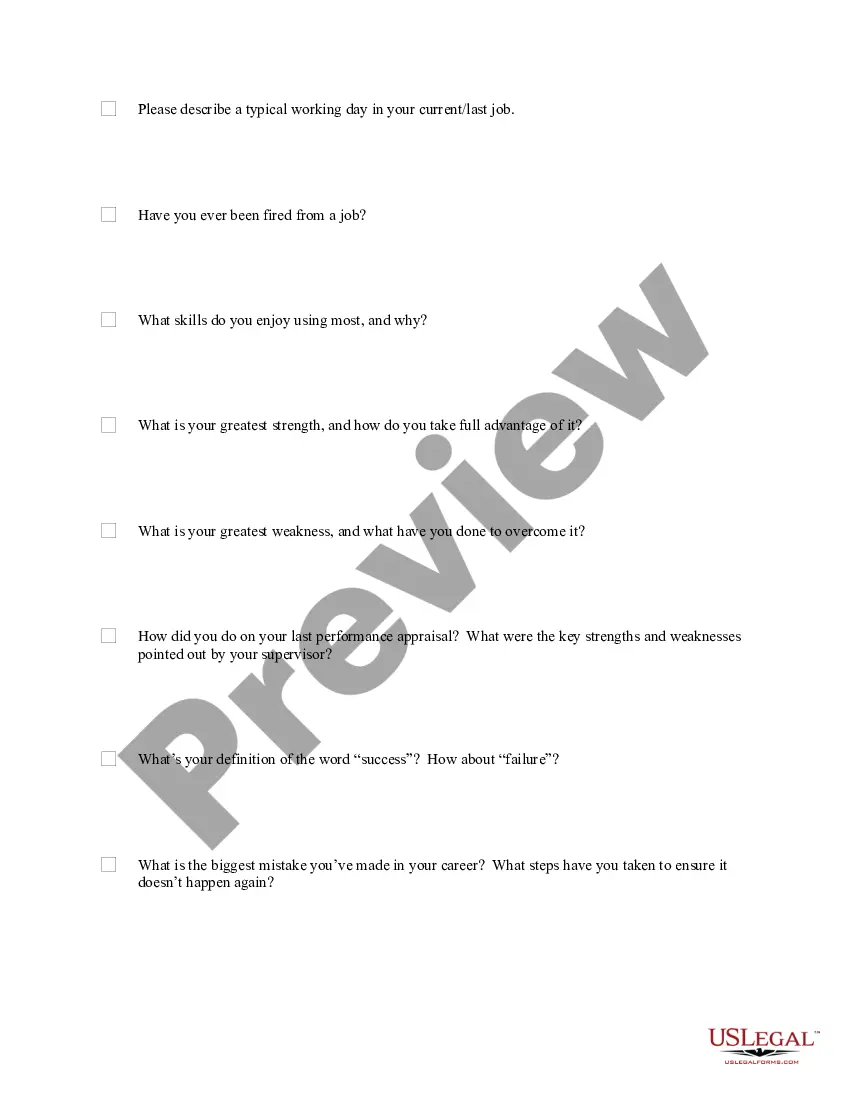
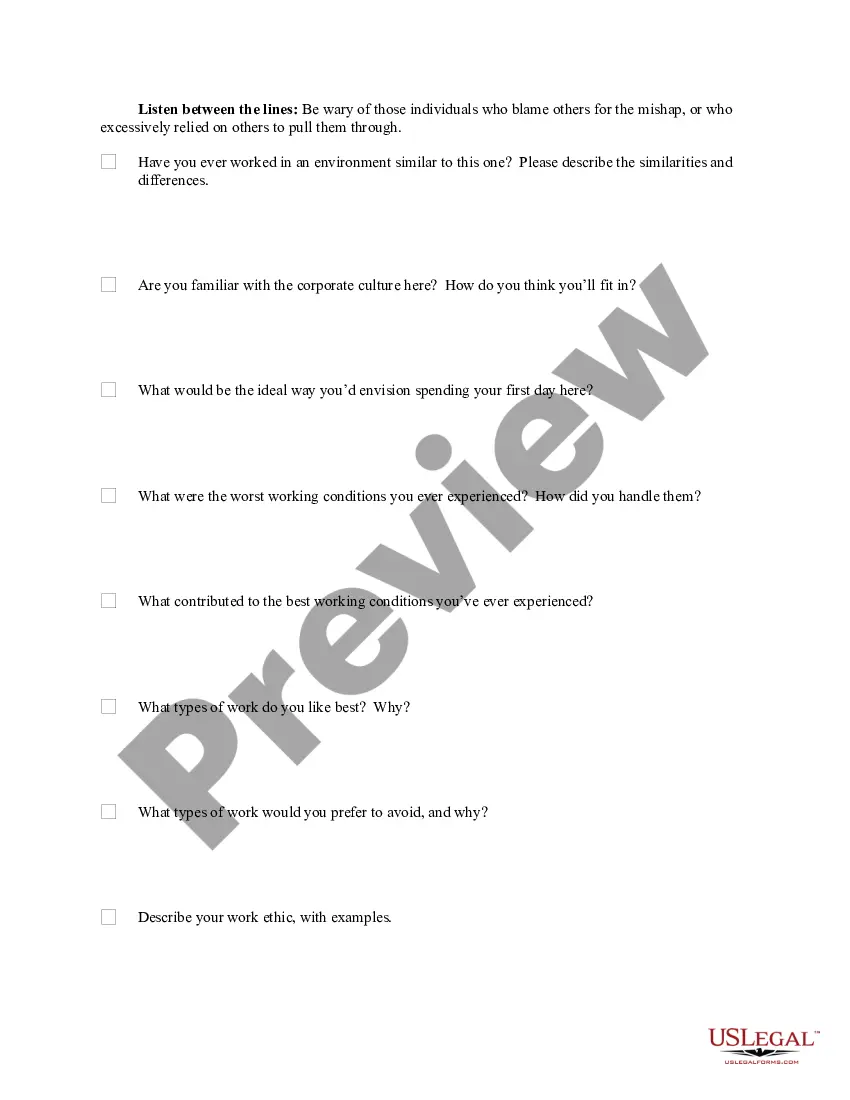
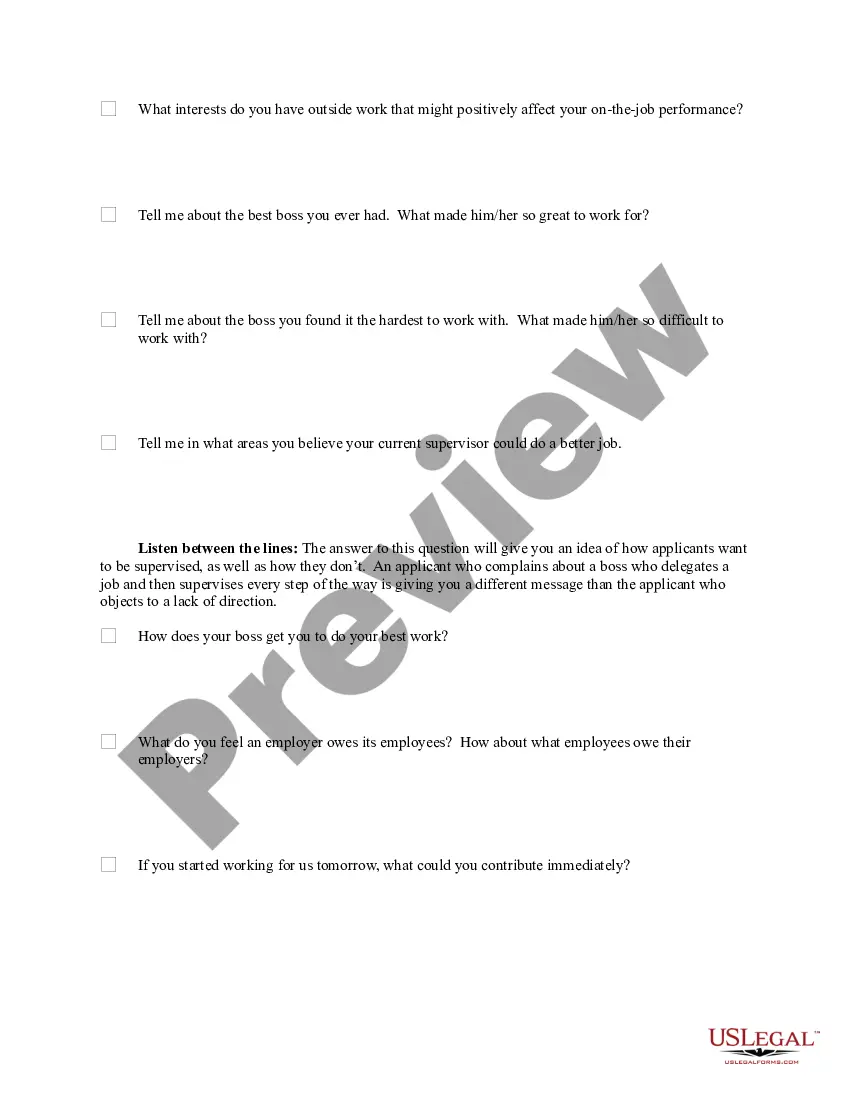
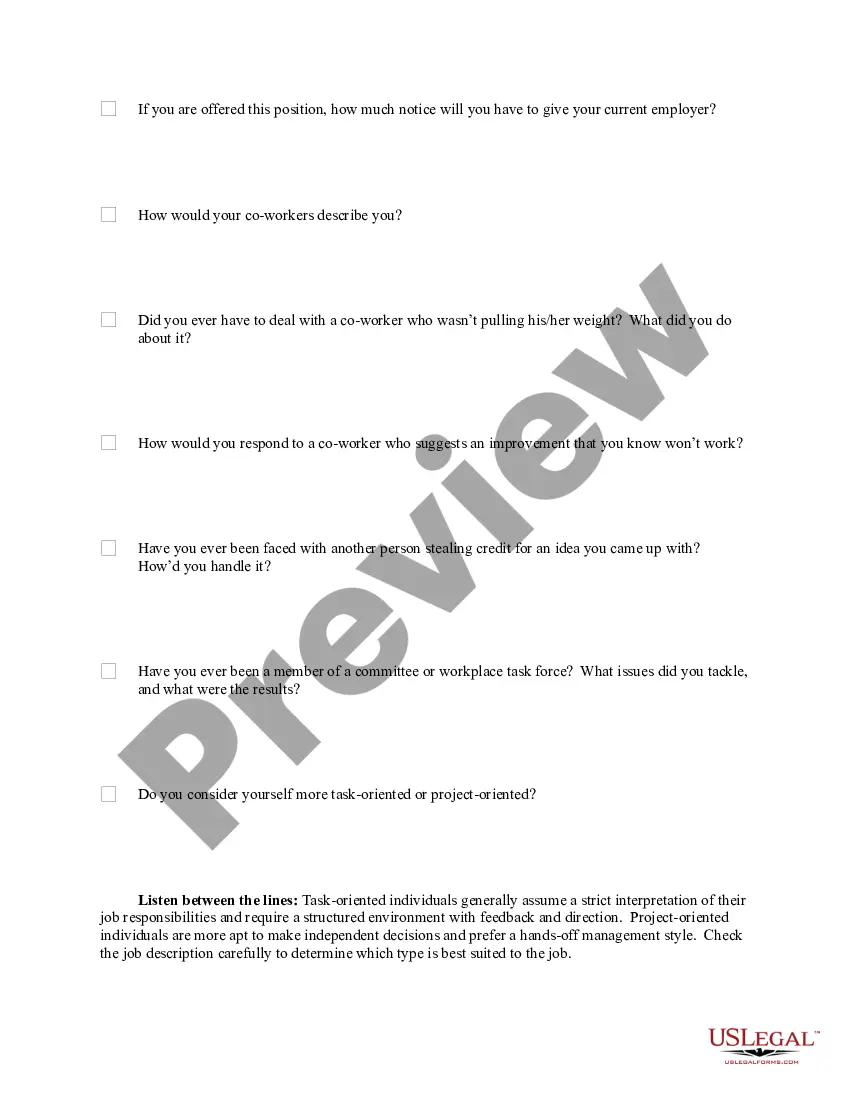
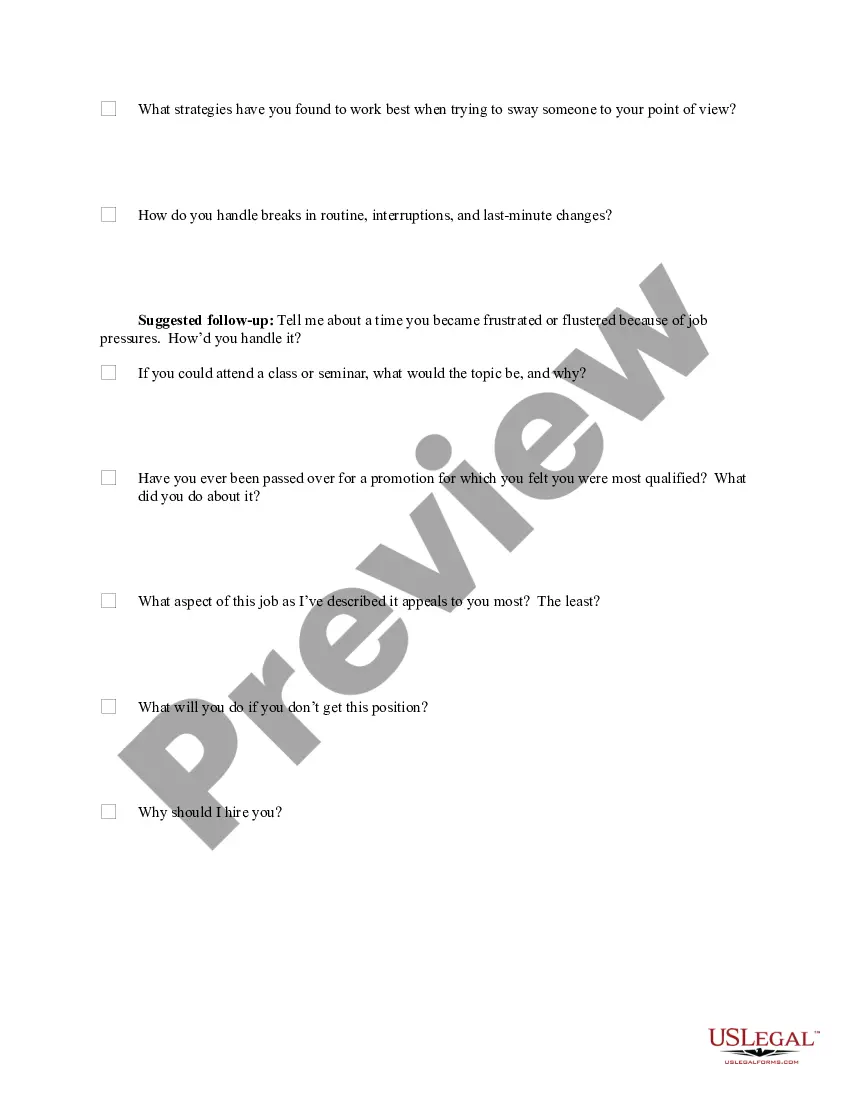
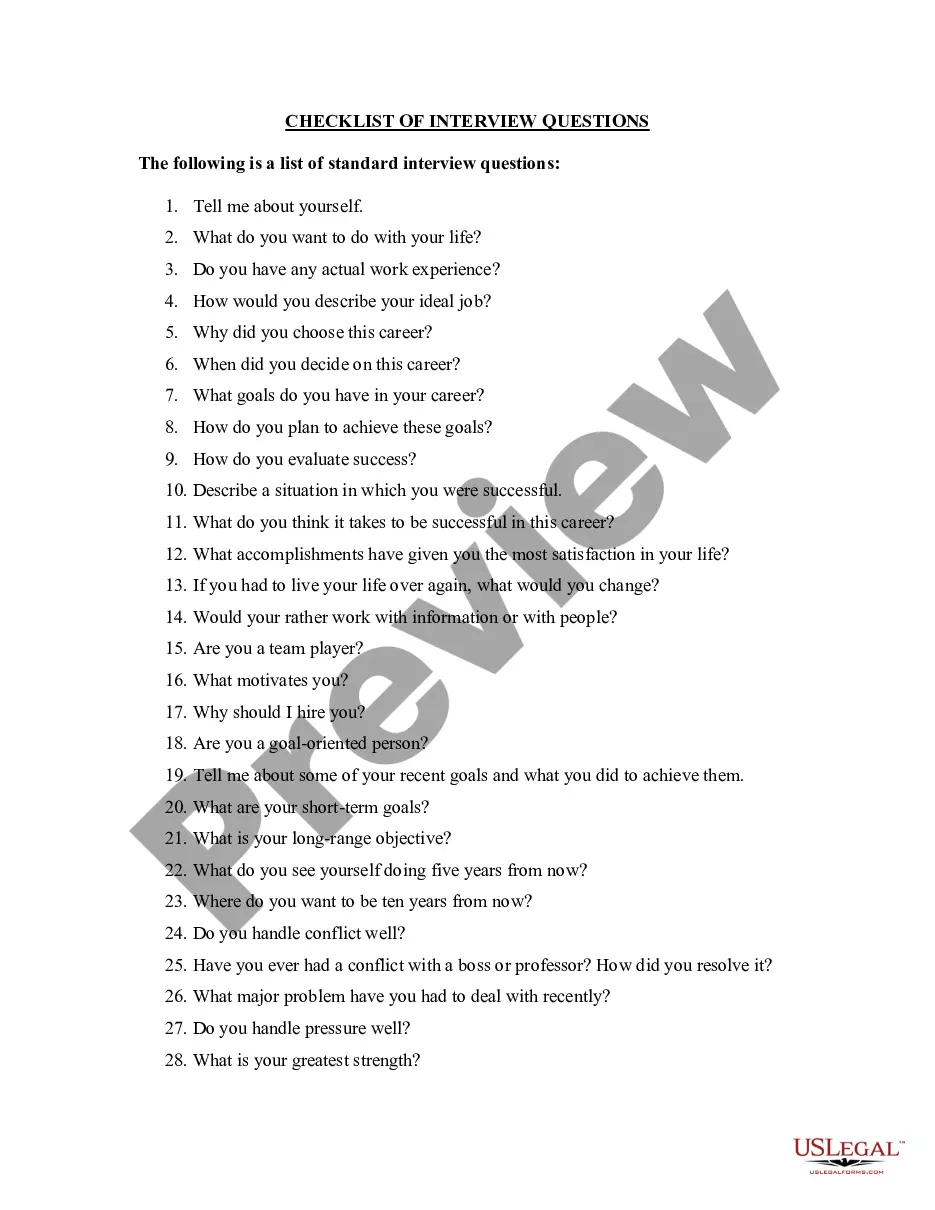
How to fill out Checklist Of Standard Hiring Interview Questions With Listening Tips And Suggested Follow-up Questions?
Securing a reliable source for accessing the most up-to-date and pertinent legal templates is a significant part of managing bureaucracy.
Locating the appropriate legal documents requires accuracy and careful consideration, which is why it's essential to obtain samples of Interview Questions Format For Research solely from trustworthy sources, such as US Legal Forms. An incorrect template can squander your time and postpone your current situation. With US Legal Forms, you have minimal concerns. You can access and review all the information concerning the document’s applicability and relevance to your circumstances and within your state or county.
Once you have the document on your device, you can modify it using the editor or print it out to fill it in manually. Eliminate the hassle that comes with your legal paperwork. Explore the comprehensive US Legal Forms catalog where you can discover legal templates, verify their relevance to your situation, and download them instantly.
- Use the catalog navigation or search bar to find your sample.
- Check the form’s details to ensure it aligns with the standards of your state and locality.
- Preview the form, if available, to confirm that the template is what you are looking for.
- Return to the search and find the appropriate template if the Interview Questions Format For Research does not satisfy your needs.
- Once you are certain of the form’s applicability, download it.
- If you are a registered customer, click Log in to verify and access your chosen forms in My documents.
- If you do not have an account yet, click Buy now to acquire the template.
- Select the pricing plan that suits your needs.
- Proceed to the registration to finalize your purchase.
- Complete your transaction by selecting a payment option (credit card or PayPal).
- Choose the file format for downloading Interview Questions Format For Research.
Form popularity
FAQ
Qualitative interviews use open-ended questions, which are questions that a researcher poses but does not provide answer options for. Open-ended questions are more demanding of participants than closed-ended questions for they require participants to come up with their own words, phrases, or sentences to respond.
Developing Questions Open-ended and elicit a long response from the interviewee (can't be answered yes/no or with one word) Focus on the experience of the interviewee. Don't lead the interviewee toward a particular response. Address a single issue/point (i.e. don't ask multi-part questions)
Usually interviewers will ask pre-determined questions in a round-robin format. When answering questions, be sure to address all of the interviewers and not just the person who asked the question. Organizations find this type of format beneficial in order to gain multi-person perspective in evaluating a candidate.
How to write an interview paper in APA format Set up your document. ... Create the title page. ... Begin the main body. ... Explain the purpose of the interview. ... Introduce your sources and the topic of your questioning. ... Present the question and the quotation. ... Cite each quotation. ... Write your conclusion.
Step-By-Step Guide to Writing Interview Questions Write down the larger research questions of the study. Outline the broad areas of knowledge that are relevant to answering these questions. 2. Develop questions within each of these major areas, shaping them to fit particular kinds of respondents.