Employee Theft Examples
Description
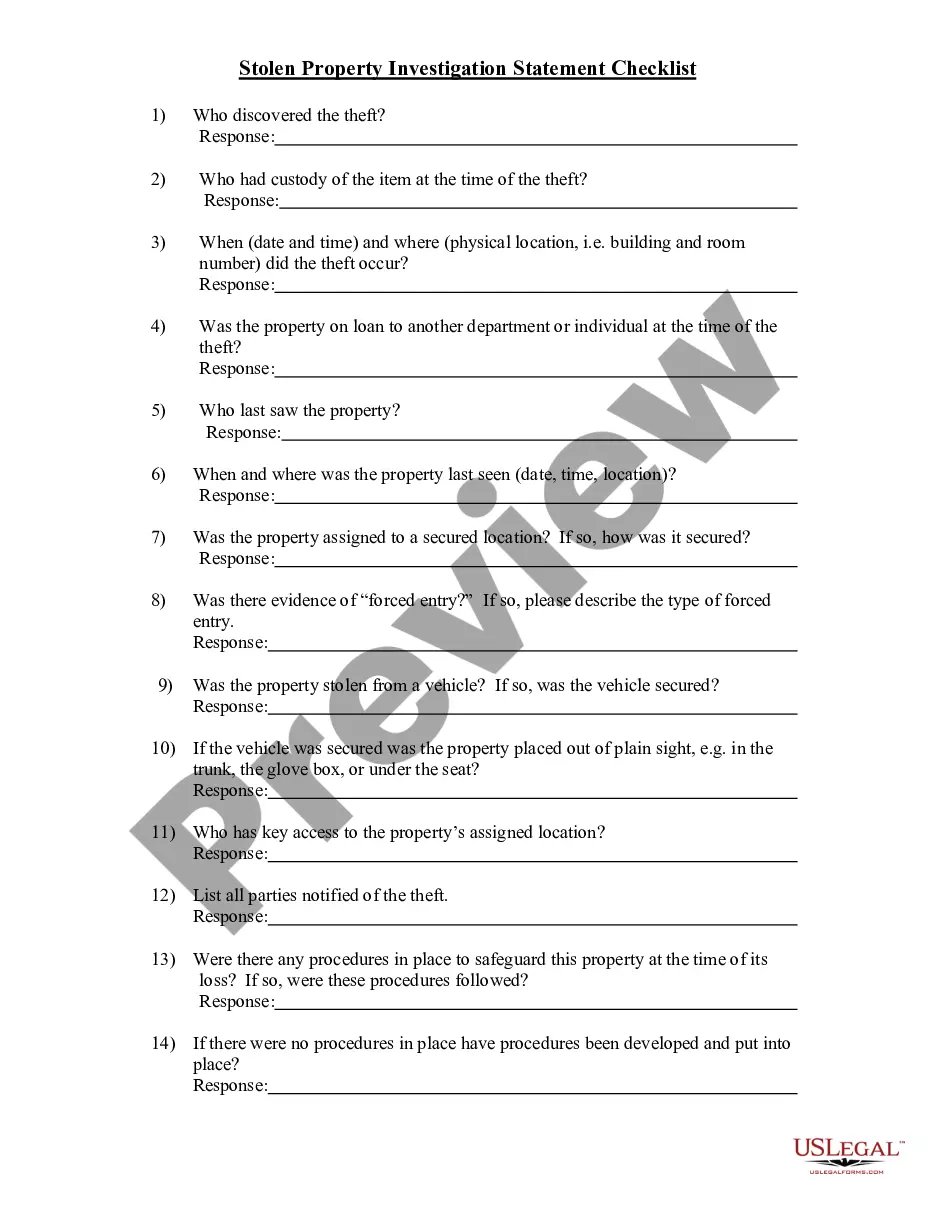
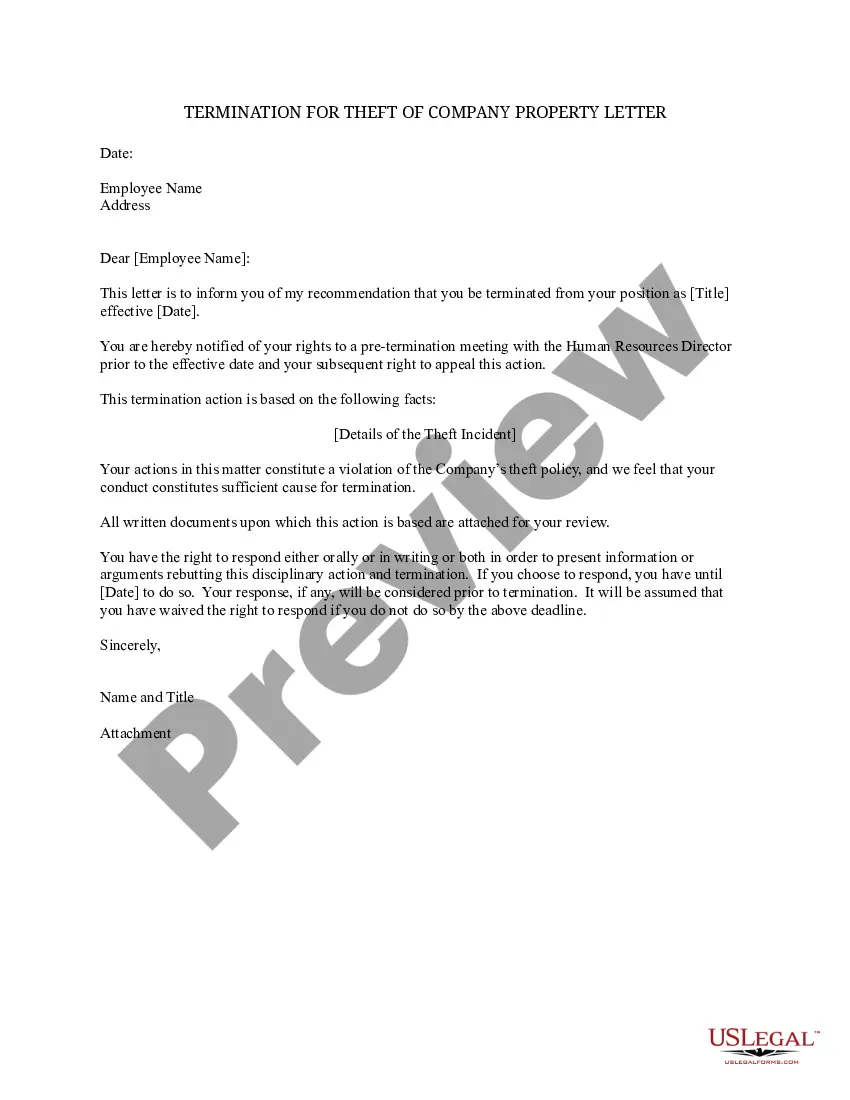
Get your form ready online
Our built-in tools help you complete, sign, share, and store your documents in one place.
Make edits, fill in missing information, and update formatting in US Legal Forms—just like you would in MS Word.
Download a copy, print it, send it by email, or mail it via USPS—whatever works best for your next step.
Sign and collect signatures with our SignNow integration. Send to multiple recipients, set reminders, and more. Go Premium to unlock E-Sign.
If this form requires notarization, complete it online through a secure video call—no need to meet a notary in person or wait for an appointment.
We protect your documents and personal data by following strict security and privacy standards.

Make edits, fill in missing information, and update formatting in US Legal Forms—just like you would in MS Word.

Download a copy, print it, send it by email, or mail it via USPS—whatever works best for your next step.

Sign and collect signatures with our SignNow integration. Send to multiple recipients, set reminders, and more. Go Premium to unlock E-Sign.

If this form requires notarization, complete it online through a secure video call—no need to meet a notary in person or wait for an appointment.

We protect your documents and personal data by following strict security and privacy standards.
Looking for another form?
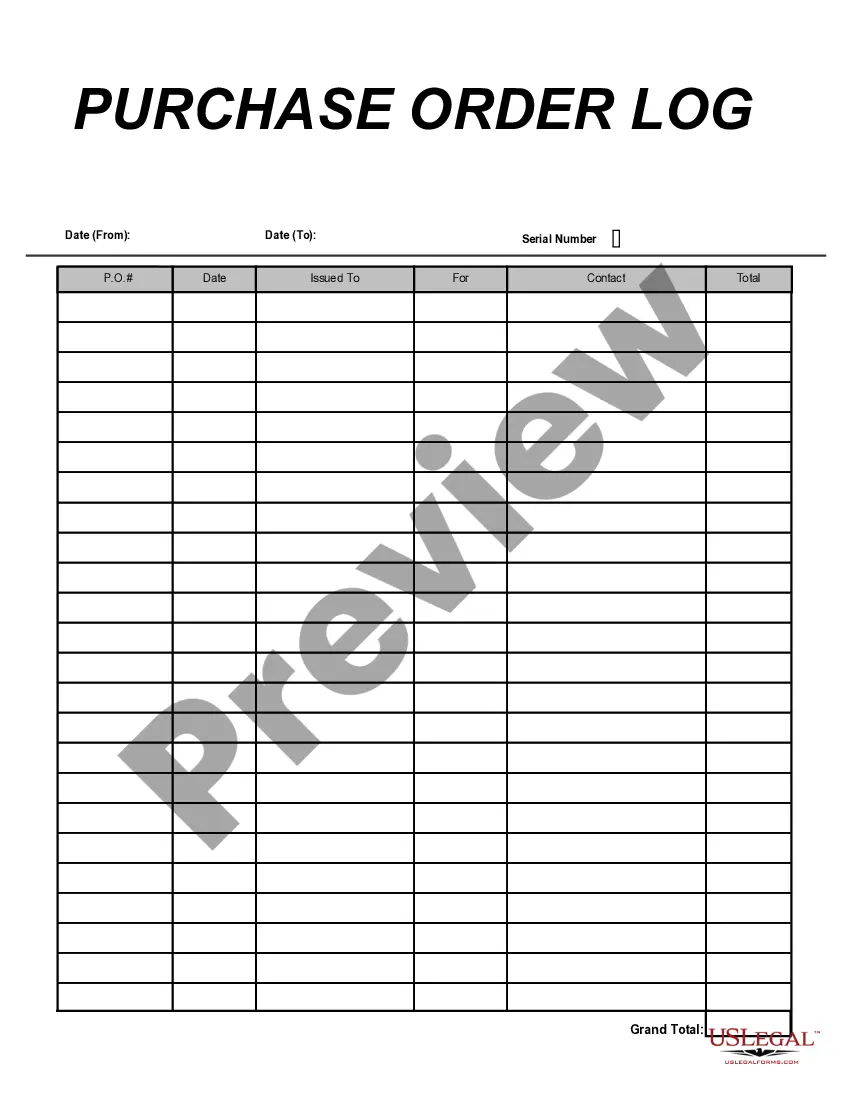

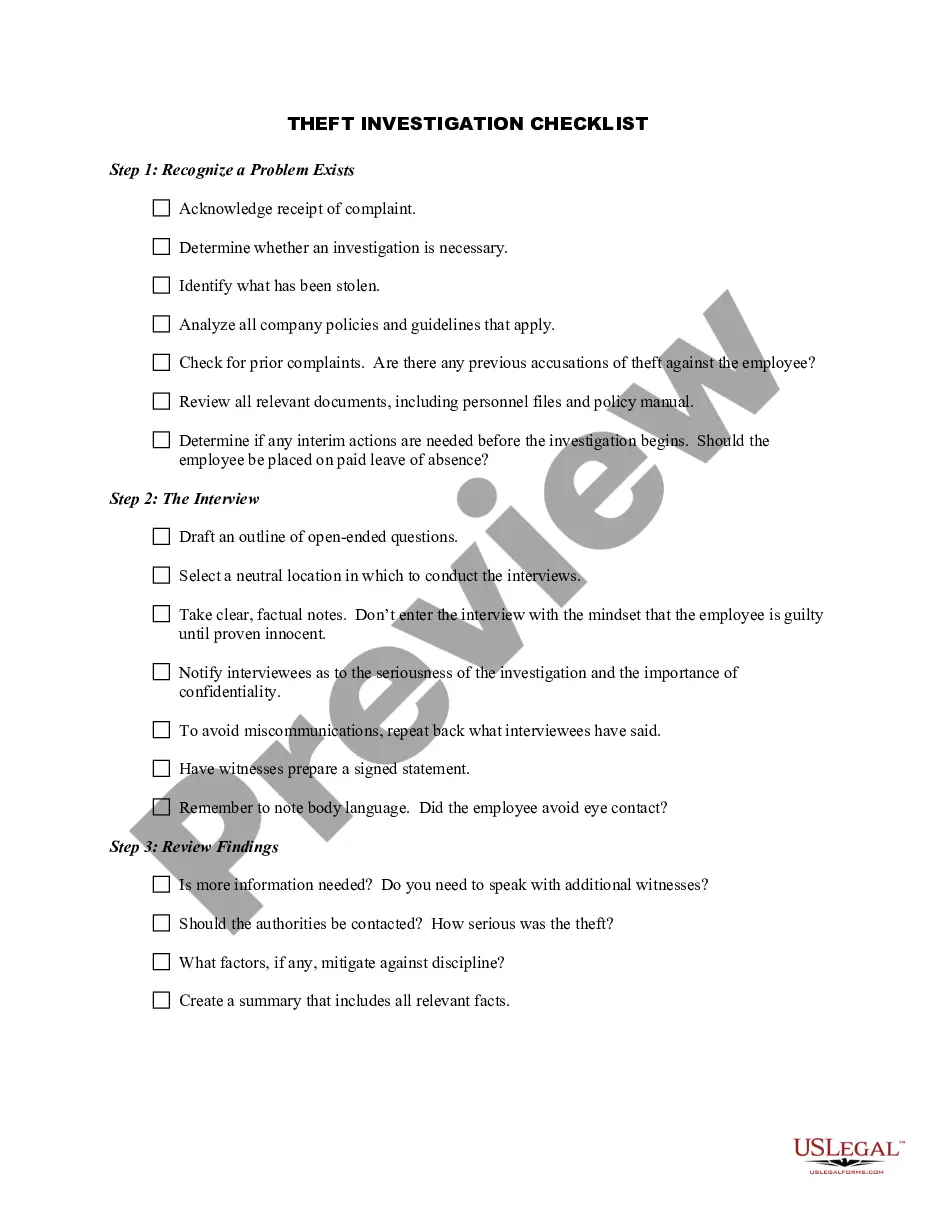
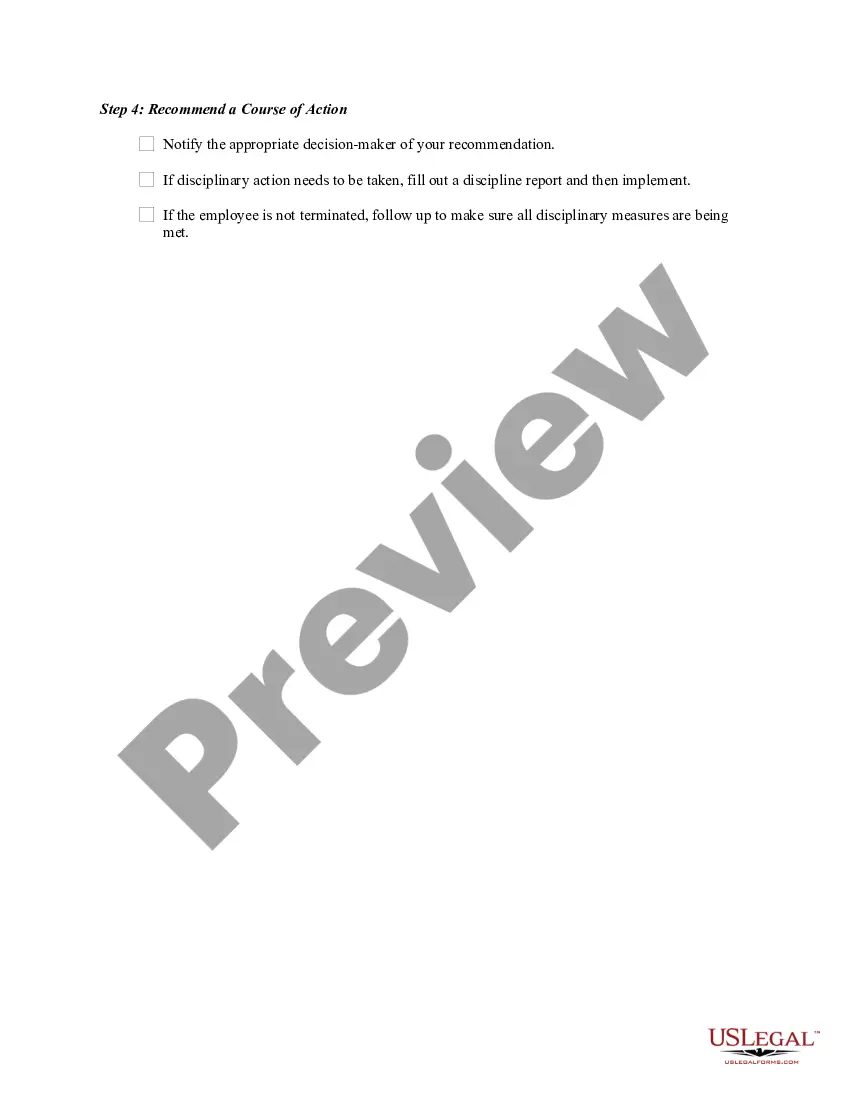
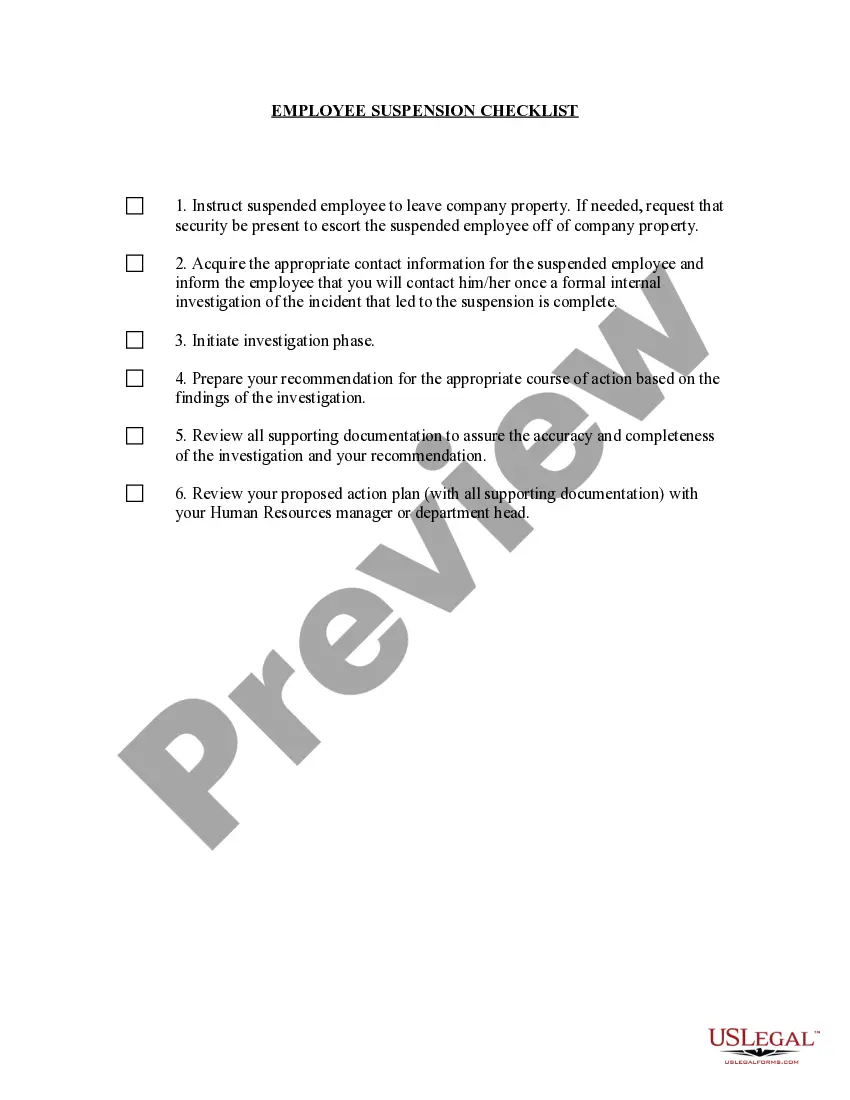
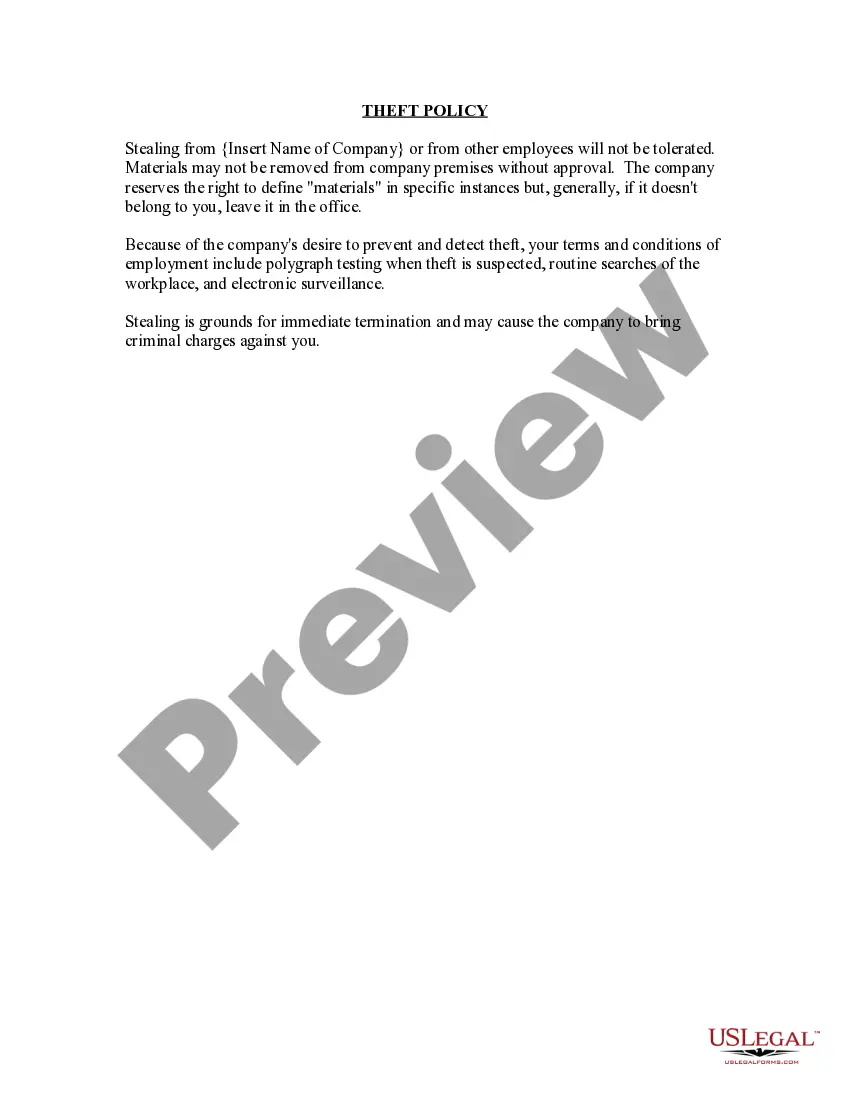
How to fill out Theft Investigation Checklist?
Handling legal documents can be exasperating, even for the most skilled individuals.
When you need examples of employee theft and lack the opportunity to conduct thorough searches for the correct and current version, the process can become overwhelming.
US Legal Forms caters to all your requirements, from personal to business paperwork, all in a single platform.
Utilize sophisticated tools to complete and manage your employee theft examples.
Here are the steps to follow once you have obtained the necessary form: Confirm it is the correct form by viewing it and checking its description, make sure the sample is accepted in your state or county, select Buy Now when you are ready, choose a monthly subscription plan, and find the format you need to Download, complete, sign, print, and send your document. Experience the US Legal Forms online library, supported by 25 years of expertise and reliability. Transform your daily document management into a simple and user-friendly process today.
- Access a repository of articles, guides, and manuals relevant to your circumstances and requirements.
- Save time and reduce effort in seeking out the documents you need, and utilize US Legal Forms’ advanced search and Review feature to locate Employee Theft Examples and obtain them.
- If you hold a membership, Log Into your US Legal Forms account, search for the form, and download it.
- Visit the My documents tab to review the documents you have previously acquired and to organize your files as needed.
- If you are new to US Legal Forms, create a free account to gain unlimited access to all the resources available in the library.
- A comprehensive online form repository can revolutionize the way anyone navigates these challenges.
- US Legal Forms is a premier provider of digital legal documents, offering over 85,000 state-specific forms available at your convenience.
- With US Legal Forms, you can access legal and business documents tailored to your state or county.
Form popularity
FAQ
The #1 most common form of identity theft is credit card fraud, where someone uses another person's credit card information without permission. This can happen through various means, including phishing or data breaches. These identity theft examples can lead to significant financial loss for individuals. It's crucial for businesses to educate employees on protecting personal information to prevent such theft.
The most common type of employee theft involves stealing physical items from the workplace, such as office supplies, tools, or products. These employee theft examples often occur in retail settings, where employees may take merchandise without paying. It can also include misusing company resources, like using company time for personal tasks. Understanding these examples can help businesses implement better security measures.
The 10 80 10 theft rule suggests that 10% of employees may be thieves, 80% are honest, and 10% are your best workers. This framework helps employers understand the distribution of trust within their workforce. Recognizing these groups can assist in developing strategies to mitigate theft, and resources like US Legal Forms can guide you in creating policies that address employee theft examples effectively.
Getting an employee to admit to theft requires a careful approach. Start by presenting the evidence you have, and ask open-ended questions that encourage honesty. Create a non-confrontational environment where the employee feels safe to confess. Remember, employee theft examples can help illustrate the seriousness of the situation, and using resources from US Legal Forms can provide you with the right documentation for any necessary actions.
To prove an employee is stealing, gather evidence such as surveillance footage, inventory discrepancies, or witness statements. Document any unusual behavior, like frequent absences or changes in routine. Utilize systems like US Legal Forms to create a structured plan for reporting and documenting theft incidents, ensuring you have a clear record of employee theft examples.
An employer can prove theft by compiling a detailed report that includes dates, times, and descriptions of the theft incidents. Utilizing technology, such as surveillance cameras or tracking software, can provide additional proof. Employing a systematic approach ensures that the evidence is organized and persuasive.
Proving employee theft involves collecting substantial evidence, including documentation of the theft, witness testimonies, and any relevant communications. It is essential to keep thorough records and follow company policies during the investigation. By presenting clear evidence, employers can effectively address the issue.
To prove theft, gather evidence such as eyewitness accounts, video footage, and physical evidence of the stolen property. Additionally, maintaining records of employee behavior and performance can support your case. Comprehensive evidence helps create a clearer picture of the situation.
When writing up an employee for stealing time, document the specific incidents, including dates, times, and any evidence such as time cards or logs. Be clear and factual in your report, avoiding emotional language. This documentation serves as a vital record should further action be necessary.
To establish an employee theft act, you must demonstrate intent, unlawful taking, possession, property belonging to another, and lack of consent. These points help build a strong case against the employee involved. Understanding these elements can guide employers in effectively addressing incidents of theft.