Warning Memo For Tardiness With A Colleague
Description
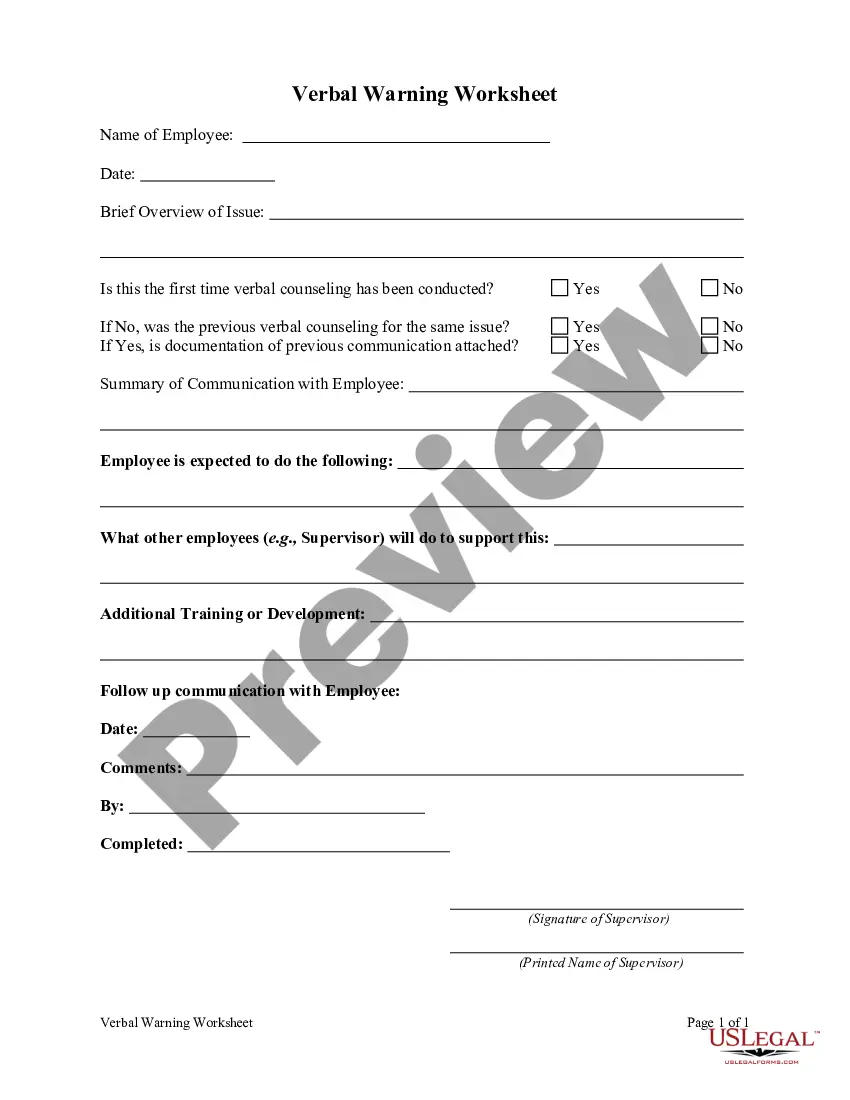
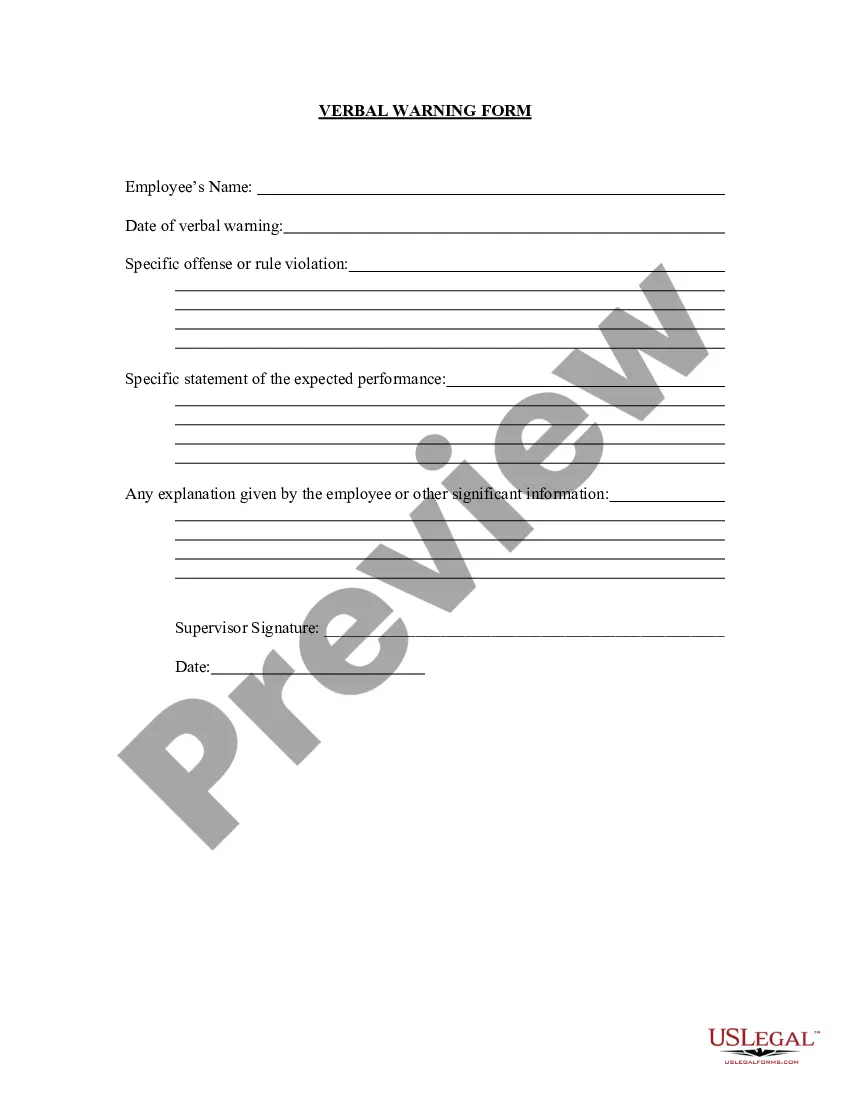

How to fill out Verbal Warning Letter Or Memo?
Creating legal documents from scratch can sometimes be slightly daunting.
Certain situations may require numerous hours of investigation and significant funds expended.
If you’re looking for an easier and more cost-effective method of generating Warning Memo For Tardiness With A Colleague or other forms without navigating obstacles, US Legal Forms is always available to assist you.
Our online repository of over 85,000 current legal documents encompasses nearly every facet of your financial, legal, and personal matters. With just a few clicks, you can swiftly obtain state- and county-compliant templates meticulously prepared for you by our legal professionals.
Ensure the form you select adheres to the regulations and laws of your state and county. Choose the most suitable subscription plan to receive the Warning Memo For Tardiness With A Colleague. Download the document. Then complete, verify, and print it out. US Legal Forms has an impeccable reputation and over 25 years of experience. Join us today and make document processing simple and efficient!
- Utilize our site whenever you require trustworthy and dependable services through which you can effortlessly find and download the Warning Memo For Tardiness With A Colleague.
- If you’re already familiar with our services and have previously created an account, simply sign in to your account, find the template, and download it or re-download it at any time in the My documents section.
- Not registered yet? No worries. It takes very little time to set up and browse the catalog.
- However, before proceeding to download the Warning Memo For Tardiness With A Colleague, follow these suggestions.
- Review the form preview and descriptions to ensure you are on the correct form.
Form popularity
FAQ
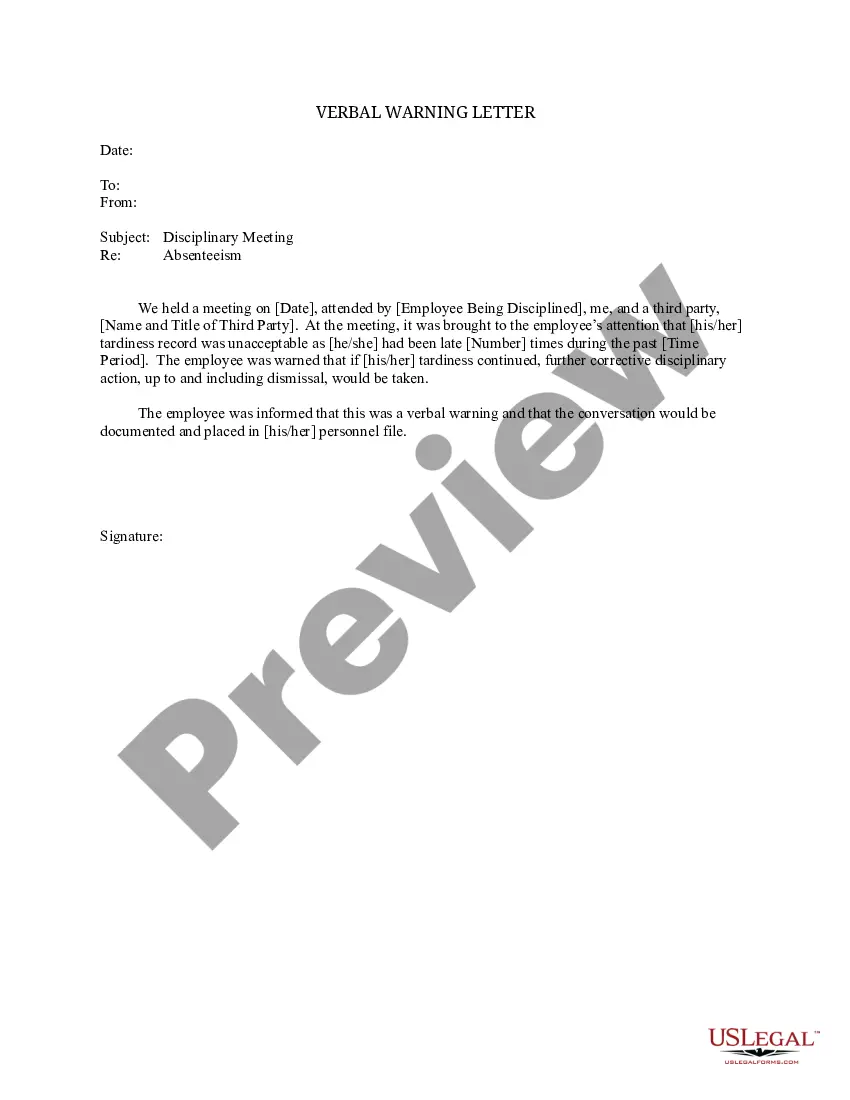
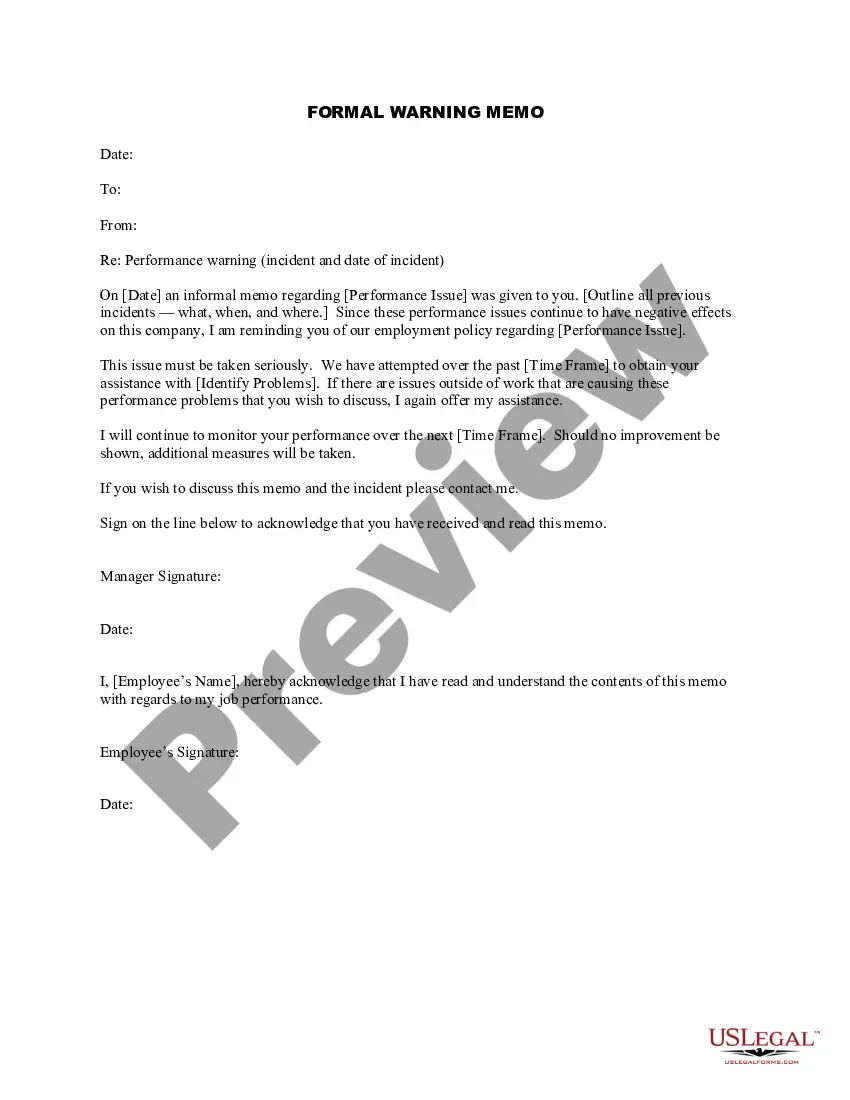
To effectively address tardiness with employees, start by gathering specific examples of the behavior. Use these instances to create a clear warning memo for tardiness with a colleague. This document should outline the expectations for punctuality and the consequences of continued tardiness. By discussing the issue directly and professionally, you can foster an environment of accountability and improvement.
An example of a memo for tardiness could start with a header that includes the date, the employee's name, and the subject line 'Warning Memo for Tardiness.' The body might state, 'Due to your lateness on specific dates, we need to address this ongoing concern. Please be aware that continued tardiness may lead to disciplinary action.' This structure effectively communicates the issue and expectations.
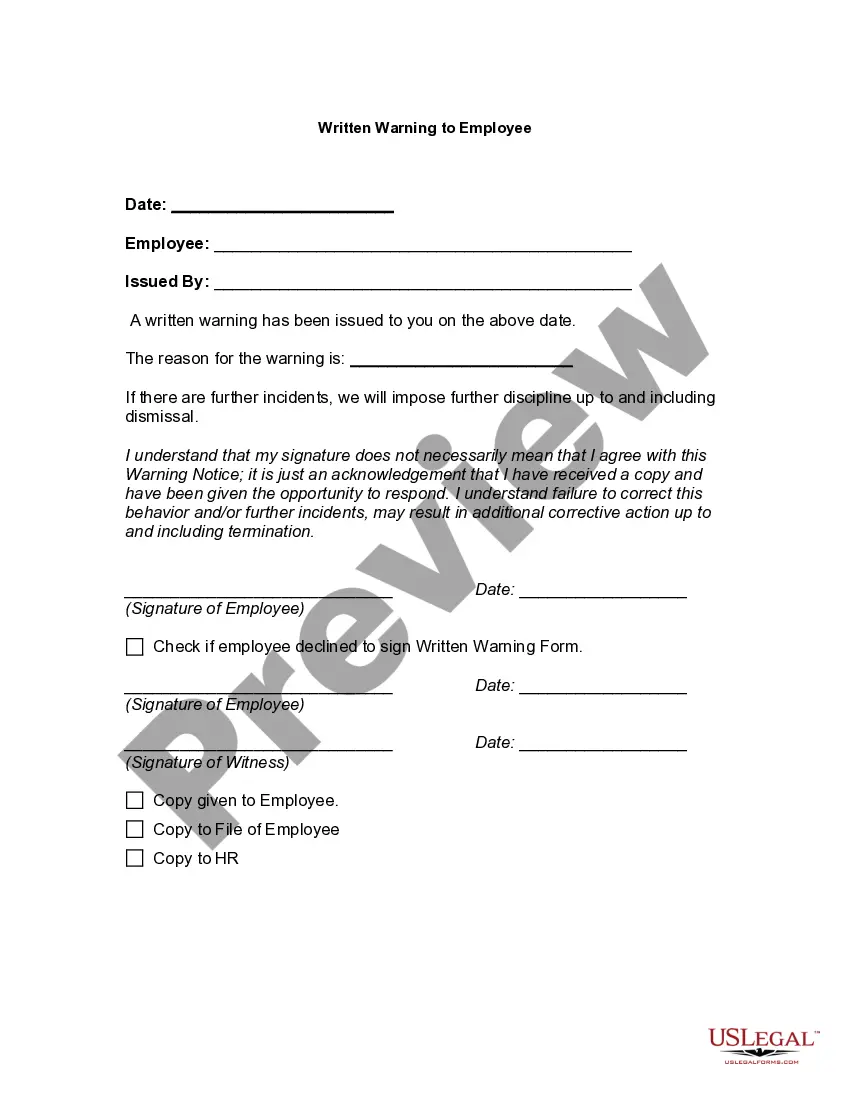
An example of a written warning for tardiness may include a statement like, 'This memo serves as a formal warning regarding your repeated tardiness on specific dates. Your lateness has affected team operations and productivity. Moving forward, we expect you to arrive on time consistently, or further disciplinary action may be required.' This example illustrates the key elements of a warning memo for tardiness with a colleague.
Writing a written warning for tardiness involves outlining the specific instances of lateness and their effect on the team's productivity. The memo should include the date, time, and context of each incident. Additionally, it should specify the employee's responsibilities moving forward and the repercussions if the issue persists. Utilizing a clear format helps convey the seriousness of the situation.
To write a warning letter for being late, begin with a professional greeting and a clear subject line. In the body of the letter, detail the occurrences of tardiness and reference any previous conversations about the issue. Clearly state the expectations for future behavior and outline the consequences of continued lateness. This approach emphasizes accountability and encourages the employee to improve.
Yes, you can give a written warning for being late. A written warning serves as an official record that highlights the issue of tardiness. It should document the specific instances of lateness, the impact on the workplace, and the expectations for improvement. This warning memo for tardiness with a colleague can help reinforce the importance of punctuality.
When writing a warning memo to an employee, start with a clear subject line that indicates the purpose. Include the employee's name, the date, and a statement that communicates the issue, such as tardiness. Be sure to outline the specific incidents and refer to any prior discussions or warnings. Finish with a clear statement of what you expect from the employee moving forward and any potential consequences.
To write up an employee for excessive tardiness, first document specific instances of lateness. Clearly state the dates and times when the tardiness occurred. Next, reference any previous discussions about the issue, and explain the impact of their tardiness on the team's performance. Finally, conclude with the expectations moving forward and the potential consequences if the behavior does not change.