Exempt Vs Non Exempt For Taxes
Description
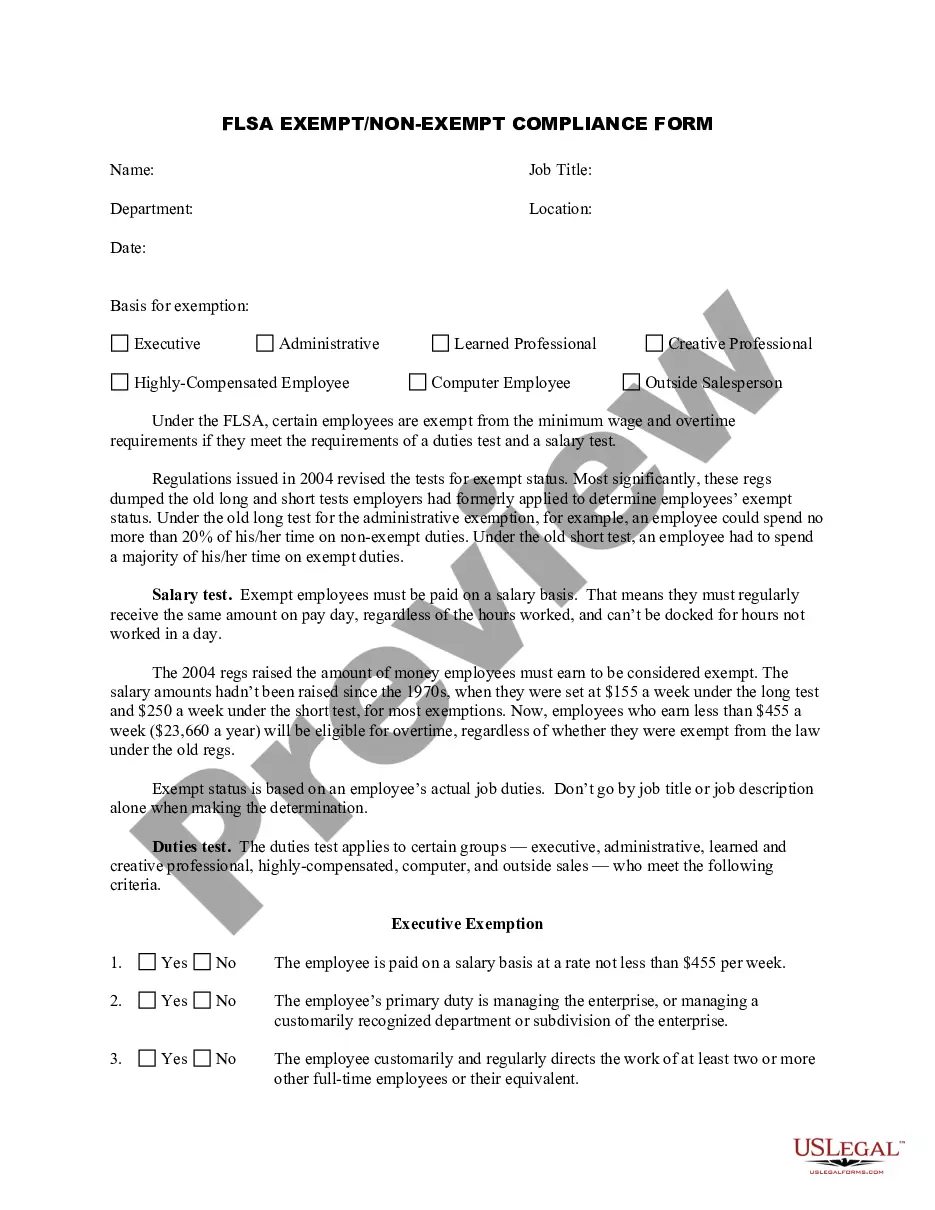
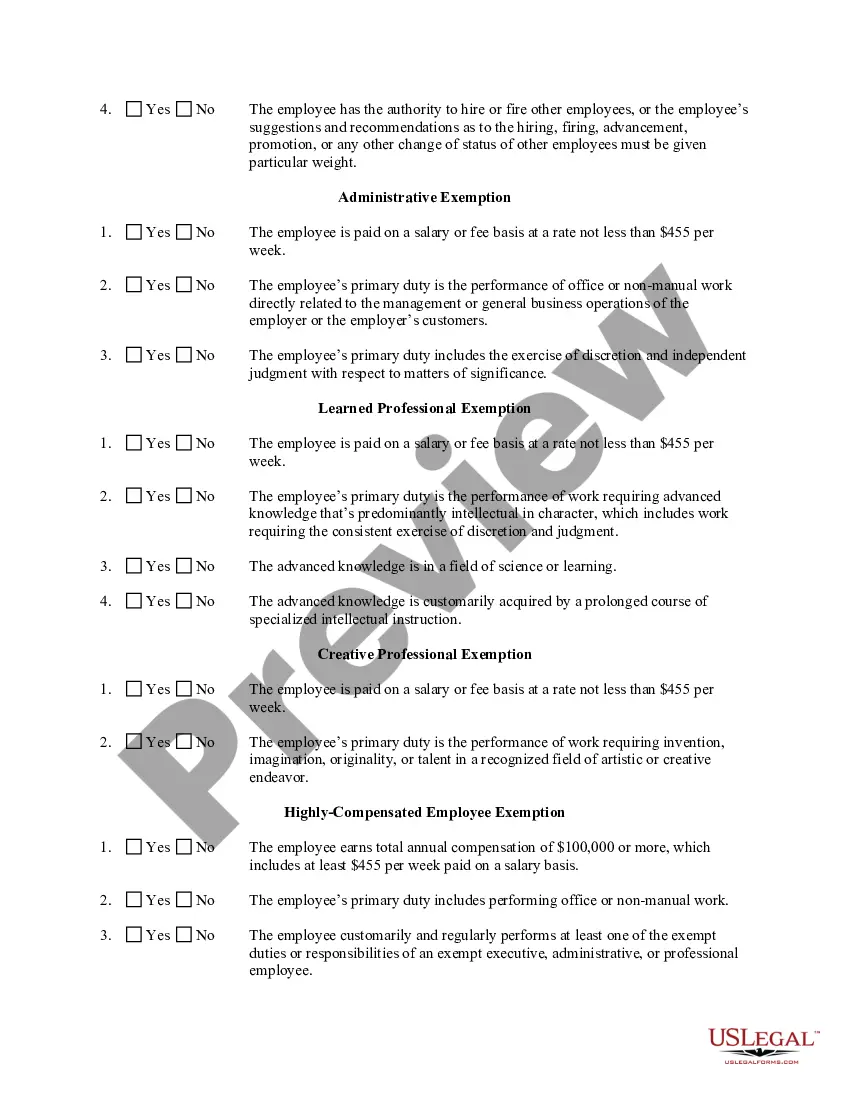
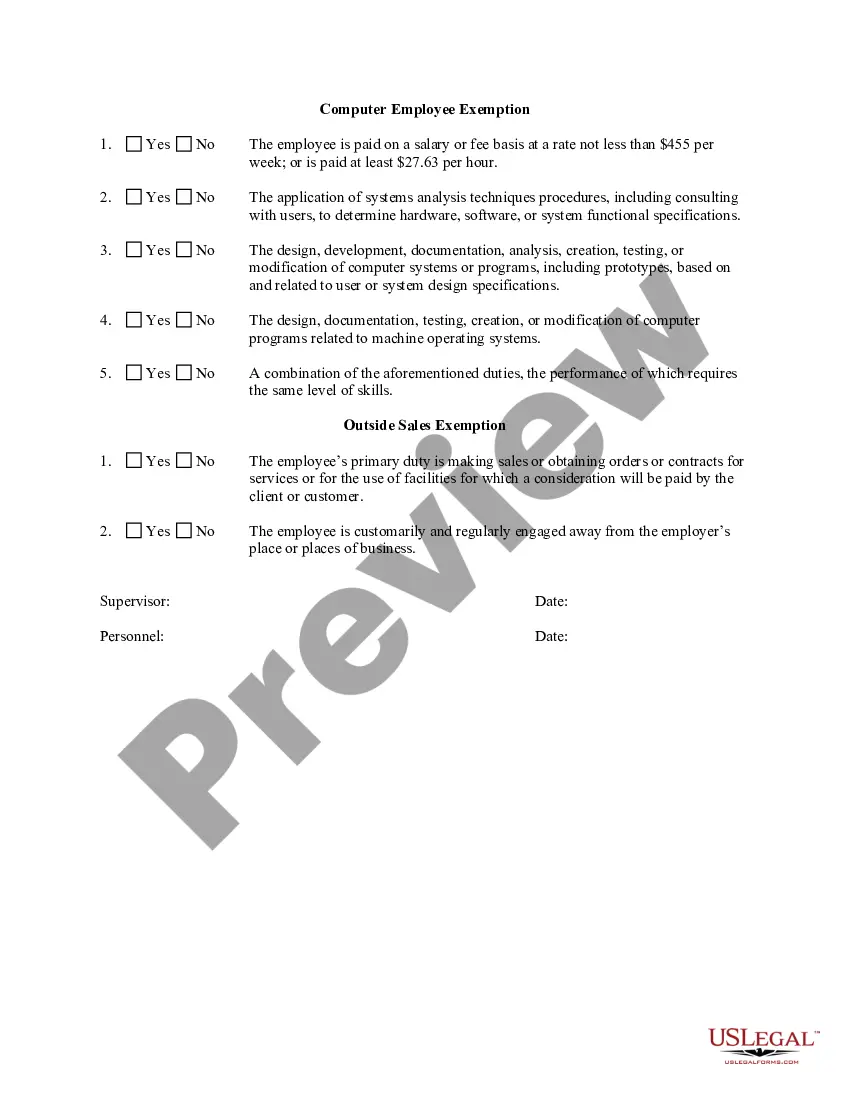
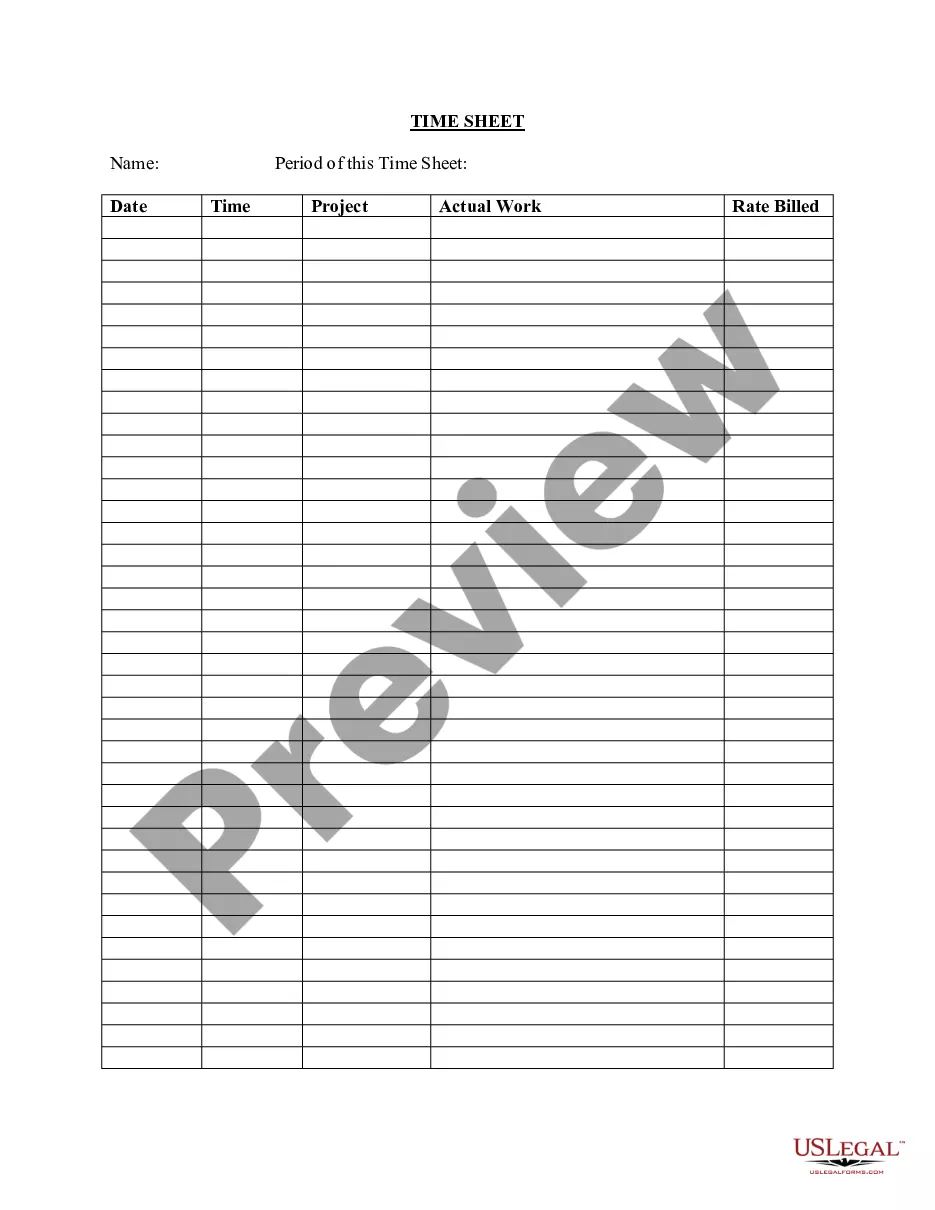
Get your form ready online
Our built-in tools help you complete, sign, share, and store your documents in one place.
Make edits, fill in missing information, and update formatting in US Legal Forms—just like you would in MS Word.
Download a copy, print it, send it by email, or mail it via USPS—whatever works best for your next step.
Sign and collect signatures with our SignNow integration. Send to multiple recipients, set reminders, and more. Go Premium to unlock E-Sign.
If this form requires notarization, complete it online through a secure video call—no need to meet a notary in person or wait for an appointment.
We protect your documents and personal data by following strict security and privacy standards.

Make edits, fill in missing information, and update formatting in US Legal Forms—just like you would in MS Word.

Download a copy, print it, send it by email, or mail it via USPS—whatever works best for your next step.

Sign and collect signatures with our SignNow integration. Send to multiple recipients, set reminders, and more. Go Premium to unlock E-Sign.

If this form requires notarization, complete it online through a secure video call—no need to meet a notary in person or wait for an appointment.

We protect your documents and personal data by following strict security and privacy standards.
Looking for another form?


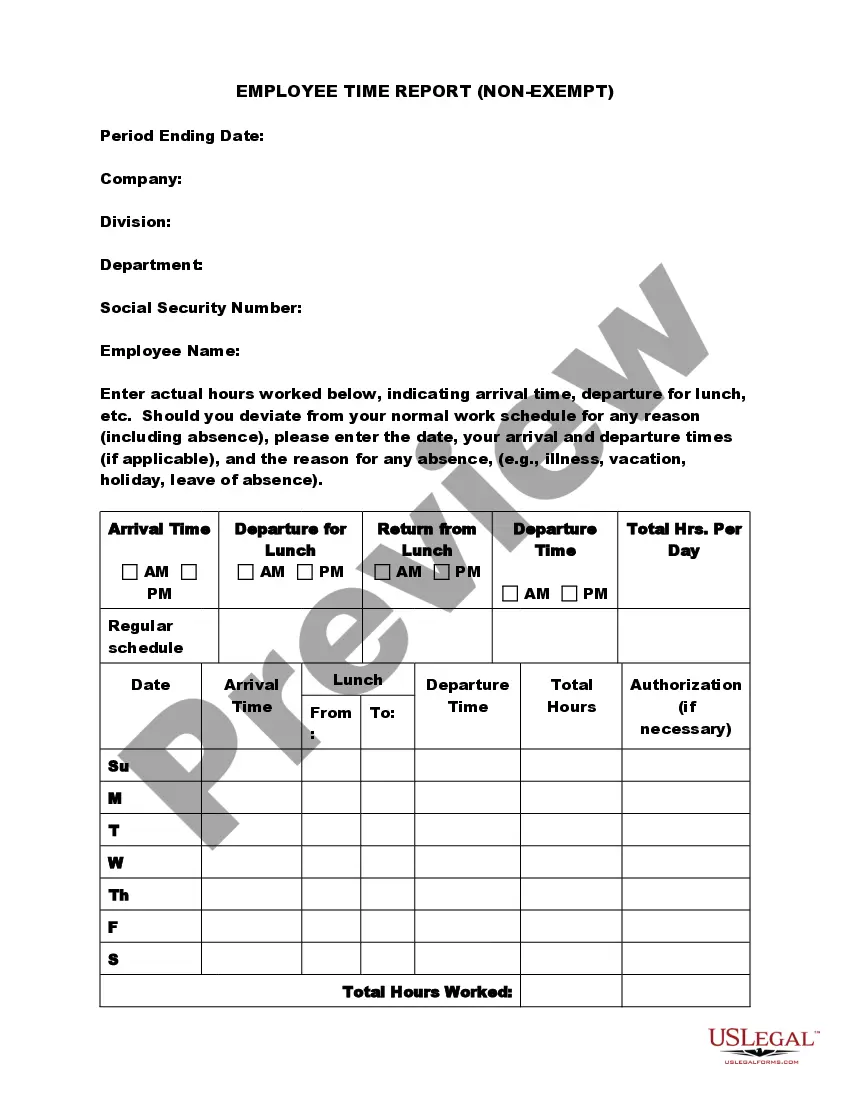
How to fill out FLSA Exempt / Nonexempt Compliance Form?
It’s well-known that you cannot instantly become a legal authority, nor can you swiftly master how to prepare Exempt Vs Non Exempt For Taxes without a specialized background.
Drafting legal documents is a lengthy endeavor that necessitates specific education and expertise. So, why not entrust the preparation of the Exempt Vs Non Exempt For Taxes to professionals.
With US Legal Forms, one of the most extensive legal document repositories, you can discover everything from court documents to templates for internal communication.
Sign up for a free account and select a subscription plan to acquire the template.
Click Buy now. Once the purchase is finalized, you can download the Exempt Vs Non Exempt For Taxes, fill it out, print it, and send or mail it to the required individuals or entities.
- We understand how vital compliance and adherence to federal and local statutes and regulations are.
- That’s why, on our platform, all forms are location-specific and current.
- Begin using our platform and secure the form you require in just a few minutes.
- Search for the form you need by utilizing the search bar at the top of the page.
- Preview it (if this option is available) and read the accompanying description to determine if Exempt Vs Non Exempt For Taxes is what you seek.
- If you require another template, restart your search.
Form popularity
FAQ
When you file non-exempt, your employer withholds taxes from your paycheck based on the wage types and tax laws applicable to your earnings. This helps ensure that you do not face an unexpected tax bill at the end of the year. Filing as non-exempt requires careful tracking of your earnings and tax contributions, which can be simplified with tools available on USLegalForms. Understanding the implications of exempt vs non exempt for taxes will help you maintain better control over your finances.
Being tax-exempt is advantageous for specific scenarios, often providing immediate relief from tax withholding. However, this status requires that you meet strict criteria each year, potentially complicating your financial planning. Many people opt for non-exempt status to ensure consistent tax payments and avoid a surprise tax bill at the end of the year. Understanding the differences in exempt vs non exempt for taxes can guide your decision, and platforms like USLegalForms can assist you.
Whether to claim exempt or non-exempt for taxes depends on your individual financial situation. Claiming exempt may appear beneficial to those expecting no tax liability but can lead to significant tax bills later. Non-exempt employees may have taxes withheld throughout the year, which can help manage finances. Understanding your tax obligations is vital, and resources like USLegalForms can aid in making informed decisions.
Determining if a position is exempt or nonexempt for taxes primarily depends on the job duties and the salary level. Exempt positions typically meet specific criteria set by the Fair Labor Standards Act (FLSA), which includes executive, administrative, and professional roles. It's essential to evaluate these factors carefully, as misclassification can lead to legal issues. Consulting resources like USLegalForms can provide clarity on the exempt vs non exempt for taxes classification.
The three factors to consider when determining exempt versus non-exempt include your annual income, expected tax liability, and filing requirements. First, evaluate your total annual income against IRS thresholds. Next, project your tax obligations based on your earnings. Lastly, refer to IRS guidelines to review filing requirements. Resources like USLegalForms can simplify these evaluations for you.
To determine if you are exempt or non-exempt, assess your income level and calculate your potential tax liability. You are likely to be non-exempt if your earnings exceed certain limits set by the IRS. Seeking assistance from tax professionals or platforms like USLegalForms can provide the clarity you need to confirm your status efficiently.
Determining whether you are exempt or non-exempt involves examining your income and tax obligations. Analyze your earnings, possible deductions, and the IRS exemption criteria. If in doubt, consult tax professionals or use services like USLegalForms to facilitate your understanding of exempt vs non-exempt for taxes.
To determine if you qualify for exempt status, review your total annual income and adjust it for possible deductions. If your expected tax liability is zero for the year, you may meet exemption criteria. Additionally, check IRS requirements or use online tools, such as those from USLegalForms, to confirm your eligibility quickly.
Filling out a tax-exempt form involves completing the appropriate section of the tax form provided by your employer or the IRS. You typically need to indicate your exempt status and provide necessary personal details. Ensure that you meet the requirement for exemption before submitting your form. Resources like USLegalForms provide templates and instructions that can simplify this task.
The test for exempt vs non-exempt primarily involves assessing your annual income and tax liability. Generally, if your income is below a certain threshold and you do not expect to owe taxes, you may qualify as exempt. To determine your status, look for IRS guidelines that outline income limits and tax responsibilities. Tools like USLegalForms can help clarify this process for you.