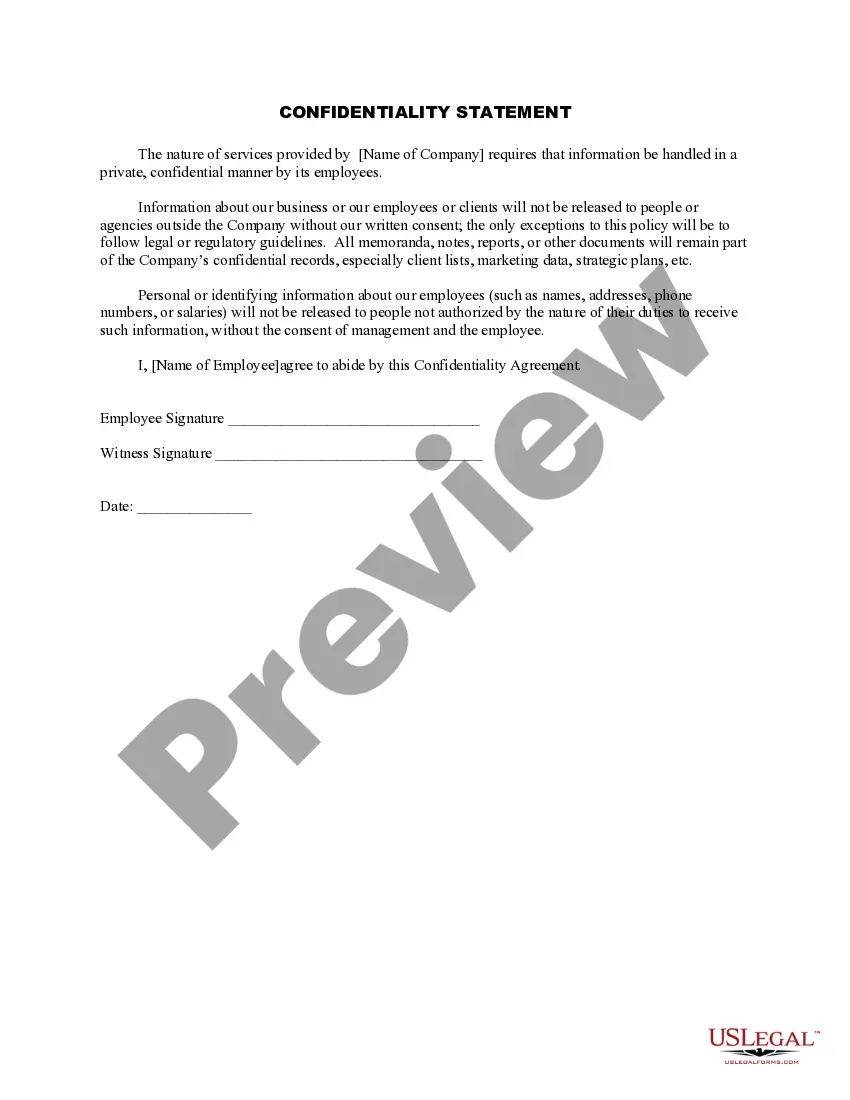
Confidentiality Statement For Therapists
Description
Get your form ready online
Our built-in tools help you complete, sign, share, and store your documents in one place.
Make edits, fill in missing information, and update formatting in US Legal Forms—just like you would in MS Word.
Download a copy, print it, send it by email, or mail it via USPS—whatever works best for your next step.
Sign and collect signatures with our SignNow integration. Send to multiple recipients, set reminders, and more. Go Premium to unlock E-Sign.
If this form requires notarization, complete it online through a secure video call—no need to meet a notary in person or wait for an appointment.
We protect your documents and personal data by following strict security and privacy standards.

Make edits, fill in missing information, and update formatting in US Legal Forms—just like you would in MS Word.

Download a copy, print it, send it by email, or mail it via USPS—whatever works best for your next step.

Sign and collect signatures with our SignNow integration. Send to multiple recipients, set reminders, and more. Go Premium to unlock E-Sign.

If this form requires notarization, complete it online through a secure video call—no need to meet a notary in person or wait for an appointment.

We protect your documents and personal data by following strict security and privacy standards.
Looking for another form?


How to fill out Confidentiality Statement And Agreement For An Employee?
Acquiring legal documents that comply with federal and state laws is essential, and the web provides many alternatives to choose from.
However, what is the benefit of spending time hunting for the correct Confidentiality Statement For Therapists example online when the US Legal Forms digital database already compiles these templates in one location.
US Legal Forms is the largest online legal repository with more than 85,000 customizable templates created by lawyers for various professional and personal scenarios.
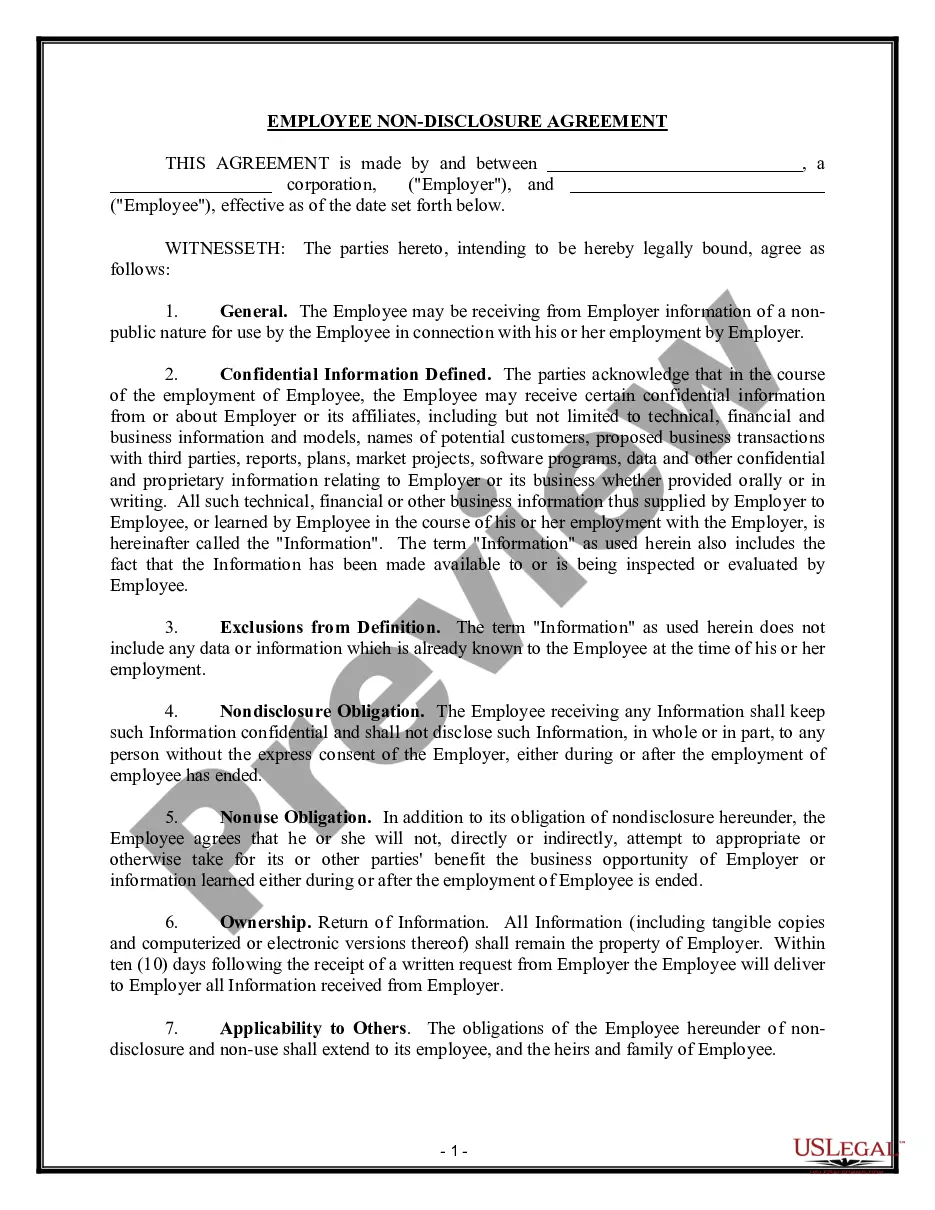
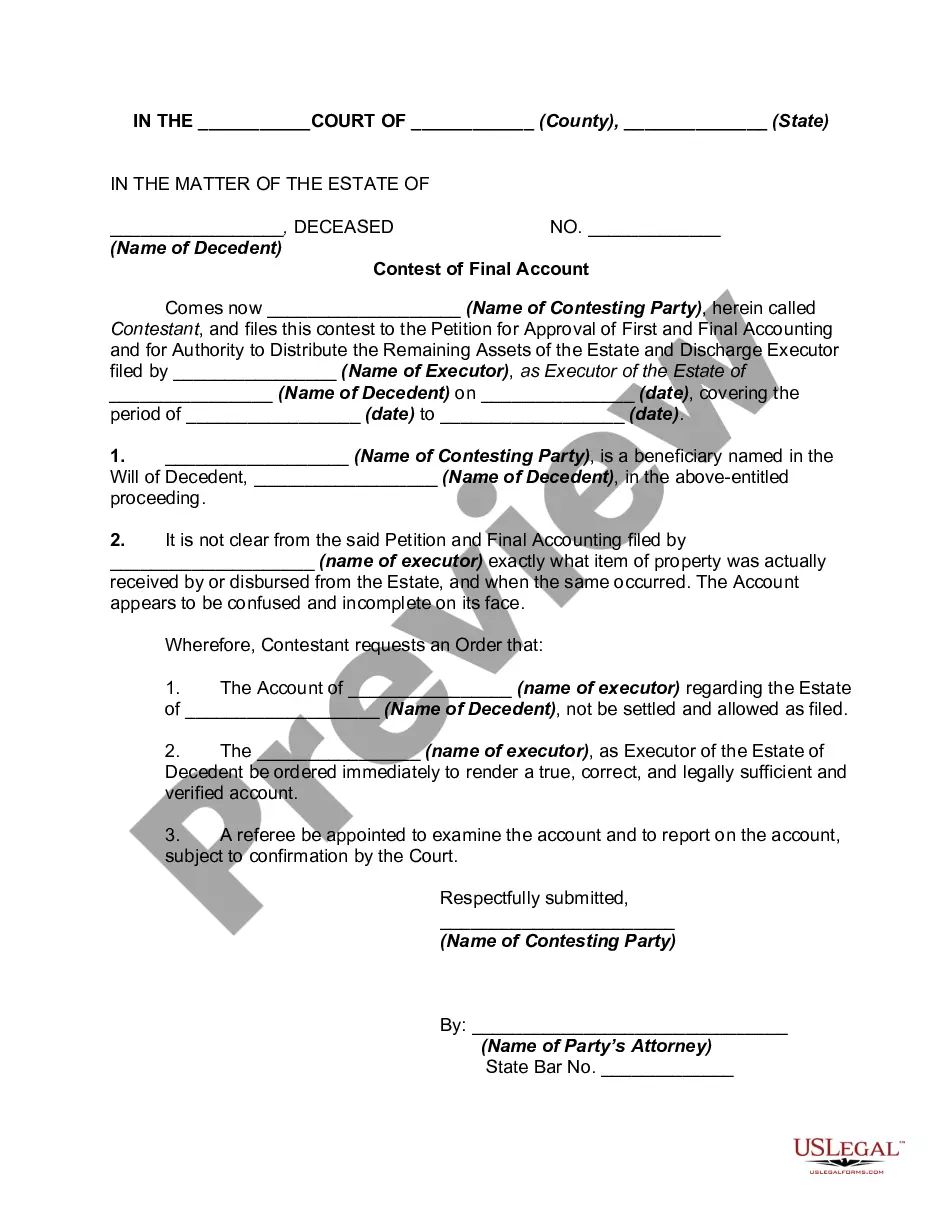
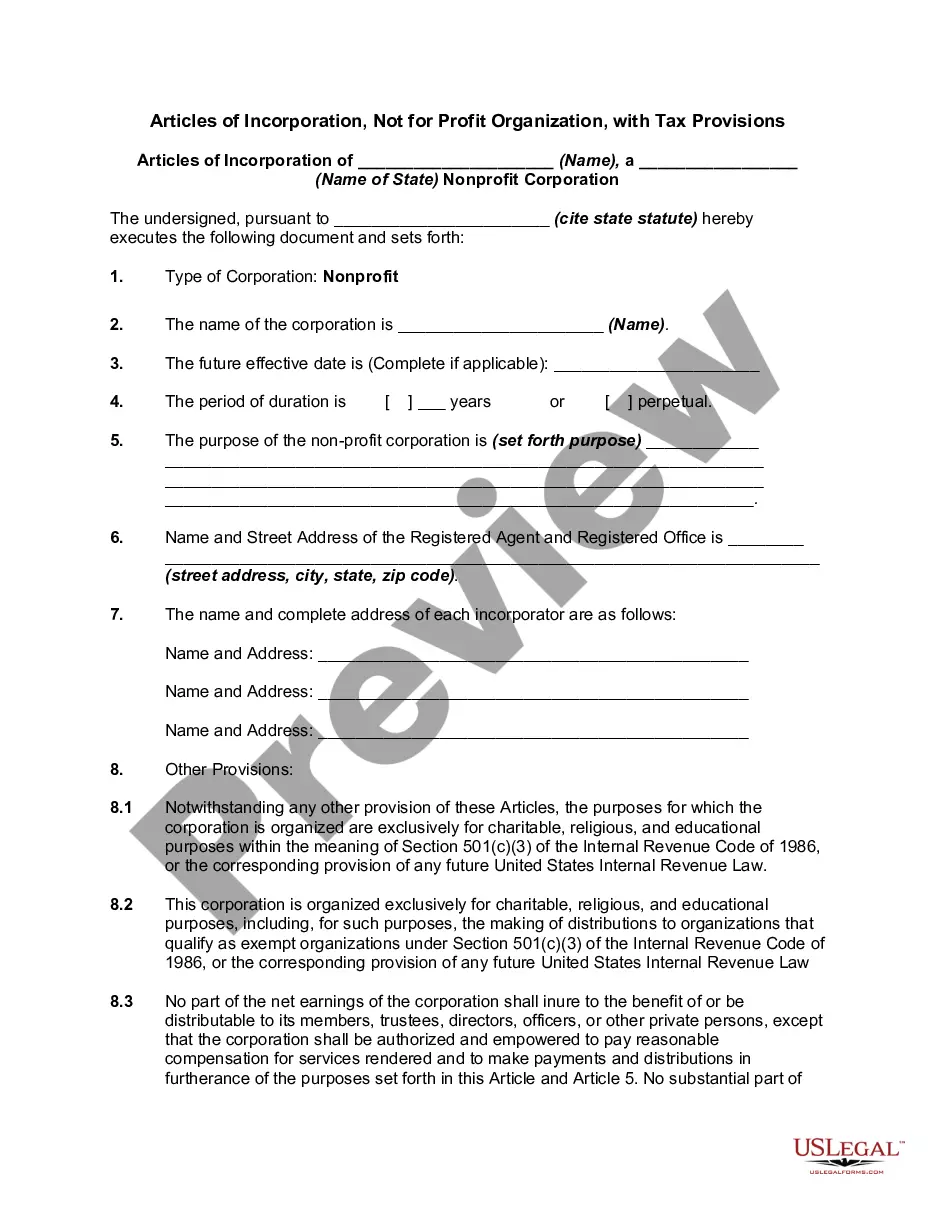
Review the template using the Preview feature or through the text outline to confirm it aligns with your requirements.
- They are straightforward to navigate, with all files organized by jurisdiction and intended use.
- Our experts keep pace with legislative updates, ensuring your form is current and compliant when obtaining a Confidentiality Statement For Therapists from our platform.
- Acquiring a Confidentiality Statement For Therapists is quick and easy for both existing and new users.
- If you possess an account with an active subscription, Log In and download the document sample you need in the correct format.
- If you are unfamiliar with our site, follow the steps below.
Form popularity
FAQ
A confidentiality statement for therapists typically asserts that the therapist will not share any client information without explicit consent. It can also explain the importance of confidentiality in the therapeutic process, emphasizing that it is essential for effective treatment. This assures clients that their discussions are protected, enabling them to open up freely during sessions. To create your own statement, consider using resources like US Legal Forms, which provides easy-to-use templates for confidentiality statements for therapists.
An example of a confidentiality statement could include a declaration that the therapist will keep all client information confidential. It might also specify the circumstances under which information could be disclosed, such as threats to safety or legal obligations. Such a statement helps clarify the boundaries of confidentiality and ensures clients understand their rights. For those seeking a reliable template, US Legal Forms offers various confidentiality statements for therapists that you can tailor to your needs.
A confidentiality statement in counseling outlines the therapist's commitment to protect client information. For instance, it may state that all conversations and records are private and will not be shared without the client's consent, except in specific legal circumstances. This statement reassures clients that their personal details remain secure, fostering trust in the therapeutic relationship. You can find customizable templates for confidentiality statements for therapists on platforms like US Legal Forms.
A good sentence for confidentiality could be, 'Confidentiality is essential for fostering a trustworthy therapist-client relationship.' This statement underscores the role of confidentiality in effective therapy. It emphasizes that clients can feel safe sharing their thoughts and feelings. A well-crafted confidentiality statement for therapists is key to building that trust and maintaining a professional standard.
The general statement of confidentiality typically states, 'Client information is kept confidential and is only disclosed with the client's consent, or as required by law.' This statement addresses the primary concerns clients may have regarding their privacy. It emphasizes the therapist's commitment to protecting client information. Implementing a confidentiality statement for therapists ensures clients know their rights and the limitations of confidentiality.
A short confidentiality statement could be, 'All discussions in therapy are confidential and will not be shared without your permission.' This succinct message effectively communicates the core principle of confidentiality. It is vital for therapists to incorporate such statements to reassure clients of their privacy. By including a confidentiality statement for therapists, you establish a foundation of trust and safety.
A good example of confidentiality is when a therapist discusses a client's case with a supervisor while keeping the client's identity anonymous. This practice ensures that the client's privacy is protected while still allowing for professional guidance. In therapy, maintaining confidentiality is crucial for creating a safe space for clients. A solid confidentiality statement for therapists can help reinforce this essential aspect of the therapeutic relationship.
An example of a confidentiality disclaimer might be, 'All client information is treated as confidential and will only be released with the client's written consent, except where required by law.' This disclaimer serves to inform clients about their rights regarding their personal information. Including a confidentiality statement for therapists in your practice can clarify the limits of confidentiality to clients, enhancing their understanding of their privacy.
A good sentence for 'confidential' could be, 'The information shared during therapy sessions remains confidential and is protected by law.' This statement highlights the importance of confidentiality in therapeutic settings. It reassures clients that their personal information will not be disclosed without their consent. Using a clear confidentiality statement for therapists helps establish trust between the therapist and the client.
To write a confidentiality statement for therapists, begin by clearly defining the purpose of the statement. Include the types of information that will be kept confidential, such as personal details and session notes. Specify the circumstances under which information may be disclosed, like legal requirements or client consent. Utilizing a platform like US Legal Forms can simplify this process by providing templates tailored for therapists, ensuring compliance and clarity.