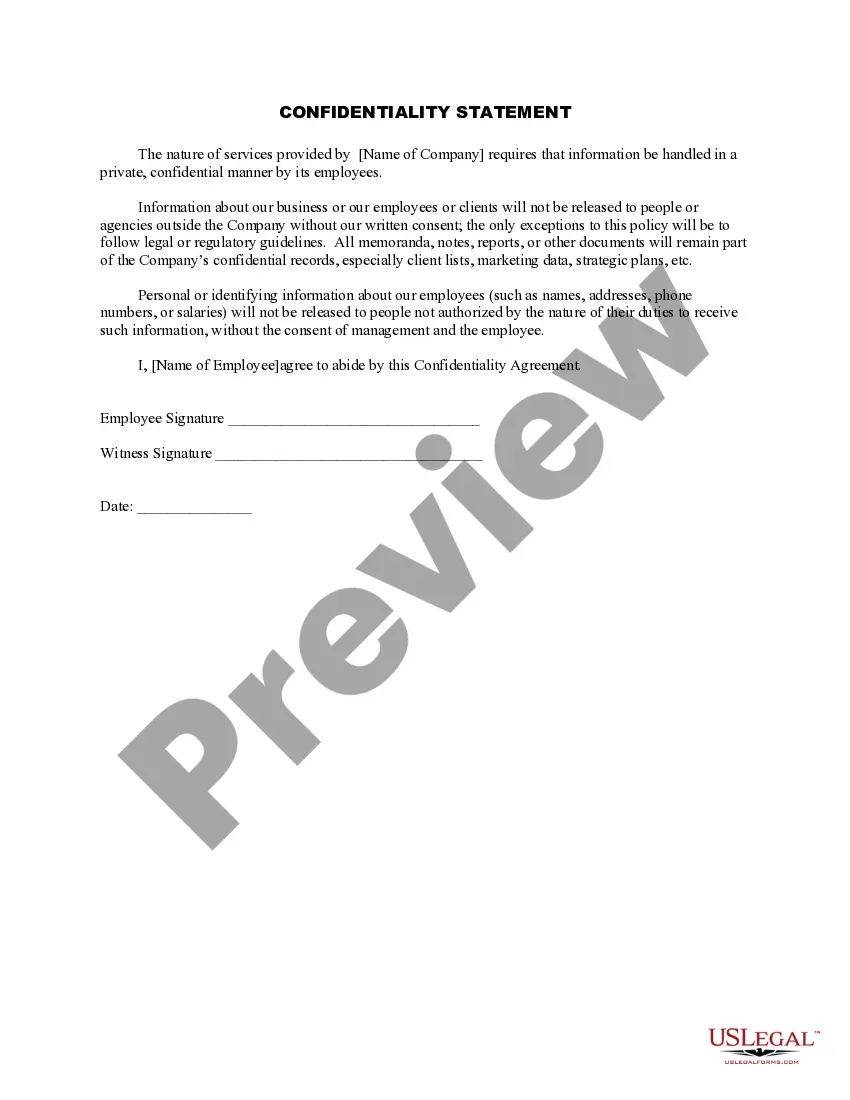
Confidentiality Agreement With Signed
Description
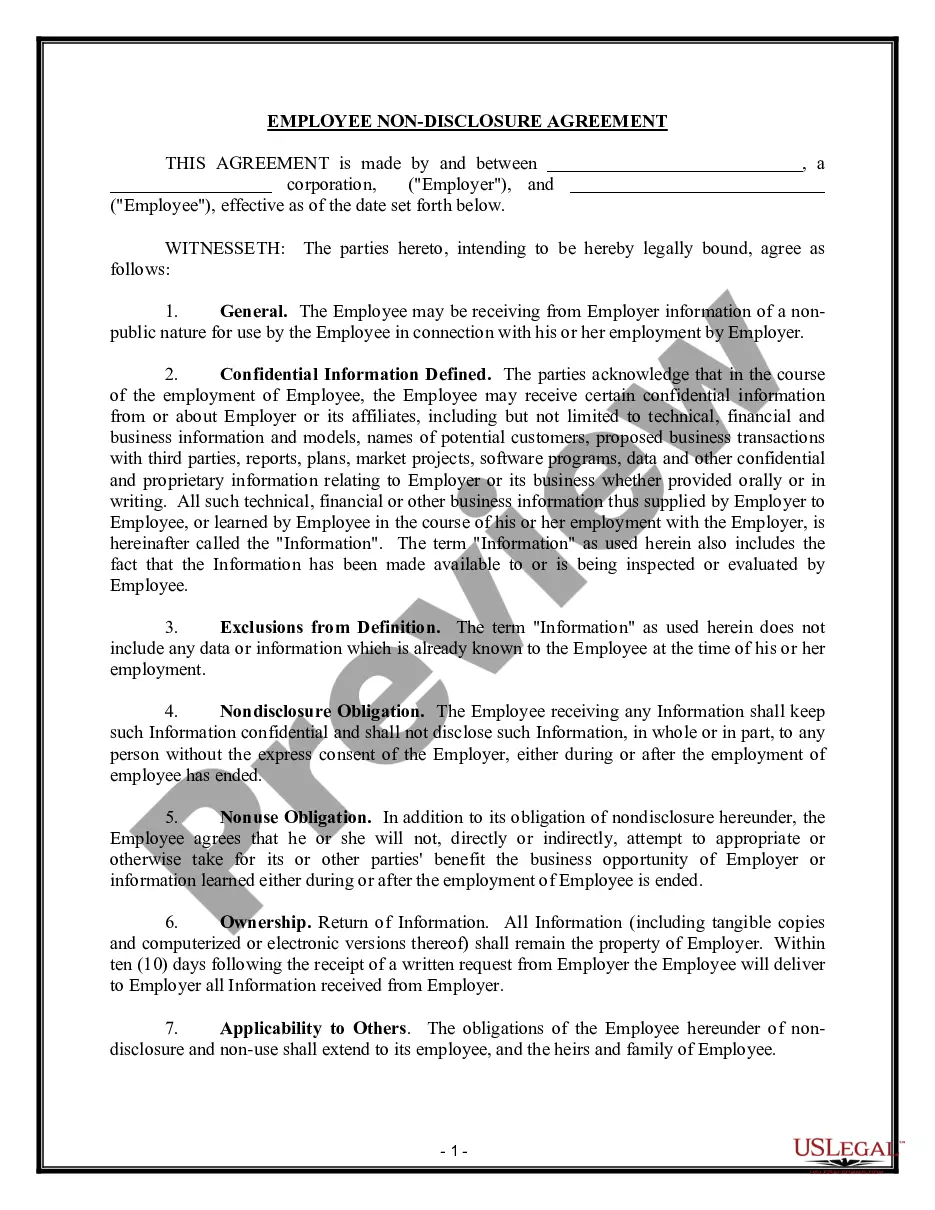
Get your form ready online
Our built-in tools help you complete, sign, share, and store your documents in one place.
Make edits, fill in missing information, and update formatting in US Legal Forms—just like you would in MS Word.
Download a copy, print it, send it by email, or mail it via USPS—whatever works best for your next step.
Sign and collect signatures with our SignNow integration. Send to multiple recipients, set reminders, and more. Go Premium to unlock E-Sign.
If this form requires notarization, complete it online through a secure video call—no need to meet a notary in person or wait for an appointment.
We protect your documents and personal data by following strict security and privacy standards.

Make edits, fill in missing information, and update formatting in US Legal Forms—just like you would in MS Word.

Download a copy, print it, send it by email, or mail it via USPS—whatever works best for your next step.

Sign and collect signatures with our SignNow integration. Send to multiple recipients, set reminders, and more. Go Premium to unlock E-Sign.

If this form requires notarization, complete it online through a secure video call—no need to meet a notary in person or wait for an appointment.

We protect your documents and personal data by following strict security and privacy standards.
Looking for another form?









How to fill out Confidentiality Statement And Agreement For An Employee?
Utilizing legal document exemplars that adhere to national and local regulations is vital, and the web presents many alternatives to select from.
However, what is the use in squandering time searching for the appropriate Confidentiality Agreement With Signed template online if the US Legal Forms digital library already has such resources gathered in one location.
US Legal Forms is the premier online legal repository with over 85,000 editable templates created by lawyers for any commercial and personal situation.
Explore the template using the Preview function or through the text outline to verify it suits your requirements.
- They are simple to navigate with all documents categorized by state and intended purpose.
- Our specialists keep abreast of legislative changes, ensuring you can always trust that your form is current and compliant when acquiring a Confidentiality Agreement With Signed from our site.
- Obtaining a Confidentiality Agreement With Signed is straightforward and quick for both existing and new users.
- If you already possess an account with an active subscription, Log In and download the document sample you need in the desired format.
- If you are a newcomer to our site, follow the steps below.
Form popularity
FAQ
Filling out a confidentiality agreement with signed details requires careful attention to each section. Begin by entering the names of the parties and the date of the agreement. Then, specify the type of confidential information and the purpose for sharing it. Make sure to review the obligations and the time frame for confidentiality before signing. Platforms like USLegalForms offer user-friendly templates that can help you complete this process efficiently and accurately.
To write a simple confidentiality agreement with signed terms, start by clearly defining the parties involved and the confidential information being shared. Next, specify the obligations of each party regarding the use and protection of the information. It’s important to include the duration of confidentiality and any exclusions. Using a platform like USLegalForms can simplify this process, providing templates that guide you through creating a comprehensive agreement tailored to your needs.
A confidentiality agreement with signed details typically includes the specifics of the confidential information, the parties involved, and the purpose of sharing this information. For example, if a business is sharing trade secrets with a potential partner, the agreement will outline what information is considered confidential and the obligations of each party. This ensures that both sides understand their responsibilities and helps protect sensitive data from unauthorized disclosure.
The difference between a Non-Disclosure Agreement and a Confidentiality Agreement with Signed terms often lies in their specific applications and language. An NDA is typically used in a broader context, while a CDA may focus on specific types of confidential information shared in particular situations. Choosing the right agreement ensures that all parties understand their responsibilities regarding confidentiality.
CDAs, or Confidentiality Agreements with Signed clauses, are generally enforceable as long as they meet legal requirements. To be enforceable, the agreement should clearly define the confidential information, specify the duration of confidentiality, and include the obligations of each party. When properly drafted, you can rely on a CDA to protect your sensitive information in legal situations.
A signed confidentiality agreement is a legally binding document in which parties consent to keep certain information private. This agreement outlines what information is considered confidential and the obligations of the parties involved. When you have a Confidentiality Agreement with Signed acknowledgment, it strengthens your position in case of disputes about information disclosure.
While both a Confidentiality Agreement with Signed provisions and a Non-Disclosure Agreement serve to protect sensitive information, the terms and scope can differ slightly. A CDA often focuses on confidentiality in specific contexts, such as collaborations or partnerships, while an NDA is a broader term for any agreement aimed at preventing information leakage. Understanding these nuances can help you choose the right document for your needs.
The primary purpose of a Confidentiality Agreement with Signed terms, commonly referred to as a CDA or NDA, is to protect sensitive information shared between parties. This legal document ensures that the receiving party does not disclose or misuse the confidential information. By establishing clear guidelines, it fosters trust and encourages open communication during business transactions.
If only one party signs a contract, the agreement may lack enforceability. In a confidentiality agreement with signed consent, both parties must agree to the terms for it to hold legal weight. Without mutual signatures, the unregistered party may not be obligated to comply, which can lead to potential disputes.
Typically, both parties involved in the exchange of confidential information sign a confidentiality agreement. This includes individuals, companies, or organizations that wish to protect sensitive data. Each signatory acknowledges their responsibility to uphold the terms of the agreement, ensuring mutual protection.