Sexual Harassment Workplace
Description
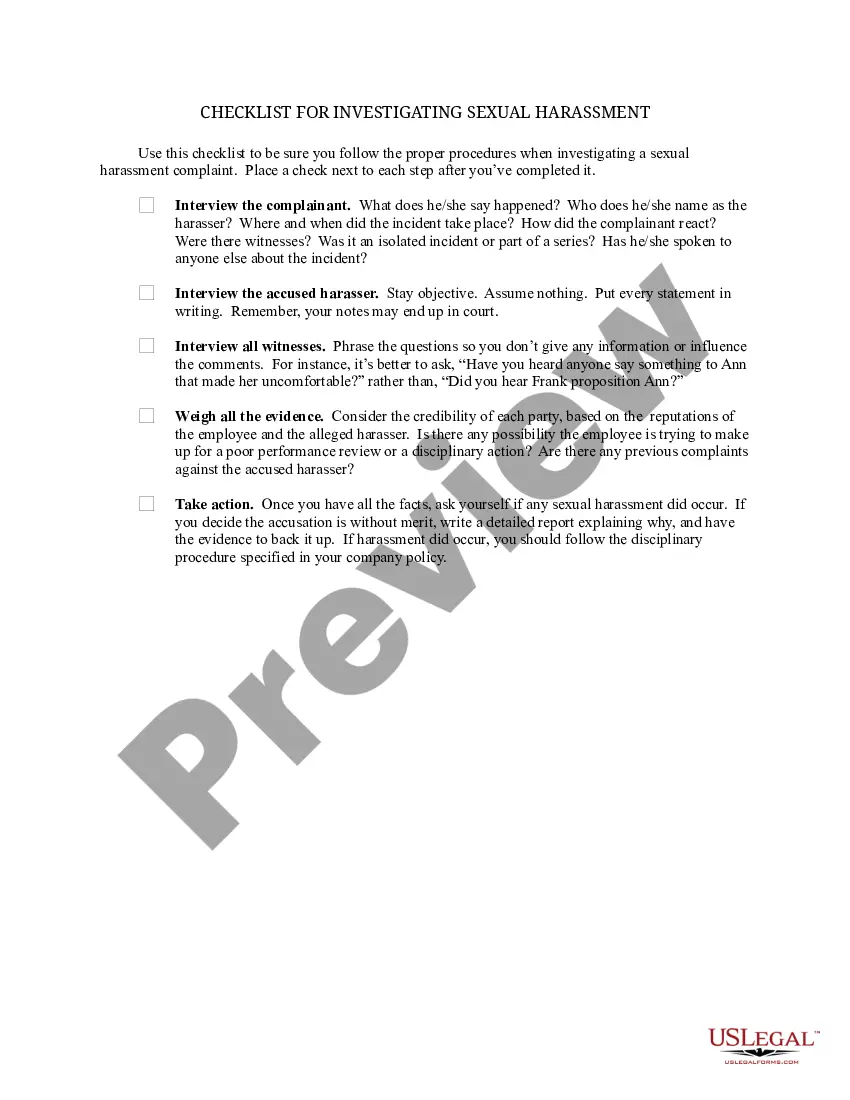
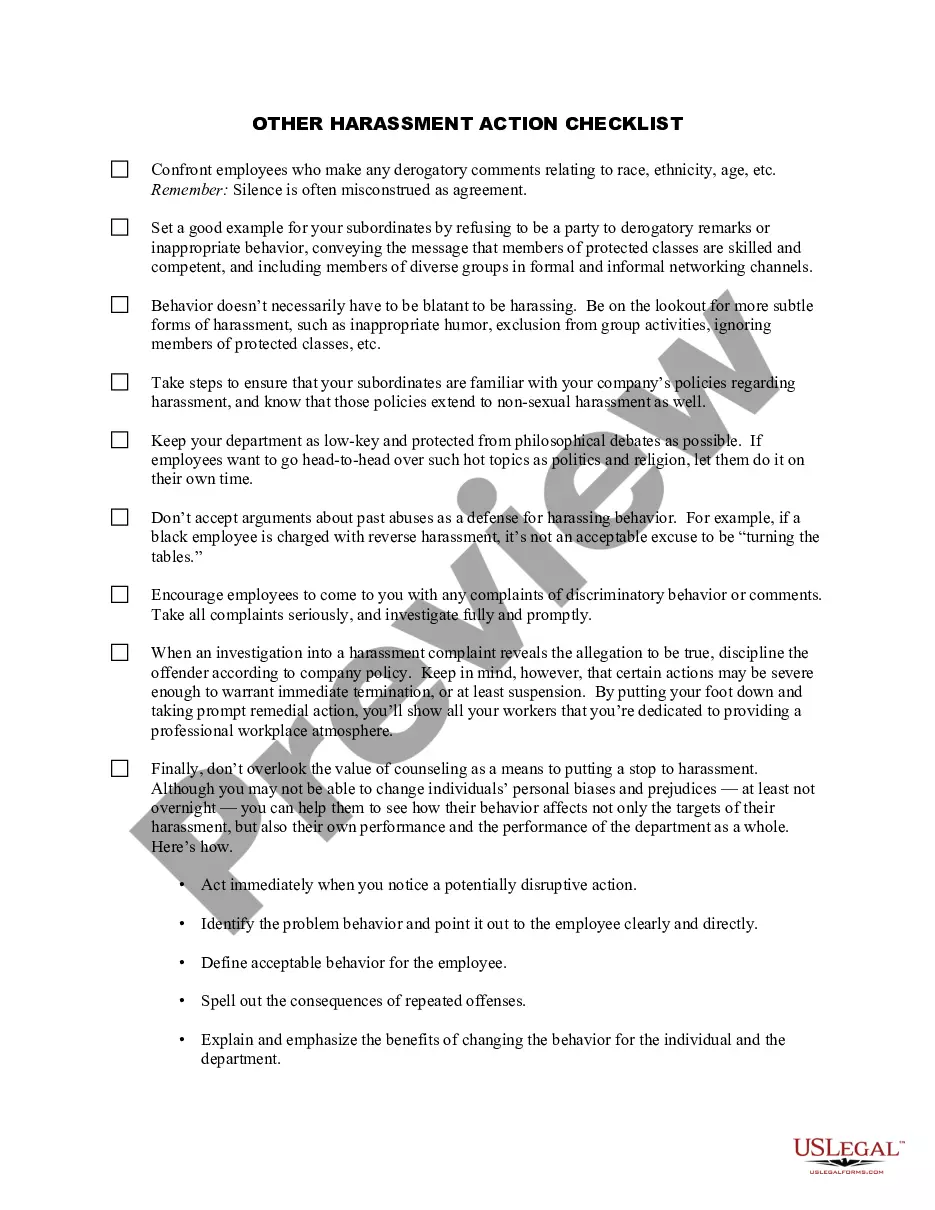
Get your form ready online
Our built-in tools help you complete, sign, share, and store your documents in one place.
Make edits, fill in missing information, and update formatting in US Legal Forms—just like you would in MS Word.
Download a copy, print it, send it by email, or mail it via USPS—whatever works best for your next step.
Sign and collect signatures with our SignNow integration. Send to multiple recipients, set reminders, and more. Go Premium to unlock E-Sign.
If this form requires notarization, complete it online through a secure video call—no need to meet a notary in person or wait for an appointment.
We protect your documents and personal data by following strict security and privacy standards.

Make edits, fill in missing information, and update formatting in US Legal Forms—just like you would in MS Word.

Download a copy, print it, send it by email, or mail it via USPS—whatever works best for your next step.

Sign and collect signatures with our SignNow integration. Send to multiple recipients, set reminders, and more. Go Premium to unlock E-Sign.

If this form requires notarization, complete it online through a secure video call—no need to meet a notary in person or wait for an appointment.

We protect your documents and personal data by following strict security and privacy standards.
Looking for another form?
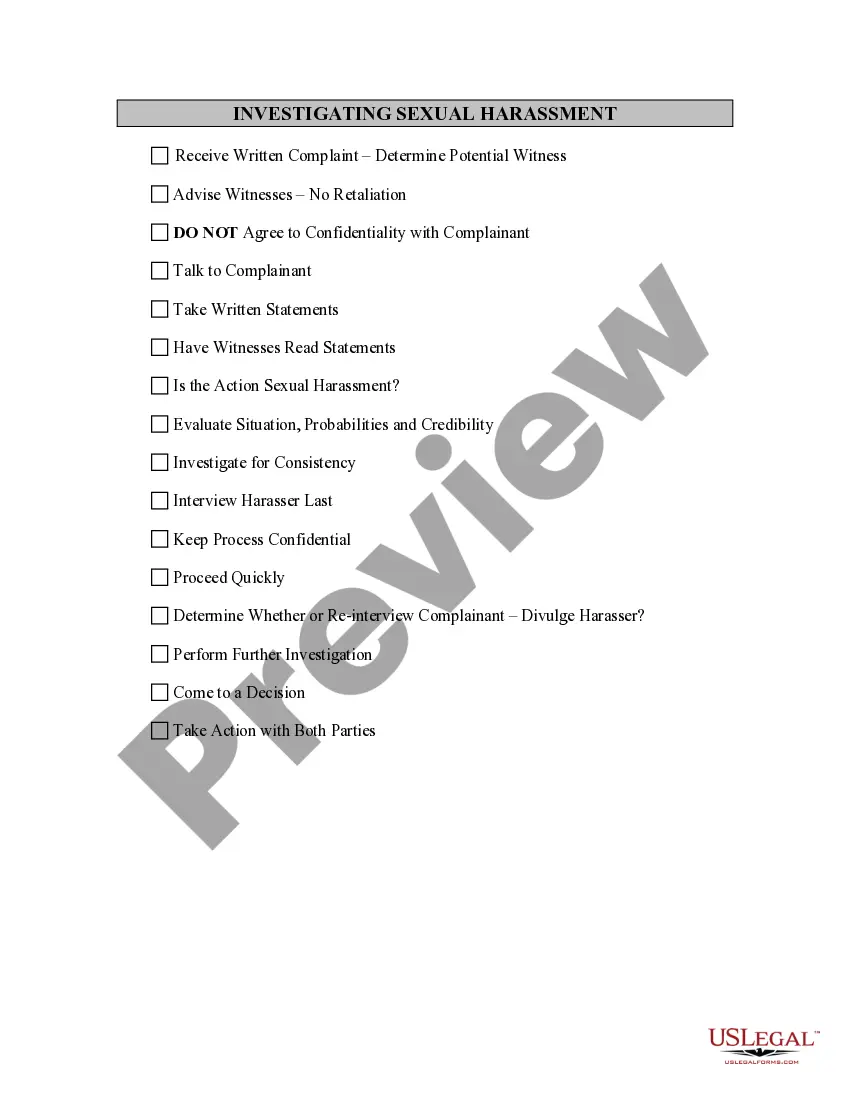
How to fill out Investigating Sexual Harassment Checklist - Workplace?
- Log into your US Legal Forms account if you are an existing user. Ensure your subscription is current before proceeding to download any templates.
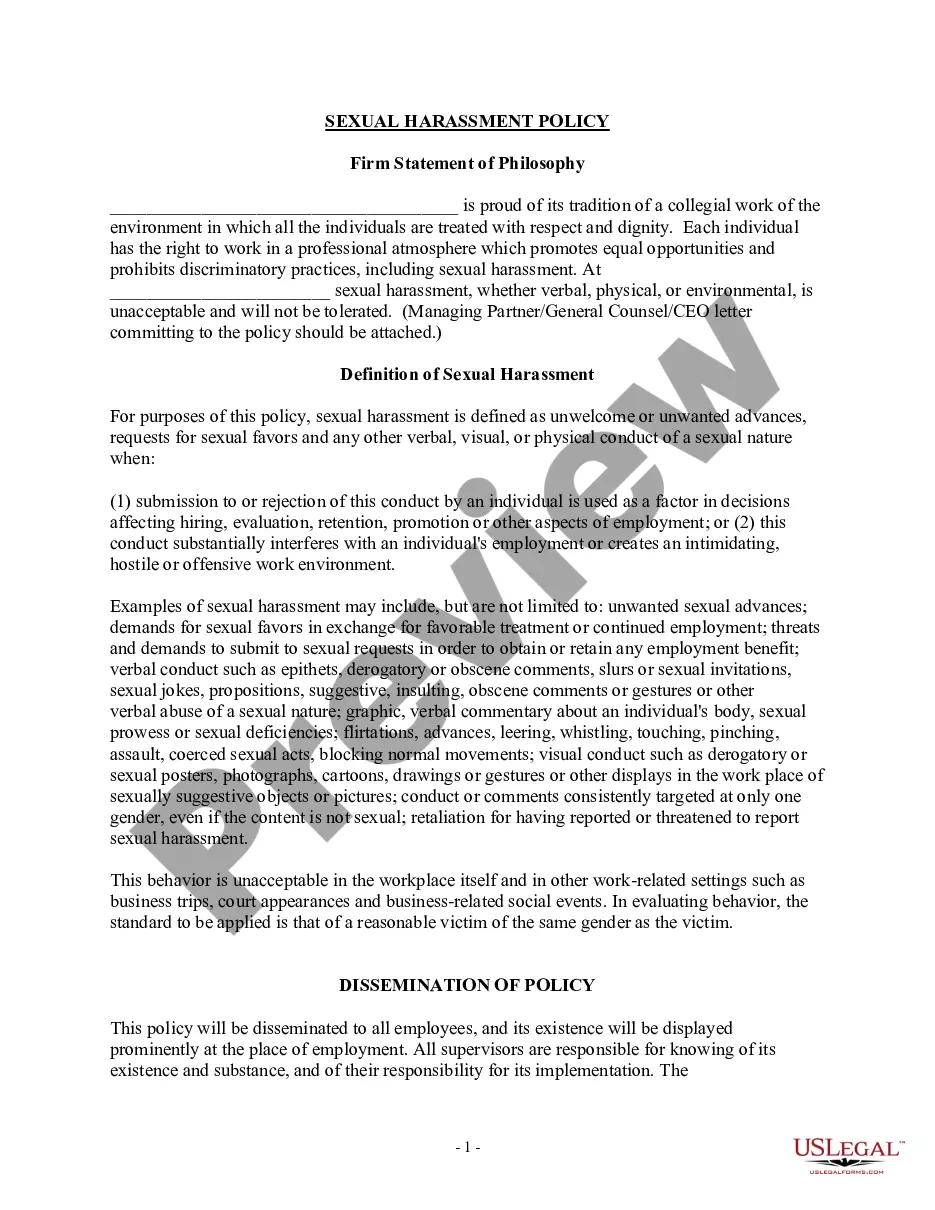
- For first-time users, begin by selecting a document type related to sexual harassment workplace issues from the extensive library. Use the Preview feature to confirm the document's relevance and compliance with your local jurisdiction.
- If the initial form does not meet your needs, utilize the Search feature to find alternative templates that may be more suitable.
- Once you have found the correct document, click on the 'Buy Now' button to select your preferred subscription plan. You will need to create an account to gain access to the full library.
- Finalize your purchase by entering your payment details, whether via credit card or PayPal, to complete the transaction.
- After your purchase, download the form directly to your device and access it anytime through the 'My Forms' section of your profile.
By utilizing US Legal Forms, you gain access to a robust collection of over 85,000 legal documents tailored to your needs, ensuring compliance and clarity in handling sexual harassment workplace situations.
Take control of your workplace safety today by accessing these invaluable resources. Explore US Legal Forms and secure the legal protection you need.
Form popularity
FAQ
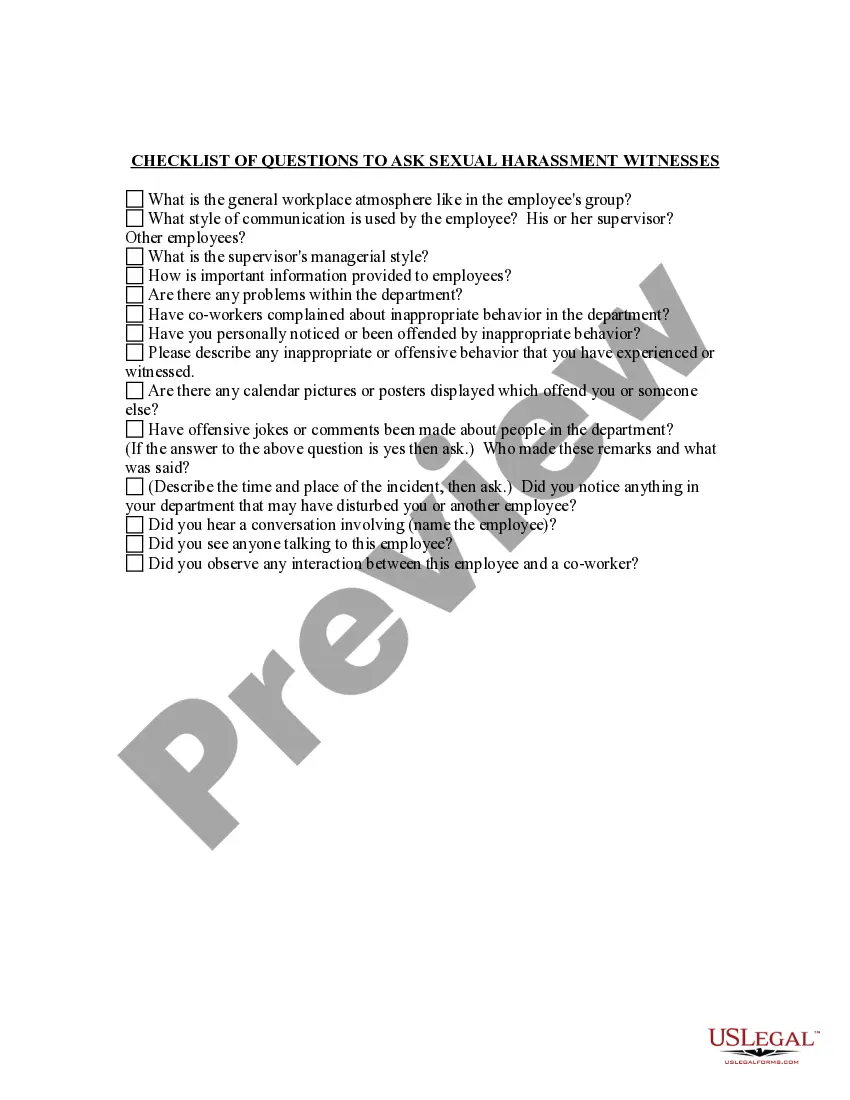
Examples of workplace harassment include unwanted advances, derogatory comments, inappropriate jokes, and physical intimidation. It can also encompass cyberbullying through emails or social media. Any behavior that creates a hostile work environment or interferes with your job performance qualifies as workplace harassment. Recognizing these examples helps you identify and address such behaviors effectively.
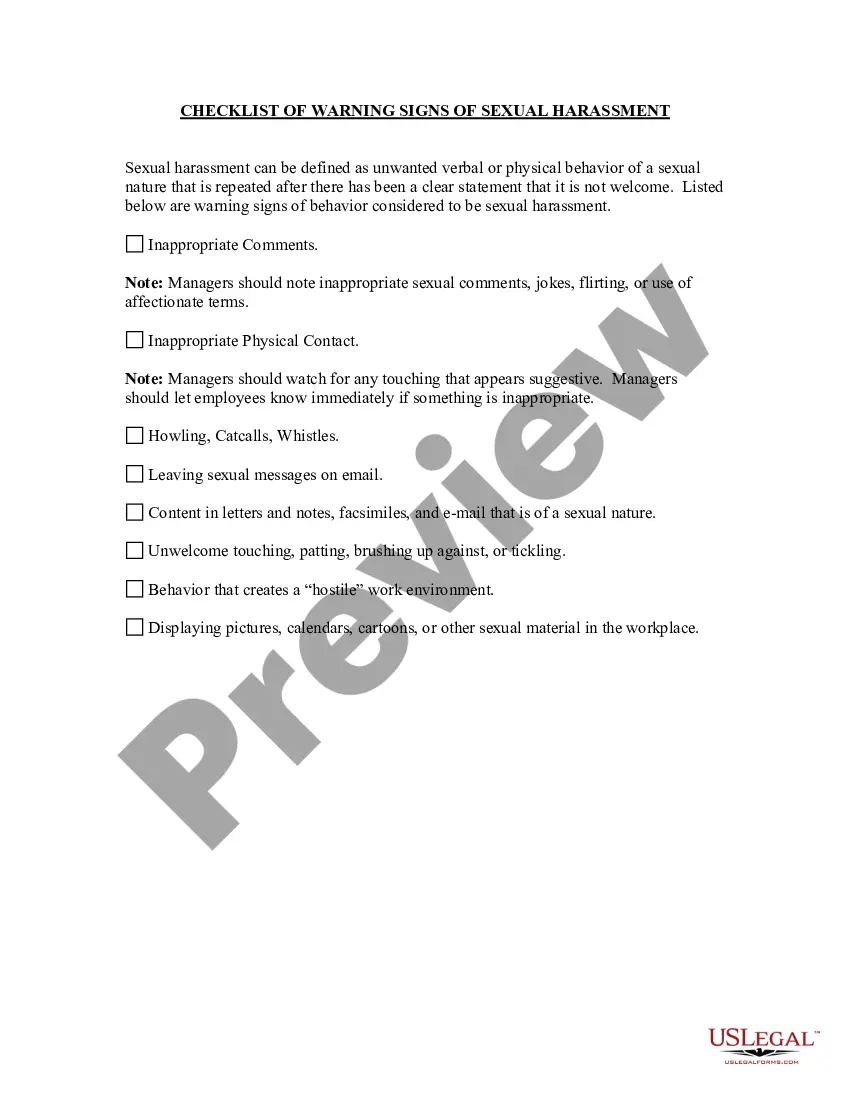
To support a claim of workplace harassment, you need various forms of evidence. This can include written documentation of incidents, emails, text messages, and witness statements. You might also gather performance reviews or other records that show a change in your work conditions or environment. Collecting diverse types of evidence strengthens your case significantly.
When telling HR about harassment, approach the matter professionally and calmly. Prepare your documentation beforehand, as this will help you explain the situation clearly. Request a private meeting and be ready to present the evidence you have collected. Focus on facts and ensure you express the impact of the harassment on your work environment.
Properly documenting workplace harassment involves writing down every incident clearly and factually. Include specific details such as dates, times, locations, and names of individuals involved. Use direct quotes for dialogue when possible, and compile any relevant emails or text messages. Thorough records provide valuable evidence and support for your case.
When reporting a case of harassment, first, gather all documentation of incidents, including notes and emails. Next, report the harassment to your supervisor, HR, or a designated official. Then, follow up to ensure proper action is taken, and don’t hesitate to seek support from colleagues or legal resources. Finally, consider utilizing platforms like USLegalForms to understand your rights and options.
To document harassment in the workplace, start by keeping a detailed record of each incident. This includes the date, time, location, people involved, and what was said or done. Ensure you note down any witnesses present during the incidents. Keeping this information organized will help you present a strong case should you decide to report the harassment.