Sexual Harassment With Words
Description
Get your form ready online
Our built-in tools help you complete, sign, share, and store your documents in one place.
Make edits, fill in missing information, and update formatting in US Legal Forms—just like you would in MS Word.
Download a copy, print it, send it by email, or mail it via USPS—whatever works best for your next step.
Sign and collect signatures with our SignNow integration. Send to multiple recipients, set reminders, and more. Go Premium to unlock E-Sign.
If this form requires notarization, complete it online through a secure video call—no need to meet a notary in person or wait for an appointment.
We protect your documents and personal data by following strict security and privacy standards.

Make edits, fill in missing information, and update formatting in US Legal Forms—just like you would in MS Word.

Download a copy, print it, send it by email, or mail it via USPS—whatever works best for your next step.

Sign and collect signatures with our SignNow integration. Send to multiple recipients, set reminders, and more. Go Premium to unlock E-Sign.

If this form requires notarization, complete it online through a secure video call—no need to meet a notary in person or wait for an appointment.

We protect your documents and personal data by following strict security and privacy standards.
Looking for another form?






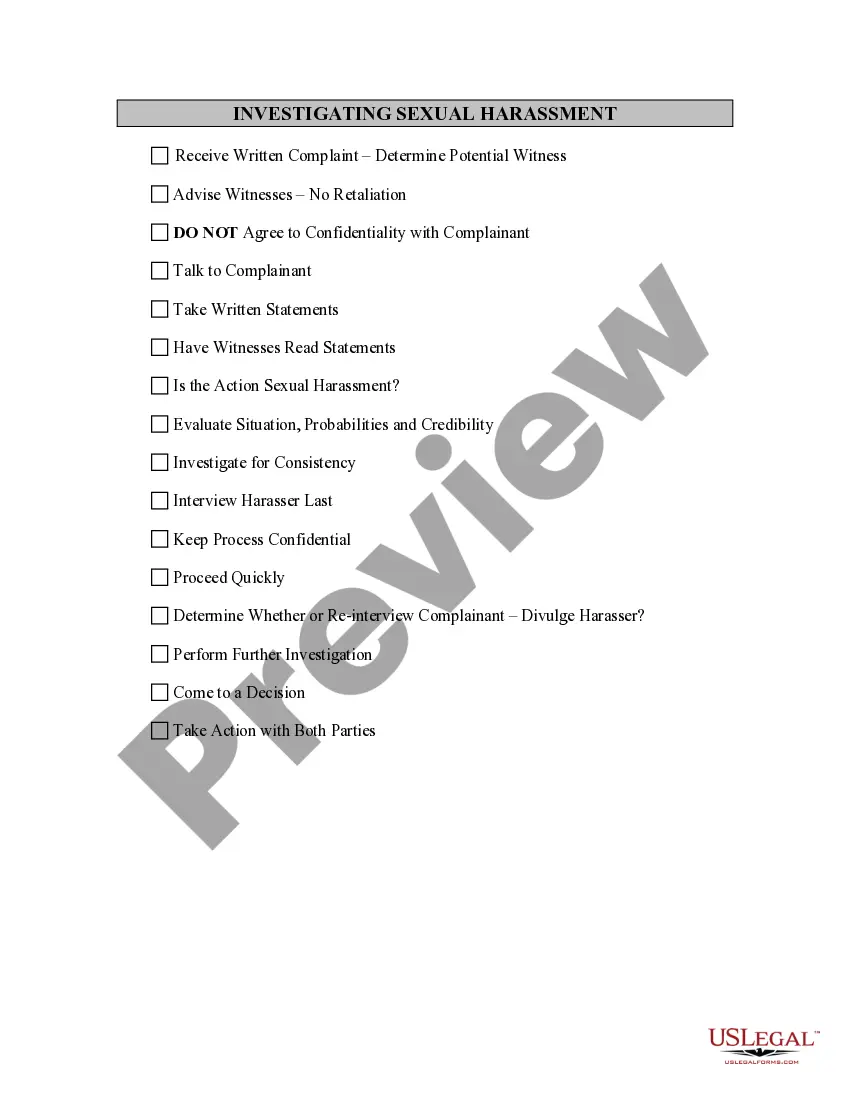
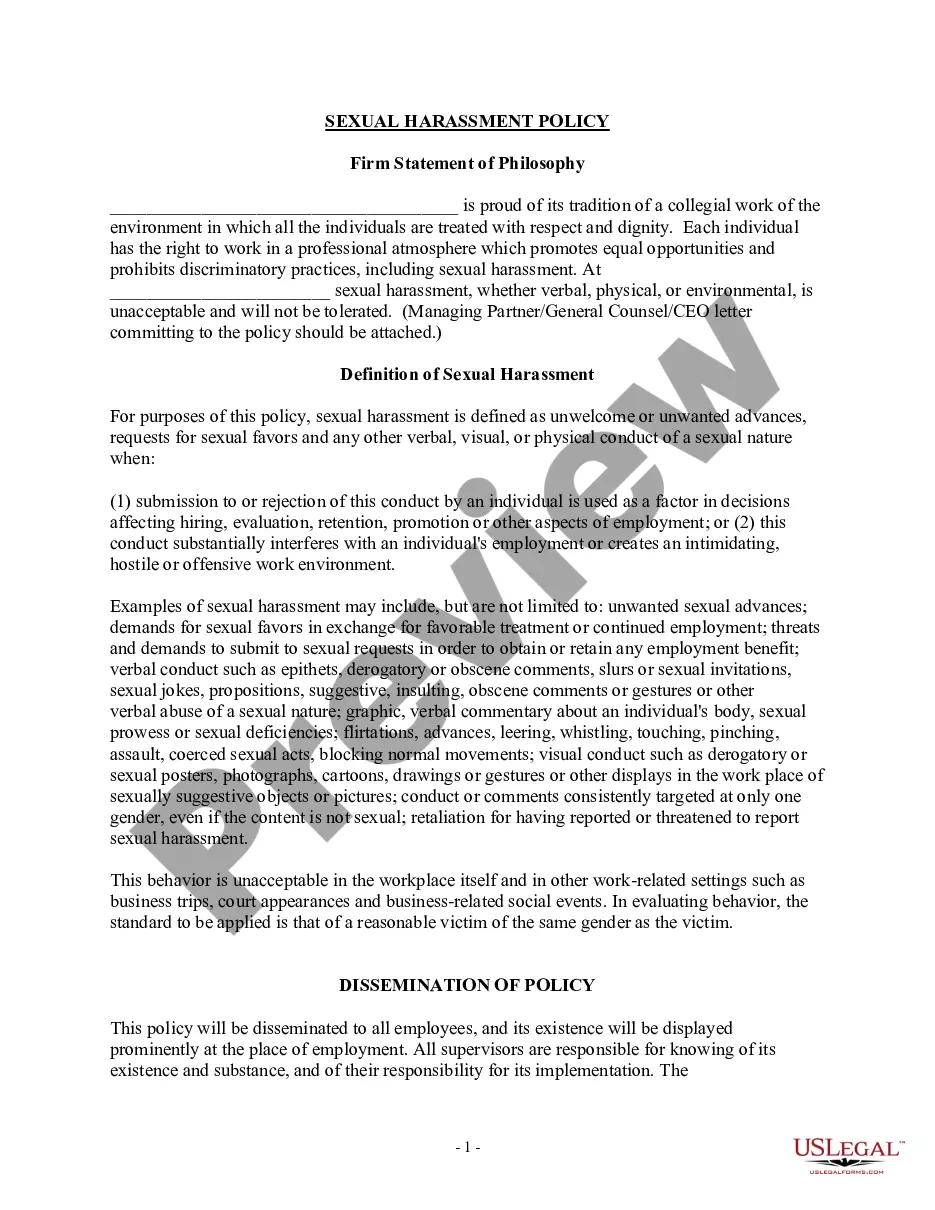
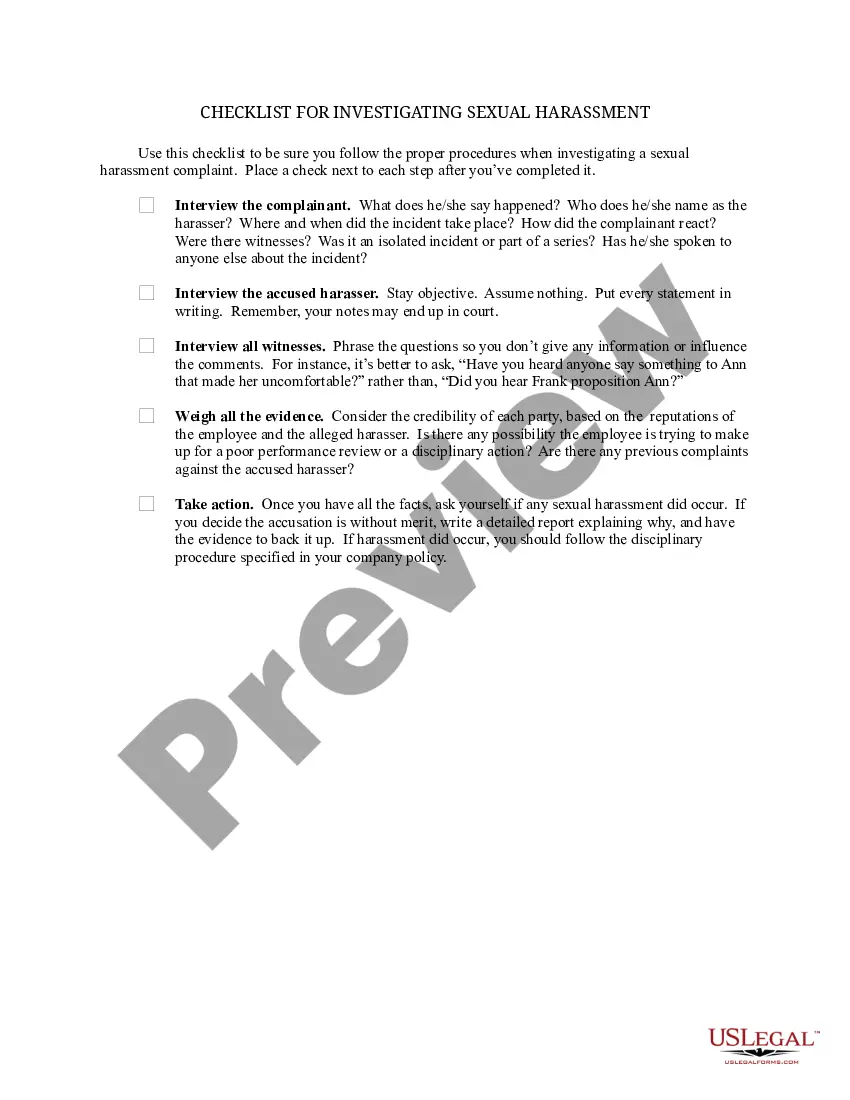
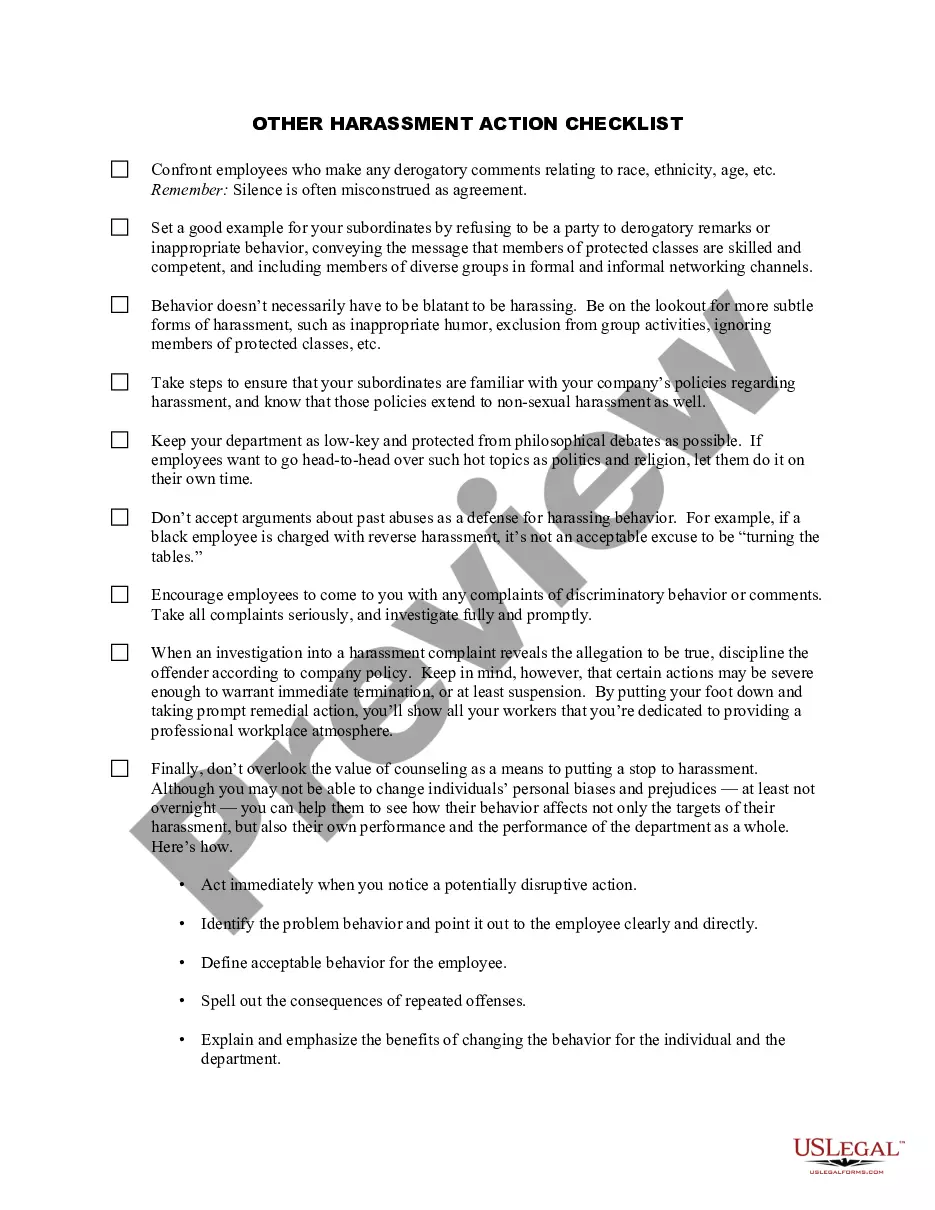
How to fill out Investigating Sexual Harassment Checklist - Workplace?
- If you have previously used US Legal Forms, log in to your account to access your legal forms. Click the Download button for the necessary template, ensuring your subscription is current. If it has expired, please renew it according to your payment plan.
- For first-time users, start by reviewing the Preview mode and form descriptions to confirm the template meets your needs and aligns with your jurisdiction’s requirements.
- If you find discrepancies, utilize the Search tab at the top to look for other relevant templates until you find the correct one.
- Once you identify your desired document, click the Buy Now button, select your preferred subscription plan, and register an account to unlock the full library.
- Complete your purchase by entering your payment details, whether using a credit card or your PayPal account.
- Finally, download and save the template on your device to fill it out as needed, and access it later in the My Forms section of your profile.
US Legal Forms equips you with a vast collection of over 85,000 legal documents, giving you a competitive edge in accessing resources quickly and efficiently.
Take advantage of US Legal Forms to ensure you have the right documents for your needs. Visit their site to get started today!
Form popularity
FAQ
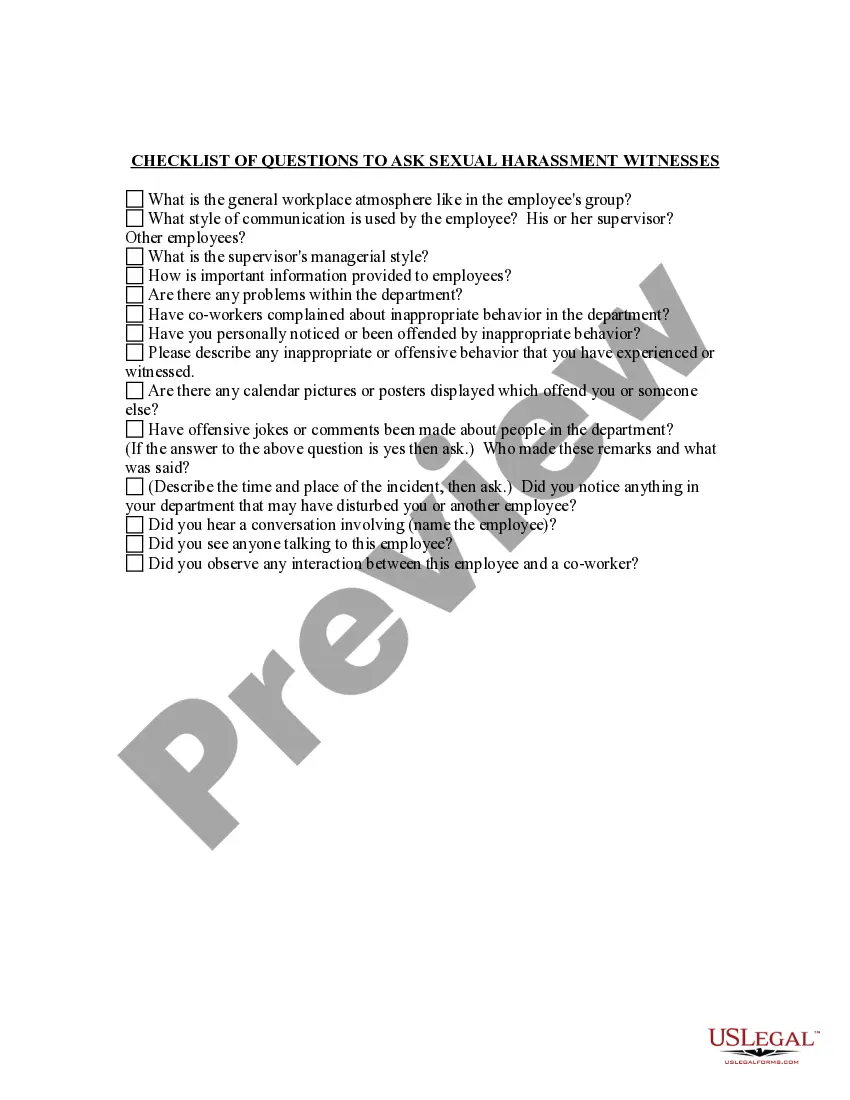
Harassment with words refers to any spoken or written communication that is offensive, threatening, or demeaning, particularly in a sexual context. This includes derogatory comments, unwanted advances, and explicit language directed at an individual. Understanding this definition can aid in recognizing and addressing sexual harassment effectively.
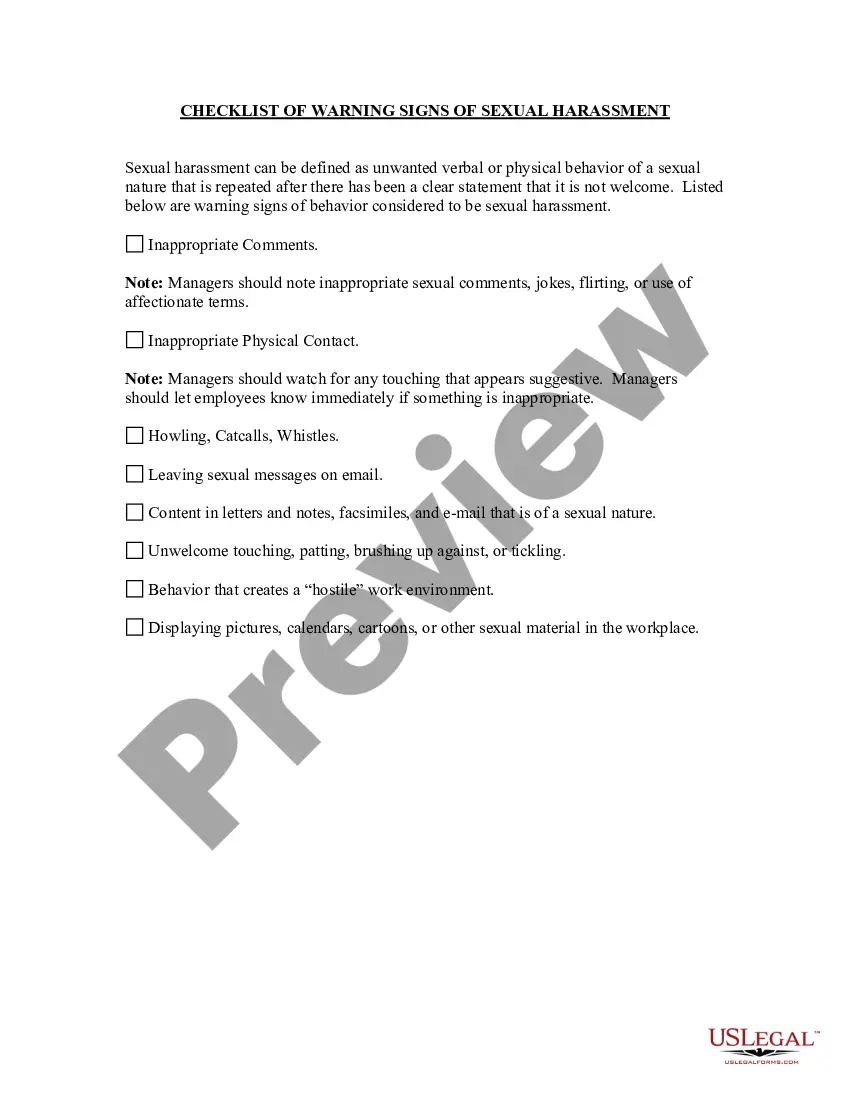
Harassment can take various forms, but specifically, sexual harassment with words often includes unwelcome sexual advances, verbal threats, and lewd comments. Visual or physical gestures accompanying these words can further intensify the harassment. Recognizing these actions is essential in combating such behaviors in workplaces or social situations.
Verbal harassment encompasses a range of behaviors, including derogatory remarks, threats, and unwanted sexual advances communicated through words. This type of harassment can create a hostile environment that negatively affects an individual's well-being. Identifying these harmful communications is vital for addressing the issue effectively.
Words that constitute sexual harassment with words include derogatory names, sexually explicit jokes, and suggestive comments. Additionally, remarks that belittle someone's sexuality or gender can also qualify. It is crucial to understand that context is key; what might be acceptable in one scenario can be harmful in another.
To demonstrate verbal harassment, you should collect evidence such as recordings of conversations, screenshots of messages, and witness testimonies who heard the statements. Documenting incidents with dates and details helps establish a clear pattern of sexual harassment with words. This thorough approach can strengthen your case if you decide to take legal action.
Sexual harassment with words often includes unwanted comments, jokes, or messages about someone's body or sexual orientation. Additionally, making inappropriate requests for sexual favors is a form of harassment. Lastly, engaging in persistent teasing or mocking can also fall under this umbrella.
Proving harassment involves presenting clear evidence of the unwanted behavior, such as documented incidents and witness statements. Compile all relevant communications and interactions that demonstrate a pattern of harassment. Utilizing templates and guidance from USLegalForms can help you build a strong case by presenting your information coherently and effectively.
To legally document harassment, keep a comprehensive account of each incident, including what was said and the impact it had on you. Make sure to note any witnesses who were present and gather any related communications like emails or recordings. A structured documentation process can strengthen your case, and resources from USLegalForms can guide you in creating an organized report.
Three actions that typically qualify as sexual harassment with words include making unwanted sexual comments, verbally threatening or intimidating someone, and engaging in derogatory name-calling. Each of these actions creates an uncomfortable and hostile environment, which is why they are considered serious offenses. Understanding these behaviors is crucial for identifying and addressing harassment effectively.
To record harassment, keep a detailed journal of occurrences, noting the specifics of what was said and done, along with the dates and times. If possible, gather any witnesses who can corroborate your experience. Additionally, consider saving voicemails, emails, or texts that may serve as evidence. USLegalForms offers guidance on compiling this information systematically.