Harassment For Payment
Description
Get your form ready online
Our built-in tools help you complete, sign, share, and store your documents in one place.
Make edits, fill in missing information, and update formatting in US Legal Forms—just like you would in MS Word.
Download a copy, print it, send it by email, or mail it via USPS—whatever works best for your next step.
Sign and collect signatures with our SignNow integration. Send to multiple recipients, set reminders, and more. Go Premium to unlock E-Sign.
If this form requires notarization, complete it online through a secure video call—no need to meet a notary in person or wait for an appointment.
We protect your documents and personal data by following strict security and privacy standards.

Make edits, fill in missing information, and update formatting in US Legal Forms—just like you would in MS Word.

Download a copy, print it, send it by email, or mail it via USPS—whatever works best for your next step.

Sign and collect signatures with our SignNow integration. Send to multiple recipients, set reminders, and more. Go Premium to unlock E-Sign.

If this form requires notarization, complete it online through a secure video call—no need to meet a notary in person or wait for an appointment.

We protect your documents and personal data by following strict security and privacy standards.
Looking for another form?



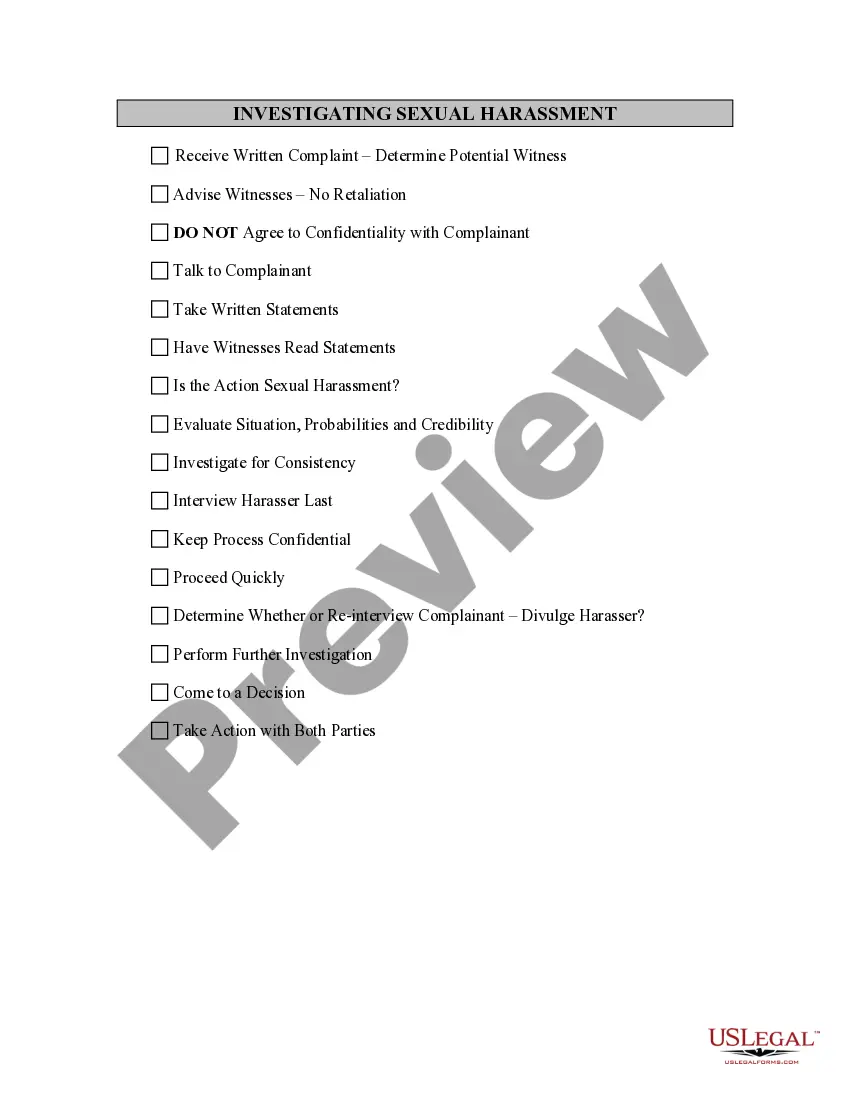
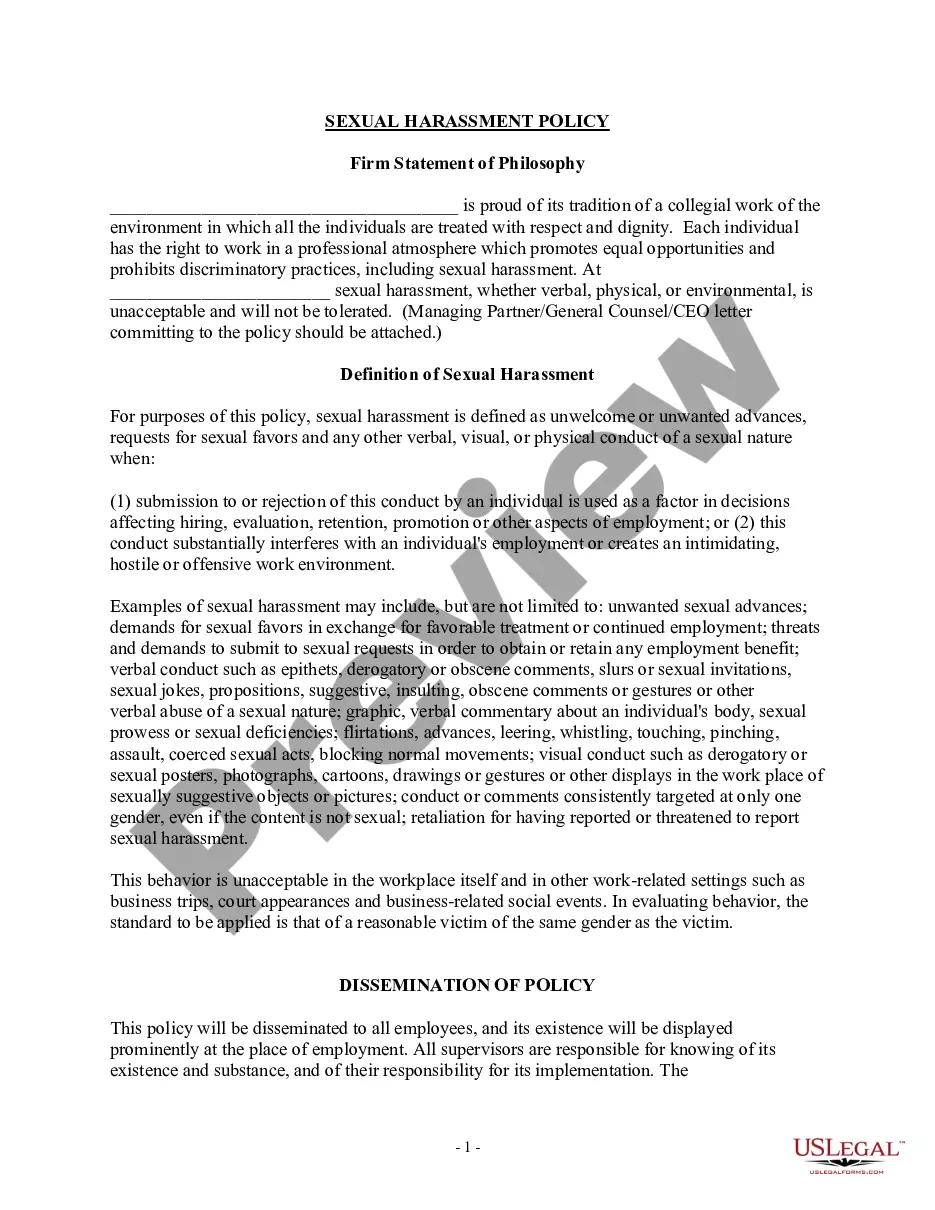
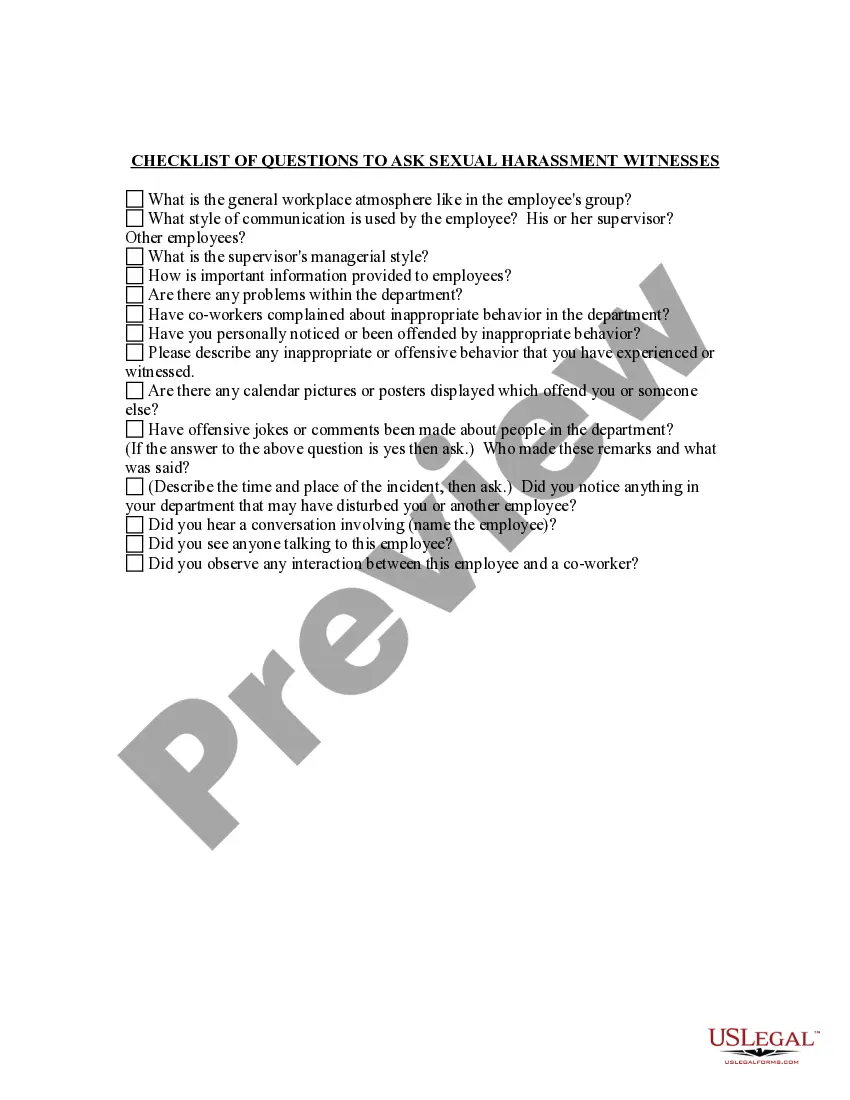
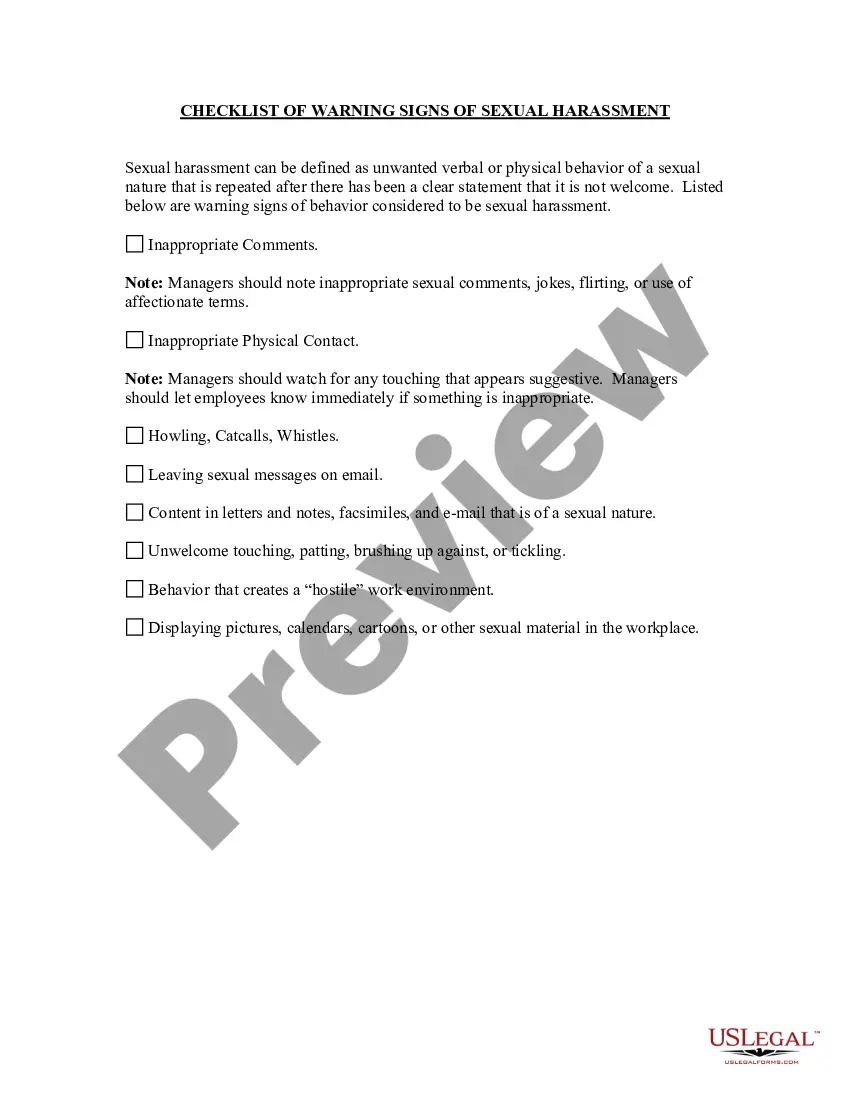
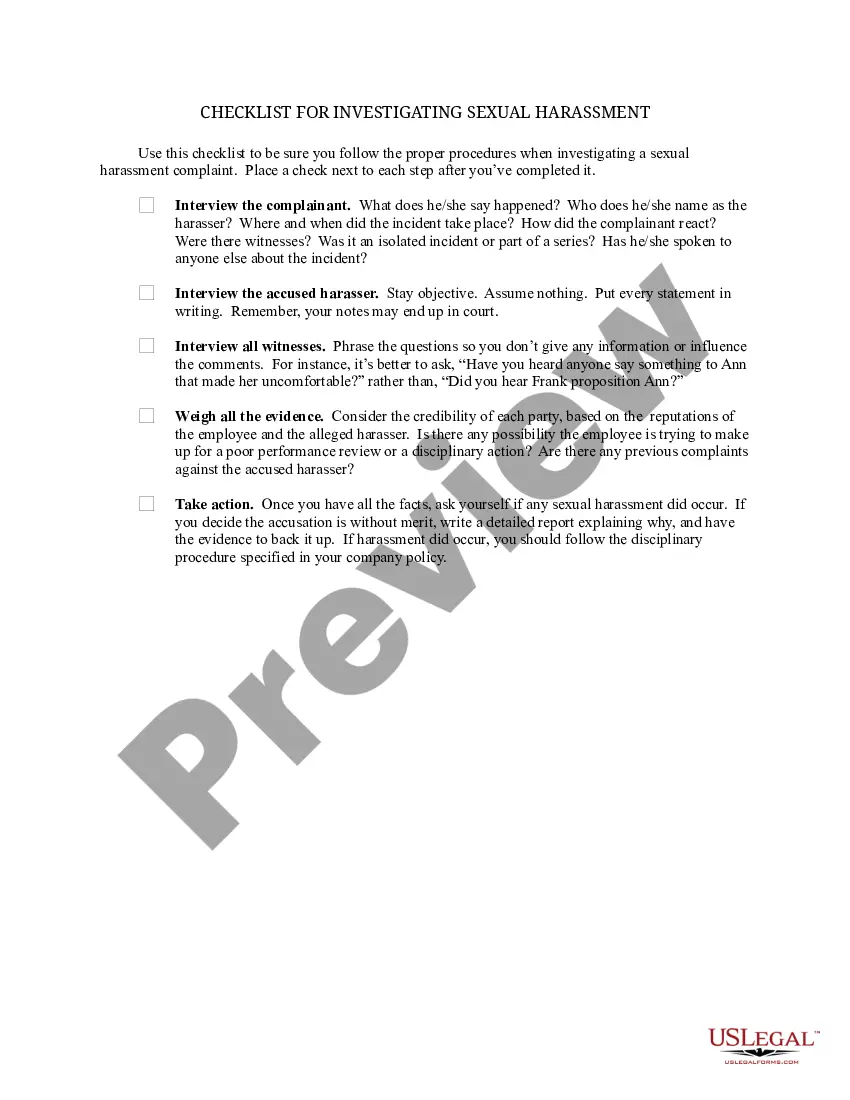
How to fill out Investigating Sexual Harassment Checklist - Workplace?
- Log in to your US Legal Forms account. If you haven't created one yet, sign up for an account to access the services.
- Browse through the extensive library and utilize the Preview mode to find the specific form that meets your legal requirements.
- In case of discrepancies, use the Search feature to locate another template that aligns with your needs.
- Select the document and click the 'Buy Now' button—choose a subscription plan that suits you best.
- Input your payment details, either through credit card or PayPal, to process the purchase swiftly.
- After the transaction, download the form to your device, and you can also access it later under the 'My Forms' section.
With US Legal Forms, obtaining essential documents is straightforward thanks to its comprehensive library and ease of use. This service empowers users to access over 85,000 legal forms, ensuring you have the right documents at your fingertips.
Take control of your legal needs today—visit US Legal Forms to start creating your harassment for payment documents efficiently!
Form popularity
FAQ
A behavior qualifies as harassment when it involves unwanted communication or actions that cause distress, especially related to payment. This can include threats, intimidation, or repeated requests that cross boundaries. Understanding these aspects can help you identify when to take action.
You should report harassment for payment as soon as it occurs, particularly when it becomes persistent or escalates in nature. Timely reporting increases the chances of effective intervention and resolution. If you feel threatened or unsafe, report immediately to the appropriate authorities.
If you don't report harassment for payment, the behavior may continue unchecked, potentially worsening over time. You also miss the opportunity to create a formal record, which could be valuable if legal action becomes necessary later. Taking action can help not only you but also others who might be affected.
If someone continues to harass you for payment, document each interaction carefully, including dates and specifics. You should consider escalating the issue by reporting it to authorities or seeking legal advice. US Legal Forms can assist you in creating the necessary documents for reporting or escalating your case.
When you report harassment for payment, the organization or authority should investigate your claims promptly. They may reach out to gather more information or evidence. Reporting can lead to actions that could resolve the issue, such as mediation or further steps against the harasser.
To write a harassment statement, start by clearly outlining the events, including dates and specific incidents of harassment for payment. Be factual and straightforward, avoiding emotional language. US Legal Forms offers resources to help you draft a comprehensive statement, ensuring you include all necessary details.
Yes, reporting harassment can help stop the negative behavior and prevent others from experiencing similar issues. It creates a record, which is important for any potential legal action related to harassment for payment. Reporting also helps organizations understand and address these situations more effectively.
A strong harassment case typically includes clear evidence of unwanted behavior that causes distress, such as persistent communications or threats for payment. Documenting incidents, dates, and the impact on your life is crucial. For assistance, US Legal Forms provides templates to help outline your case effectively.
The 777 rule is a guideline that protects consumers from harassment for payment by debt collectors. Under this rule, debt collectors must follow specific protocols when communicating about debts, which limits their ability to contact you repeatedly in a short timeframe. This helps reduce the stress associated with harassment for payment and gives you the right to dispute collections if necessary. At US Legal Forms, we provide resources to help you understand your rights regarding debt collection practices, ensuring you navigate these situations confidently.
Harassment for payment occurs when a debt collector uses abusive tactics to collect a debt. You may experience harassment if a collector calls you excessively, uses threats, or discloses your debt to unauthorized parties. It's important to know your rights; regulations like the Fair Debt Collection Practices Act protect you. If you believe you are facing harassment for payment, consider using US Legal Forms to find the resources you need to address the situation.