Harassment For Men
Description
Get your form ready online
Our built-in tools help you complete, sign, share, and store your documents in one place.
Make edits, fill in missing information, and update formatting in US Legal Forms—just like you would in MS Word.
Download a copy, print it, send it by email, or mail it via USPS—whatever works best for your next step.
Sign and collect signatures with our SignNow integration. Send to multiple recipients, set reminders, and more. Go Premium to unlock E-Sign.
If this form requires notarization, complete it online through a secure video call—no need to meet a notary in person or wait for an appointment.
We protect your documents and personal data by following strict security and privacy standards.

Make edits, fill in missing information, and update formatting in US Legal Forms—just like you would in MS Word.

Download a copy, print it, send it by email, or mail it via USPS—whatever works best for your next step.

Sign and collect signatures with our SignNow integration. Send to multiple recipients, set reminders, and more. Go Premium to unlock E-Sign.

If this form requires notarization, complete it online through a secure video call—no need to meet a notary in person or wait for an appointment.

We protect your documents and personal data by following strict security and privacy standards.
Looking for another form?





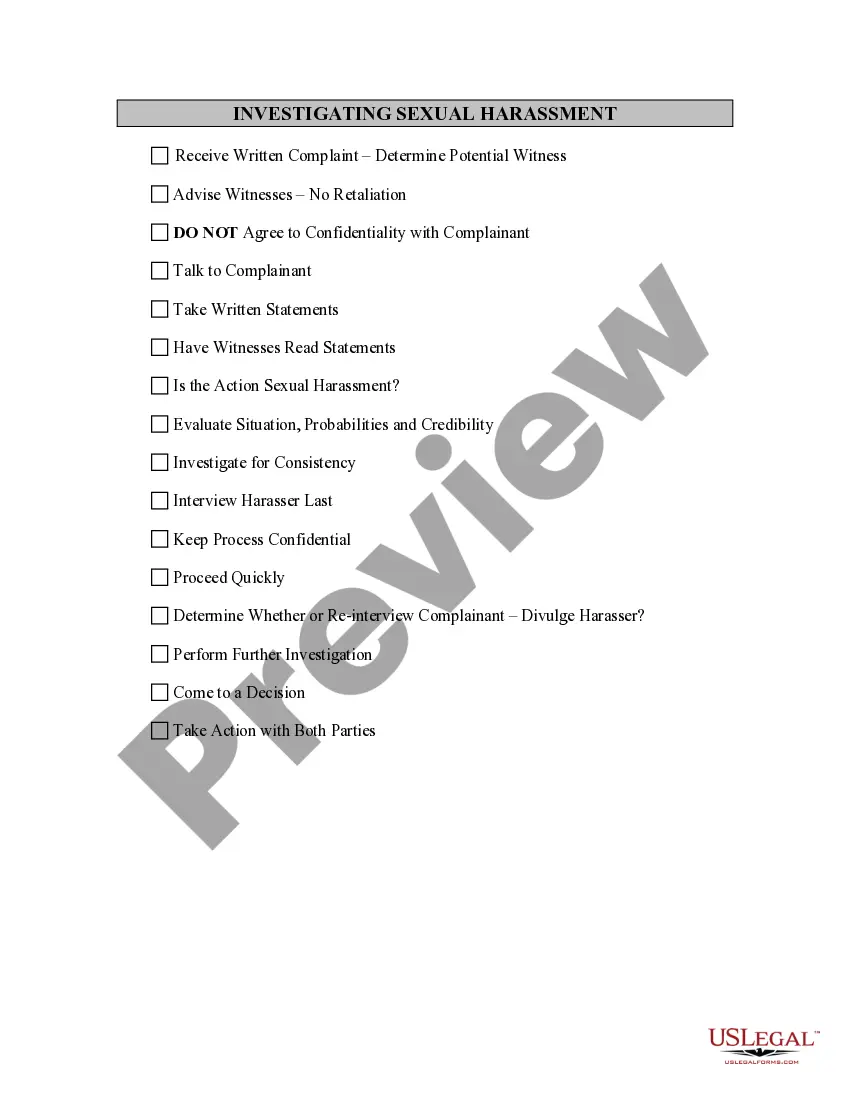
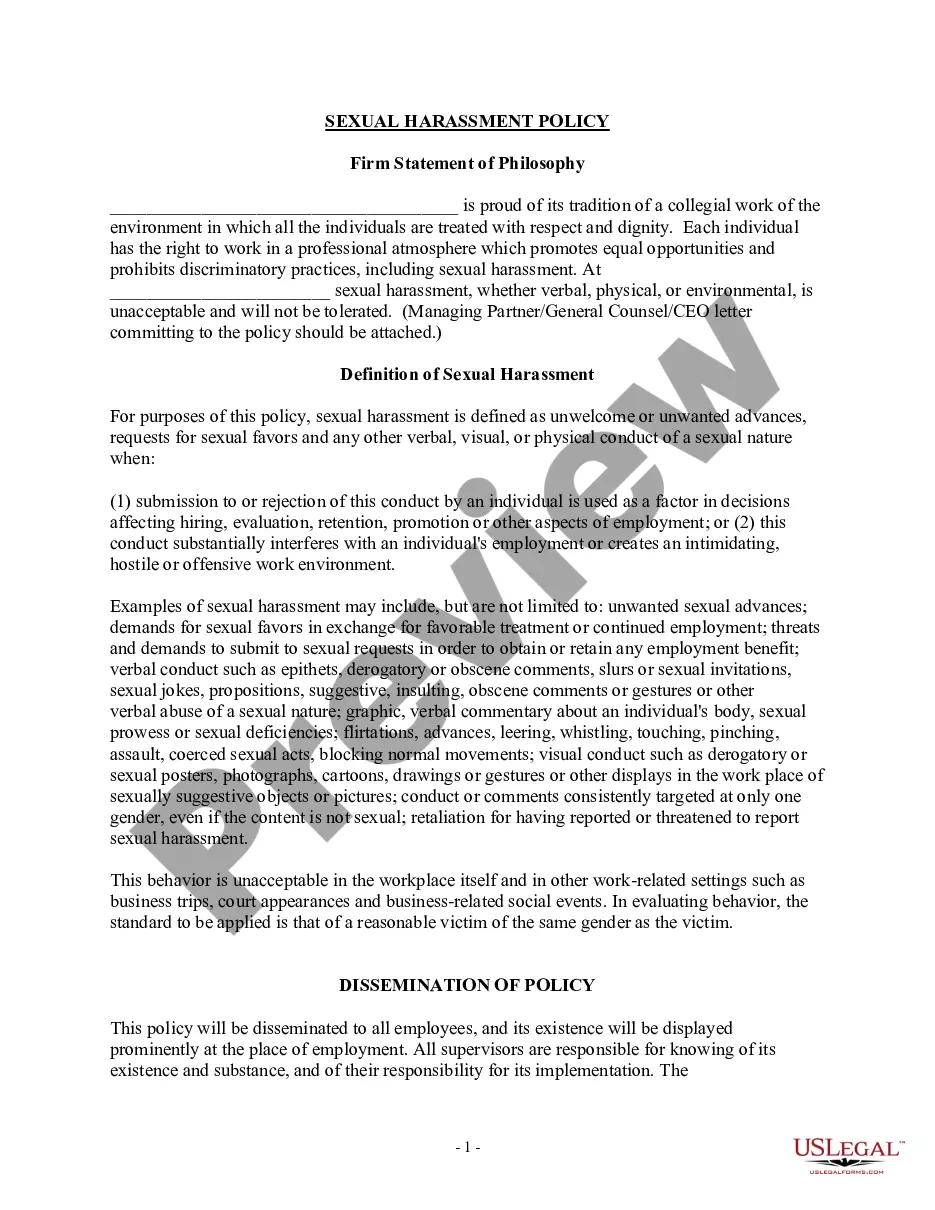
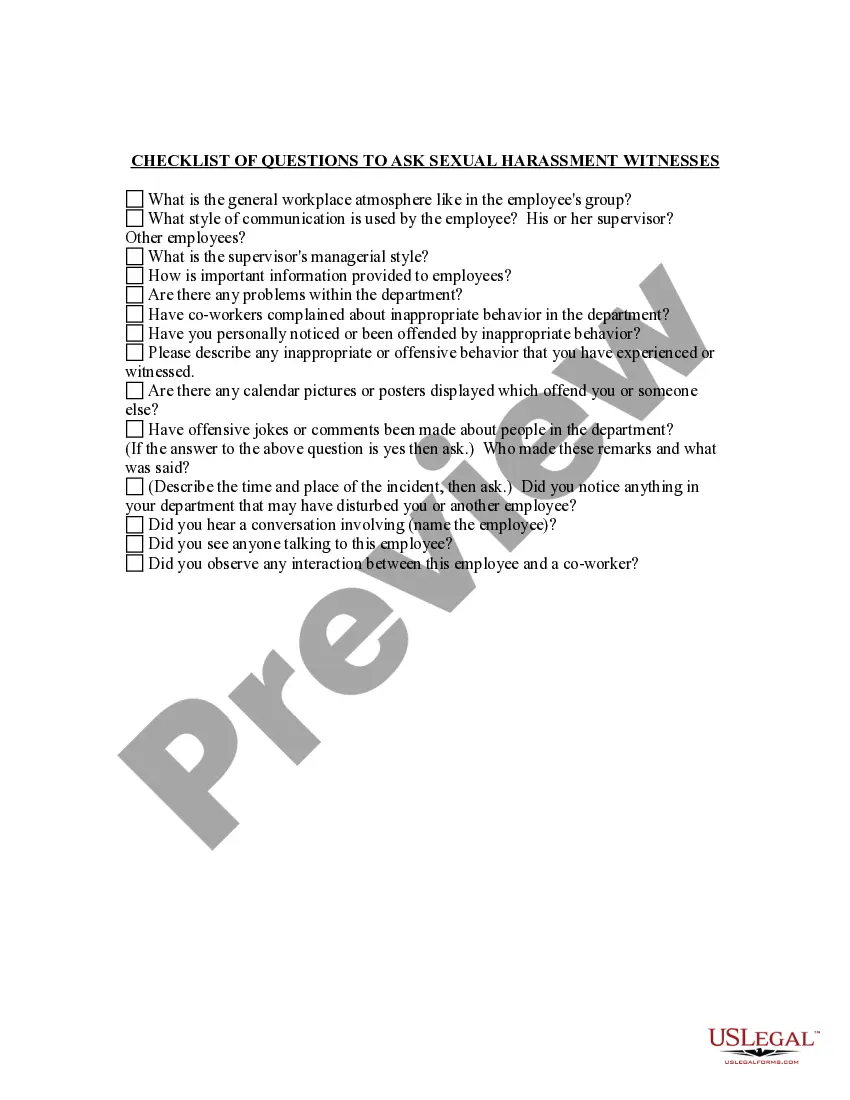
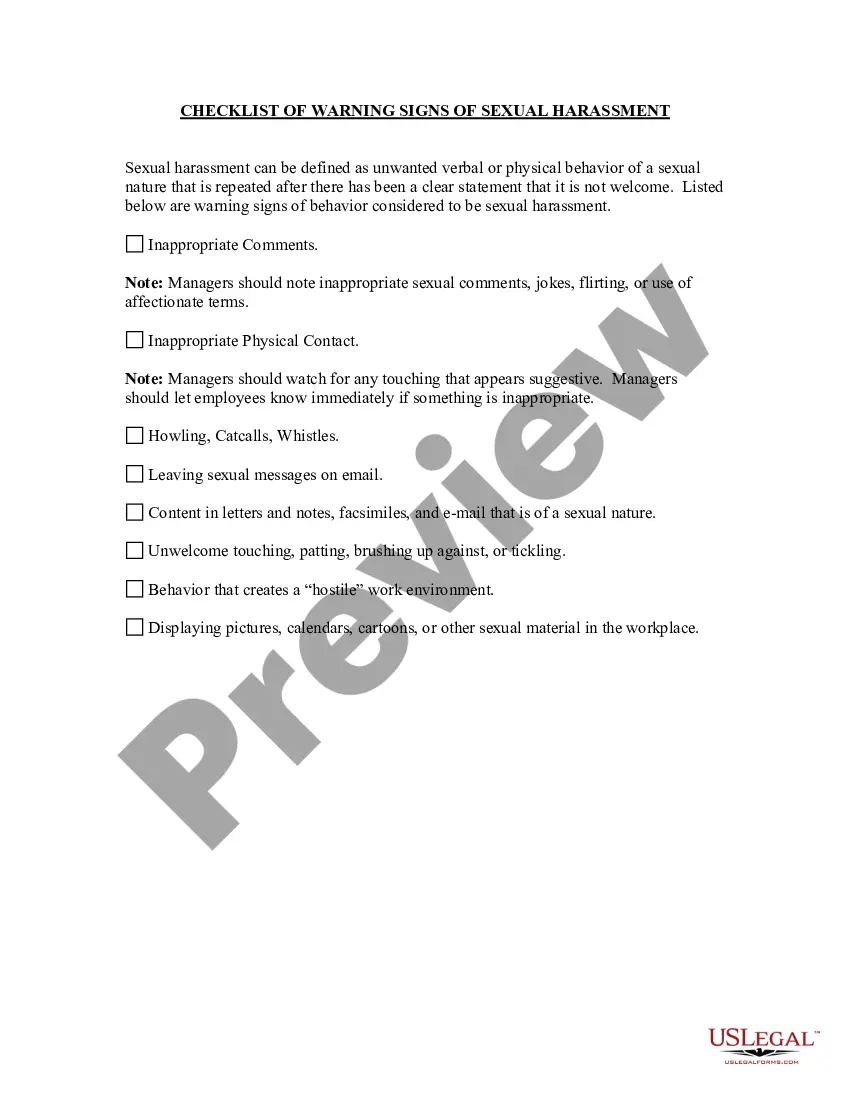
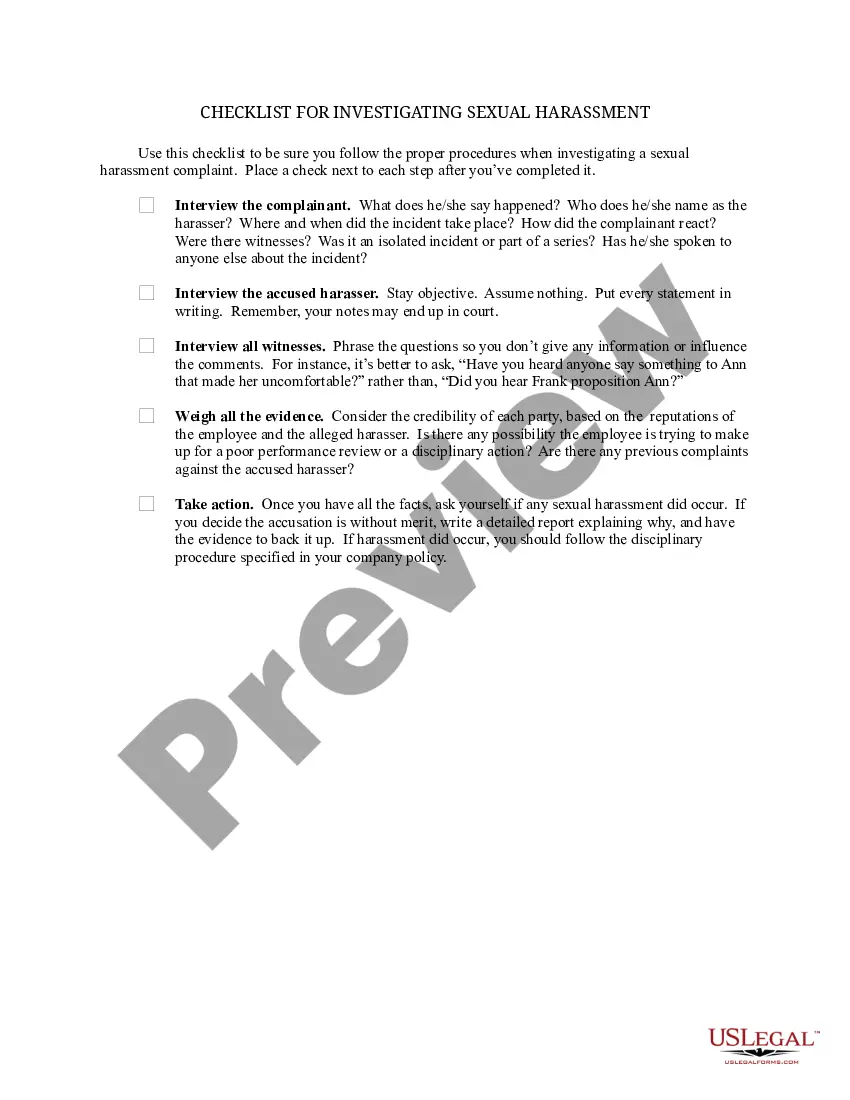
How to fill out Investigating Sexual Harassment Checklist - Workplace?
- Log in to your US Legal Forms account if you are a returning user. If this is your first visit, create a new account to get started.
- Preview the form descriptions in the library to find the harassment template that matches your situation. Ensure it's compliant with your local jurisdiction.
- If you require a different form, utilize the search bar to locate a more suitable template that meets your legal requirements.
- Select the harassment form you need and click on the 'Buy Now' button to choose your preferred subscription plan for access.
- Complete your purchase by entering your payment information, either through credit card or PayPal.
- Download your documents directly to your device and also find them in the 'My Forms' section of your profile whenever needed.
In conclusion, US Legal Forms offers a reliable and efficient way to tackle harassment-related legal matters. With a robust library and expert assistance, you can ensure your documents are completed correctly and legally sound.
Start today by visiting US Legal Forms and gain access to the support you need for your legal challenges!
Form popularity
FAQ
Behavior qualifies as harassment when it creates an intimidating, hostile, or abusive environment. This can include aggressive communications, observations, or actions that are unwanted and persistent. Understanding these boundaries is critical, particularly for men facing harassment, as it helps identify when you need to seek help or legal recourse.
To prove someone is harassing you, maintain a log of incidents, including dates, times, and descriptions of the behavior. Having witnesses or recordings can strengthen your case, but keeping documented evidence is key. The focus on harassment for men is significant, as it brings awareness to the behaviors that must be challenged and reported.
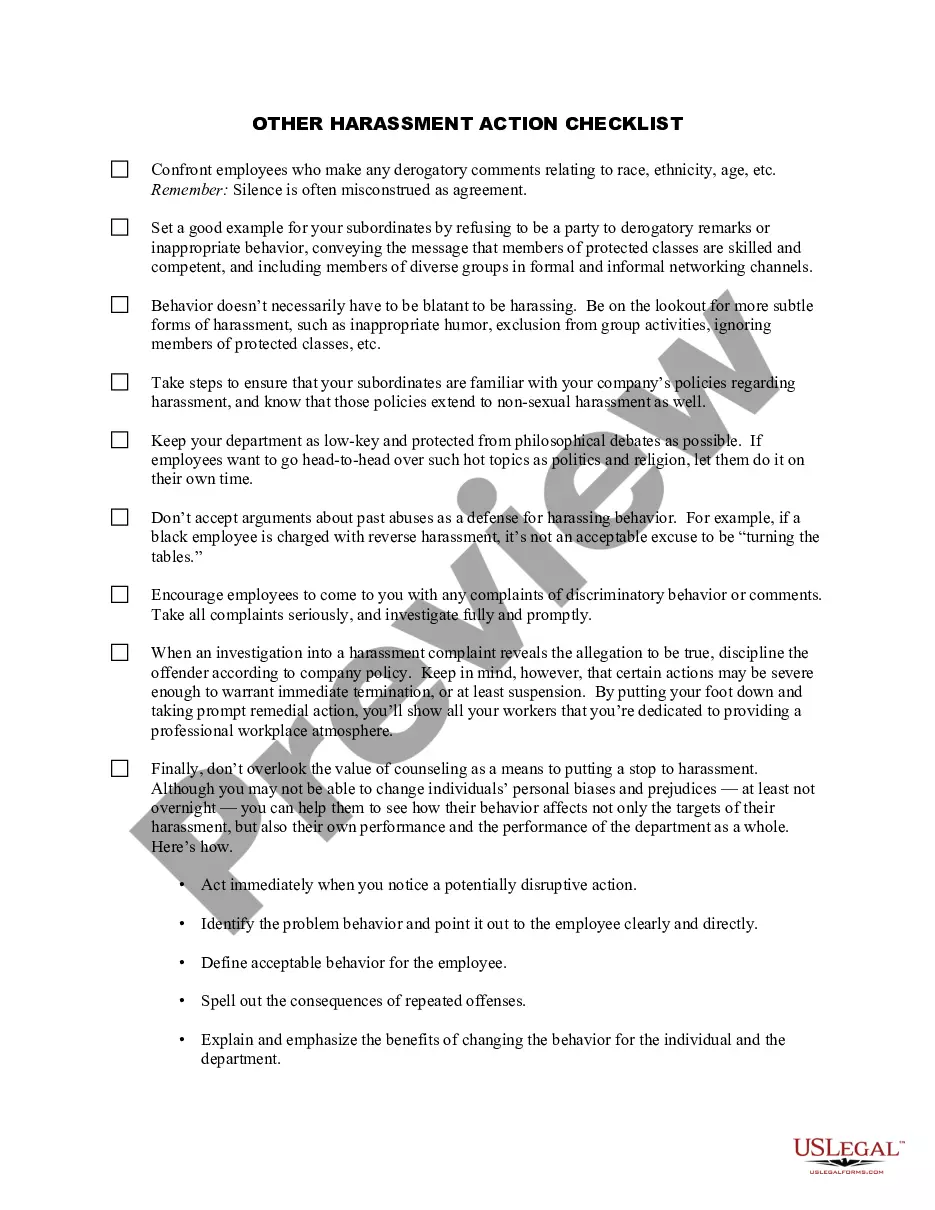
You should take immediate action against someone harassing you by documenting their behavior and reaching out to appropriate support systems. It’s wise to talk to someone you trust, and if necessary, involve law enforcement. Furthermore, using resources like US Legal Forms can guide you in creating formal letters or legal documents addressing harassment for men effectively.
If a man is harassing you, first ensure your safety by seeking help from friends or authorities. Document each incident precisely to build a solid case. Additionally, utilize resources from platforms like US Legal Forms to help you navigate the legal steps needed to address harassment for men. Remember, taking action is vital in stopping the behavior.
Three common actions that are considered harassment include unwanted communication, threatening behavior, and stalking. Each of these actions creates an uncomfortable or threatening environment for the victim. Understanding these actions is essential, particularly in the context of harassment for men, as it clarifies what to report and defend against.
Proving you're being harassed involves keeping a detailed record of each incident, including dates and descriptions of the behavior. You should also save any messages, emails, or other forms of communication that illustrate the harassment. In cases of harassment for men, discussing your situation with trusted individuals can provide additional support as you document everything.
To prove harassment charges, you need to gather evidence that clearly demonstrates unwanted and repeated behavior. This may include documented communications, witness statements, and any relevant records. Keep in mind that a clear pattern of behavior leading to emotional distress is crucial. If you are dealing with harassment for men, collecting this evidence empowers you in legal situations.
Legally, to qualify as harassment for men, four elements must be established. First, there must be unwelcome behavior that is based on gender or sexual advances. Second, the behavior must be severe or pervasive enough to create a hostile environment. Third, it must be proven that the victim felt threatened or offended. Lastly, the behavior must be tied to the person’s employment or educational experience for legal recognition.
Harassment for men can manifest through several actions, including stalking, bullying, and making unwelcome sexual advances. Stalking involves persistent and unwanted attention that causes fear. Bullying can occur through intimidation, aggressive words, or shunning behaviors. Additionally, making unwelcome sexual advances can create an uncomfortable and hostile environment.
Harassment for men typically appears in three main forms: verbal, physical, and visual. Verbal harassment involves derogatory comments, threats, or insults aimed at an individual. Physical harassment can include unwanted contact or intimidation. Visual harassment often involves sharing offensive images or materials, which can also affect a person's emotional well-being.