Suspension Letter Without Pay
Description
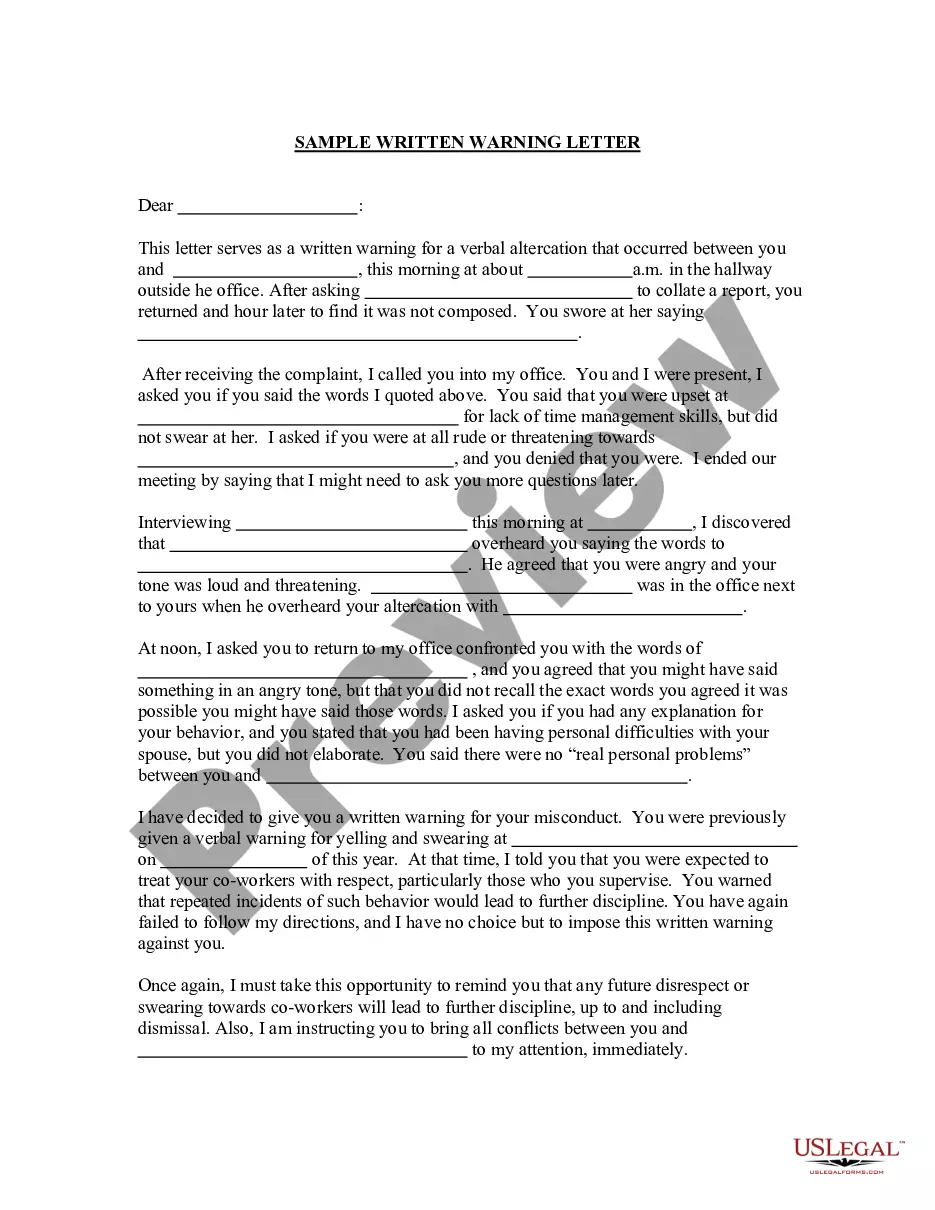

Get your form ready online
Our built-in tools help you complete, sign, share, and store your documents in one place.
Make edits, fill in missing information, and update formatting in US Legal Forms—just like you would in MS Word.
Download a copy, print it, send it by email, or mail it via USPS—whatever works best for your next step.
Sign and collect signatures with our SignNow integration. Send to multiple recipients, set reminders, and more. Go Premium to unlock E-Sign.
If this form requires notarization, complete it online through a secure video call—no need to meet a notary in person or wait for an appointment.
We protect your documents and personal data by following strict security and privacy standards.

Make edits, fill in missing information, and update formatting in US Legal Forms—just like you would in MS Word.

Download a copy, print it, send it by email, or mail it via USPS—whatever works best for your next step.

Sign and collect signatures with our SignNow integration. Send to multiple recipients, set reminders, and more. Go Premium to unlock E-Sign.

If this form requires notarization, complete it online through a secure video call—no need to meet a notary in person or wait for an appointment.

We protect your documents and personal data by following strict security and privacy standards.
Looking for another form?
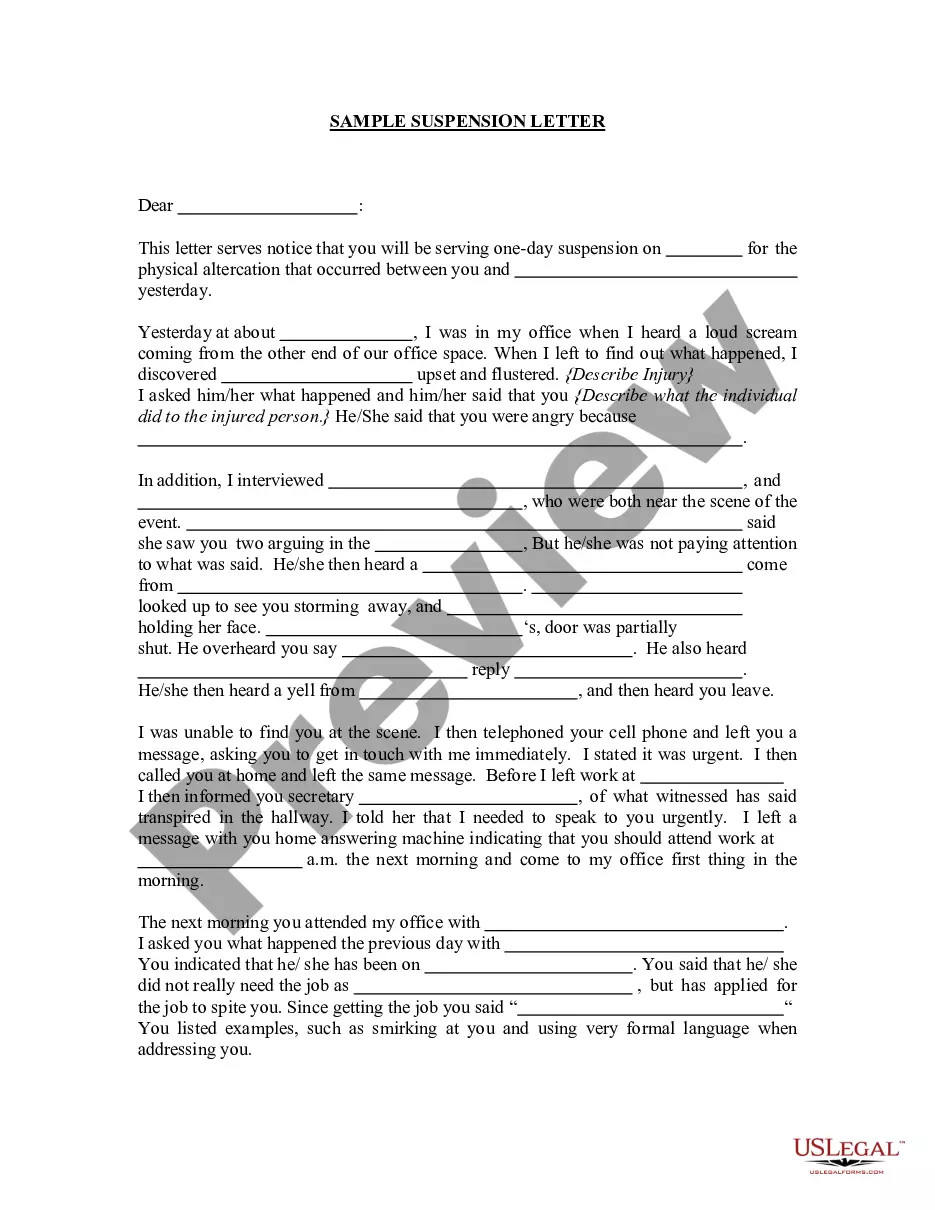
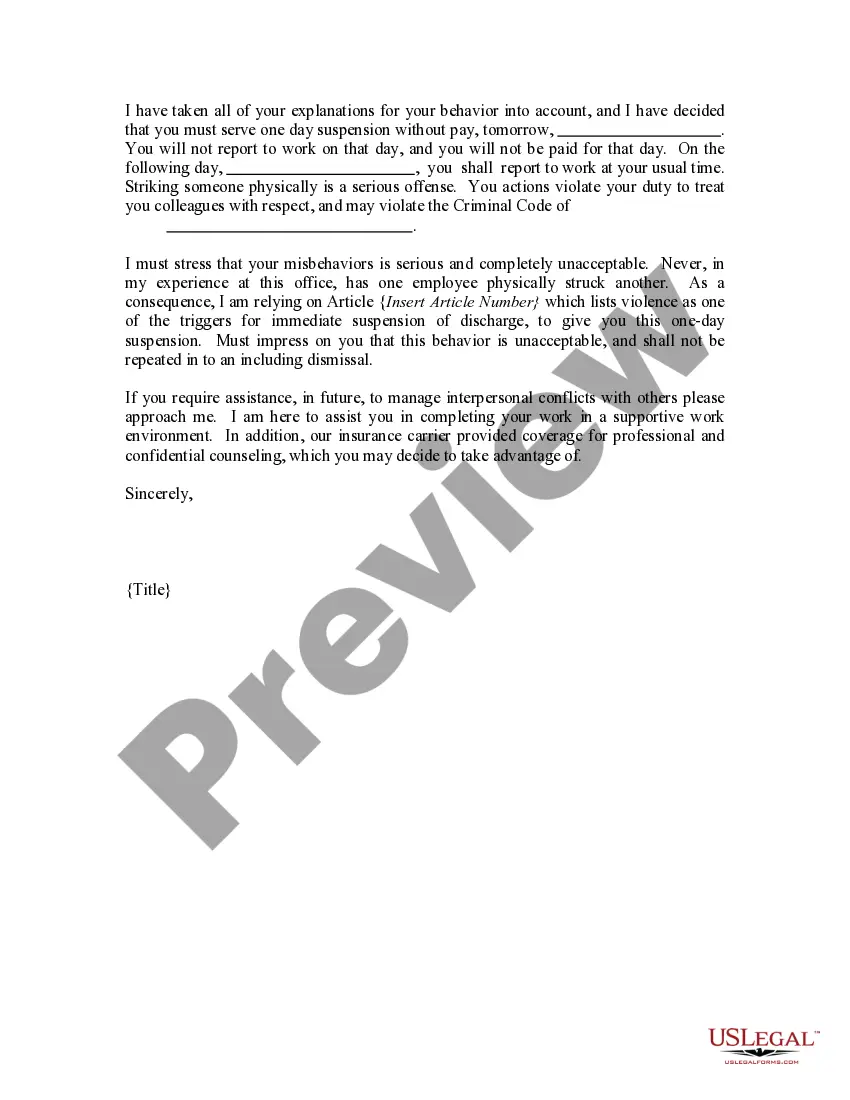
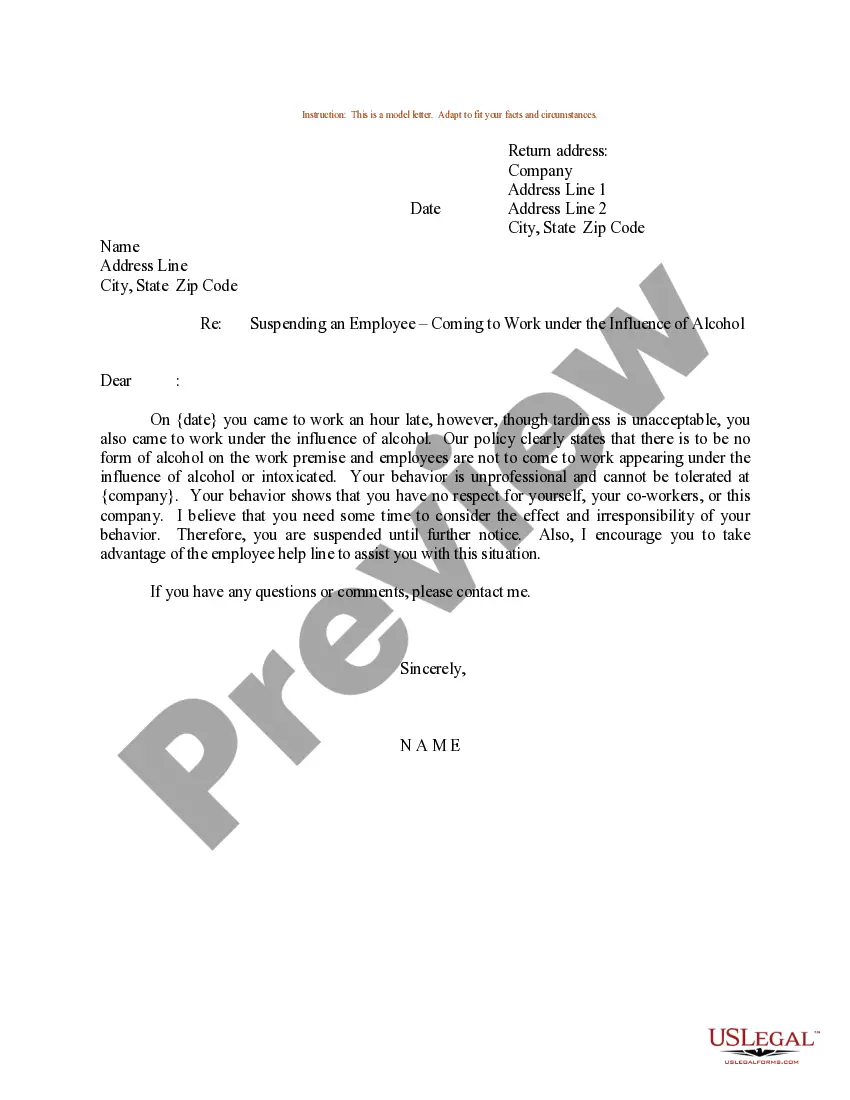
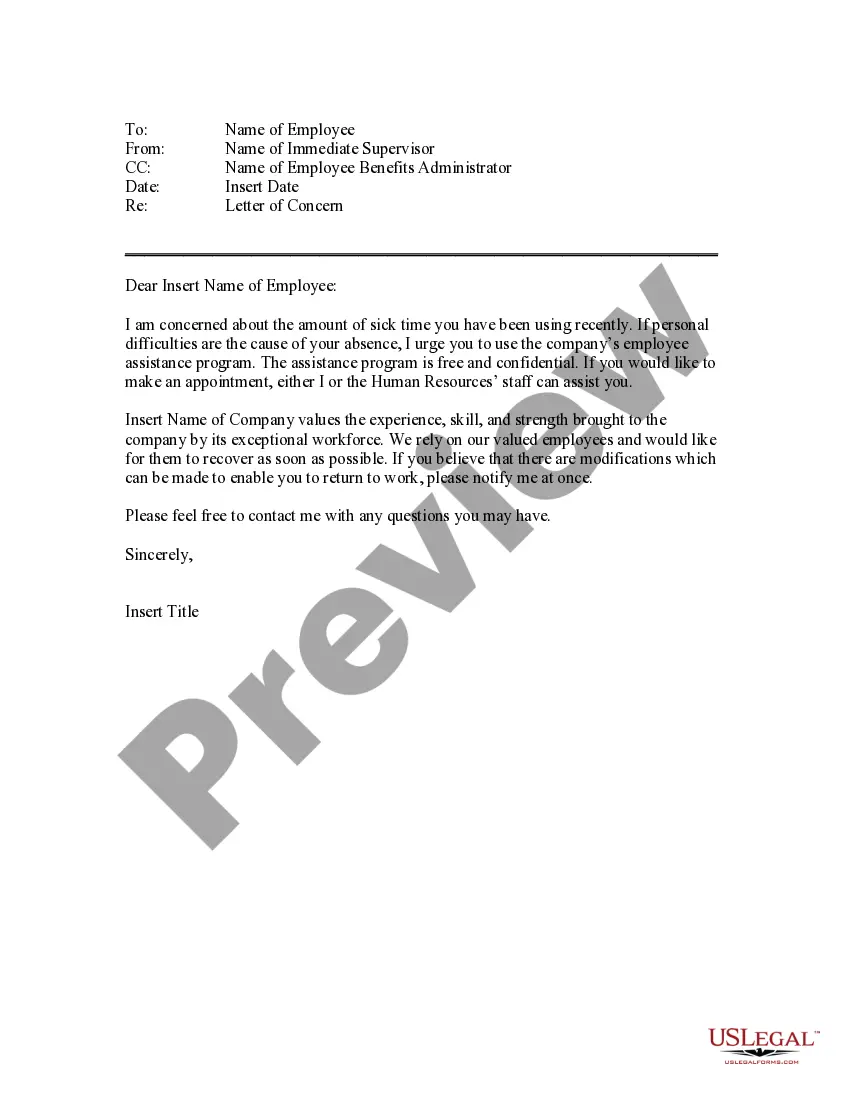
How to fill out Sample Letter Of Suspension For Physical Altercation?
Regardless of whether it is for corporate objectives or personal matters, everyone must confront legal issues at some stage in their life.
Filling out legal paperwork requires meticulous attention, starting with choosing the correct form template.
With an extensive catalog of US Legal Forms available, you do not need to waste time searching for the appropriate sample online. Make use of the library’s straightforward navigation to find the correct form for any situation.
- Obtain the template you need by utilizing the search bar or browsing the catalog.
- Review the form’s description to confirm it aligns with your circumstance, state, and area.
- Select the form’s preview to inspect it.
- If it is not the correct document, revert to the search feature to locate the Suspension Letter Without Pay template you require.
- Download the template if it meets your specifications.
- If you already own a US Legal Forms account, click Log in to access previously saved documents in My documents.
- In case you don’t have an account yet, you can download the form by clicking Buy now.
- Select the suitable pricing option.
- Complete the account registration form.
- Choose your payment method: you can use a credit card or PayPal account.
- Select the file format you prefer and download the Suspension Letter Without Pay.
- Once it is downloaded, you can fill out the form using editing software or print it and complete it manually.
Form popularity
FAQ
To write a simple suspension letter without pay, start by clearly stating the reason for the suspension and the duration. Ensure you include the employee's name, position, and the date of the letter. You should also explain any relevant company policies or guidelines that justify this action. Finally, offer the employee an opportunity to discuss the situation, fostering an open line of communication.
An unpaid suspension refers to a period during which an employee is temporarily removed from their job without pay. This situation typically arises due to disciplinary actions or unresolved performance issues. It's important for employers to document the reasons thoroughly, as a suspension letter without pay provides clarity and fairness. Understanding this concept can help both employees and employers navigate workplace challenges with transparency.
To write a formal suspension letter without pay, start with your company letterhead, including the date and recipient's information. Clearly state the reason for the suspension and outline the duration. Use a respectful tone and provide any necessary information, such as the right to appeal. This letter should be concise yet clear, ensuring the employee understands the expectations and implications of the suspension.
Yes, you should receive a suspension letter without pay to document the terms and reasons for your suspension clearly. This letter serves as an official record, providing you with information about the situation and your rights. Receiving this communication allows you to understand the process better and prepare for any necessary discussions or appeals. It is an important step in maintaining transparency and fairness.
Suspension rules vary by organization but generally require a clear justification and documentation before the action is taken. Employers should communicate effectively with the employee about the suspension letter without pay, outlining the reasons and expected duration. Following proper procedures ensures that both the employer and employee understand their rights and responsibilities during this time.
You can be suspended without pay for various reasons, including misconduct, violation of company policy, or poor performance. Employers typically follow a defined process to determine if suspension is appropriate. Reviewing employee handbooks or contractual agreements can provide specific grounds for suspension. It's essential to adhere to fair practices to ensure employee rights are honored.
Writing a suspension letter without pay requires clarity and professionalism. Start with your organization's letterhead, include the date, and address the employee respectfully. Clearly state the reason for the suspension, specify the duration, and outline any pertinent policies or agreements. Finally, invite the employee to discuss the matter, ensuring a fair process.
Unfair suspension occurs when an employee is suspended without just cause or due process. This can happen if the suspension is based on discrimination, retaliation, or failure to follow company policies. If you suspect an unfair suspension, it's important to document the facts and seek to understand your rights. Understanding how to respond can promote a fair investigation and appropriate action.
A suspension letter without pay typically includes key details such as the employee's name, the reason for the suspension, and the duration of the suspension. For instance, it may state that the employee is being suspended due to misconduct or policy violations. The letter should clearly outline expectations for behavior moving forward and any return-to-work procedures. This ensures upfront communication and lays the groundwork for resolution.