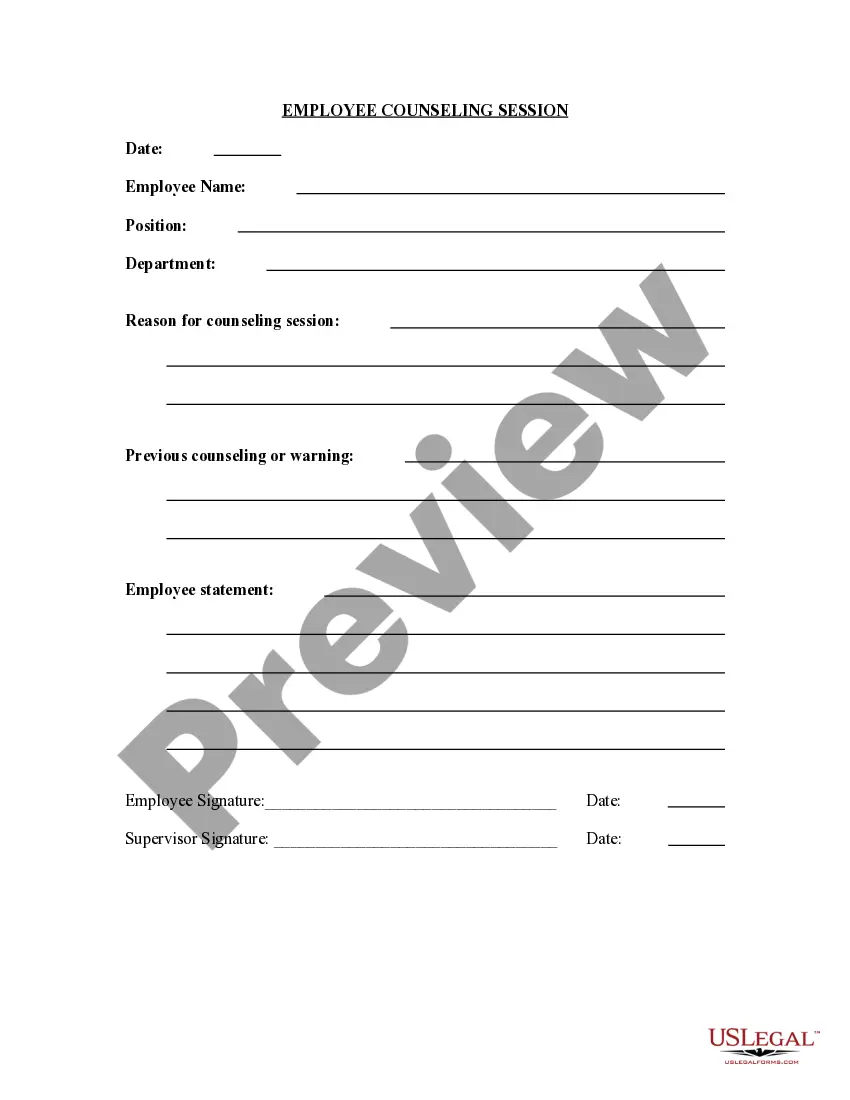
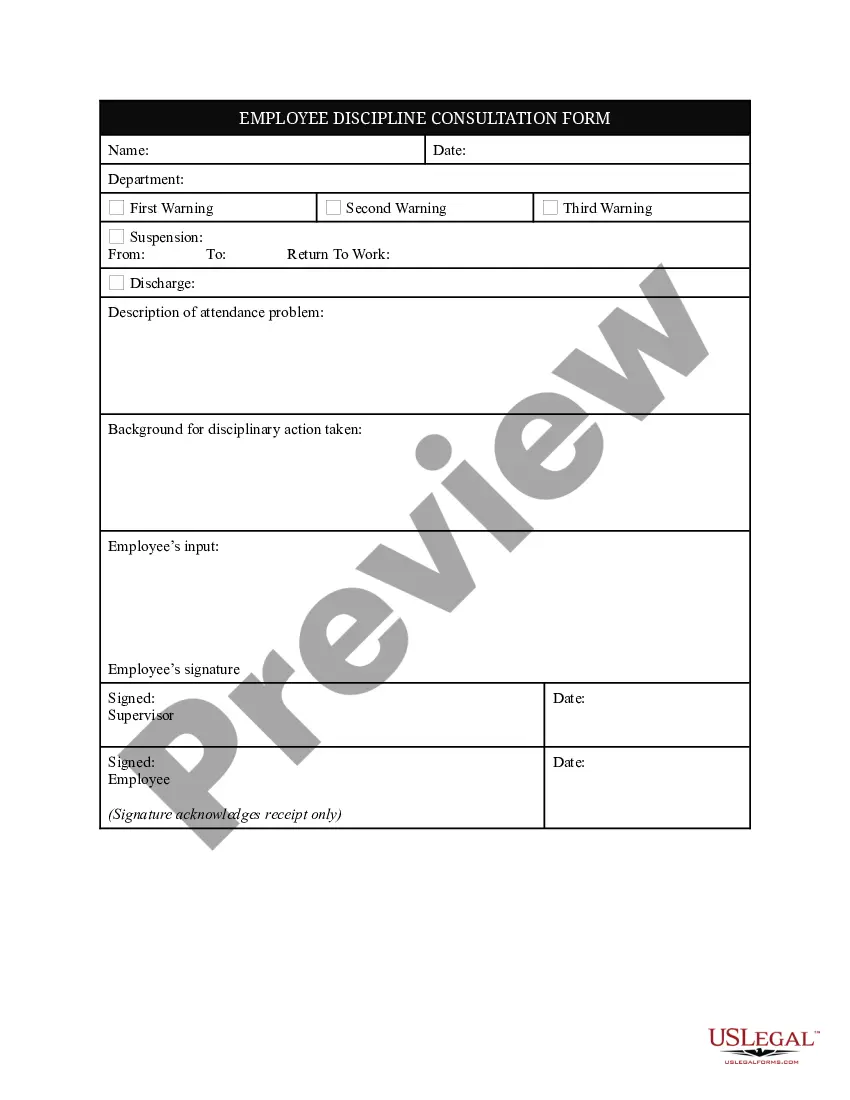
Counseling Form For Employee
Description
Get your form ready online
Our built-in tools help you complete, sign, share, and store your documents in one place.
Make edits, fill in missing information, and update formatting in US Legal Forms—just like you would in MS Word.
Download a copy, print it, send it by email, or mail it via USPS—whatever works best for your next step.
Sign and collect signatures with our SignNow integration. Send to multiple recipients, set reminders, and more. Go Premium to unlock E-Sign.
If this form requires notarization, complete it online through a secure video call—no need to meet a notary in person or wait for an appointment.
We protect your documents and personal data by following strict security and privacy standards.

Make edits, fill in missing information, and update formatting in US Legal Forms—just like you would in MS Word.

Download a copy, print it, send it by email, or mail it via USPS—whatever works best for your next step.

Sign and collect signatures with our SignNow integration. Send to multiple recipients, set reminders, and more. Go Premium to unlock E-Sign.

If this form requires notarization, complete it online through a secure video call—no need to meet a notary in person or wait for an appointment.

We protect your documents and personal data by following strict security and privacy standards.
Looking for another form?







Form popularity
FAQ
Employee counselling is a professional service aimed at assisting employees with various life challenges that may impact their work. This service fosters a supportive environment where employees can discuss their concerns confidentially. By utilizing a Counseling form for employee, organizations can efficiently address and manage these challenges, enhancing overall workplace well-being and productivity.
Work counselling refers to a supportive service aimed at helping employees manage work-related concerns. It can relate to job performance, workplace relationships, or career development. Implementing a Counseling form for employee can greatly enhance this process, providing a clear framework for communication and addressing specific issues that employees may face in the workplace.
Work in counselling involves a process where trained professionals help individuals address personal, work-related, or emotional challenges. This process often utilizes a structured approach, allowing employees to navigate various issues effectively. By utilizing tools such as a Counseling form for employee, companies can streamline the counselling process, ensuring employees receive the support they need in a productive manner.
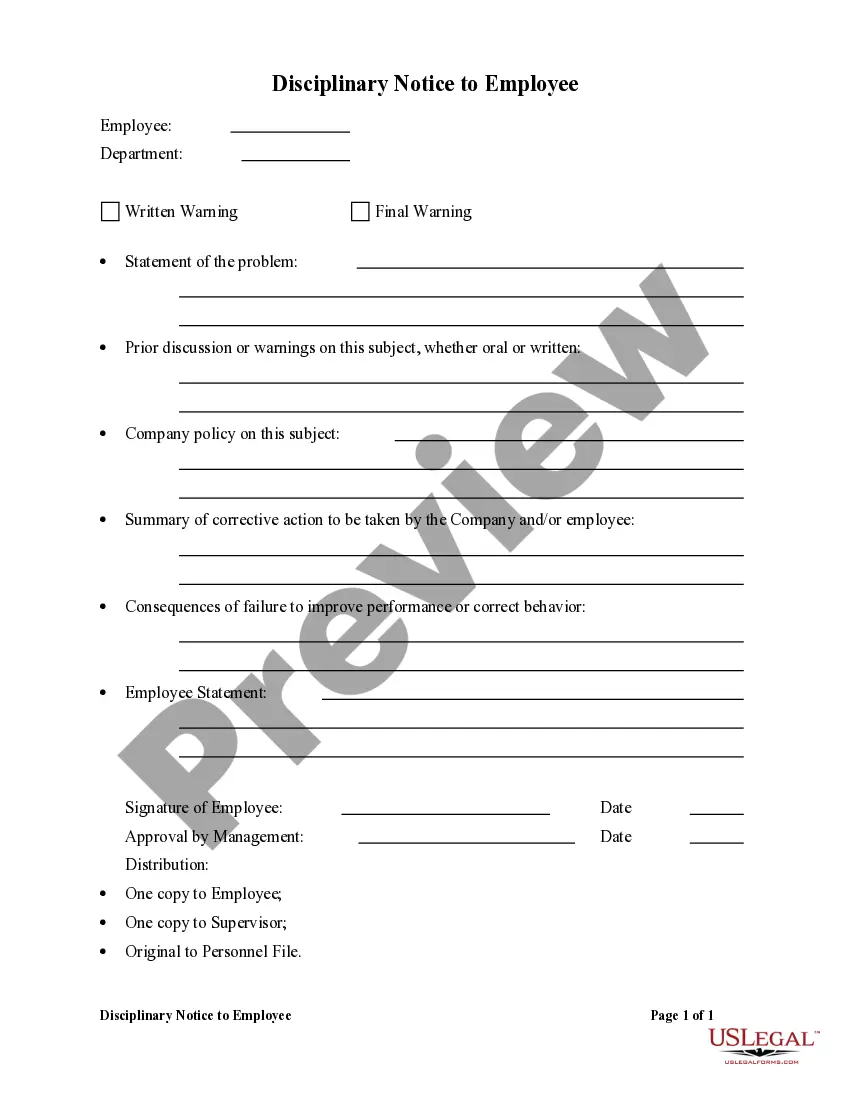
An example of a disciplinary subject might include workplace theft or harassment. Such serious matters often require immediate attention and should be documented with a counseling form for employee to establish a formal record. This helps protect the rights of all parties involved and supports fair handling of the situation.
An example of performance counselling could be a meeting where a manager discusses an employee's missed deadlines. Using a counseling form for employee to outline the issue helps structure the discussion, allowing both parties to identify solutions and agree on new deadlines for future tasks.
Counseling subordinates involves a combination of empathy and clear communication. Start the conversation using a counseling form for employee to address specific performance issues. This approach not only sets a professional tone but also demonstrates your commitment to the subordinate's success and growth.
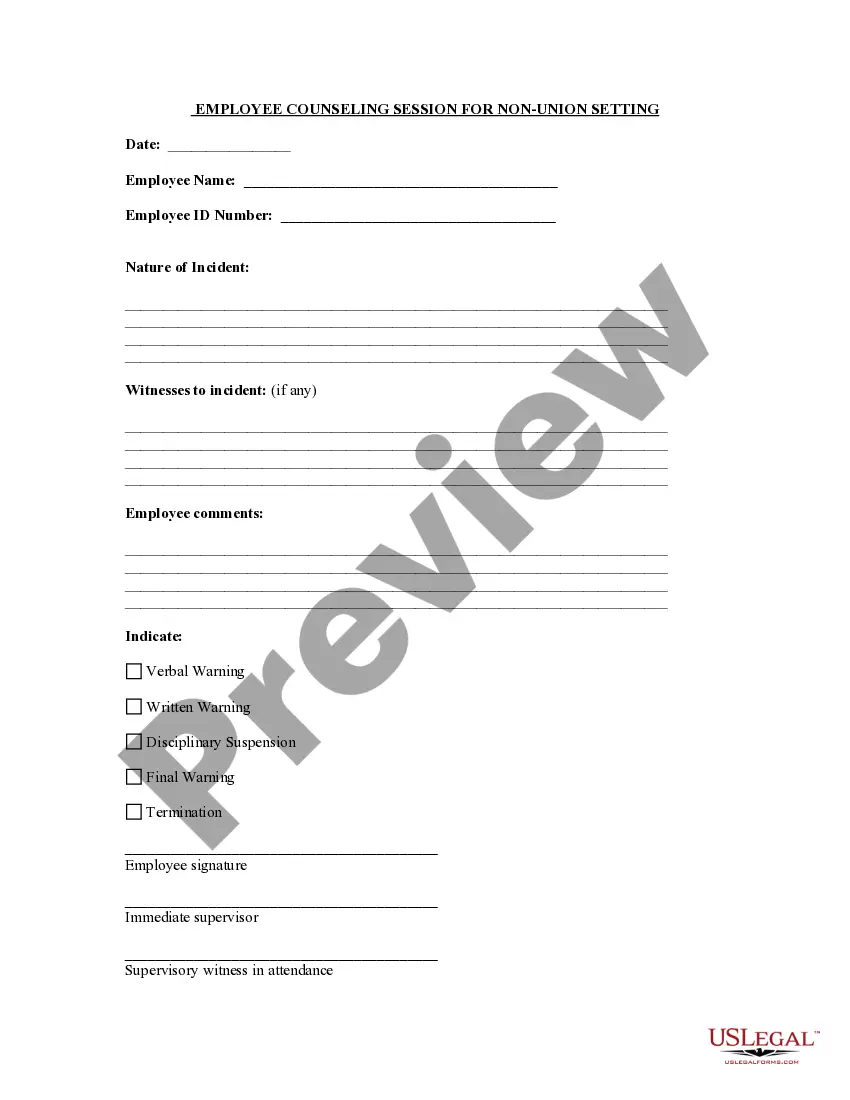
Employee counselling is a structured process aimed at supporting employees facing challenges in their work. It often involves using a counseling form for employee to document discussions about performance or behavior. This method fosters an environment for open communication and professional development, ensuring employees feel supported.
Performance counseling examples include discussions about meeting job expectations or developing additional skills. Managers often use a counseling form for employee to track progress and provide feedback over time. This ongoing dialogue not only highlights successes but also clarifies areas for growth.
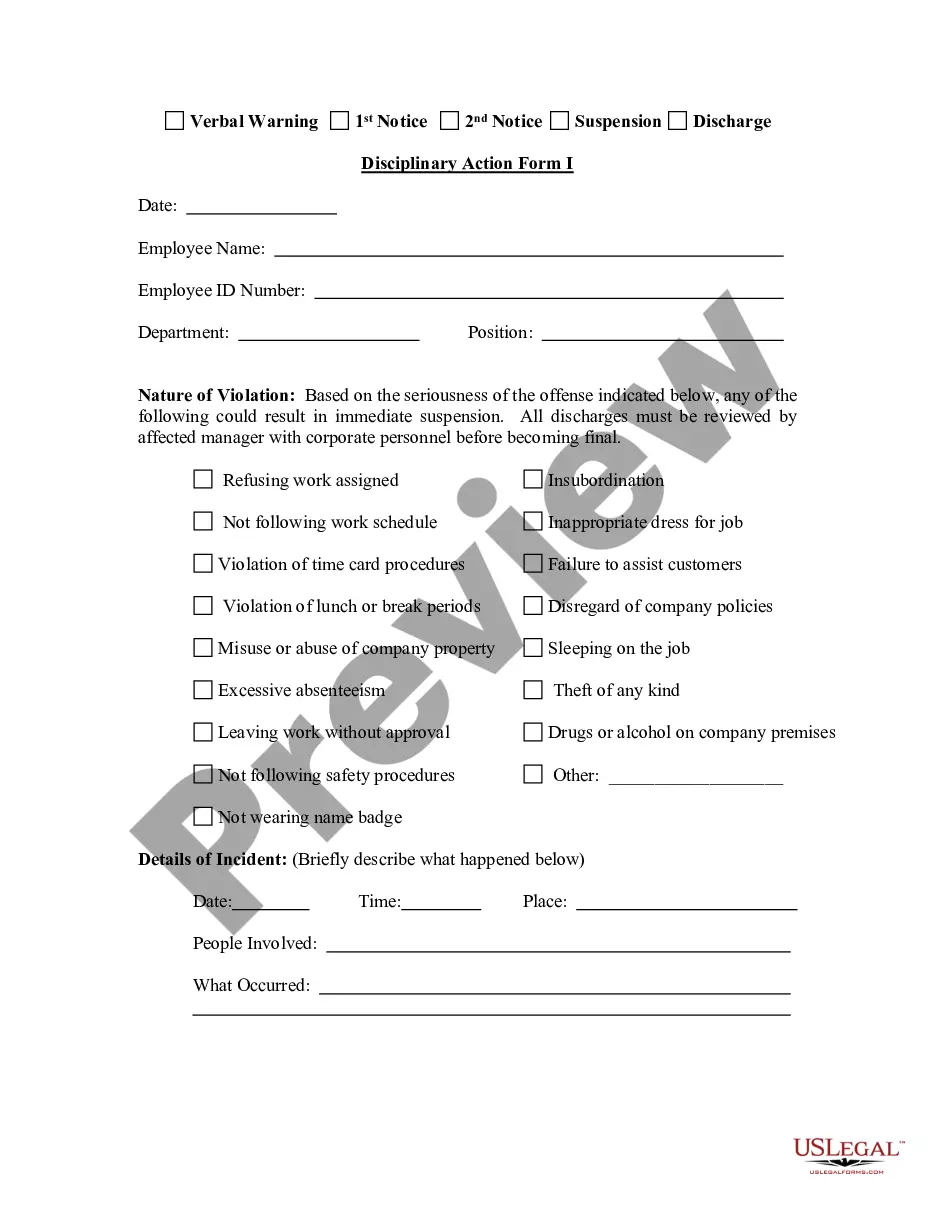
Examples of disciplinary actions include verbal warnings, written warnings, and probationary periods. These actions are documented using a counseling form for employee, ensuring transparency and clarity. The goal is to guide the employee towards better performance while adhering to company policies.
Discipline counseling refers to the process of addressing employee behavior that does not meet company standards. It's a constructive approach that utilizes a counseling form for employee to outline the issues, expectations, and corrective actions required. This method encourages accountability while aiming to improve performance and maintain workplace harmony.