Employee Termination
Description
Get your form ready online
Our built-in tools help you complete, sign, share, and store your documents in one place.
Make edits, fill in missing information, and update formatting in US Legal Forms—just like you would in MS Word.
Download a copy, print it, send it by email, or mail it via USPS—whatever works best for your next step.
Sign and collect signatures with our SignNow integration. Send to multiple recipients, set reminders, and more. Go Premium to unlock E-Sign.
If this form requires notarization, complete it online through a secure video call—no need to meet a notary in person or wait for an appointment.
We protect your documents and personal data by following strict security and privacy standards.

Make edits, fill in missing information, and update formatting in US Legal Forms—just like you would in MS Word.

Download a copy, print it, send it by email, or mail it via USPS—whatever works best for your next step.

Sign and collect signatures with our SignNow integration. Send to multiple recipients, set reminders, and more. Go Premium to unlock E-Sign.

If this form requires notarization, complete it online through a secure video call—no need to meet a notary in person or wait for an appointment.

We protect your documents and personal data by following strict security and privacy standards.
Looking for another form?





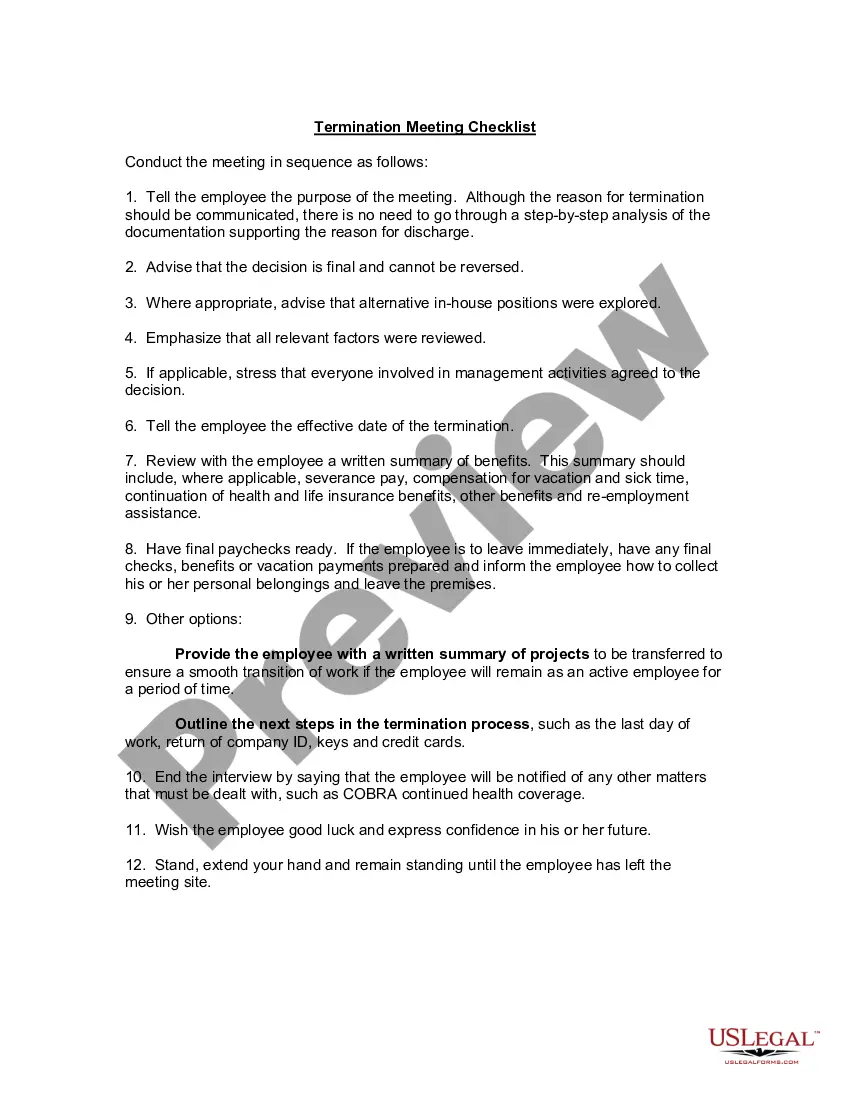
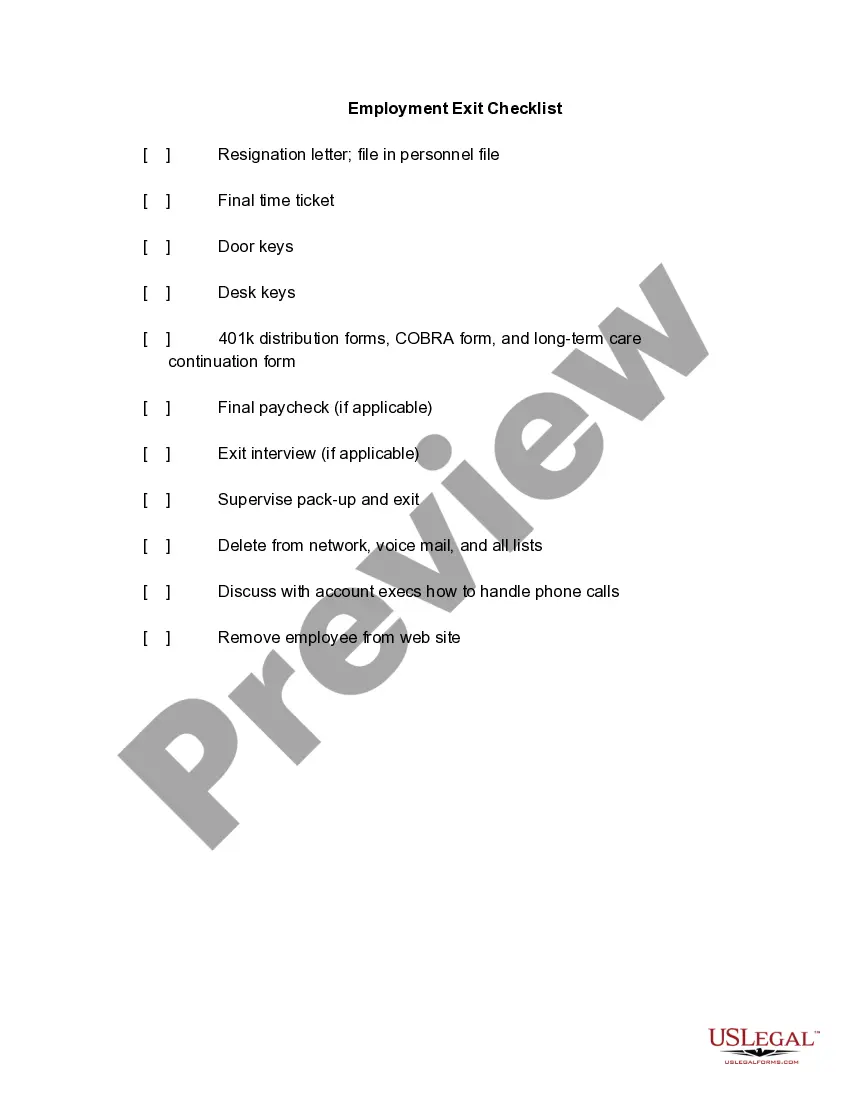
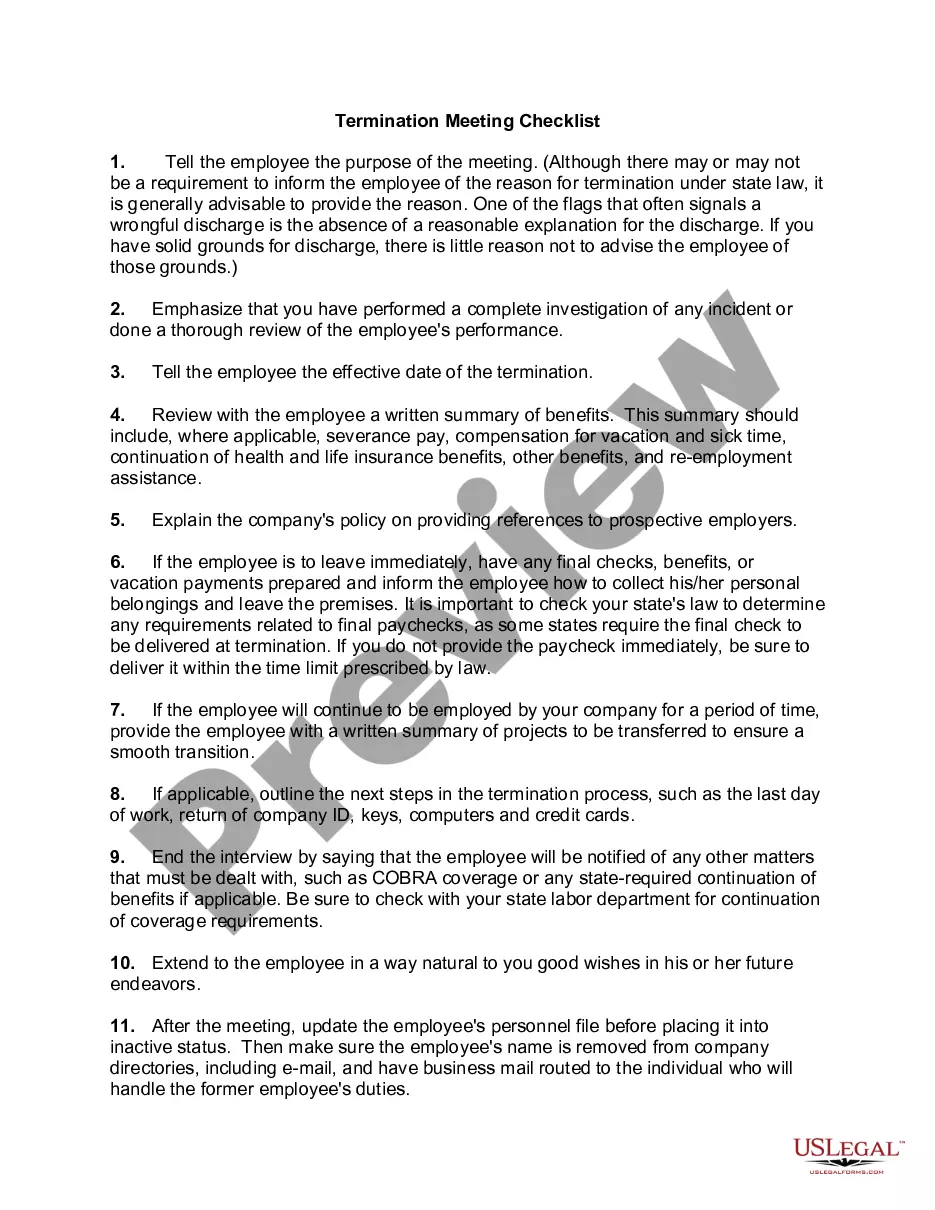
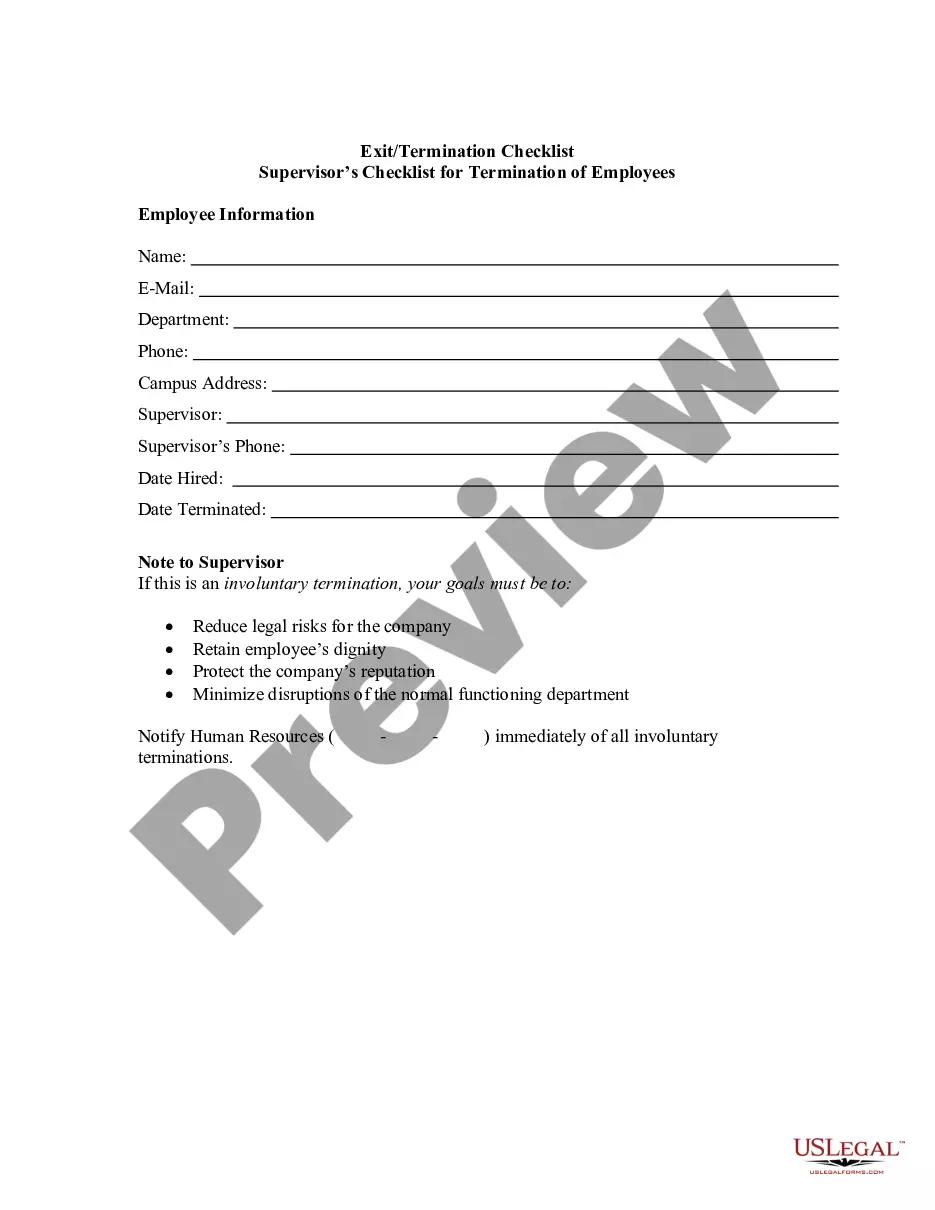
How to fill out Termination Meeting Checklist?
- Visit the US Legal Forms website and log in to your account. If you're a new user, you'll need to create an account to proceed.
- Once logged in, search for 'employee termination' in the search bar to find the appropriate form that meets your legal needs.
- Review the preview mode and form descriptions to ensure you've selected the right document that complies with your local jurisdiction.
- In case you need another template, utilize the Search tab to browse for other relevant forms.
- Select the form and click on the 'Buy Now' button. Choose a suitable subscription plan that fits your requirements.
- Complete your purchase by entering your payment information, either via credit card or PayPal.
- After purchasing, download the completed form directly to your device and save it for future reference.
Once you've secured the right employee termination form, you can easily fill it out and ensure it meets legal standards. This step is crucial to avoid any potential issues that may arise from improper documentation.
In conclusion, US Legal Forms simplifies the employee termination process by providing a vast array of legal documents tailored to your needs. For a seamless experience, start your documentation journey today!
Form popularity
FAQ
Politely terminating an employee involves maintaining respect and dignity throughout the process. Begin the conversation by expressing appreciation for the employee’s efforts, and then clearly explain the reasons for the employee termination. Approaching this with empathy can help preserve the relationship and maintain a positive work environment.
Filling out a termination form effectively requires accurate information. Start by entering the employee's personal details, followed by the reasons for the employee termination. You'll find that US Legal Forms offers user-friendly templates that prompt you on what information to include, simplifying the process for you.
Using clear and respectful language is vital when drafting a termination notice. It's essential to state the reason for the employee termination without ambiguity. Phrases like 'After careful consideration, we have decided to terminate your employment due to...' can establish clarity while maintaining professionalism.
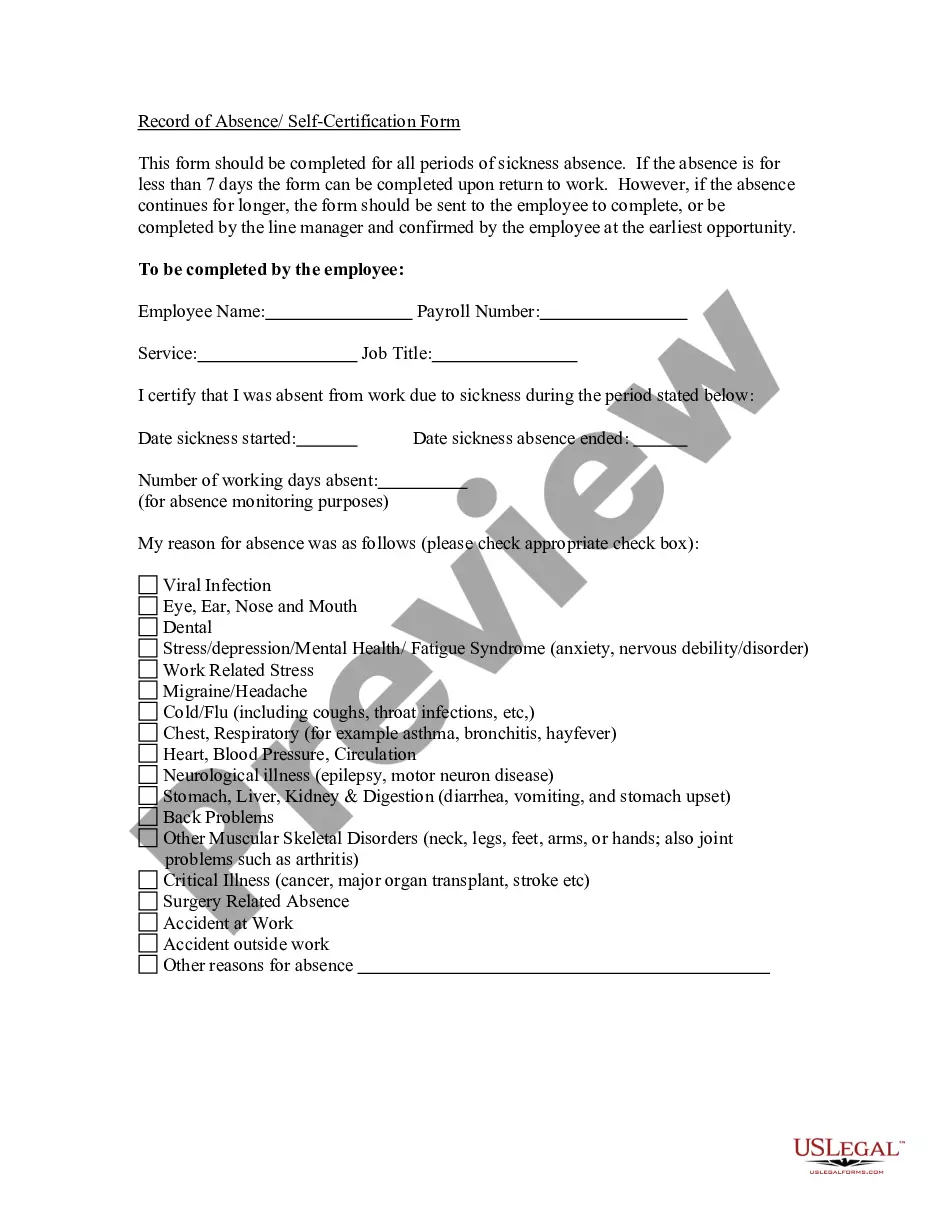
Filling out a termination form involves several key steps. First, ensure you have all the necessary details, such as the employee's name, job title, and reasons for termination. US Legal Forms provides straightforward templates that guide you through the process, making it easier to complete your employee termination paperwork accurately.
A termination document serves as an official record when ending an employee's contract. It may include details such as the reason for termination, the employee's final day, and any severance information. For a comprehensive template, consider checking US Legal Forms, which offers various examples tailored to your needs.
The three types of termination of employment include voluntary, involuntary, and mutual agreement. Voluntary termination occurs when an employee chooses to leave, such as through resignation. Involuntary termination can be initiated by the employer, while mutual agreement involves both parties deciding to part ways. Understanding these distinctions is crucial for effectively managing employee termination.
Responding to termination of employment requires a calm and thoughtful approach. Start by acknowledging the employee's feelings and providing a clear rationale for the decision. It is critical to maintain a respectful conversation, allowing the individual to express their thoughts. This practice can foster a more positive transition for both parties.
When you terminate an employee, several actions must take place to ensure compliance and clarity. You should provide written notice outlining the reasons for termination, any severance details, and final paycheck information. Additionally, facilitate the return of company property and ensure the employee understands their rights regarding unemployment benefits.
During an employee termination, avoid using language that could be perceived as disrespectful or judgmental. Steer clear of comments about the individual's personal life or future prospects. Instead, focus on factual reasons and company policy to maintain professionalism and respect throughout the employee termination process.
Termination and being fired are often used interchangeably but may have different implications. While both result in the end of employment, termination can refer to mutual separations or layoffs as well. It is essential to communicate the context clearly to avoid confusion and ensure understanding of the terms involved in employee termination.