Employee Final Pay Within Occupations
Description
Get your form ready online
Our built-in tools help you complete, sign, share, and store your documents in one place.
Make edits, fill in missing information, and update formatting in US Legal Forms—just like you would in MS Word.
Download a copy, print it, send it by email, or mail it via USPS—whatever works best for your next step.
Sign and collect signatures with our SignNow integration. Send to multiple recipients, set reminders, and more. Go Premium to unlock E-Sign.
If this form requires notarization, complete it online through a secure video call—no need to meet a notary in person or wait for an appointment.
We protect your documents and personal data by following strict security and privacy standards.

Make edits, fill in missing information, and update formatting in US Legal Forms—just like you would in MS Word.

Download a copy, print it, send it by email, or mail it via USPS—whatever works best for your next step.

Sign and collect signatures with our SignNow integration. Send to multiple recipients, set reminders, and more. Go Premium to unlock E-Sign.

If this form requires notarization, complete it online through a secure video call—no need to meet a notary in person or wait for an appointment.

We protect your documents and personal data by following strict security and privacy standards.
Looking for another form?









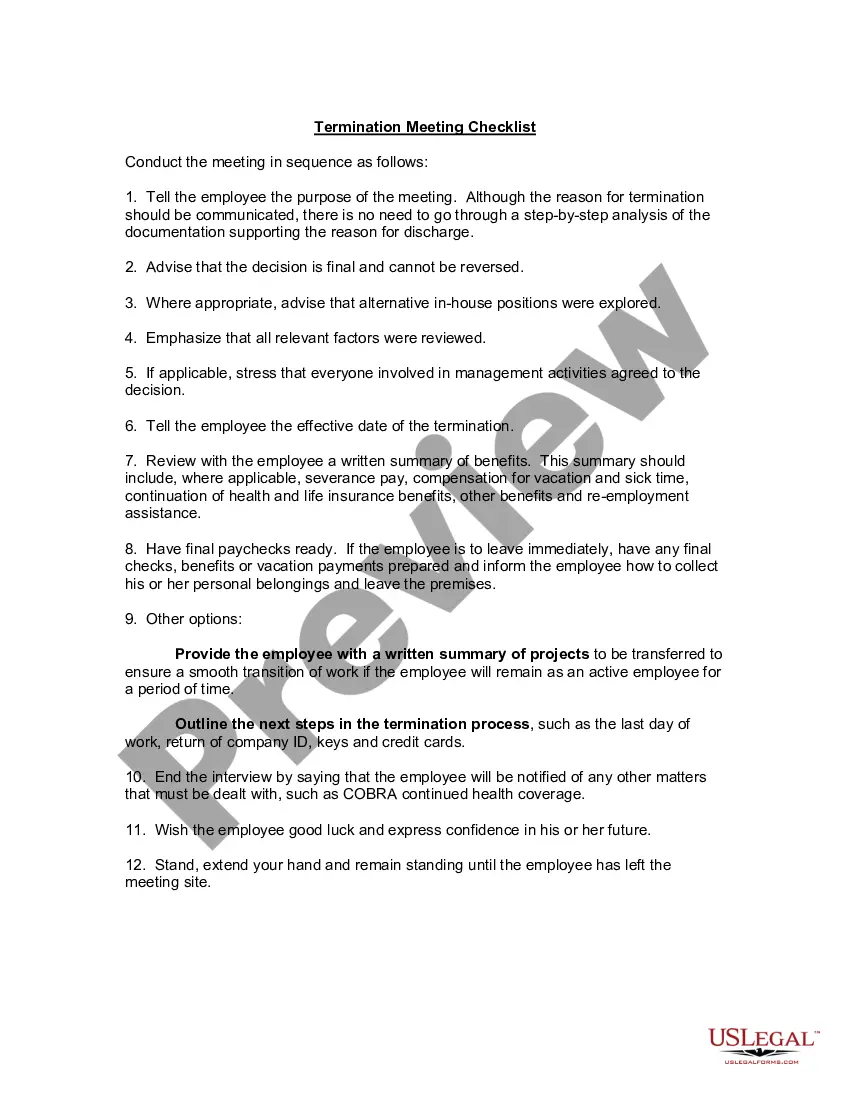
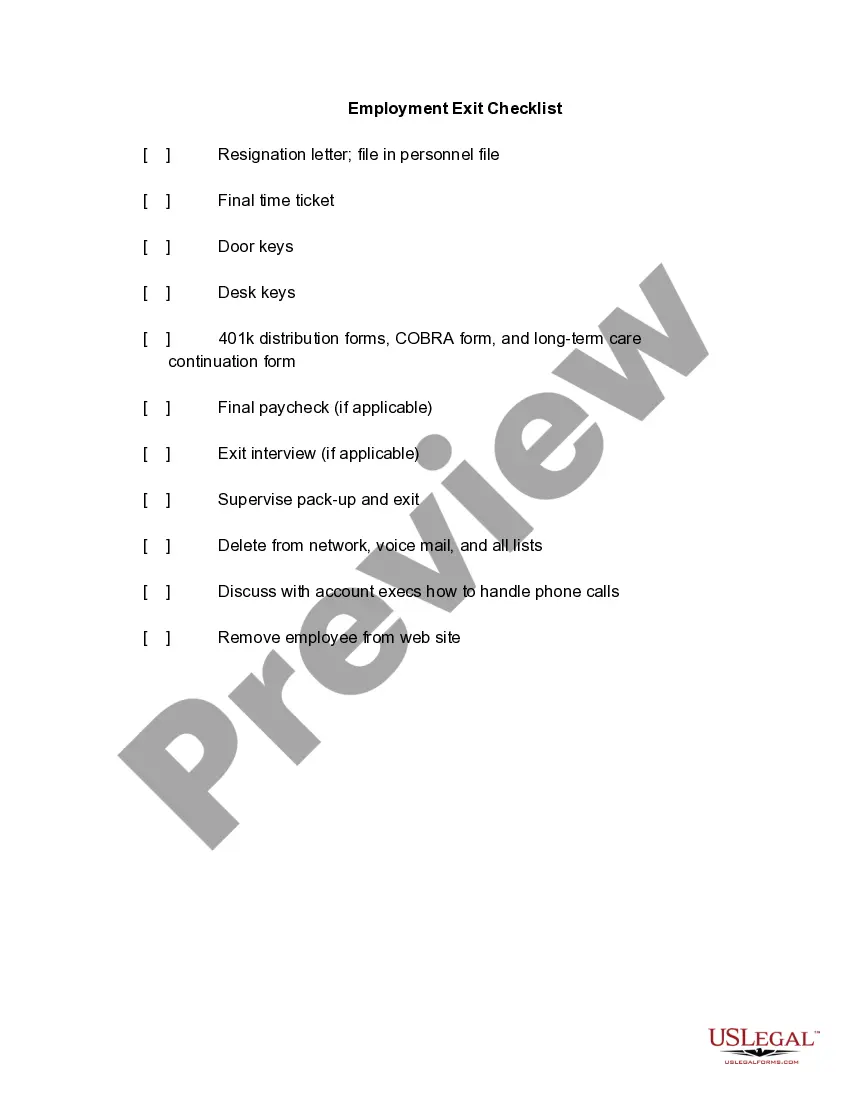
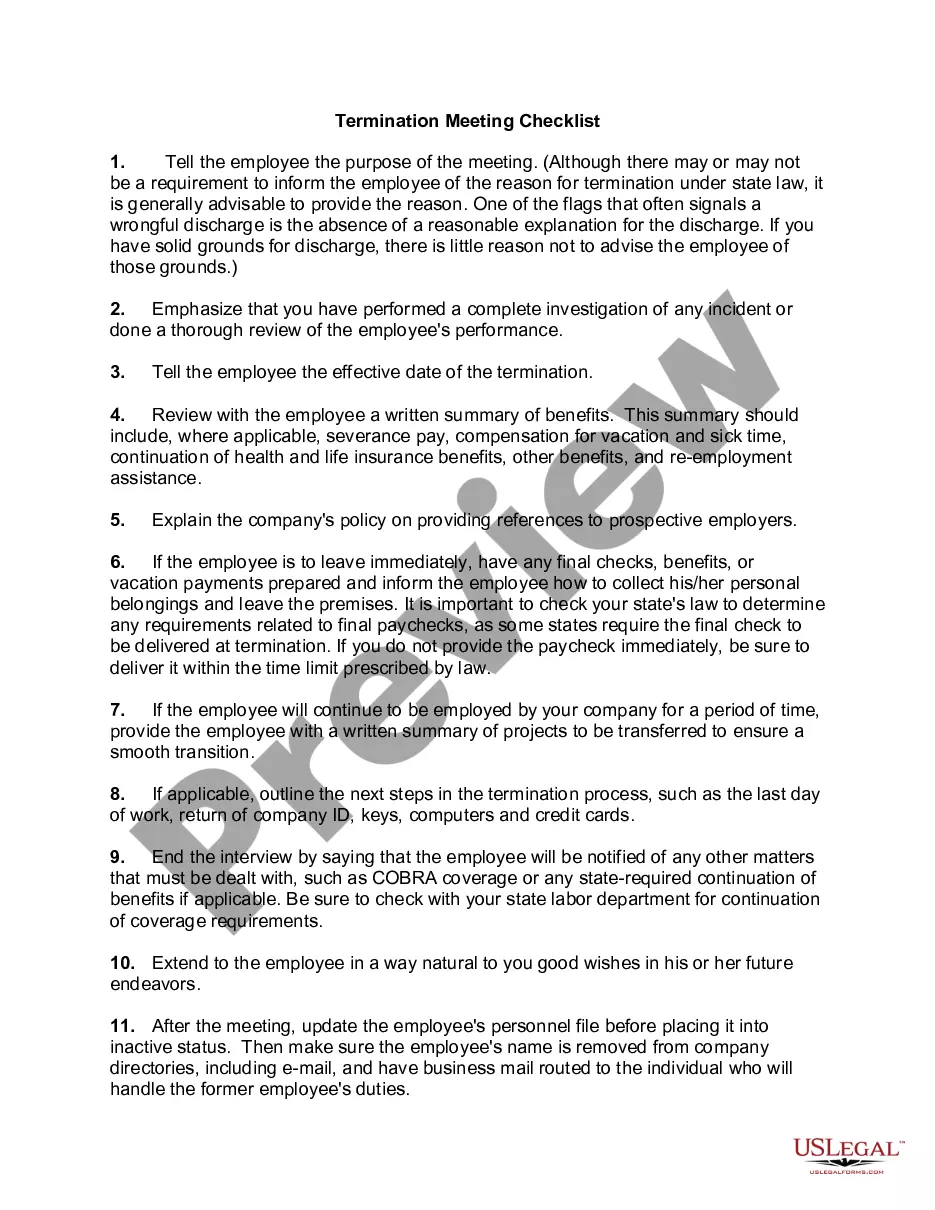
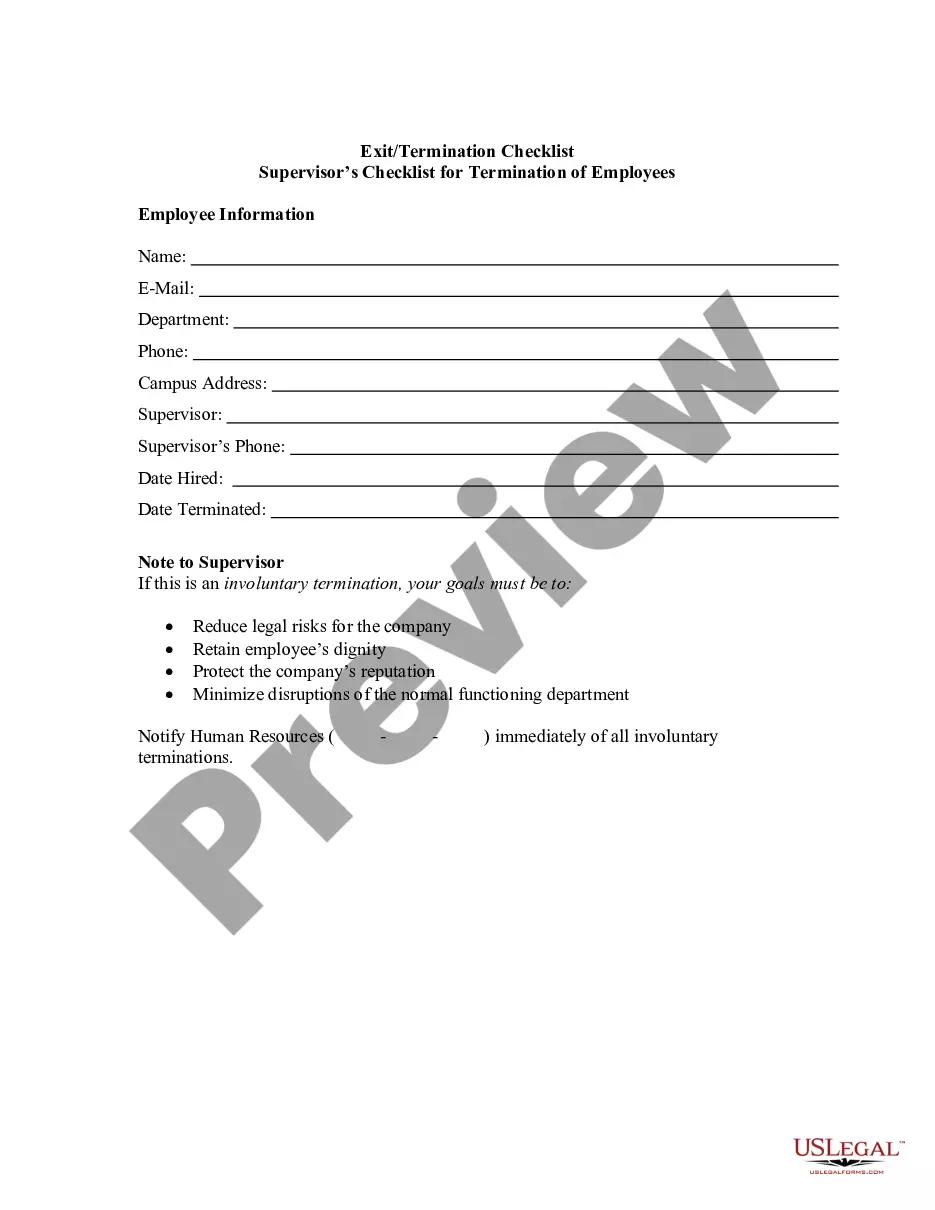
How to fill out Termination Meeting Checklist?
Creating legal papers from the ground up can frequently be intimidating.
Certain situations may require extensive investigation and significant financial resources.
If you're seeking a more direct and economical approach to producing Employee Final Pay Within Occupations or other documents without unnecessary complications, US Legal Forms is always accessible.
Our digital library of over 85,000 current legal documents encompasses nearly every aspect of your financial, legal, and personal matters.
However, before directly downloading Employee Final Pay Within Occupations, adhere to these suggestions: Verify the document preview and descriptions to ensure you have the appropriate document. Confirm that the template you choose meets the requirements of your state and county. Select the most suitable subscription plan to obtain the Employee Final Pay Within Occupations. Download the file, then complete, certify, and print it out. US Legal Forms enjoys an impeccable reputation and over 25 years of experience. Join us now and make form completion a simple and efficient process!
- With just a few clicks, you can swiftly access state- and county-specific templates meticulously prepared by our legal specialists.
- Utilize our site whenever you need a dependable service through which you can effortlessly locate and download the Employee Final Pay Within Occupations.
- If you're familiar with our site and have previously registered with us, simply Log In to your account, select the template, and download it or re-download it anytime in the My documents section.
- Not signed up yet? No problem. It only takes minutes to register and explore the library.
Form popularity
FAQ
To calculate final payment, gather all relevant compensation details, including the employee's hourly wage or salary. Next, add any applicable overtime, bonuses, and benefits, ensuring you're also accounting for deductions like taxes. Utilizing a reliable platform like USLegalForms can simplify this process, helping you navigate employee final pay within occupations with ease and accuracy.
Calculating the final payout for an employee involves a few key components. First, you'll need to consider the employee's last pay period, including any wages owed for hours worked. Additionally, you should factor in any accrued benefits, such as unused vacation time or sick leave. Remember, understanding employee final pay within occupations helps ensure that all calculations are accurate and comply with state regulations.
When you decide to leave your job, you are generally entitled to receive your final paycheck. The timing of this payment may vary based on state laws and company policies, but you should expect to receive your employee final pay within occupations within a specified period. It is essential to know your rights regarding final pay, as some states require employers to issue payment immediately, while others have different timeframes. If you have questions or encounter issues, consider using the UsLegalForms platform to understand your rights and find resources to help you address your final pay concerns.
When you leave a job, you typically receive your employee final pay within occupations, which includes unpaid wages, any accrued vacation or sick leave, and possibly bonuses if applicable. It’s important to check your employment contract or company policy, as these can outline specific entitlements upon your departure. If you feel uncertain about the payment process, consider seeking guidance from resources like US Legal Forms, which provides valuable information about employee rights and the final pay process. Understanding these aspects helps ensure you receive what you deserve when transitioning from a job.
Federal law does not mandate a specific time frame for issuing a final paycheck after termination; instead, it refers to state law for guidance. Employees must be informed of the company's pay schedule, which typically governs when they receive their final earnings. Employers must comply with relevant state laws to ensure adherence to requirements for employee final pay within occupations. Utilizing platforms like US Legal Forms can help clarify these legal obligations effectively.
Severance pay can be significantly higher than the termination pay required by the ESC. Where that is the case, the employee is entitled to receive the higher of the two amounts. However, unlike termination pay, it is possible for employers to contract out of an obligation to provide severance pay.
The employer must pay the employee's earnings with 10 days after the end of the pay period in which termination occurred, or 31 consecutive days after the last day of employment. Neither earnings nor other terms or conditions of employment may be reduced during the notice period.
After being encouraged to step down, some individuals do ? convinced that it's better to resign than to be fired or let go. However, the opposite is often true. If you quit your job voluntarily, your company doesn't have to provide you with a severance package, which can be as much as 24 months' pay.
It's also important that you present the information you have to the employee. Be clear and unwavering, and explain why you decided to terminate them. Also, make sure you actually say the words ?We're terminating you? or ?We're letting you go.? Don't use ambiguous language.
The main difference between severance pay and termination pay is that severance pay is compensation that an employer must pay to a qualifying employee who has been dismissed in addition to what is required by statutory notice obligations (ESA guidelines for termination pay).