Hipaa Privacy Form Statement Format
Description
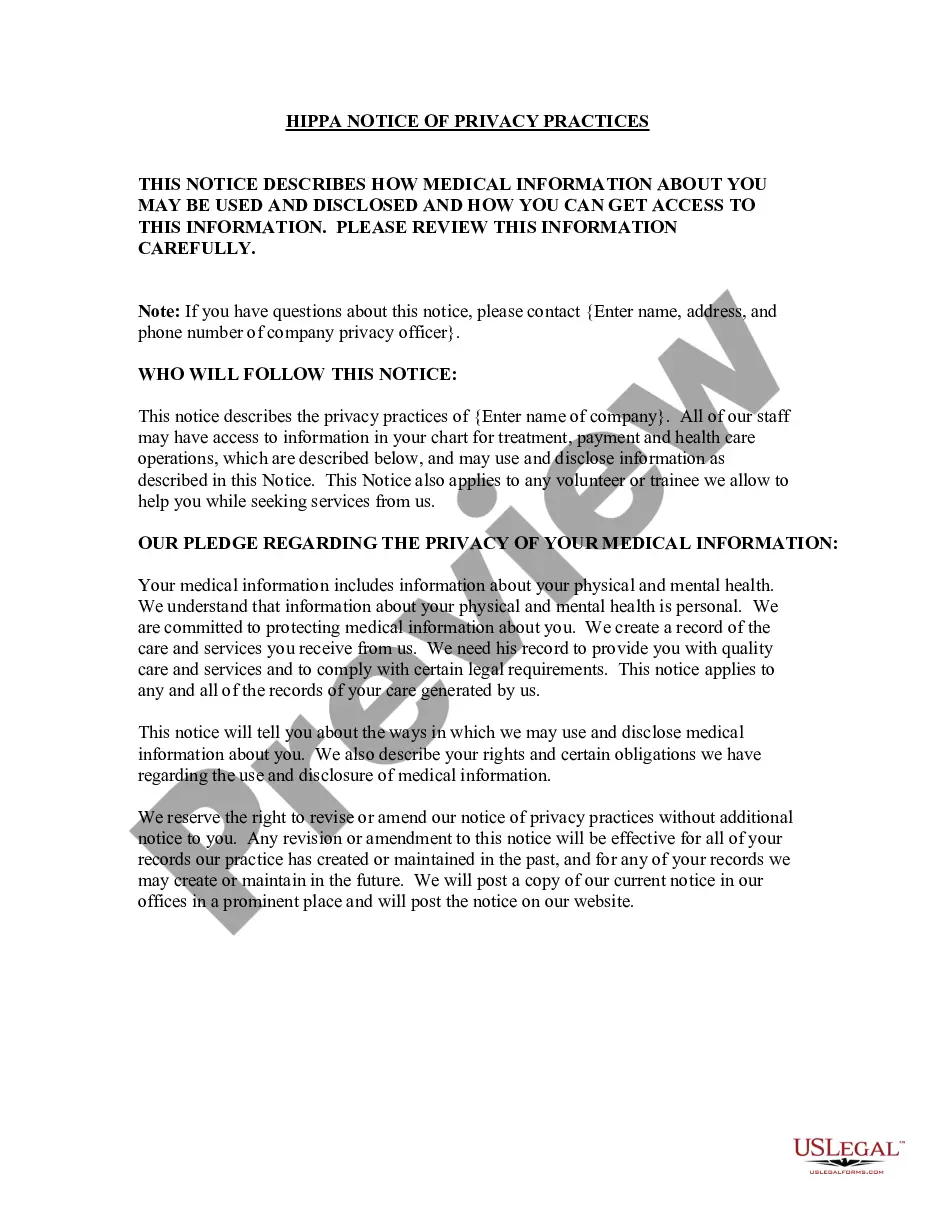
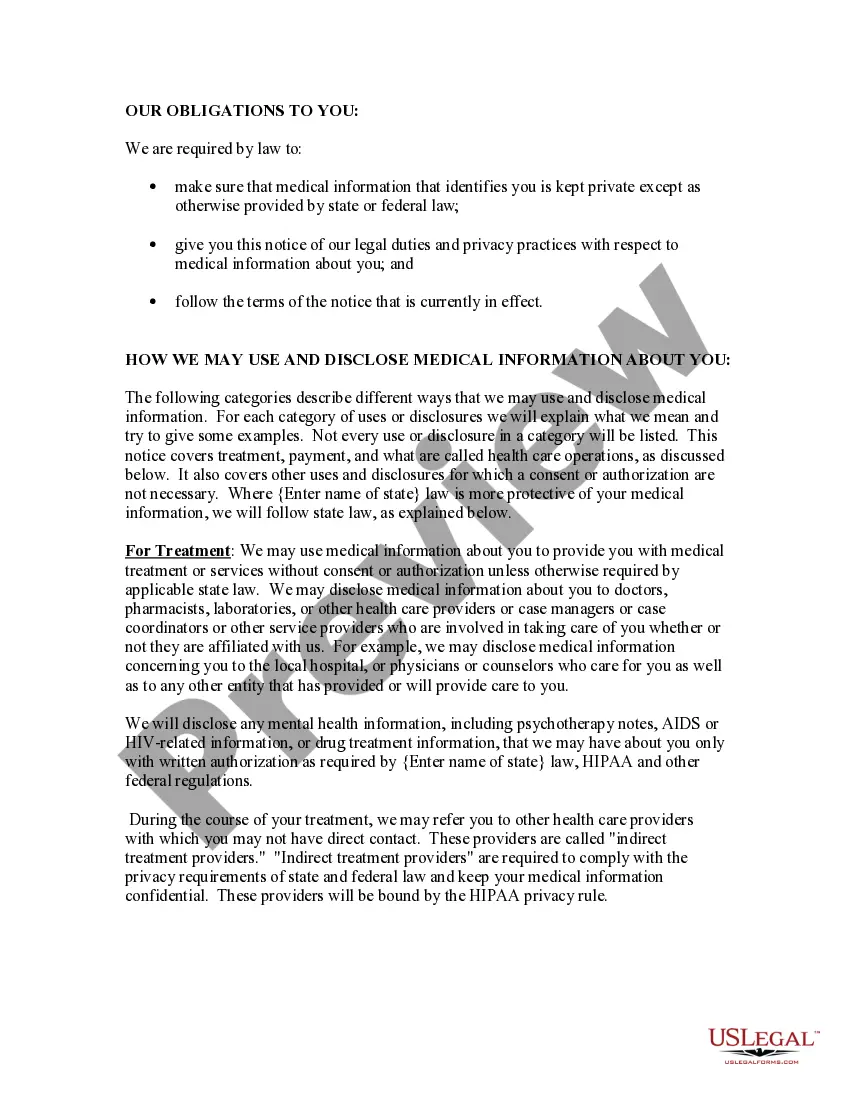
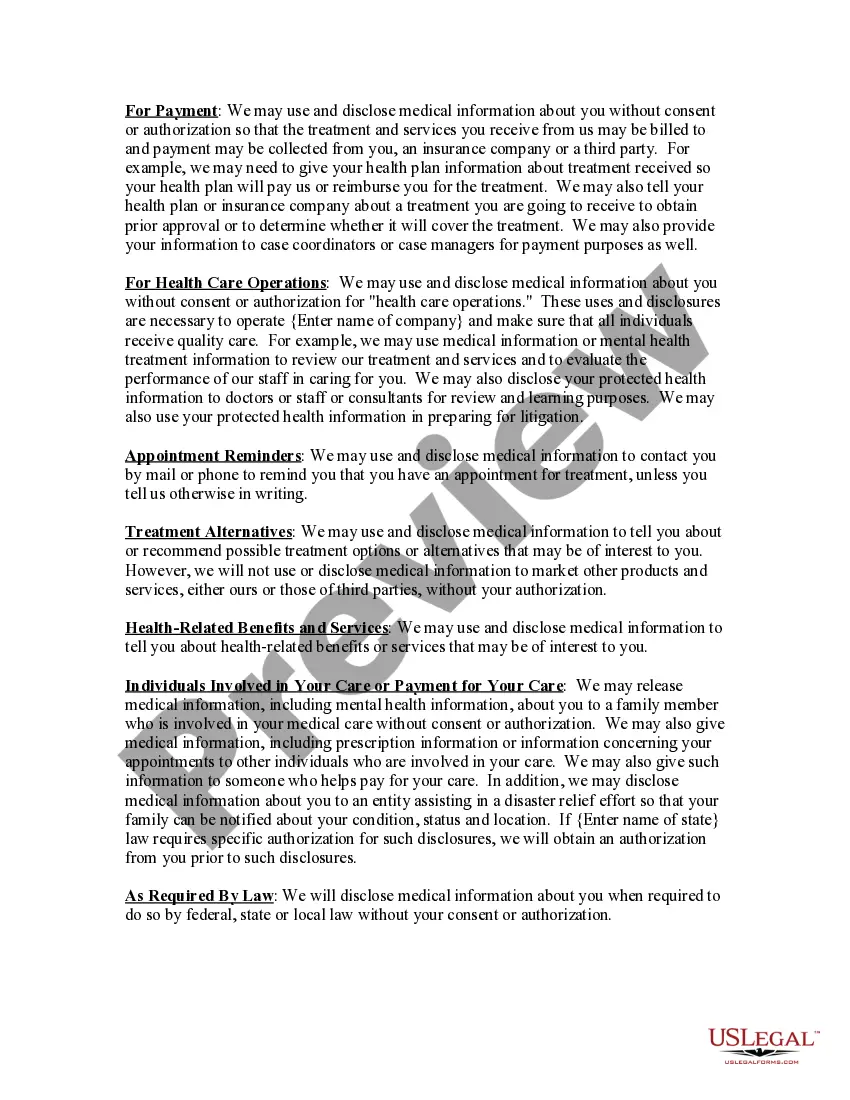
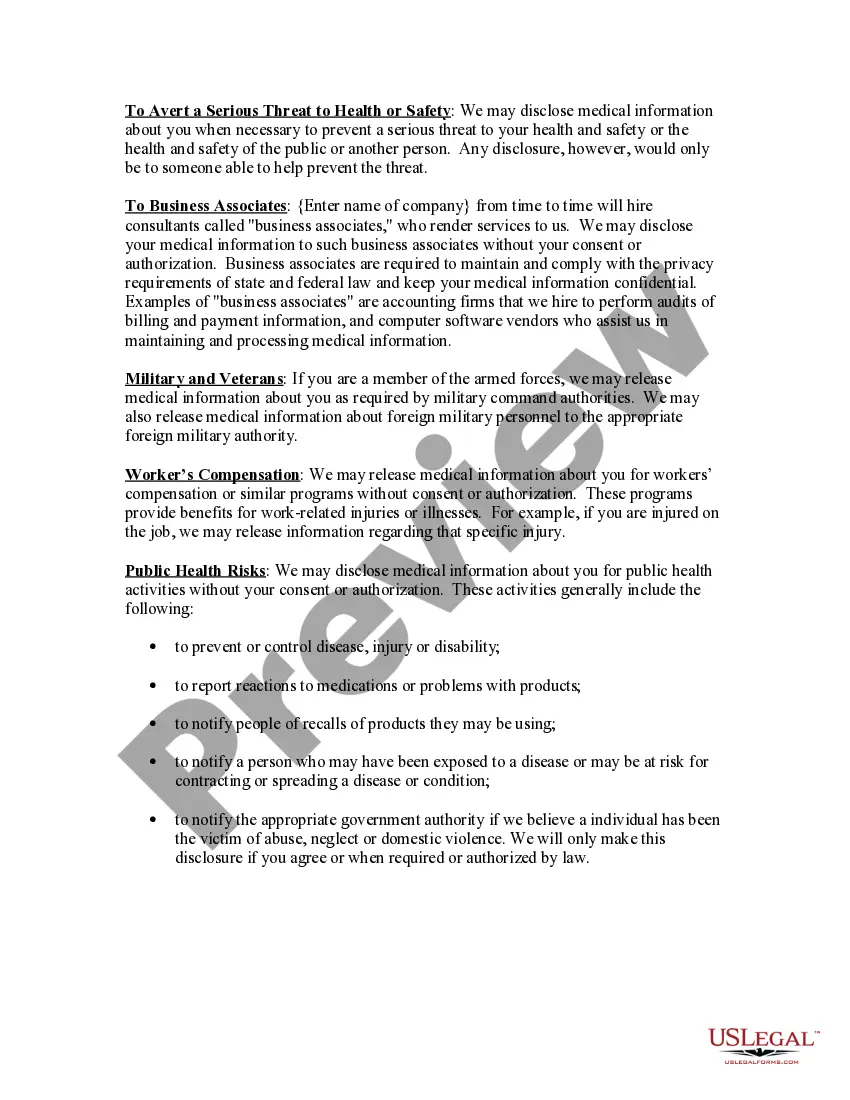
Get your form ready online
Our built-in tools help you complete, sign, share, and store your documents in one place.
Make edits, fill in missing information, and update formatting in US Legal Forms—just like you would in MS Word.
Download a copy, print it, send it by email, or mail it via USPS—whatever works best for your next step.
Sign and collect signatures with our SignNow integration. Send to multiple recipients, set reminders, and more. Go Premium to unlock E-Sign.
If this form requires notarization, complete it online through a secure video call—no need to meet a notary in person or wait for an appointment.
We protect your documents and personal data by following strict security and privacy standards.
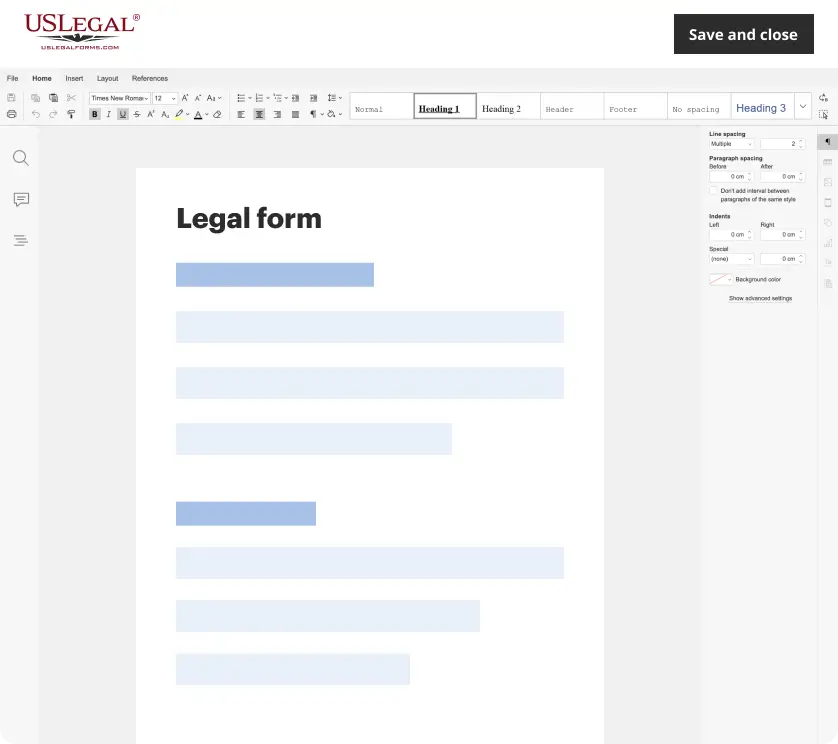
Make edits, fill in missing information, and update formatting in US Legal Forms—just like you would in MS Word.
Download a copy, print it, send it by email, or mail it via USPS—whatever works best for your next step.
Sign and collect signatures with our SignNow integration. Send to multiple recipients, set reminders, and more. Go Premium to unlock E-Sign.
If this form requires notarization, complete it online through a secure video call—no need to meet a notary in person or wait for an appointment.
We protect your documents and personal data by following strict security and privacy standards.
Looking for another form?
How to fill out HIPAA Notice Of Privacy Practices?
Acquiring legal document examples that adhere to federal and state regulations is crucial, and the internet provides a plethora of choices.
However, what is the purpose of wasting time searching for the correctly constructed Hipaa Privacy Form Statement Format template online when the US Legal Forms digital library already has such documents consolidated in one location.
US Legal Forms is the premier online legal repository with over 85,000 fillable templates prepared by legal professionals for any professional and personal situation.
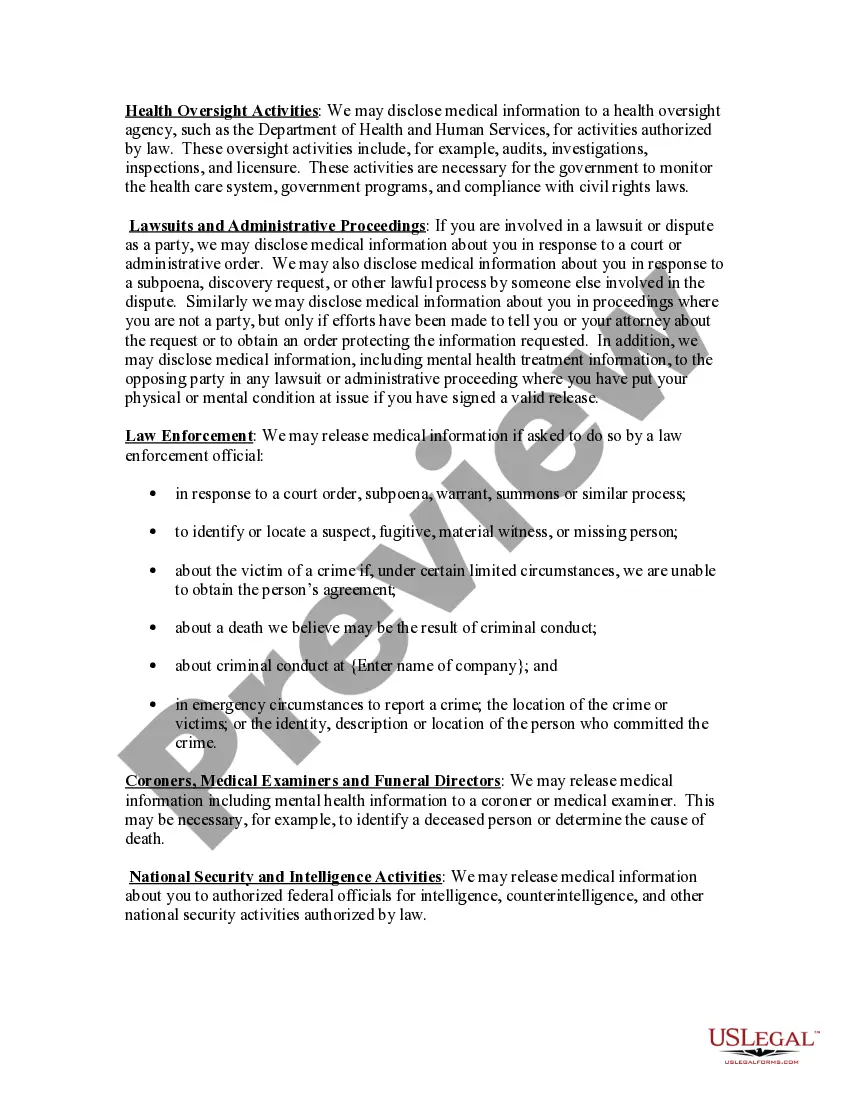
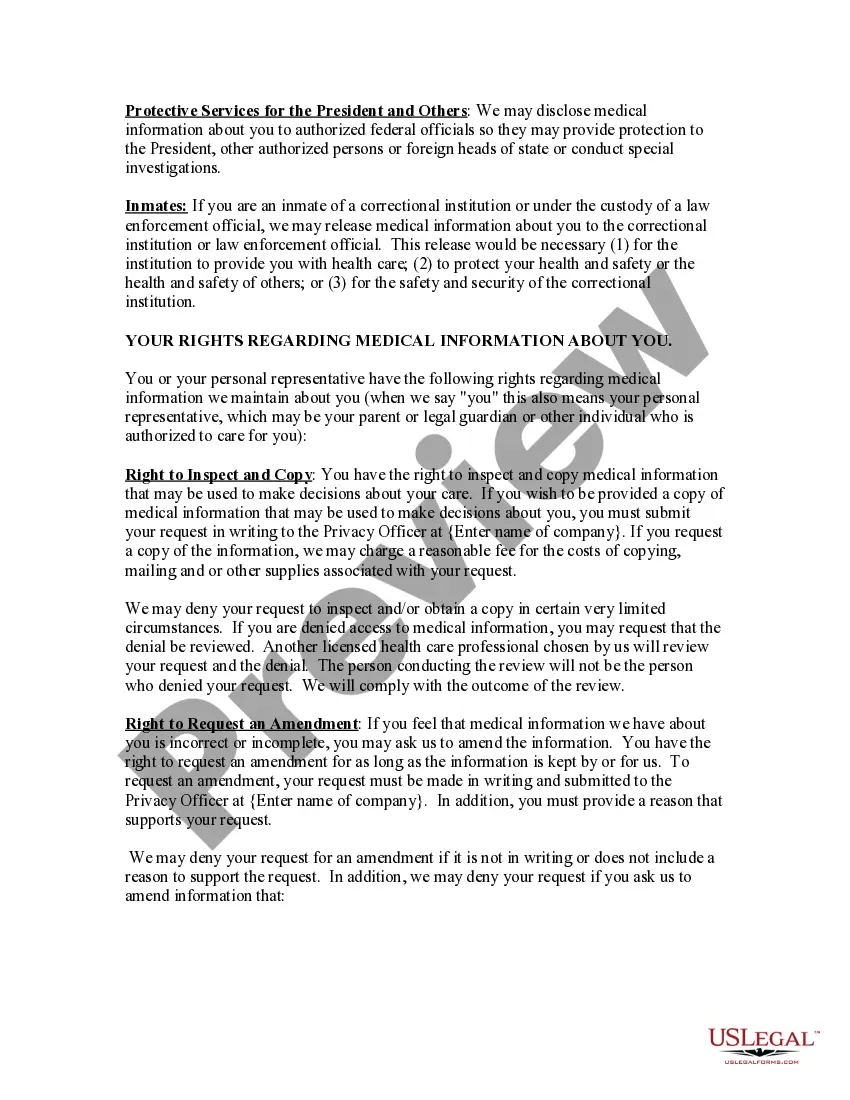
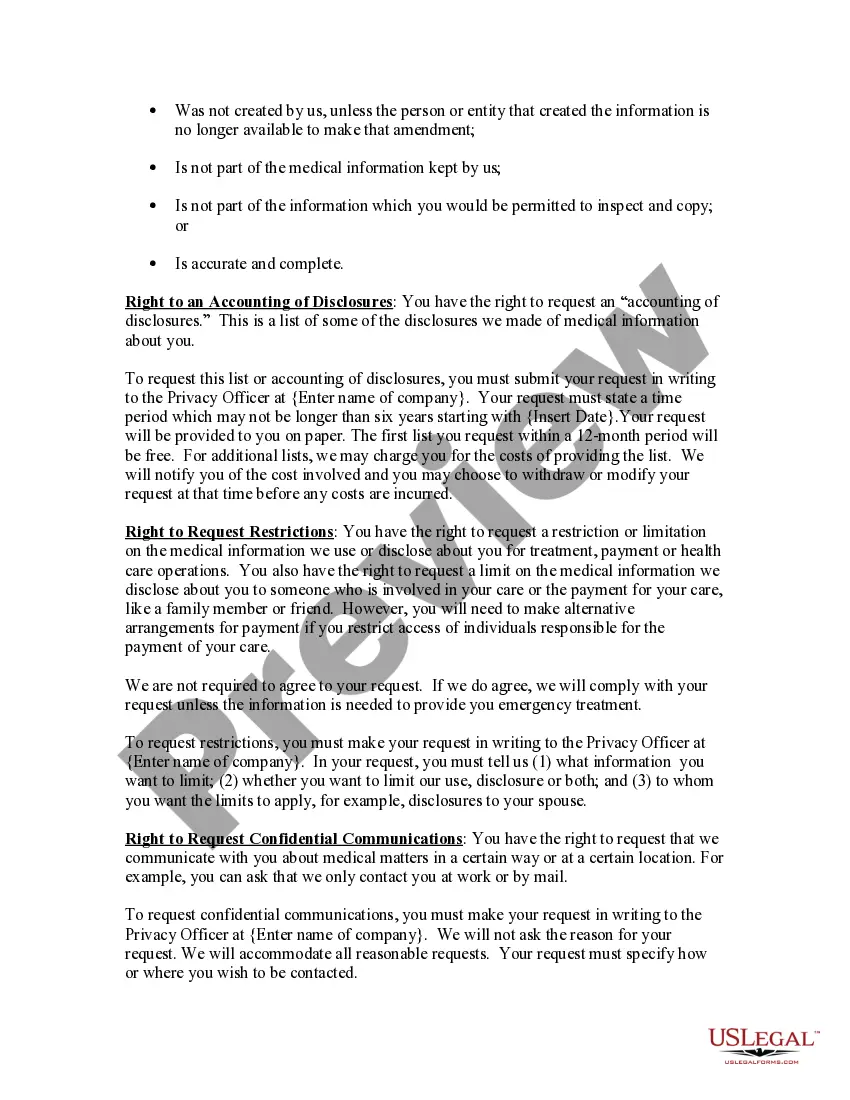
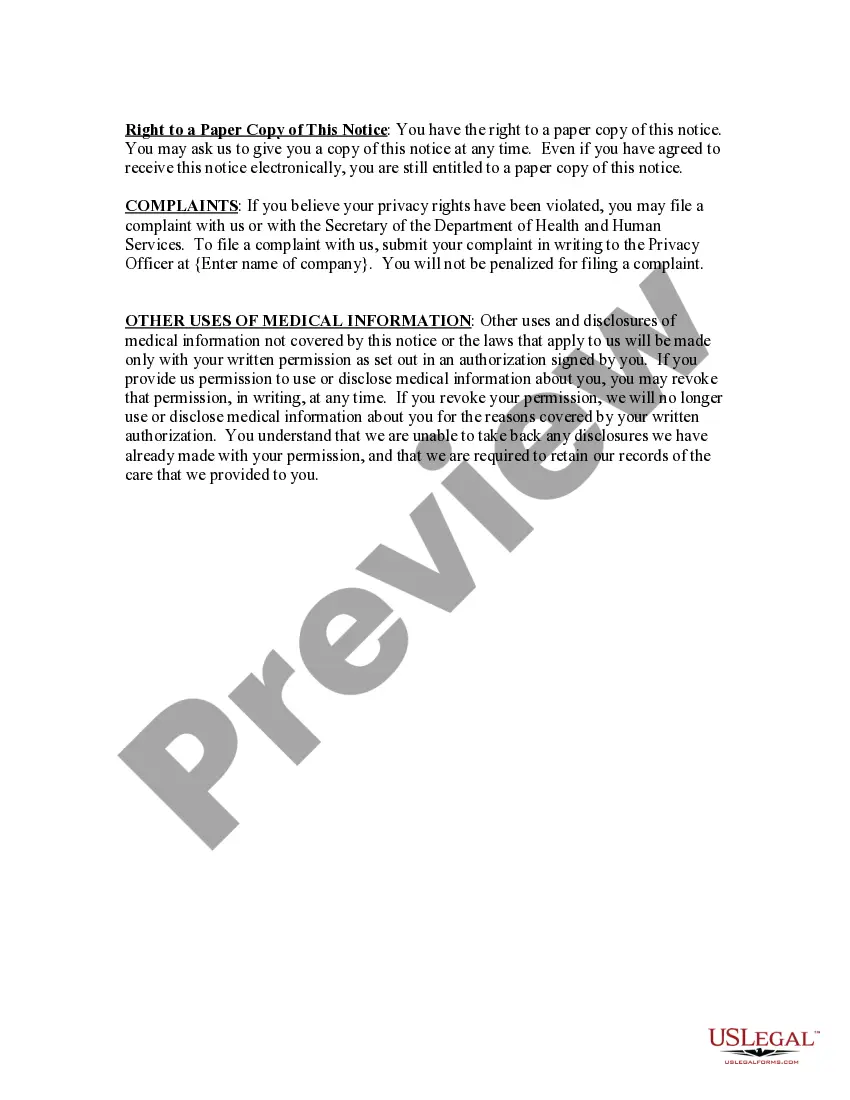
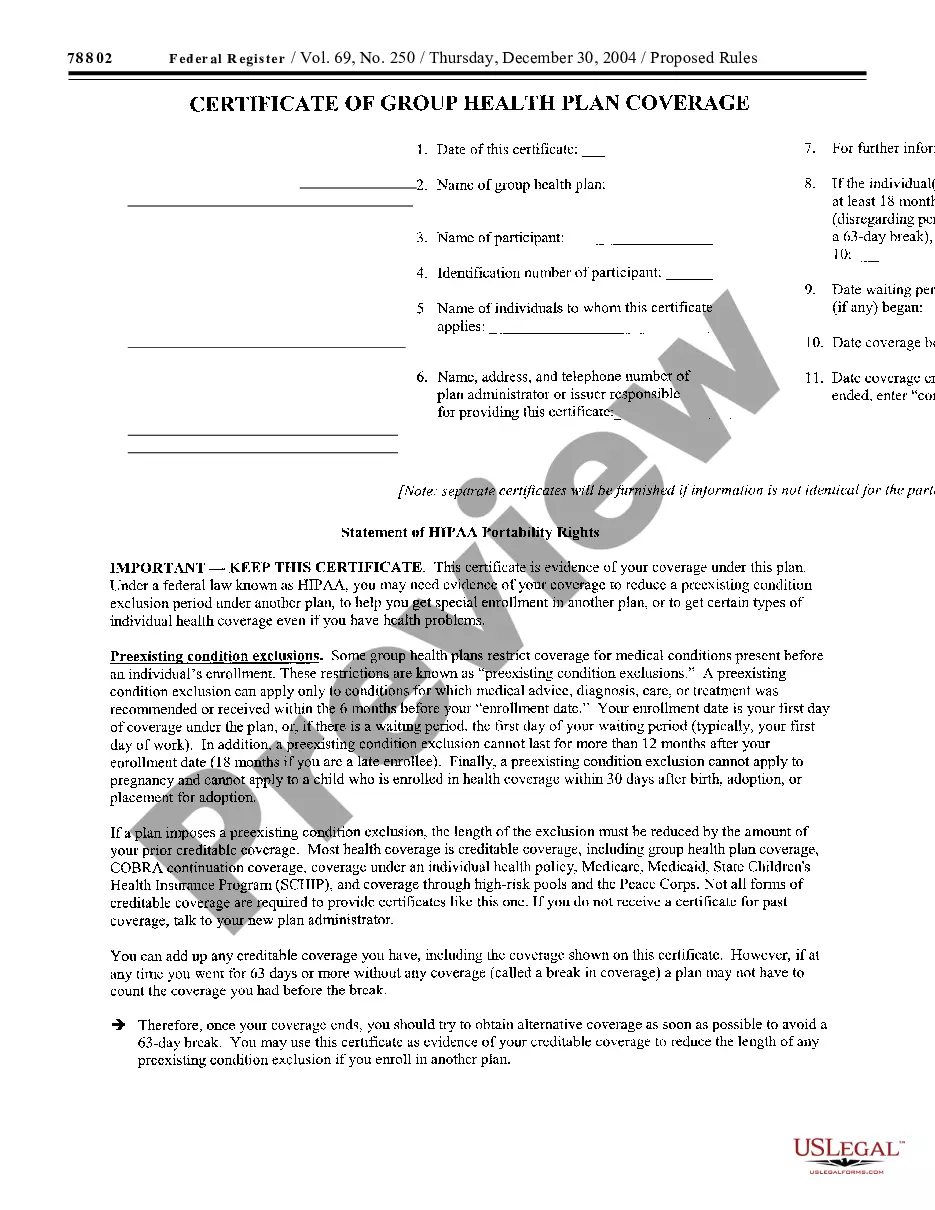
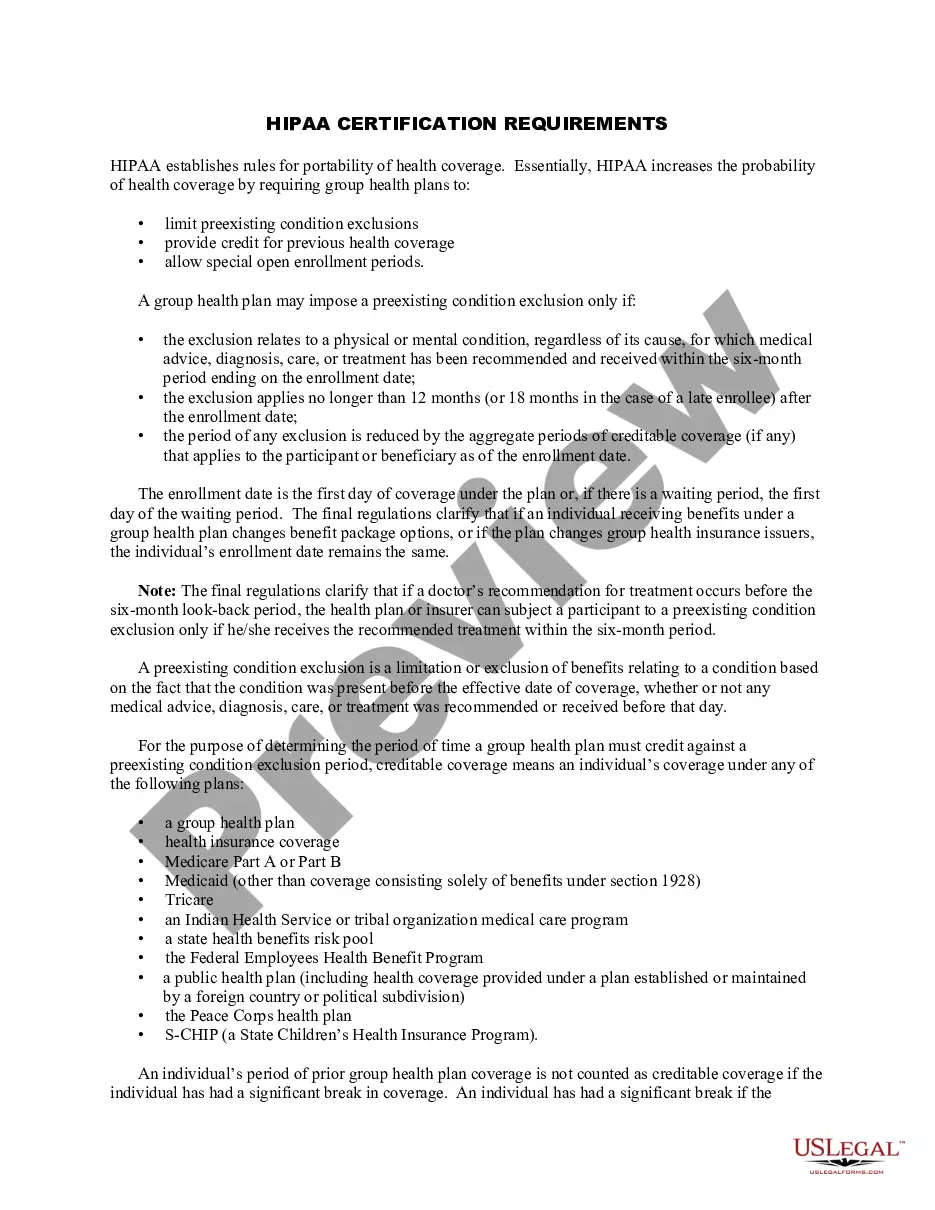
Access the template using the Preview feature or via the text description to ensure it aligns with your requirements.
- They are easy to navigate with all documents categorized by state and intended use.
- Our specialists stay updated with legislative modifications, so you can always ensure your form is current and compliant when obtaining a Hipaa Privacy Form Statement Format from our site.
- Acquiring a Hipaa Privacy Form Statement Format is quick and straightforward for both existing and new users.
- If you already hold an account with an active subscription, Log In and save the document sample you require in the preferred format.
- If you're new to our platform, follow the instructions below.
Form popularity
FAQ
A confidentiality disclaimer might say: 'This message and any attachments are confidential and intended only for the named recipients. Unauthorized review, use, or distribution is prohibited.' Such disclaimers help protect sensitive information and maintain compliance with the HIPAA privacy form statement format, which is essential for safeguarding health data.
Currently, standard ChatGPT is not designed to be HIPAA compliant, as it may handle PHI without the necessary safeguards in place. To engage in HIPAA compliant conversations, consider using specialized communication tools that are certified. These tools ensure that your data is handled according to HIPAA standards. Always refer to a HIPAA privacy form statement format when dealing with sensitive information to protect yourself.
You may be able to avoid probate in New Hampshire by: Making a Revocable Living Trust. Titling property: Joint Tenancy. Community Property With Right of Survivorship. Tenancy by the Entirety. Create accounts as TOD or POD (Transfer on Death; Payable on Death) Establish beneficiaries.
Your property can be transferred to your beneficiaries without entering probate, and this is possible in a few ways. Common methods include transferring your property to a living trust, gifting property before you pass on or making a beneficiary a joint owner of your property.
Property that is jointly owned with a survivorship right will avoid probate. If one owner dies, title passes automatically to the remaining owner. There are three types of joint ownership with survivorship rights: Joint tenancy with rights of survivorship.
A presumption exists that all court records are subject to public inspection. The public right of access to specific court records must be weighed and balanced against nondisclosure interests as established by the Federal and/or New Hampshire Constitution or by statutory provision granting or requiring confidentiality.
Members of the public will need a PACER login and password to review electronic documents. You can obtain a PACER login on-line or by calling (800) 676-6856. If you have a PACER account, you may login to the court's electronic case files.
Probate Process In New Hampshire New Hampshire probate laws assert that the estate becomes the state court's property until you probate it. Once you complete probate and pay off all debts, your loved one's inheritance is distributed.
While an attorney is not required to probate an estate, involving a lawyer minimizes the likelihood of inadvertent deviation from the fiduciary standard. All assets need to be identified and an inventory is provided to the Probate Court within a specific time frame of getting the Certificate of Appointment.
After a person dies, the state supervises the administration of his or her estate in a process called probate. New Hampshire does not require every estate to go through probate. Review the state's probate rules to inform your estate plans and ensure your executor can carry out your wishes as intended.