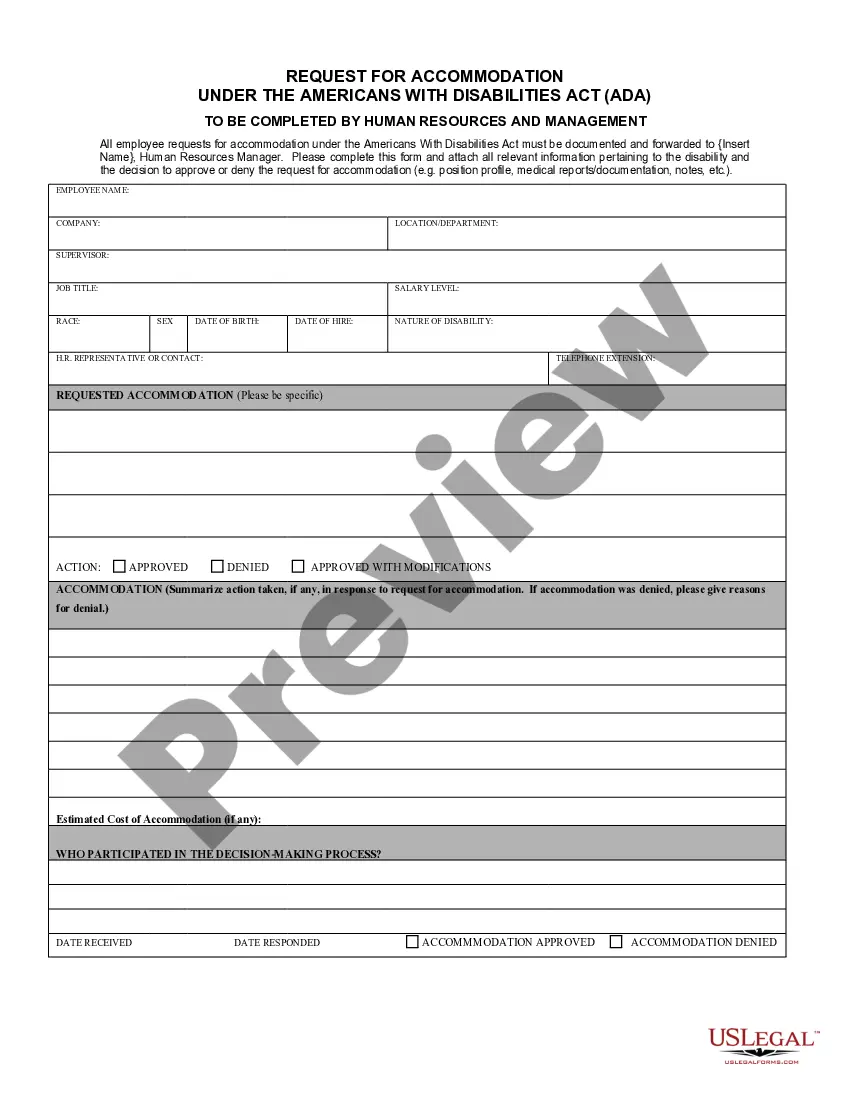
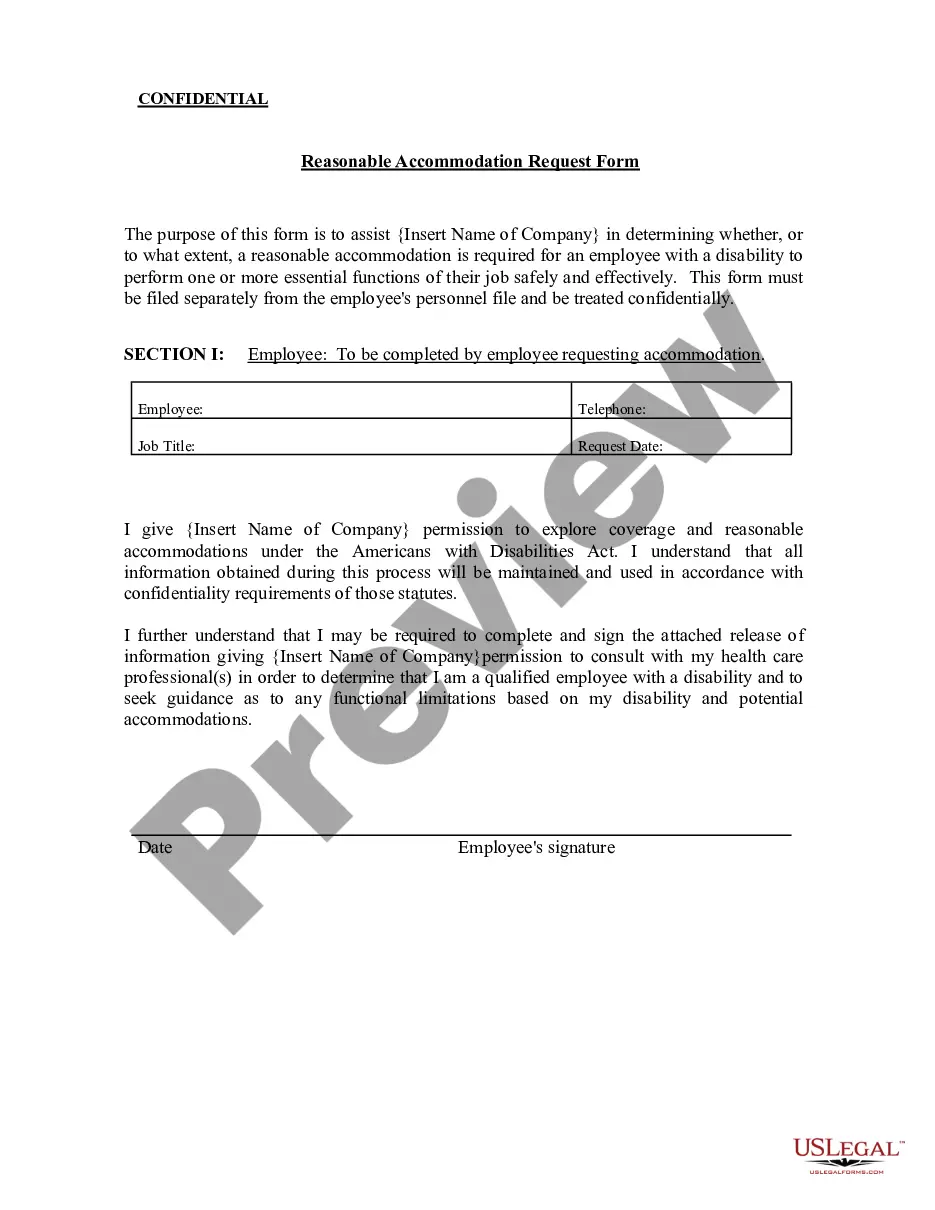
Ada Accommodation For Caregiver
Description
Get your form ready online
Our built-in tools help you complete, sign, share, and store your documents in one place.
Make edits, fill in missing information, and update formatting in US Legal Forms—just like you would in MS Word.
Download a copy, print it, send it by email, or mail it via USPS—whatever works best for your next step.
Sign and collect signatures with our SignNow integration. Send to multiple recipients, set reminders, and more. Go Premium to unlock E-Sign.
If this form requires notarization, complete it online through a secure video call—no need to meet a notary in person or wait for an appointment.
We protect your documents and personal data by following strict security and privacy standards.

Make edits, fill in missing information, and update formatting in US Legal Forms—just like you would in MS Word.

Download a copy, print it, send it by email, or mail it via USPS—whatever works best for your next step.

Sign and collect signatures with our SignNow integration. Send to multiple recipients, set reminders, and more. Go Premium to unlock E-Sign.

If this form requires notarization, complete it online through a secure video call—no need to meet a notary in person or wait for an appointment.

We protect your documents and personal data by following strict security and privacy standards.
Looking for another form?
How to fill out Request For Accommodation Under The ADA?
Utilizing legal document examples that adhere to federal and state guidelines is essential, and the internet provides numerous alternatives to select from.
However, what's the benefit of spending time searching for the appropriate Ada Accommodation For Caregiver example online if the US Legal Forms digital library already compiles such templates in one location.
US Legal Forms is the largest online legal repository with over 85,000 fillable documents created by attorneys for any professional and personal situation. They are straightforward to navigate with all documents categorized by state and intended use.
All templates you find through US Legal Forms are reusable. To re-download and complete previously acquired documents, access the My documents section in your account. Take advantage of the most extensive and user-friendly legal document service!
- Our experts stay updated with legal alterations, ensuring that your documents are always current and compliant when obtaining an Ada Accommodation For Caregiver from our site.
- Acquiring an Ada Accommodation For Caregiver is hassle-free and swift for both existing and new users.
- If you possess an account with an active subscription, Log In and download the document template you need in the appropriate format.
- If you’re new to our platform, follow the steps outlined below.
- Review the template using the Preview option or the text description to confirm it satisfies your needs.
Form popularity
FAQ
A reasonable accommodation statement should clearly articulate your need for adjustments in the workplace. For instance, you can say, 'Due to my caregiving responsibilities and my health condition, I request a flexible work schedule that allows me to fulfill both my professional and personal obligations.' Crafting a reasonable accommodation statement shows clarity and confidence, which can lead to obtaining the necessary ADA accommodation for caregiver.
Writing an ADA accommodation request involves several key steps. Start with a formal greeting, provide your information, and explain the purpose of your request. Specify your condition, detail how it affects your work, and suggest reasonable accommodations that may aid your caregiving duties. Ensure that your request is concise, respectful, and includes the key phrase: ADA accommodation for caregiver.
To write an ADA accommodation request, clearly outline your specific needs related to your caregiving responsibilities. Begin by stating your condition and how it impacts your ability to perform your job. It’s also beneficial to mention the type of accommodations you believe would help you. Remember, a well-structured request can enhance your chances of receiving the appropriate ADA accommodation for caregiver.
Yes, the Americans with Disabilities Act (ADA) can apply to caregivers. When caregivers request accommodations due to a disability, they may be entitled to protections under the ADA. It's essential to understand your rights to ensure that you're treated fairly in the workplace while providing care. The ADA supports individuals who need accommodations to perform their job duties effectively.
Unreasonable accommodations can include modifications that impose significant difficulty or expense on the employer. For instance, requesting an entire department's restructuring to create a new role may not be seen as a reasonable ADA accommodation for a caregiver. Additionally, asking for a different work schedule that disrupts business operations can also be deemed unreasonable. It's crucial to find a balance between the caregiver's needs and the employer's ability to meet those needs without undue hardship.
An example of caregiver discrimination is when an employer penalizes an employee for taking time off to care for a loved one, viewing it as a lack of commitment. This creates a challenging workplace for those fulfilling caregiver roles. Recognizing and addressing such discrimination is vital under the ADA.
Individuals who do not qualify as having a disability under the ADA are not covered, including those without significant impairments that affect major life activities. Additionally, certain employment environments may have exemptions under specific circumstances. Understanding the nuanced definitions involved is essential for caregivers seeking to ensure protections.
Yes, you can sue for medical discrimination if you believe you have been treated unfairly based on your age, disability, or caregiving role. Legal actions can seek remedy for violations of your rights, including those protected under the ADA. Consulting with legal professionals can provide clarity on your specific situation.
Discrimination against the elderly can manifest in various ways, such as denying them appropriate medical treatment based on their age. Such actions are often rooted in stereotypes and misconceptions about aging. It is crucial to advocate for equal rights and ADA accommodations for caregivers of the elderly.
If you suspect discrimination at work, begin by documenting incidents and speaking to your supervisor or HR. Utilize your rights under the ADA to request accommodations that support your caregiving role. For additional support, consider contacting US Legal Forms for resources on how to proceed with your claim.