Fcra Law On Late Payments
Description
Get your form ready online
Our built-in tools help you complete, sign, share, and store your documents in one place.
Make edits, fill in missing information, and update formatting in US Legal Forms—just like you would in MS Word.
Download a copy, print it, send it by email, or mail it via USPS—whatever works best for your next step.
Sign and collect signatures with our SignNow integration. Send to multiple recipients, set reminders, and more. Go Premium to unlock E-Sign.
If this form requires notarization, complete it online through a secure video call—no need to meet a notary in person or wait for an appointment.
We protect your documents and personal data by following strict security and privacy standards.

Make edits, fill in missing information, and update formatting in US Legal Forms—just like you would in MS Word.

Download a copy, print it, send it by email, or mail it via USPS—whatever works best for your next step.

Sign and collect signatures with our SignNow integration. Send to multiple recipients, set reminders, and more. Go Premium to unlock E-Sign.

If this form requires notarization, complete it online through a secure video call—no need to meet a notary in person or wait for an appointment.

We protect your documents and personal data by following strict security and privacy standards.
Looking for another form?


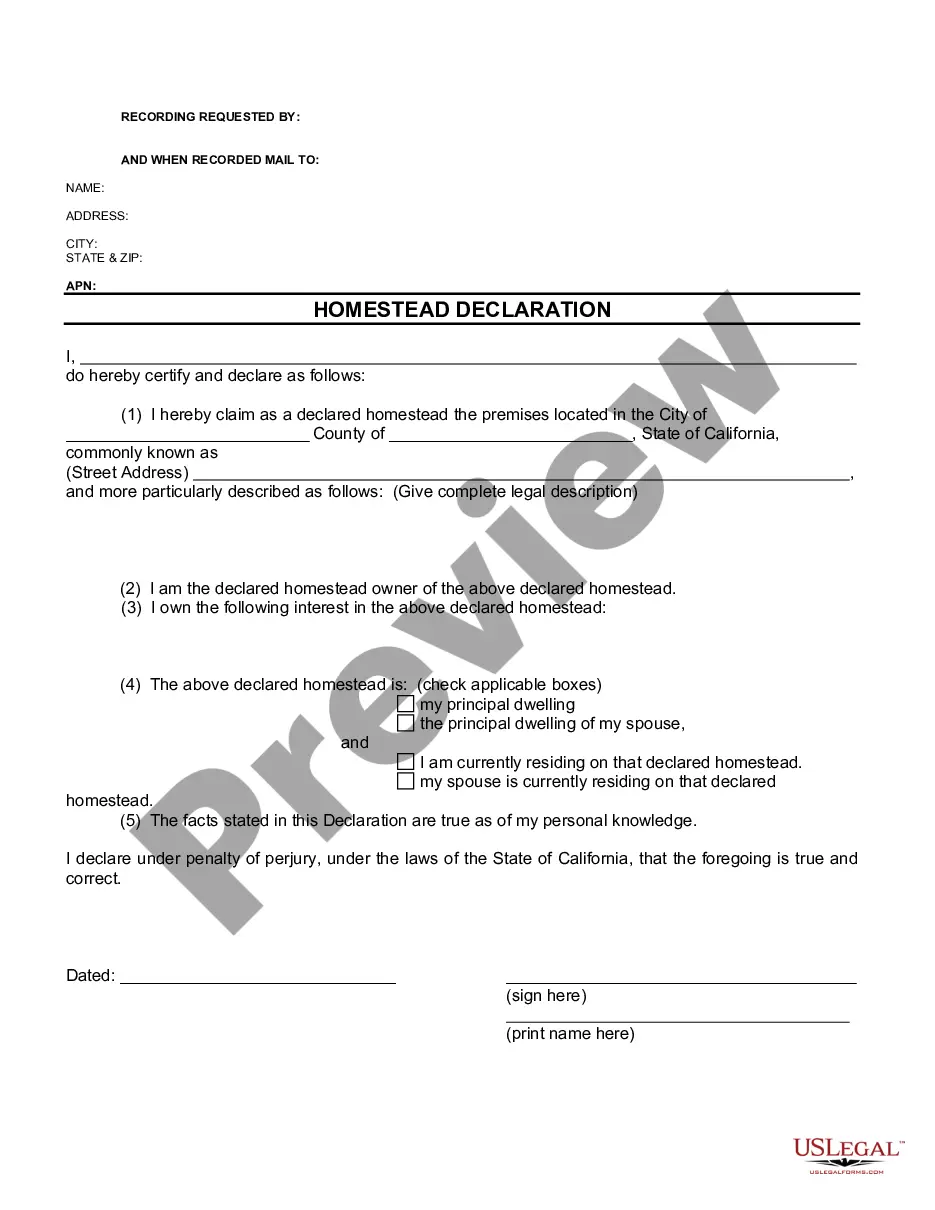

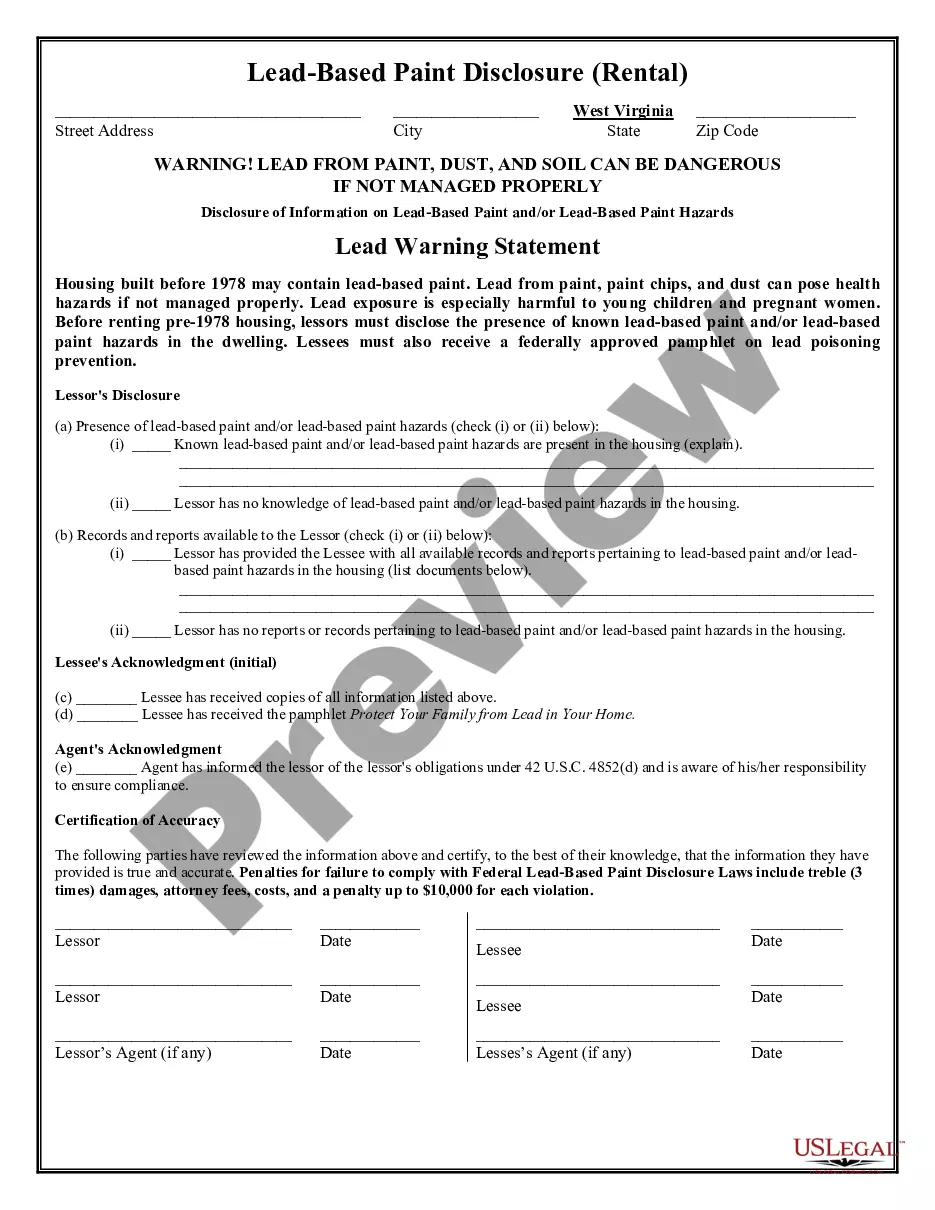





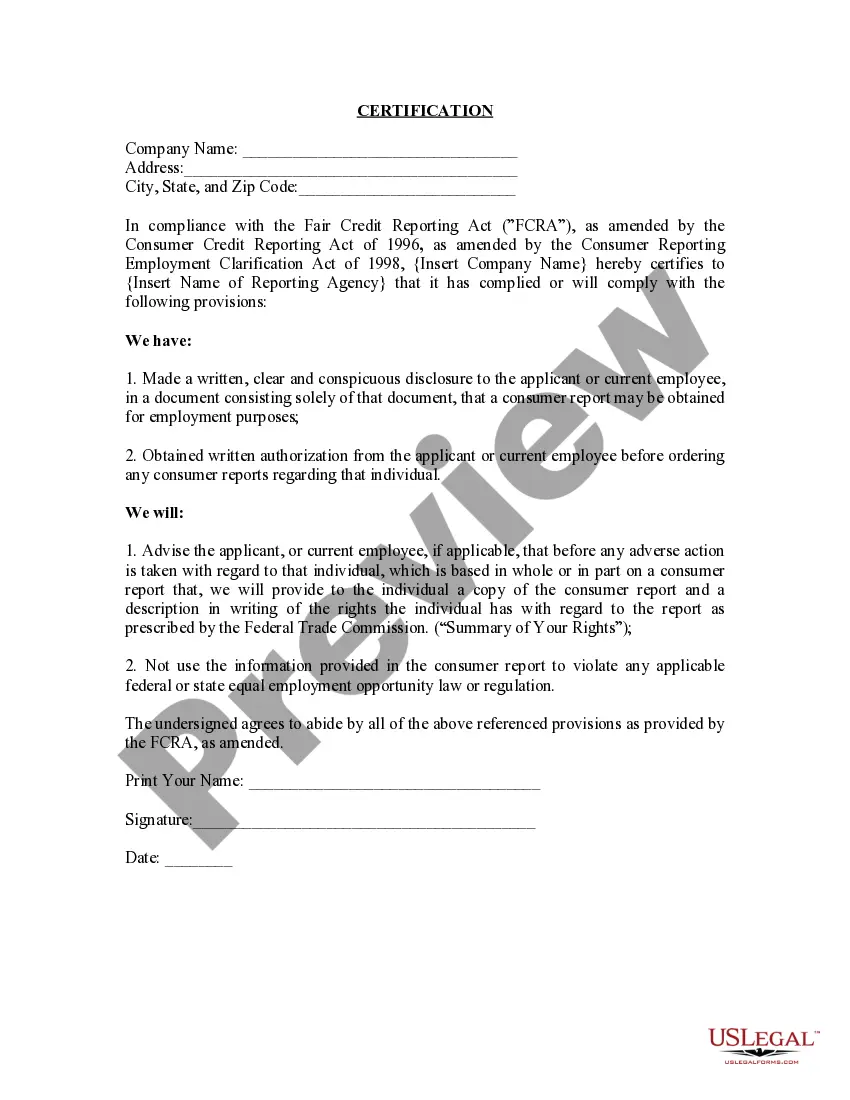
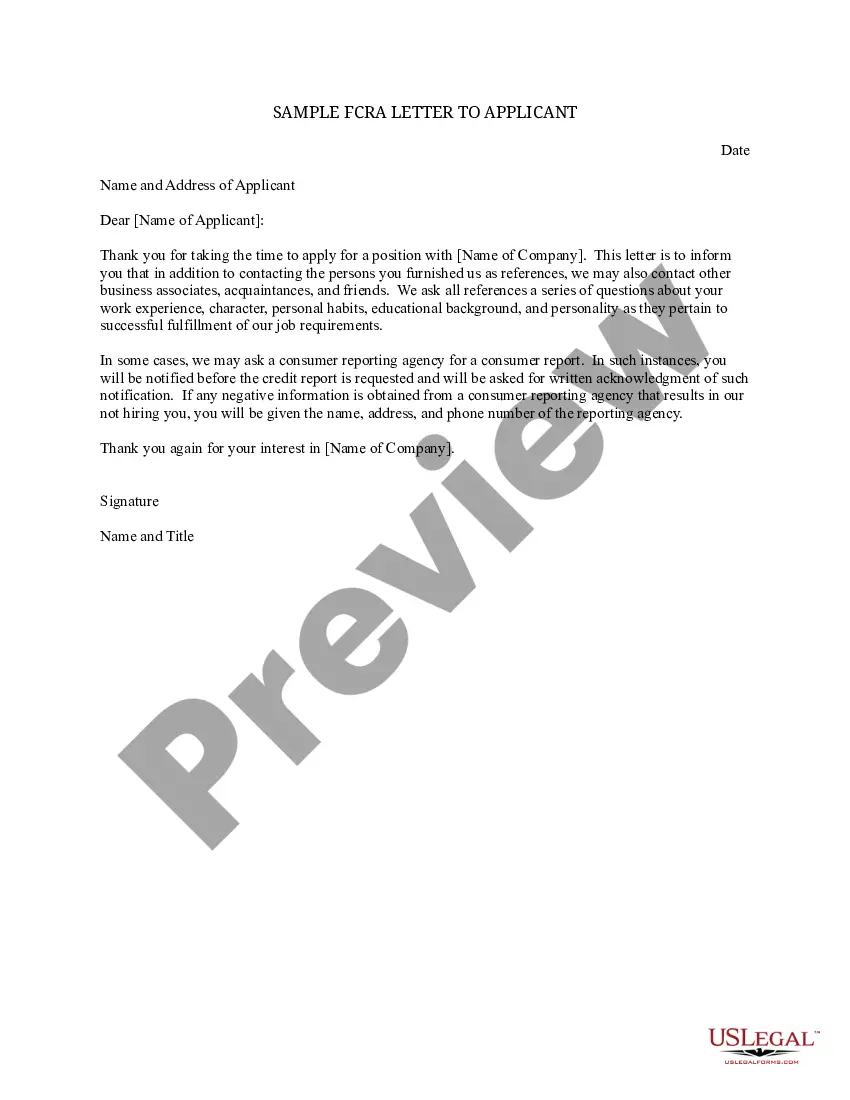
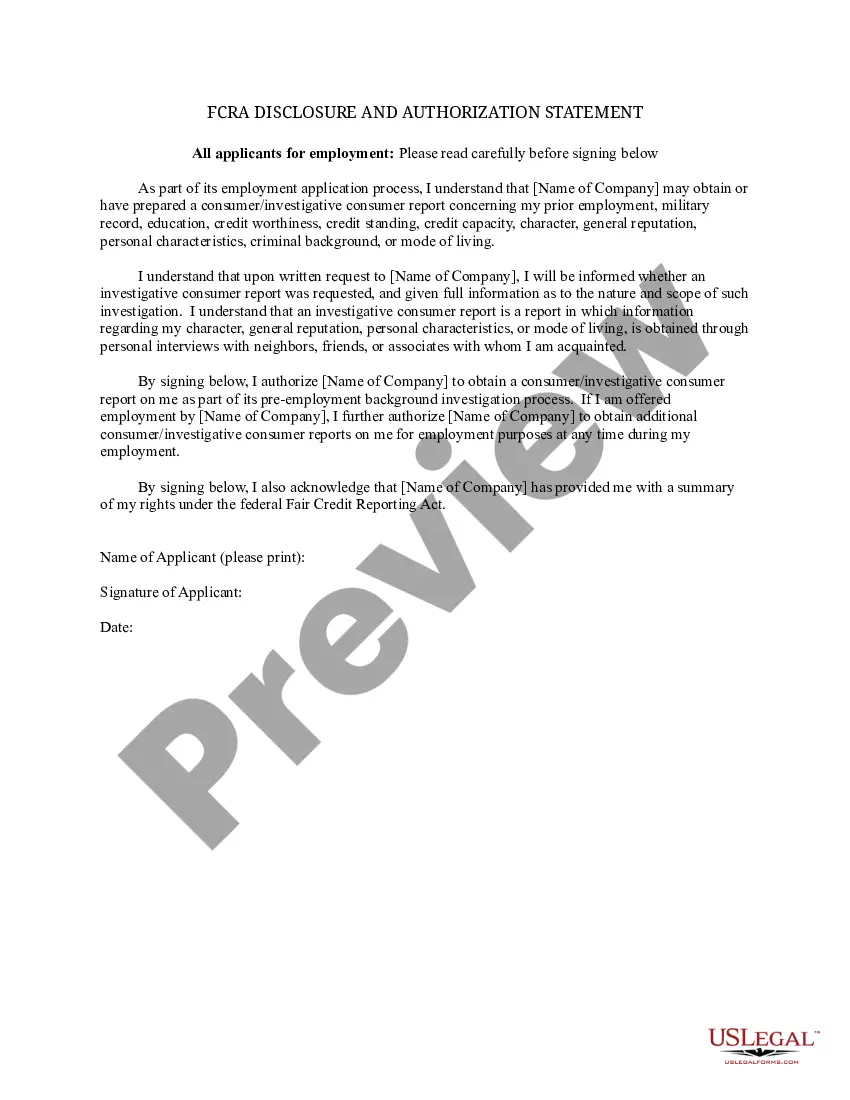
How to fill out FCRA Certification Letter To Consumer Reporting Agency?
- If you already have an account, log in and verify your subscription status before downloading your form directly.
- Ensure you’ve chosen the correct template by checking the Preview mode and form description to ensure compliance with local jurisdiction requirements.
- If adjustments are necessary, utilize the Search tab to find the more suitable template if needed.
- Click on the Buy Now button, select your preferred subscription plan, and register an account for full access.
- Proceed with payment using your credit card or PayPal account to finalize your subscription.
- Once your purchase is complete, download the needed form and store it on your device for easy access later via the My Forms menu.
By following these steps, you can ensure that you are provided with the right legal forms that align with the FCRA law on late payments, tailored to your situation.
Get started today by accessing US Legal Forms and streamline your legal processes—because your time is valuable.
Form popularity
FAQ
The FCRA law on late payments emphasizes the importance of accurate credit reporting and grants consumers specific rights. It stipulates that any late payment reported must be true and backed by proper documentation. Consumers can dispute any inaccuracies and seek corrections through credit reporting agencies. By adhering to these guidelines, the FCRA helps maintain trust in the credit system and supports consumers in managing their financial reputations.
Section 623 of the FCRA law on late payments outlines the responsibilities of financial institutions regarding the accuracy of the information they report to credit bureaus. It holds furnishers accountable for providing correct data and mandates that they investigate disputes raised by consumers. If a consumer contests a late payment, the creditor must review the information and report accurate findings to the credit reporting agencies. This section empowers consumers by ensuring their credit history is fairly maintained.
Under the FCRA law on late payments, consumers have the right to dispute inaccurate information on their credit reports. When a consumer identifies a late payment that is incorrect or unverified, they must notify the credit reporting agencies and the lender. The agencies then have 30 days to investigate the claim and confirm the accuracy of the information. This legal framework helps protect consumers from wrongful late payment reporting and ensures fair credit reporting practices.
To remove late payments from your credit report, start by reviewing your credit report for inaccuracies. The Fair Credit Reporting Act (FCRA) law on late payments regulates how long negative items can stay on your report. If you find errors, you can dispute them with the credit bureaus. Additionally, consider using US Legal Forms to help guide you through the dispute process effectively, ensuring you understand your rights under the FCRA.
The FCRA law on late payments governs how credit reports reflect payment history. This law ensures consumers can dispute inaccurate information and promotes transparency in reporting. When a payment is late, the FCRA mandates that it should be reported accurately and provides guidelines on how long this information can remain on your credit report. Understanding your rights under the FCRA law on late payments can help you maintain better control over your credit health.
To remove collections and late payments, begin by reviewing your credit report for discrepancies. You can dispute these entries with the credit bureaus under the FCRA law on late payments, emphasizing your consumer rights. By utilizing tools like a 609 letter or seeking assistance from platforms like USLegalForms, you can effectively draft disputes that support the removal of inaccurate information, helping clean up your credit history.
Removing late payments under consumer law requires understanding your rights as a consumer. You can dispute inaccurate late payments with credit reporting agencies using the framework of the FCRA law on late payments. If the creditor cannot provide sufficient evidence that the late payments are valid, they must remove them from your credit report, enhancing your financial credibility.
To legally remove late payments from your credit report, start by reviewing your credit report for inaccuracies. If you find errors, you can submit a dispute to the credit bureau under the FCRA law on late payments. Additionally, consider drafting a 609 letter to challenge any unverifiable entries. USLegalForms offers templates that can help you create the necessary documents for this process.
The FCRA, or Fair Credit Reporting Act, governs how credit information is reported and ensures your rights as a consumer. Under the FCRA law on late payments, creditors must report accurate information to credit bureaus. If a late payment is reported inaccurately, you have the right to dispute it, which can lead to its removal if it cannot be verified.
Yes, you can potentially have late payments removed from your credit report. Under the FCRA law on late payments, you have the right to challenge any inaccuracies or unverifiable negative marks. By utilizing the proper dispute process or a 609 letter, you may succeed in getting these late payments corrected or removed from your report, which can improve your credit profile significantly.