Fcra Law For Collections
Description
Get your form ready online
Our built-in tools help you complete, sign, share, and store your documents in one place.
Make edits, fill in missing information, and update formatting in US Legal Forms—just like you would in MS Word.
Download a copy, print it, send it by email, or mail it via USPS—whatever works best for your next step.
Sign and collect signatures with our SignNow integration. Send to multiple recipients, set reminders, and more. Go Premium to unlock E-Sign.
If this form requires notarization, complete it online through a secure video call—no need to meet a notary in person or wait for an appointment.
We protect your documents and personal data by following strict security and privacy standards.

Make edits, fill in missing information, and update formatting in US Legal Forms—just like you would in MS Word.

Download a copy, print it, send it by email, or mail it via USPS—whatever works best for your next step.

Sign and collect signatures with our SignNow integration. Send to multiple recipients, set reminders, and more. Go Premium to unlock E-Sign.

If this form requires notarization, complete it online through a secure video call—no need to meet a notary in person or wait for an appointment.

We protect your documents and personal data by following strict security and privacy standards.
Looking for another form?








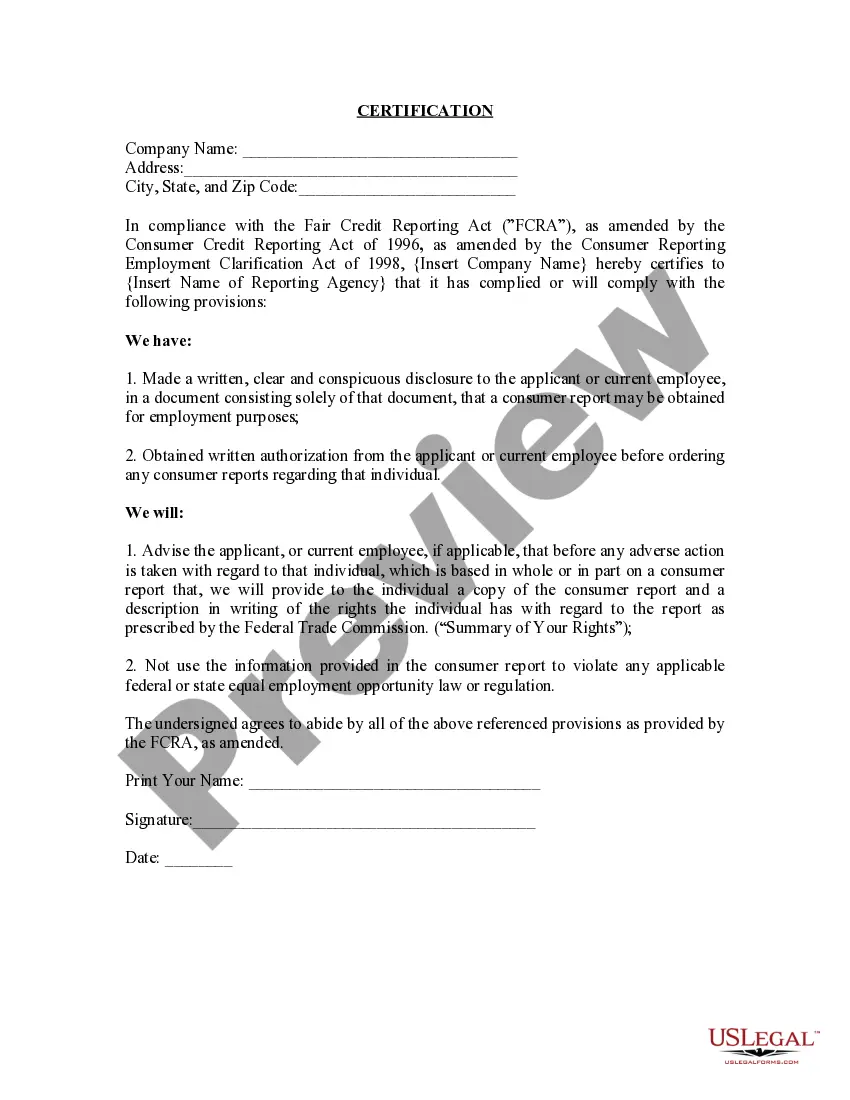
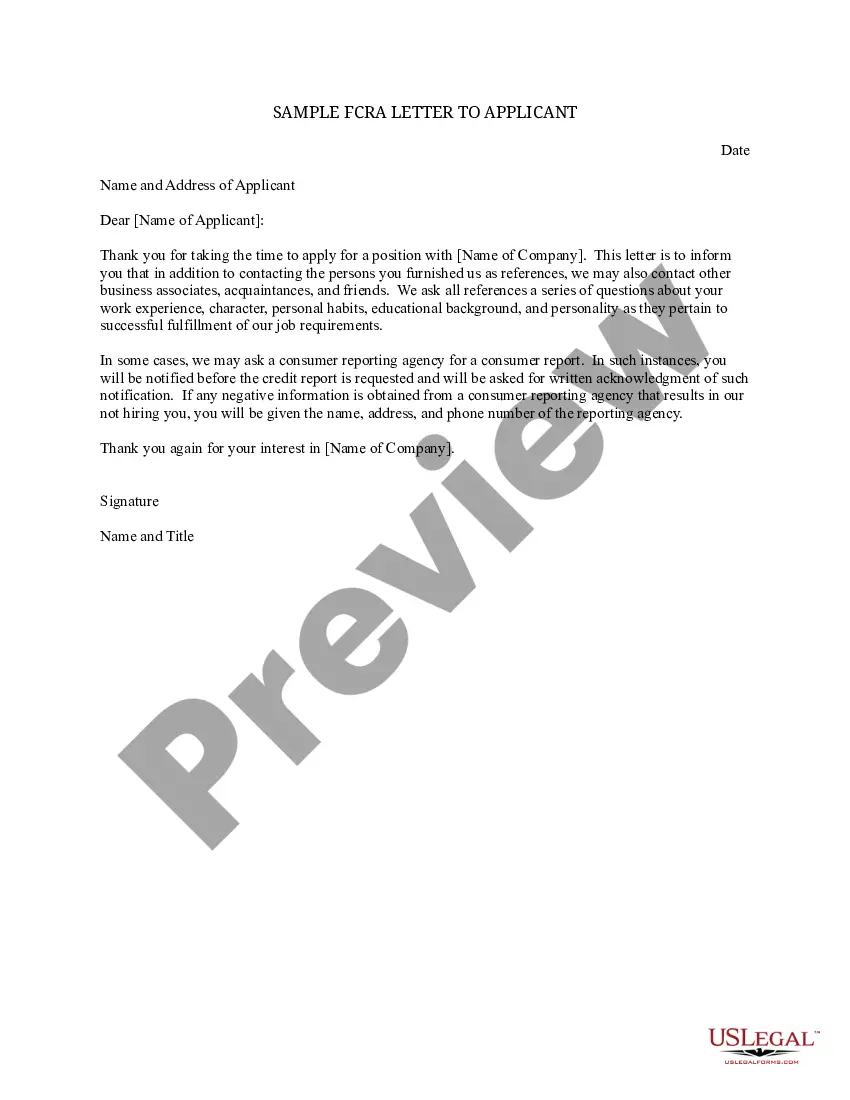
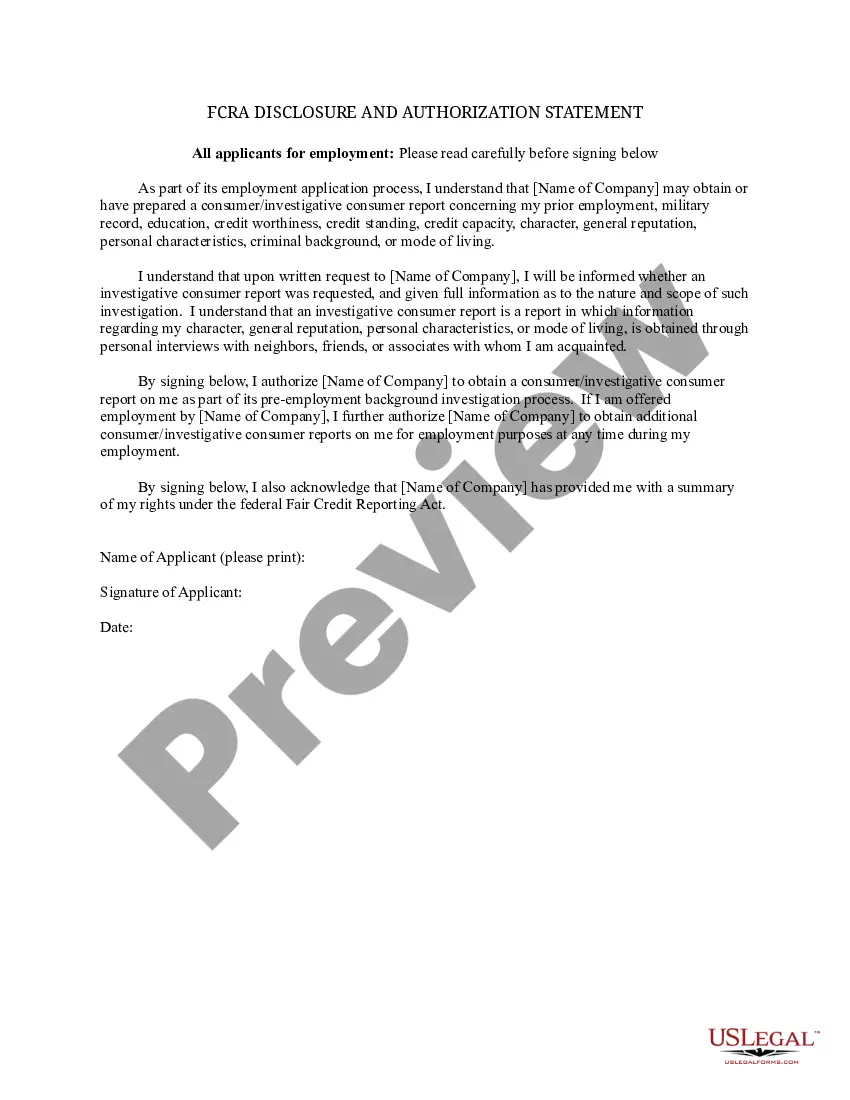
How to fill out FCRA Certification Letter To Consumer Reporting Agency?
- Log into your US Legal Forms account if you are a returning user and download the desired form template from your library by clicking the Download button. Confirm your subscription is active; if not, renew it according to your current payment plan.
- For first-time users, start by exploring the Preview mode and reading the form description to find the appropriate document that aligns with your needs and local regulations.
- If you need another form, utilize the Search tab to identify the correct template. If the form meets your requirements, proceed to the next step.
- Select a subscription plan by clicking the Buy Now button. You will need to create an account to access the full library of resources available.
- Complete your purchase by entering your credit card information or choosing your PayPal account for payment.
- Finally, download the form to your device to work on it later. You can also find it again in the My Forms section of your profile whenever needed.
With US Legal Forms, you gain access to an extensive library of over 85,000 legal forms, ensuring that you find the perfect template for your needs. Its user-friendly platform allows for easy form completion while also providing access to expert assistance for legally sound documents.
In conclusion, utilizing US Legal Forms makes it easier to comply with the FCRA law for collections. Don't hesitate to start your journey towards efficient legal documentation—visit US Legal Forms today and empower yourself with the best tools available.
Form popularity
FAQ
The 7 in 7 rule for collections refers to the time limit within which a debt collector can report unpaid debts to credit agencies. If a debt remains unpaid for seven years, it typically falls off your credit report. Understanding this timeframe is essential when dealing with debt and utilizing the FCRA law for collections effectively.
To stop debt collectors, you can use the phrase, 'I do not want to be contacted by you again.' This statement often puts debt collectors on notice, compelling them to cease communication. Knowing your rights under the FCRA law for collections can help you stand firm in such situations.
The FCRA law for collections allows creditors to report payment history and other account information to consumer reporting agencies. However, they must provide accurate data and investigate disputes promptly. Collection agencies must also follow strict guidelines when contacting consumers about their debts.
Under the FCRA law for collections, you have the right to access your credit report and receive accurate information. You can dispute errors and expect timely investigations into your claims. Additionally, the FCRA protects you from being penalized for exercising these rights.
You can use the FCRA law for collections by first obtaining a copy of your credit report. After reviewing it for inaccuracies, you can dispute any errors with the reporting agencies. This process empowers you to correct misinformation and improve your credit standing.
The FCRA law for collections regulates how consumer reporting agencies handle your credit information. It requires lenders to report accurate data and gives you the right to dispute errors. This law ensures that your credit report reflects only truthful information, protecting you from unfair debt collection practices.
The 777 rule is a strategy for interacting with debt collectors that generally advises not to communicate with them until they make an initial contact within a specific timeframe. This aligns with the principles under the FCRA law for collections that aim to protect consumers. Keep records of your engagements and know your rights. Utilizing resources like US Legal Forms can guide you in understanding this rule better and empower you during collection processes.
Smart strategies include knowing your rights under the FCRA law for collections and staying informed about the debt collection process. Document all communications and don’t acknowledge the debt unless you are certain of its validity. Use your knowledge to negotiate terms or request verification of the debt. Proper tools, such as those offered by US Legal Forms, can help you navigate these challenges effectively.
When communicating with a creditor, avoid admitting that you owe the debt or making promises you cannot keep. The FCRA law for collections protects your rights by ensuring accurate reporting of your credit history. It's best to be cautious and assertive. You can seek advice or support from platforms like US Legal Forms that provide resources on managing debt.
The FCRA law regarding collections outlines the rights of consumers when dealing with debt collection practices. It mandates that collectors provide clear and accurate information about debts, ensuring transparency and fairness throughout the collection process. This law also restricts whom collectors can contact and under what circumstances. Understanding the FCRA law for collections can help you navigate debt situations confidently, and platforms like uslegalforms offer templates and resources to assist you in ensuring compliance and protecting your rights.