Termination Of Employment
Description
Get your form ready online
Our built-in tools help you complete, sign, share, and store your documents in one place.
Make edits, fill in missing information, and update formatting in US Legal Forms—just like you would in MS Word.
Download a copy, print it, send it by email, or mail it via USPS—whatever works best for your next step.
Sign and collect signatures with our SignNow integration. Send to multiple recipients, set reminders, and more. Go Premium to unlock E-Sign.
If this form requires notarization, complete it online through a secure video call—no need to meet a notary in person or wait for an appointment.
We protect your documents and personal data by following strict security and privacy standards.

Make edits, fill in missing information, and update formatting in US Legal Forms—just like you would in MS Word.

Download a copy, print it, send it by email, or mail it via USPS—whatever works best for your next step.

Sign and collect signatures with our SignNow integration. Send to multiple recipients, set reminders, and more. Go Premium to unlock E-Sign.

If this form requires notarization, complete it online through a secure video call—no need to meet a notary in person or wait for an appointment.

We protect your documents and personal data by following strict security and privacy standards.
Looking for another form?



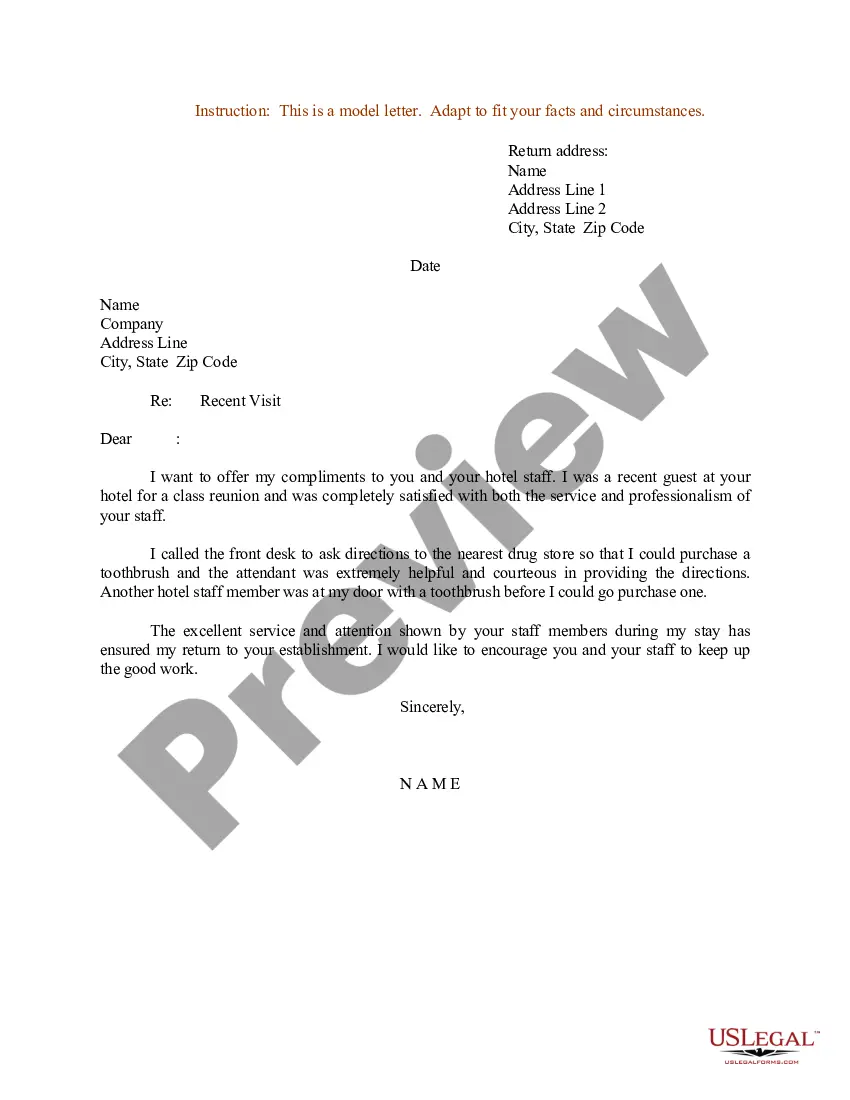


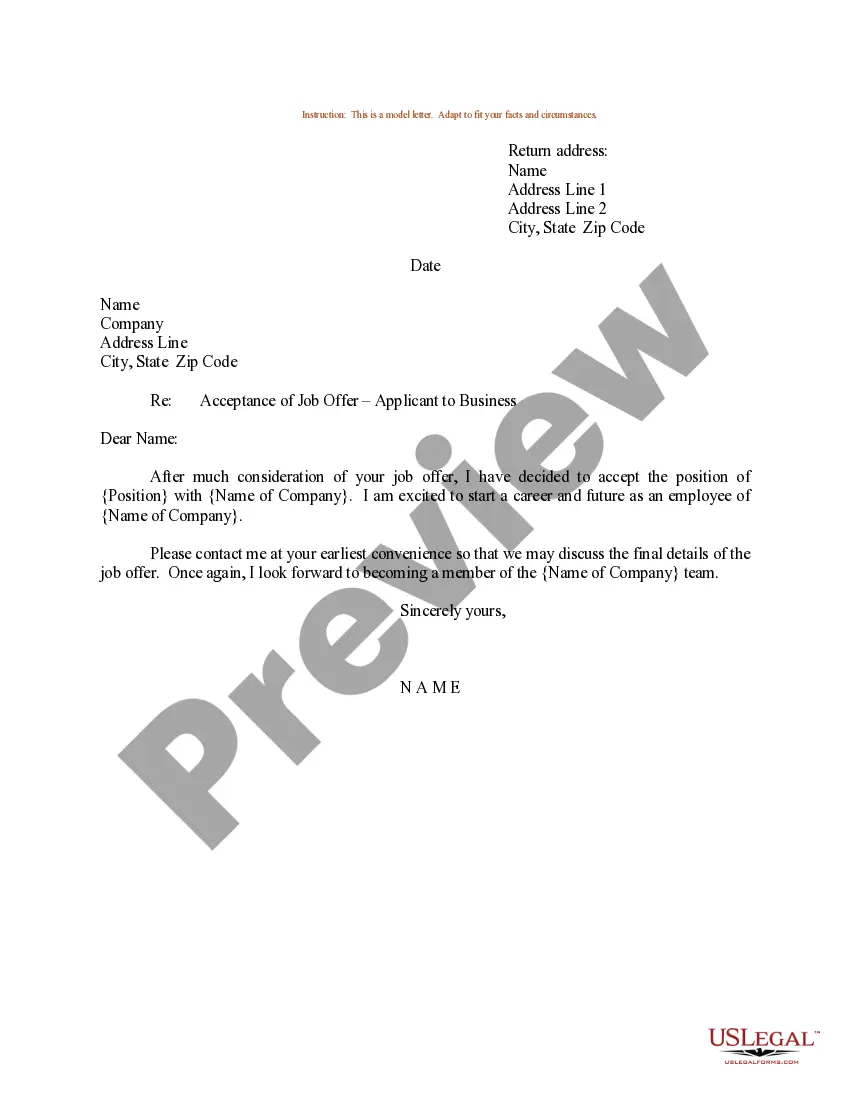


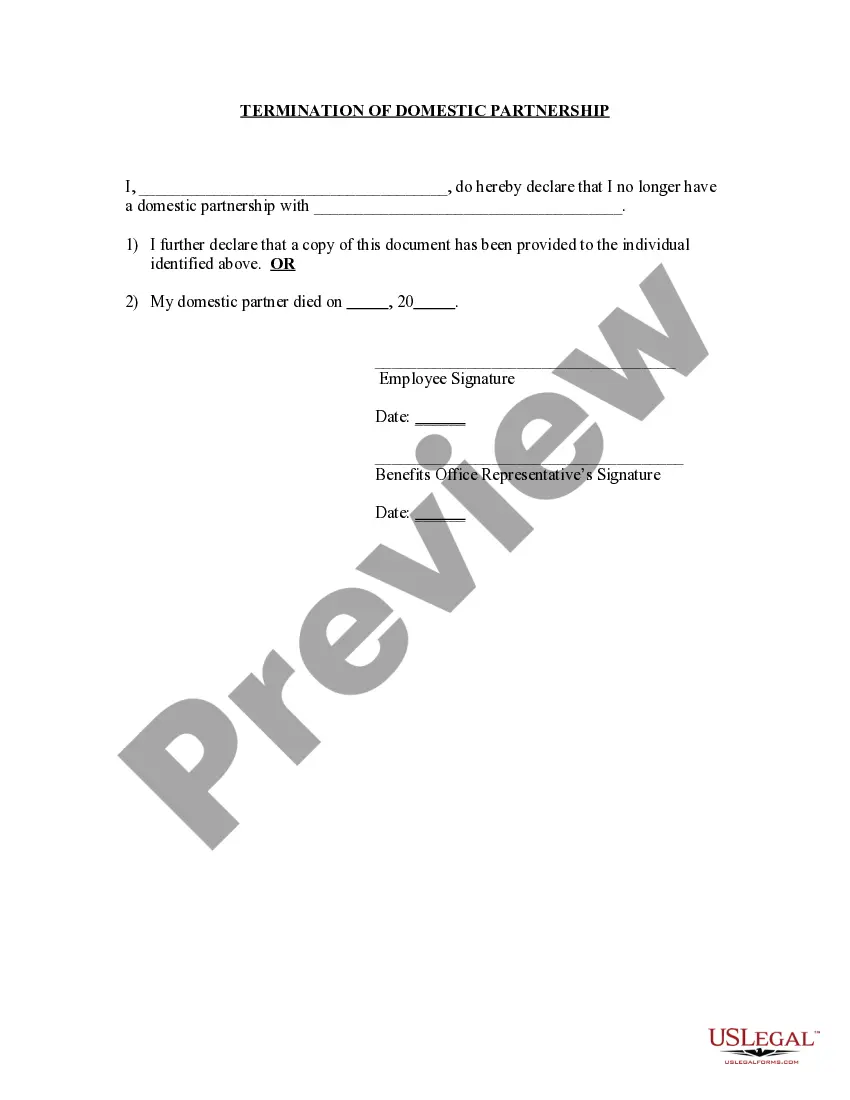
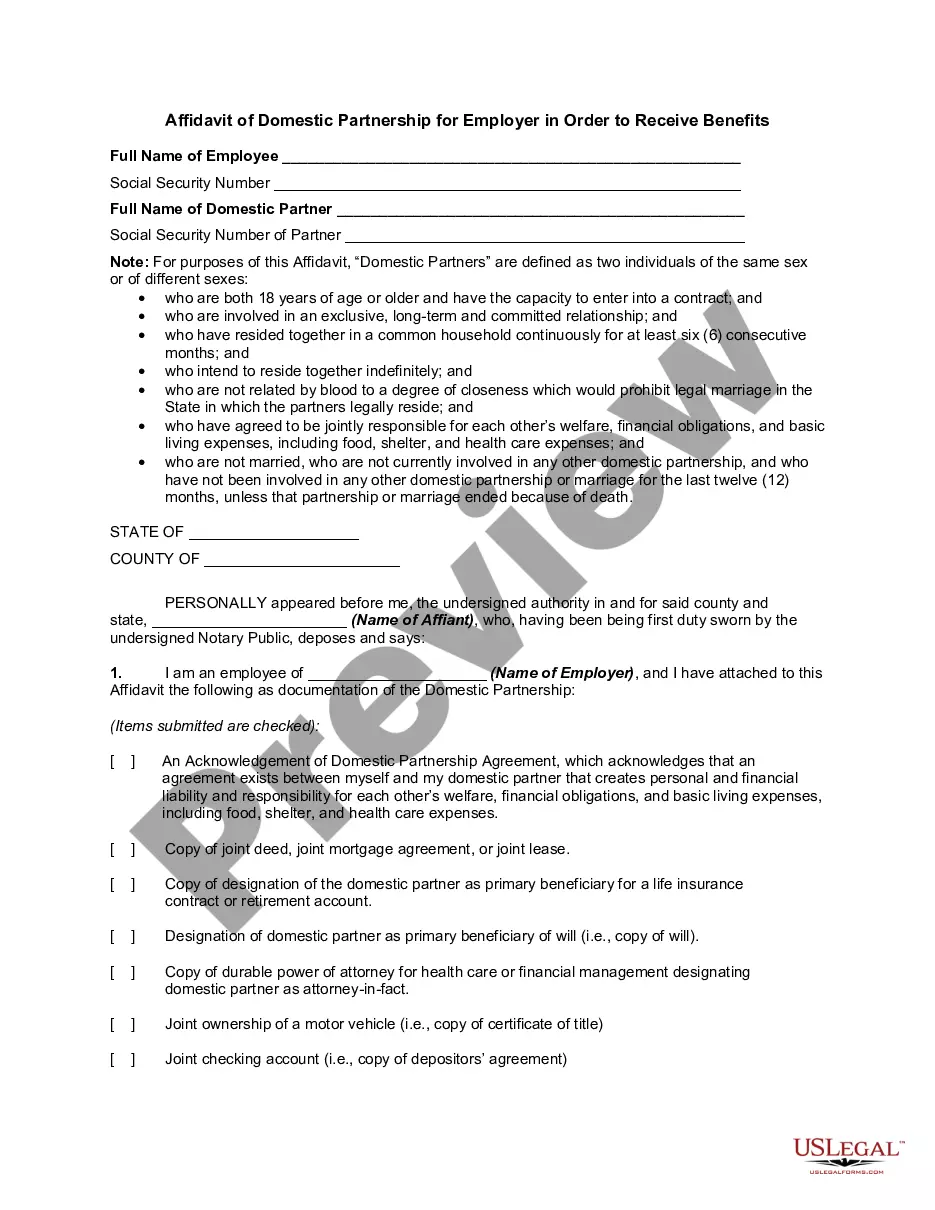
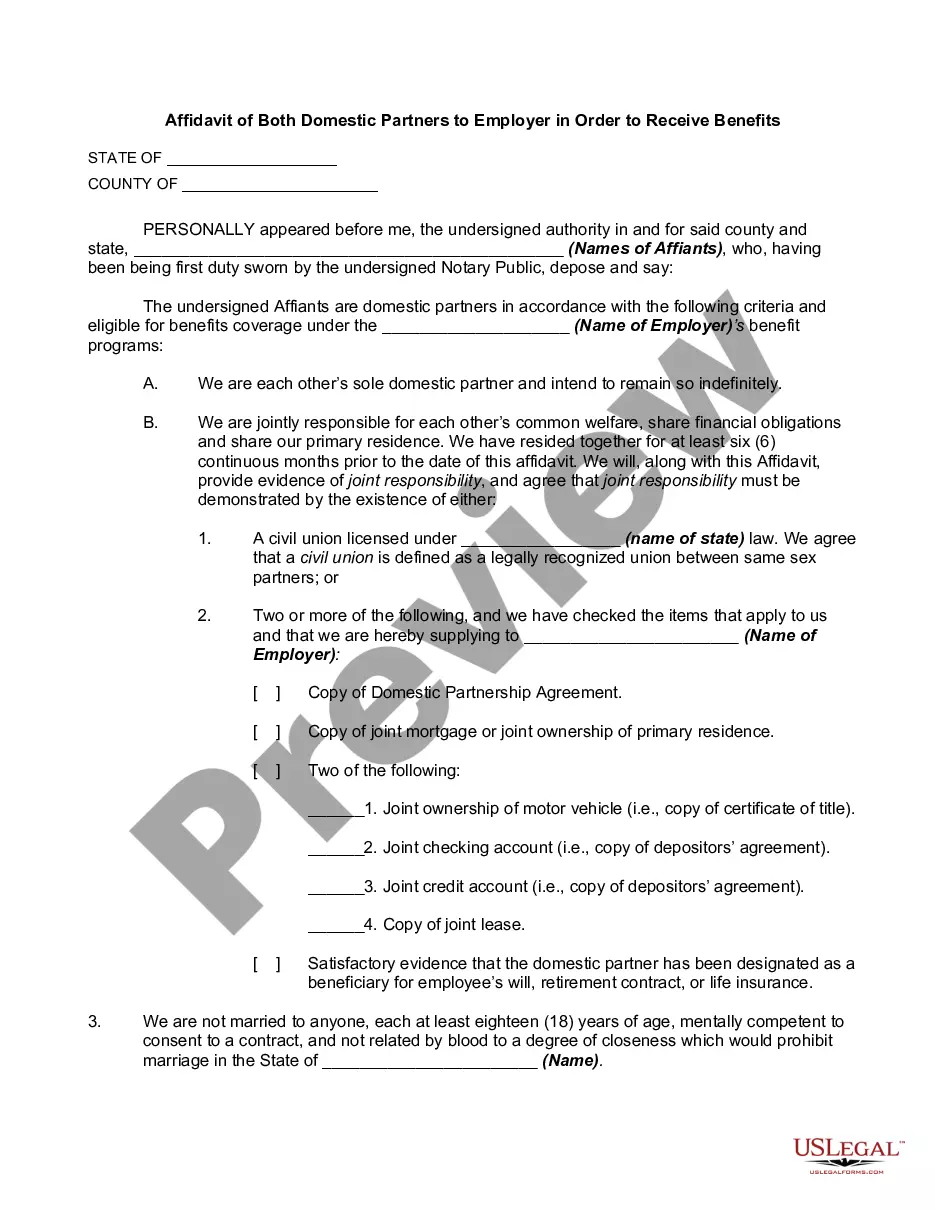
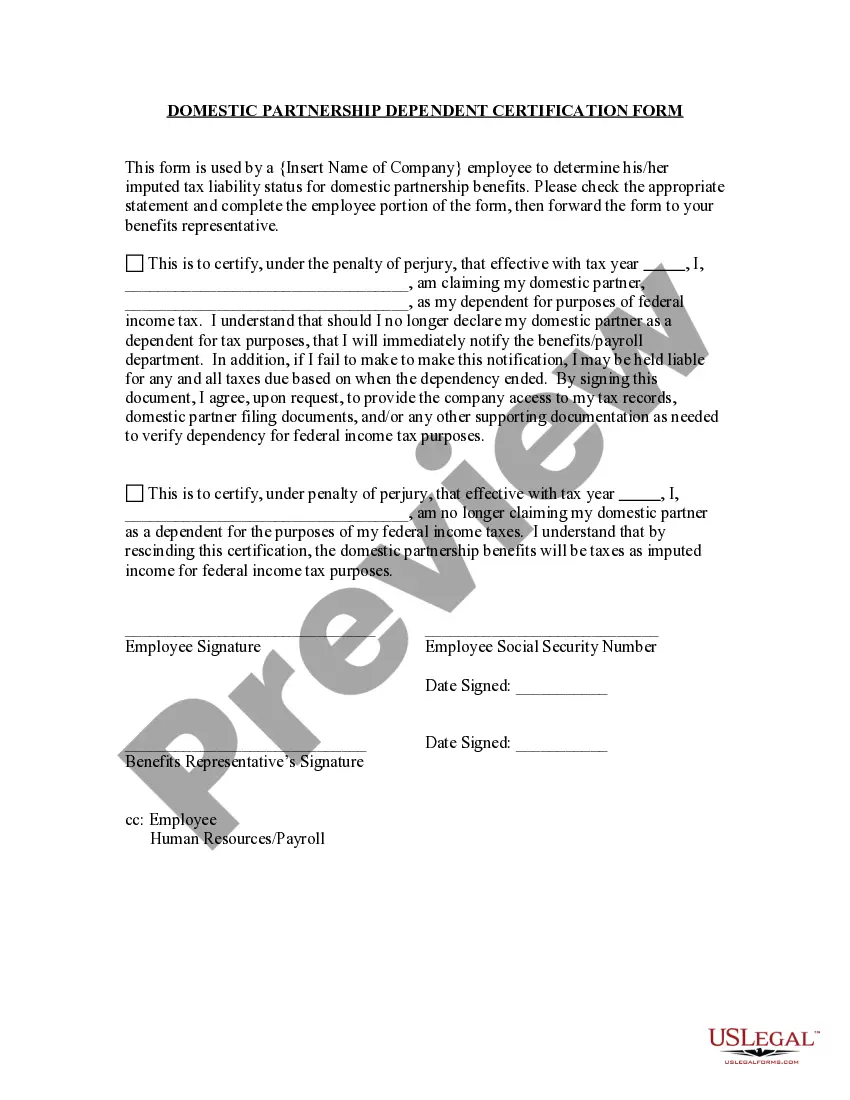
How to fill out Termination Of Domestic Partnership?
- Log into your US Legal Forms account if you are a returning user. Ensure your subscription remains active.
- If this is your first time, start by browsing the extensive online library containing over 85,000 legal forms. Use the Preview mode to verify that you've chosen the correct form for your needs.
- If you encounter any discrepancies, utilize the Search feature to find the appropriate template.
- Once satisfied, click on the 'Buy Now' button and select your preferred subscription plan. Create an account to access the library easily.
- Complete your payment using your credit card information or through PayPal to acquire your chosen document.
- Finally, download the selected form for your records and access it anytime through the 'My Forms' menu within your profile.
With US Legal Forms, you gain the advantage of an extensive form collection, ensuring comprehensive cover for all your legal documentation needs.
Take control of your legal processes today by utilizing US Legal Forms for all your termination of employment needs. Start creating well-structured documents effortlessly!
Form popularity
FAQ
When handling the termination of employment, employers must adhere to several legal obligations. This includes providing any required notice, ensuring compliance with federal and state laws, and fulfilling wage and benefit obligations. Furthermore, employers should document the termination process thoroughly to protect against potential legal disputes. Using uSlegalforms can facilitate understanding and fulfilling these legal obligations effectively.
Having a termination of employment on your record can raise concerns for future employers, but it depends on the circumstances surrounding the termination. If the termination occurred due to layoffs or other non-performance related issues, it might not carry a negative connotation. However, if it results from misconduct, it could impact future job prospects. It’s vital to frame your experience positively when discussing it with potential employers.
Termination of employment is a broader term that encompasses several circumstances, including being fired. While being fired typically implies that the employer initiated the termination due to performance or behavior issues, the term also includes resignations and layoffs. Therefore, not all terminations are the same, and it's essential to understand the context behind each situation.
There are three main types of termination of employment: voluntary, involuntary, and constructive. Voluntary termination occurs when employees choose to leave, while involuntary termination happens when the employer decides to end the employment. Constructive termination arises when employees feel forced to resign due to intolerable conditions. Understanding these distinctions can help both employers and employees navigate their rights.
To effectively manage the termination of employment, start by reviewing the employee's file to ensure all documentation is in order. Next, conduct a termination meeting, providing the employee with the reasons for their termination. Finally, complete all necessary paperwork and explain any final paycheck details. Using uSlegalforms can provide templates to streamline this process.
A nice way to say termination of employment could be to refer to it as 'ending of the employment relationship.' This softer language can help alleviate some of the emotional weight associated with the term. Additionally, ensuring that you provide supportive language and resources can make the conversation more constructive.
To write a termination of employment, start with the company's letterhead and include the date. Then, clearly state the employee's name, position, and the effective date of termination. Follow with a concise explanation of the reasons for the decision, ensuring you remain objective and professional throughout.
The best verbiage for terminating an employee includes clear and respectful language. For example, 'We have made the decision to terminate your employment due to XYZ reasons.' Always state the reasons clearly while remaining compassionate, as this helps in preserving dignity and can ease the transition for the employee.
To politely terminate employment, approach the situation with empathy and respect. Schedule a private meeting to discuss the termination of employment, allowing the employee to ask questions and express feelings. Ensure you communicate the decision clearly while providing supportive resources for their next steps.
The best wording for termination of employment should be direct yet respectful. Use phrases like 'This letter serves to inform you of the termination of your employment effective immediately' while also acknowledging the efforts of the employee. Clarity helps avoid misunderstandings, allowing both parties to move forward positively.