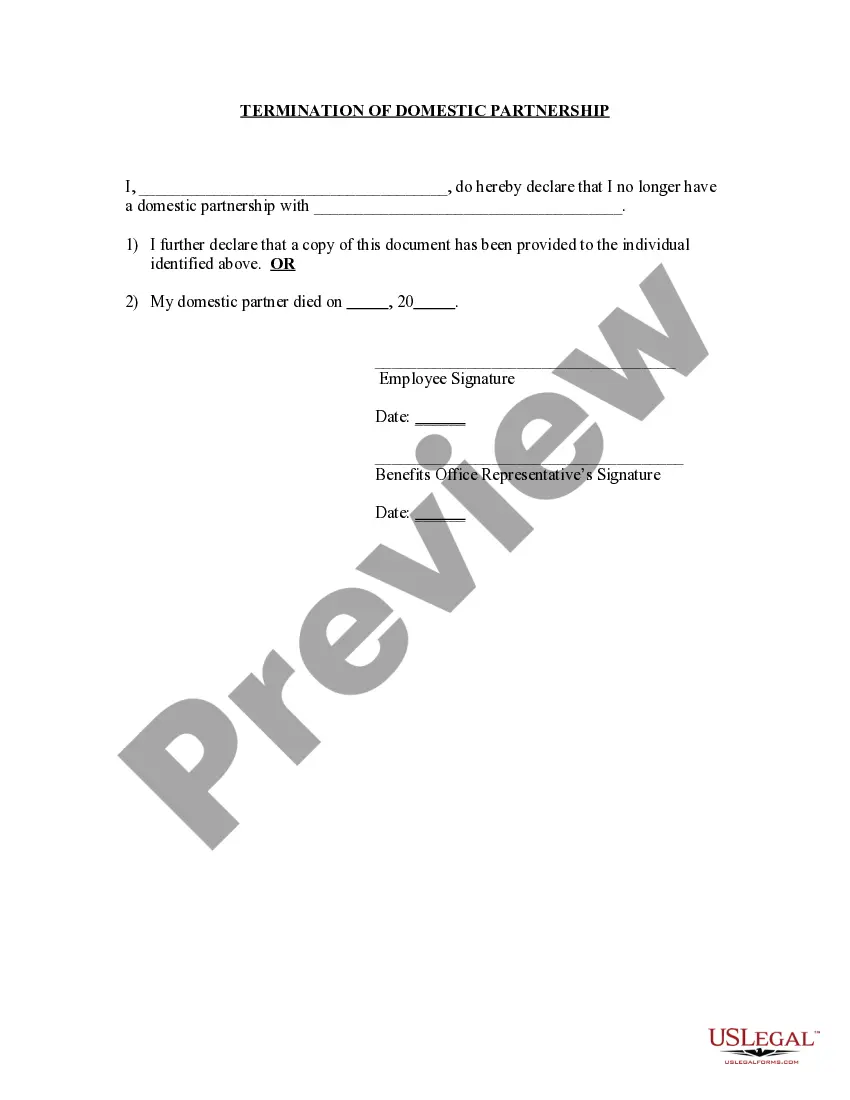
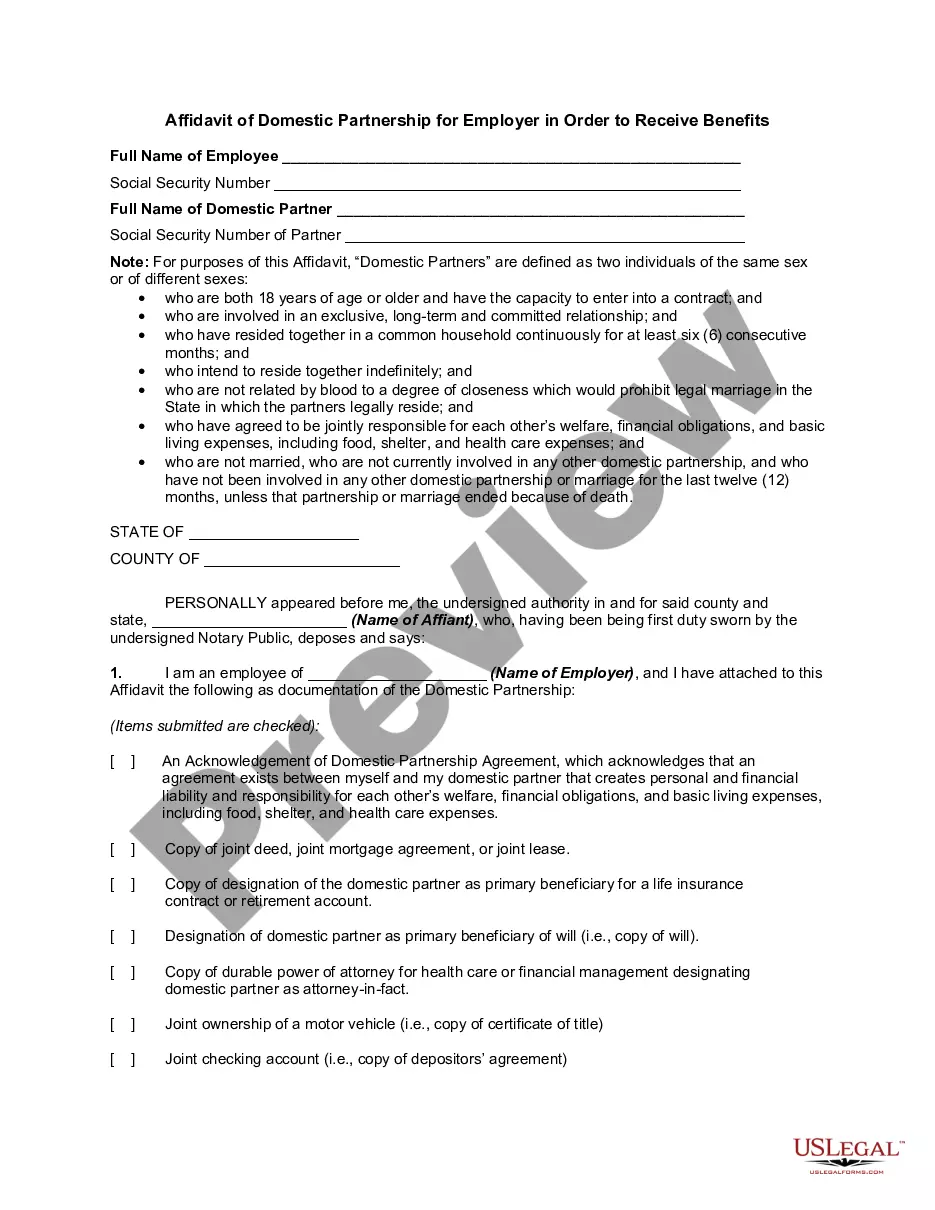
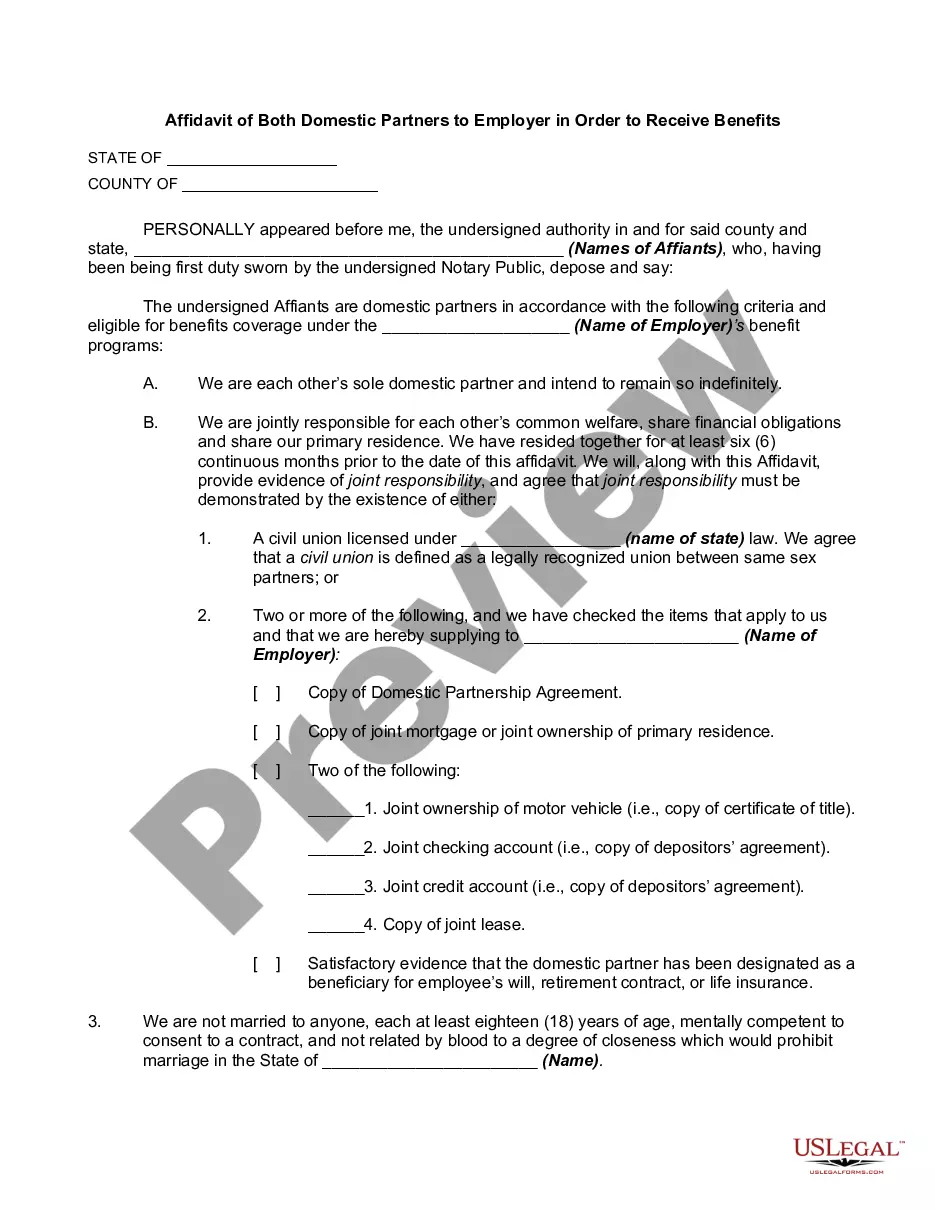
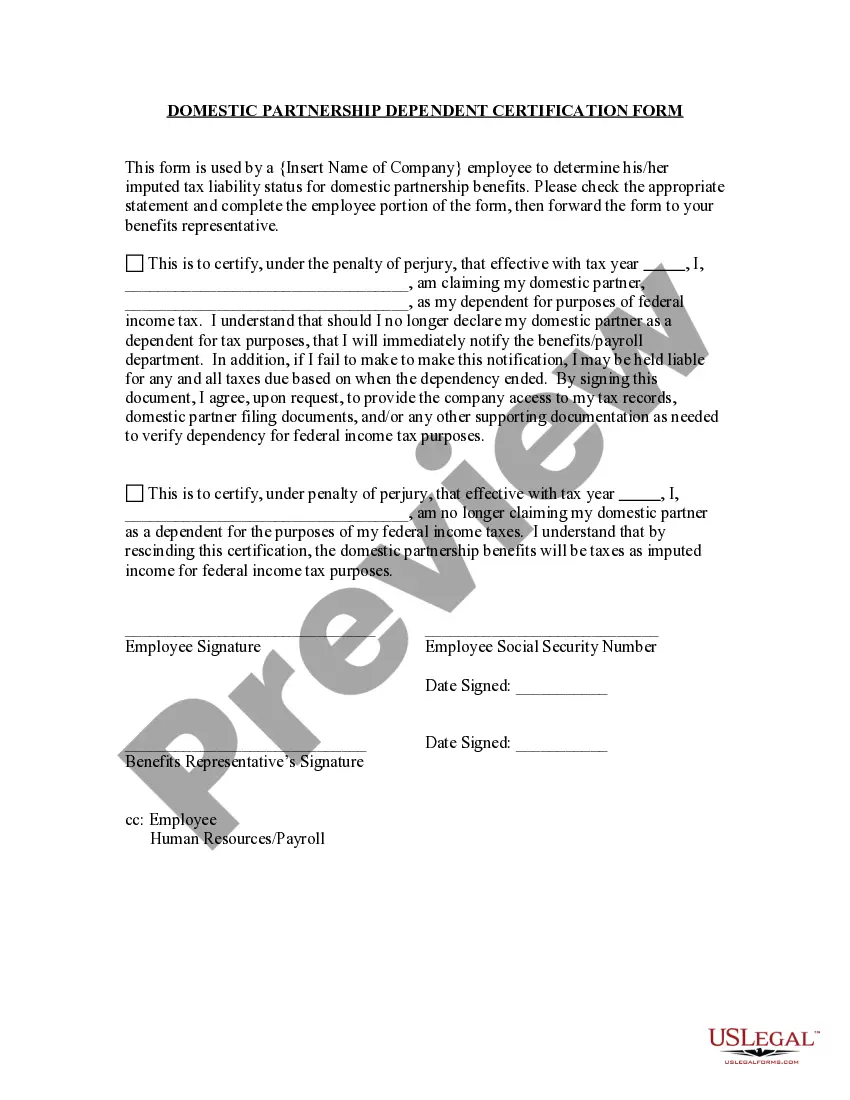
Partner Domestic Provided For The
Description
Get your form ready online
Our built-in tools help you complete, sign, share, and store your documents in one place.
Make edits, fill in missing information, and update formatting in US Legal Forms—just like you would in MS Word.
Download a copy, print it, send it by email, or mail it via USPS—whatever works best for your next step.
Sign and collect signatures with our SignNow integration. Send to multiple recipients, set reminders, and more. Go Premium to unlock E-Sign.
If this form requires notarization, complete it online through a secure video call—no need to meet a notary in person or wait for an appointment.
We protect your documents and personal data by following strict security and privacy standards.

Make edits, fill in missing information, and update formatting in US Legal Forms—just like you would in MS Word.

Download a copy, print it, send it by email, or mail it via USPS—whatever works best for your next step.

Sign and collect signatures with our SignNow integration. Send to multiple recipients, set reminders, and more. Go Premium to unlock E-Sign.

If this form requires notarization, complete it online through a secure video call—no need to meet a notary in person or wait for an appointment.

We protect your documents and personal data by following strict security and privacy standards.
Looking for another form?








How to fill out Termination Of Domestic Partnership?
It’s well-known that you cannot instantly become a legal authority, nor can you swiftly learn how to prepare the Partner Domestic Provided For The without having a specialized background.
Drafting legal documents is an extensive procedure that demands particular education and expertise. So why not entrust the creation of the Partner Domestic Provided For The to the professionals.
With US Legal Forms, one of the most comprehensive legal template collections, you can discover everything from court documents to templates for internal corporate correspondence. We recognize how crucial compliance and adherence to federal and state statutes and regulations are.
You can revisit your documents from the My documents section at any time. If you’re a returning customer, you can simply Log In, and find and download the template from the same section.
Regardless of the reason for your forms—whether it’s financial and legal, or personal—our platform has you covered. Try US Legal Forms now!
- Locate the form you require using the search feature at the top of the page.
- Preview it (if this option is available) and review the accompanying description to determine if Partner Domestic Provided For The is what you seek.
- If you need another form, restart your search.
- Create a free account and choose a subscription plan to acquire the template.
- Select Buy now. Once the payment is processed, you can access the Partner Domestic Provided For The, fill it out, print it, and send or mail it to the appropriate individuals or organizations.
Form popularity
FAQ
If you and your partner are over 18, or one or both partners are under 18 and have obtained a court order granting permission to establish a domestic partnership, and meet the requirements of California Family Code section 297, you may register a domestic partnership with the California Secretary of State.
The IRS doesn't allow you to claim a domestic partner as your only dependent and file as a Head of Household. The only way to claim a domestic partner as a dependent and also file under the Head of Household filing status is also to have another qualifying dependent on your return.
A domestic partnership is an arrangement in which two people live together and are in a committed relationship without being legally married. It shares many of the same benefits as being married. Domestic partnerships are composed of two people of any gender, which includes male, female, or nonbinary people.
A domestic partner can be broadly defined as an unrelated and unmarried person who shares common living quarters with an employee and lives in a committed, intimate relationship that is not legally defined as marriage by the state in which the partners reside.
Domestic partner benefits generally include medical and dental insurance, but they may also include disability and life insurance, family and bereavement leave, education and tuition assistance, relocation and travel expenses, and inclusion of partners in company events.