Domestic Partnership Partner For The Future
Description
Get your form ready online
Our built-in tools help you complete, sign, share, and store your documents in one place.
Make edits, fill in missing information, and update formatting in US Legal Forms—just like you would in MS Word.
Download a copy, print it, send it by email, or mail it via USPS—whatever works best for your next step.
Sign and collect signatures with our SignNow integration. Send to multiple recipients, set reminders, and more. Go Premium to unlock E-Sign.
If this form requires notarization, complete it online through a secure video call—no need to meet a notary in person or wait for an appointment.
We protect your documents and personal data by following strict security and privacy standards.

Make edits, fill in missing information, and update formatting in US Legal Forms—just like you would in MS Word.

Download a copy, print it, send it by email, or mail it via USPS—whatever works best for your next step.

Sign and collect signatures with our SignNow integration. Send to multiple recipients, set reminders, and more. Go Premium to unlock E-Sign.

If this form requires notarization, complete it online through a secure video call—no need to meet a notary in person or wait for an appointment.

We protect your documents and personal data by following strict security and privacy standards.
Looking for another form?







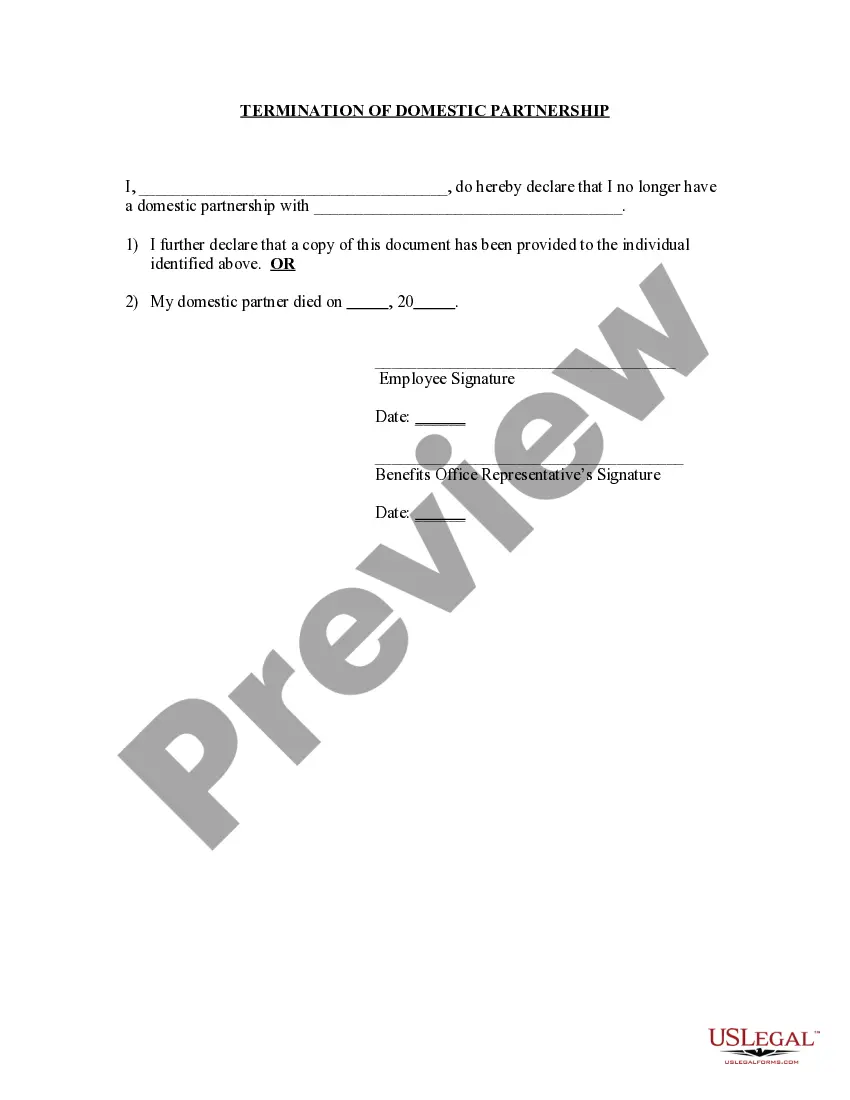
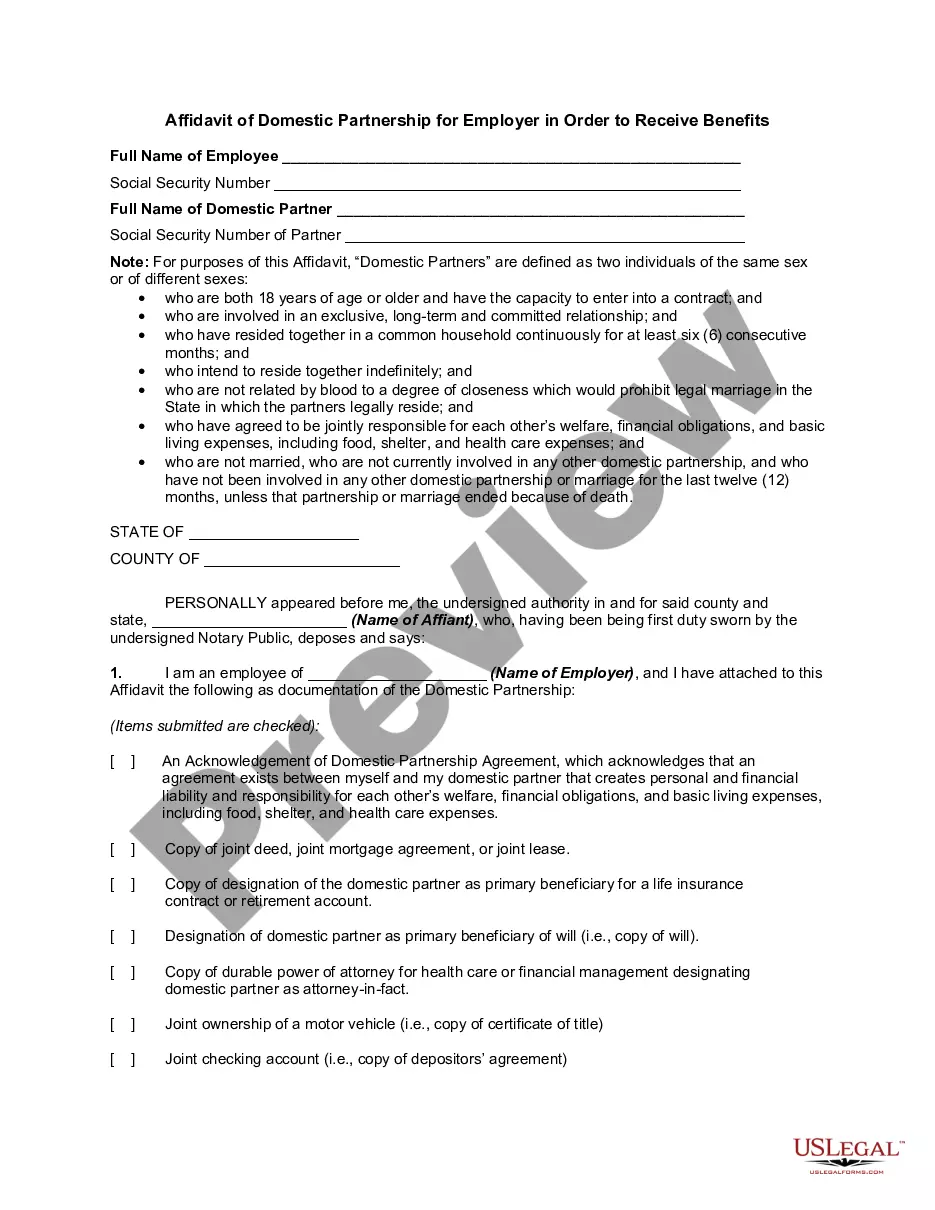
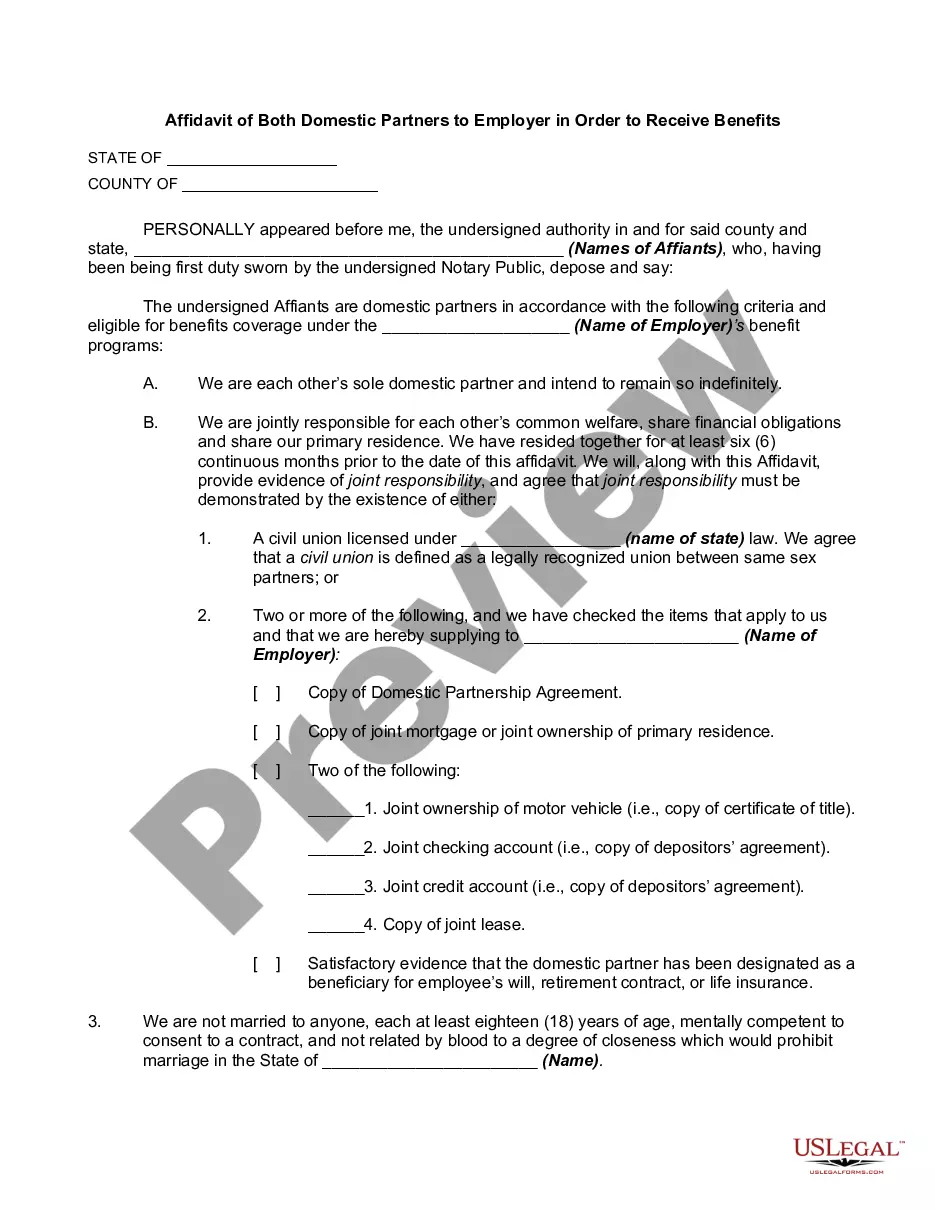
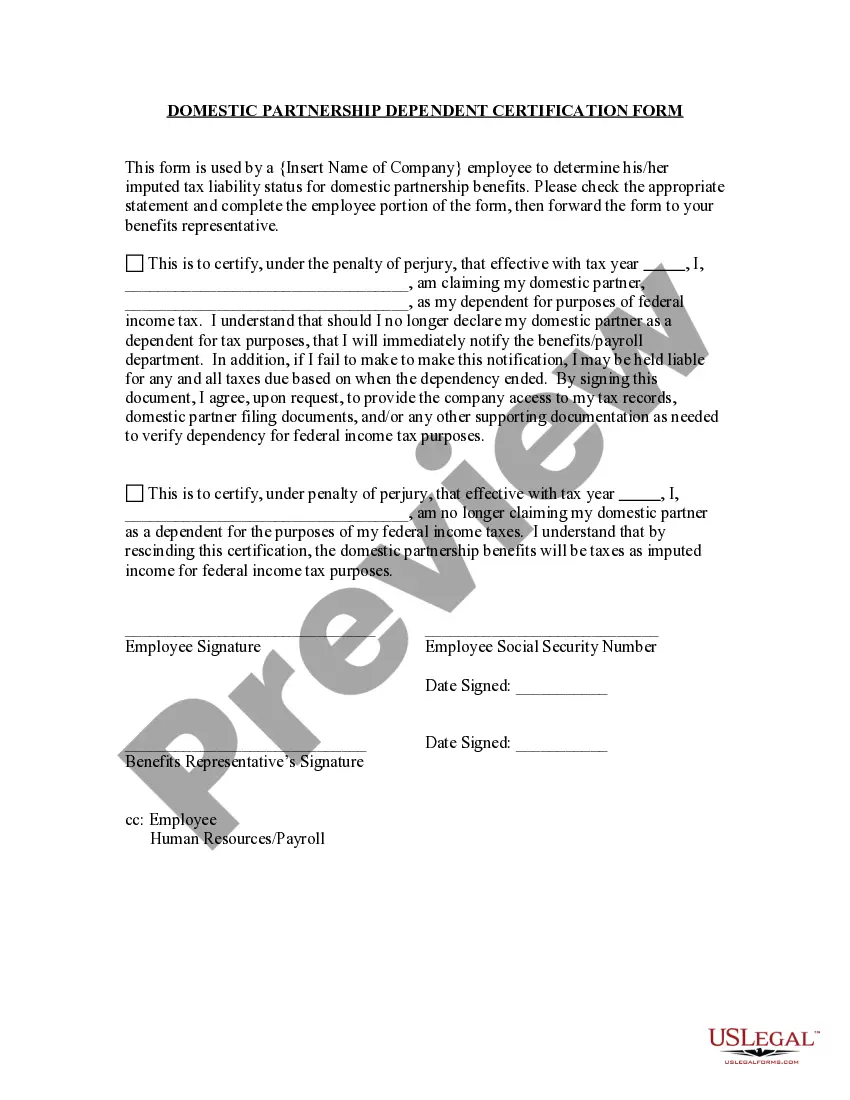
How to fill out Termination Of Domestic Partnership?
- If you are a returning user, log in to your account and select the required form template to download. Ensure your subscription is current to avoid interruptions.
- For first-time users, review the form description and preview mode to confirm it meets your needs and complies with local jurisdiction requirements.
- If the desired form doesn't match your needs, utilize the Search tab above to find another suitable template before proceeding.
- To purchase the document, click 'Buy Now' and select a subscription plan that fits your needs. Registration is necessary for access to our extensive library.
- Complete your purchase by entering your credit card information or opting for PayPal to finalize the subscription.
- Download the completed form onto your device and later access it from the My Forms section in your profile. You can revisit it whenever necessary.
US Legal Forms stands out by empowering individuals and attorneys to efficiently create legal documents through its robust and extensive library, featuring over 85,000 fillable forms.
Take the first step toward securing your relationship—start today with US Legal Forms and ensure your domestic partnership is legally protected.
Form popularity
FAQ
The time required to be considered a domestic partner varies by state and personal circumstances. Some states recognize a domestic partnership immediately upon registration, while others may require you to cohabit for a specified period. It is important to check local laws to understand these requirements. Planning for a domestic partnership partner for the future can help clarify your standing through uslegalforms.
While domestic partnerships offer many benefits, there are a few downsides to consider. For example, not all states recognize domestic partners the same way they recognize marriages. You may also face limitations regarding health benefits or tax advantages, depending on your location. Thus, it’s crucial to look into these aspects when planning for a domestic partnership partner for the future.
Determining if your live-in girlfriend qualifies as a domestic partner depends on certain factors. You both need to share a committed relationship and live together, but it may also depend on state laws. Some states recognize domestic partnerships through registration. If you are considering your relationship’s legal aspects, uslegalforms can help you understand your options for a domestic partnership partner for the future.
The IRS defines a domestic partner as a person who shares a domestic life with another individual without being married. To qualify, both partners must live together and share a committed relationship. Additionally, some states may require registration to recognize the partnership. Understanding these qualifications is essential for those looking to establish a domestic partnership partner for the future.
Unmarried couples may find themselves in complex situations when addressing debt responsibility. As you explore a domestic partnership partner for the future, keep in mind that generally, each person is only liable for their debts unless both partners agreed to the debt jointly. Understanding state laws and having open financial discussions can help prevent misunderstandings. Platforms like USLegalForms can provide valuable resources to help navigate these concerns.
One major disadvantage of a domestic partnership can be the limited legal recognition compared to marriage, which may impact benefits and rights. For example, while a domestic partnership partner for the future enjoys certain legal protections, they may not have access to all the federal benefits that married couples receive. Additionally, breaking a domestic partnership can sometimes be less straightforward than a divorce. It's essential to evaluate these aspects before committing.
Domestic partners, similar to spouses, may face joint financial responsibilities, especially if debts are incurred during the partnership. When you consider a domestic partnership partner for the future, it’s essential to analyze your joint financial obligations. If a debt is solely in one partner's name, the other partner is usually not liable for that debt. However, state laws can vary, so it's wise to stay informed.
The length of time required to live together before filing for domestic partnership varies by jurisdiction, with some states not specifying a minimum period. More importantly, demonstrating commitment through cohabitation and shared responsibilities can be crucial. Ensure you verify the specific requirements in your area to solidify your status as a domestic partnership partner for the future.
Absolutely, you can claim your girlfriend as a domestic partner if you fulfill the requirements set by your state. This classification can enhance your relationship by providing certain legal rights and responsibilities. By recognizing her as your domestic partnership partner for the future, you can foster a deeper sense of commitment and security in your shared life.
Yes, you can refer to your boyfriend as your domestic partner, provided you meet the legal criteria for domestic partnership in your state. This designation can signify your commitment and shared responsibilities, which are essential in establishing a domestic partnership partner for the future. Keep in mind that legal recognition varies, so you may want to explore the formalities involved.