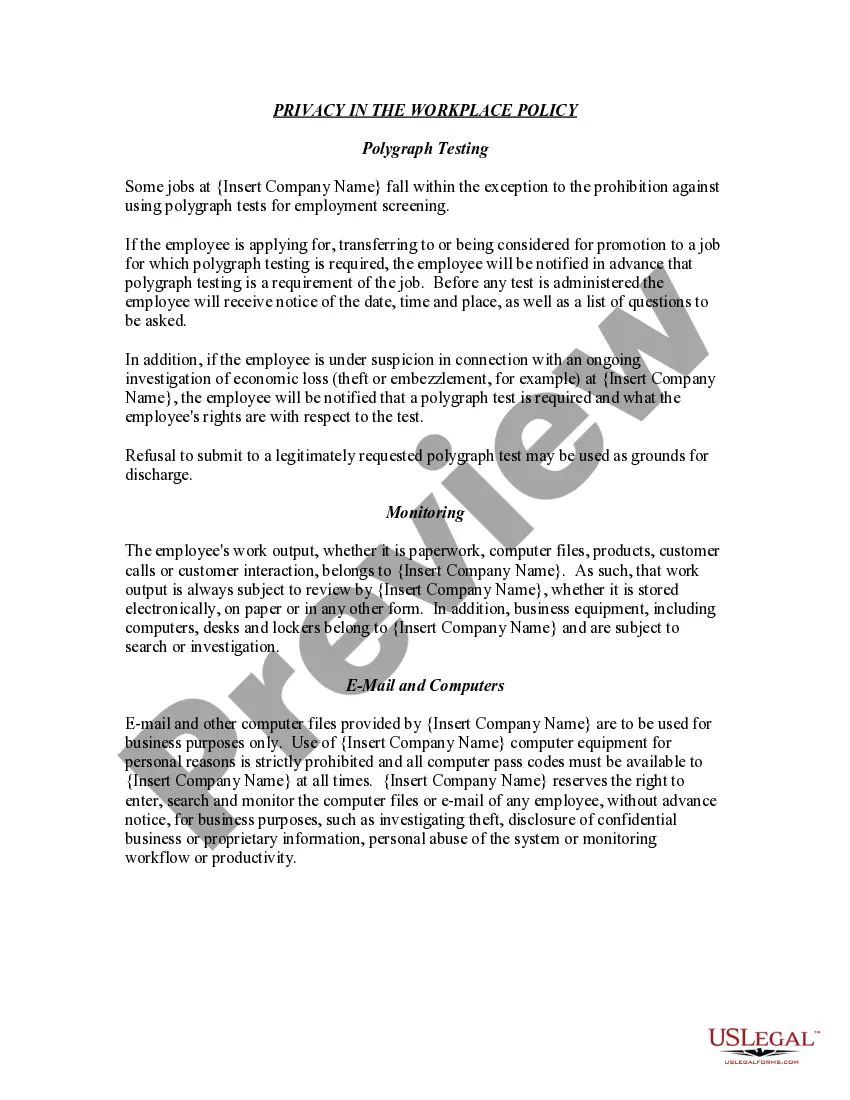
Confidentiality Within Workplace
Description

Get your form ready online
Our built-in tools help you complete, sign, share, and store your documents in one place.
Make edits, fill in missing information, and update formatting in US Legal Forms—just like you would in MS Word.
Download a copy, print it, send it by email, or mail it via USPS—whatever works best for your next step.
Sign and collect signatures with our SignNow integration. Send to multiple recipients, set reminders, and more. Go Premium to unlock E-Sign.
If this form requires notarization, complete it online through a secure video call—no need to meet a notary in person or wait for an appointment.
We protect your documents and personal data by following strict security and privacy standards.

Make edits, fill in missing information, and update formatting in US Legal Forms—just like you would in MS Word.

Download a copy, print it, send it by email, or mail it via USPS—whatever works best for your next step.

Sign and collect signatures with our SignNow integration. Send to multiple recipients, set reminders, and more. Go Premium to unlock E-Sign.

If this form requires notarization, complete it online through a secure video call—no need to meet a notary in person or wait for an appointment.

We protect your documents and personal data by following strict security and privacy standards.
Looking for another form?


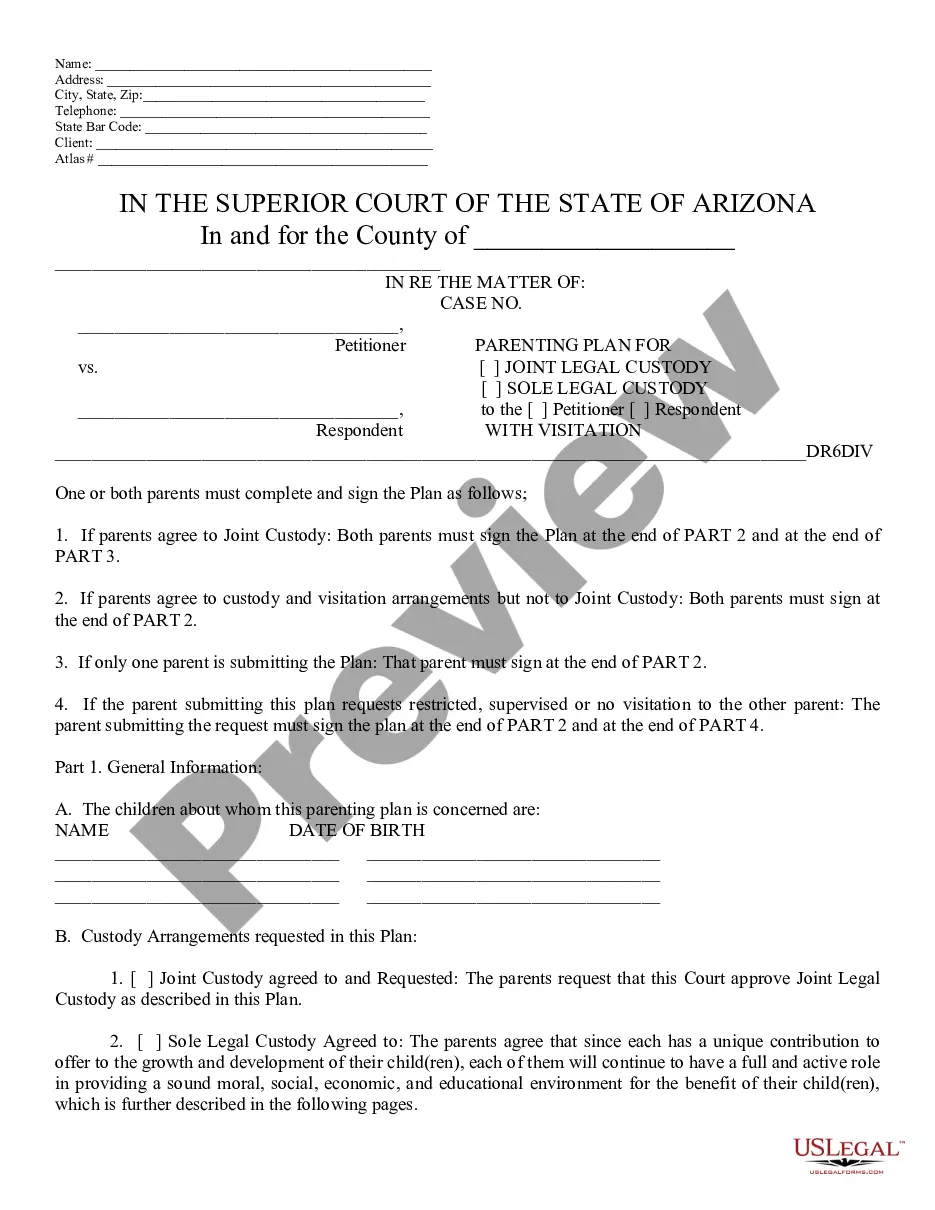






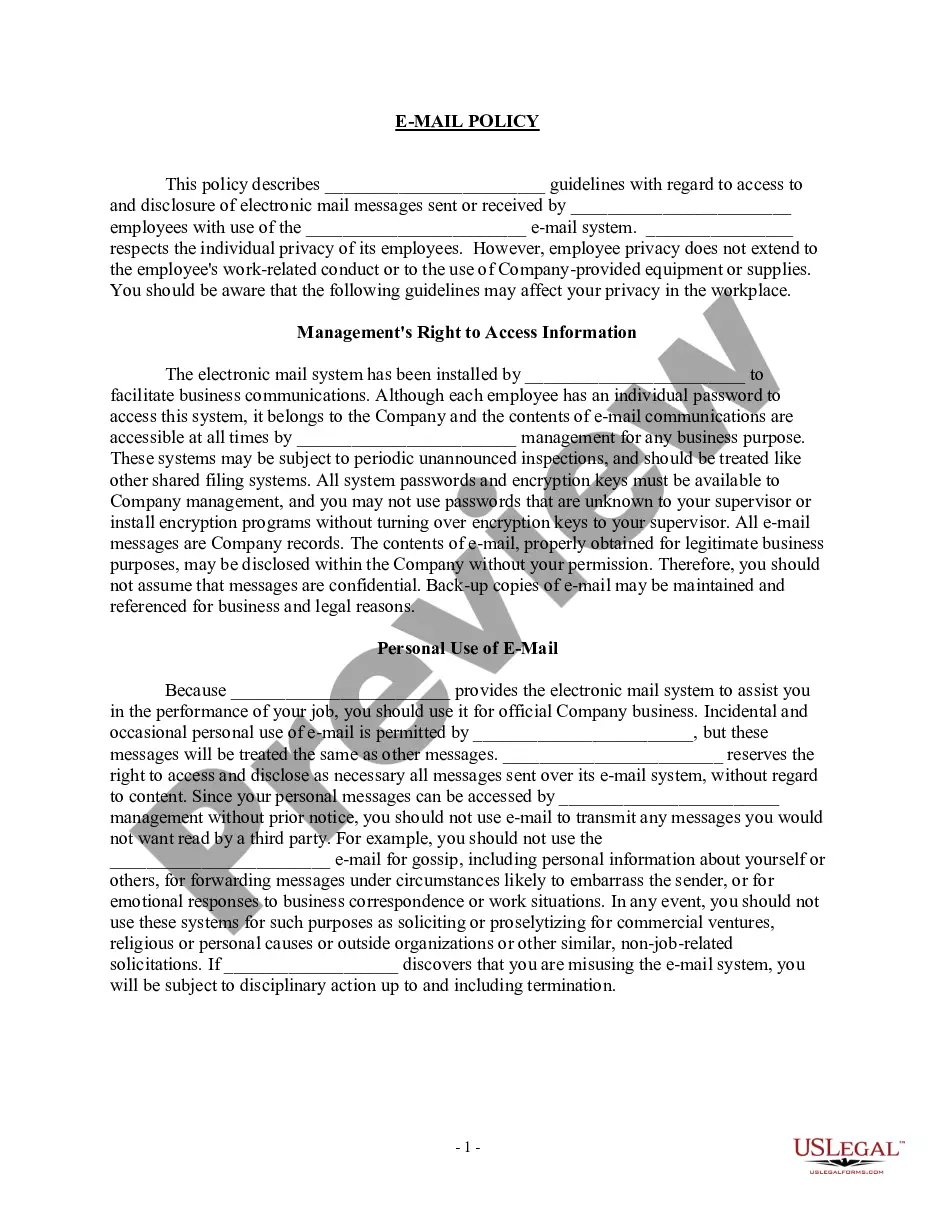
How to fill out Privacy In The Workplace Policy?
Managing legal documents and procedures can be a lengthy addition to your schedule.
Confidentiality Within Workplace and similar forms typically necessitate your effort to locate them and understand how to fill them out efficiently.
Consequently, whether you are managing financial, legal, or personal issues, having a detailed and user-friendly online directory of forms readily available will be immensely beneficial.
US Legal Forms is the premier online platform for legal templates, featuring over 85,000 state-specific documents and a variety of tools to help you complete your paperwork with ease.
Is this your first experience with US Legal Forms? Create and configure a free account in just a few minutes, granting you access to the forms library and Confidentiality Within Workplace. Next, follow these steps to complete your form: Ensure you have located the correct form using the Review feature and examining the form description. Select Buy Now when ready, and choose the monthly subscription plan that suits your needs. Click Download, then fill out, sign, and print the form. US Legal Forms has 25 years of experience assisting users with their legal documents. Obtain the form you need today and streamline any process effortlessly.
- Browse the collection of relevant documents with just one click.
- US Legal Forms offers state- and county-specific documents available for download at any time.
- Safeguard your document management processes with high-quality support that enables you to prepare any form in minutes without extra or hidden fees.
- Simply Log In to your account, find Confidentiality Within Workplace, and obtain it immediately from the My documents section.
- You can also retrieve previously downloaded forms.
Form popularity
FAQ
Suggestion: "I handle sensitive information in the workplace by following all relevant policies and procedures, using secure methods of communication, protecting the information through secure storage and proper disposal, and being mindful of my surroundings when discussing sensitive topics."
Common examples of confidential information are: Unpublished financial information. Data of Customers/Partners/Vendors. Patents, formulas or new technologies. Customer lists (existing and prospective) Data entrusted to our company by external parties. Pricing/marketing and other undisclosed strategies.
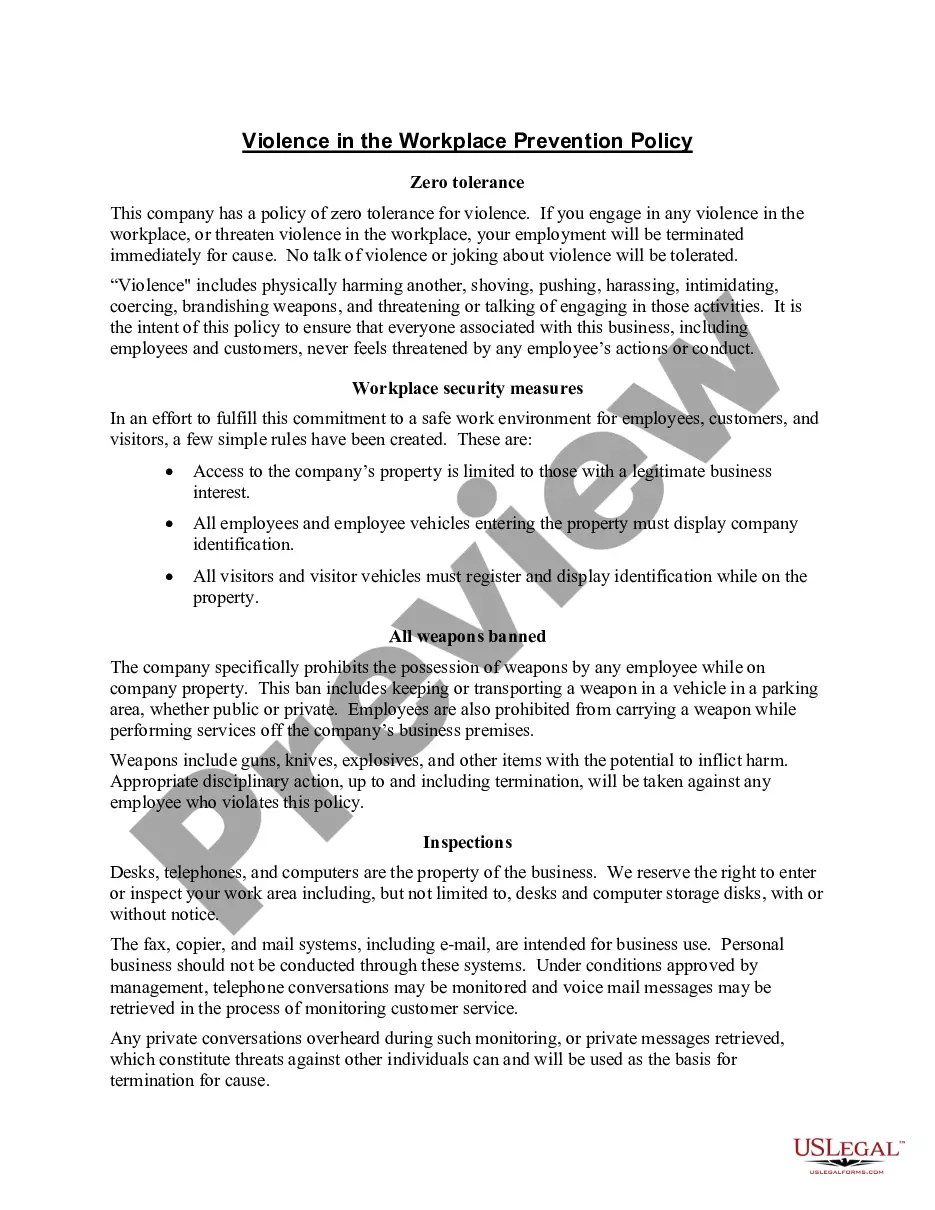
Confidentiality Checklist Develop a workplace privacy policy that explains the collection and handling of employee personal information. Keep employee personal information secure so that no unauthorised persons can access it. Consider your privacy obligations when providing personal information to third parties.
A confidentiality agreement should include a clear definition of the confidential information, scope of the agreement, obligations of the receiving party, the duration of the contract, any exceptions to confidentiality, and the consequences of a breach of the contract.
What do you do if a potential client wants to know company details? (e.g. for new products and features.) If you're asked to divulge sensitive info in a meeting, how do you respond? What would you do if you received a sensitive email addressed to someone else?