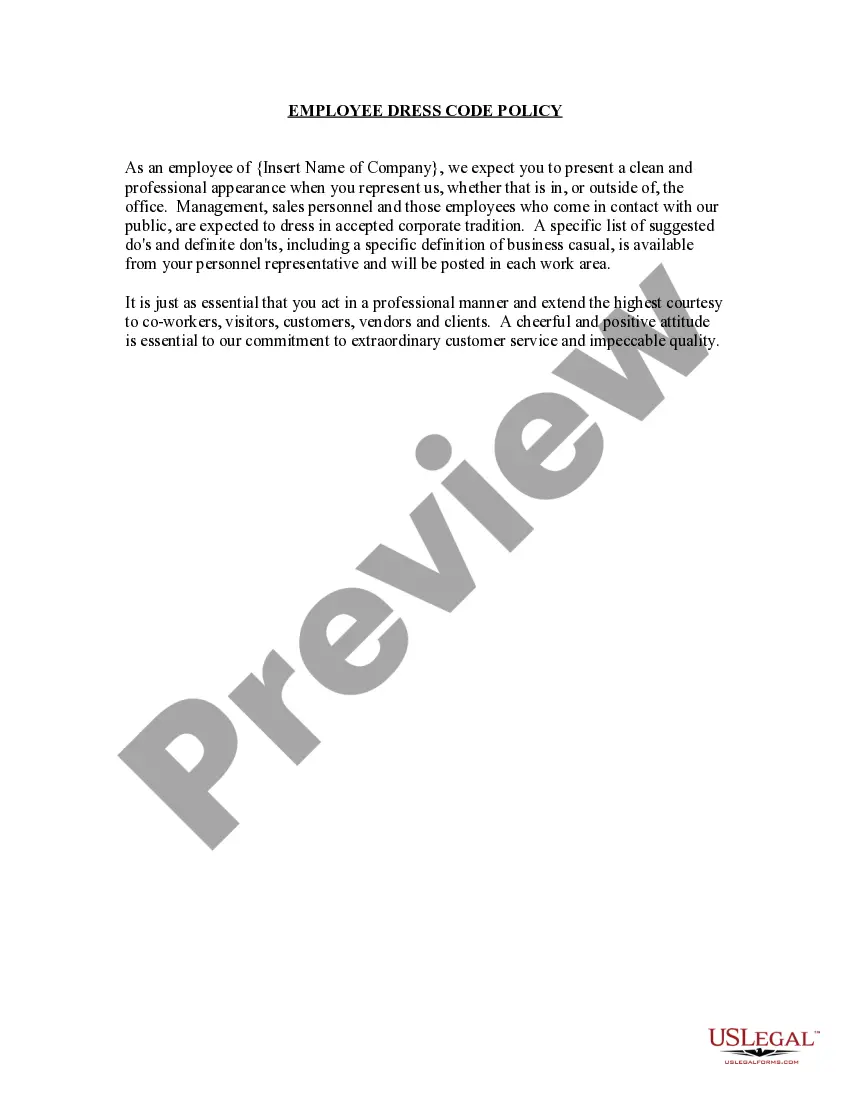
Sample Dress Code Policy For Office
Description
Get your form ready online
Our built-in tools help you complete, sign, share, and store your documents in one place.
Make edits, fill in missing information, and update formatting in US Legal Forms—just like you would in MS Word.
Download a copy, print it, send it by email, or mail it via USPS—whatever works best for your next step.
Sign and collect signatures with our SignNow integration. Send to multiple recipients, set reminders, and more. Go Premium to unlock E-Sign.
If this form requires notarization, complete it online through a secure video call—no need to meet a notary in person or wait for an appointment.
We protect your documents and personal data by following strict security and privacy standards.

Make edits, fill in missing information, and update formatting in US Legal Forms—just like you would in MS Word.

Download a copy, print it, send it by email, or mail it via USPS—whatever works best for your next step.

Sign and collect signatures with our SignNow integration. Send to multiple recipients, set reminders, and more. Go Premium to unlock E-Sign.

If this form requires notarization, complete it online through a secure video call—no need to meet a notary in person or wait for an appointment.

We protect your documents and personal data by following strict security and privacy standards.
Looking for another form?

How to fill out Employee Dress Code Policy - General?
Managing legal documents can be overwhelming, even for experienced professionals.
If you're looking for a Sample Dress Code Policy For Office and don't have the time to invest in finding the right and current version, the process can be stressful.
US Legal Forms accommodates all needs you may have, from personal to business documents, all in one location.
Utilize advanced tools to complete and manage your Sample Dress Code Policy For Office.
Here are the steps to take after accessing the form you need: Validate that it is the correct form by previewing it and reviewing its details.
- Access a valuable repository of articles, tutorials, and guides that are relevant to your circumstances and requirements.
- Save time and effort in retrieving the documents you require, using US Legal Forms’ sophisticated search and Review feature to find Sample Dress Code Policy For Office and obtain it.
- If you hold a subscription, Log In to your US Legal Forms account, search for the form, and acquire it.
- Check your My documents tab to review the documents you’ve previously downloaded and manage your files as needed.
- For new users of US Legal Forms, create an account and enjoy unlimited access to all the benefits of the platform.
- A robust online form library could be transformative for anyone aiming to handle these situations efficiently.
- US Legal Forms is a frontrunner in online legal documents, offering over 85,000 state-specific legal forms accessible to you at any time.
- With US Legal Forms, you have access to a variety of state- or county-specific legal and business documents.
Form popularity
FAQ
An effective dress code policy for employees might outline specific attire for different days or events. A sample dress code policy for office could include guidelines like 'business formal on Mondays, casual Fridays,' or define acceptable business casual attire. By providing these examples, companies can ensure employees understand expectations and maintain a consistent image that reflects the organization's values.
The rules for dress code in the workplace can vary based on industry and company culture. A sample dress code policy for office often includes requirements such as maintaining a neat appearance, avoiding overly casual clothing, and ensuring that clothing is appropriate for client interactions. These rules promote professionalism and help foster a workplace where employees feel respected and valued.
A sample dress code policy for office typically includes guidelines that define acceptable and unacceptable attire for employees. For instance, business casual attire may be appropriate, which allows for collared shirts, blouses, and slacks. Conversely, it may prohibit items like flip-flops, shorts, or distressed clothing. Clear examples help create a professional environment and guide employees' choices effectively.
Writing a dress code policy involves outlining the purpose, expectations, and consequences. Start with a clear introduction to set the tone, followed by specific guidelines that align with your company culture. You can utilize a sample dress code policy for office from platforms like US Legal Forms to simplify the process and ensure compliance with legal standards.
To write a dress code rule, begin by identifying the key standards you wish to enforce. Make sure the rule is straightforward, like, 'All employees must wear closed-toed shoes during working hours.' Additionally, consider including a section for exceptions, ensuring everyone understands the expectations and any variations to the rule.
When crafting a dress code policy, use clear and direct language. Start with an introduction that explains the purpose of the policy, followed by sections detailing acceptable and unacceptable attire. For instance, stating, 'Employees are required to wear business casual attire, which includes dress slacks and blouses, while avoiding shorts or casual sneakers' ensures clarity in expectations.
A sample dress code policy for office might include guidelines around business casual attire, prohibiting items such as ripped jeans or flip-flops. It can also specify accepted colors and patterns, fostering a cohesive work environment. Providing employees with clear examples helps them understand expectations and contributes to a professional atmosphere.
When asking your boss for a dress code, choose a suitable time when they are not busy. Start the conversation by expressing your focus on maintaining professionalism and wanting to represent the company well. Then, ask if they can clarify the dress code expectations to help you align with the company's culture. If you're unsure, suggesting a reference like a sample dress code policy for office can foster a productive discussion.
To politely ask for a dress code, approach your supervisor or HR personnel with respect and clarity. You might frame your request by expressing your desire to adhere to company standards and seeking guidance. This conversation can open up a discussion about the dress code, making it easier for you to understand their expectations. Engaging in this manner prepares you to align your professional image with the organization's values.
Creating a dress code policy involves several steps, beginning with understanding the company culture and the image you wish to convey. Gather input from employees to ensure the policy is fair and representative of everyone. Include clear guidelines on acceptable clothing and the reasons behind the policy. Utilizing templates like a sample dress code policy for office can simplify this process and ensure that your policy is both comprehensive and easy to understand.