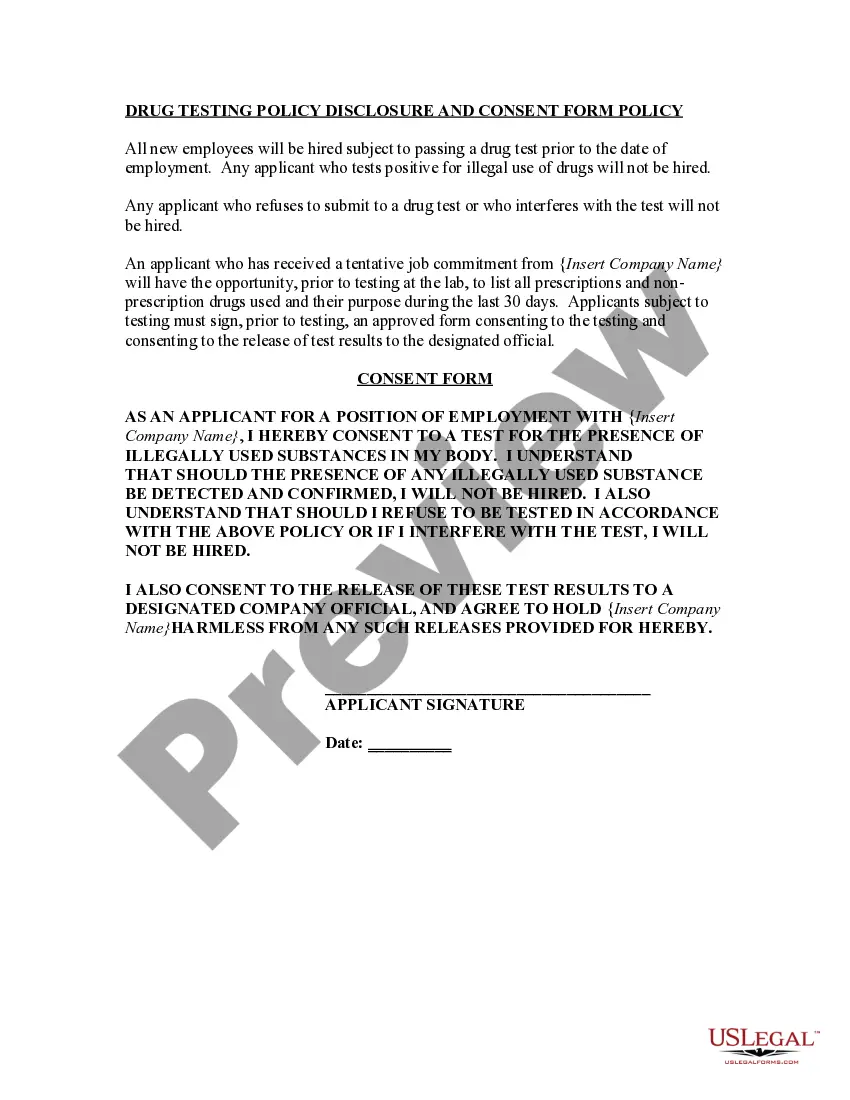
Drug Test Refuse To Take
Description
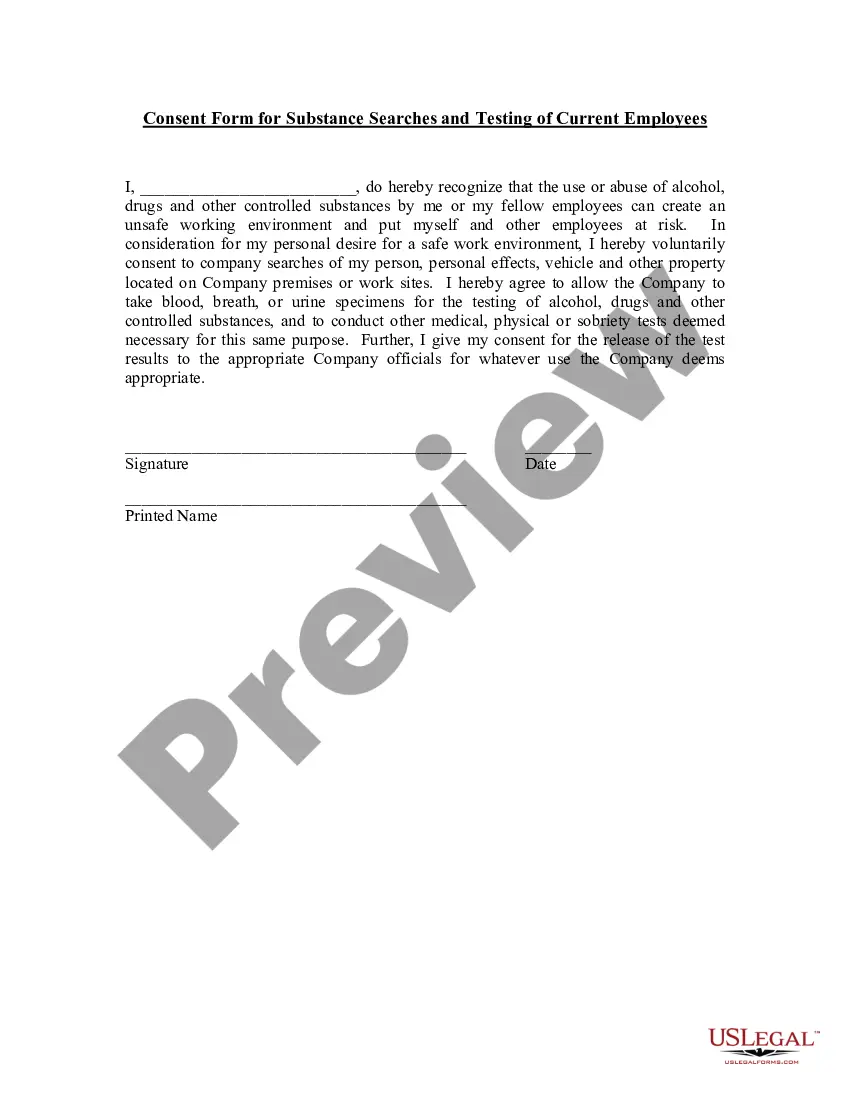
Get your form ready online
Our built-in tools help you complete, sign, share, and store your documents in one place.
Make edits, fill in missing information, and update formatting in US Legal Forms—just like you would in MS Word.
Download a copy, print it, send it by email, or mail it via USPS—whatever works best for your next step.
Sign and collect signatures with our SignNow integration. Send to multiple recipients, set reminders, and more. Go Premium to unlock E-Sign.
If this form requires notarization, complete it online through a secure video call—no need to meet a notary in person or wait for an appointment.
We protect your documents and personal data by following strict security and privacy standards.

Make edits, fill in missing information, and update formatting in US Legal Forms—just like you would in MS Word.

Download a copy, print it, send it by email, or mail it via USPS—whatever works best for your next step.

Sign and collect signatures with our SignNow integration. Send to multiple recipients, set reminders, and more. Go Premium to unlock E-Sign.

If this form requires notarization, complete it online through a secure video call—no need to meet a notary in person or wait for an appointment.

We protect your documents and personal data by following strict security and privacy standards.
Looking for another form?









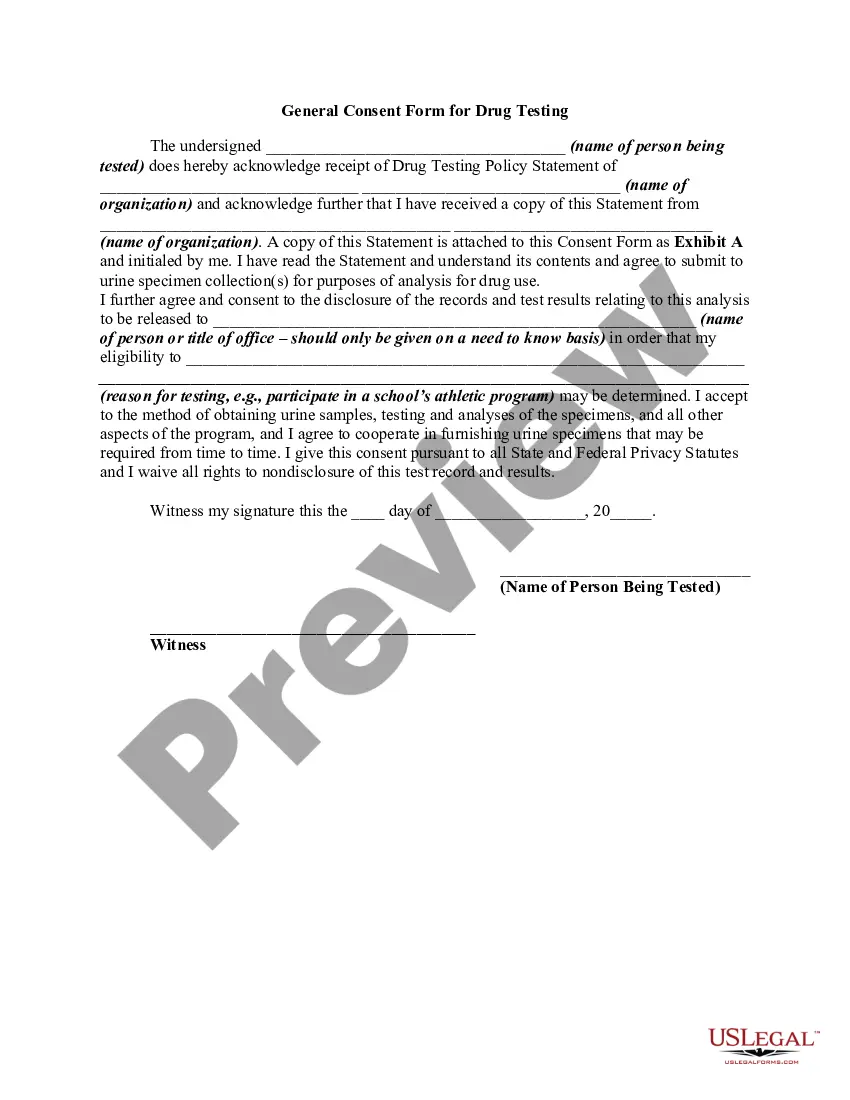
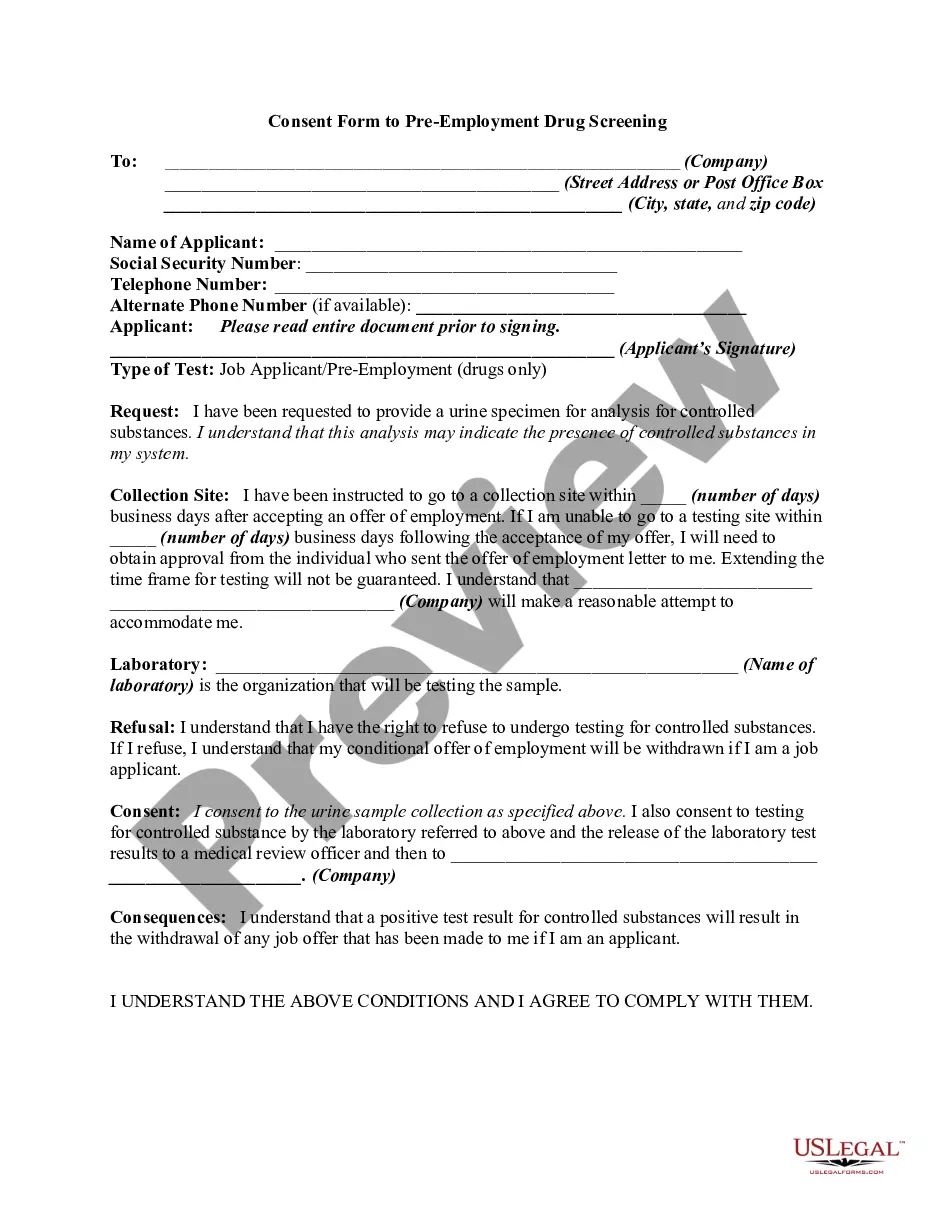
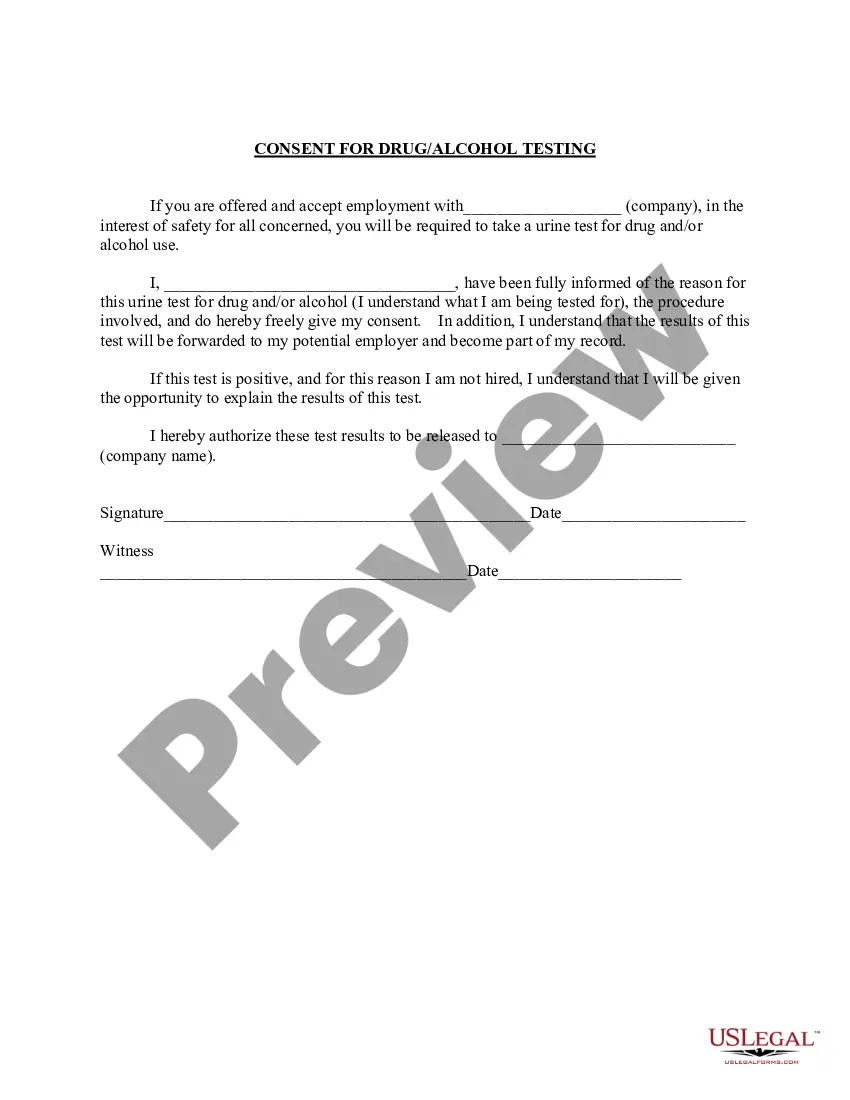
How to fill out Drug Testing Policy Disclosure And Consent Form?
Handling legal paperwork and processes can be a time-intensive addition to your day.
Drug Test Refusal and similar forms often necessitate that you locate them and comprehend the best method to fill them out efficiently.
As a result, if you are managing financial, legal, or personal issues, having access to a comprehensive and user-friendly online repository of forms will greatly assist you.
US Legal Forms is the leading online service for legal templates, featuring over 85,000 state-specific documents and a variety of resources to help you complete your paperwork effortlessly.
Is it your first time using US Legal Forms? Sign up and create a free account in just a few minutes to access the form repository and Drug Test Refusal. After that, follow the steps outlined below to fill out your form: Ensure you have the correct template using the Review function and examining the form details. Select Buy Now when you're ready, and choose the subscription plan that meets your requirements. Click on Download and then fill out, eSign, and print the document. US Legal Forms has 25 years of expertise assisting clients with their legal paperwork. Obtain the form you need today and simplify any process without extra hassle.
- Explore the assortment of pertinent documents available to you with just a single click.
- US Legal Forms provides you with state- and county-specific templates available for download at any time.
- Protect your document management processes with a premium service that permits you to prepare any form in minutes without additional or concealed fees.
- Simply Log Into your account, find Drug Test Refusal, and obtain it immediately from the My documents section.
- You can also access previously saved forms.
Form popularity
FAQ
A drug test refusal can stay on your record for several years, which may impact your employment opportunities. Typically, this refusal may be recorded for five years or longer, depending on state regulations and employer policies. The longer it remains, the more it can influence potential job prospects. To understand your situation better, consider using platforms like uslegalforms, which can help you navigate the legal implications of a drug test refuse to take.
In most cases, employers are responsible for reporting a refusal to test to the clearinghouse. They must follow federal guidelines and maintain accurate records of employee behavior concerning drug testing. Accurate reporting ensures compliance and accountability within the industry. If you find yourself facing this situation, understanding the reporting process is crucial for your future.
When a person does not agree to a drug test, the implications can vary depending on the setting. In workplace environments, such refusal may prompt immediate action, such as suspension or termination. In some cases, not agreeing to a drug test may hinder job opportunities and future employment prospects. It’s important to weigh your choices and consider the potential ramifications of a drug test refuse to take.
If you refuse to take a drug test, it can lead to significant consequences. Employers may see your refusal as an indication of wrongdoing or a way to avoid accountability. This situation often results in disciplinary action, including possible termination or negative impacts on your professional reputation. Always understand your rights and options before making a decision on a drug test refusal.
Refusal to take a drug test can occur when an individual does not comply with the request or does not provide a sample. This may include failing to show up for the test, being uncooperative during the testing process, or not providing a sample within the required time frame. Understanding these aspects is crucial if you're contemplating how to handle a drug test, and platforms like USLegalForms can offer helpful resources.
If you're looking to clean your system quickly for a drug test, staying hydrated is imperative, as it can help flush out toxins. Additionally, some individuals explore detox products, but results can vary significantly. Always approach this carefully, as any attempt to manipulate the test can raise red flags and may lead to a refusal scenario.
Many factors can affect the accuracy of a drug test. Certain medications, hydration levels, and even food can lead to unexpected results. Understanding these factors can be useful if you are considering how to navigate your own situation around refusing a drug test.
A valid reason to refuse a drug test typically involves medical or ethical concerns. For instance, if you have a legitimate medical condition that affects your drug test results, you may cite this as a reason. Additionally, if you believe the testing procedure is unfair or violates your privacy, it can serve as a basis for your refusal.
If you want to decline a drug test, it is important to communicate your concerns clearly. You should express your reasons to the administrator or employer in a professional manner. Keep in mind that refusing a drug test may have consequences, so make sure you are aware of the potential impacts on your employment or legal standing.
If you refuse to take a drug test, your employer may classify it as a violation of company policy, which can lead to disciplinary action, including termination. Additionally, some industries implement strict regulations where refusal leads to serious legal implications. Seeking advice from US Legal Forms can assist you in addressing your specific case and help you understand your options.