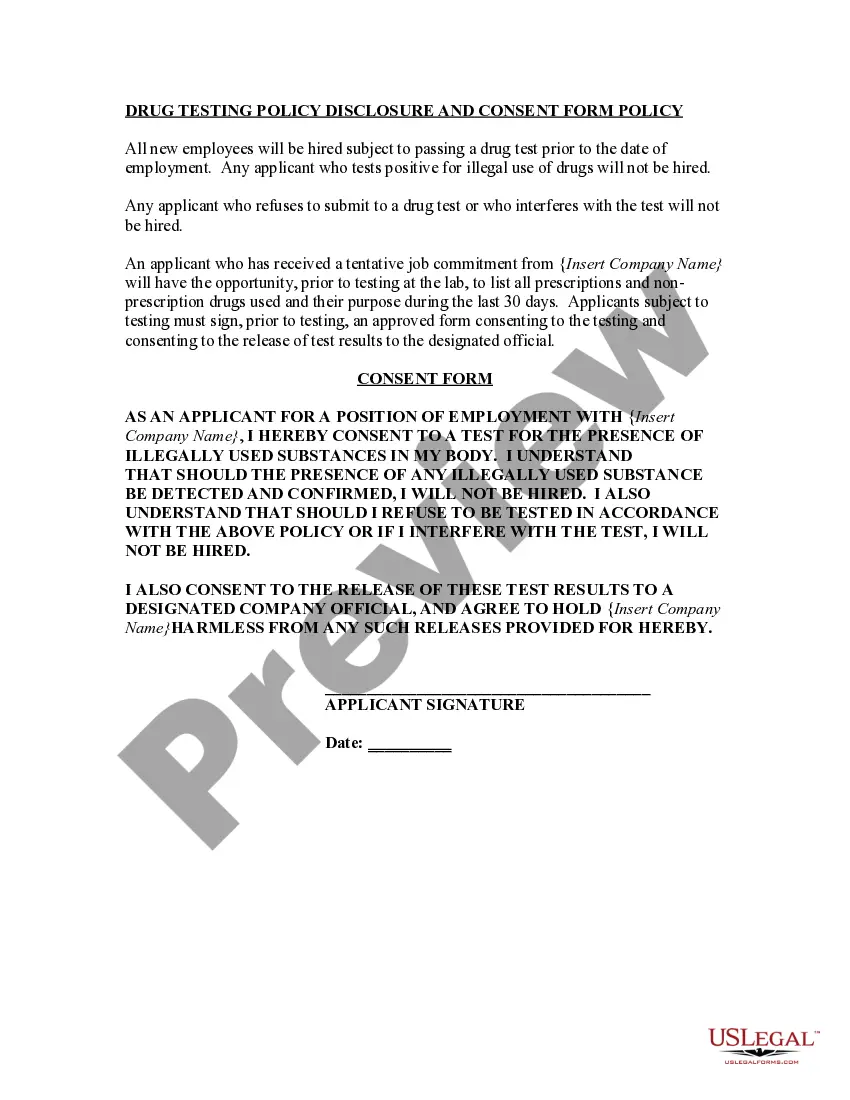
Drug Test For Employment Adderall
Description
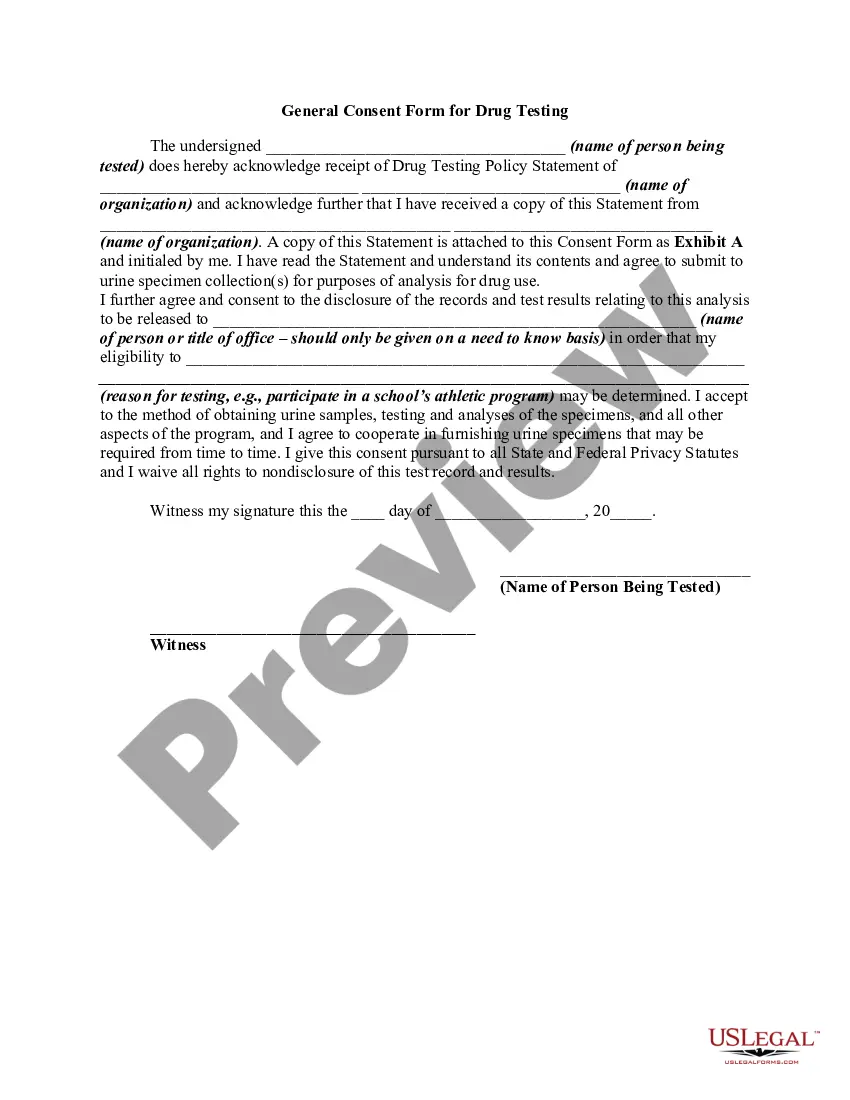
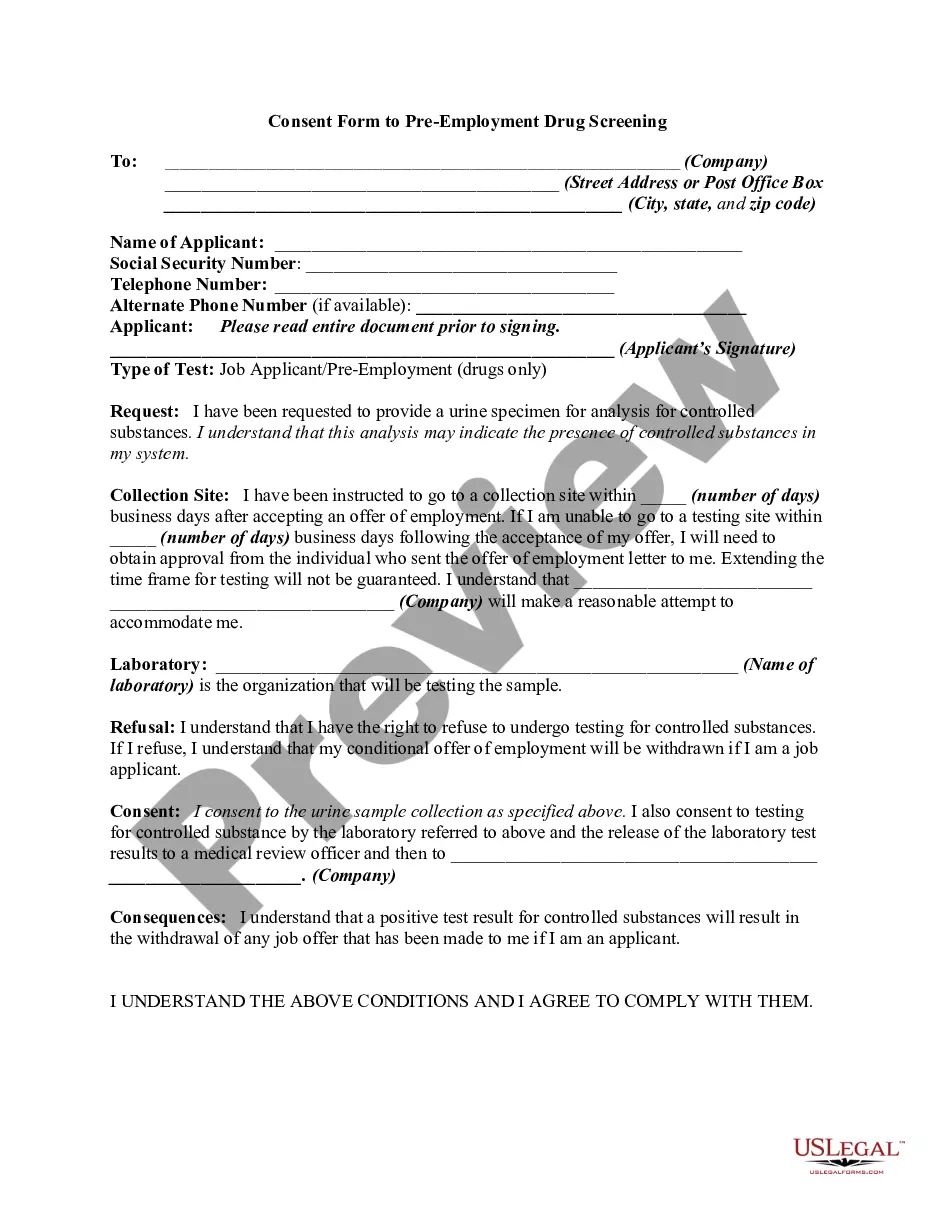
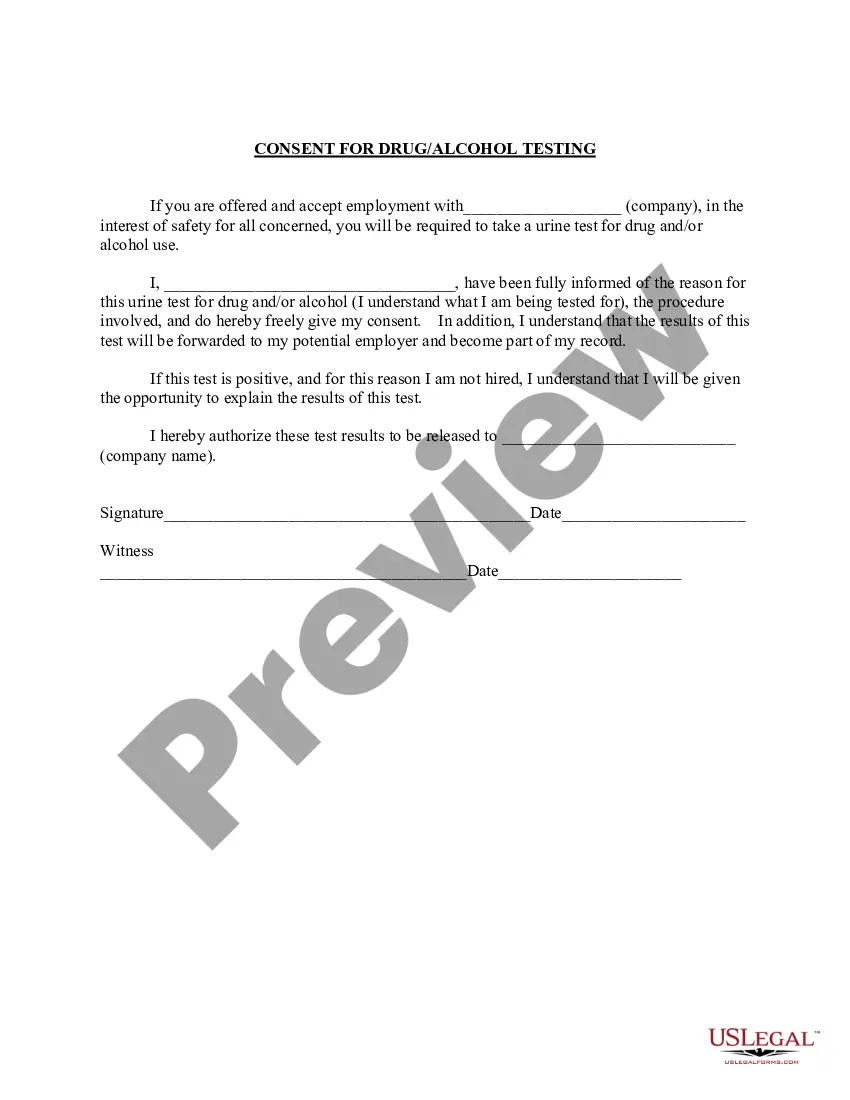
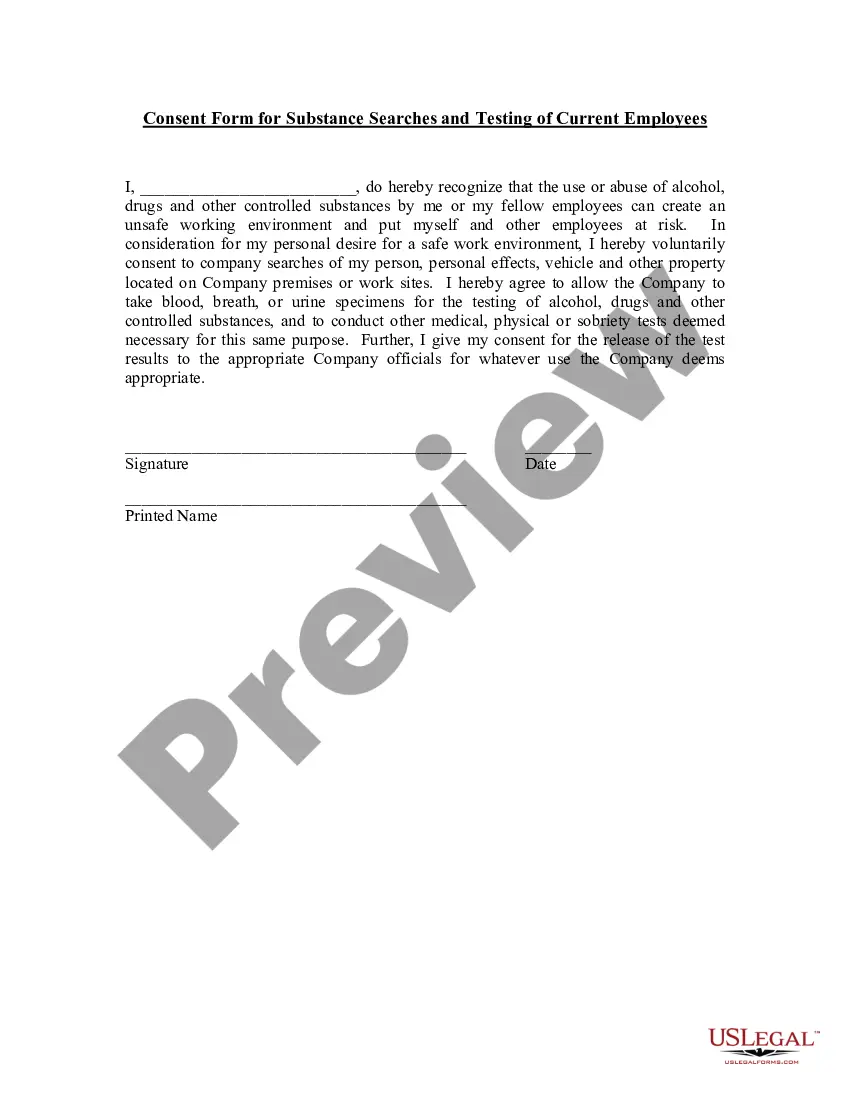
Get your form ready online
Our built-in tools help you complete, sign, share, and store your documents in one place.
Make edits, fill in missing information, and update formatting in US Legal Forms—just like you would in MS Word.
Download a copy, print it, send it by email, or mail it via USPS—whatever works best for your next step.
Sign and collect signatures with our SignNow integration. Send to multiple recipients, set reminders, and more. Go Premium to unlock E-Sign.
If this form requires notarization, complete it online through a secure video call—no need to meet a notary in person or wait for an appointment.
We protect your documents and personal data by following strict security and privacy standards.

Make edits, fill in missing information, and update formatting in US Legal Forms—just like you would in MS Word.

Download a copy, print it, send it by email, or mail it via USPS—whatever works best for your next step.

Sign and collect signatures with our SignNow integration. Send to multiple recipients, set reminders, and more. Go Premium to unlock E-Sign.

If this form requires notarization, complete it online through a secure video call—no need to meet a notary in person or wait for an appointment.

We protect your documents and personal data by following strict security and privacy standards.
Looking for another form?



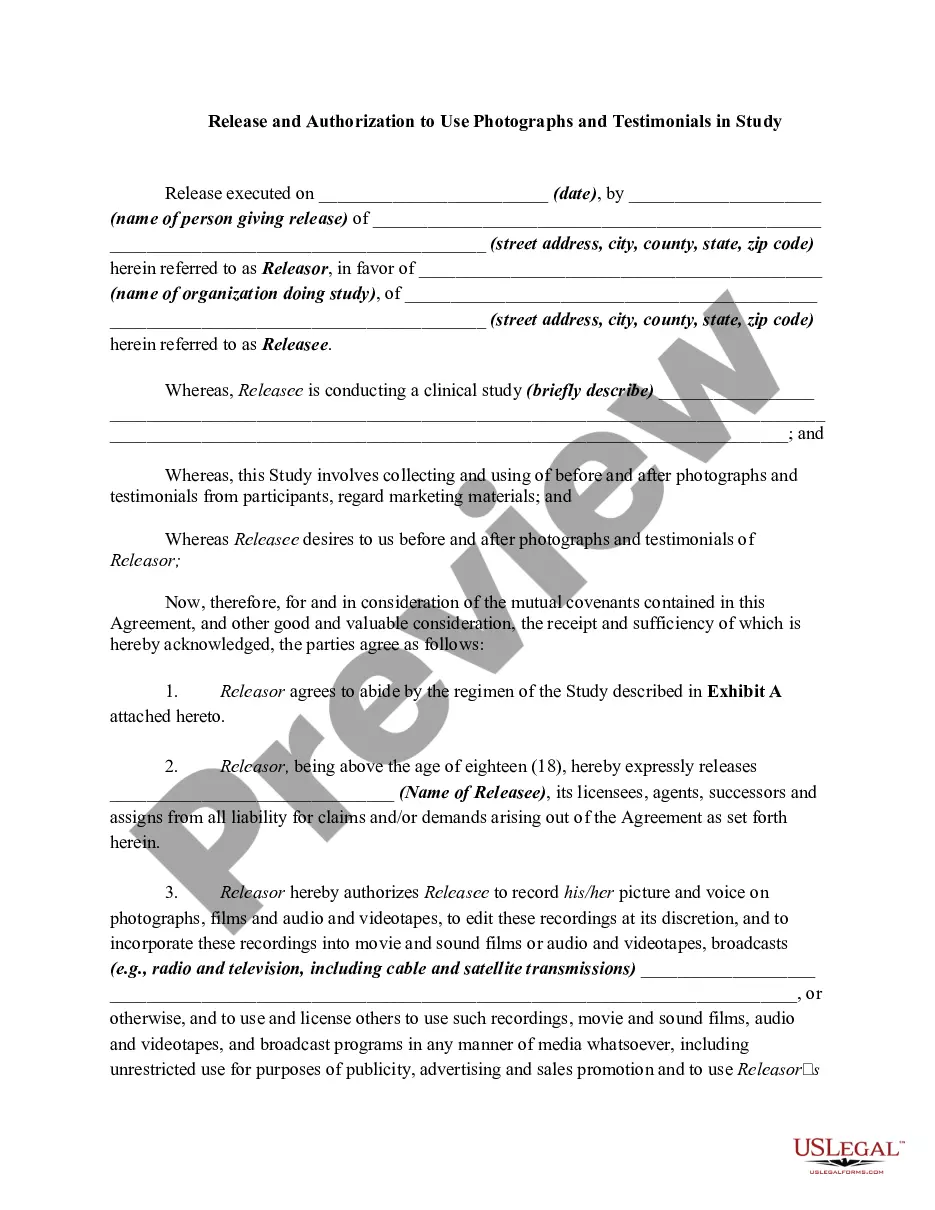





How to fill out Drug Testing Policy Disclosure And Consent Form?
Legal administration can be exasperating, even for informed professionals.
When you are looking for a Drug Test For Employment Adderall and don’t have the opportunity to invest time in finding the correct and current version, the procedures can be stressful.
US Legal Forms addresses any requirements you may have, ranging from personal to business documentation, all in one place.
Utilize advanced tools to complete and manage your Drug Test For Employment Adderall.
Here are the steps to take after acquiring the form you need: Verify this is the correct form by previewing it and reviewing its details.
- Access a valuable resource repository of articles, guidelines, and manuals related to your circumstances and needs.
- Save time and effort in finding the documents you require, and use US Legal Forms’ enhanced search and Preview feature to find Drug Test For Employment Adderall and download it.
- If you possess a membership, Log In to your US Legal Forms account, locate the form, and download it.
- Check your My documents section to review the documents you have downloaded previously and to manage your folders as you see fit.
- If this is your first encounter with US Legal Forms, create a complimentary account and gain unlimited access to all the benefits of the library.
- A robust online form repository may be a revolutionary factor for anyone wishing to manage these matters effectively.
- US Legal Forms is a front-runner in online legal documents, providing over 85,000 state-specific legal forms available to you whenever needed.
- With US Legal Forms, you can access state- or county-specific legal and organizational documents.
Form popularity
FAQ
Yes, medications for ADHD, like Adderall, do show up in drug tests. These tests generally screen for amphetamines, so the presence of your medication may be noted. If you're concerned about how ADHD medications impact your drug test for employment, consider consulting your doctor or using resources like Uslegalforms to navigate your options.
The prescription medications known to cause false-positive amphetamine urine drug screen include fluoxetine, selegiline, ranitidine, trazodone, nefazodone, brompheniramine, phenylpropanolamine, chlorpromazine, promethazine, ephedrine, methamphetamine, and labetalol [6?9].
Methylphenidate is a stimulant medication used to treat ADHD. Many sources state that methylphenidate can cause false positive results for amphetamines.
Adderall is a mixture of d- and l-enantiomers of amphetamine salts. Peak amphetamine concentrations ranged from 2645 to 5948 ng/mL. Samples containing > or = 500 ng/mL of amphetamine (the administrative cutoff for a positive result by gas chromatography-mass spectrometry) were seen up to h post dose.
Methylphenidate is not structurally similar to amphetamine. Although both drugs are used in ADHD/ADD, it should not be assumed that both will cause positive amphetamine results. Methylphenidate will not be detected with routine drug screens.
Adderall is a prescription medication that contains two drugs: amphetamine and dextroamphetamine. It belongs to a class of medications called stimulants. It's most commonly used to treat attention-deficit hyperactivity disorder (ADHD). It's also used to treat narcolepsy.