Charges For Rental Agreement
Description
Get your form ready online
Our built-in tools help you complete, sign, share, and store your documents in one place.
Make edits, fill in missing information, and update formatting in US Legal Forms—just like you would in MS Word.
Download a copy, print it, send it by email, or mail it via USPS—whatever works best for your next step.
Sign and collect signatures with our SignNow integration. Send to multiple recipients, set reminders, and more. Go Premium to unlock E-Sign.
If this form requires notarization, complete it online through a secure video call—no need to meet a notary in person or wait for an appointment.
We protect your documents and personal data by following strict security and privacy standards.

Make edits, fill in missing information, and update formatting in US Legal Forms—just like you would in MS Word.

Download a copy, print it, send it by email, or mail it via USPS—whatever works best for your next step.

Sign and collect signatures with our SignNow integration. Send to multiple recipients, set reminders, and more. Go Premium to unlock E-Sign.

If this form requires notarization, complete it online through a secure video call—no need to meet a notary in person or wait for an appointment.

We protect your documents and personal data by following strict security and privacy standards.
Looking for another form?





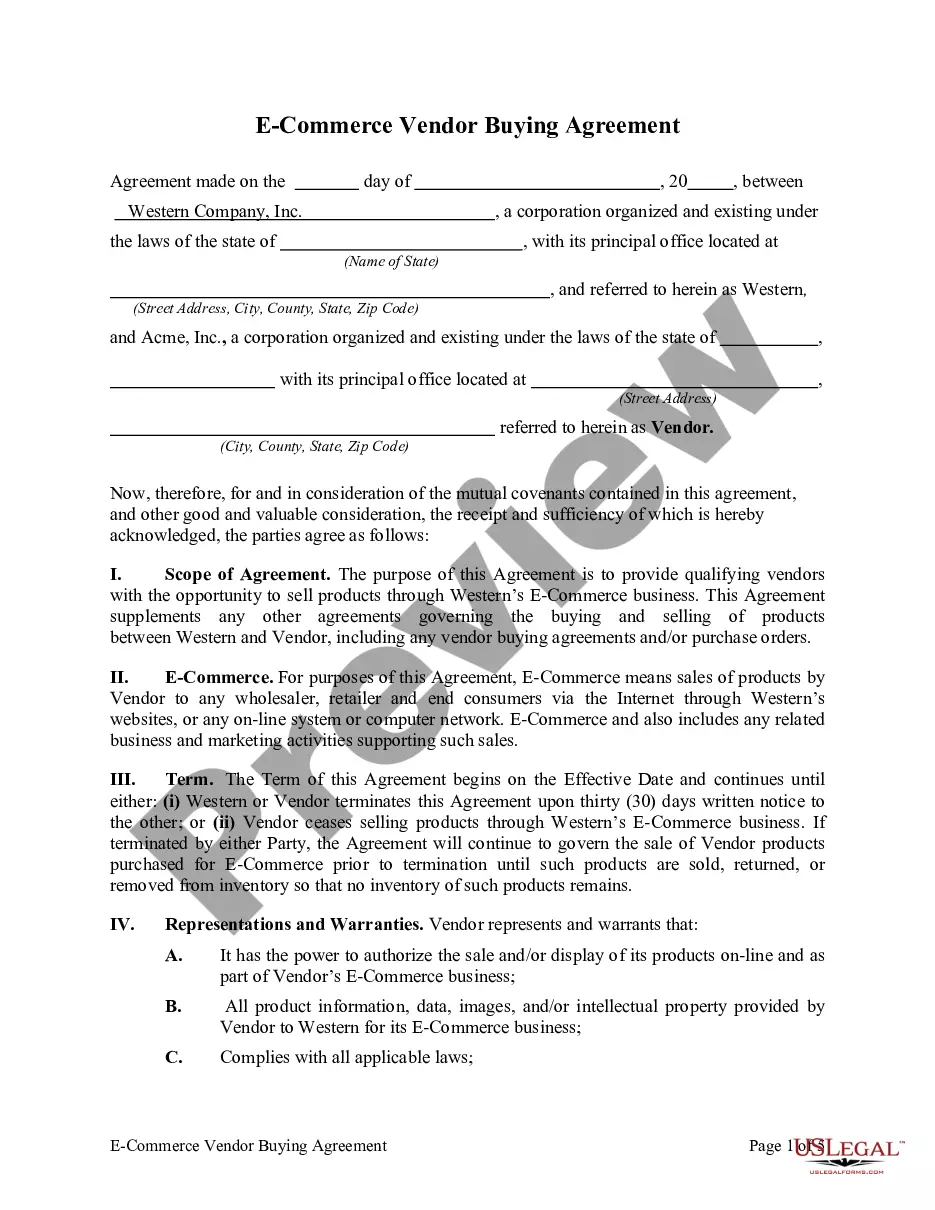


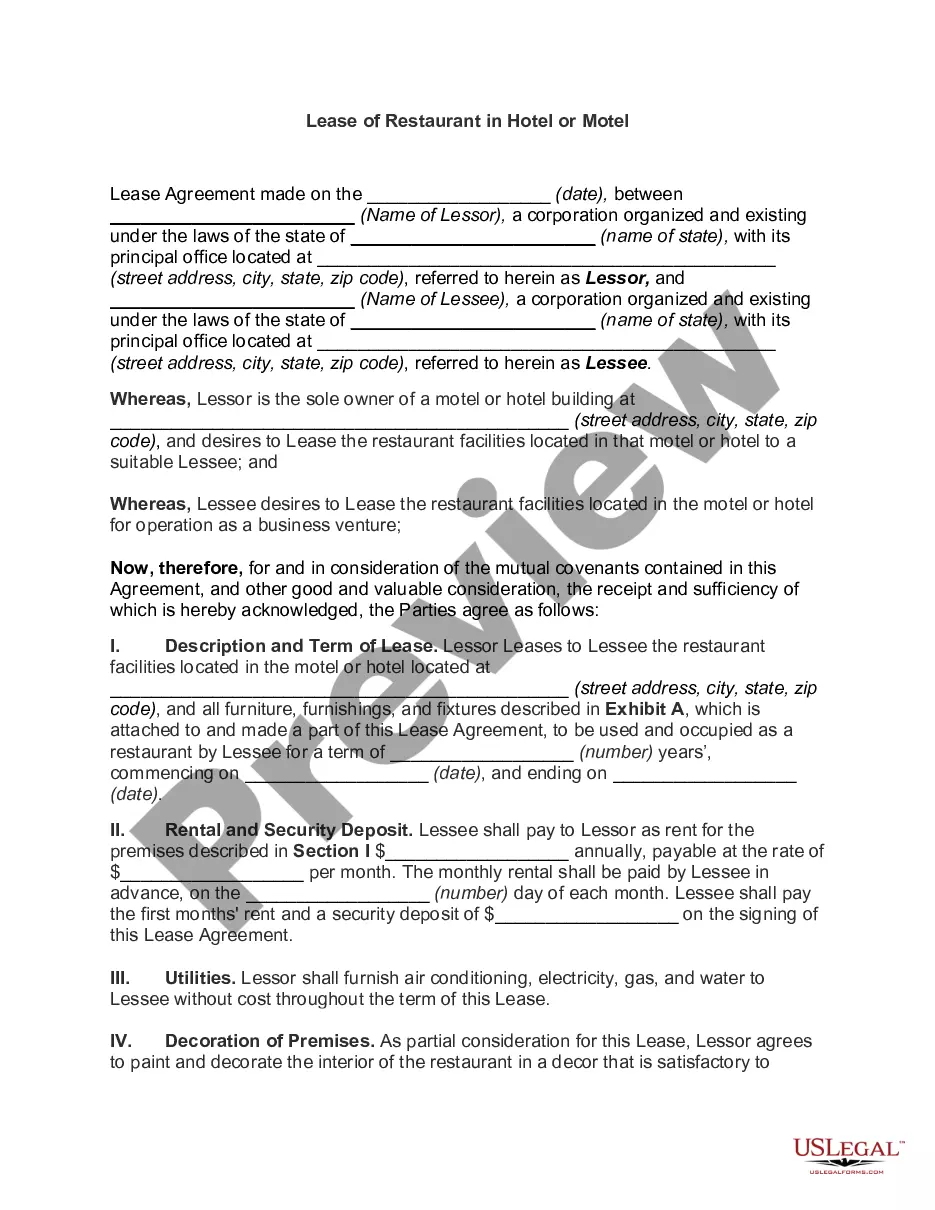
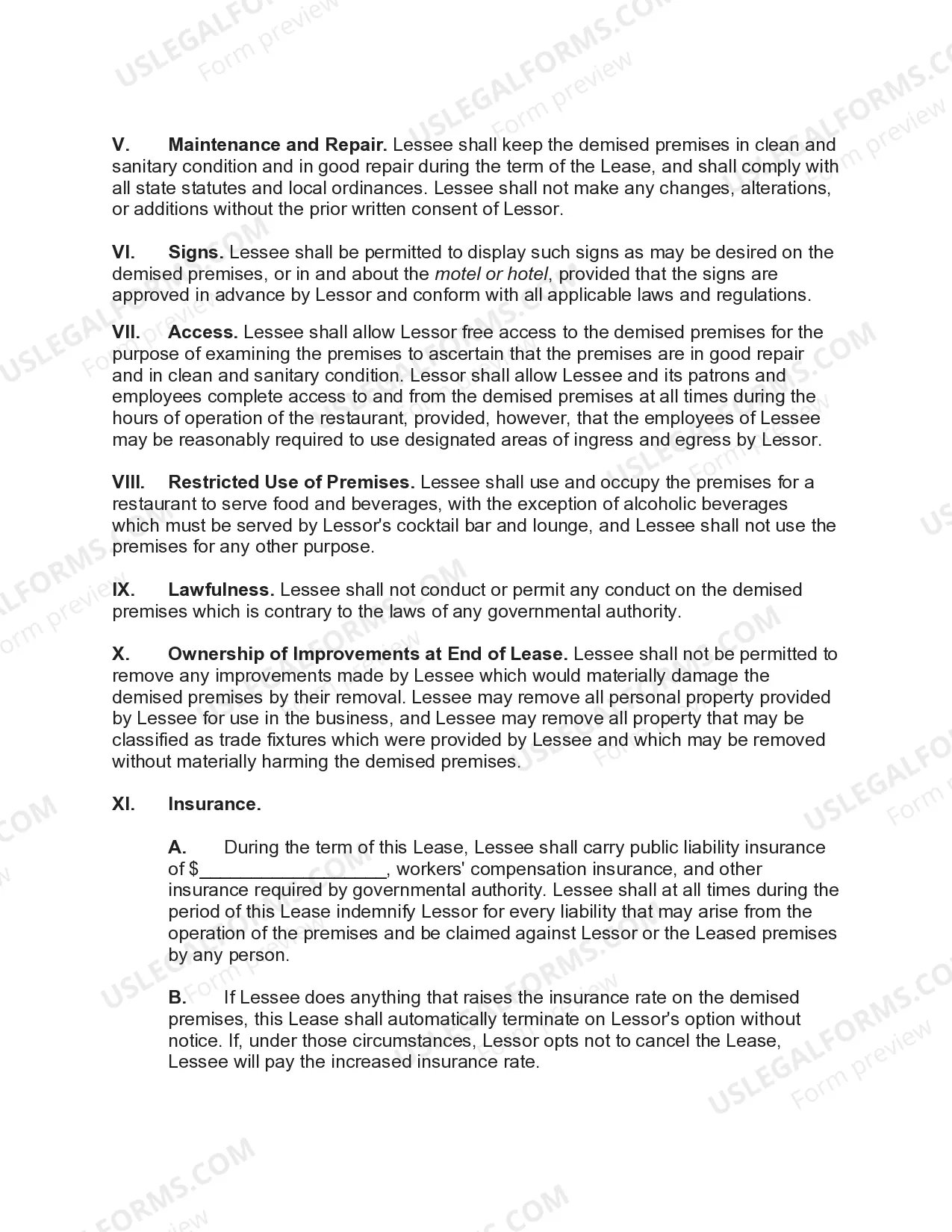
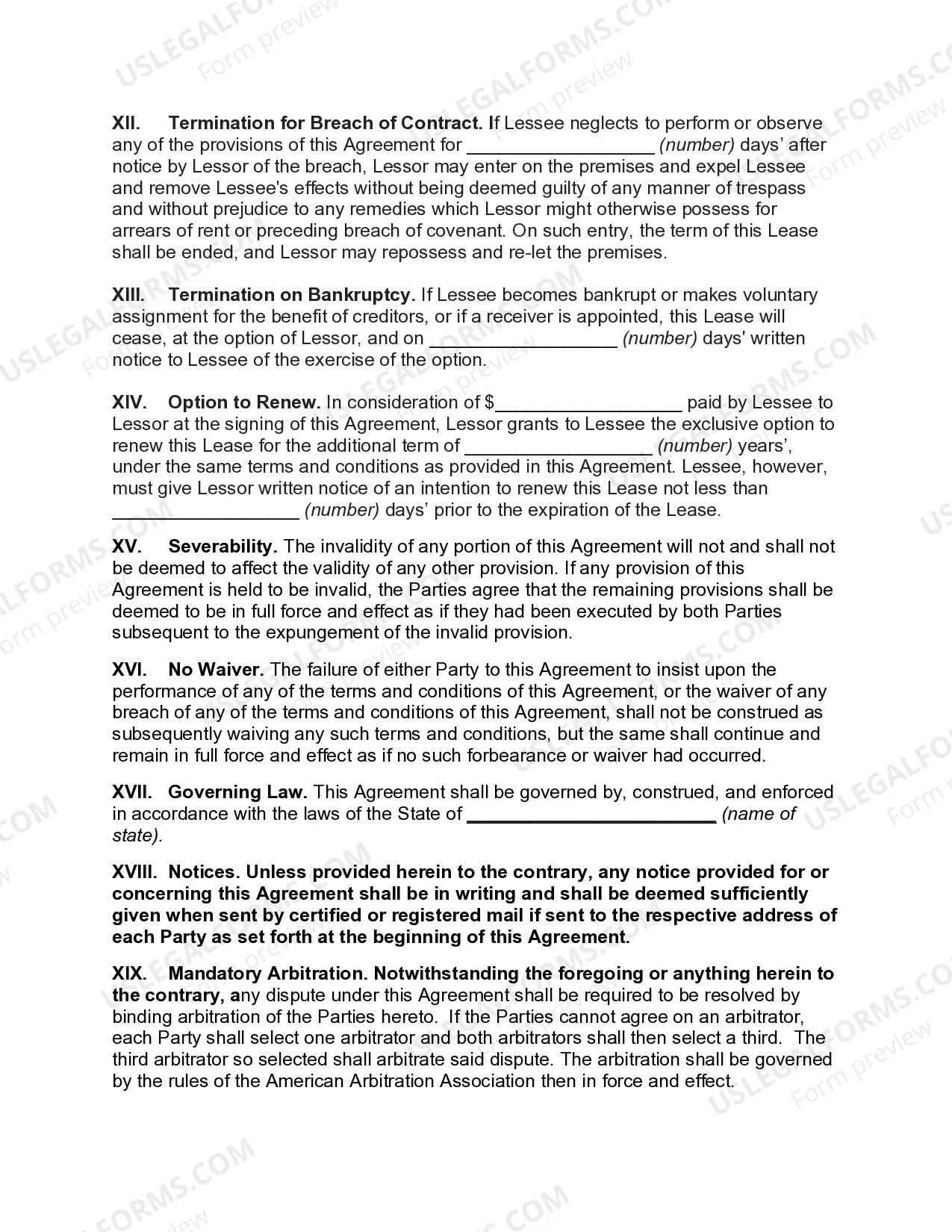
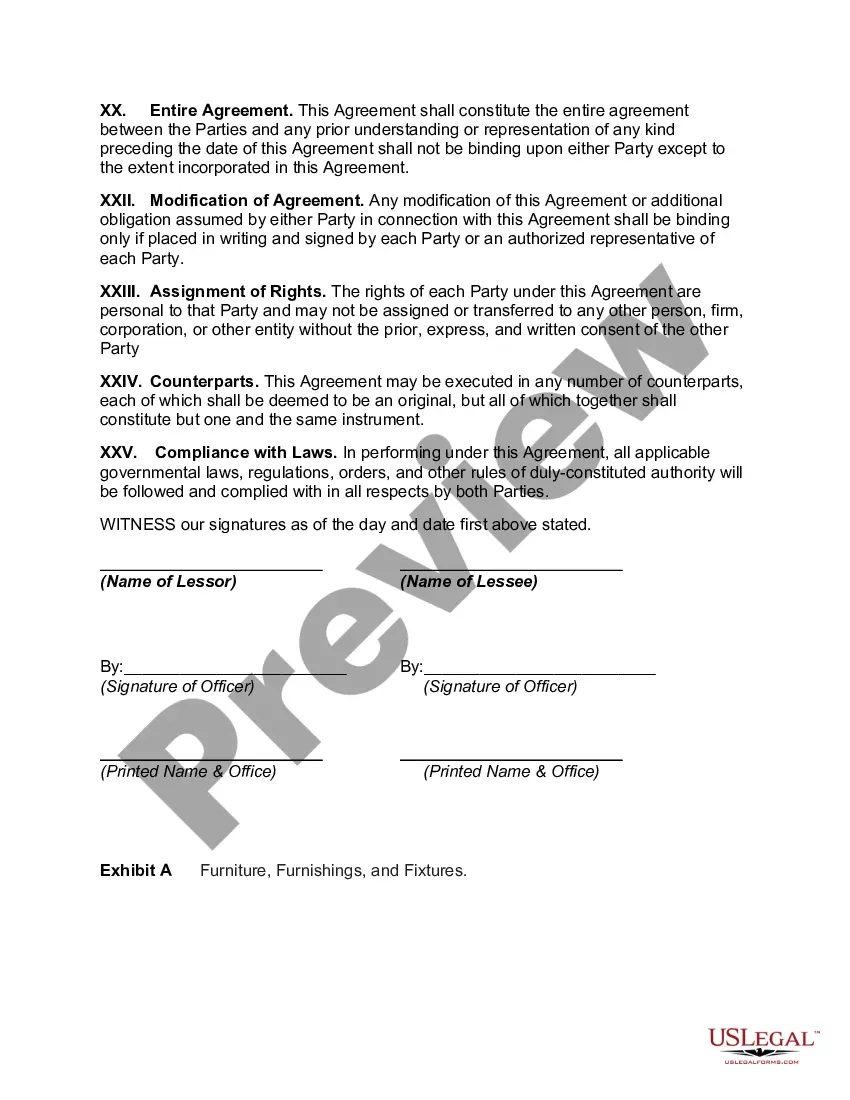
How to fill out Lease Of Restaurant In Hotel Or Motel?
Whether for professional objectives or personal issues, everyone must handle legal circumstances at some juncture in their existence. Completing legal documents requires meticulous care, starting from selecting the appropriate form template. For example, if you select an incorrect version of the Charges For Rental Agreement, it will be denied when you submit it. Thus, it is crucial to have a trustworthy source of legal forms like US Legal Forms.
If you need to obtain a Charges For Rental Agreement template, adhere to these straightforward steps.
With a vast US Legal Forms catalog available, you do not need to waste time searching for the correct template online. Take advantage of the library’s simple navigation to find the suitable form for any circumstance.
- Locate the template you require utilizing the search bar or catalog navigation.
- Review the form’s description to confirm it fits your situation, state, and county.
- Click on the form’s preview to examine it.
- If it is the incorrect document, return to the search function to find the Charges For Rental Agreement template you need.
- Download the file once it aligns with your requirements.
- If you possess a US Legal Forms account, click Log in to retrieve previously saved documents in My documents.
- In case you do not have an account yet, you can acquire the form by clicking Buy now.
- Select the appropriate pricing choice.
- Complete the account registration form.
- Choose your payment method: you may use a credit card or PayPal account.
- Select the document format you desire and download the Charges For Rental Agreement.
- Once it is saved, you can fill out the form using editing software or print it and complete it manually.
Form popularity
FAQ
The minimum rental contract typically varies by state, but it generally ranges from month-to-month agreements to longer fixed terms. When considering the charges for rental agreement, it’s vital to understand your rights and responsibilities under your lease. A shorter contract might offer flexibility, while a longer one may provide stability in rental rates. US Legal Forms can help you create a rental agreement that meets legal requirements and your specific needs.
Common rental fees often include the base rent, security deposit, and sometimes additional charges for utilities or maintenance. When reviewing the charges for rental agreement, be sure to look for any hidden fees such as late payment charges or pet fees. Understanding these costs helps you budget effectively and avoid surprises. Platforms like US Legal Forms provide templates that clearly outline these fees to ensure you know what to expect.
Filling out the lease agreement involves more than just providing basic information. It’s essential to review all terms and conditions, especially those regarding charges for rental agreement. Make sure to document any agreements or modifications discussed with your landlord. Platforms like USLegalForms offer helpful resources to guide you through each step, ensuring you complete the lease accurately.
To fill in a lease agreement, begin by carefully reading each section to understand its purpose. Input your information in the designated areas, ensuring that details such as the rental amount and payment due dates are accurate. Be mindful of the charges for rental agreement, and clarify any uncertainties with the landlord. Consider using USLegalForms to access easy-to-use templates that simplify the process.
Before signing a lease, it’s essential to conduct thorough research on the property and the landlord. Review the rental agreement closely to understand the charges for rental agreement, such as security deposits and maintenance fees. Additionally, assess the neighborhood and its amenities, and gather feedback from previous tenants if possible. Taking these steps will help you make an informed decision and avoid potential issues.
Landlords may not advertise or rent condemned property. Landlords must disclose housing code violations they have been notified of but have not corrected. They must also reveal structural defects, a lack of hot or cold running water, serious plumbing, or electrical problems, and other hazards.
Filing False Charges or False Eviction Against the Tenant. Refusing to Accept Rent Payments as a Means of Intimidation. Illegal Entry into the Rental Property. Not Providing Proper Notice. Unlawfully Changing the Locks.
There are no state laws limiting the amount of a rent increase. If you are renting by the month, the landlord may terminate the rental agreement by giving you a written termination notice at least 28 days before the next rent due date.
It is acceptable to indicated in the rental agreement that the tenant is responsible for providing and paying for routine carpet cleaning. See DOJ letter to DATCP dated 7/31/13. But, if the tenant fails to do so, a landlord still cannot deduct the cost of routine carpet cleaning from the tenant's security deposit.
Landlords are generally prohibited from locking a tenant out of the premises, from taking a tenant's property for nonpayment of rent (except for abandoned property under certain conditions), or from intentionally terminating a tenant's utility service. Various penalties exist for violating these protections.