Trademark Infringement Name Without Registration
Description
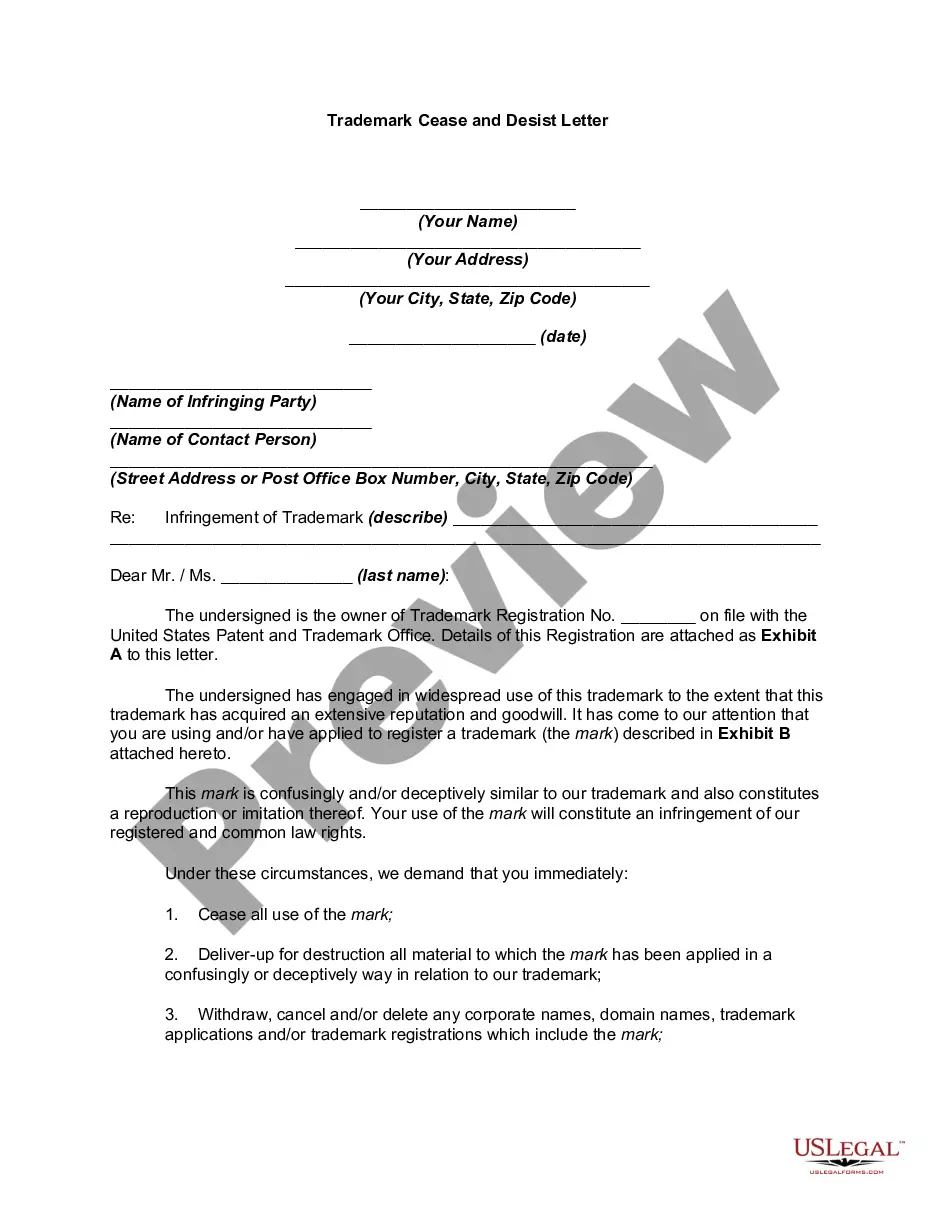
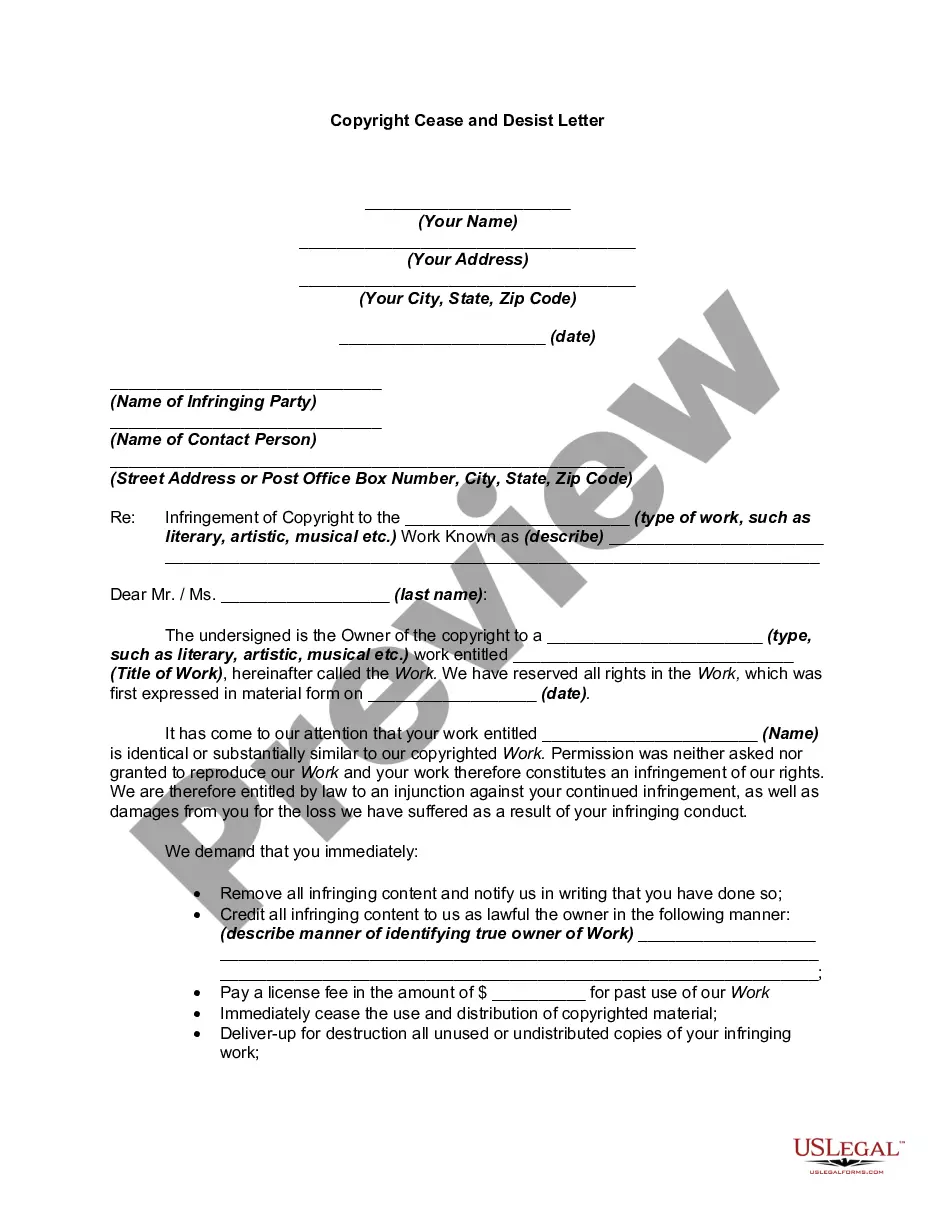
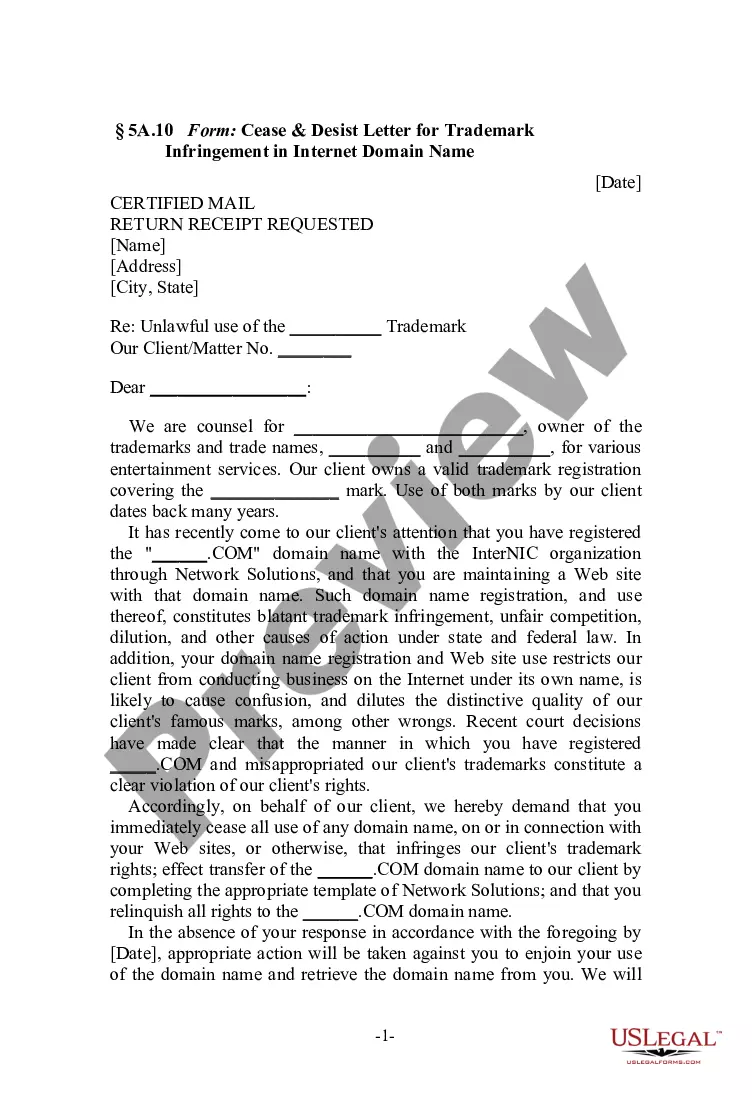
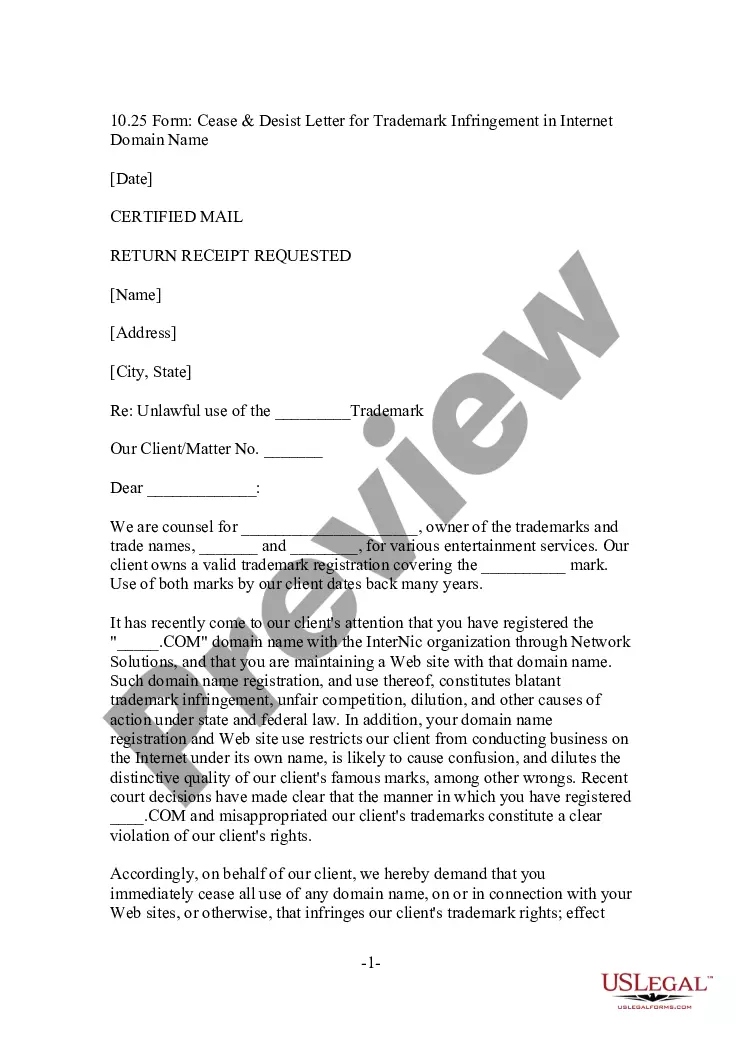



How to fill out Cease And Desist Letter For Trademark Infringement Of Internet Domain Name?
Managing legal documentation and processes can be a lengthy addition to your entire day.
Trademark Infringement Name Without Registration and similar forms usually require you to search for them and understand how to fill them out correctly.
Thus, if you are handling financial, legal, or personal affairs, utilizing a comprehensive and user-friendly online directory of forms when necessary will greatly assist you.
US Legal Forms is the leading online platform of legal documents, providing over 85,000 state-specific forms and a range of resources to facilitate your paperwork with ease.
Is this your first time using US Legal Forms? Sign up and create an account in a few minutes to gain access to the form directory and Trademark Infringement Name Without Registration. Then, follow the steps below to finalize your form: Confirm you have located the correct form using the Preview feature and reviewing the form details. Click Buy Now when you are prepared, and choose the monthly subscription plan that satisfies your requirements. Click Download then fill out, sign, and print the form. US Legal Forms has twenty-five years of expertise assisting clients with their legal documentation. Locate the form you need today and simplify any procedure without exerting much effort.
- Browse the collection of pertinent documents available to you with just a single click.
- US Legal Forms provides you with state- and county-specific forms accessible at any time for downloading.
- Safeguard your document management processes with a premium service that allows you to assemble any form within minutes without incurring extra or hidden charges.
- Simply Log In to your account, locate Trademark Infringement Name Without Registration, and download it immediately from the My documents section.
- You can also retrieve previously saved forms.
Form popularity
FAQ
If the name is a personal name you may use it a trademark, as long as a namesake does not beat you to the punch, meaning that your proposed personal name would not cause a likelihood of confusion with a similar name already in use for related goods or services.
You Can Sue Without Registration?But Only On A Limited Level However, the law does not require registration as a requirement to obtain legal rights. Indeed, federal law allows for a trademark infringement claim even without registration (15 U.S.C. § 1125(a)).
The lack of a federal registration means you will not have a presumption of ownership, but you can still sue an infringer for trademark infringement since the Lanham Act allows for lawsuits based on unregistered trademarks.
§ 1125(a), the plaintiff must demonstrate that (1) it has a valid and legally protectable mark; (2) it owns the mark; and (3) the defendant's use of the mark to identify goods or services causes a likelihood of confusion.
The fact is, you can only trademark a name if you use it in your business. And you'll have to show that people are likely to think of you and your goods or services when they hear the name.