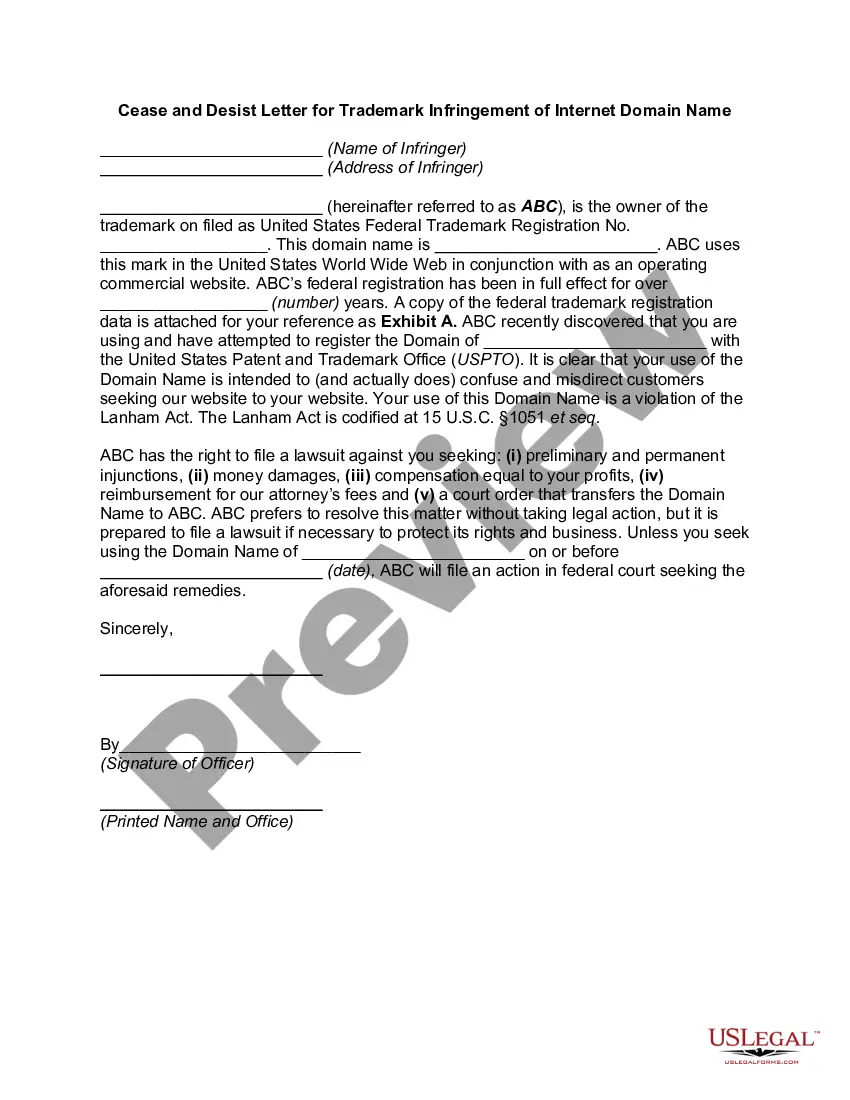
Trademark Infringement Name Ford
Description
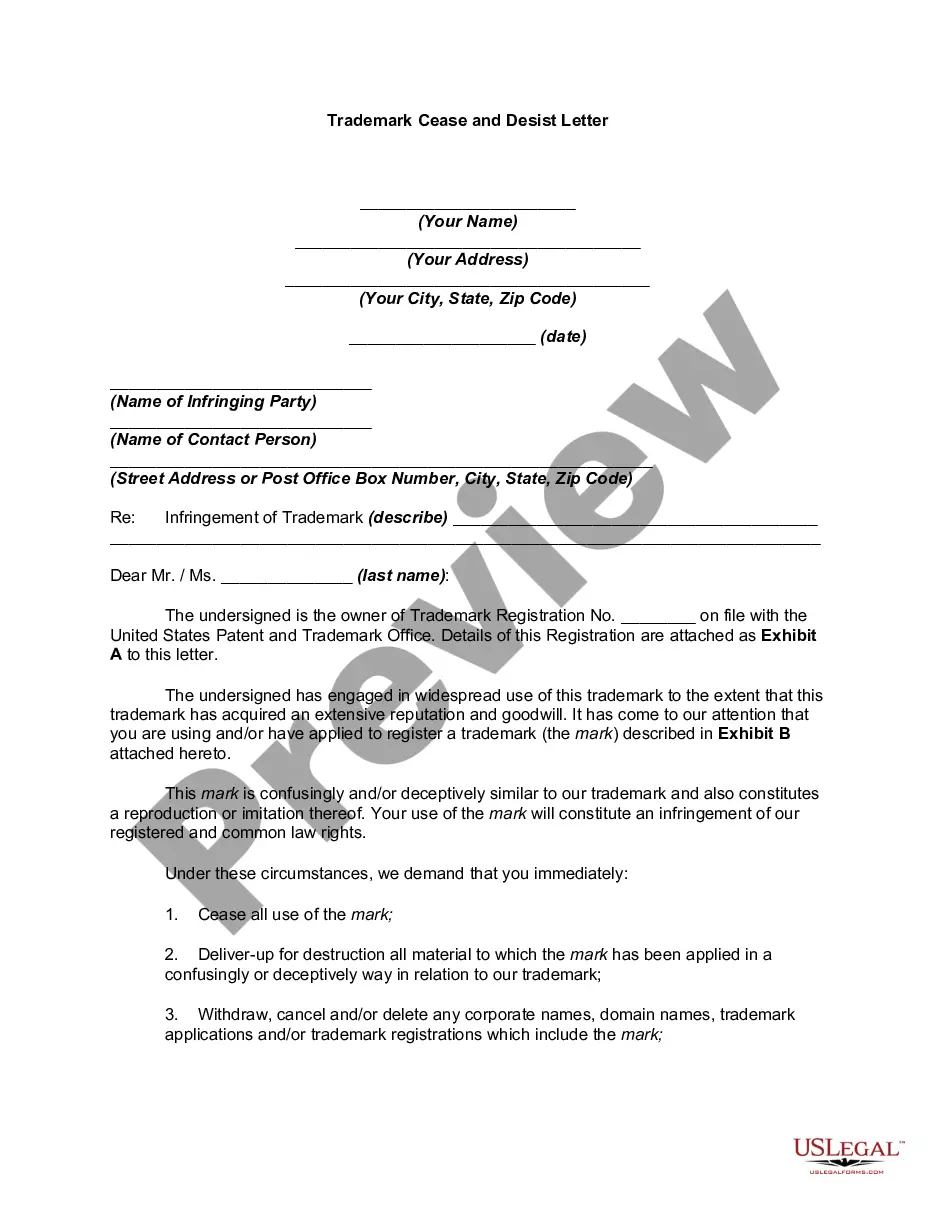
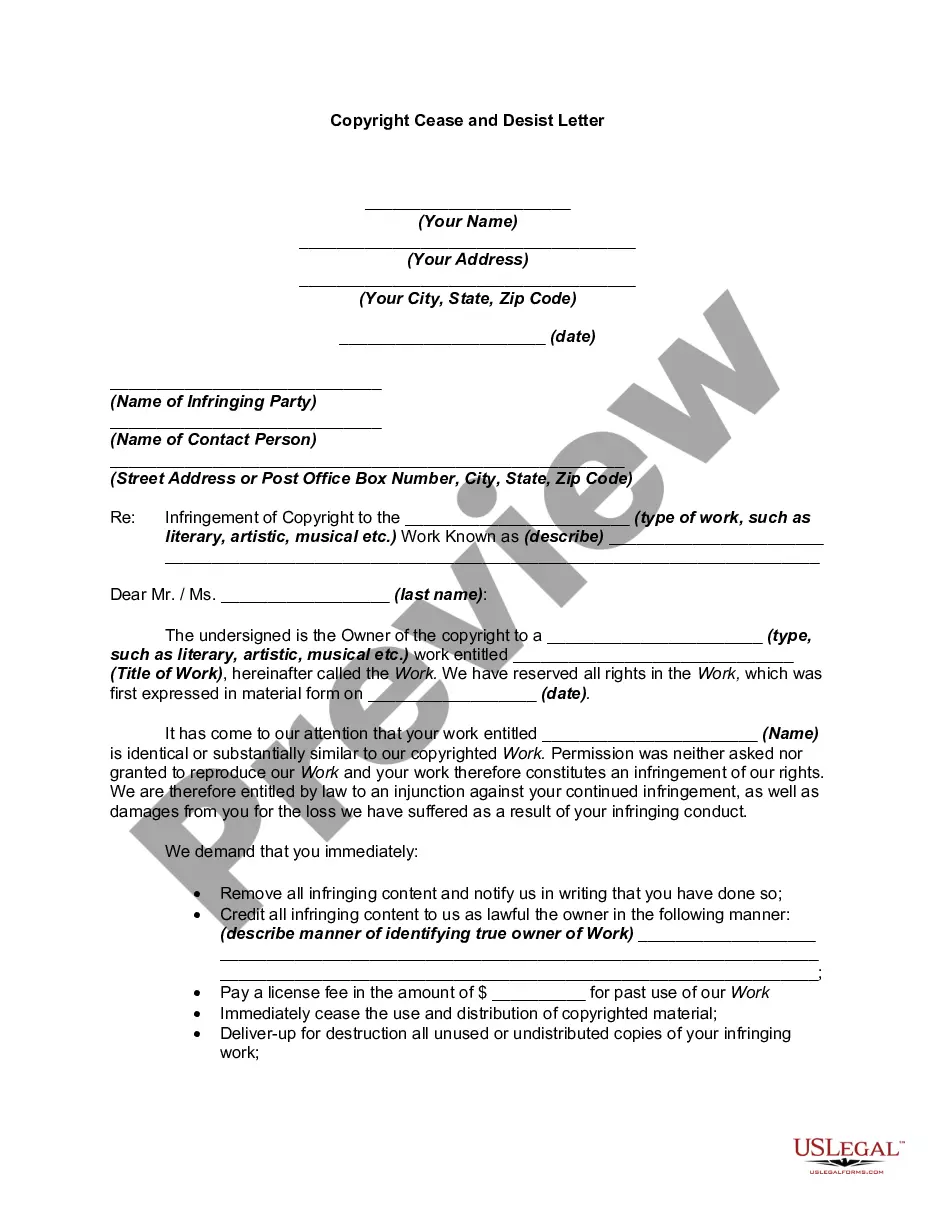
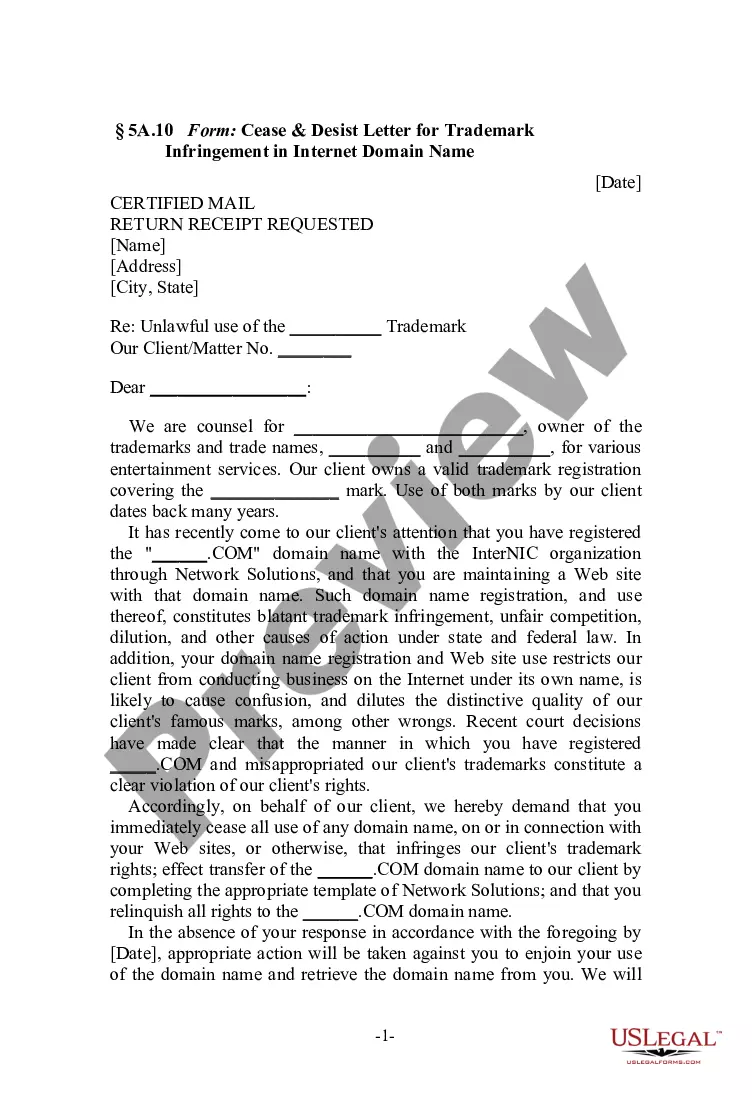
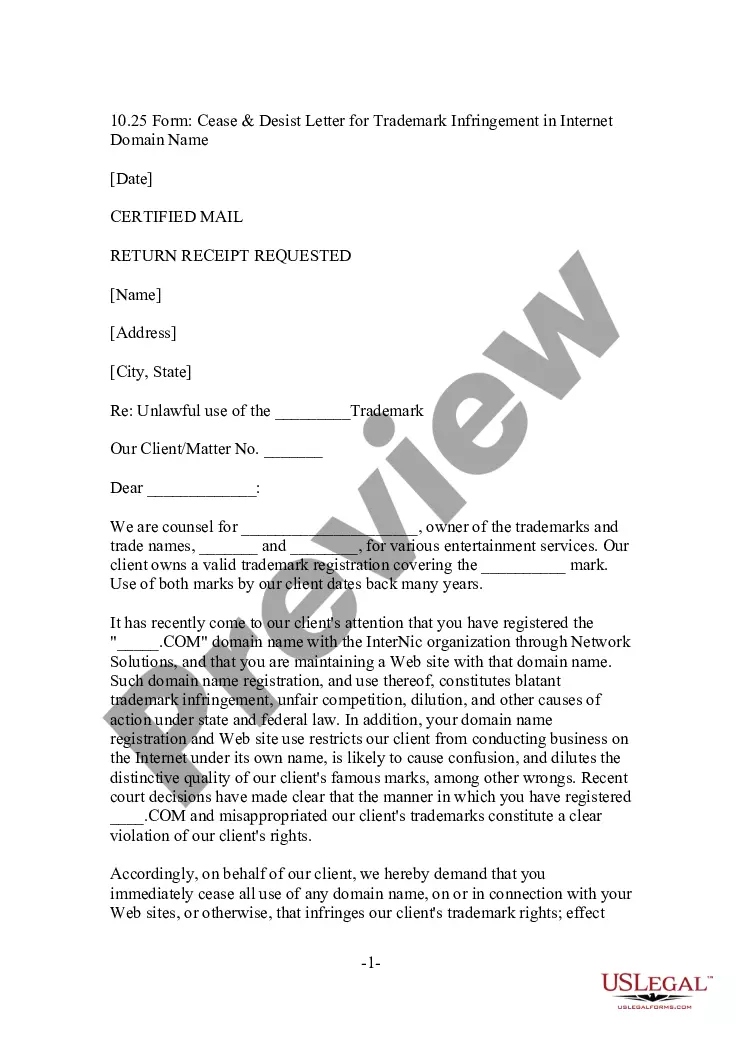




How to fill out Cease And Desist Letter For Trademark Infringement Of Internet Domain Name?
Locating a reliable source for the latest and suitable legal documents is a significant part of dealing with bureaucracy.
Selecting the appropriate legal forms requires accuracy and careful consideration, which is why it's crucial to obtain samples of Trademark Infringement Name Ford exclusively from trustworthy providers, like US Legal Forms. An incorrect template can waste your time and delay your current situation.
Once you have the form on your device, you can edit it using the editor or print it out and fill it in by hand. Eliminate the stress associated with your legal paperwork. Explore the comprehensive US Legal Forms catalog where you can discover legal templates, verify their applicability to your situation, and download them immediately.
- Use the catalog navigation or search box to find your template.
- Review the form's description to determine if it aligns with the requirements of your state and locality.
- Examine the form preview, if available, to confirm that the form is the one you want.
- Return to the search and locate the appropriate template if the Trademark Infringement Name Ford does not meet your needs.
- If you are certain about the form's applicability, download it.
- As a registered user, click Log in to verify and access your chosen forms in My documents.
- If you haven't created an account yet, click Buy now to purchase the form.
- Select the pricing option that suits your needs.
- Proceed with the registration to complete your order.
- Conclude your transaction by choosing a payment method (credit card or PayPal).
- Select the file format for downloading Trademark Infringement Name Ford.
Form popularity
FAQ
A lawsuit against Infringement can be filed in the District Court under Section 134 of the Trademark Act, 1999. Afterwards, the court will file an injunction order. That would eventually include payment of damages to accounts of profits and destruction of infringing labels.
The only way to report trademark infringement is by filing a lawsuit. Upon proving that a trademark has been infringed upon, there are several ways to rectify the situation: Issuance of a court order requiring the infringer to discontinue use of the mark.
Though a report to the court system is the only official report a person must make, a trademark owner can often report trademark infringement to a website or company where the infringement is occurring. This may result in a more affordable and quicker fix of the infringing activity.
For clerical corrections in the TM before the registration of the mark, an applicant can apply online through Form TM 16 accompanied by the prescribed fee. This application is examined and the office of the registrar will enable the correction of any error in the application.
Trademark infringement occurs when someone uses a registered trademark without permission and in a way that confuses consumers about the source of the products or services. Importantly, the use of the trademark must be "likely to cause" confusion to actual or potential users or customers.