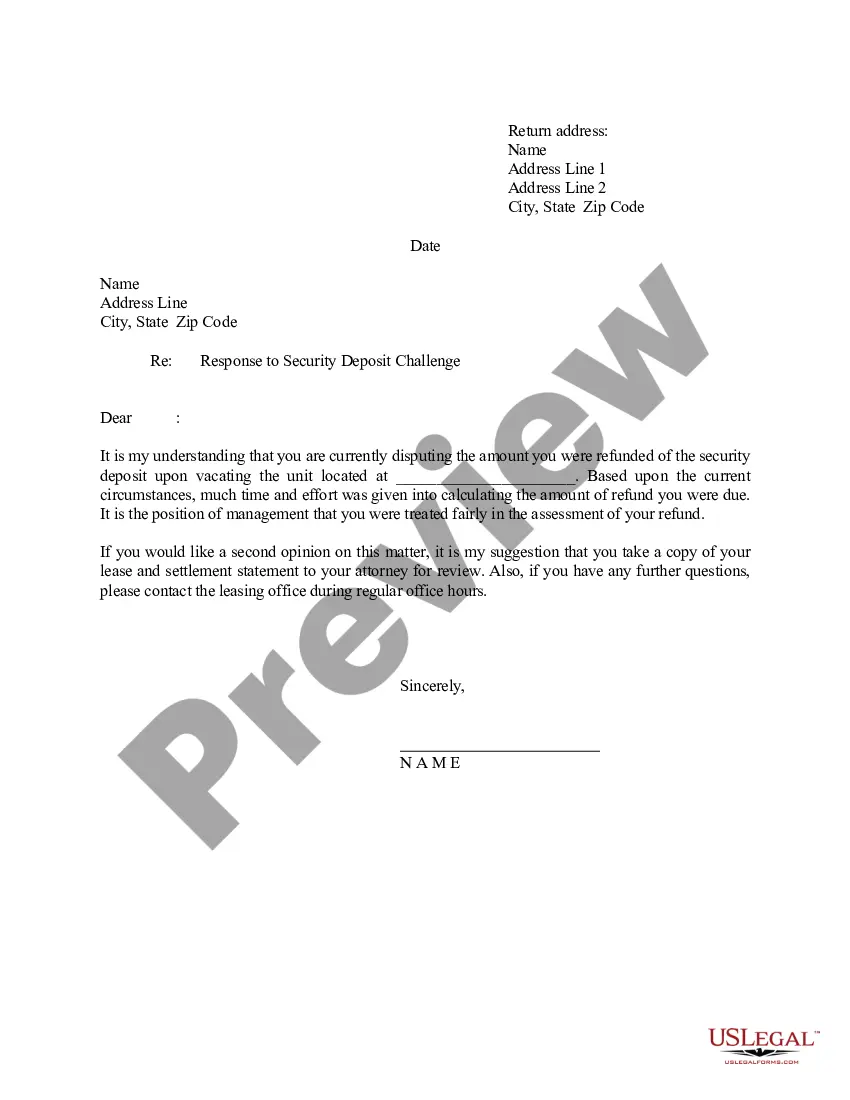
Security Refund With California
Description
Get your form ready online
Our built-in tools help you complete, sign, share, and store your documents in one place.
Make edits, fill in missing information, and update formatting in US Legal Forms—just like you would in MS Word.
Download a copy, print it, send it by email, or mail it via USPS—whatever works best for your next step.
Sign and collect signatures with our SignNow integration. Send to multiple recipients, set reminders, and more. Go Premium to unlock E-Sign.
If this form requires notarization, complete it online through a secure video call—no need to meet a notary in person or wait for an appointment.
We protect your documents and personal data by following strict security and privacy standards.

Make edits, fill in missing information, and update formatting in US Legal Forms—just like you would in MS Word.

Download a copy, print it, send it by email, or mail it via USPS—whatever works best for your next step.

Sign and collect signatures with our SignNow integration. Send to multiple recipients, set reminders, and more. Go Premium to unlock E-Sign.

If this form requires notarization, complete it online through a secure video call—no need to meet a notary in person or wait for an appointment.

We protect your documents and personal data by following strict security and privacy standards.
Looking for another form?

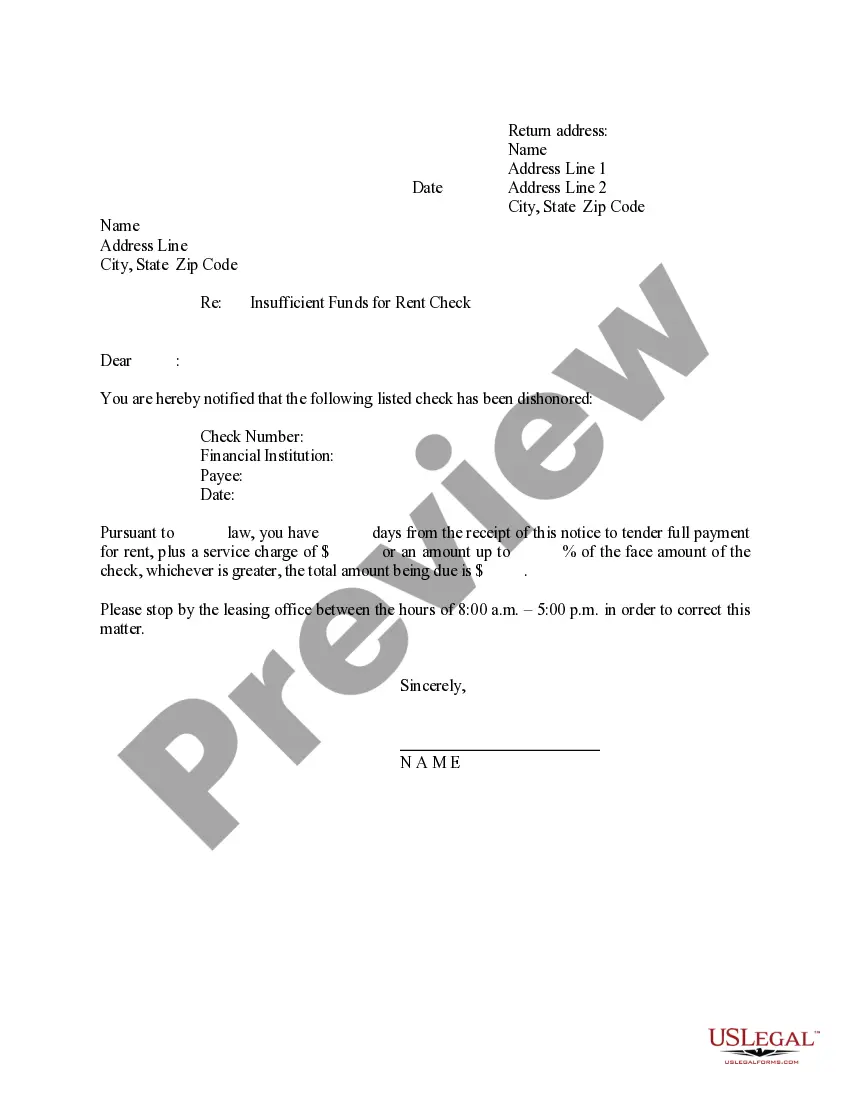
How to fill out Letter - To Tenant In Response To A Challenge To The Security Deposit Refund?
Securing a reliable source for obtaining the most up-to-date and suitable legal templates is a significant part of dealing with bureaucracy. Identifying the correct legal documents requires precision and carefulness, which is why it is crucial to obtain samples of Security Refund With California solely from trusted providers, such as US Legal Forms. An incorrect template will squander your time and delay your current situation. With US Legal Forms, you have minimal concerns. You can access and review all the information regarding the document’s applicability and significance for your circumstances and in your jurisdiction.
Follow these steps to complete your Security Refund With California.
Once you have the form on your device, you can edit it using the editor or print it and fill it out manually. Eliminate the stress associated with your legal documentation. Explore the comprehensive US Legal Forms catalog where you can locate legal templates, evaluate their relevance to your situation, and download them instantly.
- Utilize the library navigation or search bar to find your template.
- View the form’s description to determine if it meets the needs of your state and region.
- Access the form preview, if available, to confirm that the form is indeed the one you need.
- Return to the search and look for the correct document if the Security Refund With California does not meet your specifications.
- If you are confident about the form’s applicability, download it.
- As a registered user, click Log in to verify and access your chosen templates in My documents.
- If you do not yet have an account, click Buy now to acquire the template.
- Select the pricing option that suits your needs.
- Proceed with the registration to complete your purchase.
- Finalize your transaction by choosing a payment method (credit card or PayPal).
- Select the file format for downloading Security Refund With California.
Form popularity
FAQ
To claim a California tax refund, you must file your state tax return accurately and on time. Ensure you include all necessary documentation and follow the guidelines for your specific situation. If you have questions about your eligibility or the process, resources like US Legal Forms can assist you in understanding how to maximize your refund and navigate the steps involved in claiming your security refund with California.
In California, if a landlord fails to return your security deposit within 21 days after you move out, they may lose the right to keep any portion of it. You can file a claim to recover your security refund with California law backing your case. It is important to document all communications with your landlord and keep records of your lease agreement. Consulting resources like US Legal Forms can help you understand your rights and guide you through the process of reclaiming your security refund.
To get your security refund with California, first, ensure that you have fulfilled all your lease obligations, such as paying rent on time and taking care of the property. After you move out, provide your landlord with your new address, so they can send you the refund. California law requires landlords to return the deposit within 21 days after you vacate the premises. If you encounter issues with the refund, consider using US Legal Forms to access resources and templates that can help you communicate effectively with your landlord.
The entry for a security refund with California typically includes a record of the amount refunded, the date of the refund, and a breakdown of any deductions made. Ensure you document the condition of the property at move-out, as this information supports your refund decision. Using US Legal Forms, you can find templates that help you create proper documentation for this process, making it easier to stay compliant with state regulations.
The procedure for a security refund with California involves evaluating the property condition and addressing any repairs or cleaning needed. You are required to return the deposit within 21 days of the tenant vacating the property, along with an itemized statement of deductions, if applicable. To simplify this process, you can access the templates and legal forms on US Legal Forms, ensuring you follow all legal requirements correctly.
To return your security deposit, you must first inspect the property for any damages. After that, you should prepare a detailed itemized list of any deductions, if necessary. Once you have completed these steps, send the remaining amount to the tenant within the timeframe specified by California law. For a seamless process, consider utilizing the resources available on US Legal Forms, which can guide you through the necessary steps.
The maximum security deposit depends on the unit being leased. If you're leasing an unfurnished residential property, the maximum amount of the security deposit is equal to two month's rent. However, for a furnished residential property, the maximum is the equivalent of three month's rent.
Failure to return the security deposit as required by law may be considered a bad faith retention of the deposit and may subject you to statutory damages of up to twice the amount of the security deposit, in addition to actual damages. California Civil Code § 1950.5(l).
Because security deposits are generally not considered rental income, they should not appear on your income statement or cash flow statement. Instead, include it as a liability on your balance sheet on the date you received it, since it's an amount you're planning to eventually return.
If the landlord doesn't return the entire security deposit within 21 days or the tenant doesn't agree with the deductions they can write a letter asking the landlord to return the security deposit. The tenant should keep a copy of the letter for their records.