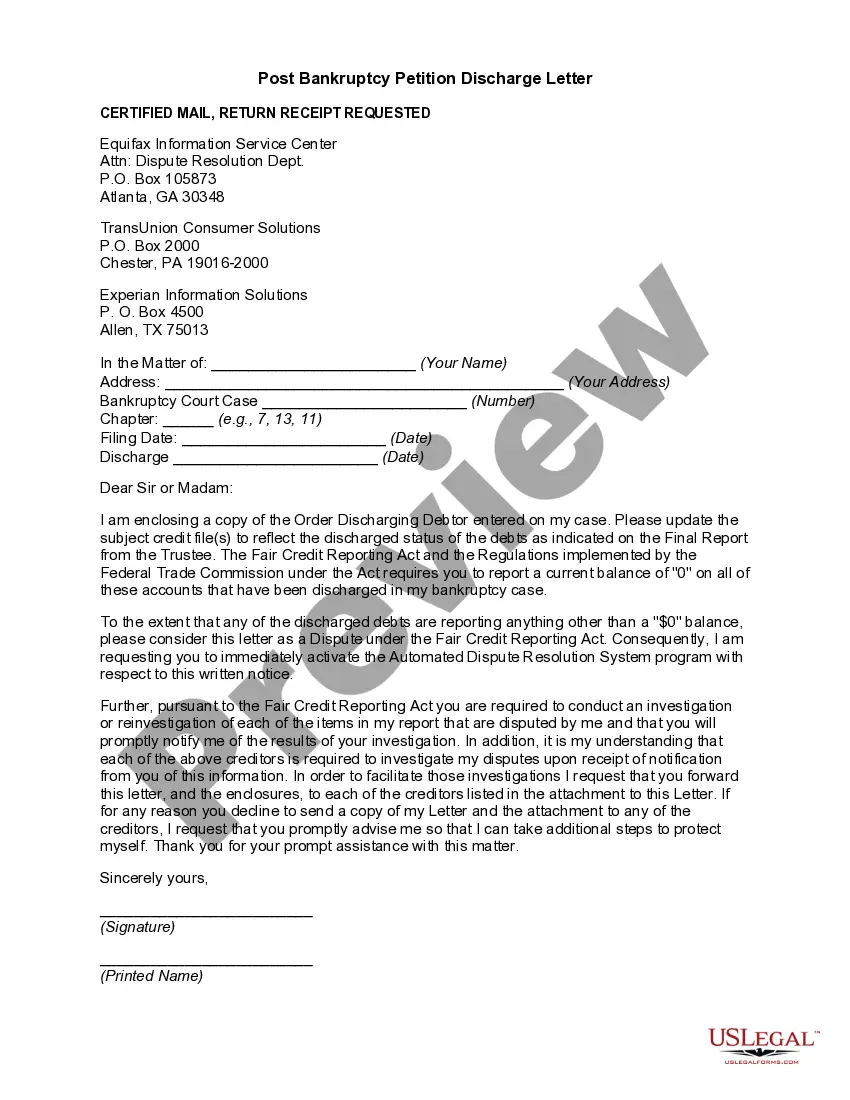
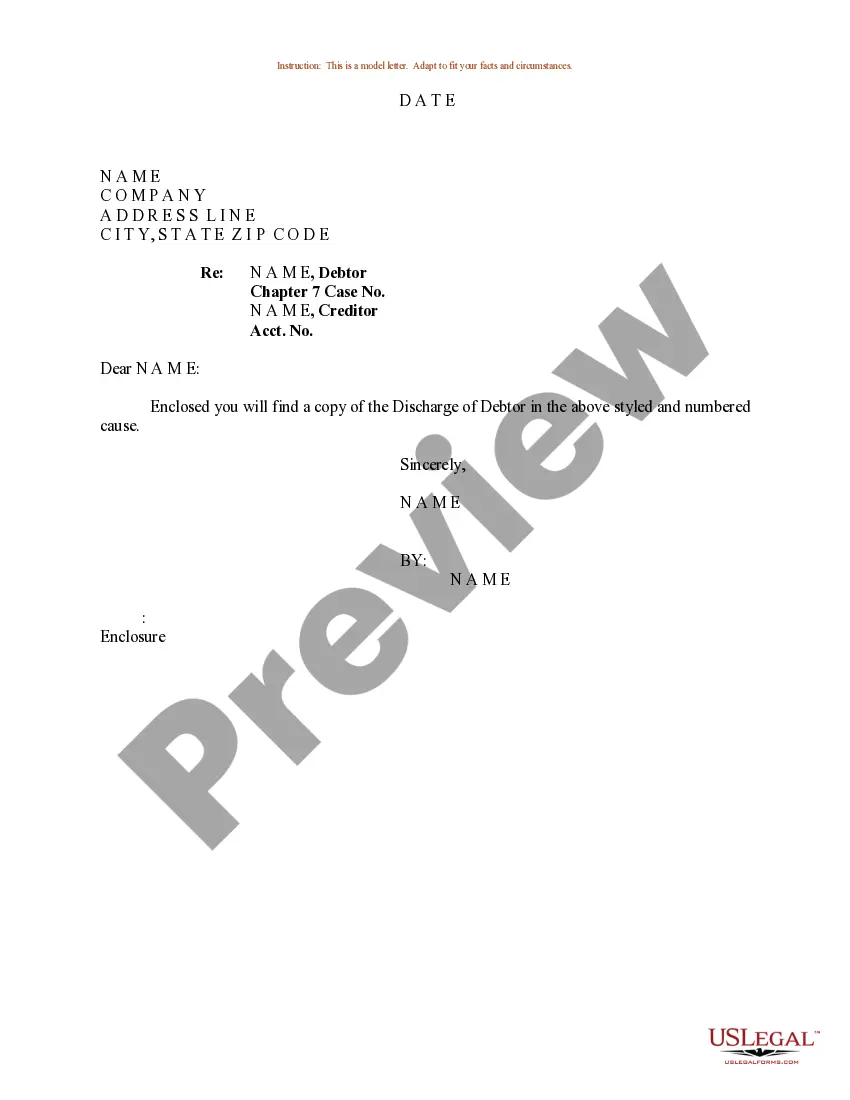
Bankruptcy Discharge By Law
Description
Get your form ready online
Our built-in tools help you complete, sign, share, and store your documents in one place.
Make edits, fill in missing information, and update formatting in US Legal Forms—just like you would in MS Word.
Download a copy, print it, send it by email, or mail it via USPS—whatever works best for your next step.
Sign and collect signatures with our SignNow integration. Send to multiple recipients, set reminders, and more. Go Premium to unlock E-Sign.
If this form requires notarization, complete it online through a secure video call—no need to meet a notary in person or wait for an appointment.
We protect your documents and personal data by following strict security and privacy standards.

Make edits, fill in missing information, and update formatting in US Legal Forms—just like you would in MS Word.

Download a copy, print it, send it by email, or mail it via USPS—whatever works best for your next step.

Sign and collect signatures with our SignNow integration. Send to multiple recipients, set reminders, and more. Go Premium to unlock E-Sign.

If this form requires notarization, complete it online through a secure video call—no need to meet a notary in person or wait for an appointment.

We protect your documents and personal data by following strict security and privacy standards.
Looking for another form?


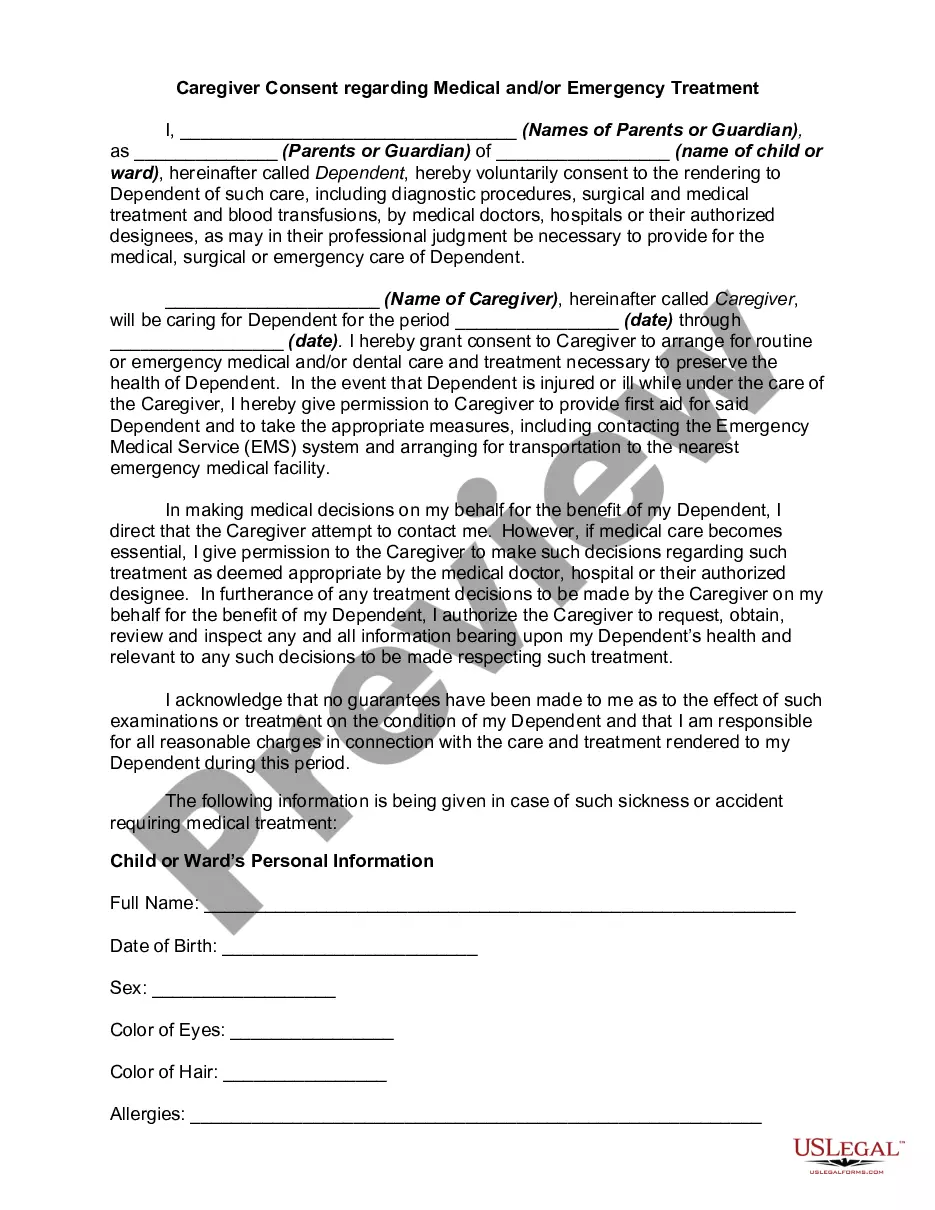





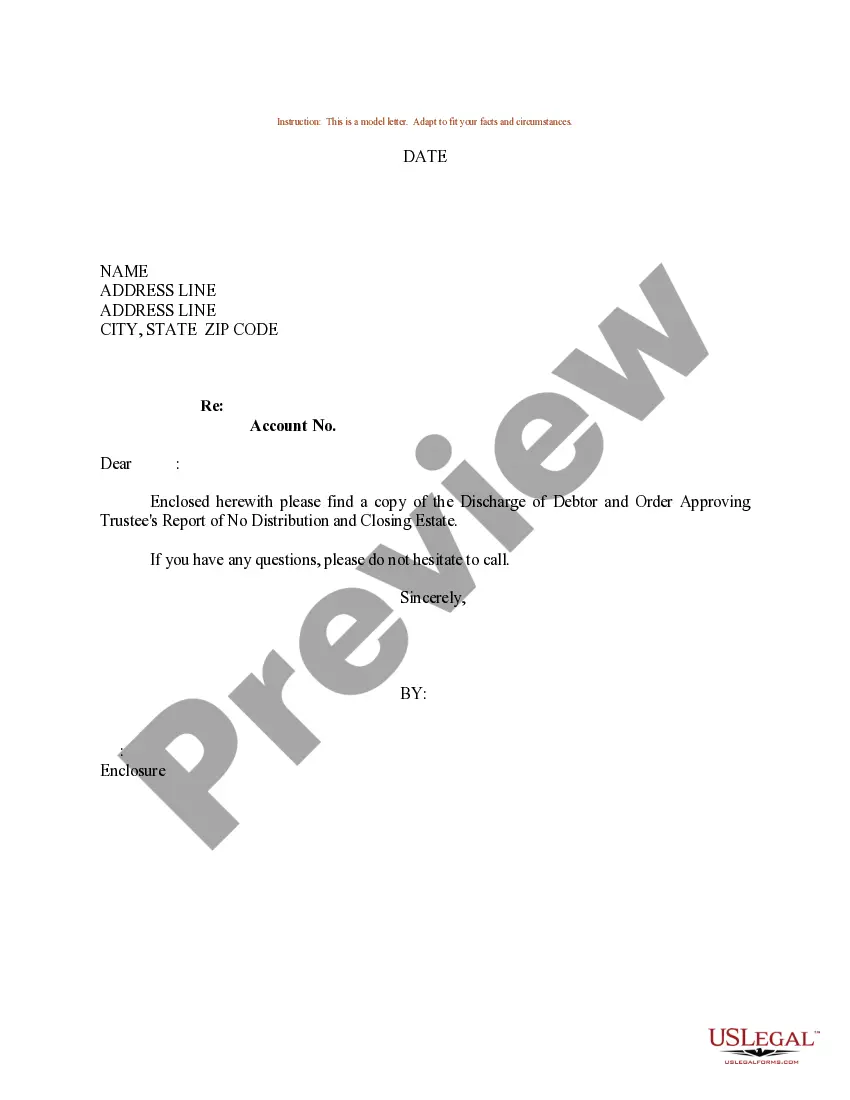
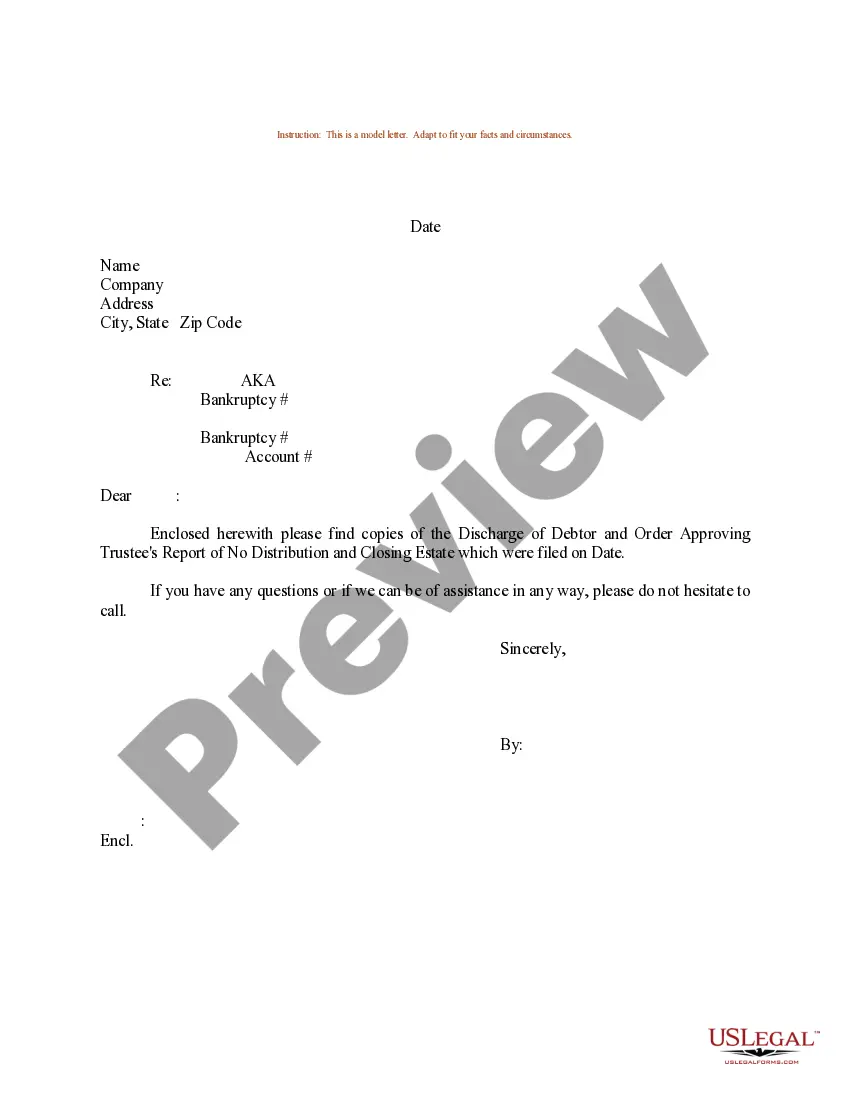
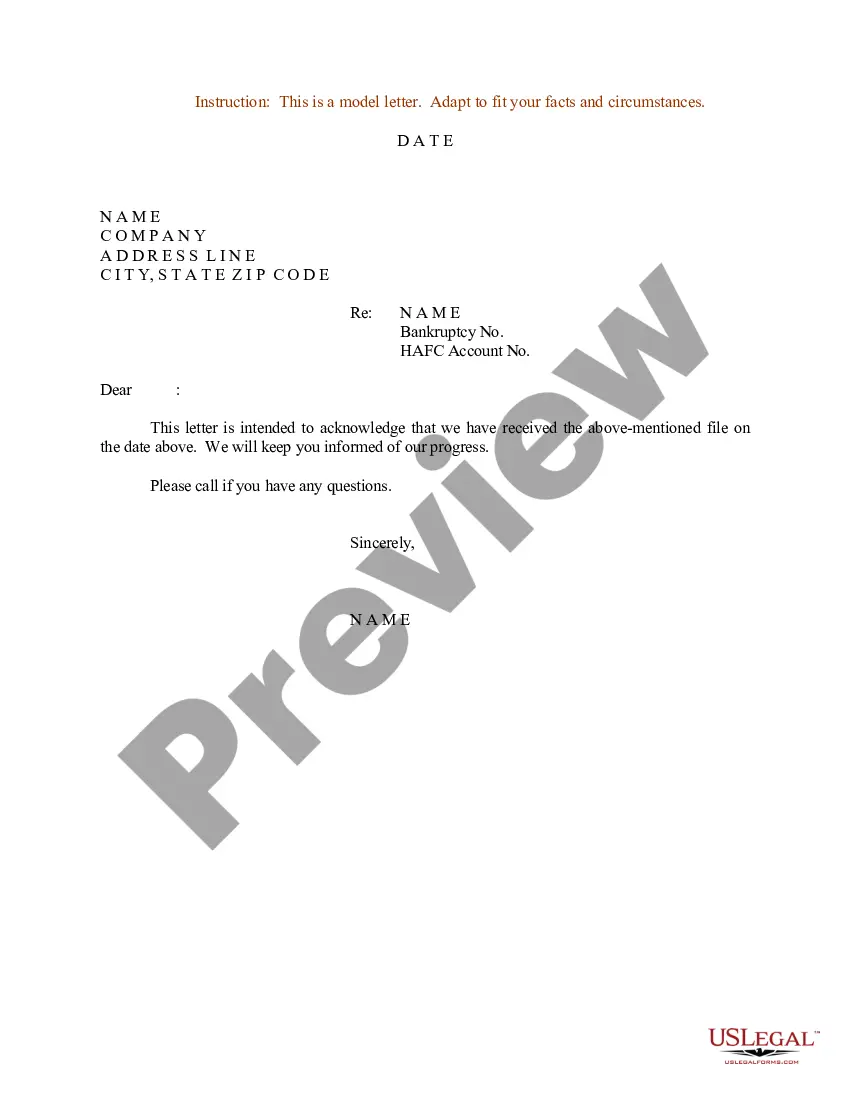
How to fill out Post Bankruptcy Petition Discharge Letter?
The Bankruptcy Discharge By Law you see on this page is a reusable formal template drafted by professional lawyers in compliance with federal and local laws and regulations.
For over 25 years, US Legal Forms has supplied individuals, businesses, and legal practitioners with more than 85,000 authenticated, state-specific forms for any commercial and personal situation. It’s the quickest, most straightforward, and most reliable method to acquire the documents you require, as the service ensures the utmost level of data protection and anti-malware security.
Select the format you want for your Bankruptcy Discharge By Law (PDF, DOCX, RTF) and save the sample on your device. Complete and sign the document. Print out the template to fill it in by hand. Alternatively, utilize an online multi-functional PDF editor to quickly and accurately fill out and sign your form with a legally-binding electronic signature. Download your papers again. Use the same document again whenever necessary. Open the My documents tab in your profile to redownload any previously downloaded forms. Sign up for US Legal Forms to have verified legal templates for all of life’s situations at your disposal.
- Search for the document you need and review it.
- Look through the sample you searched and preview it or review the form description to confirm it fits your needs. If it does not, make use of the search bar to find the appropriate one. Click Buy Now once you have located the template you need.
- Sign up and Log In.
- Select the pricing plan that suits you and create an account. Use PayPal or a credit card to make a quick payment. If you already have an account, Log In and check your subscription to proceed.
- Acquire the fillable template.
Form popularity
FAQ
If a debt arose from the debtor's intentional wrongdoing, the creditor can object to discharging it. This might involve damages related to a drunk driving accident, for example, or costs caused by intentional damage to an apartment or other property.
The discharge is a permanent order prohibiting the creditors of the debtor from taking any form of collection action on discharged debts, including legal action and communications with the debtor, such as telephone calls, letters, and personal contacts.
Closing Your Bankruptcy Case Your trustee only has control of your estate until the bankruptcy is complete. However, if something was in progress during your bankruptcy and you don't collect the money until later, your trustee could still gain access to it.
Key Takeaways. Types of debt that cannot be discharged in bankruptcy include alimony, child support, and certain unpaid taxes. Other types of debt that cannot be alleviated in bankruptcy include debts for willful and malicious injury to another person or property.
Any assets that the Official Receiver or the trustee held or claimed during your bankruptcy remain under the control of the Official Receiver or the trustee. They are not returned to you on discharge. It may be some time after your discharge before all your assets are dealt with.