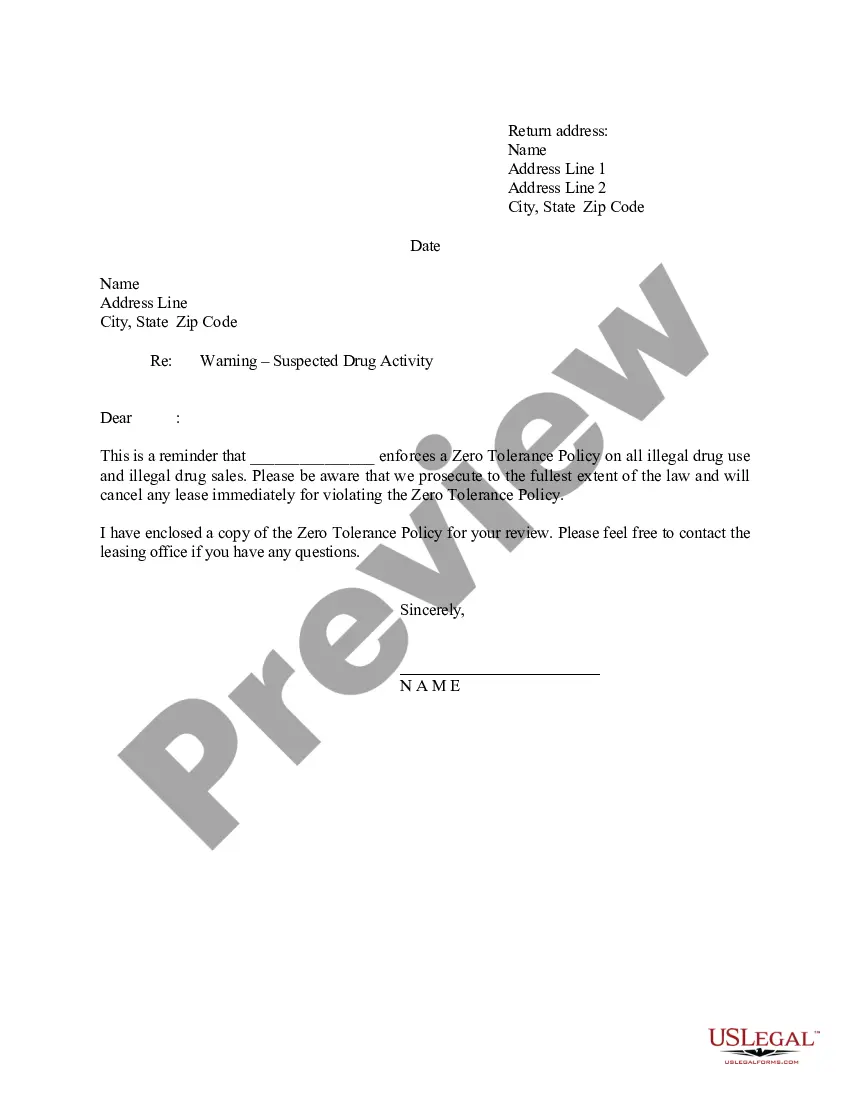
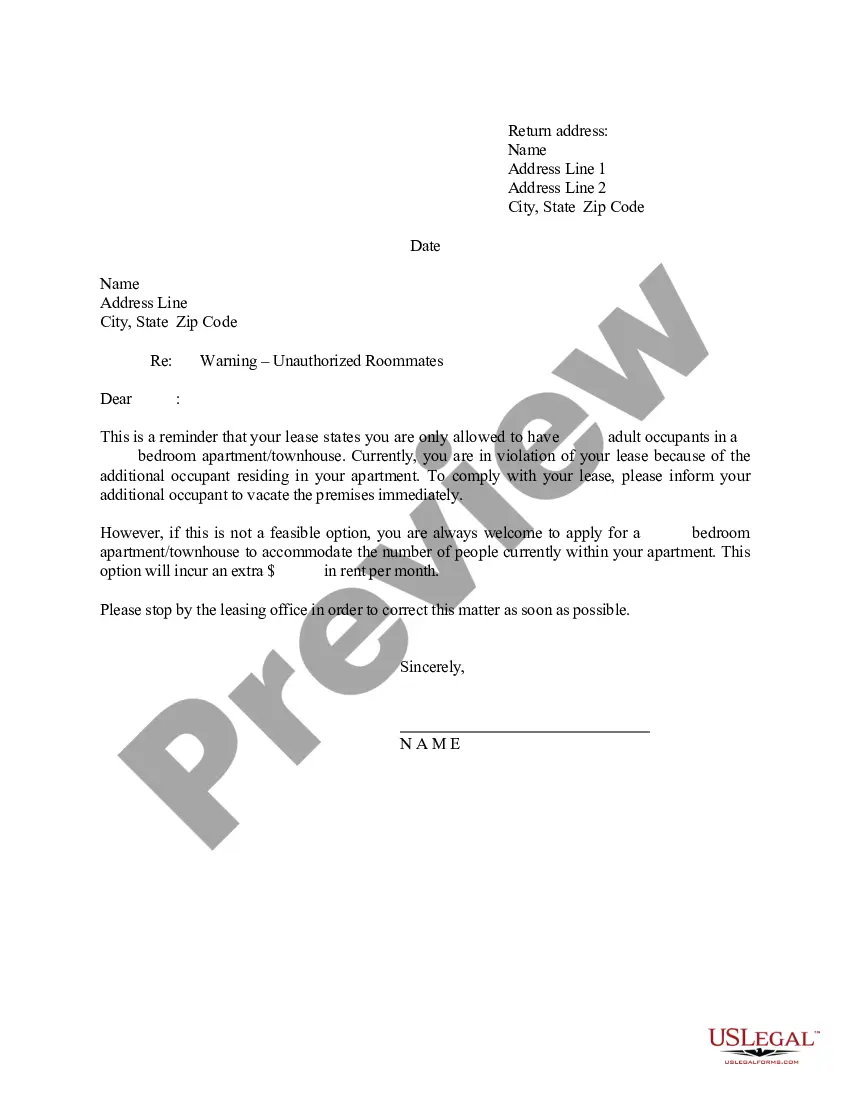
Sample Warning Letter To Tenant For Drug Use
Description
Get your form ready online
Our built-in tools help you complete, sign, share, and store your documents in one place.
Make edits, fill in missing information, and update formatting in US Legal Forms—just like you would in MS Word.
Download a copy, print it, send it by email, or mail it via USPS—whatever works best for your next step.
Sign and collect signatures with our SignNow integration. Send to multiple recipients, set reminders, and more. Go Premium to unlock E-Sign.
If this form requires notarization, complete it online through a secure video call—no need to meet a notary in person or wait for an appointment.
We protect your documents and personal data by following strict security and privacy standards.

Make edits, fill in missing information, and update formatting in US Legal Forms—just like you would in MS Word.

Download a copy, print it, send it by email, or mail it via USPS—whatever works best for your next step.

Sign and collect signatures with our SignNow integration. Send to multiple recipients, set reminders, and more. Go Premium to unlock E-Sign.

If this form requires notarization, complete it online through a secure video call—no need to meet a notary in person or wait for an appointment.

We protect your documents and personal data by following strict security and privacy standards.
Looking for another form?
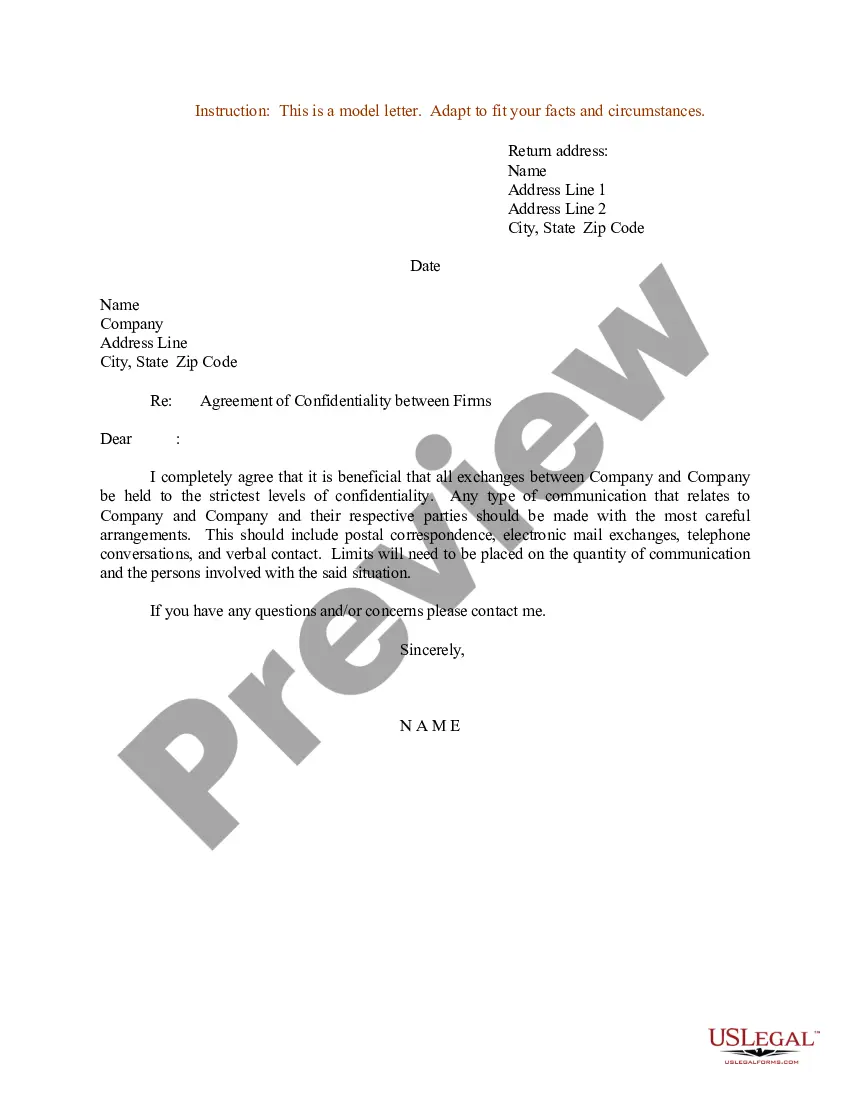
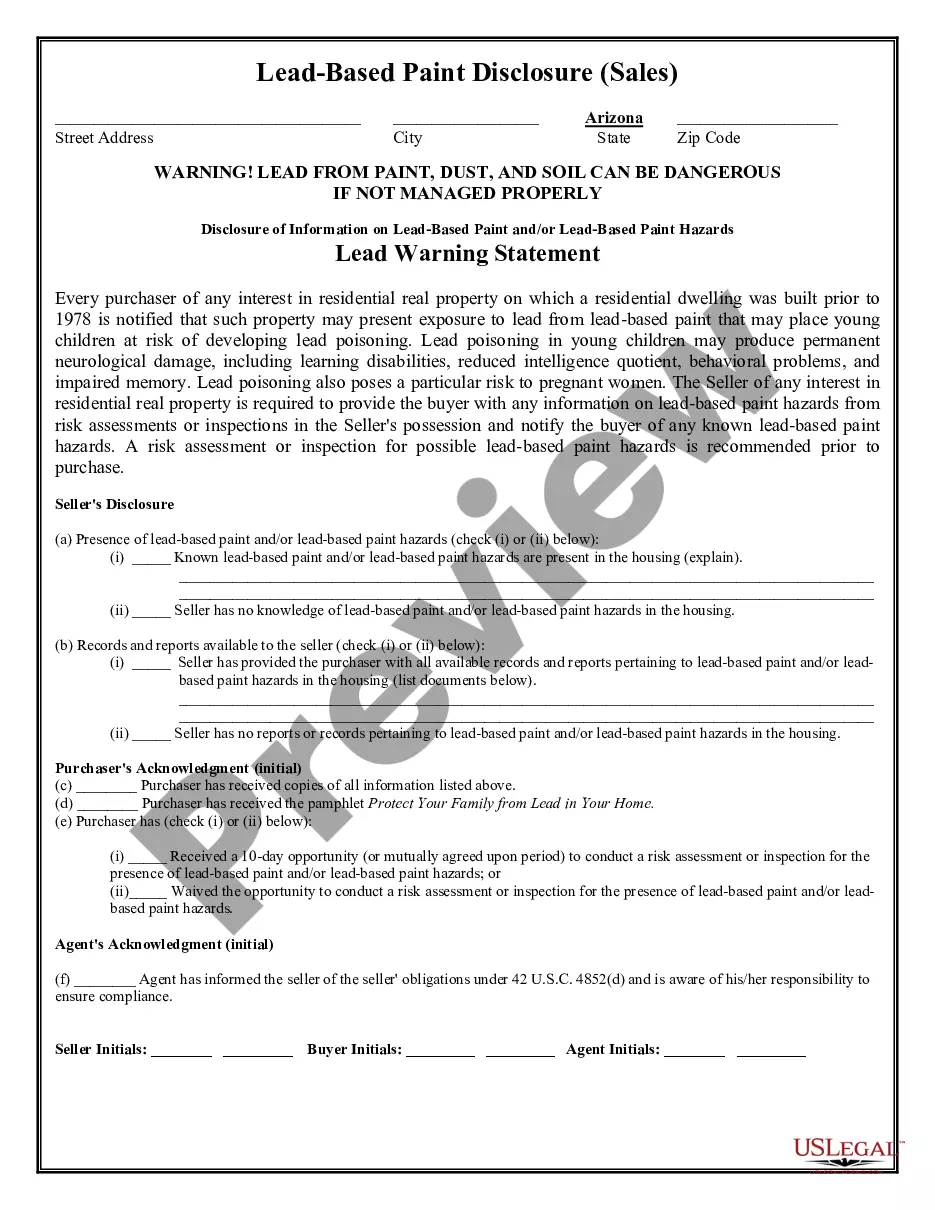
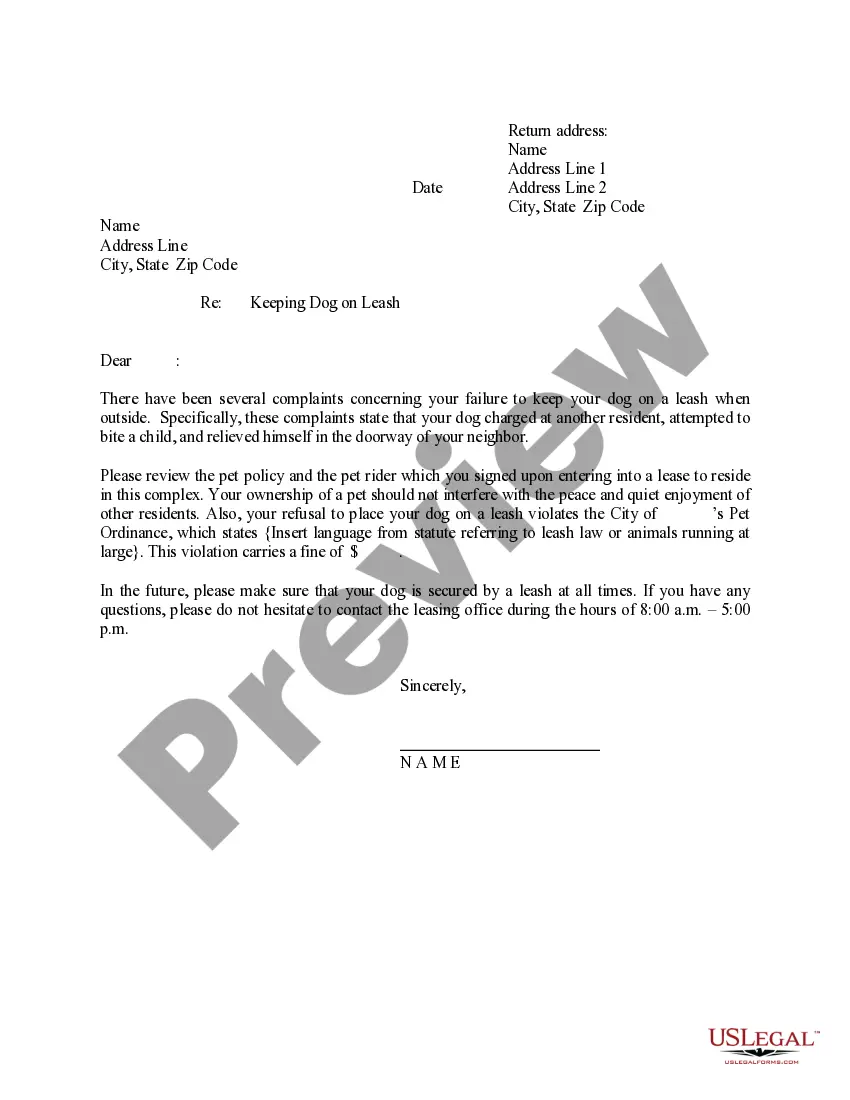
How to fill out Letter - Warning To Renter Regarding The Behavior Of The Renters Dog?
Whether for commercial intentions or personal matters, everyone must deal with legal circumstances at some point in life.
Filling out legal documents requires meticulous care, beginning with selecting the appropriate form template.
With an extensive US Legal Forms collection available, you do not need to waste time searching for the right sample online. Utilize the library’s user-friendly navigation to locate the correct form for any occasion.
- Retrieve the sample you require by utilizing the search field or catalog exploration.
- Review the form’s details to ensure it aligns with your situation, state, and locality.
- Click on the form’s preview to inspect it.
- If it is the incorrect document, return to the search feature to find the Sample Warning Letter To Tenant For Drug Use template you need.
- Download the template once it suits your requirements.
- If you possess a US Legal Forms account, simply click Log in to access previously saved templates in My documents.
- If you do not have an account yet, you can download the form by clicking Buy now.
- Select the suitable pricing option.
- Complete the profile registration form.
- Choose your payment method: utilize a credit card or PayPal account.
- Select the file format you wish and download the Sample Warning Letter To Tenant For Drug Use.
- Once it is saved, you can complete the form using editing software or print it and fill it out by hand.
Form popularity
FAQ
To prove that a tenant is smoking in an apartment, gather evidence such as photographs, video recordings, or witness statements from neighbors. Document any smells or residue that may indicate drug use, and follow up with regular inspections as permitted by the lease. Additionally, use a 'Sample warning letter to tenant for drug use' to address your concerns formally, which underlines the seriousness of the issue while documenting it.
To write a warning letter to a tenant, first address the letter formally, including their name and rental address. Clearly articulate the specific behavior that violates the lease, such as drug use, making sure to cite dates and any eyewitness accounts if necessary. Include potential outcomes if the issue persists, and suggest remediation steps. A well-structured 'Sample warning letter to tenant for drug use' can help form a solid basis for your letter.
A simple warning letter should start with a clear subject line, such as 'Warning About Lease Violations.' Open with a formal greeting, then state the main concern concisely. Use straightforward language to explain the violation, ensuring you include the potential consequences if the issue is not resolved. You may also consider referencing a 'Sample warning letter to tenant for drug use' as a template to guide your writing.
To write a letter explaining a warning, begin by clearly stating the purpose of the letter. Use direct language to outline the specific behavior or actions that prompted the warning, such as observations related to drug use. Be sure to reference relevant agreements or laws that apply. Finally, encourage the tenant to address the issue to avoid further actions, and offer resources if necessary.
To write a quick notice to a tenant, first, identify the purpose of the notice clearly. Start with a title that informs of the subject, such as 'Notice of Violation: Sample Warning Letter to Tenant for Drug Use.' State the necessary details, including dates and specifics of the issue. Keep your language straightforward and professional, and ensure you provide a timeline for any required action.
Generally, a landlord cannot drug test a tenant without consent, as it may violate privacy rights. However, landlords may include drug testing clauses in lease agreements, making it essential to review the contract. If you suspect drug use, referencing a 'Sample Warning Letter to Tenant for Drug Use' can help address the situation and clarify your expectations. Always consult legal guidelines in your state before taking action.
To write a warning letter to a tenant, start with a clear subject line that states the purpose, such as 'Sample Warning Letter to Tenant for Drug Use.' Include the tenant's name and address at the top, followed by the date. In the body of the letter, explicitly describe the observed behavior, reference the lease agreement, and the potential consequences if the behavior continues. Finish with your contact information and a request for the tenant to respond.
To evict a tenant for drug use, it’s essential to follow the legal process carefully. Start by collecting evidence of the drug use, which may include witness statements or photographs. Next, provide the tenant with a sample warning letter to tenant for drug use, clearly stating the violation and any necessary steps they need to take to rectify the situation. If the tenant does not comply, you may need to file an eviction notice with your local court to proceed with formal eviction.