Enclosure In Letter Example
Description
Get your form ready online
Our built-in tools help you complete, sign, share, and store your documents in one place.
Make edits, fill in missing information, and update formatting in US Legal Forms—just like you would in MS Word.
Download a copy, print it, send it by email, or mail it via USPS—whatever works best for your next step.
Sign and collect signatures with our SignNow integration. Send to multiple recipients, set reminders, and more. Go Premium to unlock E-Sign.
If this form requires notarization, complete it online through a secure video call—no need to meet a notary in person or wait for an appointment.
We protect your documents and personal data by following strict security and privacy standards.

Make edits, fill in missing information, and update formatting in US Legal Forms—just like you would in MS Word.

Download a copy, print it, send it by email, or mail it via USPS—whatever works best for your next step.

Sign and collect signatures with our SignNow integration. Send to multiple recipients, set reminders, and more. Go Premium to unlock E-Sign.

If this form requires notarization, complete it online through a secure video call—no need to meet a notary in person or wait for an appointment.

We protect your documents and personal data by following strict security and privacy standards.
Looking for another form?
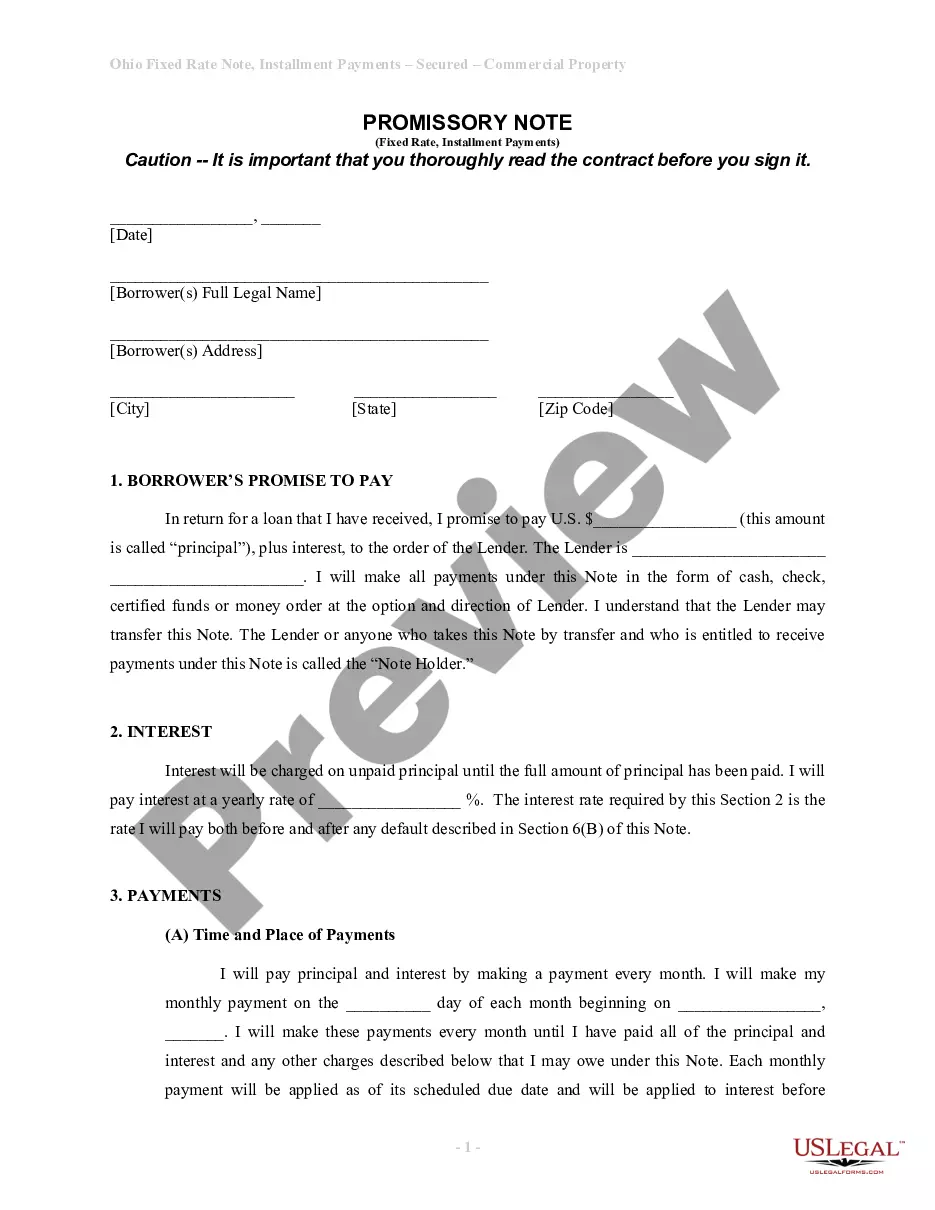
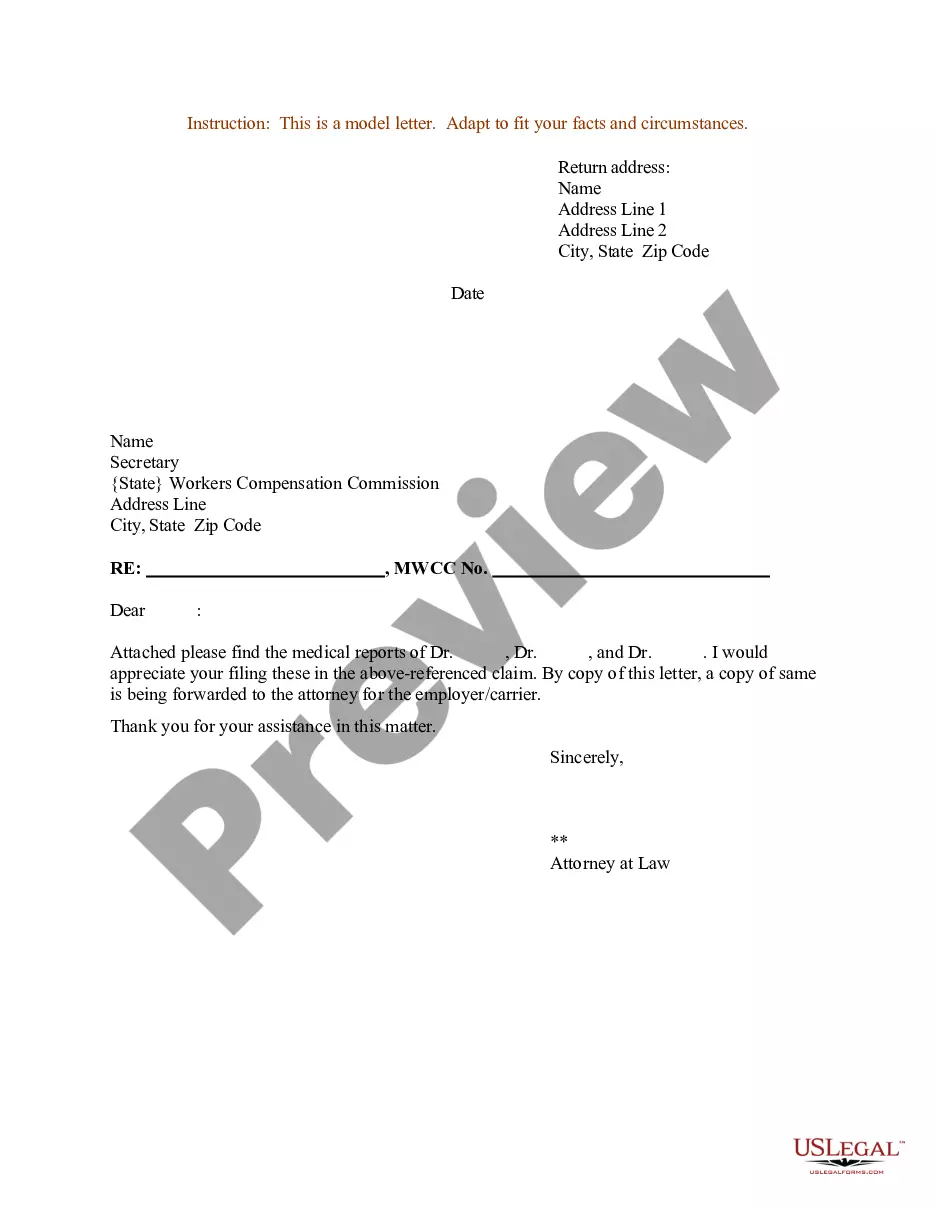
How to fill out Sample Letter For Enclosure Of Medical Reports?
Whether for commercial purposes or for personal matters, everyone must handle legal issues at some stage in their life.
Completing legal documents necessitates meticulous attention, beginning with selecting the appropriate form template.
Once it is saved, you can fill out the form using editing software or print it and complete it by hand. With an extensive US Legal Forms library available, you don't have to waste time searching for the suitable template online. Utilize the library’s user-friendly navigation to find the appropriate template for any occasion.
- For instance, if you select an incorrect version of an Enclosure In Letter Example, it will be declined once submitted.
- Thus, it is vital to acquire a trustworthy source of legal documents like US Legal Forms.
- If you wish to obtain a sample of Enclosure In Letter Example, follow these straightforward steps.
- Locate the template you require by using the search bar or catalog browsing.
- Review the form’s details to ensure it aligns with your circumstances, jurisdiction, and area.
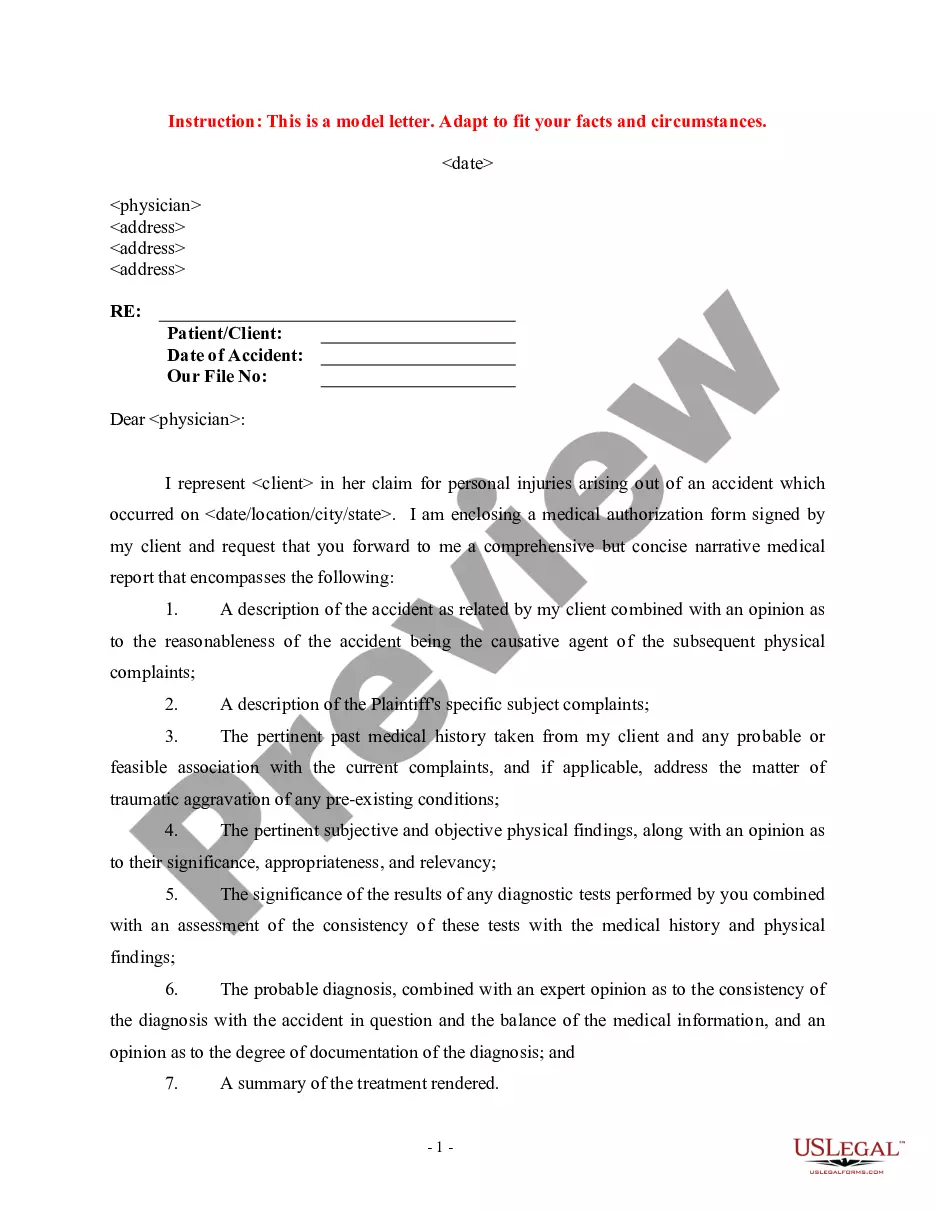
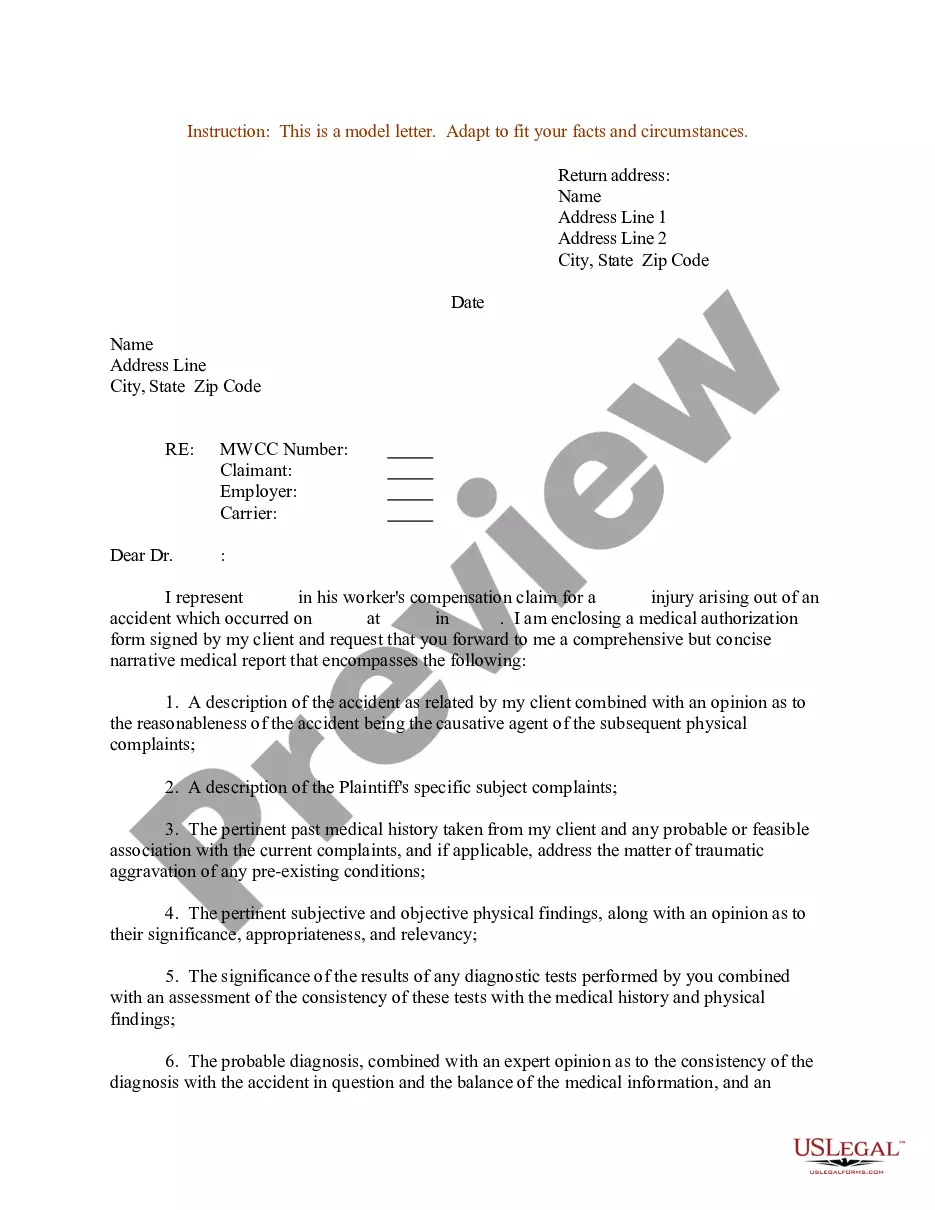
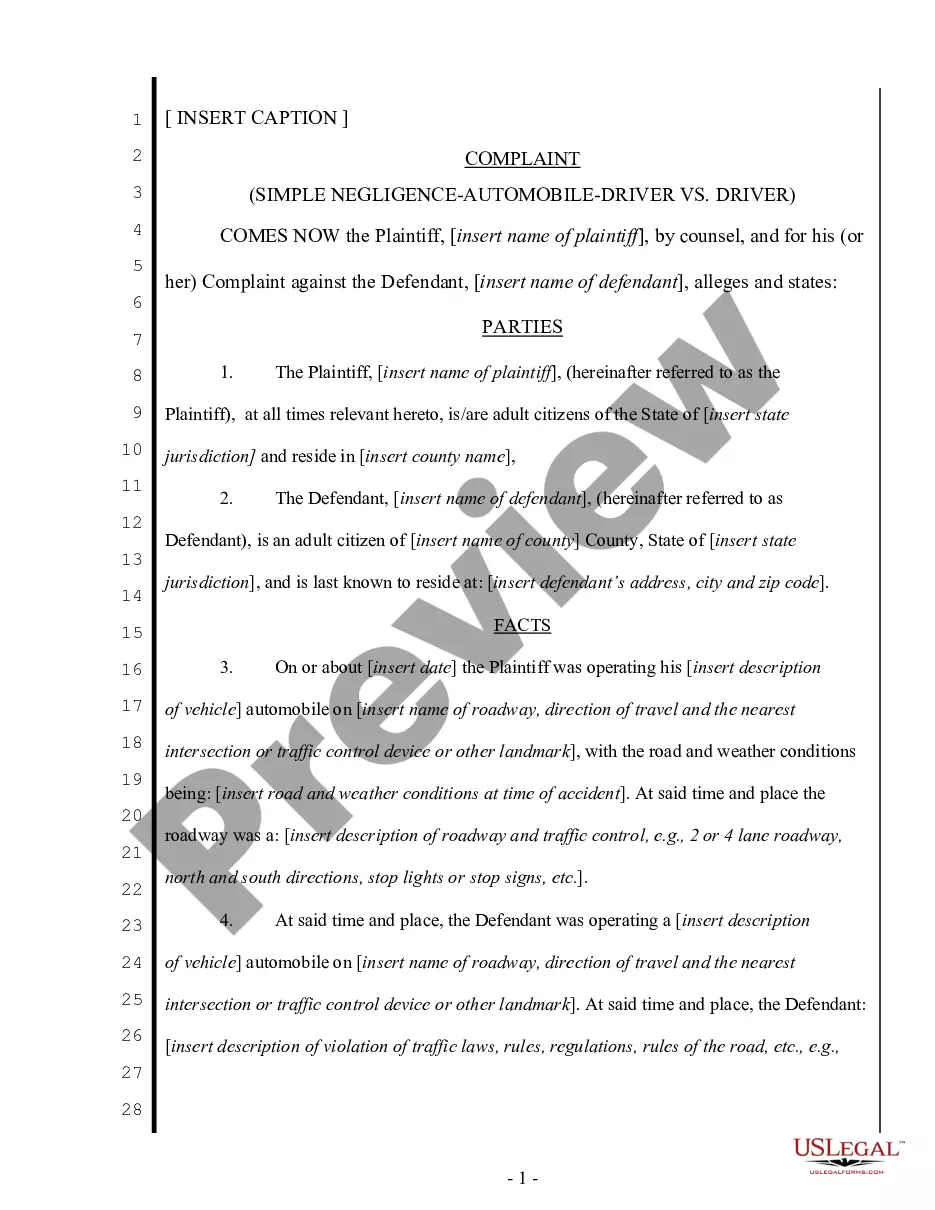
- Click on the form’s preview to inspect it.
- If it is the wrong form, return to the search feature to find the Enclosure In Letter Example template you need.
- Obtain the template when it corresponds to your requirements.
- If you possess a US Legal Forms account, click Log in to access previously saved documents in My documents.
- In case you do not have an account yet, you can acquire the form by clicking Buy now.
- Select the suitable pricing choice.
- Complete the profile registration form.
- Choose your payment method: you may utilize a credit card or PayPal account.
- Select the file format desired and download the Enclosure In Letter Example.
Form popularity
FAQ
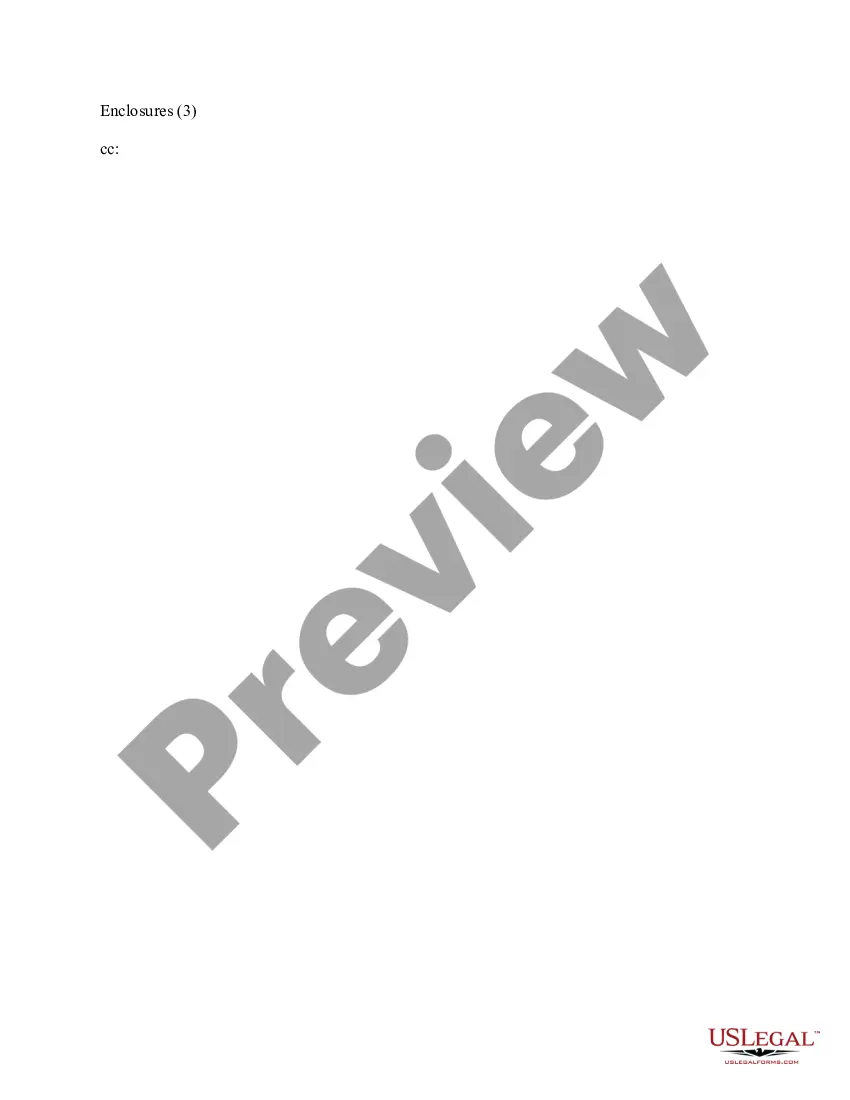
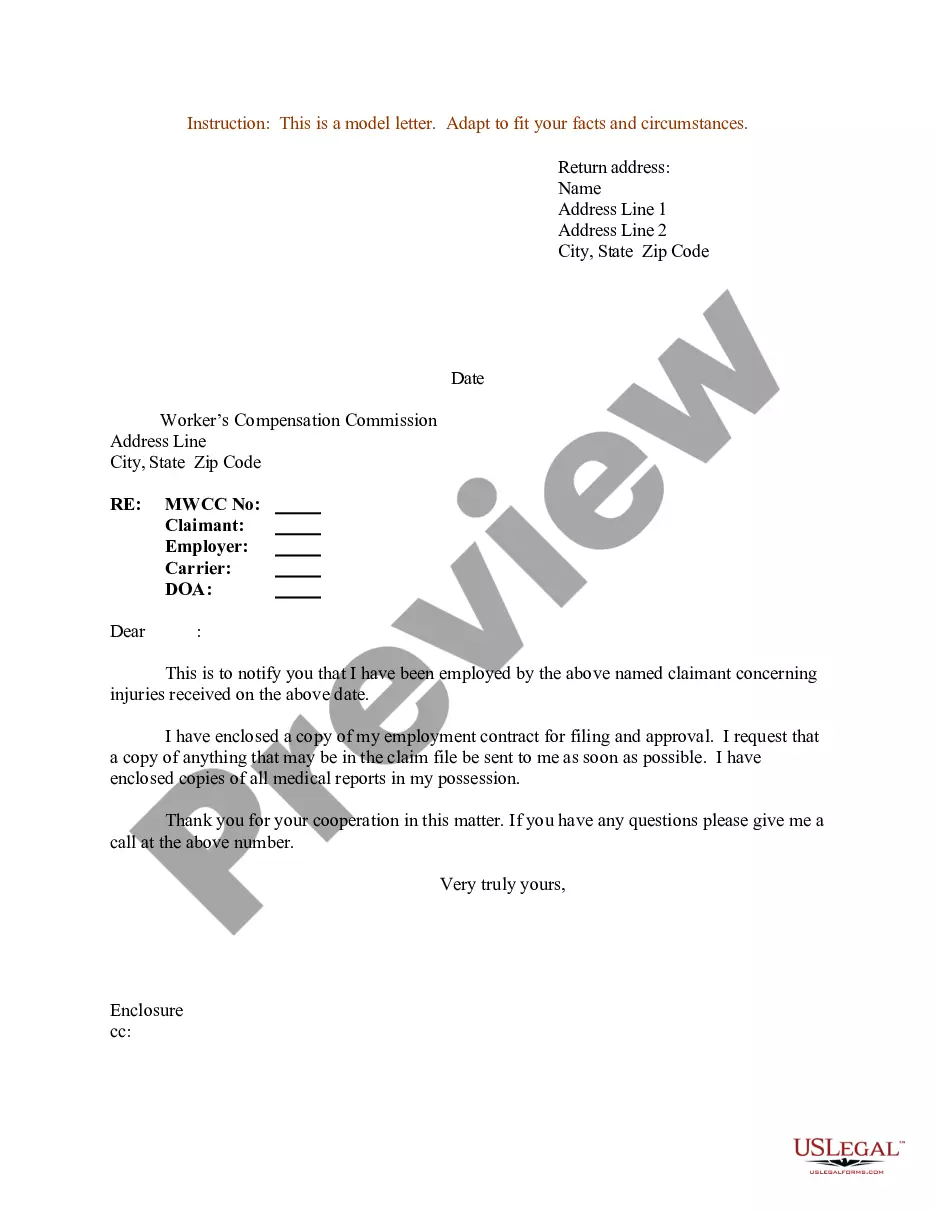
When listing enclosures on a formal letter, provide the term 'Enclosures' followed by either a colon or a list. You can format it in a single line if there is only one item, or use bullet points to make it clear when there are multiple items. This organized presentation of enclosures ensures that your documents are easily recognizable. By following this structure, you create a more professional impression.
To notate enclosures in your letter, you can simply write 'Enclosure' or 'Enclosures' at the bottom of the letter, followed by a list of the enclosed documents. This could be a simple bullet-point list if there are multiple items. Notating enclosures helps the reader understand what additional information they can expect. It enhances the clarity of your communication.
A formal letter should ideally close with a courteous phrase such as 'Sincerely' or 'Best regards.' After your closing phrase, leave space for your signature, then type your name. This format maintains professionalism and shows respect for the recipient. Make sure to review your letter for any final adjustments before closing.
An example of an enclosure in a letter could be a resume sent along with a cover letter. You may also include documents like contracts, reports, or any relevant supporting materials. The enclosure provides additional context or details for the recipient. Showing that you include necessary documents illustrates your thoroughness and respect for the recipient's time.
When writing about an enclosure in a formal letter, you typically use the word 'Enclosure' followed by a colon. For example, you might write 'Enclosure: Resume.' This notifies the recipient that there is additional information included with the letter. By clearly indicating enclosures, you enhance clarity and professionalism in your correspondence.
You should add 'CC' at the bottom of your formal letter, just below your signature line. This notation stands for 'carbon copy' and is used to indicate that copies of the letter are being sent to other recipients. It is important to list the names of these additional recipients clearly. Including a CC is a professional touch, ensuring everyone stays informed.
Examples of enclosures can include various documents that support your letter, such as contracts, invoices, applications, or additional information relevant to your correspondence. Each enclosure should relate closely to the main content of your letter. Listing these items enhances the enclosure in letter example, ensuring the recipient fully understands what additional information you are providing.
In a formal letter, writing 'enclosed' involves clear communication of additional documents accompanying your message. After your closing and signature, indicate the word 'Enclosure' or 'Enclosures' along with the list of documents. You may say, for example, 'Enclosures: Invoice and Terms of Service.' This clarifies the purpose and prevents confusion for your recipient.
To demonstrate enclosures in a letter example, format your letter as you normally would, ensuring to include a clear enclosure notation at the end. After your signature, write 'Enclosure' or 'Enclosures' and list the items included. For instance, you might say 'Enclosures: Contract, Agreement, and Receipt.' This technique enhances clarity and ensures the recipient is aware of all documents sent.
When writing 'enclosed' in letter format, you should place a note at the bottom of your letter, typically after your signature. You might write 'Enclosures' followed by a colon and then list the documents included, which is an effective way to reinforce the enclosure in letter example. This approach helps the recipient quickly understand what additional information is being provided.