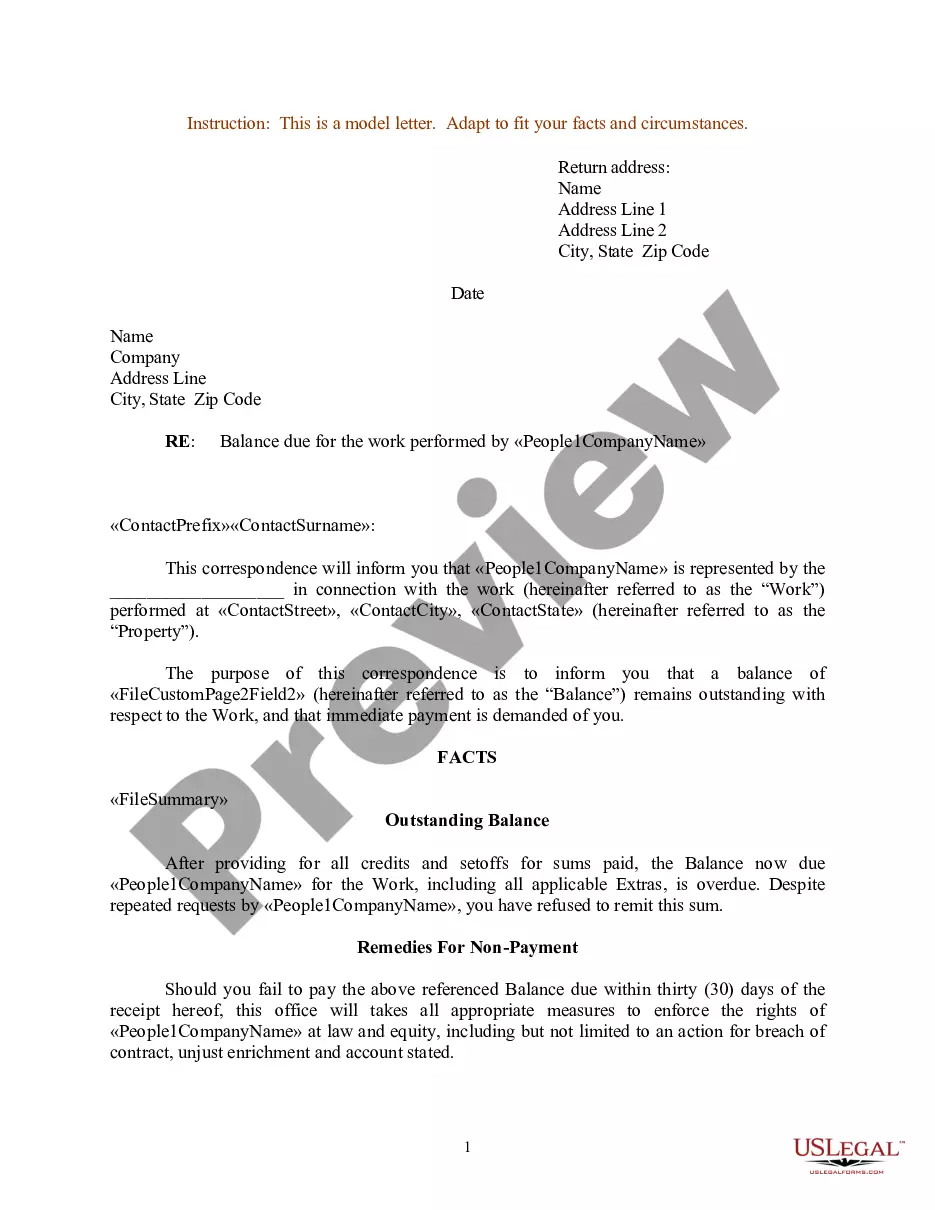
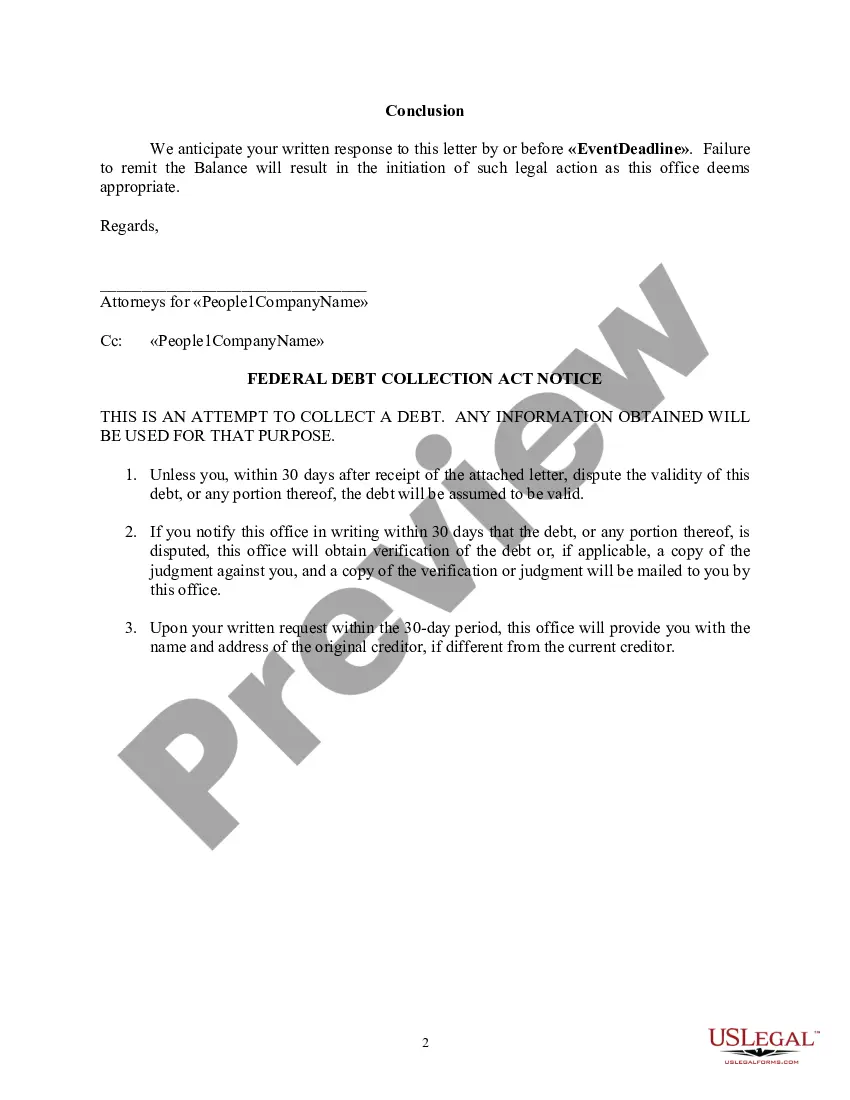
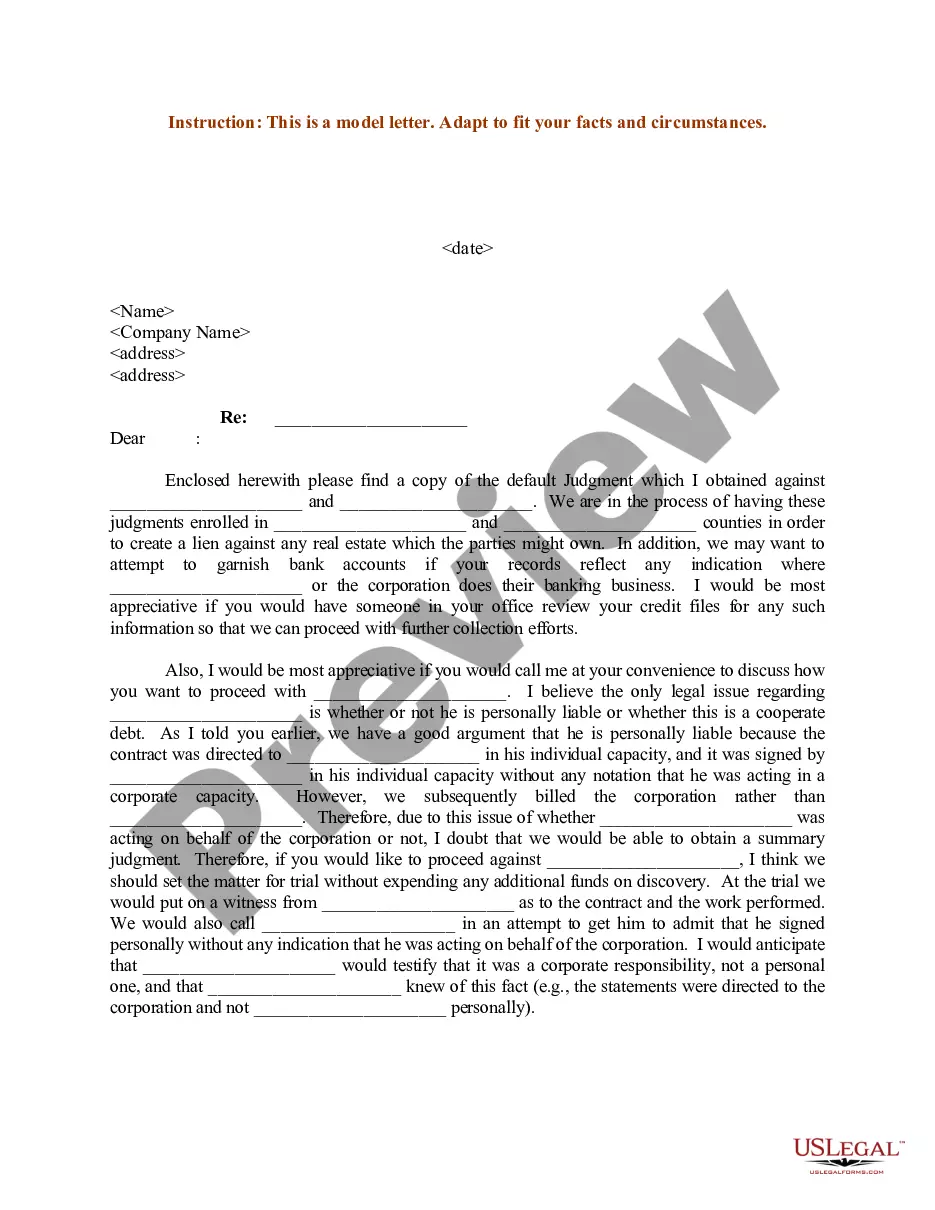
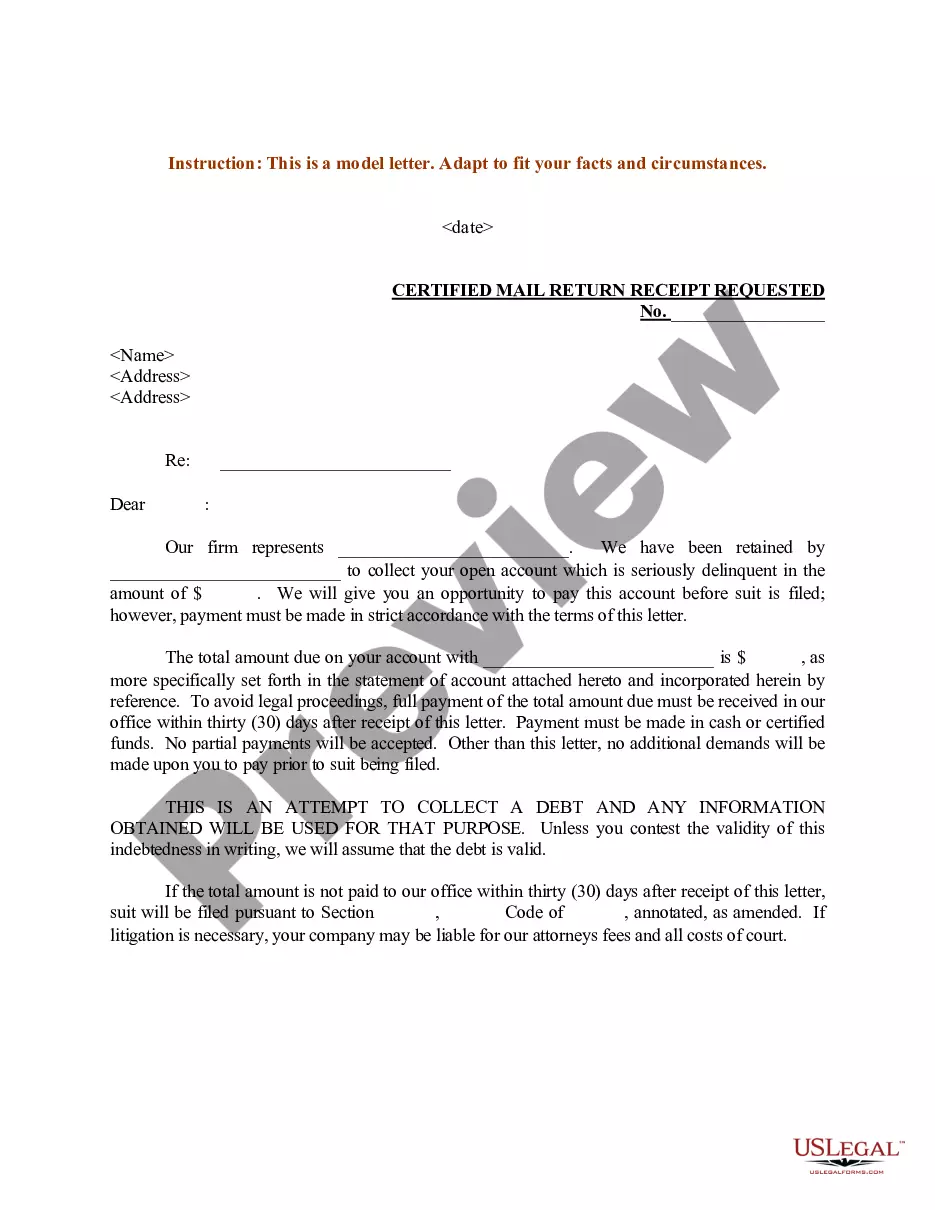
Sample Letter Debt Collection Without Notice
Description
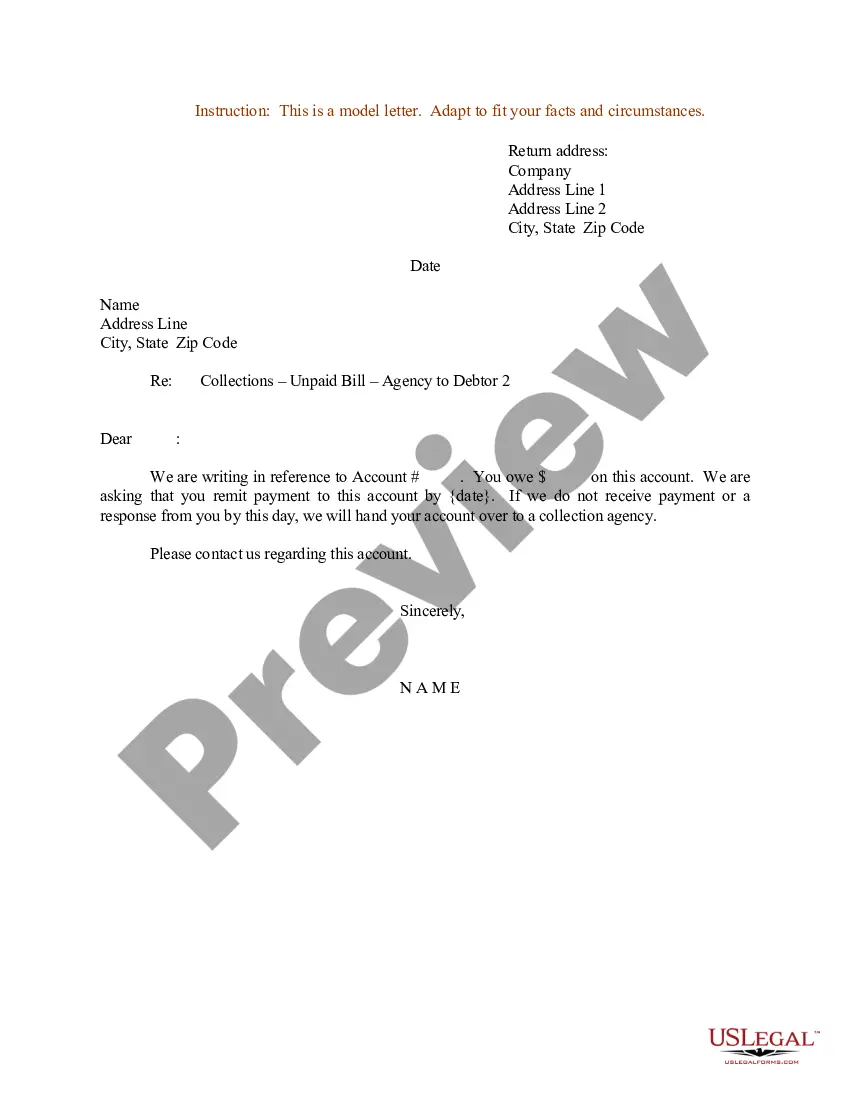
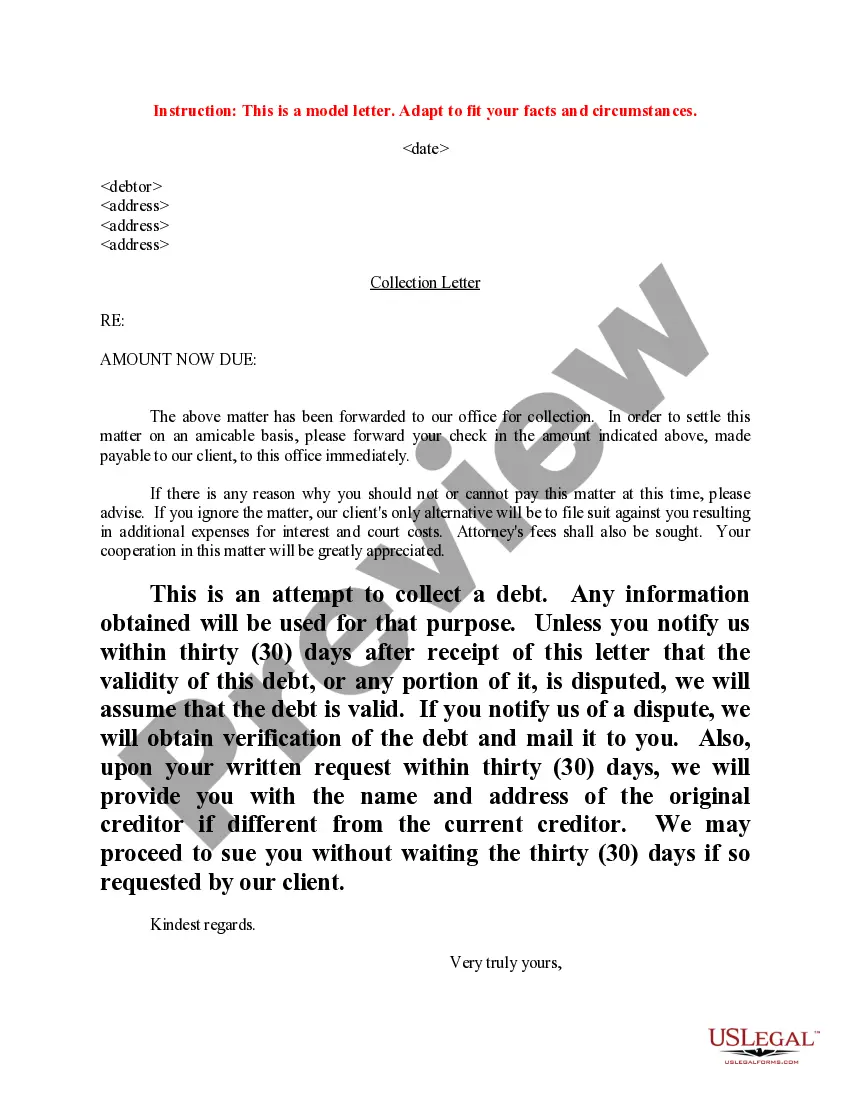
Get your form ready online
Our built-in tools help you complete, sign, share, and store your documents in one place.
Make edits, fill in missing information, and update formatting in US Legal Forms—just like you would in MS Word.
Download a copy, print it, send it by email, or mail it via USPS—whatever works best for your next step.
Sign and collect signatures with our SignNow integration. Send to multiple recipients, set reminders, and more. Go Premium to unlock E-Sign.
If this form requires notarization, complete it online through a secure video call—no need to meet a notary in person or wait for an appointment.
We protect your documents and personal data by following strict security and privacy standards.

Make edits, fill in missing information, and update formatting in US Legal Forms—just like you would in MS Word.

Download a copy, print it, send it by email, or mail it via USPS—whatever works best for your next step.

Sign and collect signatures with our SignNow integration. Send to multiple recipients, set reminders, and more. Go Premium to unlock E-Sign.

If this form requires notarization, complete it online through a secure video call—no need to meet a notary in person or wait for an appointment.

We protect your documents and personal data by following strict security and privacy standards.
Looking for another form?
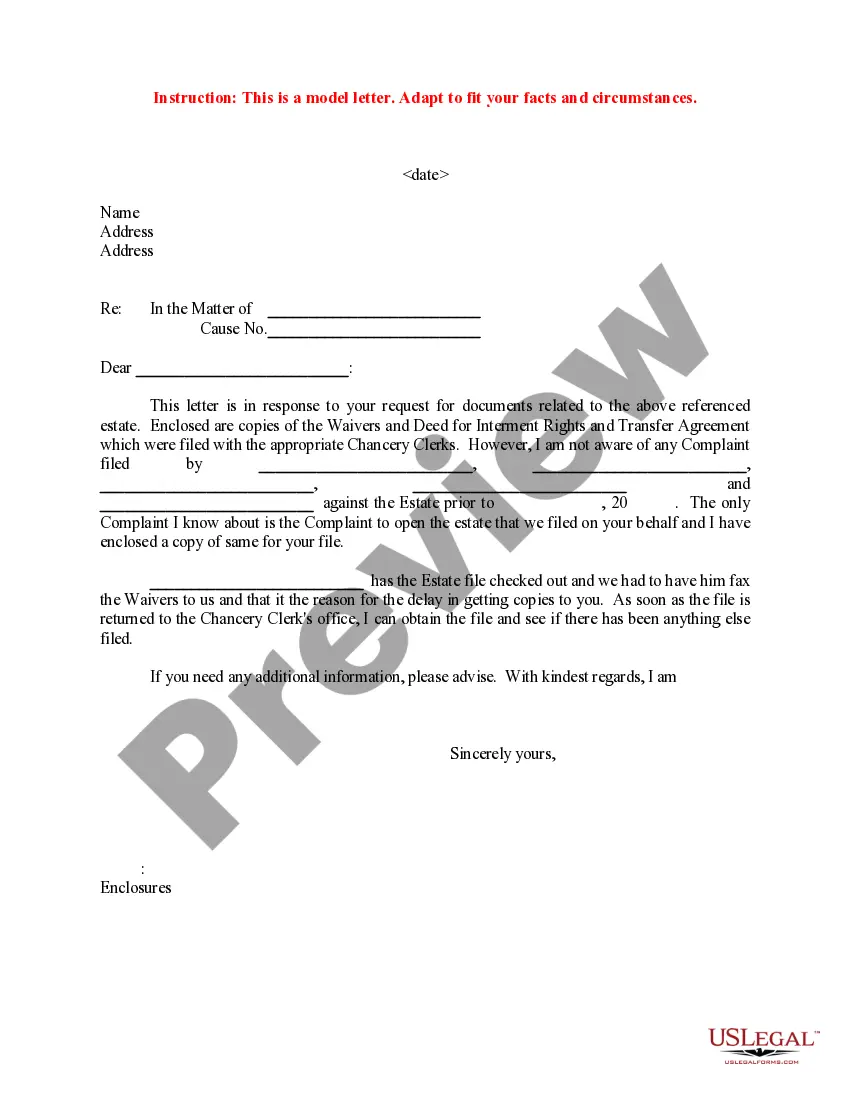
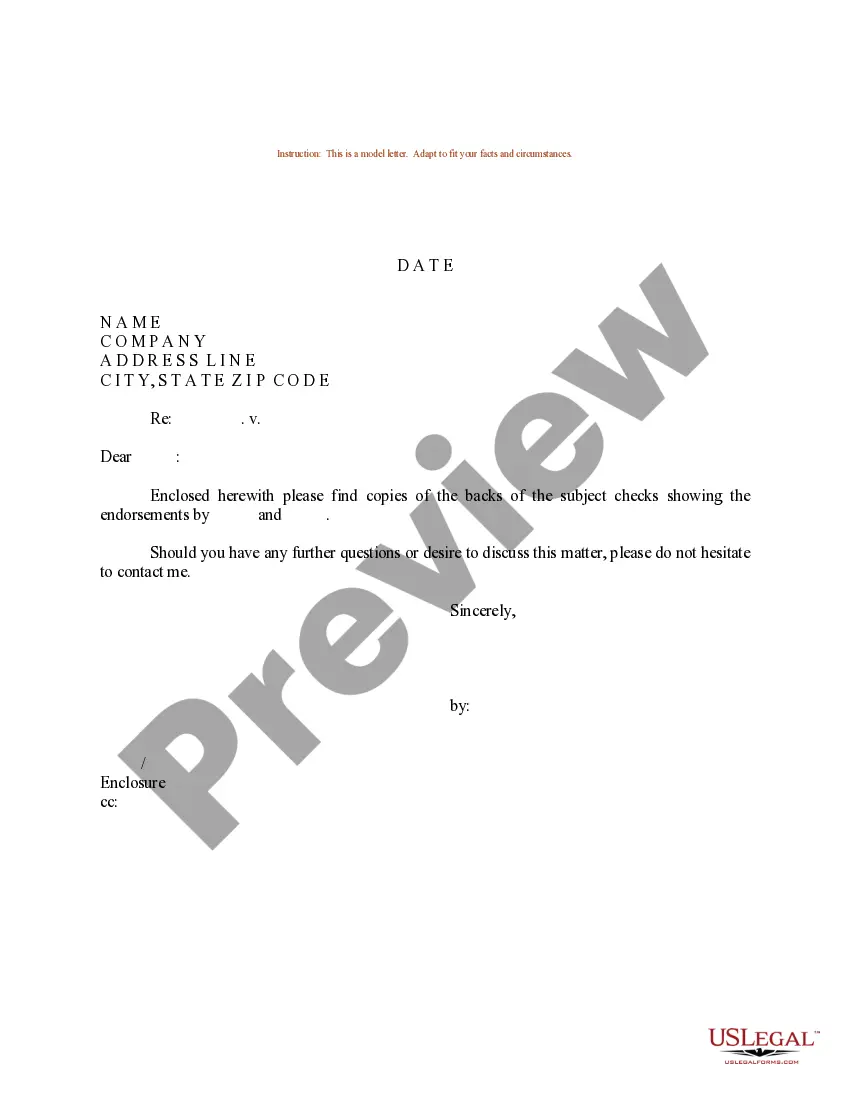
How to fill out Sample Letter For Debt Collection?
Locating a preferred destination to obtain the most up-to-date and suitable legal templates is half the challenge of navigating bureaucracy.
Identifying the correct legal documents requires precision and meticulousness, which is why it is crucial to acquire templates for Sample Letter Debt Collection Without Notice solely from trustworthy sources, such as US Legal Forms. A faulty template can squander your time and postpone your current issue. With US Legal Forms, you have minimal cause for concern. You can access and review all the information regarding the document’s applicability and significance for your matter and in your jurisdiction.
Eliminate the complications associated with your legal documents. Explore the vast US Legal Forms library where you can discover legal templates, evaluate their relevance to your case, and download them instantly.
- Utilize the library navigation or search box to locate your sample.
- Check the form’s description to determine if it meets the specifications of your jurisdiction.
- View the form preview, if available, to confirm that the form is indeed what you need.
- If the Sample Letter Debt Collection Without Notice does not fulfill your criteria, go back to the search and find the correct document.
- When you are certain about the form’s applicability, proceed to download it.
- If you are an authorized user, click Log in to verify and access your chosen templates in My documents.
- If you do not have an account yet, click Buy now to acquire the template.
- Choose the pricing package that aligns with your needs.
- Continue with the registration to finish your purchase.
- Complete your transaction by selecting a payment option (credit card or PayPal).
- Choose the document format for downloading Sample Letter Debt Collection Without Notice.
- Once the form is on your device, you can edit it with the editor or print it to complete by hand.
Form popularity
FAQ
However, an affidavit of heirship is a legal document that can transfer ownership of real property from a decedent to heirs without the property going through probate. Probate costs money, so these documents can be a less costly way for heirs to transfer real property.
How to Fill Out Affidavit of Heirship | PDFRUN - YouTube YouTube Start of suggested clip End of suggested clip Read the clause above the signature. Lines. Once you have understood this clause. And have confirmedMoreRead the clause above the signature. Lines. Once you have understood this clause. And have confirmed the information contained in this affidavit. You may sign it a fix your signature.
A ballpark fee for preparation of the affidavit is between $750 for a very simple estate with few heirs to several thousand dollars for a more complicated estate with many heirs. The filing fees to record the affidavit in each county where the real property is located usually run about $50 to $75 in Texas.
In Texas, if you wish to contest an affidavit of heirship, you can file for a judicial heirship proceeding. A judicial heirship proceeding is a court-supervised process in which a judge determines who the legal heirs of an estate are.
An affidavit of heirship must be filed with the real property records in the county where the land is located. Call the county clerk and ask how much their filing fees are. The filing fees vary from county to county.
An affidavit of heirship is a document used to give property to the heirs of a person who has died. It may be needed if the person did not have a will, or if the will was not approved within four years of their death.
Good to know: By Texas law, all property owned by the deceased passes to the Heirs at Law of the deceased unless there is a valid Will or other estate plan in place stating otherwise. Once the affidavit has been recorded, the heirs are identified in the property records as the new owners of the property.
Texas law provides that, when this happens, the Will is treated as if it did not exist, and the estate passes by intestate (without a Will) succession.