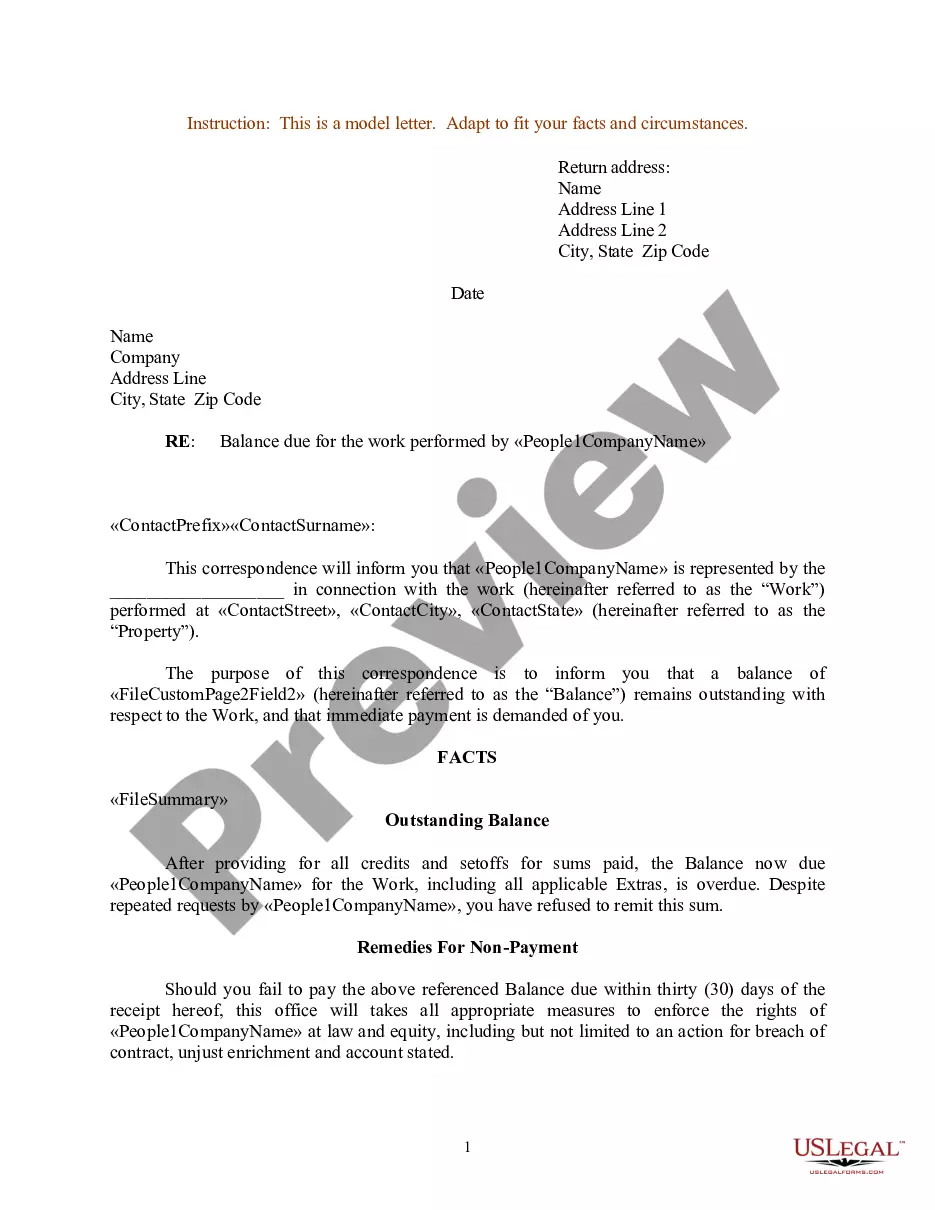
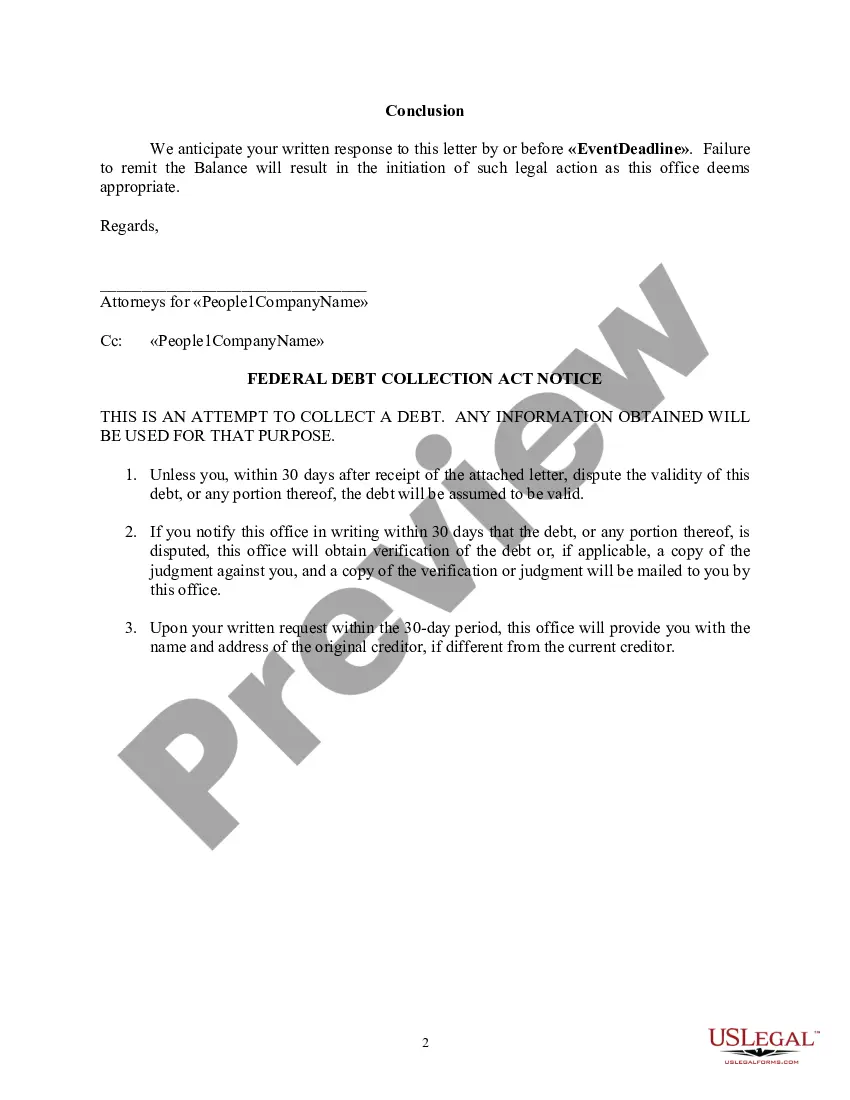
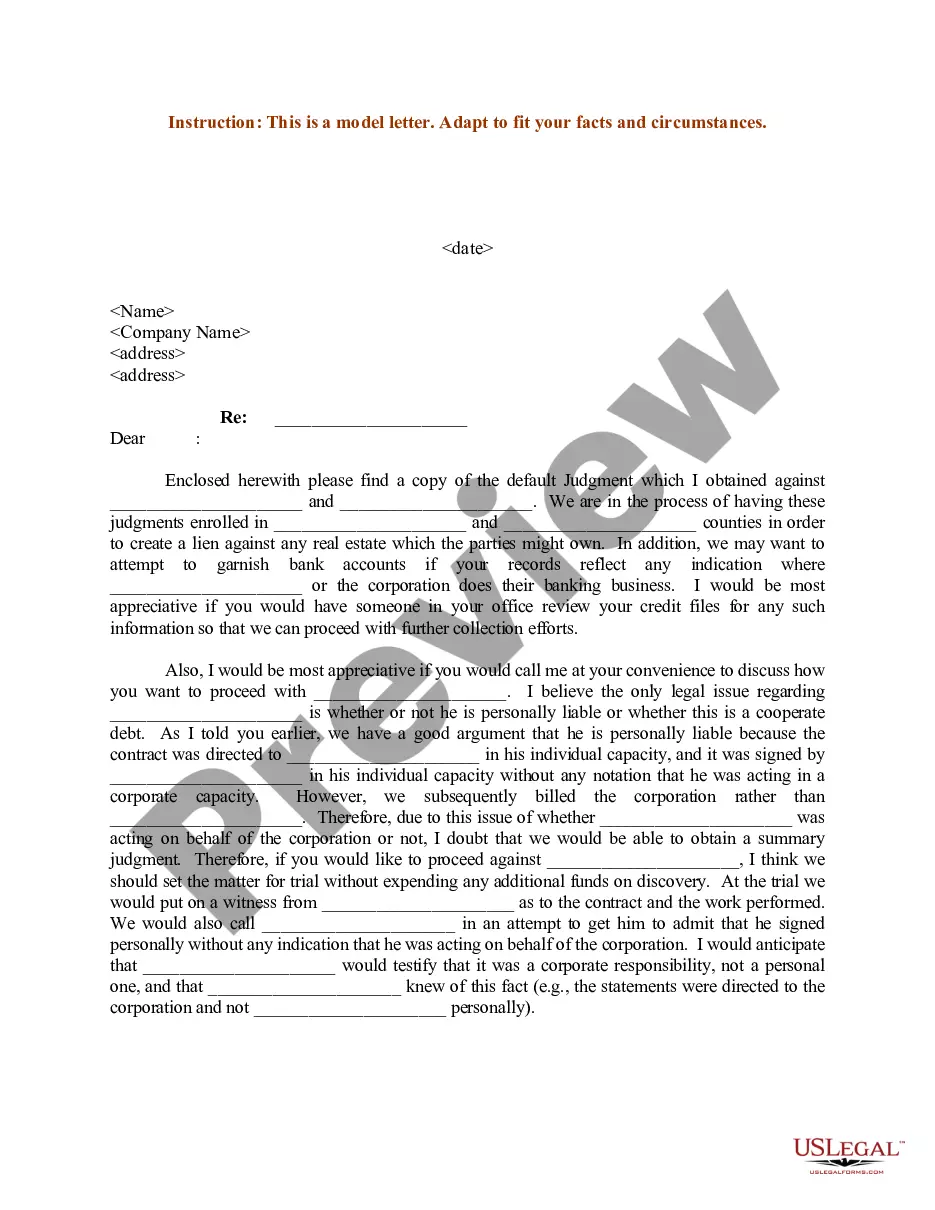
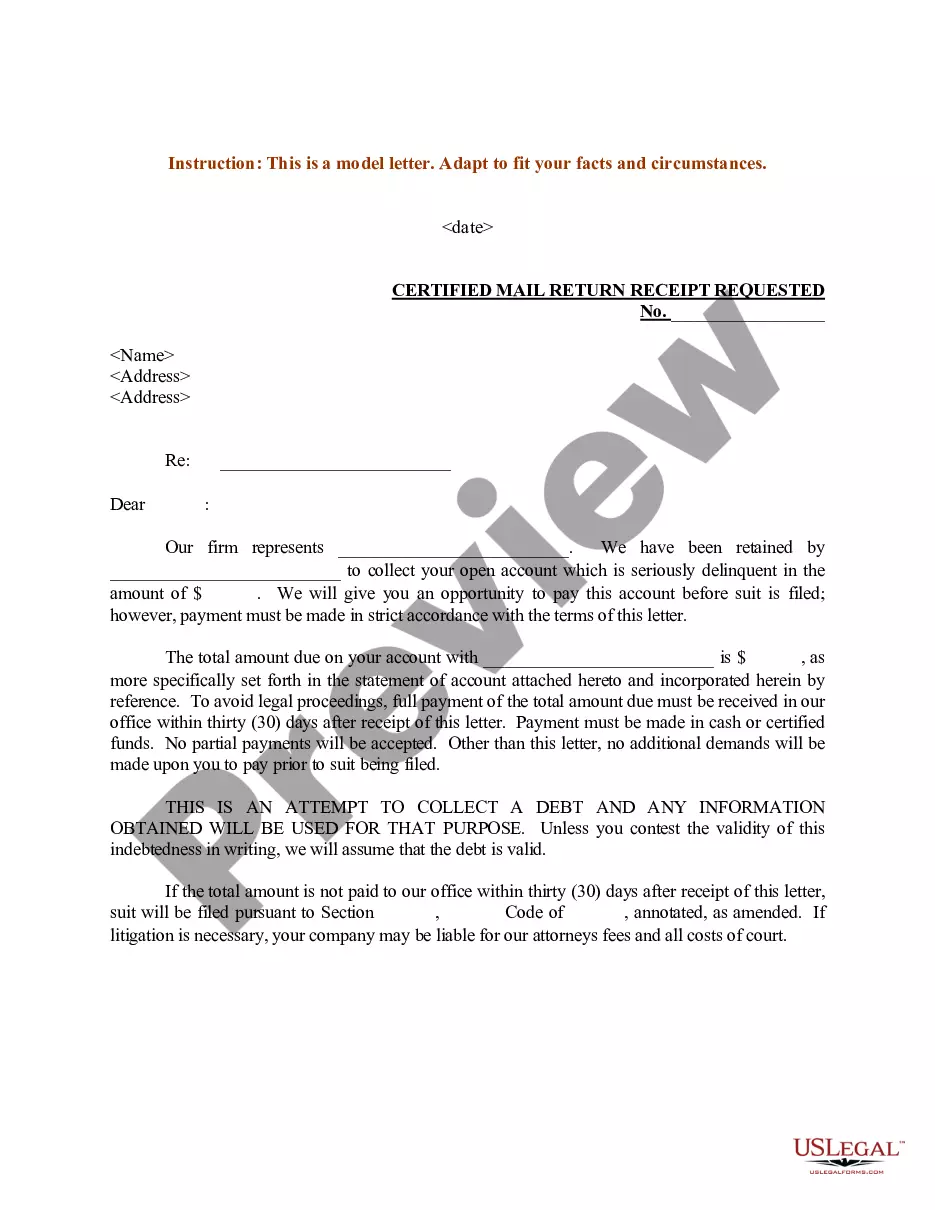
Sample Letter Debt Collection Without Consent
Description
Get your form ready online
Our built-in tools help you complete, sign, share, and store your documents in one place.
Make edits, fill in missing information, and update formatting in US Legal Forms—just like you would in MS Word.
Download a copy, print it, send it by email, or mail it via USPS—whatever works best for your next step.
Sign and collect signatures with our SignNow integration. Send to multiple recipients, set reminders, and more. Go Premium to unlock E-Sign.
If this form requires notarization, complete it online through a secure video call—no need to meet a notary in person or wait for an appointment.
We protect your documents and personal data by following strict security and privacy standards.

Make edits, fill in missing information, and update formatting in US Legal Forms—just like you would in MS Word.

Download a copy, print it, send it by email, or mail it via USPS—whatever works best for your next step.

Sign and collect signatures with our SignNow integration. Send to multiple recipients, set reminders, and more. Go Premium to unlock E-Sign.

If this form requires notarization, complete it online through a secure video call—no need to meet a notary in person or wait for an appointment.

We protect your documents and personal data by following strict security and privacy standards.
Looking for another form?
How to fill out Sample Letter For Debt Collection?
Whether for commercial reasons or personal matters, everyone must deal with legal circumstances at some time in their lives.
Filling out legal documents requires meticulous care, starting with choosing the correct form template.
Once it is saved, you can complete the form using editing software or print it and finalize it by hand. With an extensive US Legal Forms catalog available, you no longer need to waste time searching for the right template online. Utilize the library’s straightforward navigation to find the appropriate form for any occasion.
- For instance, if you choose an incorrect version of the Sample Letter Debt Collection Without Consent, it will be refused upon submission.
- Thus, it is crucial to have a reliable source of legal paperwork like US Legal Forms.
- Should you need to obtain a Sample Letter Debt Collection Without Consent template, adhere to these straightforward steps.
- Retrieve the template you require using the search bar or catalog browsing.
- Examine the form’s details to confirm it aligns with your situation, state, and county.
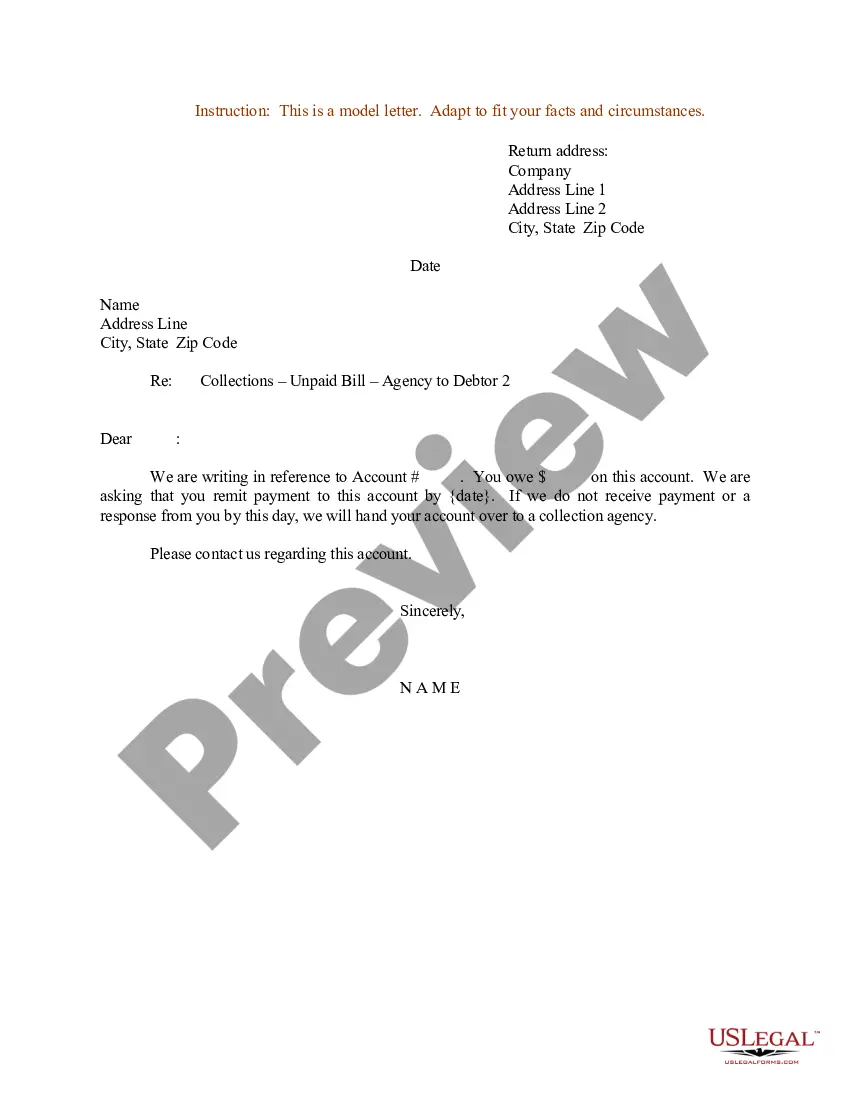
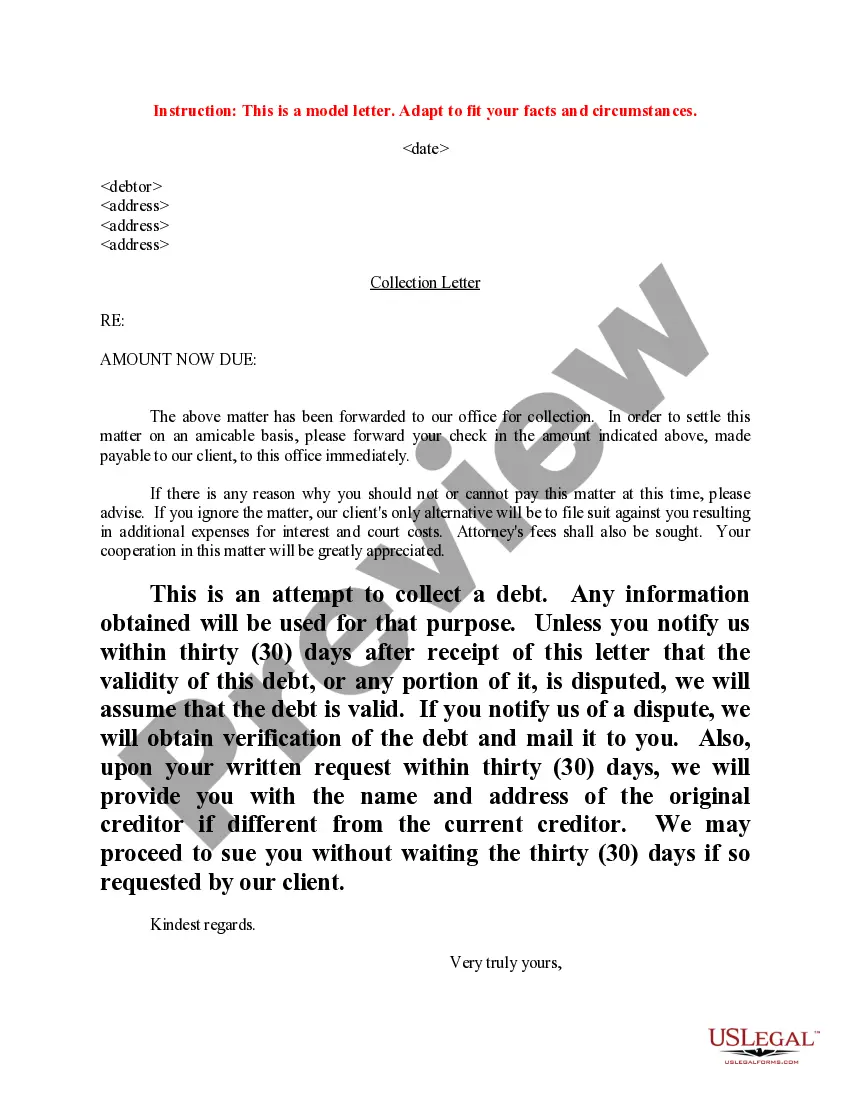
- Click on the form’s preview to inspect it.
- If it is not the correct form, return to the search feature to find the Sample Letter Debt Collection Without Consent template you need.
- Download the document if it satisfies your requirements.
- If you possess a US Legal Forms account, click Log in to access previously saved documents in My documents.
- In case you do not have an account yet, you may download the form by clicking Buy now.
- Select the suitable pricing option.
- Fill out the account registration form.
- Choose your payment method: utilize a credit card or PayPal account.
- Select the file format you wish and download the Sample Letter Debt Collection Without Consent.
Form popularity
FAQ
The 11-word phrase that can stop debt collectors is: 'I do not wish to be contacted by you again.' This statement informs the collector that you no longer wish to receive communications, which is protected under certain regulations. If you're looking for a formal way to make this request, consider using a sample letter debt collection without consent.
Texas is one of only four states in the nation that require you to take an additional step after you've completed your Five Wishes. State law mandates you use a government-approved form and words to express your own wishes.
It is a written statement that you share with your doctors and family members telling them the type of care you want if you become terminally ill or permanently unconscious and if you are unable to make decisions about your continued care. However, Living wills are not recognized in Michigan law.
A will and testament is a legal document that expresses a person's (testator) wishes as to how their property (estate) is to be distributed after their death and as to which person (executor) is to manage the property until its final distribution.
Steps for completing an Advance Directive Talk with your doctor about the kinds of treatment decisions you might need to make in the future. Complete the Patient's Advance Directive form to list the treatments you want and those you don't want. ... List the name of a person you trust to speak on your behalf.
Are there different types of advance directives? Yes. Three types are a durable power of attorney for health care, a living will, and a do-not-resuscitate declaration. There is also a declaration of anatomical gift, to take effect when you die.
Is the Five Wishes advance directive a legal document? Yes. It was written with the help of the American Bar Association's Commission on Law & Aging. It meets the legal requirements of 46 states, but is used widely in all 50, and a federal law requires medical care providers to honor patient wishes as expressed.
Five Wishes® online allows you to complete and save the advance care document electronically free of charge. It can also be downloaded, printed, and completed by hand.
The most common types of advance directives are the living will and the durable power of attorney for health care (sometimes known as the medical power of attorney). There are many advance directive formats.