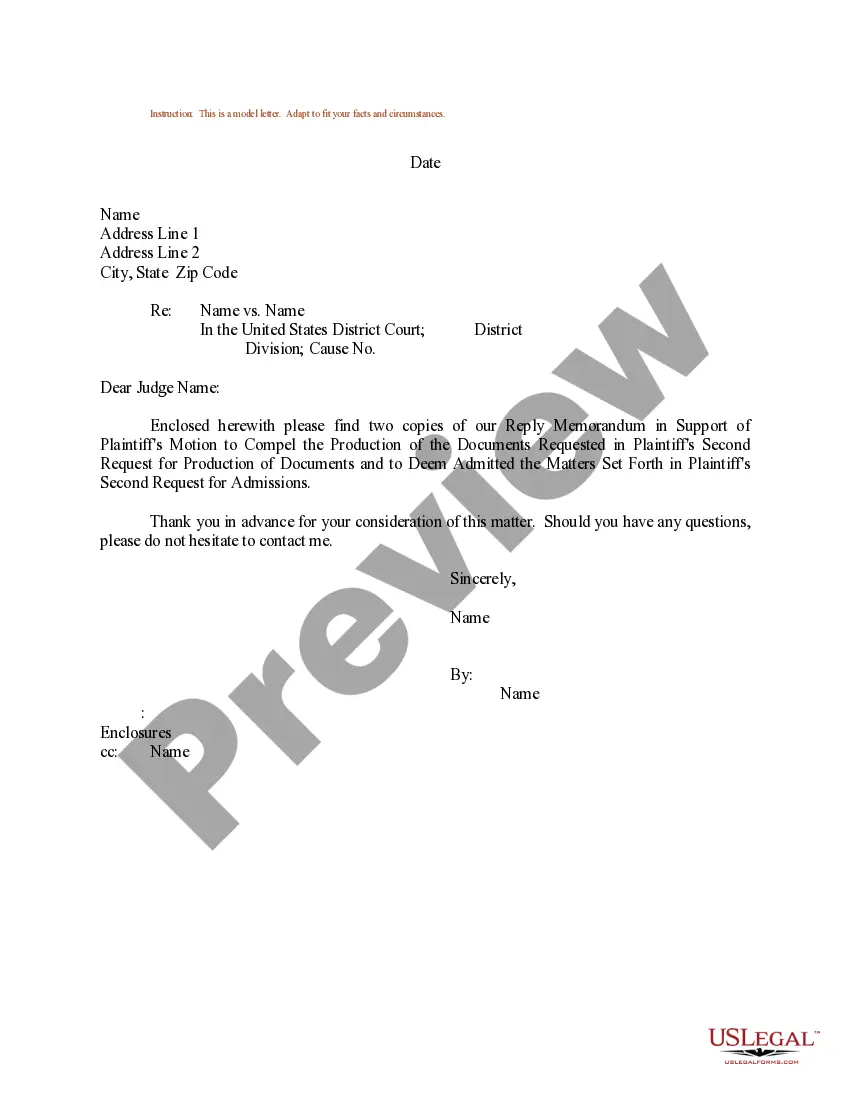
Letter Asking Judge For Leniency
Description
Get your form ready online
Our built-in tools help you complete, sign, share, and store your documents in one place.
Make edits, fill in missing information, and update formatting in US Legal Forms—just like you would in MS Word.
Download a copy, print it, send it by email, or mail it via USPS—whatever works best for your next step.
Sign and collect signatures with our SignNow integration. Send to multiple recipients, set reminders, and more. Go Premium to unlock E-Sign.
If this form requires notarization, complete it online through a secure video call—no need to meet a notary in person or wait for an appointment.
We protect your documents and personal data by following strict security and privacy standards.

Make edits, fill in missing information, and update formatting in US Legal Forms—just like you would in MS Word.

Download a copy, print it, send it by email, or mail it via USPS—whatever works best for your next step.

Sign and collect signatures with our SignNow integration. Send to multiple recipients, set reminders, and more. Go Premium to unlock E-Sign.

If this form requires notarization, complete it online through a secure video call—no need to meet a notary in person or wait for an appointment.

We protect your documents and personal data by following strict security and privacy standards.
Looking for another form?
How to fill out Sample Letter For Documents To Judge?
It’s well known that you cannot instantly become a legal expert, nor can you swiftly learn how to create a Letter Asking Judge For Leniency without a distinct background.
Drafting legal documents is a lengthy process demanding specific education and expertise. So why not entrust the drafting of the Letter Asking Judge For Leniency to professionals.
With US Legal Forms, one of the most extensive legal document repositories, you can obtain anything from court forms to templates for internal business communication.
If you need another template, restart your search.
Establish a free account and choose a subscription plan to acquire the form. Click Buy now. Once the payment is complete, you can download the Letter Asking Judge For Leniency, fill it out, print it, and send it or mail it to the appropriate individuals or institutions.
- We understand how crucial compliance and observance of federal and state regulations are.
- That's why, on our platform, all templates are tailored to specific locations and are current.
- Begin by visiting our website and securing the document you need within moments.
- Find the form you seek by utilizing the search bar at the top of the page.
- Preview it (if available) and review the accompanying description to determine if Letter Asking Judge For Leniency aligns with your requirements.
Form popularity
FAQ
A Minnesota motor vehicle bill of sale is a legal document that serves as a recording that two (2) parties have executed the sale of a motor vehicle. The document also establishes a change of ownership and provides the required information for the vehicle's registration. This form requires notarization.
Original Documents are Required The Minnesota Department of Public Safety (DPS) is the state agency that administers vehicle titles and registration. DPS requires an original certificate of title and other original title documents when you apply for title and registration.
Title jumping is the act of buying a vehicle and selling it without registering the vehicle in your name.
Usually, the vehicle's title can be used to transfer ownership; however, if certain crucial information is missing from the document, the deputy registrar's office may require a bill of sale or similar document signed by both parties.
There are several documents which sellers of vehicles will need: A Bill of Sale or Application to Title and Register a Motor Vehicle filled out and signed by both parties. Current maintenance and vehicle records. The vehicle's original or replacement certificate of title.
Minnesota doesn't require a bill of sale to transfer a title or register a vehicle. But the document can still offer legal protection for both buyers and sellers.
If the vehicle has been issued a title, the transfer must take place on the title. If the title has been lost, the titled owner of the vehicle must obtain a duplicate title. If the vehicle has never been titled, the Minnesota registration card is acceptable proof of ownership.
The state of Minnesota doesn't require a bill of sale for any transactions, but the document is recognized as an official record of a sale. A bill of sale needs to clearly identify the parties involved in a transaction, the item being sold, the selling price, and the date the transaction took place.