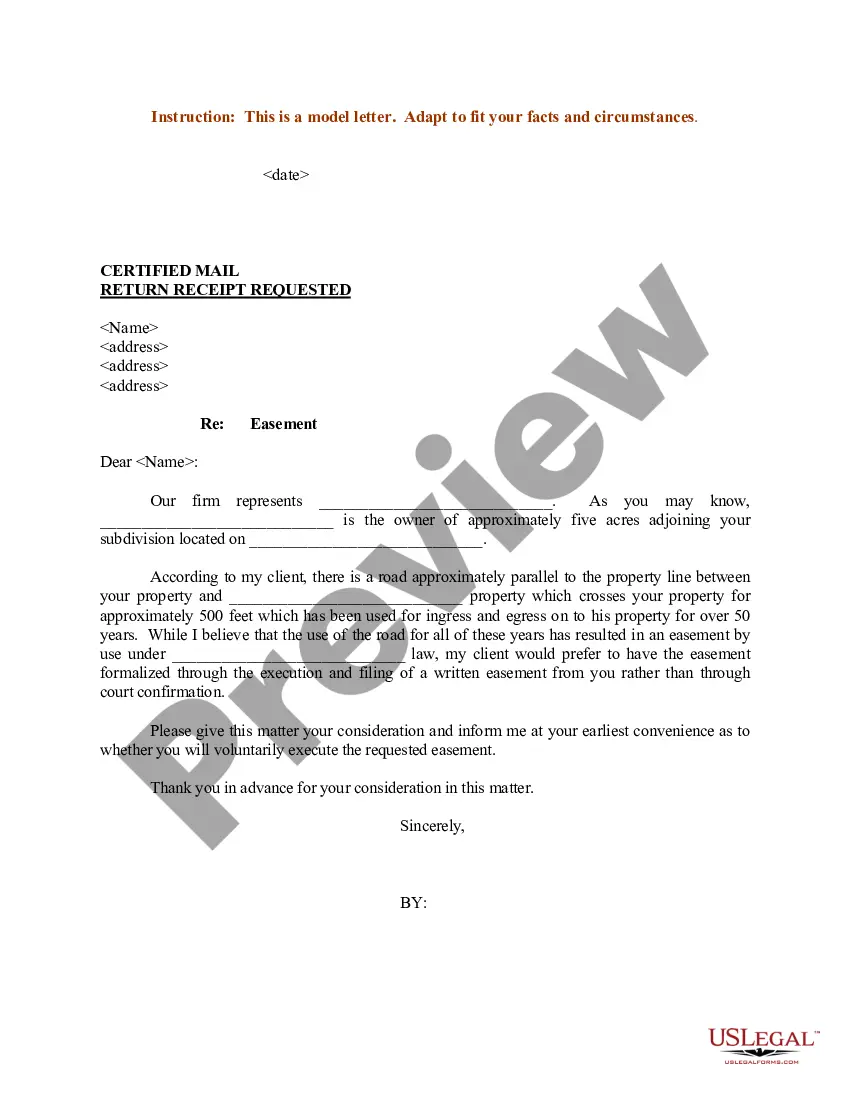
Sample Easement Request Letter With Deed Of Trust
Description
Get your form ready online
Our built-in tools help you complete, sign, share, and store your documents in one place.
Make edits, fill in missing information, and update formatting in US Legal Forms—just like you would in MS Word.
Download a copy, print it, send it by email, or mail it via USPS—whatever works best for your next step.
Sign and collect signatures with our SignNow integration. Send to multiple recipients, set reminders, and more. Go Premium to unlock E-Sign.
If this form requires notarization, complete it online through a secure video call—no need to meet a notary in person or wait for an appointment.
We protect your documents and personal data by following strict security and privacy standards.

Make edits, fill in missing information, and update formatting in US Legal Forms—just like you would in MS Word.

Download a copy, print it, send it by email, or mail it via USPS—whatever works best for your next step.

Sign and collect signatures with our SignNow integration. Send to multiple recipients, set reminders, and more. Go Premium to unlock E-Sign.

If this form requires notarization, complete it online through a secure video call—no need to meet a notary in person or wait for an appointment.

We protect your documents and personal data by following strict security and privacy standards.
Looking for another form?
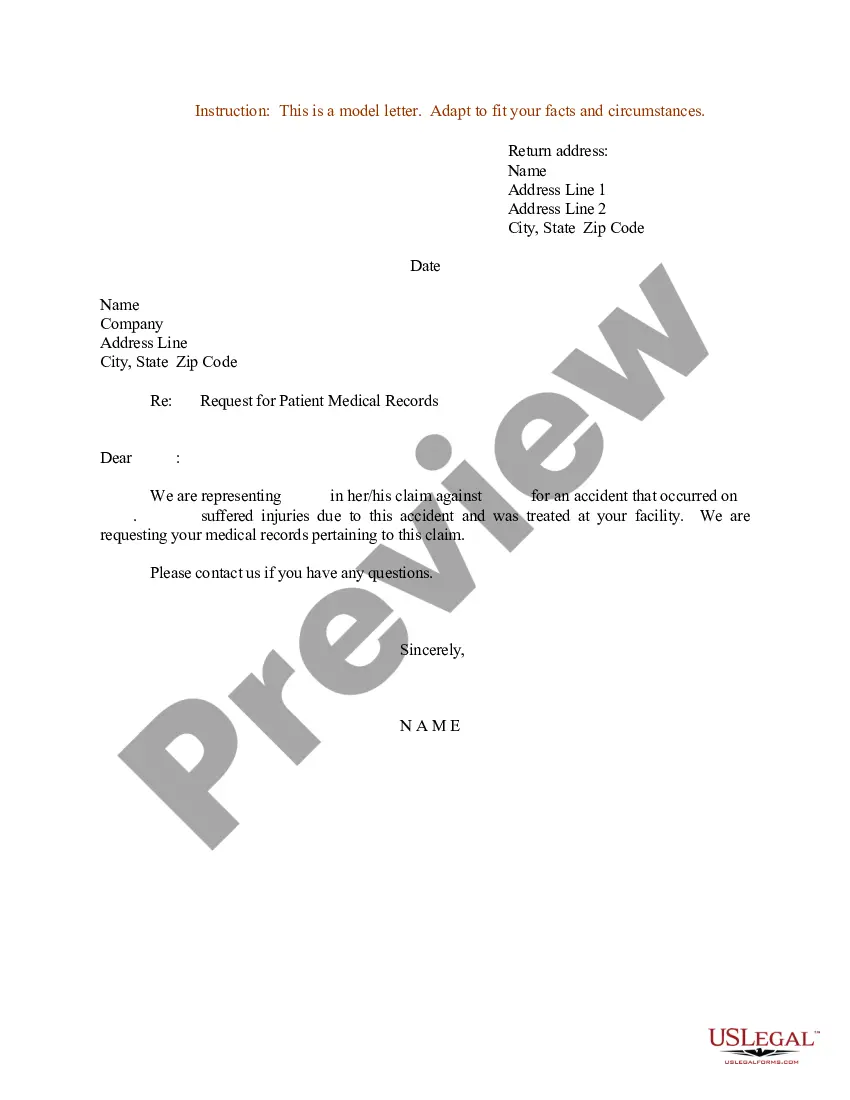

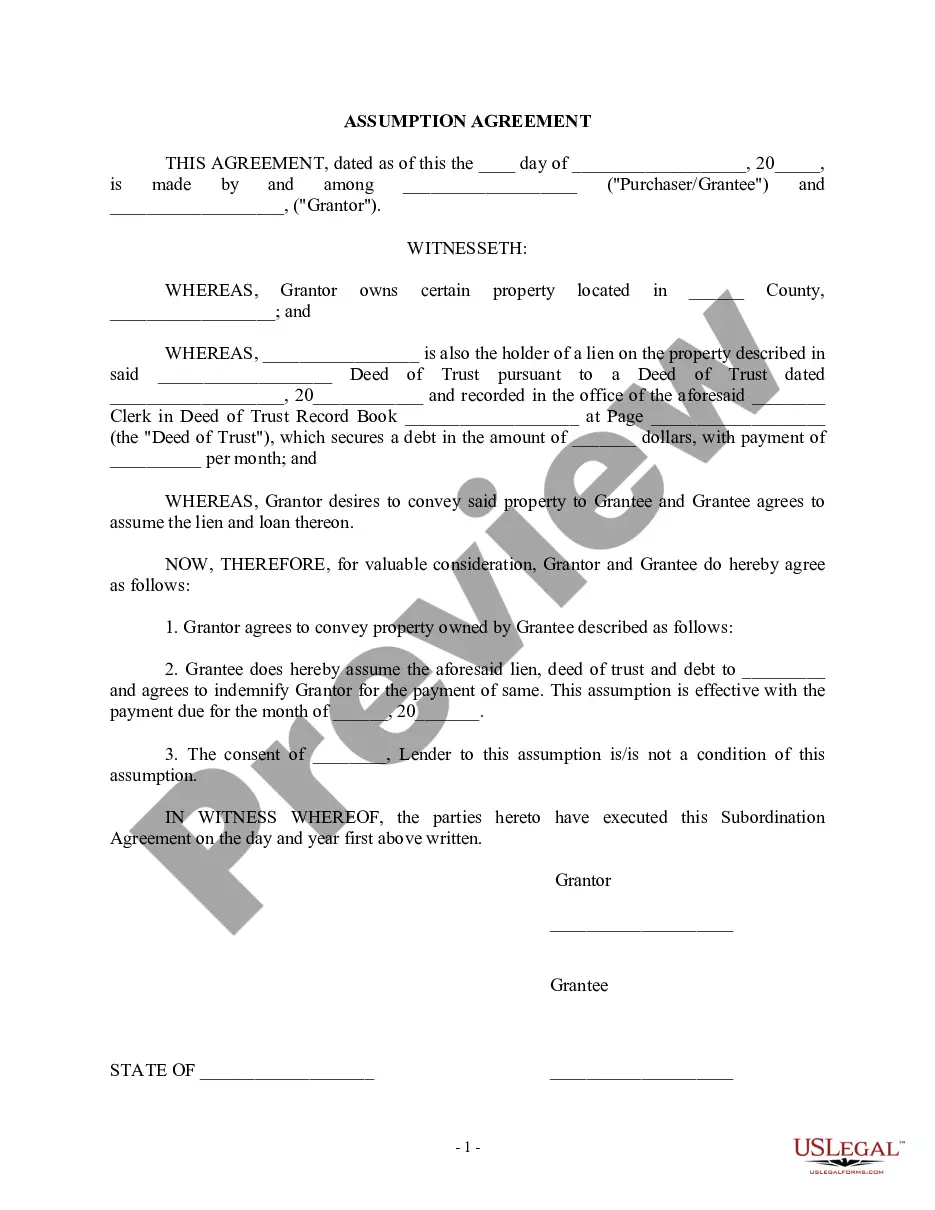
How to fill out Sample Letter For Request To Formalize Easement?
The Sample Easement Request Letter With Deed Of Trust displayed on this site is a reusable legal template created by expert attorneys in accordance with national and local laws.
For over 25 years, US Legal Forms has assisted individuals, companies, and legal professionals with more than 85,000 authenticated, state-specific documents for any business and personal need.
Register for US Legal Forms to have verified legal templates available for all of life's circumstances at your fingertips.
- Look for the document you need and examine it.
- Browse through the file you searched and preview it or review the form description to confirm it meets your criteria. If it doesn’t, utilize the search bar to find the appropriate one. Click Buy Now once you have identified the template you require.
- Register and sign in.
- Select the pricing plan that fits you and create an account. Use PayPal or a credit card for swift payment. If you already possess an account, Log In and verify your subscription to proceed.
- Obtain the editable template.
- Choose the format you prefer for your Sample Easement Request Letter With Deed Of Trust (PDF, Word, RTF) and save the document on your device.
- Fill out and sign the document.
- Print the template to complete it by hand. Alternatively, use an online multifunctional PDF editor to rapidly and accurately fill out and sign your form with an eSignature.
- Redownload your paperwork.
- Reuse the same document whenever necessary. Access the My documents tab in your profile to redownload any forms you have previously purchased.
Form popularity
FAQ
In Kentucky, property owners generally cannot deny access to landlocked properties if there is a legally established easement. Landowners must allow access in accordance with the easement's terms. If you're facing related issues, consulting a sample easement request letter with deed of trust can help clarify your rights and guide your actions.
Writing an easement agreement requires clarity and attention to detail. Start by defining the parties involved, the property location, and the purpose of the easement. Using a sample easement request letter with deed of trust as a guide can help ensure that you cover all essential aspects and avoid potential disputes.
The writing that evidences an easement is referred to as an 'easement deed' or 'easement agreement.' This document should clearly outline the rights granted to the easement holder. If you need to create one, a sample easement request letter with deed of trust can serve as a model to ensure all necessary information is included.
In Kentucky, a property owner typically cannot block an easement that has been legally established. Doing so may result in legal action from the easement holder, as these rights are usually enforceable. If you're uncertain about easement rights on your property, consider drafting a sample easement request letter with deed of trust to clearly express your position.
Easement laws in Kentucky stipulate how easements are created, maintained, and terminated. Generally, easements can be created by express agreement, necessity, or prescription. For detailed guidance on Kentucky laws, you may find a sample easement request letter with deed of trust beneficial as it outlines important elements corresponding to state regulations.
A deed of trust is typically released by a document known as a 'deed of reconveyance.' This document confirms that the obligation secured by the deed of trust has been fulfilled. If you are navigating this process, utilizing a sample easement request letter with deed of trust can provide a clear framework for the necessary documentation.
Blocking access to an easement can lead to legal consequences, depending on the terms of the easement itself and local laws. Generally, property owners cannot restrict access if the easement is valid and properly recorded. If you have concerns about an easement on your property, using a sample easement request letter with deed of trust may help clarify your rights and obligations.
An easement can be terminated through several actions, including abandonment, expiration, or agreement. When both parties agree to end the easement, it typically requires documentation, such as a sample easement request letter with deed of trust. Always consider consulting a legal expert to ensure you follow local laws when terminating an easement.
In Minnesota, easements are granted for specific purposes and can be created through express grant or implied use. Both written and verbal agreements can establish easements, but a written document is usually preferred for clarity and legal purposes. If you need to request an easement, using a sample easement request letter with deed of trust can provide a solid framework for your correspondence. Always consult a local attorney to navigate state laws effectively.
An easement can be terminated in several ways, including expiration, abandonment, or merging with the title of the dominant and servient estates. Additionally, if the easement is violated or if the purpose of the easement is no longer needed, it may also end. To ensure a clear understanding of your rights and obligations, consider drafting a sample easement request letter with deed of trust when dealing with these issues.