Transfer Letter For Job
Description
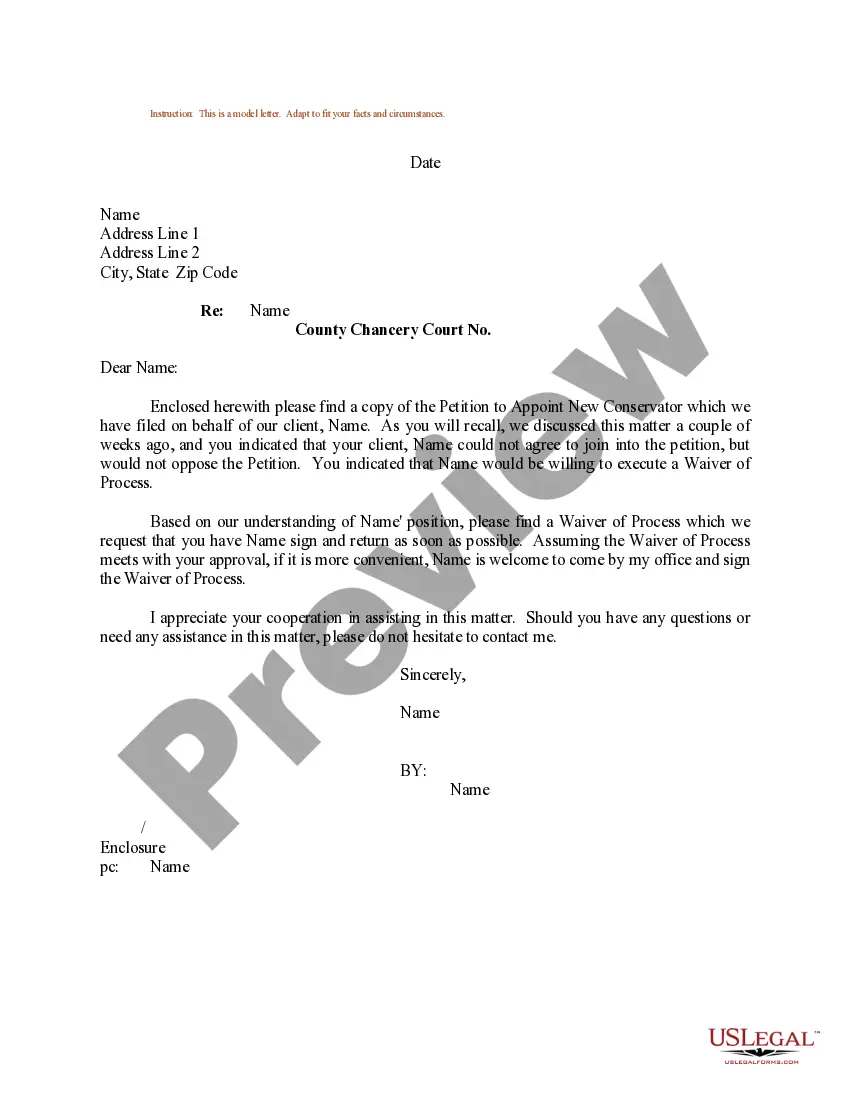
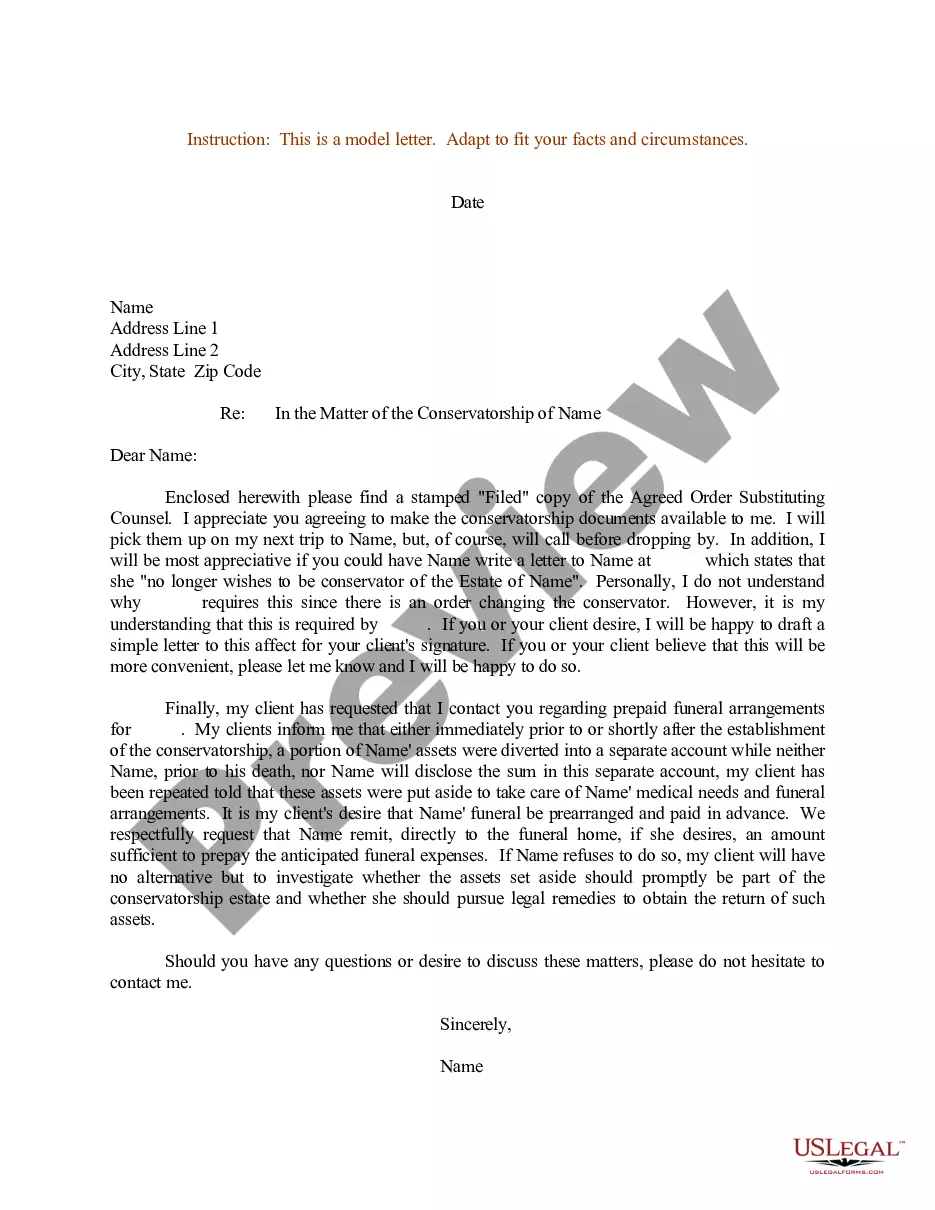
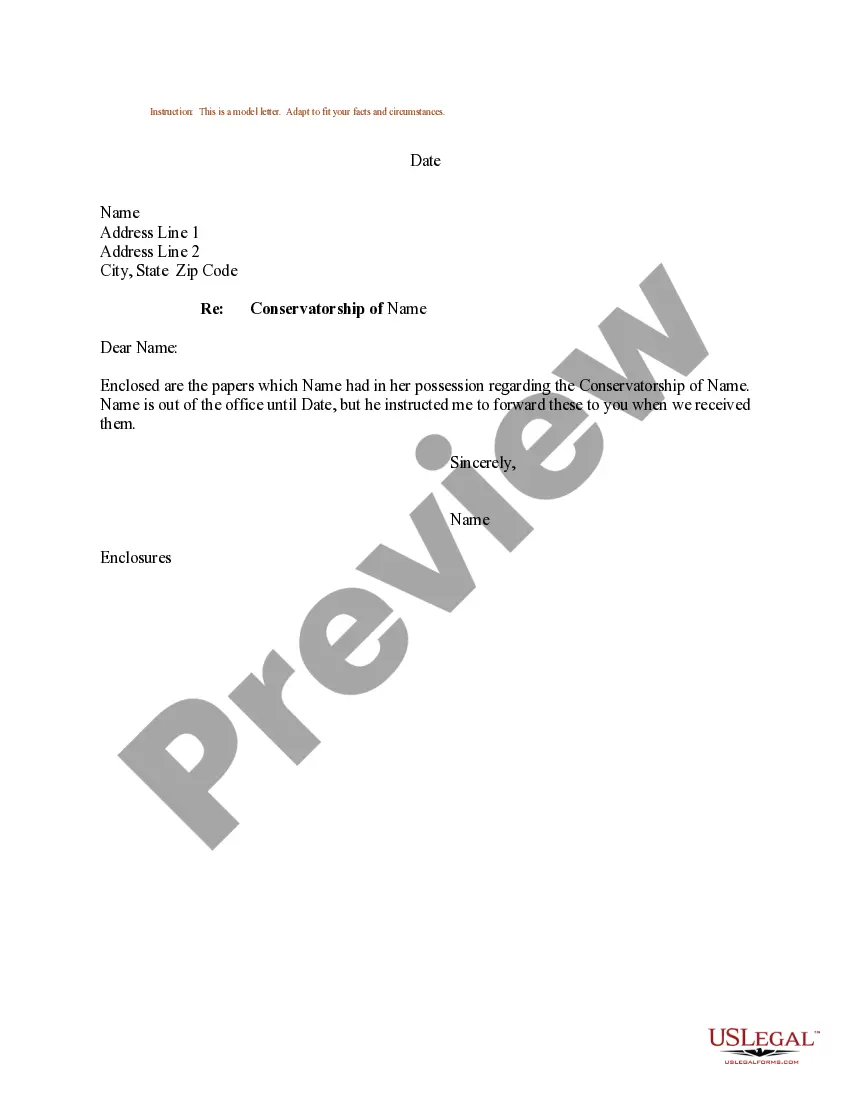
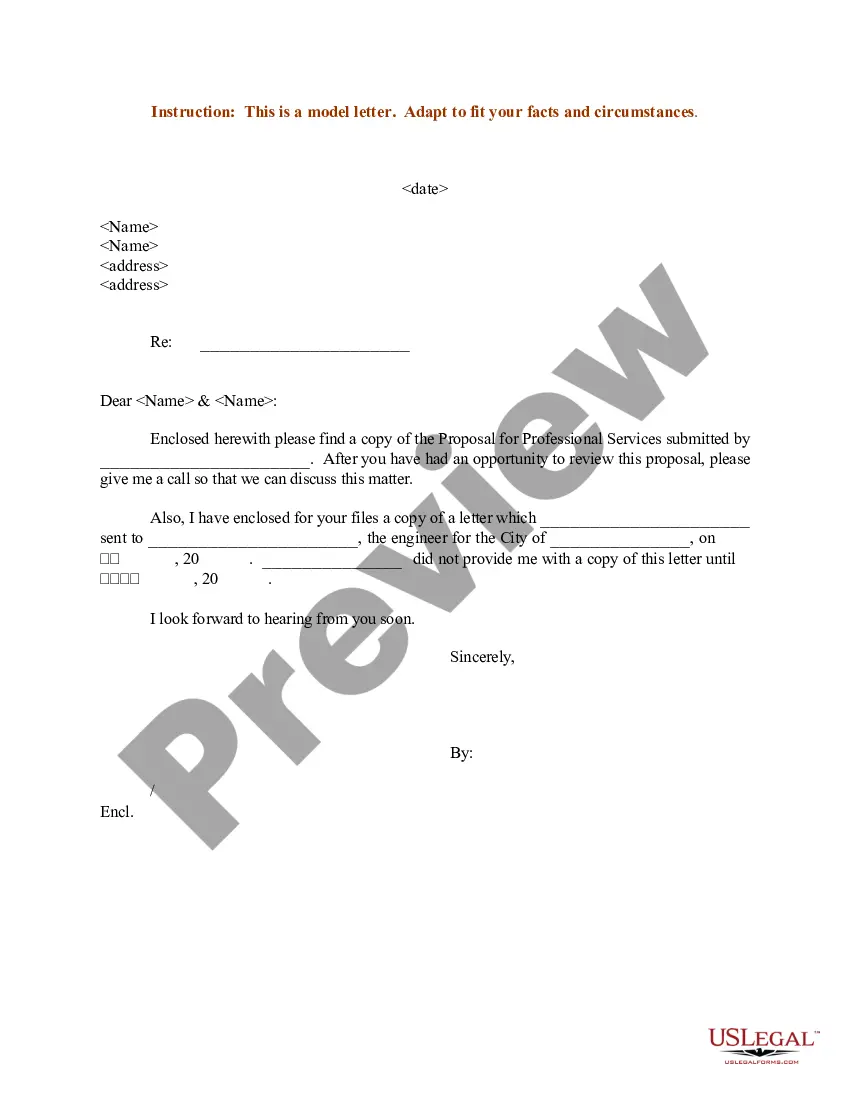




How to fill out Sample Letter Regarding Order Transferring Matter Of Conservatorship?
Dealing with legal documents and processes can be a lengthy addition to your daily routine.
Transfer Letter For Job and similar forms typically demand that you search for them and understand how to fill them out correctly.
Thus, whether you are managing financial, legal, or personal issues, having a comprehensive and easy-to-use online collection of forms readily available will be extremely beneficial.
US Legal Forms is the premier online source for legal templates, featuring over 85,000 state-specific documents and various tools to help you complete your paperwork swiftly.
Is it your first experience using US Legal Forms? Create and establish a free account in just a few minutes, giving you entry to the form library and Transfer Letter For Job. Then, follow the instructions outlined below to fill out your form.
- Browse the library of relevant documents accessible to you with just a single click.
- US Legal Forms offers you state- and county-specific forms you can download at any time.
- Protect your document management tasks with a high-quality service that allows you to create any form in minutes without incurring any extra or hidden charges.
- Just Log In to your account, search for Transfer Letter For Job, and obtain it immediately from the My documents section.
- You can also retrieve previously saved forms.
Form popularity
FAQ
To write a job transfer letter, begin by clearly stating your current position and the position you wish to transfer to. Provide valid reasons for the transfer, such as career advancement or personal circumstances. Remember to keep the tone positive and focused on how this change benefits both you and the company. For tools and guidance, consider using platforms like US Legal Forms that offer templates tailored for such letters.
The best format for a transfer letter for a job includes a clear and professional structure. Start with your address and the date, followed by the employer’s address. Use a formal greeting, such as 'Dear Manager's Name,' and keep sentences concise. Conclude with a professional closing and your signature, ensuring complete clarity and a respectful tone throughout.
Typically, the employee requesting the job transfer writes the transfer letter for a job. This responsibility allows you to express your specific interests and reasons for the move. Sometimes, a direct supervisor may support your transfer request by writing a recommendation or endorsing your transfer. However, the initiative usually rests with the employee.
To write a transfer letter for a job, start by addressing your direct supervisor or the appropriate manager. Clearly state your intention to transfer, including your current position and the desired role. Be concise and articulate the reasons for your request, emphasizing how the transfer aligns with your career goals and the organization’s needs. This approach demonstrates your professionalism and commitment.
To professionally request a transfer, start with a formal greeting and introduce your current role. Detail your reasons for wanting the transfer, such as personal circumstances or career growth. Highlight how the transfer aligns with company goals. Consider using USLegalForms to find templates that help streamline the writing process and present your request effectively.
A formal letter for transfer should be structured with a proper greeting, a clear introduction, and a detailed body outlining your request. Mention your desire to transfer, provide context on why the transfer is necessary, and include any relevant dates. Conclude with an expression of gratitude for considering your request, making it sound respectful and professional.
When crafting a request to transfer a letter, clearly express your reason for the transfer. Specify the details about your job position and the address where the letter should be sent. It is important to be concise but include all necessary information to avoid confusion. Using a template can make this process easier and more effective.
To write a transfer letter for job purposes, start by clearly stating your intention to transfer. Include your current position, the reasons for your transfer, and the new location where you wish to move. You should also mention how this transfer will benefit both you and the company. Keep the tone professional and ensure you include a formal closing.
To request a transfer at your job, start by gathering the necessary information about the new position you want. Schedule a meeting with your supervisor to discuss your interest and express your reasons. Submitting a transfer letter for job can formalize this request and show your professionalism in navigating this transition.
When requesting a transfer request, begin by drafting a formal email or letter to your supervisor or HR. Clearly state that you are seeking a transfer and outline your reasons comprehensively. By including a transfer letter for job with all essential details, you can present a formalized request, ensuring your wishes are communicated effectively.