Summary Judgment Legal Foreclosure
Description
Get your form ready online
Our built-in tools help you complete, sign, share, and store your documents in one place.
Make edits, fill in missing information, and update formatting in US Legal Forms—just like you would in MS Word.
Download a copy, print it, send it by email, or mail it via USPS—whatever works best for your next step.
Sign and collect signatures with our SignNow integration. Send to multiple recipients, set reminders, and more. Go Premium to unlock E-Sign.
If this form requires notarization, complete it online through a secure video call—no need to meet a notary in person or wait for an appointment.
We protect your documents and personal data by following strict security and privacy standards.

Make edits, fill in missing information, and update formatting in US Legal Forms—just like you would in MS Word.

Download a copy, print it, send it by email, or mail it via USPS—whatever works best for your next step.

Sign and collect signatures with our SignNow integration. Send to multiple recipients, set reminders, and more. Go Premium to unlock E-Sign.

If this form requires notarization, complete it online through a secure video call—no need to meet a notary in person or wait for an appointment.

We protect your documents and personal data by following strict security and privacy standards.
Looking for another form?
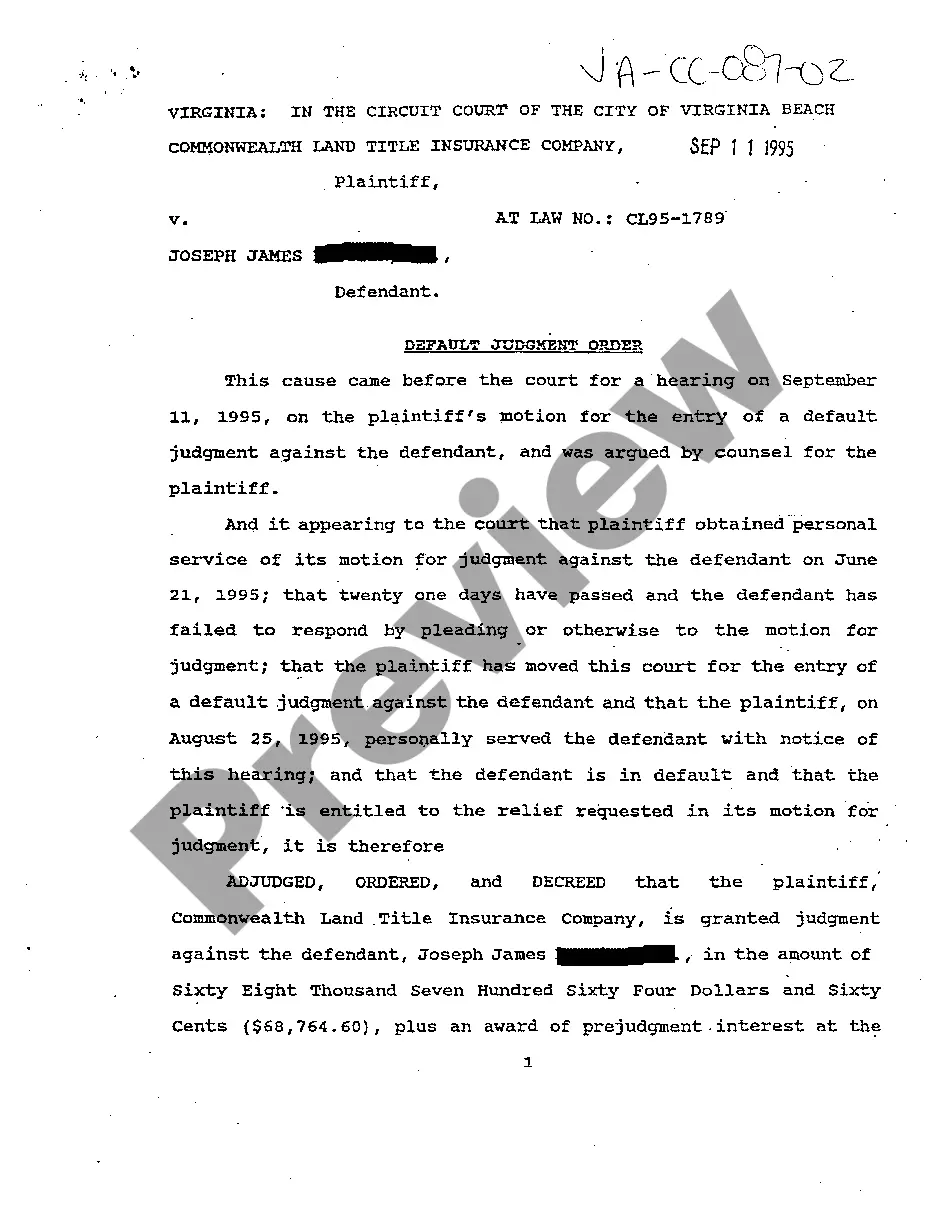
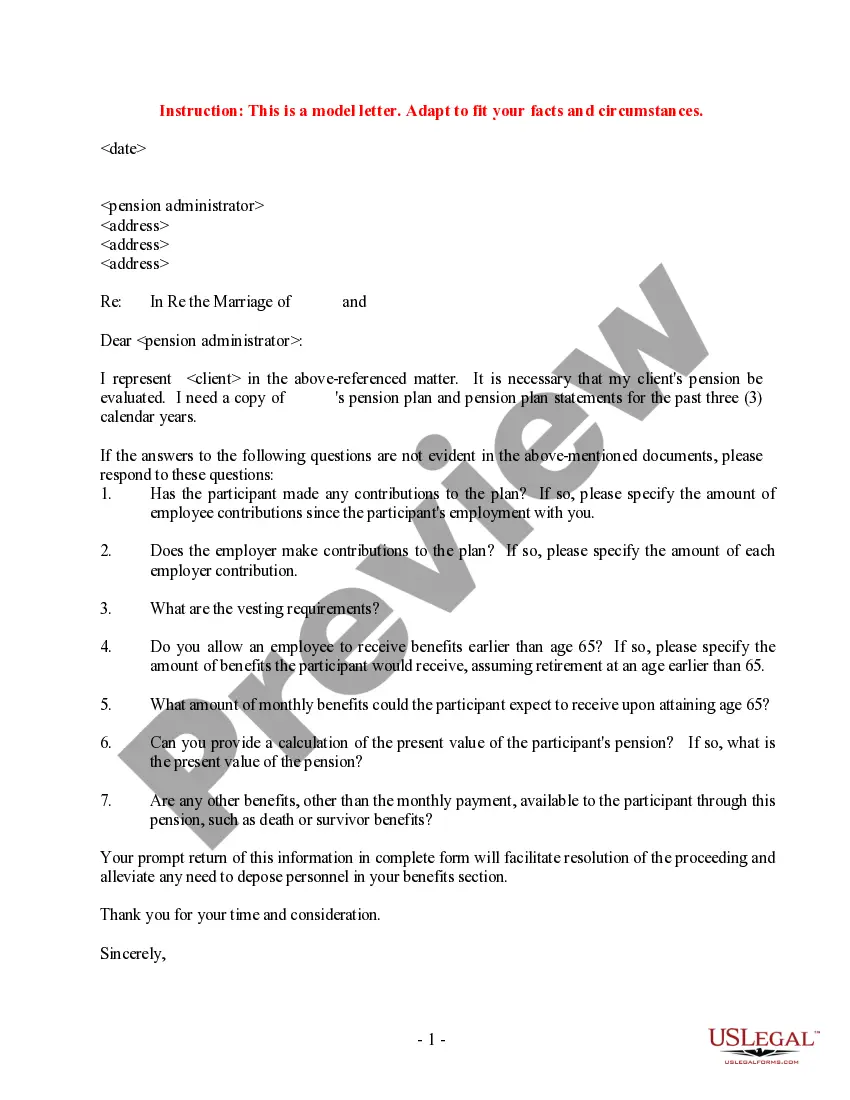

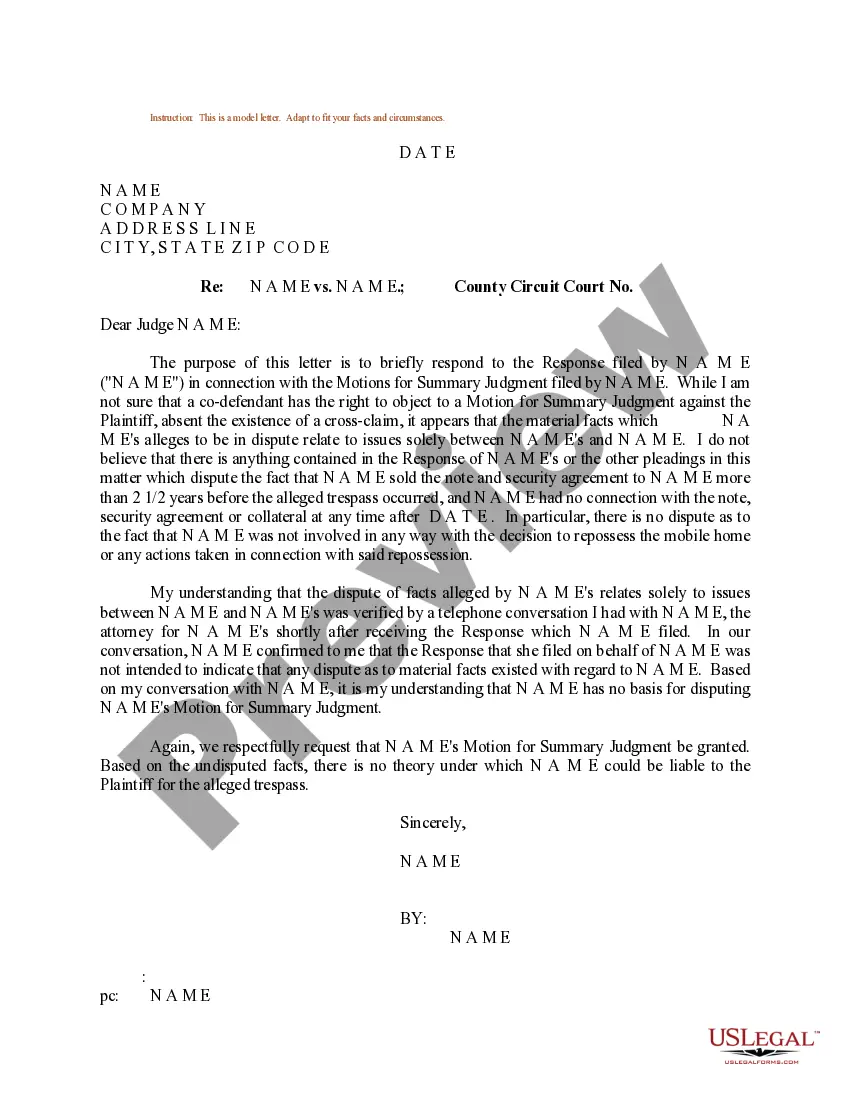
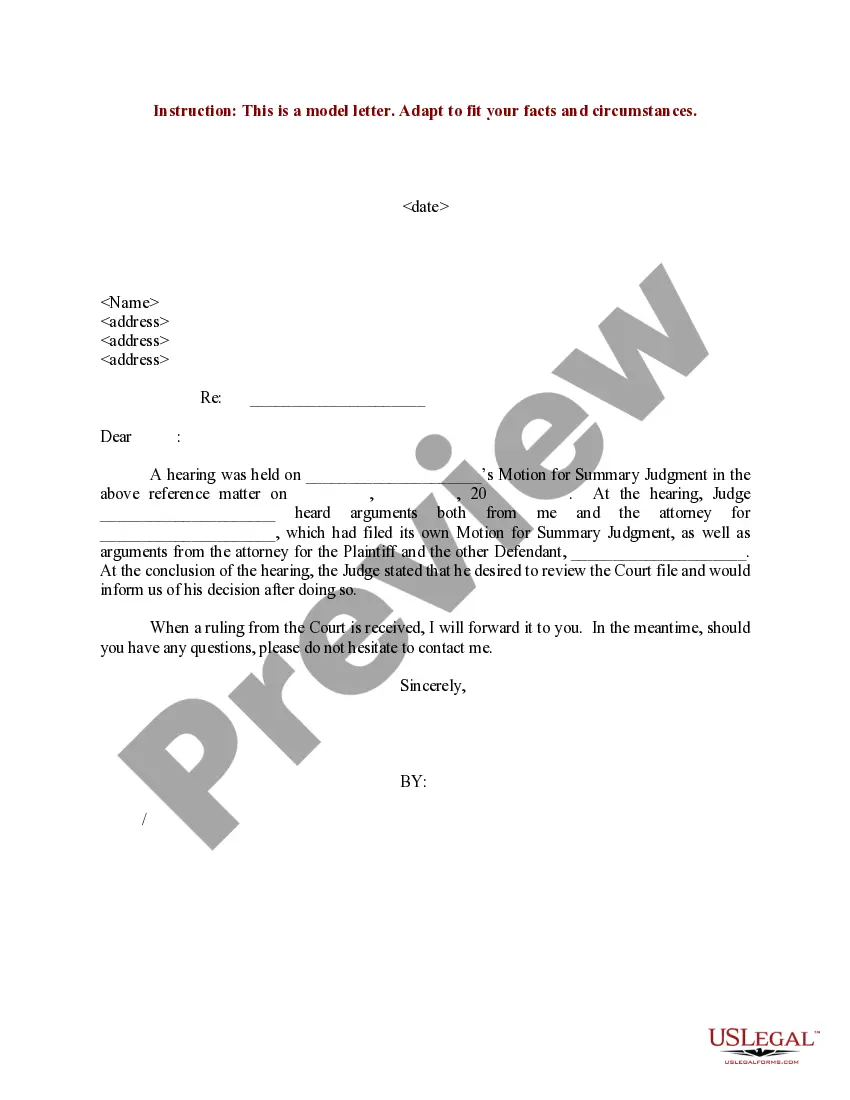
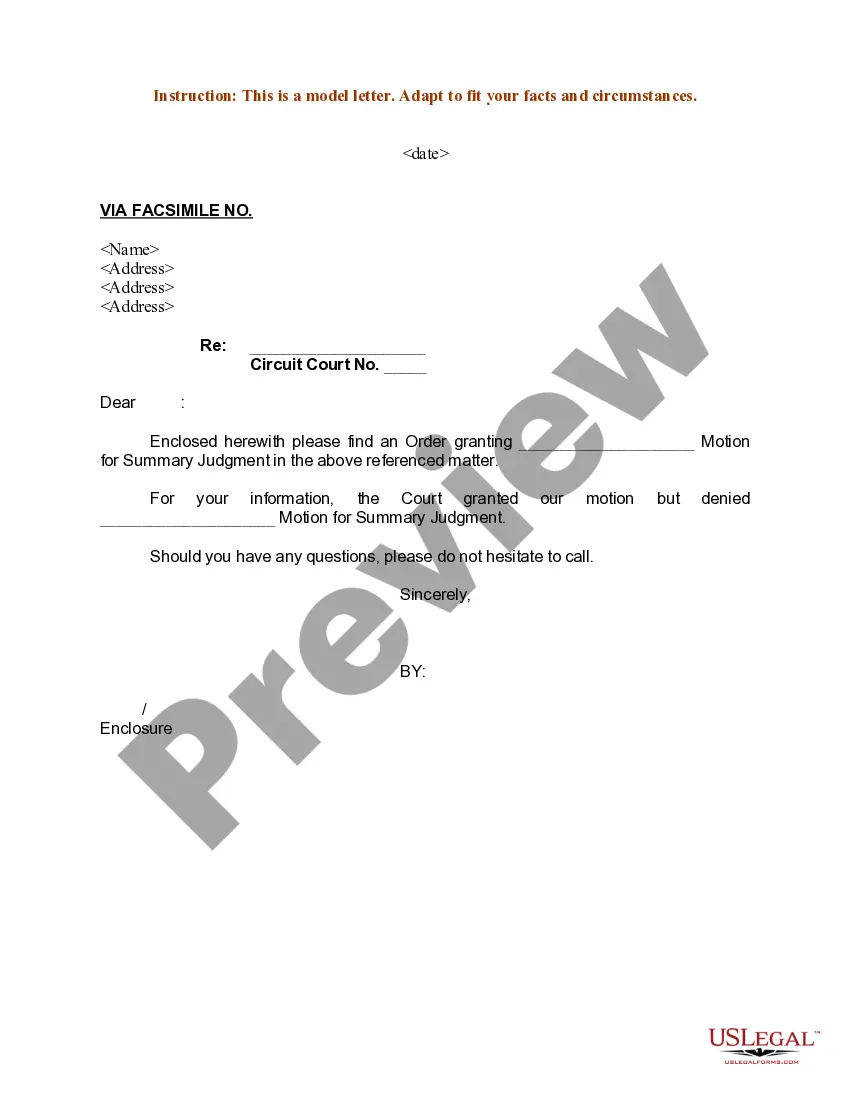
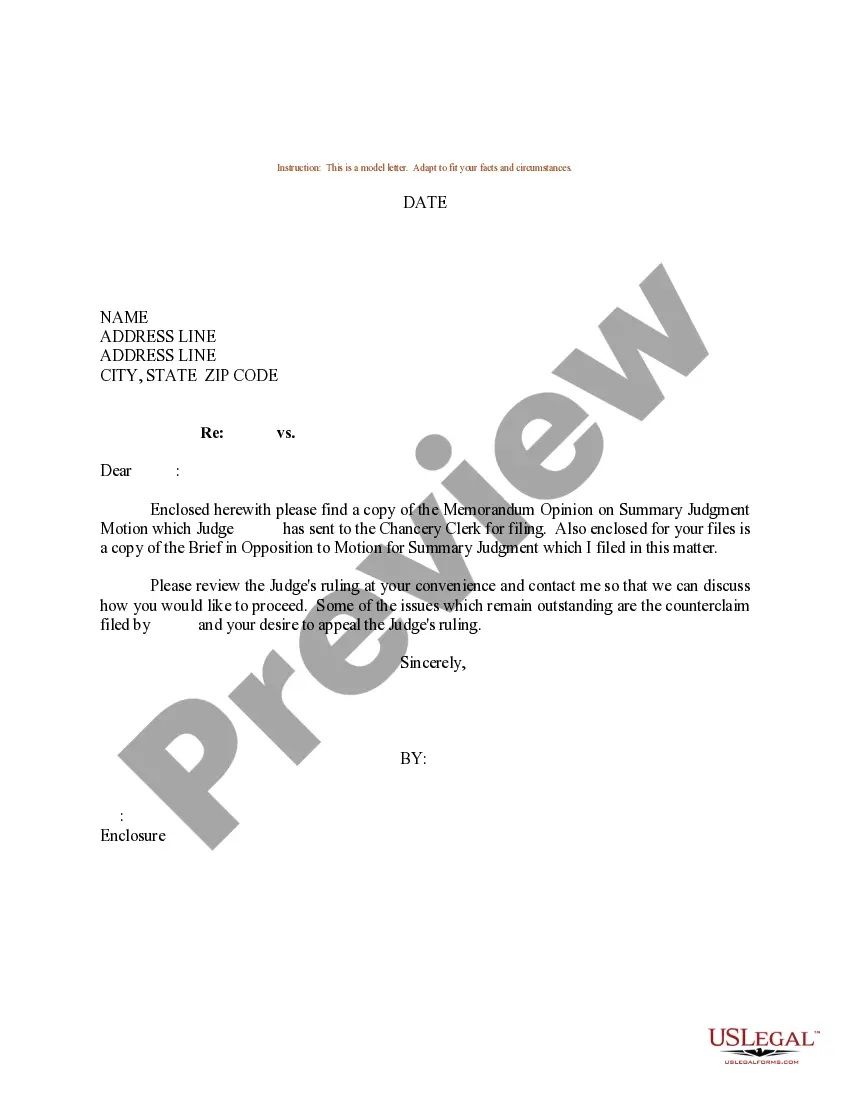
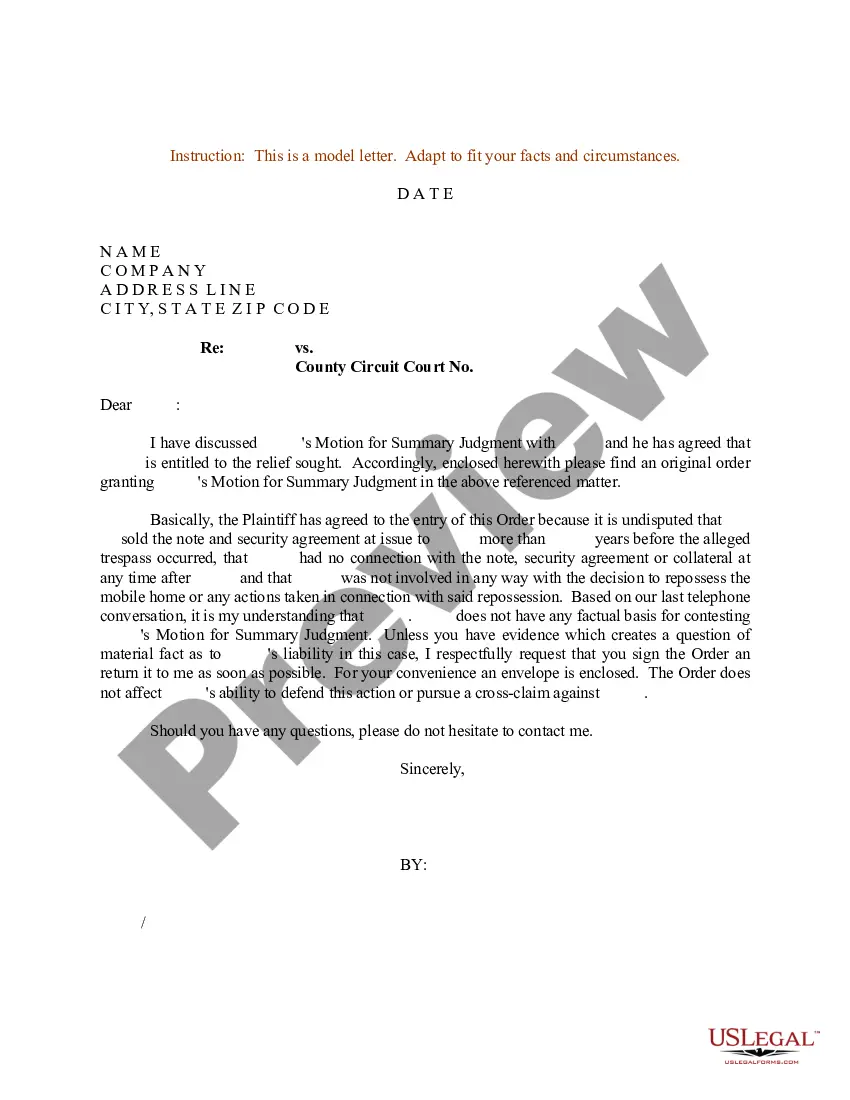
How to fill out Sample Letter For Response In Connection With Motions For Summary Judgment?
The Overview Judgment Legal Foreclosure displayed on this page is a reusable legal framework crafted by experienced attorneys in accordance with federal and state regulations.
For over 25 years, US Legal Forms has furnished individuals, enterprises, and lawyers with over 85,000 validated, state-specific forms for any business and personal circumstance. It’s the fastest, simplest, and most reliable method to secure the documentation you require, as the service ensures the utmost level of data protection and anti-malware safeguards.
Subscribe to US Legal Forms to have authenticated legal templates for all of life's situations readily available.
- Search for the document you need and verify it.
- Browse through the file you searched and preview it or read the form description to confirm it meets your needs. If it doesn’t, use the search bar to locate the appropriate one. Click Buy Now once you've discovered the template you require.
- Choose and sign in.
- Select the pricing plan that fits you and create an account. Use PayPal or a credit card to process a quick payment. If you already possess an account, Log In and verify your subscription to proceed.
- Obtain the editable template.
- Select the format you desire for your Overview Judgment Legal Foreclosure (PDF, Word, RTF) and save the document on your device.
- Complete and sign the document.
- Print the template to fill it out manually. Alternatively, use an online multifunctional PDF editor to swiftly and accurately complete and sign your form with a legally-binding electronic signature.
- Redownload your documents as needed.
- Utilize the same document again whenever necessary. Access the My documents tab in your profile to redownload any previously downloaded forms.
Form popularity
FAQ
The chances of winning a summary judgment depend on the strength of your evidence and the clarity of your arguments. If your case is well-documented and addresses factual disputes effectively, you have a greater likelihood of success. Consulting with platforms like USLegalForms can provide insights and resources to improve those chances in the summary judgment legal foreclosure process.
One downside of filing for summary judgment is the potential for appeals if the opposing party contests the ruling. Additionally, if the motion is denied, you may give the other party the opportunity to strengthen their case. Thus, careful consideration is necessary when entering the summary judgment legal foreclosure arena.
A summary judgment for foreclosure is a court ruling that allows one party to win the case without a trial. This legal resolution occurs when there are no factual disputes to be resolved, typically favoring the lender. By obtaining a summary judgment, the lender can secure the right to proceed with foreclosure more swiftly.
The odds of winning a summary judgment can vary based on the unique circumstances of each case. Typically, a party must show that there are no disputes over material facts and that they are entitled to a judgment as a matter of law. In summary judgment legal foreclosure cases, strong evidence and clear documentation significantly enhance your chances of success. To improve your chances, it's important to consult with legal experts who can guide you through the process.
To file a summary judgment in a summary judgment legal foreclosure case, you first need to gather all relevant documents. After preparing the necessary legal forms, submit them to the court along with supporting evidence that proves no material facts are in dispute. It is essential to meet the filing deadlines set by your jurisdiction, and often, using a platform like USLegalForms can simplify this process. Properly filed documents can facilitate a quicker resolution in your case.
Foreclosure is a legal process that allows lenders to recover the amount owed on a defaulted loan by taking ownership of and selling the mortgaged property. The foreclosure process varies by state, but in general, lenders try to work with borrowers to get them caught up on payments and avoid foreclosure.
In a Florida foreclosure action, a motion for summary judgment is typically filed by the lender, asking the judge to decide the case in favor of the lender immediately. This would provide the bank to take control of the property without a lengthy trial.
Among other requested forms of relief the Order of Reference (aka OOR or OREF) formally asks the Court to appoint a Referee to determine the amount due on the mortgaged premises. The Referee will report these findings in what is commonly known as the Referee's Oath and Report.
Foreclosure Can Take Months or Years Notice of default: The lender typically issues a notice of default, indicating its intention to foreclose, when the loan becomes 90 days past due. Typically, the notice indicates legal foreclosure will begin in 90 days unless the borrower brings their payments up to date.
In a Florida foreclosure action, a motion for summary judgment is typically filed by the lender, asking the judge to decide the case in favor of the lender immediately. This would provide the bank to take control of the property without a lengthy trial.