Summary Judgment Legal For Reconsideration
Description
Get your form ready online
Our built-in tools help you complete, sign, share, and store your documents in one place.
Make edits, fill in missing information, and update formatting in US Legal Forms—just like you would in MS Word.
Download a copy, print it, send it by email, or mail it via USPS—whatever works best for your next step.
Sign and collect signatures with our SignNow integration. Send to multiple recipients, set reminders, and more. Go Premium to unlock E-Sign.
If this form requires notarization, complete it online through a secure video call—no need to meet a notary in person or wait for an appointment.
We protect your documents and personal data by following strict security and privacy standards.

Make edits, fill in missing information, and update formatting in US Legal Forms—just like you would in MS Word.

Download a copy, print it, send it by email, or mail it via USPS—whatever works best for your next step.

Sign and collect signatures with our SignNow integration. Send to multiple recipients, set reminders, and more. Go Premium to unlock E-Sign.

If this form requires notarization, complete it online through a secure video call—no need to meet a notary in person or wait for an appointment.

We protect your documents and personal data by following strict security and privacy standards.
Looking for another form?








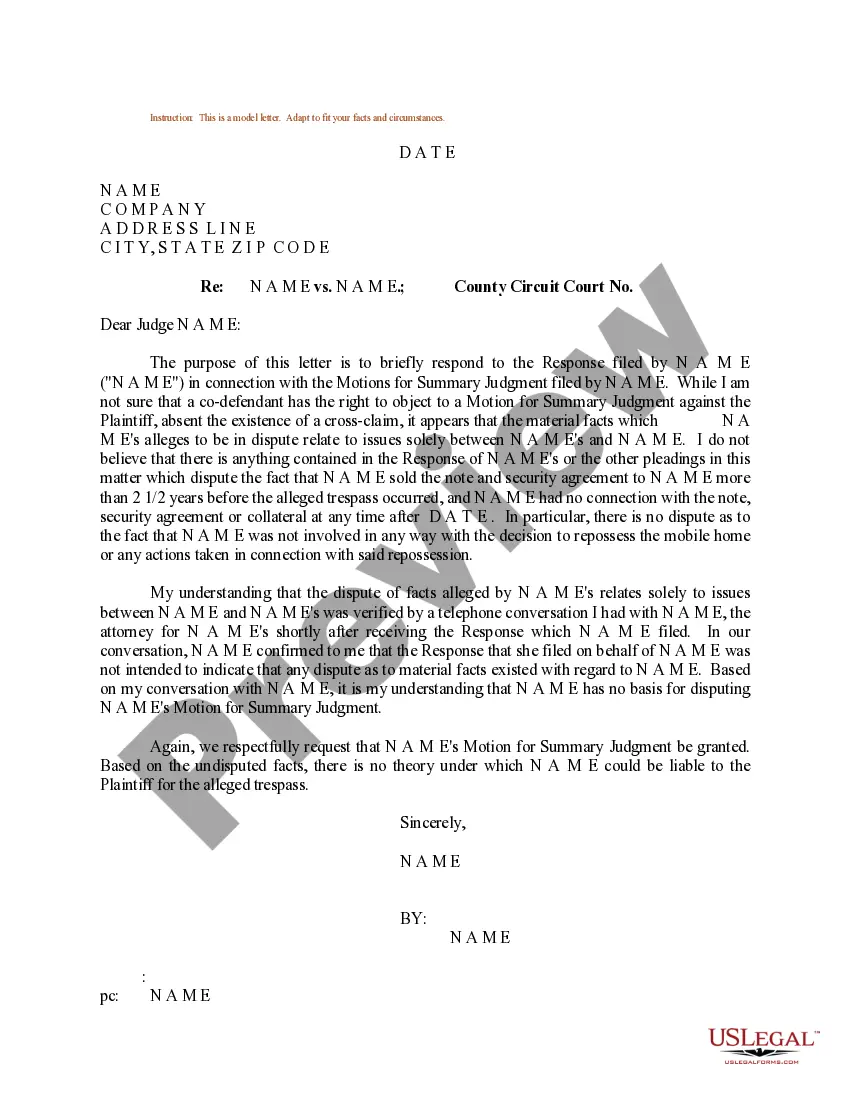
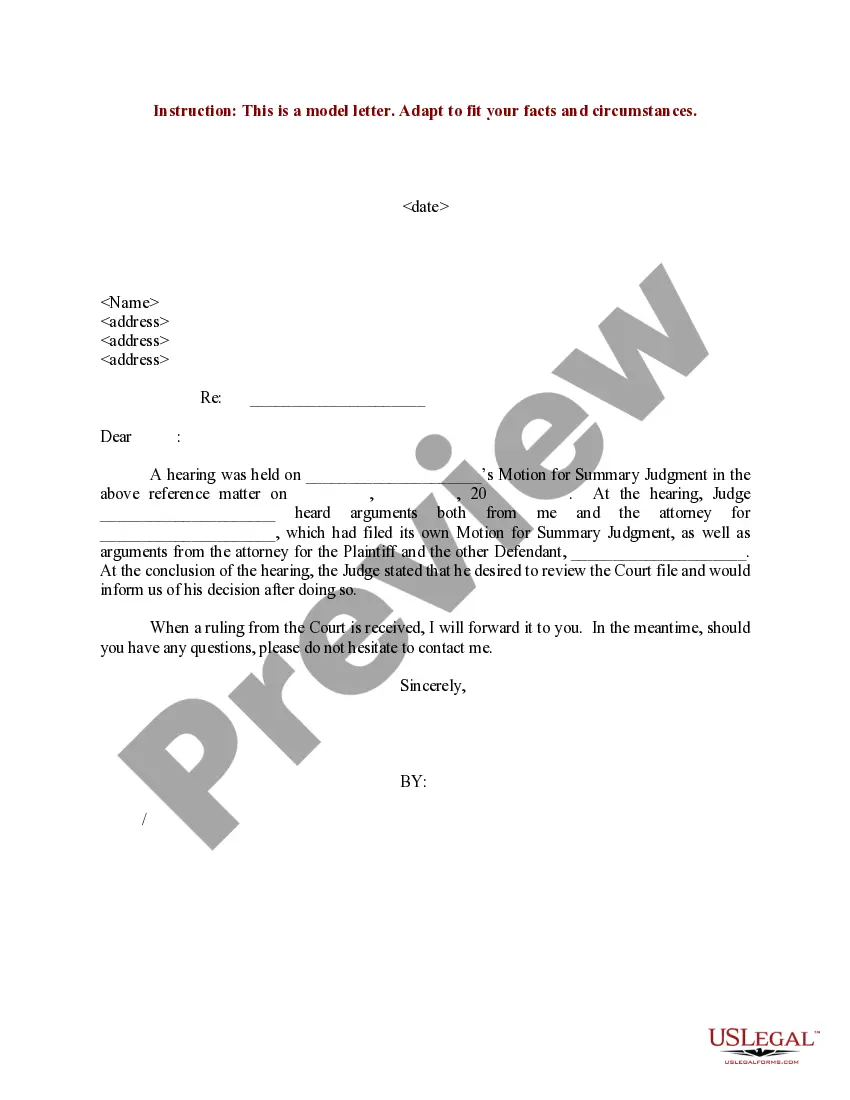
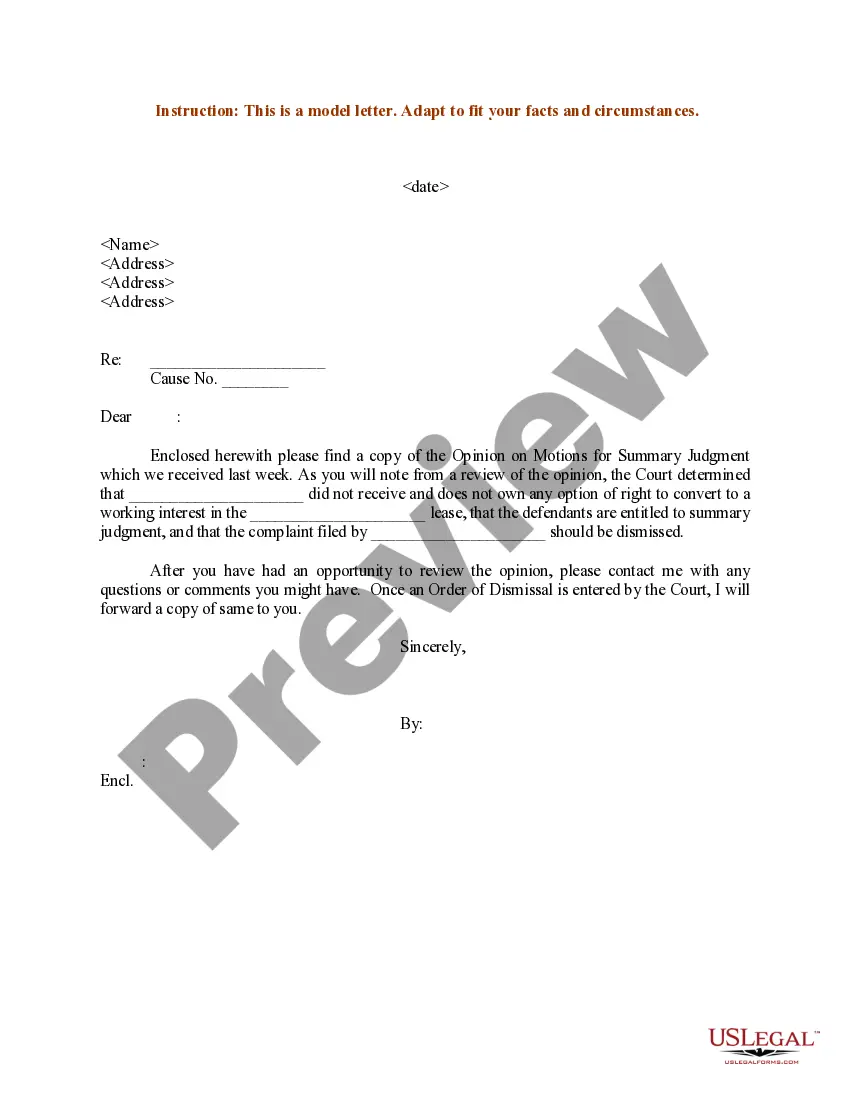
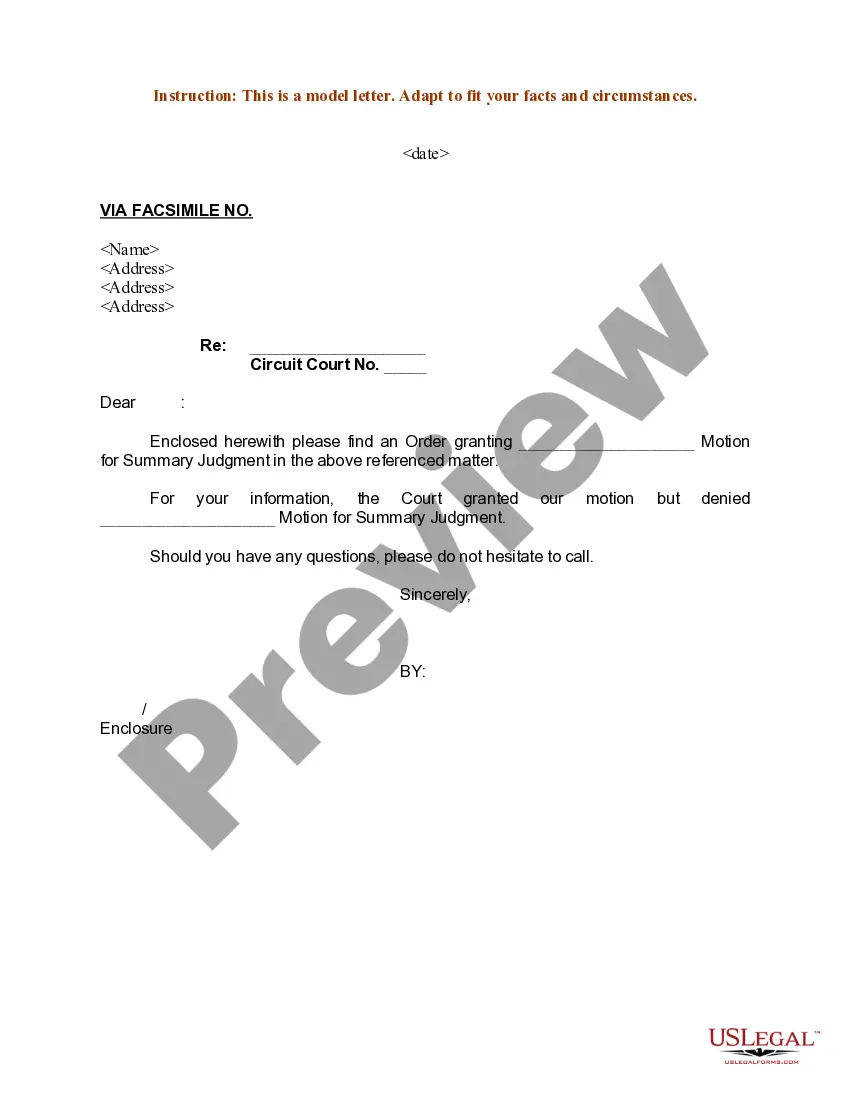
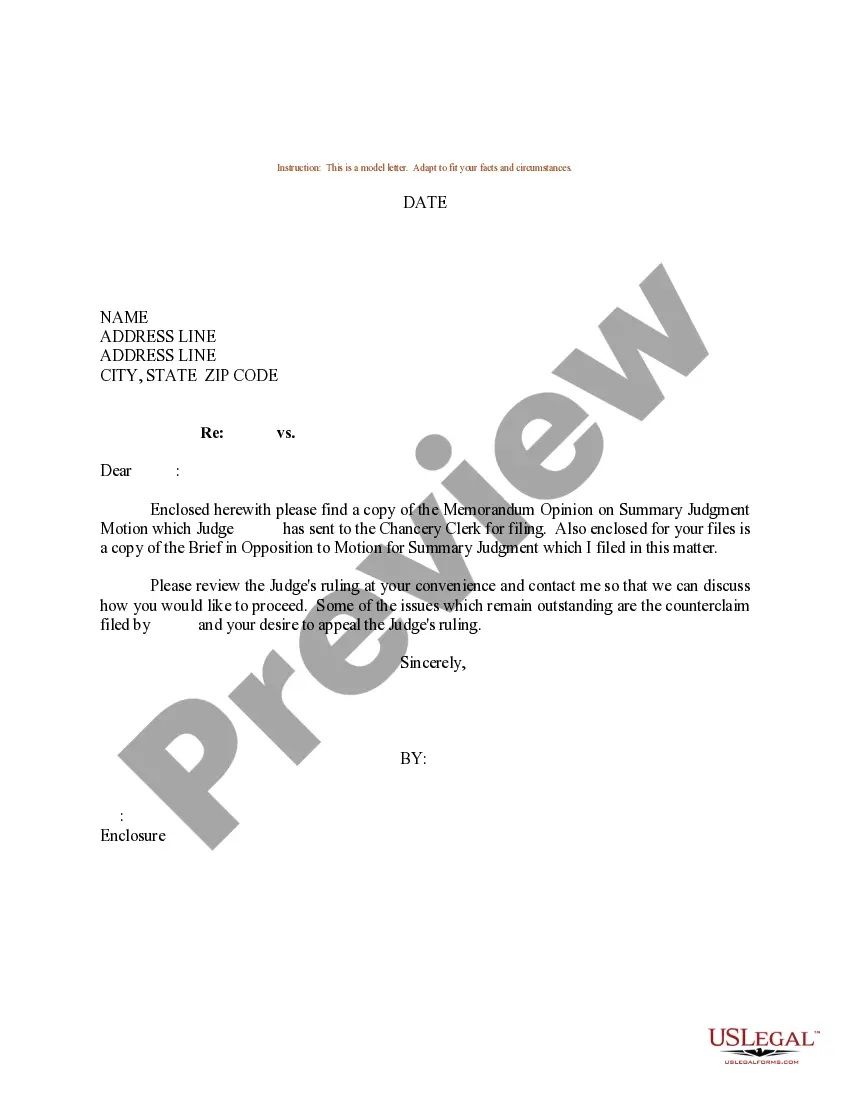
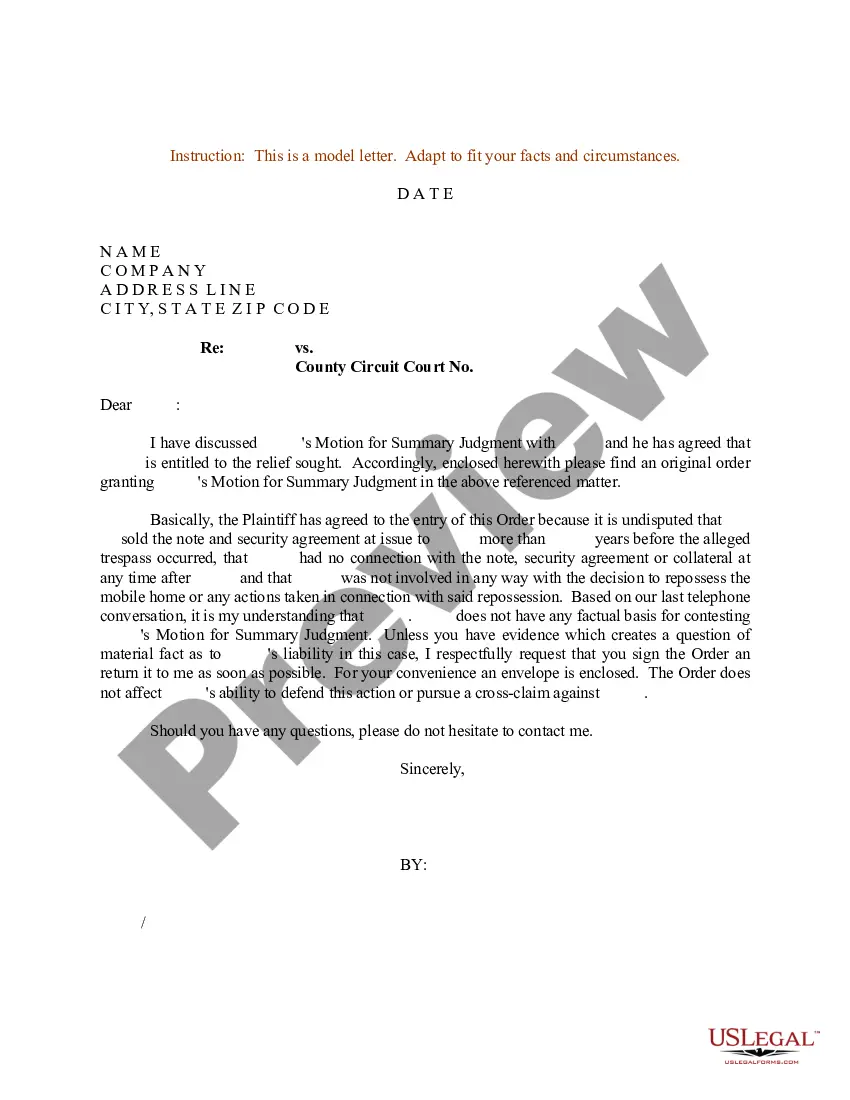
How to fill out Sample Letter For Response In Connection With Motions For Summary Judgment?
Acquiring legal documents that adhere to federal and state laws is crucial, and the web provides a multitude of choices to select from.
However, why squander time searching for the appropriate Summary Judgment Legal For Reconsideration example online when the US Legal Forms digital library already has such documents compiled in one location.
US Legal Forms is the largest online legal repository with over 85,000 fillable documents created by lawyers for any business and personal circumstance. They are straightforward to navigate with all forms categorized by state and intended use. Our experts keep pace with legislative changes, so you can always trust that your form is current and compliant when obtaining a Summary Judgment Legal For Reconsideration from our site.
Click Buy Now once you have found the appropriate form and select a subscription plan. Establish an account or sign in and process your payment via PayPal or a credit card. Choose the suitable format for your Summary Judgment Legal For Reconsideration and download it. All documents you find through US Legal Forms are reusable. To re-download and complete previously saved forms, navigate to the My documents section in your profile. Experience the most comprehensive and user-friendly legal document service!
- Quickly obtain a Summary Judgment Legal For Reconsideration is efficient for both existing and new users.
- If you possess an account with an active subscription, Log In and download the document template you require in the correct format.
- If you are new to our platform, follow the steps outlined below.
- Examine the template using the Preview option or through the text overview to confirm it fulfills your requirements.
- Search for another template using the search functionality at the top of the page if necessary.
Form popularity
FAQ
Yes, a summary judgment is generally appealable, allowing you to challenge the court’s decision in a higher court. However, certain timing and procedural rules must be followed to ensure your appeal is valid. If you find yourself facing a summary judgment that you believe is unjust, consider using US Legal services, which can assist you in the appeal process related to summary judgment legal for reconsideration.
To overturn a summary judgment, you typically must file a motion for reconsideration or an appeal, showing that the court made a legal error or that new evidence has emerged. It's essential to present a well-supported argument and refer to relevant legal standards. Engaging with professional legal services can improve your chances of success in navigating the complexities of summary judgment legal for reconsideration.
The burden of production in summary judgment refers to the obligation of a party to present evidence sufficient to support their claims or defenses. In summary judgment legal for reconsideration, this means you must show that there are disputed facts that warrant a trial. If a party fails to meet this burden, the court may grant summary judgment in favor of the opposing party.
Summary judgments do get overturned, but the frequency varies based on many factors, including the jurisdiction and specific case details. Generally, courts are cautious when granting summary judgment, and appeals may yield a different outcome. If you're considering seeking summary judgment legal for reconsideration, consulting an attorney may provide insights specific to your situation. Remember, each case is unique, and outcomes depend on the evidence presented.
The chance of success in these cases is less than 10% [1]. Another study found that summary judgment is mostly granted in Title VII cases, for example, cases involving equal pay or employment discrimination [2]. When it comes to federal cases, summary judgments are filed in 17% of total cases.
Summary judgment is granted when the facts can be decided upon without needing to go to trial, where the opposing party would lose due to a lack of evidence. If it's not clear that there is no more evidence, then summary judgment must be denied.
How to write a letter of reconsideration of appeal Confirm the recipient's information. ... Consider why you want a reconsideration. ... Find out why they passed. ... Support your request. ... Add a conclusion.
When a motion for summary judgment is denied, the nonmoving party achieves a form of premium that enables a case to settle for an additional amount. Put simply, the settlement value of a case increases when a motion for summary judgment is denied. Thus, denials of summary judgment up the ante in the litigation game.
Consider the following five approaches: Show that the motion fails to list the specific facts and law supporting summary judgment. ... Show that a dispute exists on a material fact. ... Show that the law does not support judgment on the undisputed facts.