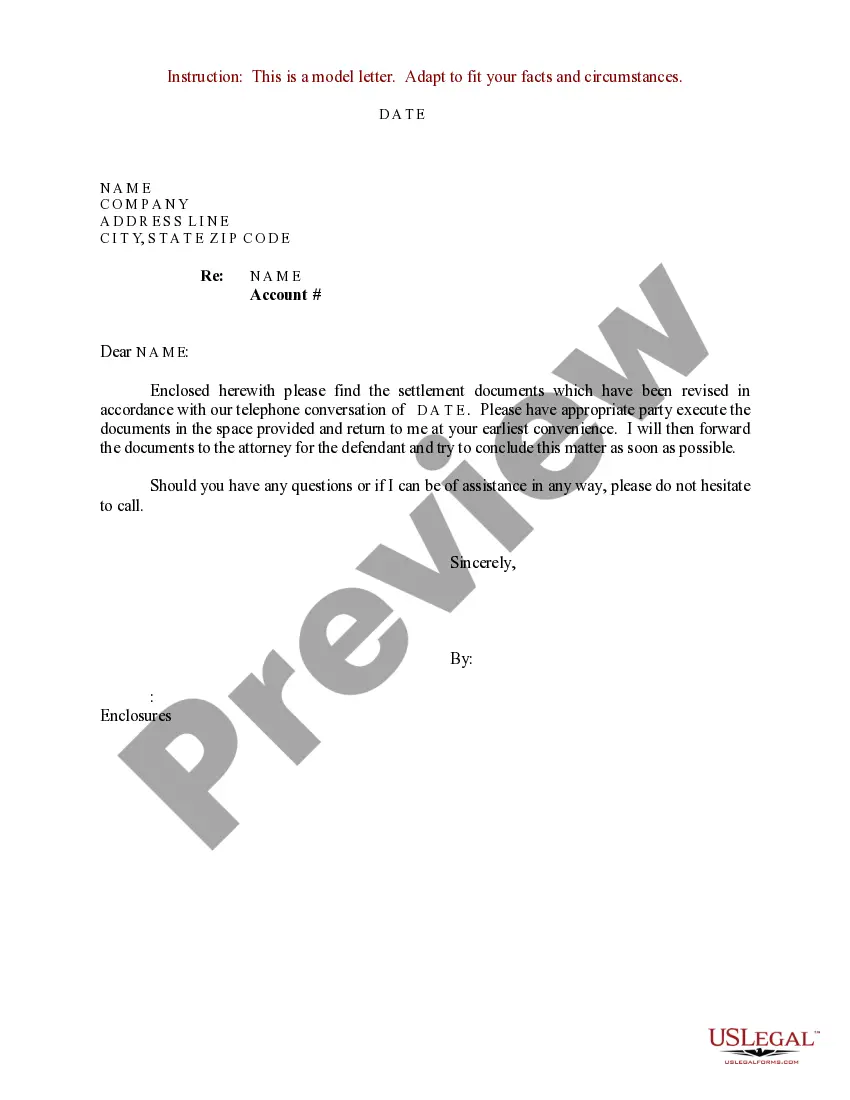
Settlement Agreement Format
Description
Get your form ready online
Our built-in tools help you complete, sign, share, and store your documents in one place.
Make edits, fill in missing information, and update formatting in US Legal Forms—just like you would in MS Word.
Download a copy, print it, send it by email, or mail it via USPS—whatever works best for your next step.
Sign and collect signatures with our SignNow integration. Send to multiple recipients, set reminders, and more. Go Premium to unlock E-Sign.
If this form requires notarization, complete it online through a secure video call—no need to meet a notary in person or wait for an appointment.
We protect your documents and personal data by following strict security and privacy standards.

Make edits, fill in missing information, and update formatting in US Legal Forms—just like you would in MS Word.

Download a copy, print it, send it by email, or mail it via USPS—whatever works best for your next step.

Sign and collect signatures with our SignNow integration. Send to multiple recipients, set reminders, and more. Go Premium to unlock E-Sign.

If this form requires notarization, complete it online through a secure video call—no need to meet a notary in person or wait for an appointment.

We protect your documents and personal data by following strict security and privacy standards.
Looking for another form?
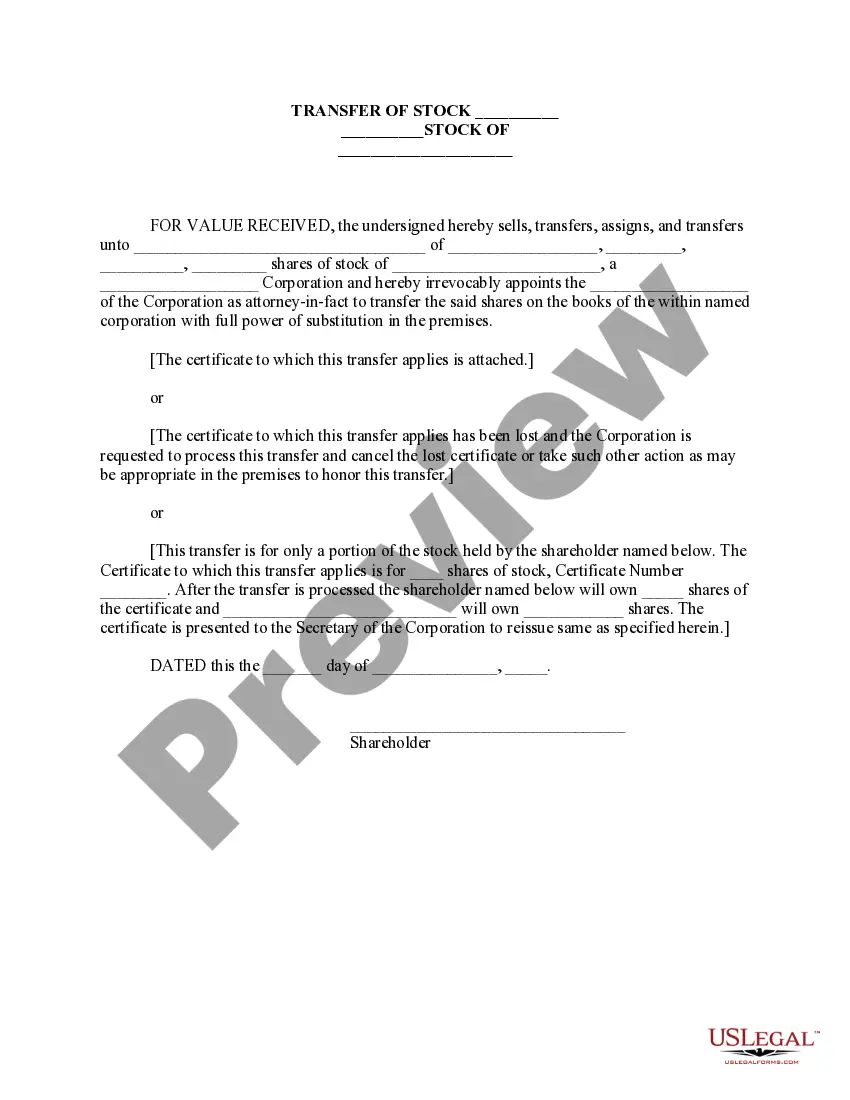

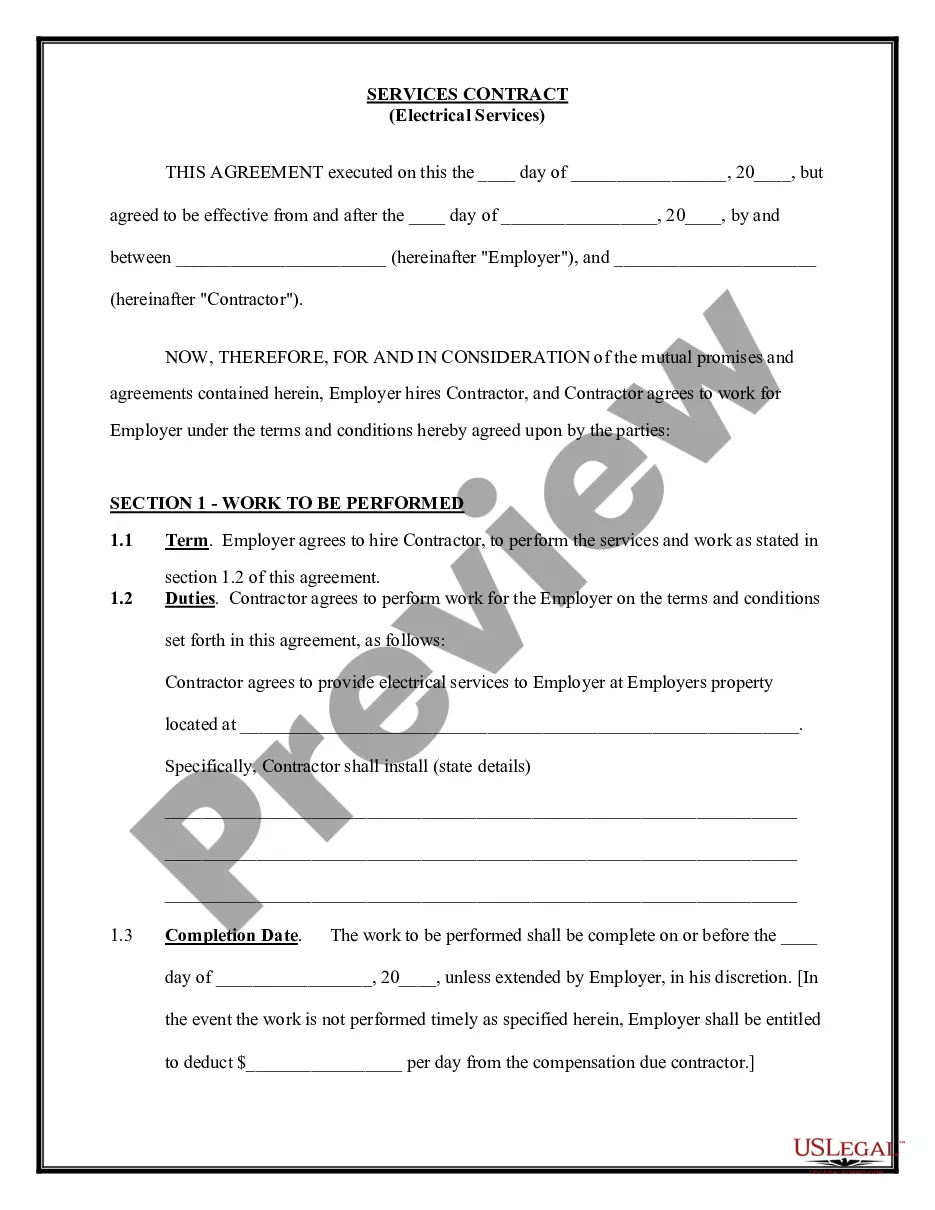
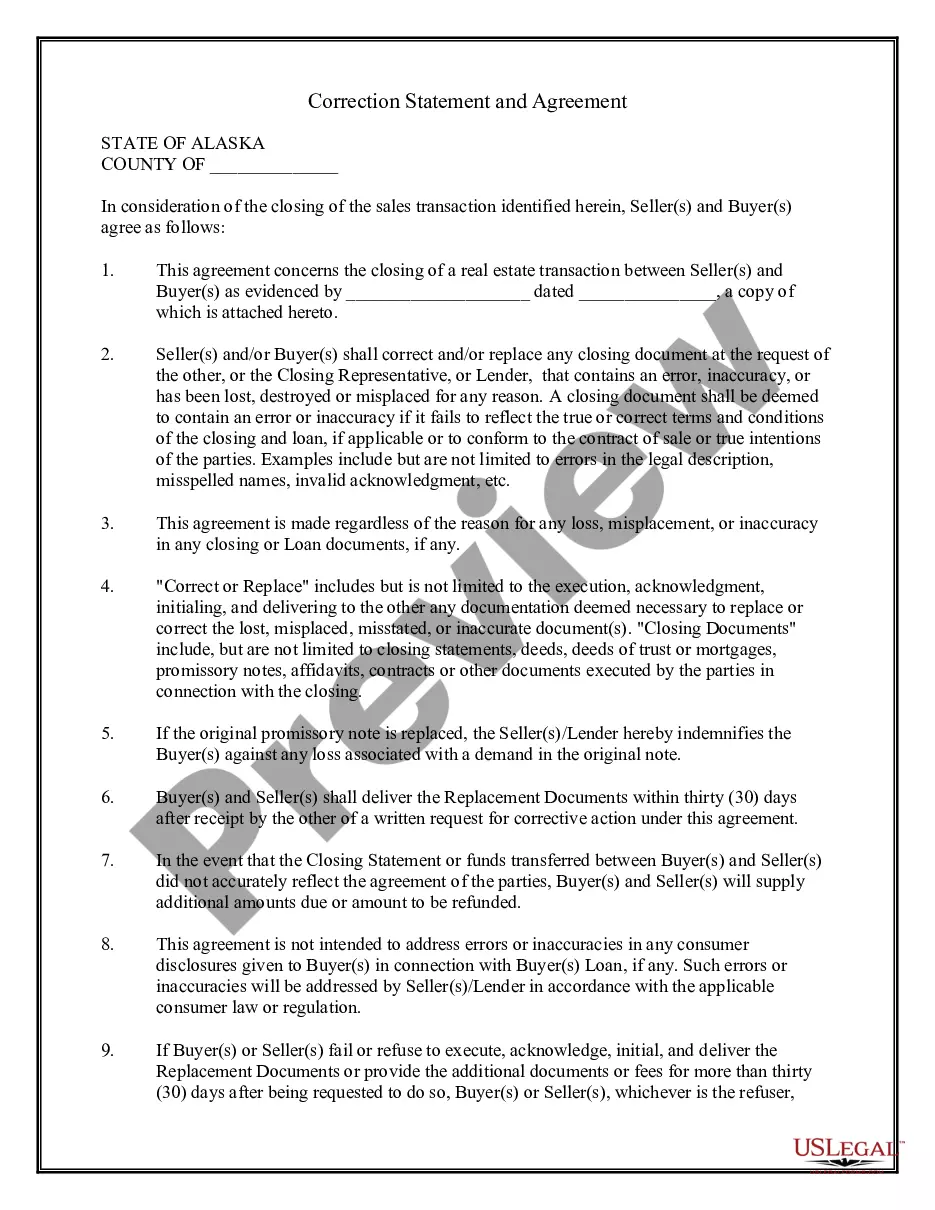


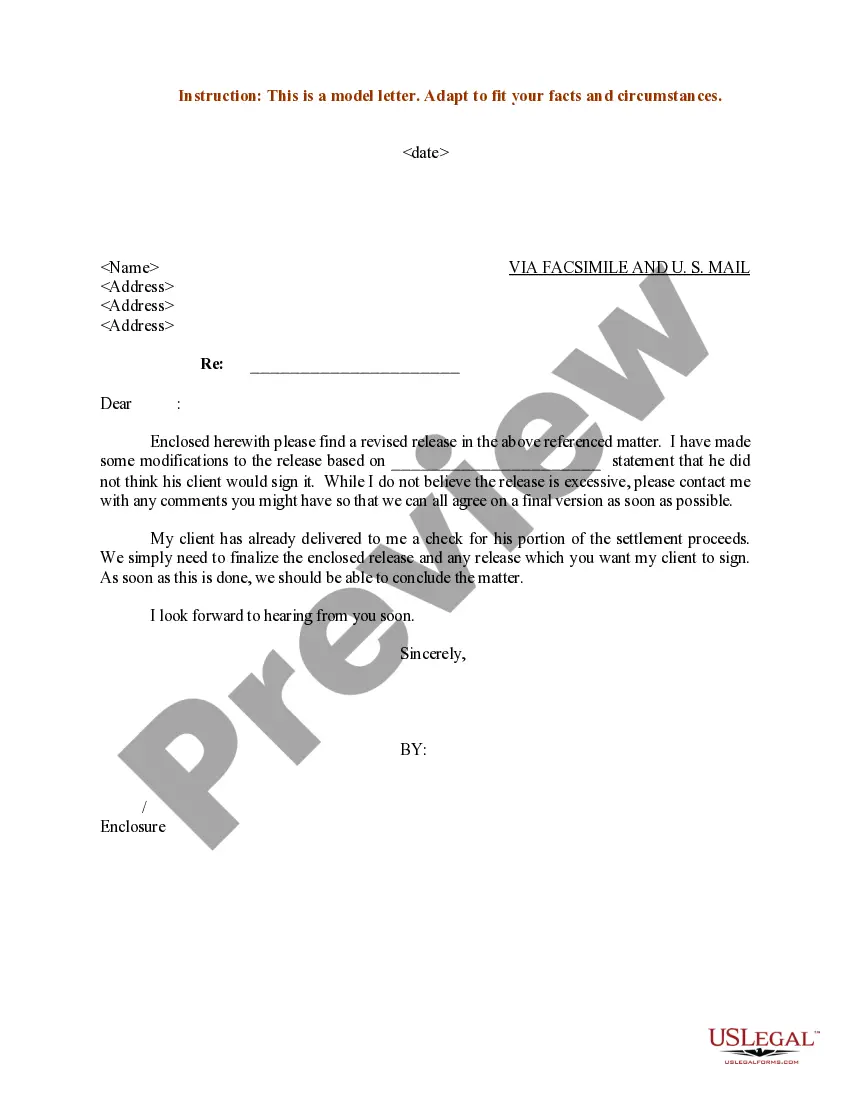
How to fill out Sample Letter For Revised Settlement Documents?
Acquiring a reliable source for the latest and pertinent legal templates is a significant part of managing bureaucracy. Locating the appropriate legal documents requires precision and meticulousness, which is why it is crucial to obtain samples of Settlement Agreement Format solely from reputable sources, such as US Legal Forms. An incorrect template could waste your time and prolong your current situation. With US Legal Forms, you have minimal concerns. You can access and review all the information regarding the document’s applicability and significance for your circumstance and in your locality.
Follow these steps to complete your Settlement Agreement Format.
Eliminate the stress associated with your legal documentation. Explore the extensive US Legal Forms catalog to discover legal templates, verify their relevance to your situation, and download them instantly.
- Use the catalog navigation or search bar to locate your template.
- Examine the form’s description to confirm if it meets the requirements of your state and region.
- Check the form preview, if available, to ensure the template is what you are looking for.
- Return to the search and find the appropriate document if the Settlement Agreement Format does not meet your needs.
- When you are confident about the form’s relevance, download it.
- If you are a registered user, click Log in to verify and access your selected templates in My documents.
- If you do not have an account yet, click Buy now to acquire the form.
- Choose the pricing plan that suits your preferences.
- Proceed to the registration to complete your purchase.
- Finalize your purchase by selecting a payment method (credit card or PayPal).
- Choose the file format for downloading the Settlement Agreement Format.
- Once you have the form on your device, you may edit it using the editor or print it out and fill it in manually.
Form popularity
FAQ
A settlement is an agreement between parties to resolve a dispute without going to trial. For instance, in a personal injury case, the injured party might agree to receive a payment from the other party in exchange for dropping the lawsuit. This payment is typically outlined in a settlement agreement format, which specifies the terms and conditions of the agreement. By using a clear settlement agreement format, both parties can ensure they understand their rights and obligations.
To write a simple agreement between two parties, first, identify the parties and describe the agreement's purpose. Clearly outline the terms, including what each party agrees to do or refrain from doing. Finally, ensure both parties sign and date the document, which solidifies the agreement and enhances its validity, providing a clear settlement agreement format that both can refer to.
Writing a simple settlement agreement involves clearly stating the purpose of the agreement and identifying the parties. Use plain language to outline each party's responsibilities, including any payments or actions to be taken. Finally, conclude with signatures and dates to finalize the settlement agreement format, ensuring both parties recognize their commitments.
To structure a settlement agreement effectively, start with a clear title and introductory statement. Next, outline the parties involved, define key terms, and detail the obligations of each party. Additionally, include clauses for confidentiality, dispute resolution, and any relevant timelines, ensuring that your settlement agreement format is straightforward and easy to understand.
A settlement agreement does not always need to be notarized, but doing so can add an extra layer of authenticity. Notarization helps verify the identities of the parties involved and ensures that they willingly entered into the agreement. While not a legal requirement in many cases, having a notarized document can help prevent disputes and provide clarity in the settlement agreement format.
Hear this out loud PauseFor example, imagine a case in which you are injured in a car accident. The other driver is at fault and agrees to pay you a certain amount of money through either their insurance company or out of pocket in order to settle the matter out of court.
Hear this out loud PauseSo all settlement documents must be interpreted in the same manner as any other contract would be interpreted. And a settlement agreement does not need to be in writing to be enforceable. An oral settlement agreement entered into by the parties can be enforceable so long as it does not violate the statute of frauds.
The laws apply to both parties. It is generally recommended that the agreement be made in writing and satisfy all claims. In addition, if the settlement agreement will regard a specific claim, then the party should put the case number in writing and specify the liability with which the plaintiff is waiving.
Hear this out loud PauseMutual assent is needed from both parties, and it must have a legal purpose. The agreement is only valid if both parties agree to it. If both parties sign a settlement and a judge approves it, then it becomes a legally binding and enforceable agreement that applies to any future claims.