Settlement Settle Contract For Difference
Description
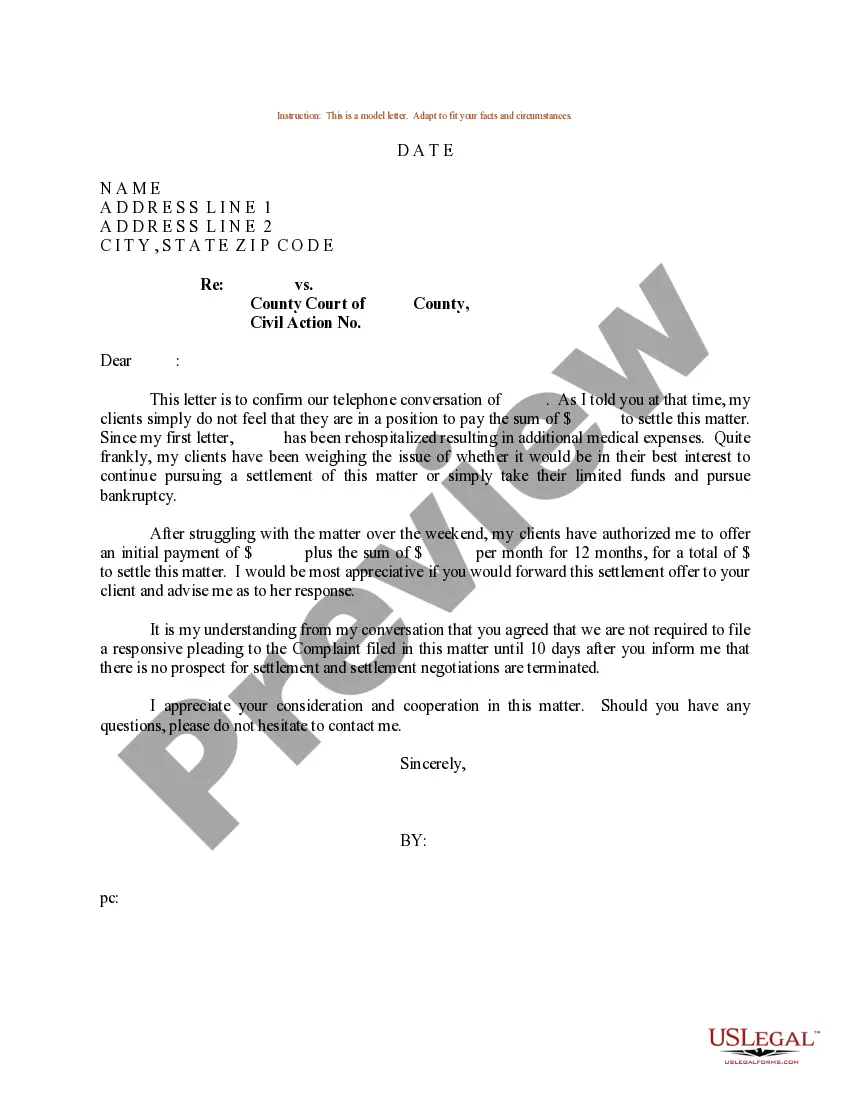
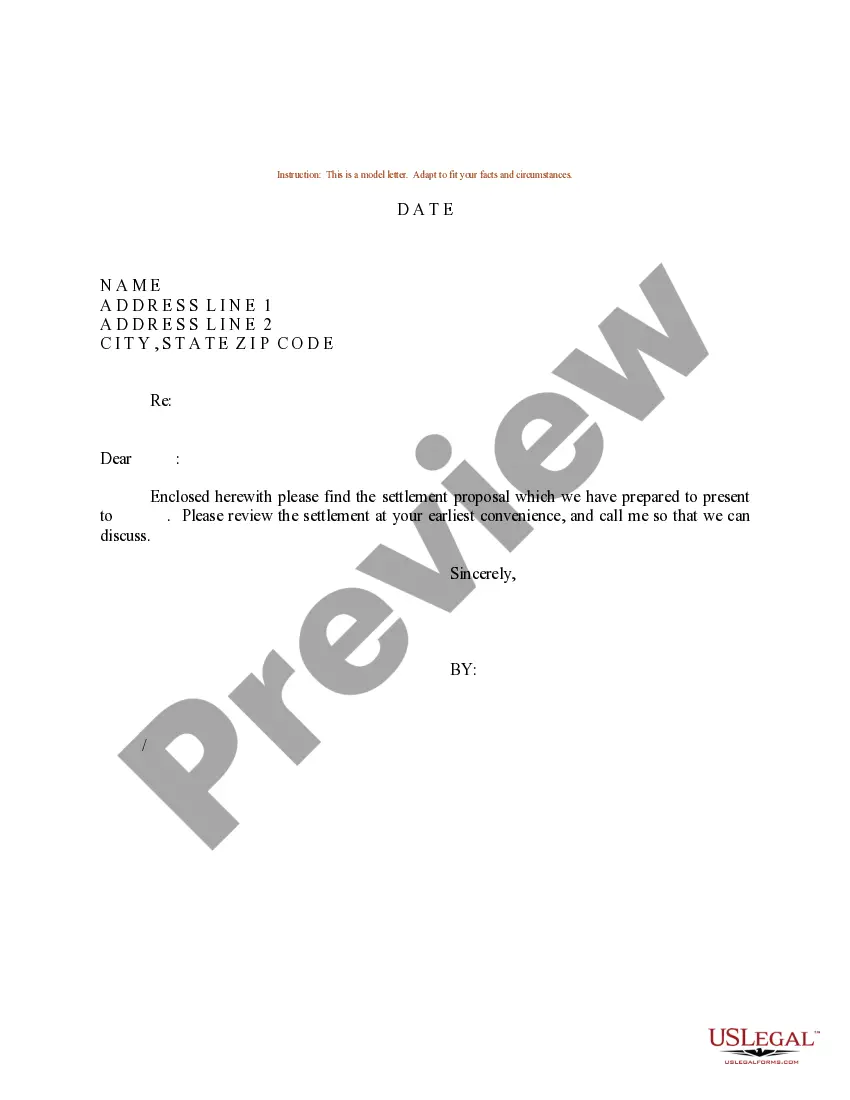
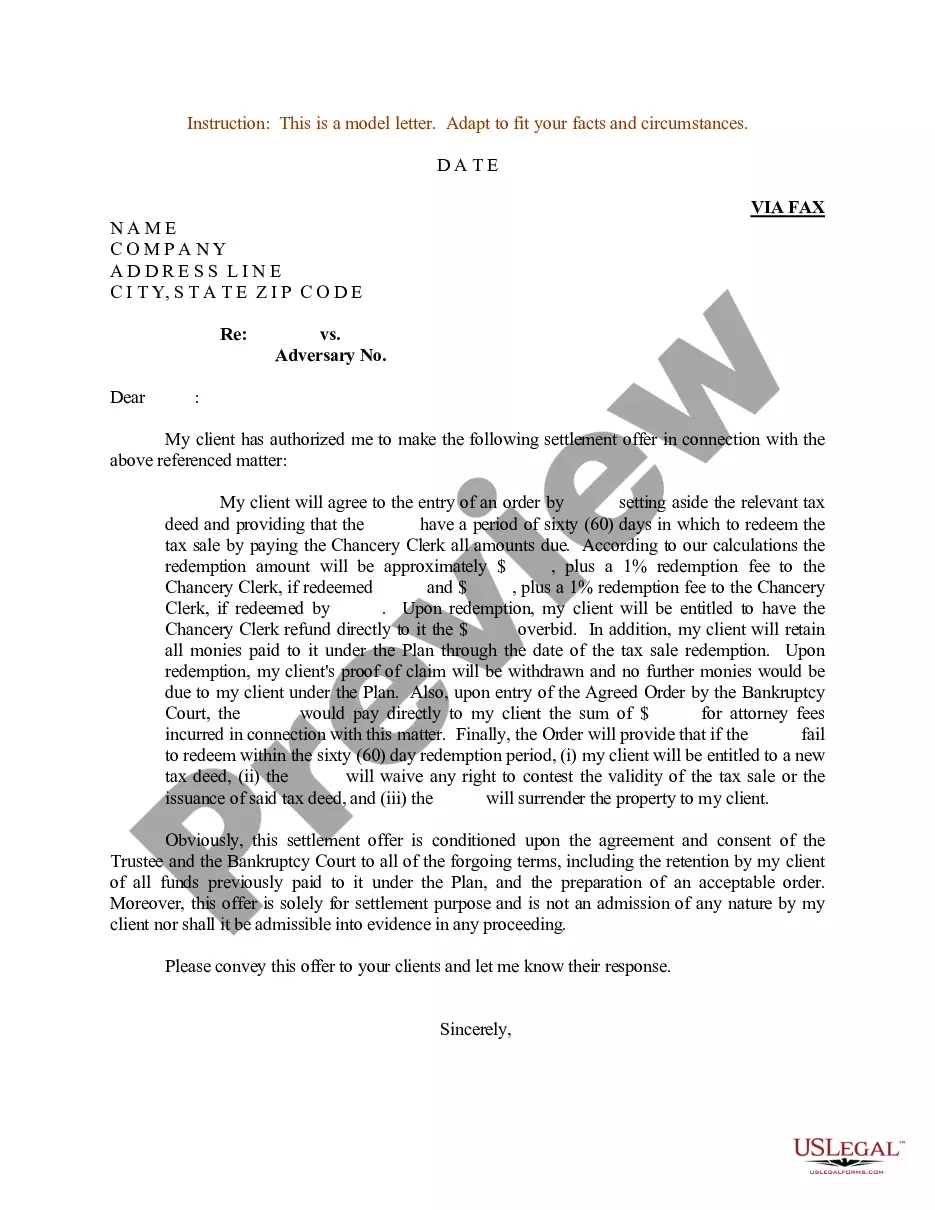
Get your form ready online
Our built-in tools help you complete, sign, share, and store your documents in one place.
Make edits, fill in missing information, and update formatting in US Legal Forms—just like you would in MS Word.
Download a copy, print it, send it by email, or mail it via USPS—whatever works best for your next step.
Sign and collect signatures with our SignNow integration. Send to multiple recipients, set reminders, and more. Go Premium to unlock E-Sign.
If this form requires notarization, complete it online through a secure video call—no need to meet a notary in person or wait for an appointment.
We protect your documents and personal data by following strict security and privacy standards.

Make edits, fill in missing information, and update formatting in US Legal Forms—just like you would in MS Word.

Download a copy, print it, send it by email, or mail it via USPS—whatever works best for your next step.

Sign and collect signatures with our SignNow integration. Send to multiple recipients, set reminders, and more. Go Premium to unlock E-Sign.

If this form requires notarization, complete it online through a secure video call—no need to meet a notary in person or wait for an appointment.

We protect your documents and personal data by following strict security and privacy standards.
Looking for another form?
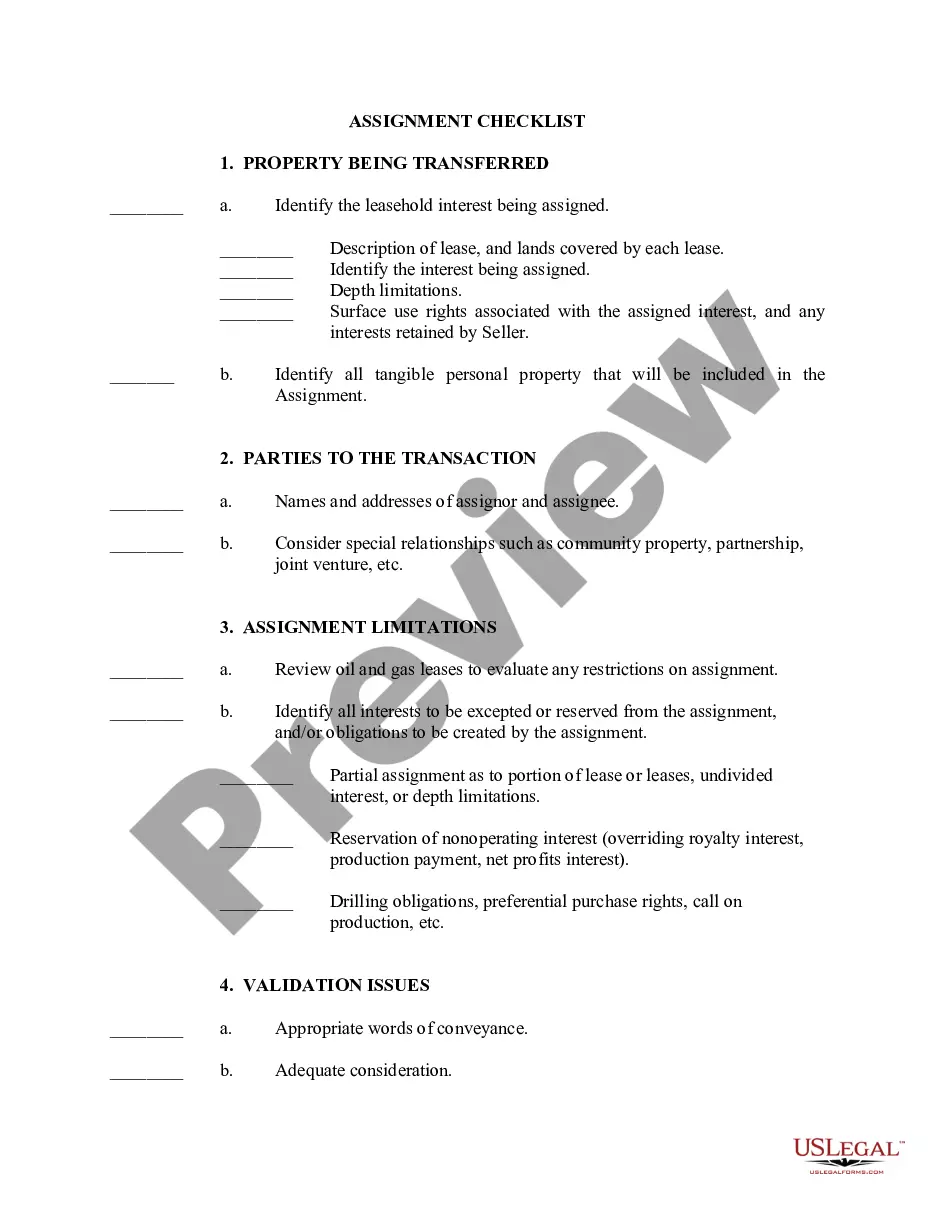
How to fill out Sample Letter For Settlement - Offer To Settle With Condition?
Securing a reliable location to obtain the most up-to-date and pertinent legal templates is half the challenge of navigating bureaucracy.
Identifying the appropriate legal documentation necessitates precision and meticulousness, which is why it is crucial to source samples of Settlement Settle Contract For Difference solely from reputable providers, such as US Legal Forms. A faulty template will squander your time and hinder the situation you are facing.
Once you have the form on your device, you may modify it using the editor or print it and complete it manually. Eliminate the hassle that accompanies your legal paperwork. Explore the extensive US Legal Forms library where you can discover legal templates, verify their applicability to your situation, and download them instantly.
- Utilize the catalog navigation or search feature to find your template.
- Examine the form’s details to ensure it meets the criteria of your state and region.
- Check the form preview, if available, to confirm that the template is the one you seek.
- Return to the search and look for the appropriate document if the Settlement Settle Contract For Difference does not meet your requirements.
- Once you are certain about the form’s relevance, download it.
- If you are an authorized user, click Log in to verify and access your selected templates in My documents.
- If you do not have an account yet, click Buy now to purchase the form.
- Choose the pricing option that aligns with your needs.
- Proceed to registration to complete your transaction.
- Finalize your purchase by selecting a payment method (credit card or PayPal).
- Choose the document format for downloading Settlement Settle Contract For Difference.
Form popularity
FAQ
bystep guide to CFD trading Practice with a demo account. Before getting into CFD trading, try a demo account. ... Open your real account. This is nowadays quite easy and fast with any CFD broker. Fund your account. ... Choose your asset and set the leverage. ... Start trading by placing orders. ... Monitor your trades.
A contract for differences (CFD) is a financial contract that pays the differences in the settlement price between the open and closing trades. CFDs essentially allow investors to trade the direction of securities over the very short-term and are especially popular in FX and commodities products.
A contract for differences (CFD) is an agreement between an investor and a CFD broker to exchange the difference in the value of a financial product (securities or derivatives) between the time the contract opens and closes. It is an advanced trading strategy that is utilized by experienced traders only.
Going long CFD trading example You purchase 100 CFDs on Apple shares at $160 a share. The total value of the trade is $16,000. If Apple appreciates to $170, you make $10 a share ? a $1,000 profit. If, however, the price falls to $150 a share, you lose $10 a share ? a $1,000 loss.
CFD trading tips Build a trading plan and stick to it. Analyse the market that you are trading on or interested in before opening a position. Ease yourself into trading and know your limits. Build on your knowledge of CFDs and derivative products in general. Assess how much capital you are willing to risk.
