Attorney Information For The State
Description
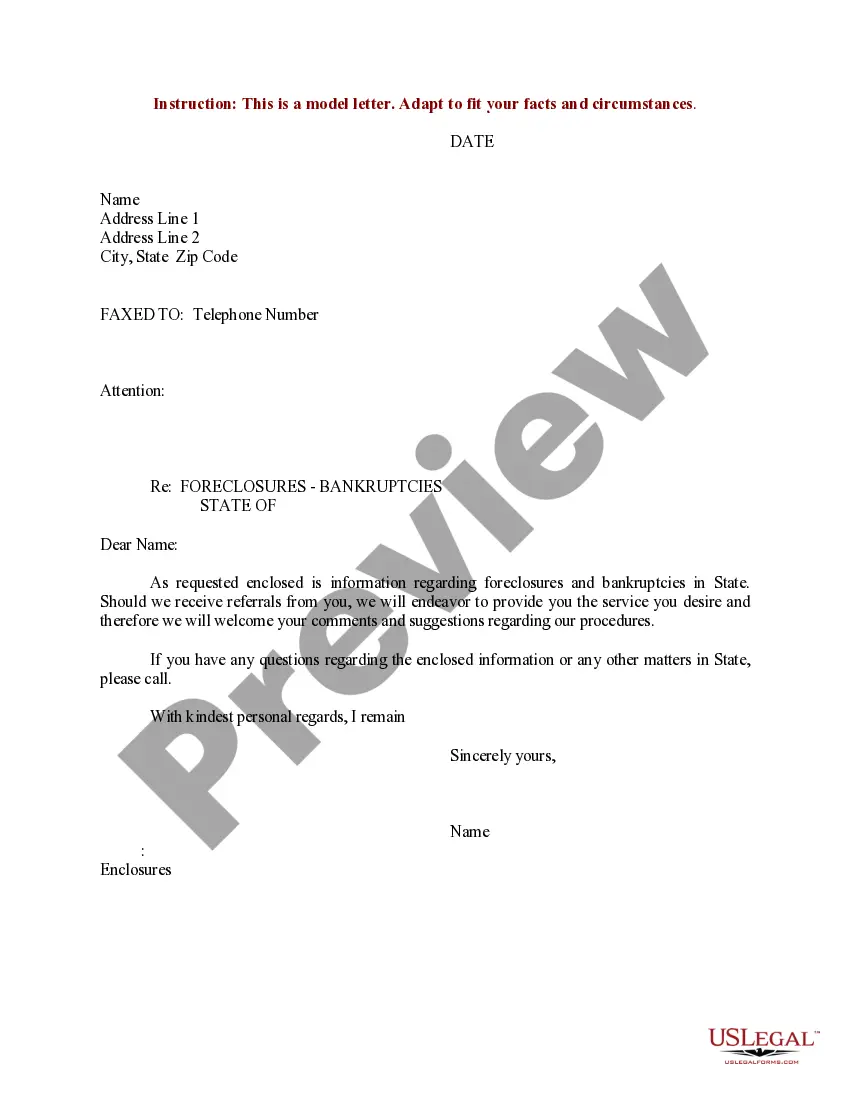
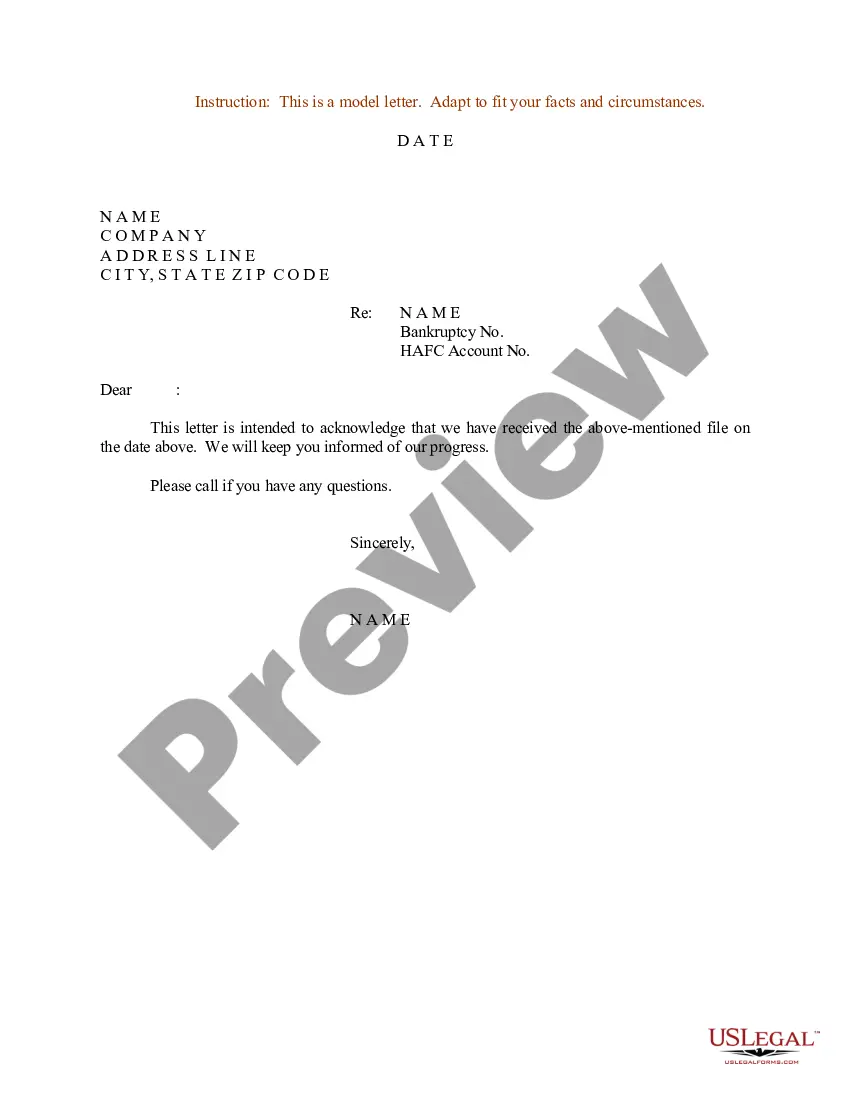
Get your form ready online
Our built-in tools help you complete, sign, share, and store your documents in one place.
Make edits, fill in missing information, and update formatting in US Legal Forms—just like you would in MS Word.
Download a copy, print it, send it by email, or mail it via USPS—whatever works best for your next step.
Sign and collect signatures with our SignNow integration. Send to multiple recipients, set reminders, and more. Go Premium to unlock E-Sign.
If this form requires notarization, complete it online through a secure video call—no need to meet a notary in person or wait for an appointment.
We protect your documents and personal data by following strict security and privacy standards.

Make edits, fill in missing information, and update formatting in US Legal Forms—just like you would in MS Word.

Download a copy, print it, send it by email, or mail it via USPS—whatever works best for your next step.

Sign and collect signatures with our SignNow integration. Send to multiple recipients, set reminders, and more. Go Premium to unlock E-Sign.

If this form requires notarization, complete it online through a secure video call—no need to meet a notary in person or wait for an appointment.

We protect your documents and personal data by following strict security and privacy standards.
Looking for another form?
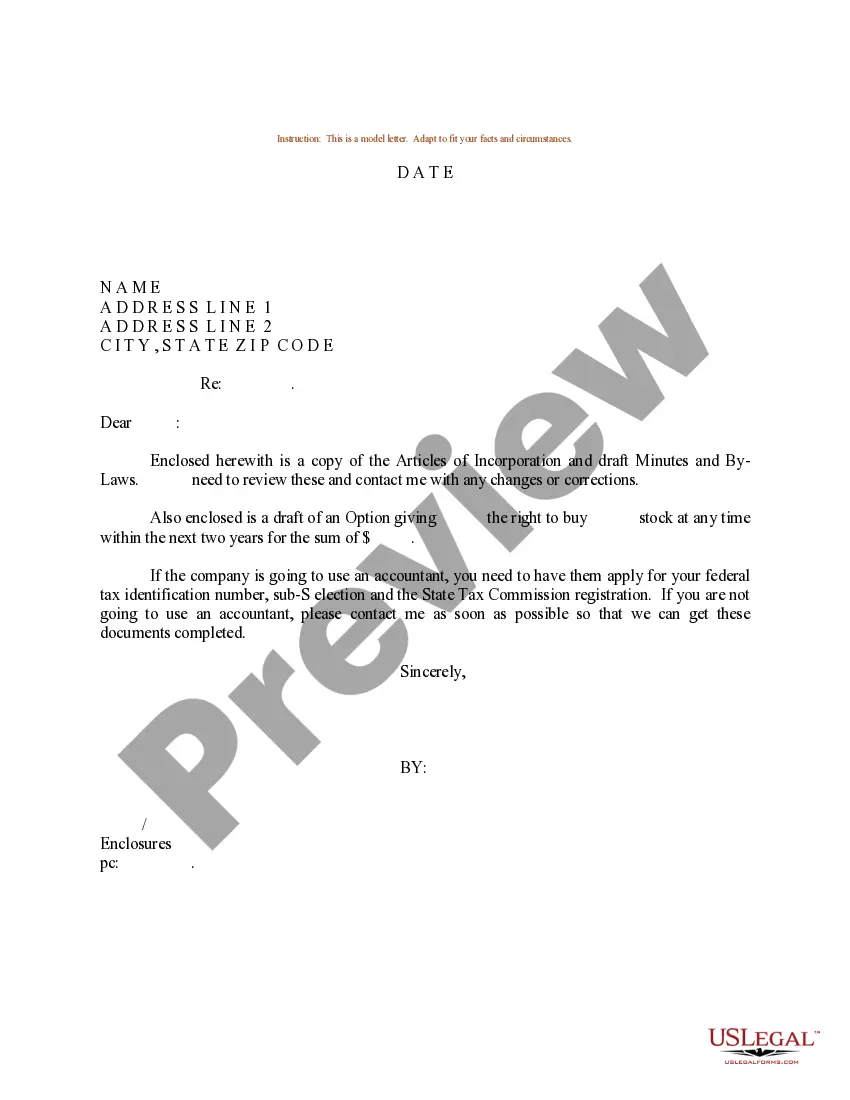

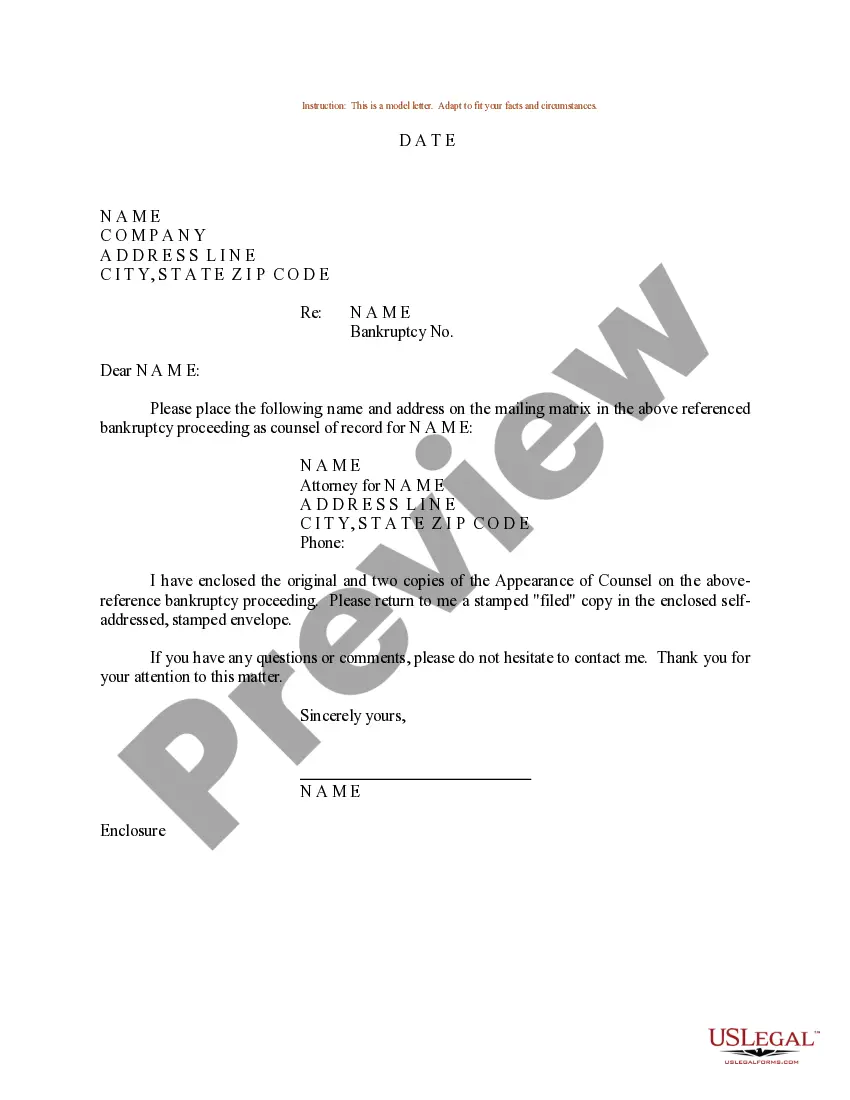
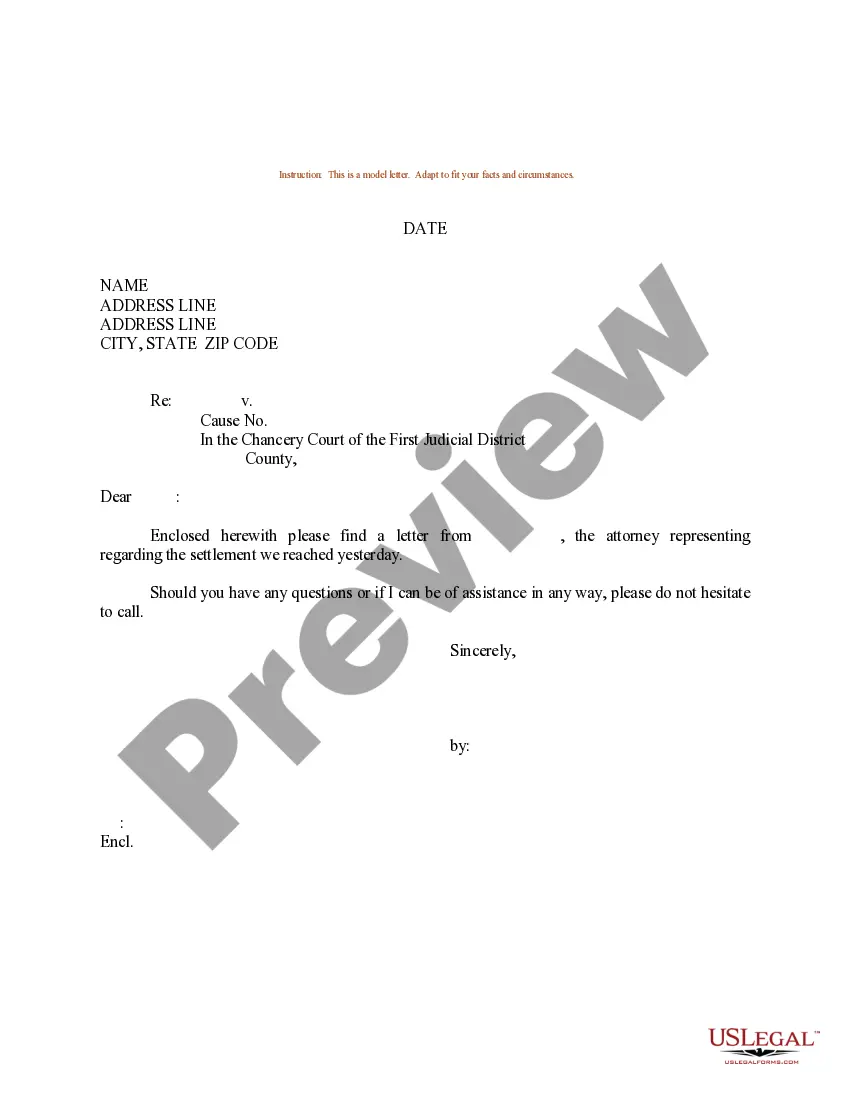
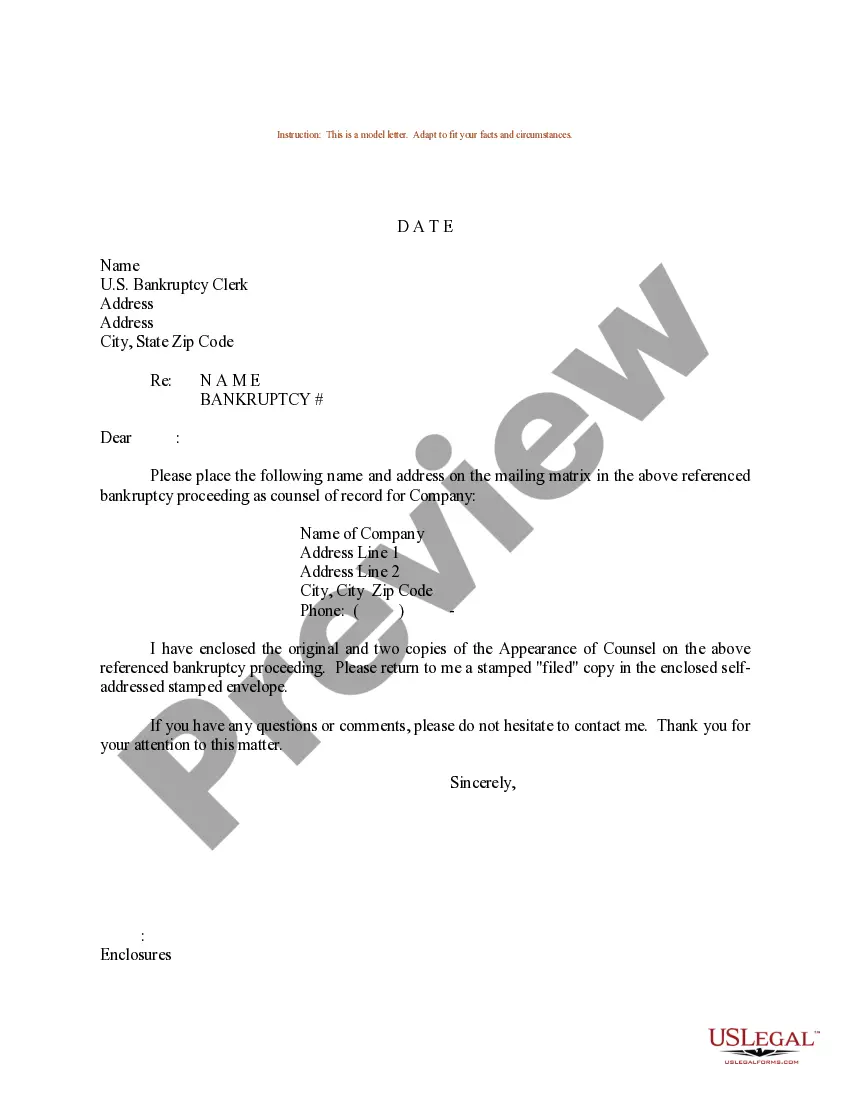
How to fill out Sample Letter For Appointment Of Attorney's Information On Mailing Matrix Concerning Bankruptcy Proceeding?
- Log into your existing US Legal Forms account to download the needed form template. Ensure your subscription is current; if not, renew it.
- If you're a new user, first explore the Preview mode to review the form descriptions, ensuring the chosen template meets your requirements and adheres to your jurisdiction's specifications.
- Should you need a different document, utilize the Search feature to find the appropriate form, then proceed to purchase if it aligns with your needs.
- Click the Buy Now button, select a suitable subscription plan, and register an account to gain access to the expansive library.
- Complete your purchase by entering your credit card details or using PayPal, then download your selected form right away.
- Access your downloaded template anytime through the My Forms section in your account for straightforward form completion.
By utilizing US Legal Forms, you gain access to an extensive collection of over 85,000 fillable legal templates, often at a better value compared to competitors. You can also access professional guidance to ensure your documents are precise and compliant.
Take control of your legal documentation today with US Legal Forms. Start your journey to better legal preparedness and download your first form now!
Form popularity
FAQ
Yes, numerous databases exist that provide attorney information for the state. These databases often include search features that allow you to filter results by location, practice area, and qualifications. Websites like uslegalforms also offer comprehensive access to legal professionals, enhancing your ability to find the right attorney easily.
Yes, lawyers can disclose who they represent, but they must adhere to the professional and ethical guidelines set by their state bar. Typically, they will share this information unless it conflicts with confidentiality agreements with clients. If you’re interested in attorney information for the state, many legal platforms can assist in understanding these practices more clearly.
Finding out what attorney represents someone typically involves reviewing public court records where the case is filed. Many jurisdictions offer online access to these records, allowing you to search by the individual's name or case number. Using uslegalforms can streamline your search for attorney information for the state, making the process easier.
To discover which lawyer represents someone, you can start by checking court documents if a case is publicly filed. Often, such records include the names of the attorneys involved. Additionally, legal databases and online platforms like uslegalforms provide resources and access to attorney information for the state, helping you identify the right representatives.
The terms lawyer and attorney are often used interchangeably, but there is a subtle difference. A lawyer is someone who has completed law school and may not necessarily represent clients in court, while an attorney is a lawyer who actively practices law and represents clients in legal matters. When looking for attorney information for the state, it’s helpful to understand these distinctions to find the right professional for your needs.
In Maryland, the state's attorney is responsible for prosecuting criminal cases at the local level, while the attorney general serves as the chief lawyer for the state and handles legal matters affecting state interests. The state's attorney focuses more on district-specific issues, whereas the attorney general deals with broader legal concerns, including consumer protection and state legal affairs. Understanding these roles helps you navigate the legal landscape and seek appropriate attorney information for the state.
To find a lawyer out of state, start by searching online legal directories that provide attorney information for the state you are interested in. Websites like the American Bar Association can help you locate lawyers based on practice areas. Additionally, consider checking your current lawyer’s network, as they often have referrals to trusted attorneys across the country.
When the state provides you with an attorney, it is referred to as legal representation by a public defender. This typically occurs in criminal cases, ensuring everyone has access to legal help. For more detailed attorney information for the state, including public defense resources, you could visit uslegalforms.
You can refer to a state attorney simply as 'the attorney.' If discussing a specific individual, use their name along with their title, such as 'Attorney Jane Smith.' This approach maintains respect and clarity when discussing legal matters.
When addressing a state attorney general in person, it is respectful to use 'Attorney General' followed by their last name. This title acknowledges their role and importance in the legal system of the state. For clarity on the responsibilities of the attorney general, you can refer to attorney information for the state.