Stipulation With Prejudice Meaning
Description
Get your form ready online
Our built-in tools help you complete, sign, share, and store your documents in one place.
Make edits, fill in missing information, and update formatting in US Legal Forms—just like you would in MS Word.
Download a copy, print it, send it by email, or mail it via USPS—whatever works best for your next step.
Sign and collect signatures with our SignNow integration. Send to multiple recipients, set reminders, and more. Go Premium to unlock E-Sign.
If this form requires notarization, complete it online through a secure video call—no need to meet a notary in person or wait for an appointment.
We protect your documents and personal data by following strict security and privacy standards.

Make edits, fill in missing information, and update formatting in US Legal Forms—just like you would in MS Word.

Download a copy, print it, send it by email, or mail it via USPS—whatever works best for your next step.

Sign and collect signatures with our SignNow integration. Send to multiple recipients, set reminders, and more. Go Premium to unlock E-Sign.

If this form requires notarization, complete it online through a secure video call—no need to meet a notary in person or wait for an appointment.

We protect your documents and personal data by following strict security and privacy standards.
Looking for another form?




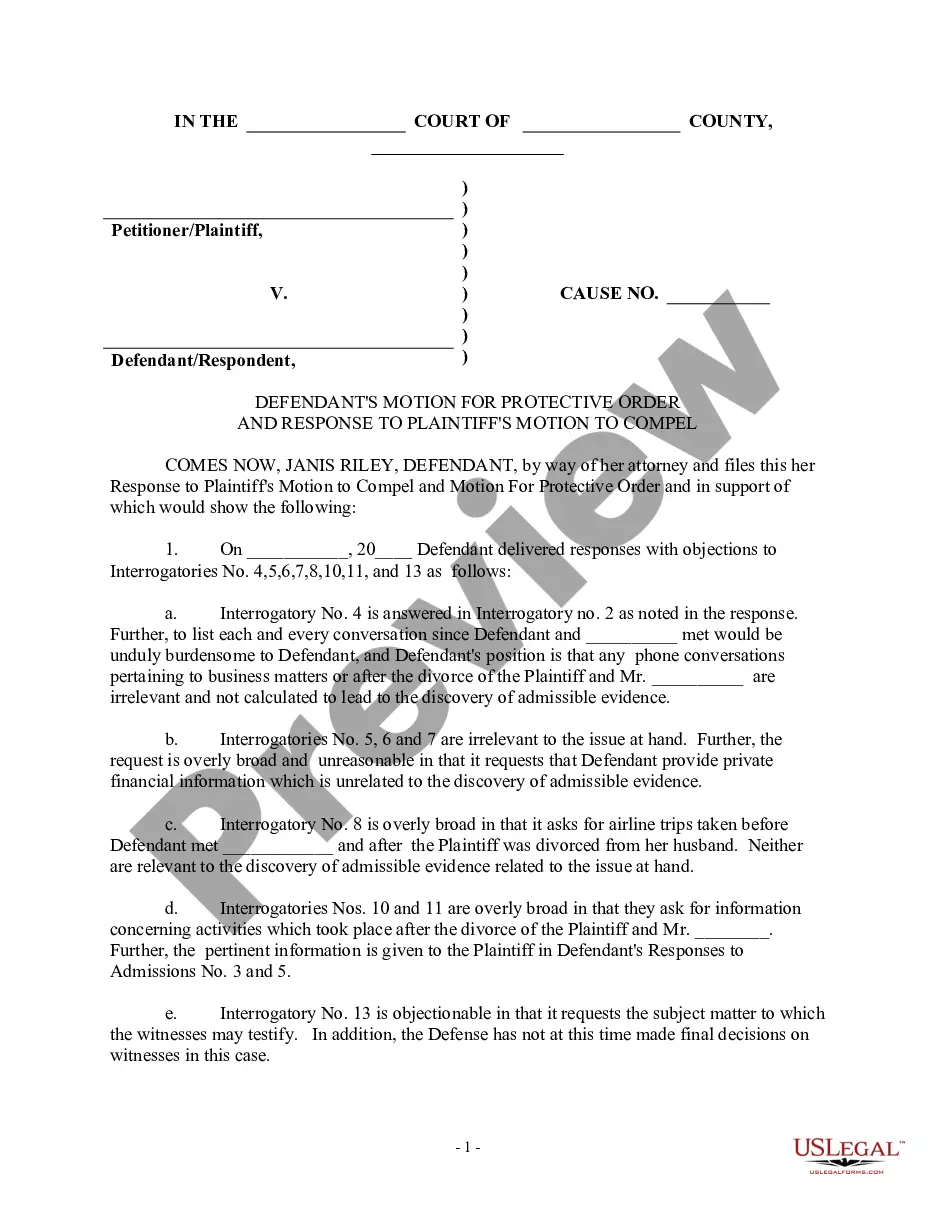


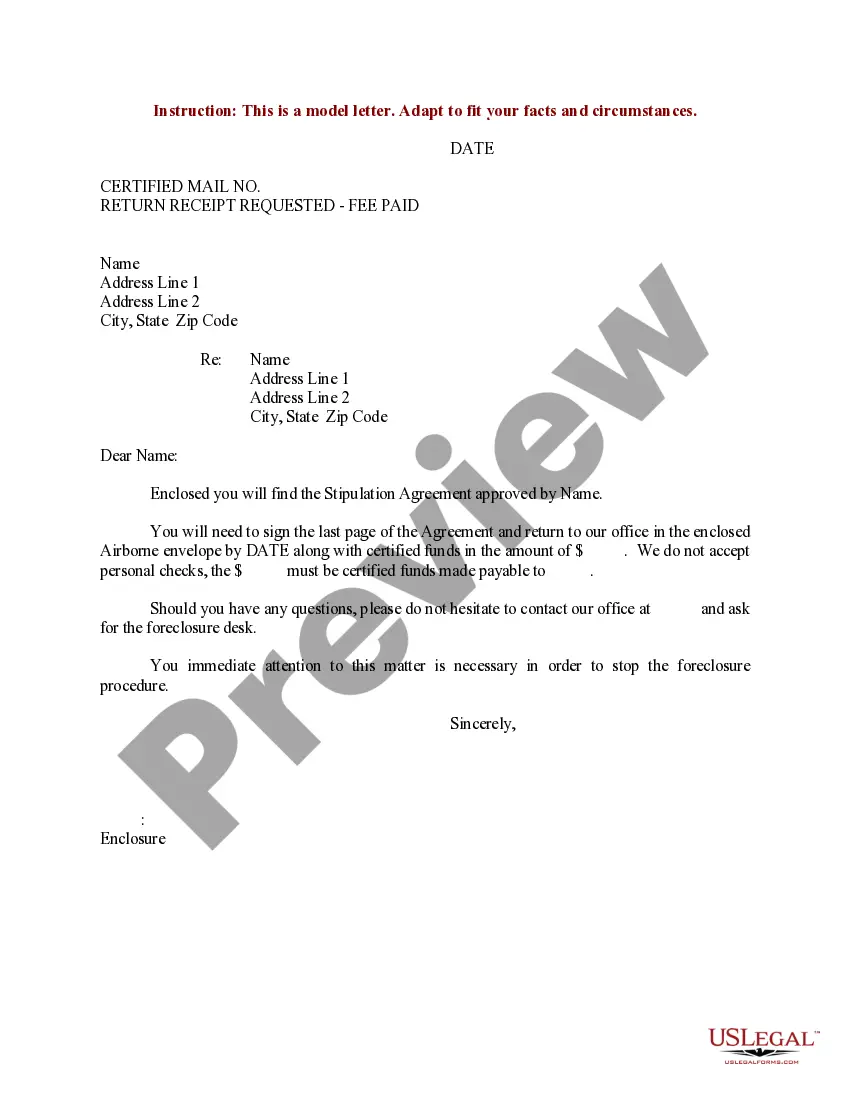
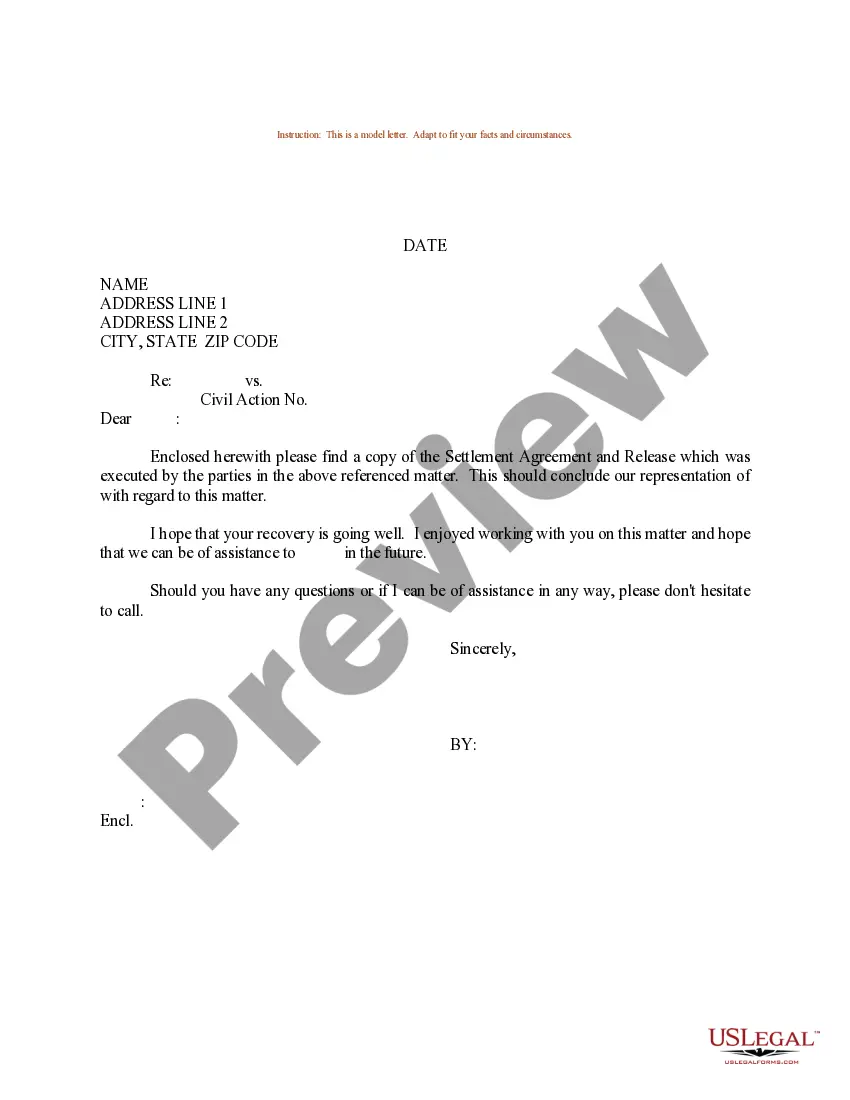
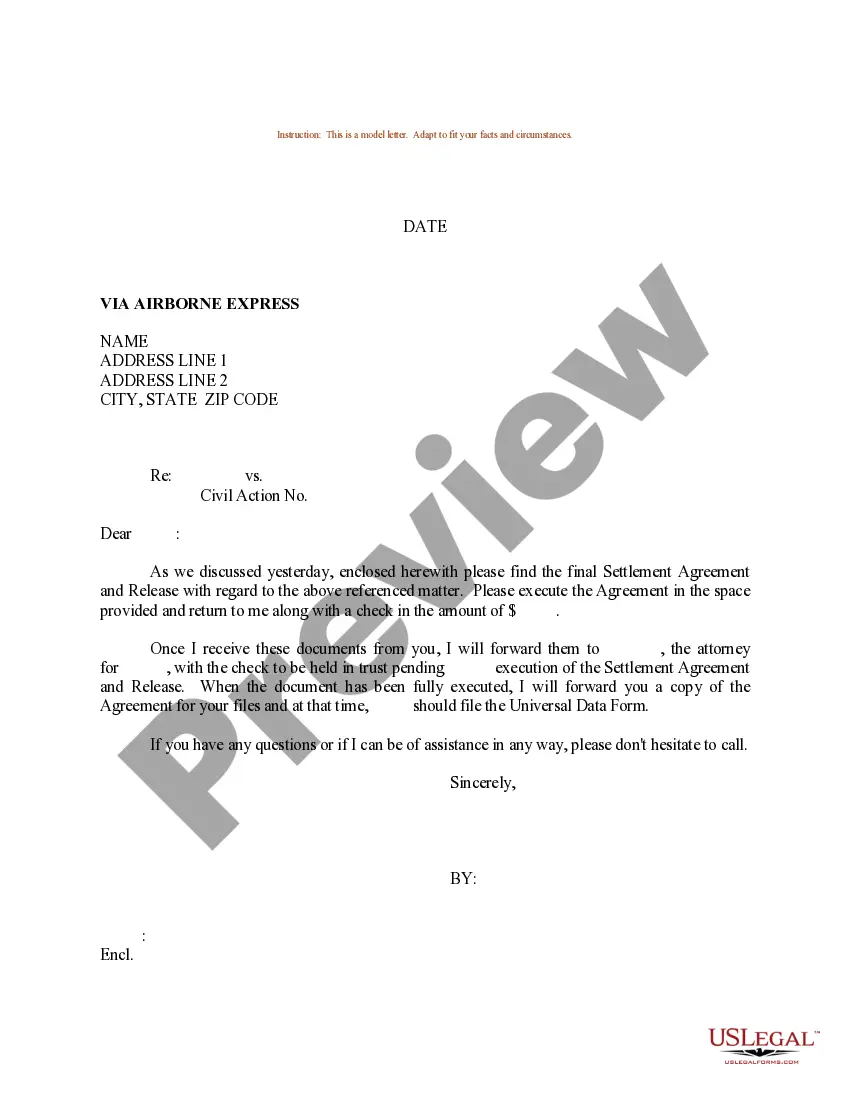
How to fill out Sample Letter For Stipulation Agreement?
- Log in to your US Legal Forms account if you're a returning user and verify the validity of your subscription before downloading the required form template.
- If you're a new user, start by checking the form's Preview mode to ensure it aligns with your local jurisdiction requirements.
- Use the Search tab to explore other templates if the initial one doesn't suit your needs.
- Proceed to purchase the document by clicking the Buy Now button and selecting a subscription plan that fits your requirements. Create an account to access the full library.
- Complete your transaction by entering your payment details and confirming your purchase.
- Download your selected form onto your device to fill it out and manage it conveniently through the My Forms section of your profile.
US Legal Forms empowers users by providing a robust collection of legal documents, with over 85,000 easily editable templates available.
By taking advantage of the premium assistance offered, users can confidently complete their legal forms, ensuring accuracy and compliance with legal standards. Start your hassle-free experience today!
Form popularity
FAQ
An example of with prejudice in law occurs when a judge dismisses a personal injury lawsuit after determining the plaintiff failed to provide sufficient evidence. As a result, the plaintiff cannot refile the same lawsuit against the defendant at a later time. Knowing real-world instances helps clarify the stipulation with prejudice meaning, guiding individuals on how to approach their legal challenges effectively.
'With prejudice' in legal terms means that a case is dismissed permanently and cannot be brought back to court. It indicates that the plaintiff has lost their opportunity to file the same claim again. Grasping the stipulation with prejudice meaning helps individuals understand the finality of certain legal decisions, ensuring they are prepared for the implications of such outcomes.
A judge might dismiss a case with prejudice due to various reasons, such as lack of evidence, failure to follow court procedures, or the case being frivolous. This dismissal prevents the plaintiff from bringing the same claim against the defendant in the future, thus closing the door on that particular legal matter. Understanding the stipulation with prejudice meaning is vital for parties involved, as it can significantly impact their legal options moving forward.
Whether to settle with or without prejudice depends on your legal strategy and goals. Settling without prejudice is often beneficial as it retains your right to pursue further claims if needed. On the other hand, settling with prejudice usually means you cannot revisit the same issue later. Understanding the stipulation with prejudice meaning can guide you in making the best choice depending on your unique circumstances.
When a claim is labeled as 'without prejudice', it signifies that the claim is made without any admission of liability. Essentially, it protects parties from having their statements used against them in future legal actions. This term is essential in negotiations, as it promotes open dialogue without fearing repercussions. Familiarity with the stipulation with prejudice meaning helps you navigate claims with confidence.
Dismissing a case without prejudice allows you to refile the case in the future if necessary. This can happen when new evidence arises or if you want to reassess your legal strategy without losing your rights. It provides flexibility in proceedings and keeps your options open. Knowing the stipulation with prejudice meaning ensures you make informed decisions regarding case dismissals.
'Settlement without prejudice' refers to an agreement reached during negotiations that allows parties to resolve their disputes while preserving their rights to pursue further claims. This means that if the terms of the settlement are not met, you can still bring your case to court. It is an effective way to negotiate while keeping your options intact. Understanding the stipulation with prejudice meaning can help you effectively navigate these situations.
You should use 'without prejudice' when you want to make a settlement offer that cannot be used against you in court if the negotiation fails. This phrase allows you to communicate openly during discussions without the risk of your statements being seen as an admission of liability. Using 'without prejudice' protects your position while you seek a resolution. It’s important to understand the stipulation with prejudice meaning, as this can affect your legal strategy.
To get a case dismissed with prejudice, both parties must reach a mutual agreement, often documented through a stipulation. This stipulation must be filed with the court to formalize the agreement and clarify that the case won’t be reopened. Working with legal experts or utilizing platforms like US Legal Forms can help you navigate this process smoothly. Knowing how to implement a stipulation with prejudice efficiently can save time and resources.
Stipulation with prejudice means that a case is dismissed permanently and cannot be brought back to court. This legal term indicates that the parties involved agree to the dismissal under specific conditions. You can use this stipulation to conclude a case effectively, preventing any future claims on the same matter. Understanding the stipulation with prejudice meaning is crucial for anyone involved in legal proceedings.