Testament Letter
Description
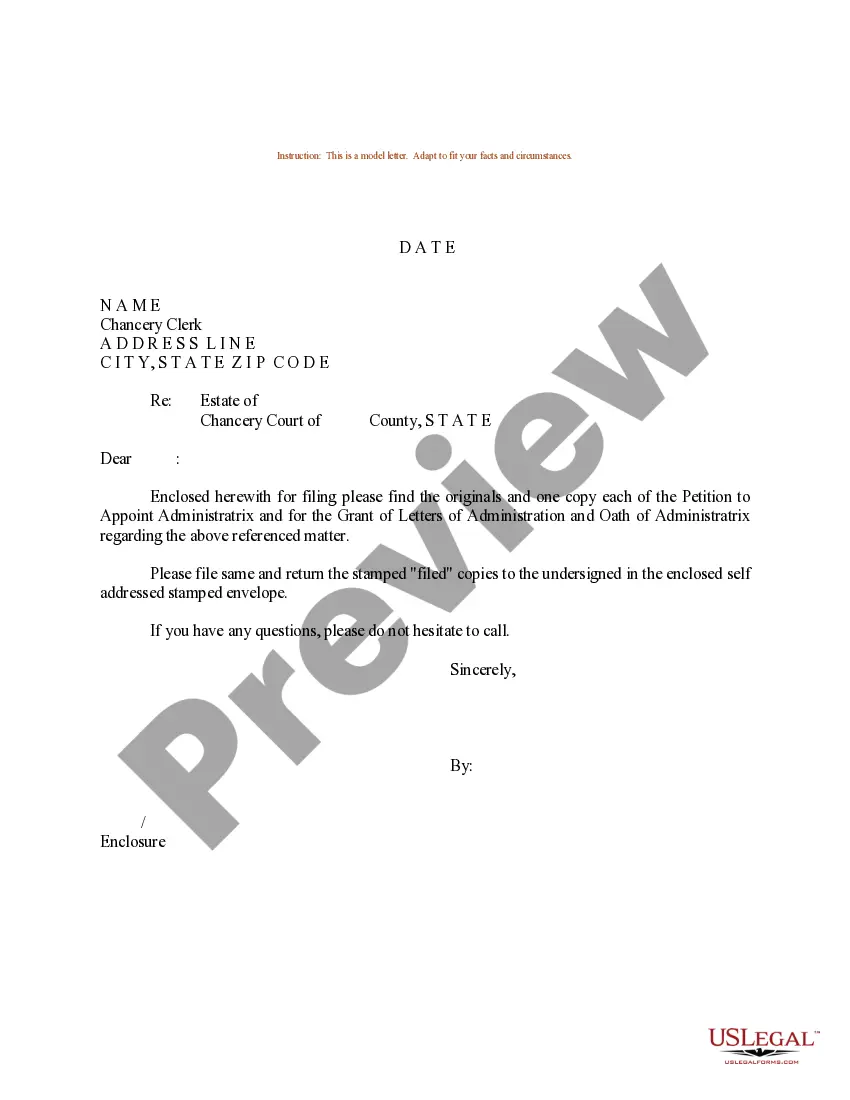
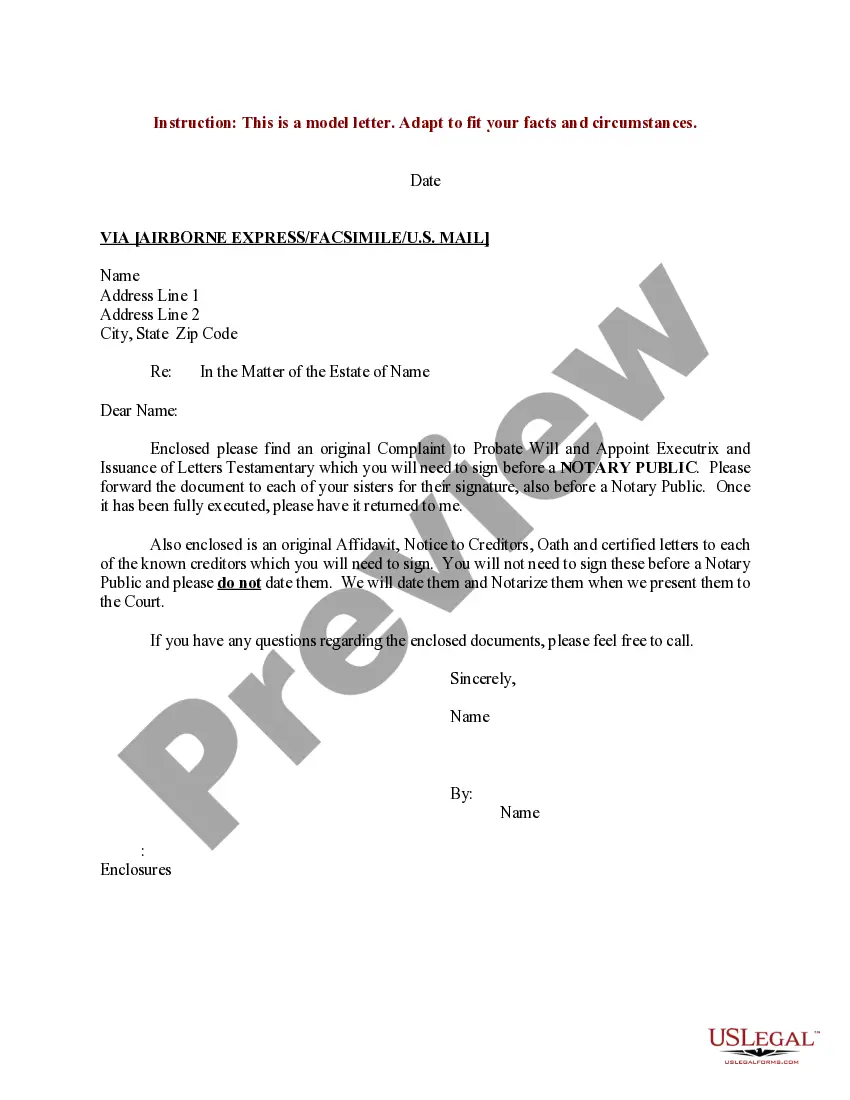
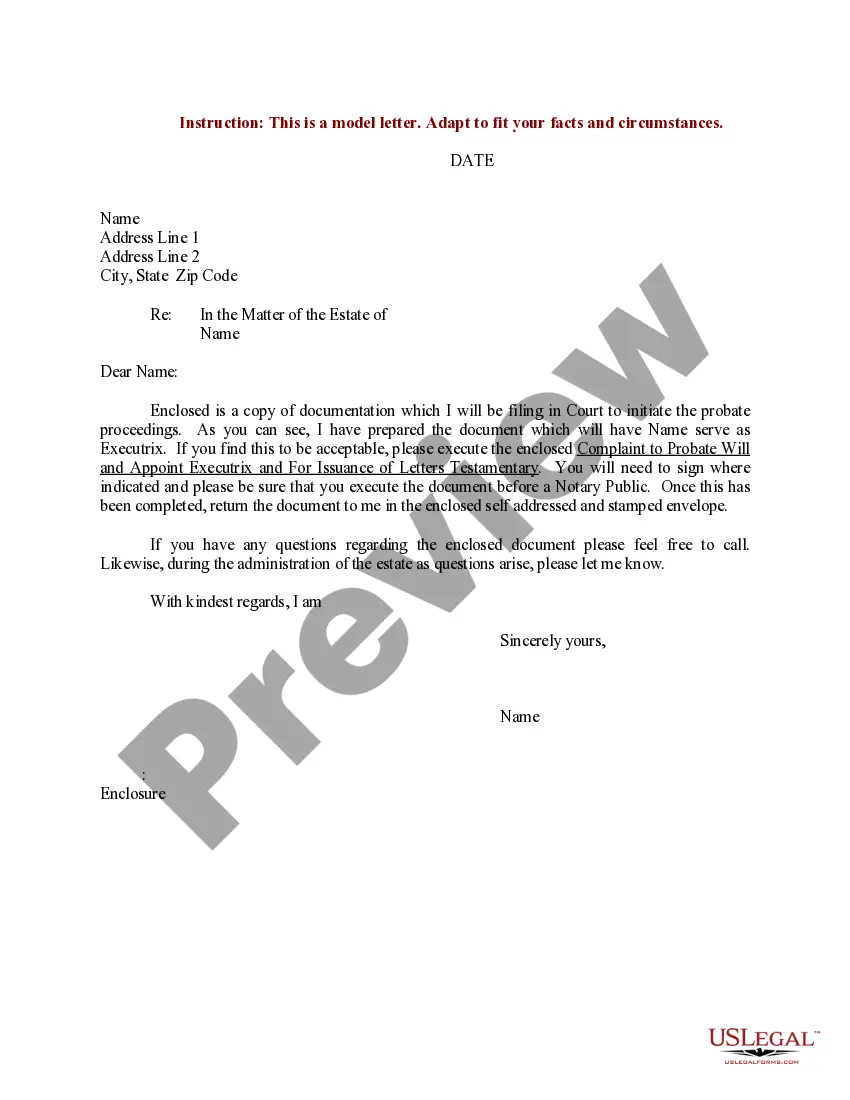
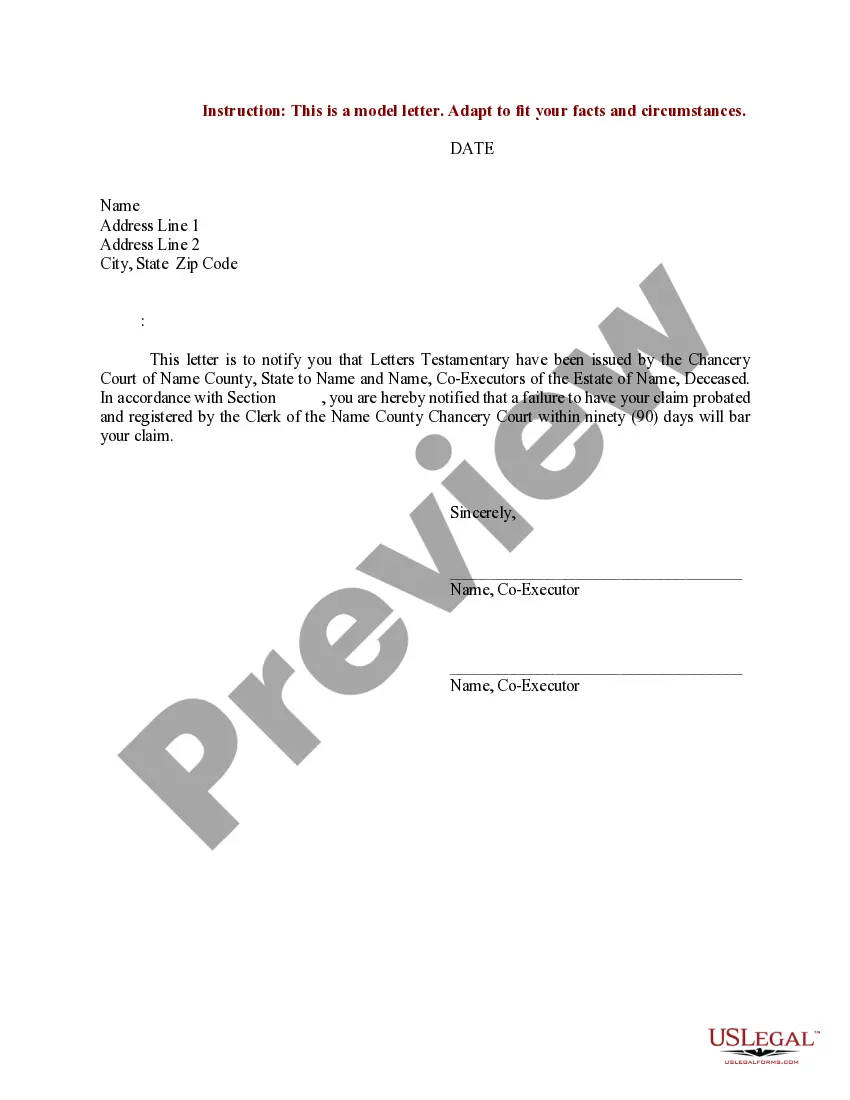
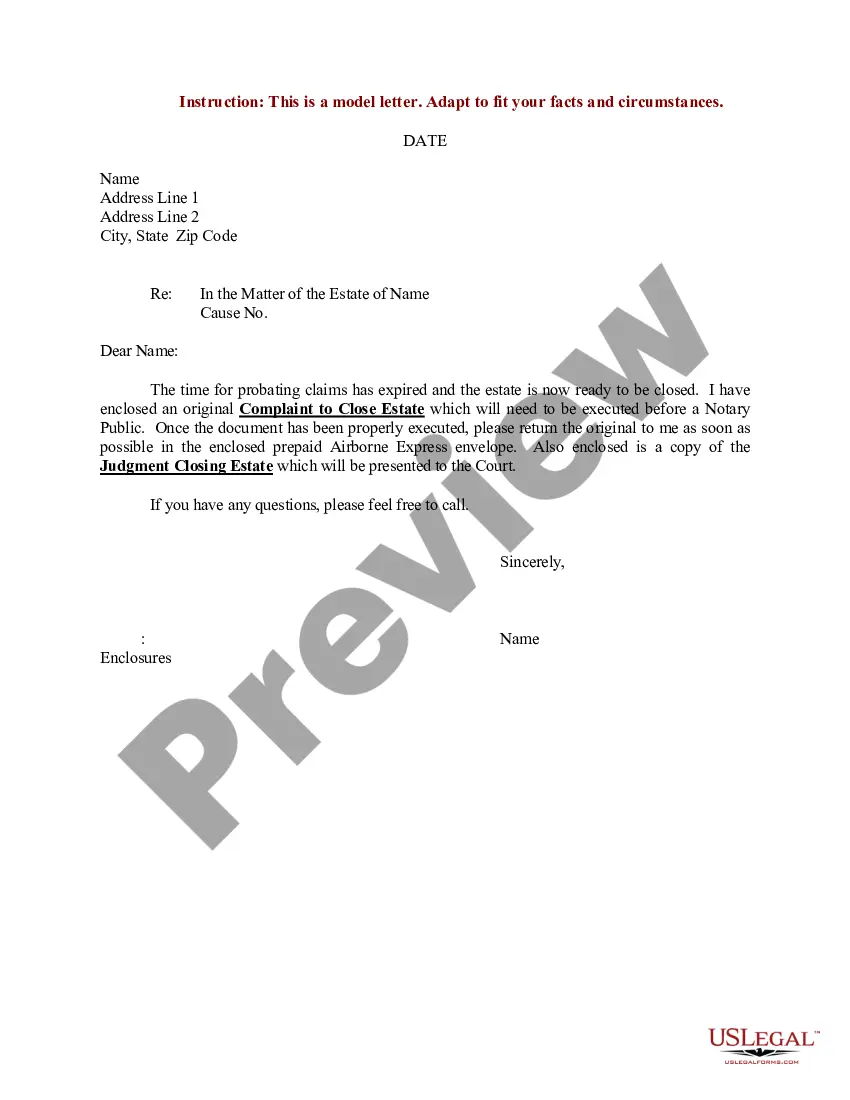




How to fill out Sample Letter For Complaint To Probate Will And Appoint Co-Executrixes And Issuance Of Letters Testamentary?
- If you're a returning user, login to your account and download the testament letter template directly by clicking the Download button. Ensure your subscription is currently valid; if it's expired, renew it per your chosen payment plan.
- For first-time users, start by exploring the Preview mode and form description to confirm you select the correct testament letter that meets your specific needs and complies with local jurisdiction requirements.
- If you need a different template, utilize the Search tab to find a suitable alternative. Once your desired form is located, proceed to the next step.
- Purchase your document by clicking the Buy Now button and selecting a subscription plan that fits your requirements. You will need to create an account to access the extensive library of resources.
- Complete your purchase by providing your payment information, either through credit card or PayPal. Make sure that your transaction is successful.
- Download your testament letter template to your device. You can access it later via the My Forms menu in your profile for any future needs.
Following these steps will ensure that you have your testament letter ready in no time, providing peace of mind and clarity to your loved ones.
Start your journey today with US Legal Forms to ensure your testament letter is crafted with precision. Visit our site now!
Form popularity
FAQ
The primary purpose of the letter of testamentary is to authorize the executor to act on behalf of the deceased's estate. This includes managing assets, paying debts, and distributing inheritances according to the will. Effectively, this letter helps ensure that the deceased's wishes are carried out in an orderly manner, providing peace of mind for the executor and beneficiaries.
Letters of testamentary remain valid until the estate is fully settled and closed. This duration can vary widely based on the complexities of the estate and state regulations. Generally speaking, they typically last anywhere from a few months to several years, depending on the probate court's timeline and any legal proceedings.
No, you cannot obtain a letter of testamentary without going through the probate process. This letter serves as official documentation that grants an executor the authority to manage and distribute the deceased's estate. In situations where probate is not required, such as small estates, alternative documents may be used, but they will not be formal letters testamentary.
To get updated letters testamentary, you must file a petition for modification with the probate court. This involves submitting relevant documents and providing details about any changes in the estate management. By using resources like US Legal Forms, you can find the necessary forms and guidance to ensure your petition is correctly prepared.
Letters of testamentary are legal documents issued by a probate court that authorize an executor to manage a deceased person's estate. They typically include details such as the deceased's name, the executor's name, and their authority to act on behalf of the estate. Understanding these documents can streamline the process and reinforce the importance of having a clear testament letter in place.
To write your testament, begin by gathering your important documents and deciding how you want to distribute your assets. Use a clear format that includes your name, the date, and specific instructions for each item. By drafting a comprehensive testament letter, you ensure your wishes are fulfilled and your loved ones understand your intentions.
A person's testament is a legal document expressing their final wishes regarding the distribution of their assets after death. It typically outlines how property, possessions, and finances should be handled and may appoint guardians for minor children. This testament letter serves as a guide for your loved ones, providing clarity during a challenging time.
One of the biggest mistakes with wills is failing to update them regularly. Life changes such as marriage, divorce, or the birth of children can impact your estate plans significantly. Additionally, neglecting to clearly express your wishes in the testament letter can lead to confusion and disputes among your heirs, so take time to review and revise your will as needed.
To fill out a last will and testament form, start by clearly stating your full name and residence. Next, list your assets and who will inherit them, including any specific gifts to individuals. Be sure to appoint an executor who will handle your estate according to your testament letter, and finally, sign the document in the presence of witnesses to ensure its validity.
A letter of testamentary generally remains valid until the estate has been fully administered and settled. This means it continues to hold value throughout the probate process until all assets are distributed and obligations are fulfilled. For specifics about validity and duration, consulting an attorney or utilizing platforms like US Legal Forms can provide tailored guidance.