Offer On House Accepted Now What
Description

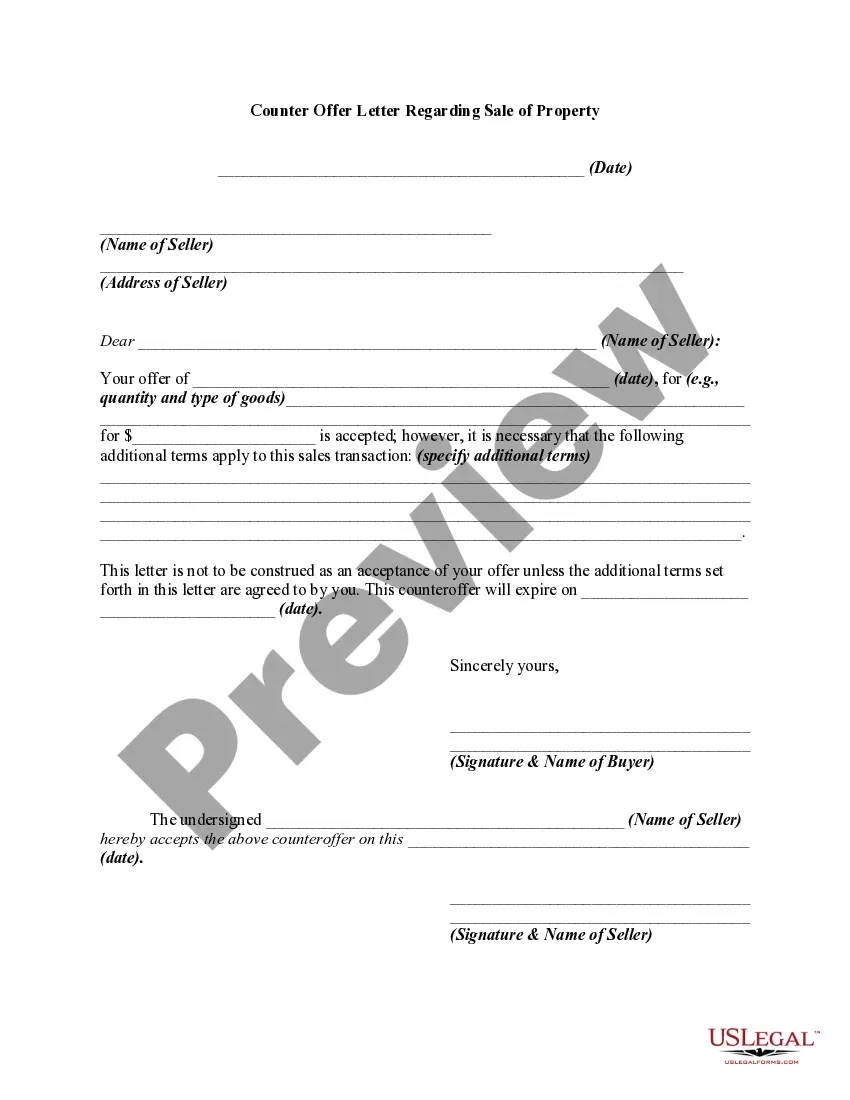
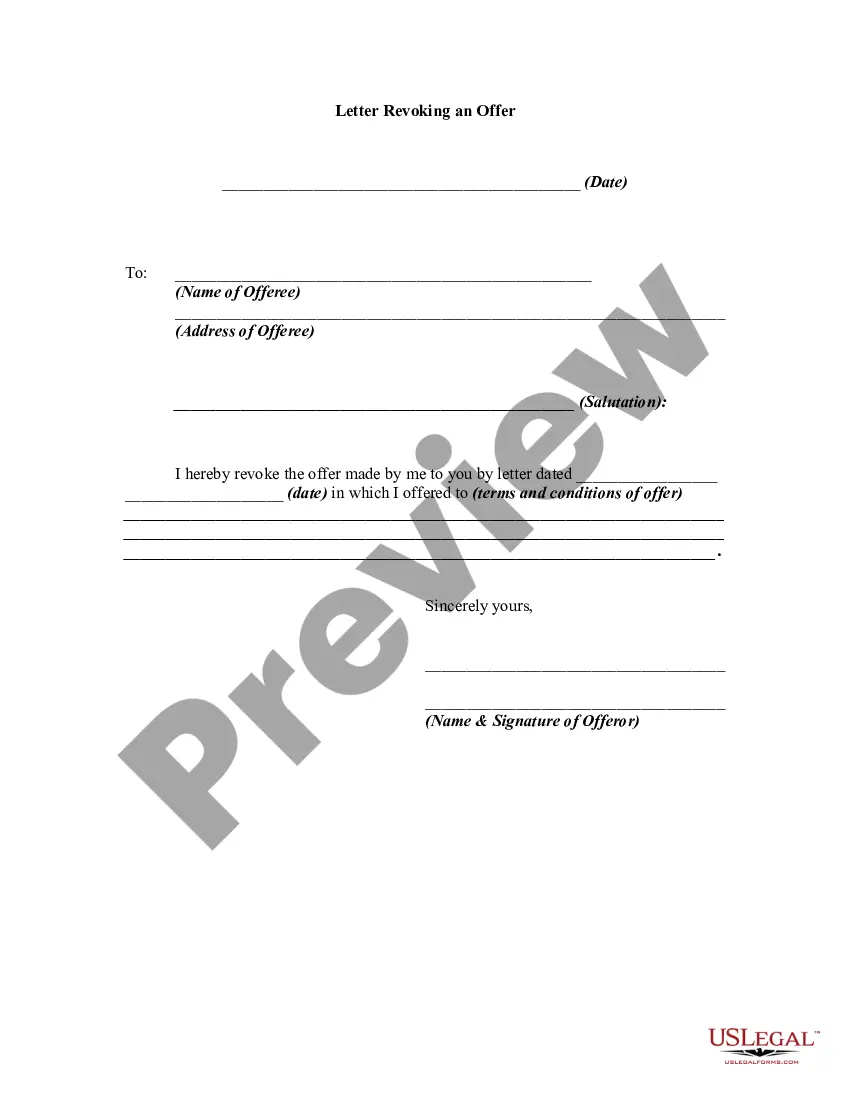
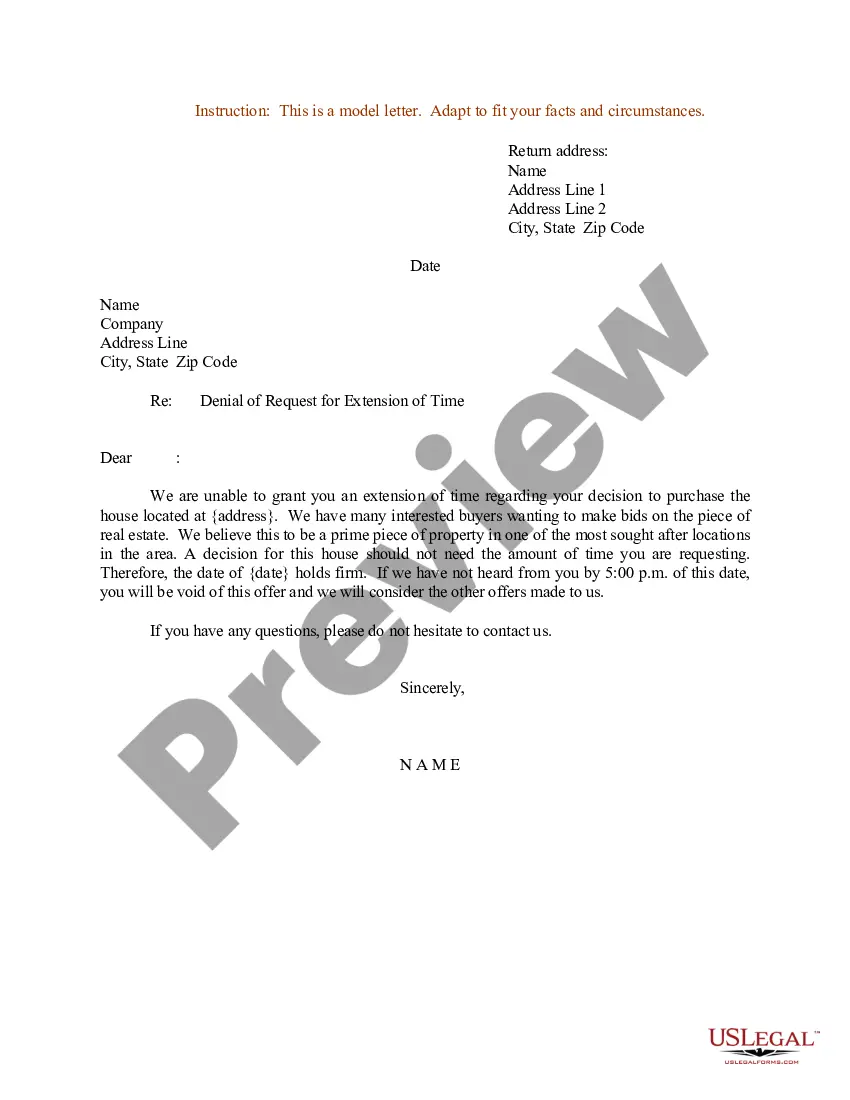
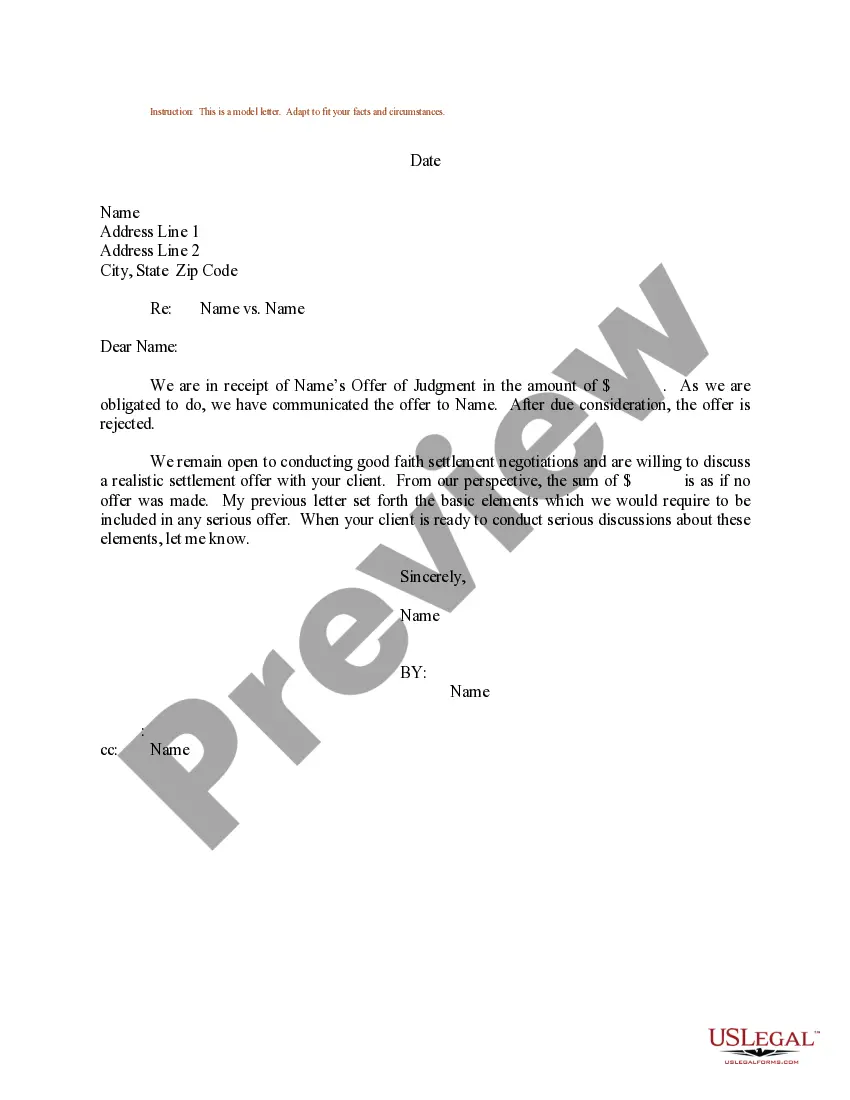




How to fill out Sample Letter Withdrawing Offer To Purchase House?
Whether for business purposes or for individual affairs, everybody has to manage legal situations at some point in their life. Completing legal papers requires careful attention, beginning from selecting the proper form sample. For instance, if you choose a wrong edition of a Offer On House Accepted Now What, it will be turned down when you send it. It is therefore essential to get a dependable source of legal papers like US Legal Forms.
If you need to obtain a Offer On House Accepted Now What sample, follow these easy steps:
- Find the sample you need using the search field or catalog navigation.
- Check out the form’s information to ensure it fits your case, state, and region.
- Click on the form’s preview to examine it.
- If it is the wrong form, return to the search function to locate the Offer On House Accepted Now What sample you need.
- Get the file if it meets your requirements.
- If you already have a US Legal Forms account, click Log in to gain access to previously saved files in My Forms.
- In the event you don’t have an account yet, you may download the form by clicking Buy now.
- Select the appropriate pricing option.
- Complete the account registration form.
- Pick your transaction method: you can use a credit card or PayPal account.
- Select the document format you want and download the Offer On House Accepted Now What.
- Once it is downloaded, you are able to complete the form with the help of editing software or print it and complete it manually.
With a vast US Legal Forms catalog at hand, you do not have to spend time looking for the right sample across the internet. Make use of the library’s simple navigation to get the appropriate form for any situation.
Form popularity
FAQ
Address the seller and introduce yourself. If you know the seller's name, use that, but you likely won't know the name of the owner of the home. ... Detail what makes the home stand out to you. ... Find something in common. ... Present your offer. ... Note any contingencies you have. ... Close with a friendly thank you.
Typically, a lowball offer is considered to be at least 20% below the asking price. If you're offering 10% below, the property should be in a good condition but may just need some cosmetic work done. The goal of offering 10% below the asking price is to use those extra funds to cover the repairs.
If a seller decides to go with a higher offer, she must communicate that to the original buyer immediately?and return any deposit presented with the initial offer. But here's another option: A seller could allow the original buyer to present a counteroffer. Granted, the buyer may not want to.
The home buying process doesn't end once the seller accepts your offer. You'll have to complete steps to assure the seller that you're equipped with the proper financing to close the sale, and the seller will have to open the house up for appraisal and inspection to assure all parties that the house is sound.
You won't be able to offer more than you can afford, so it's important to determine your budget upfront. Some financial experts use a rule of thumb that says your home should cost no more than two or three times your annual household income.